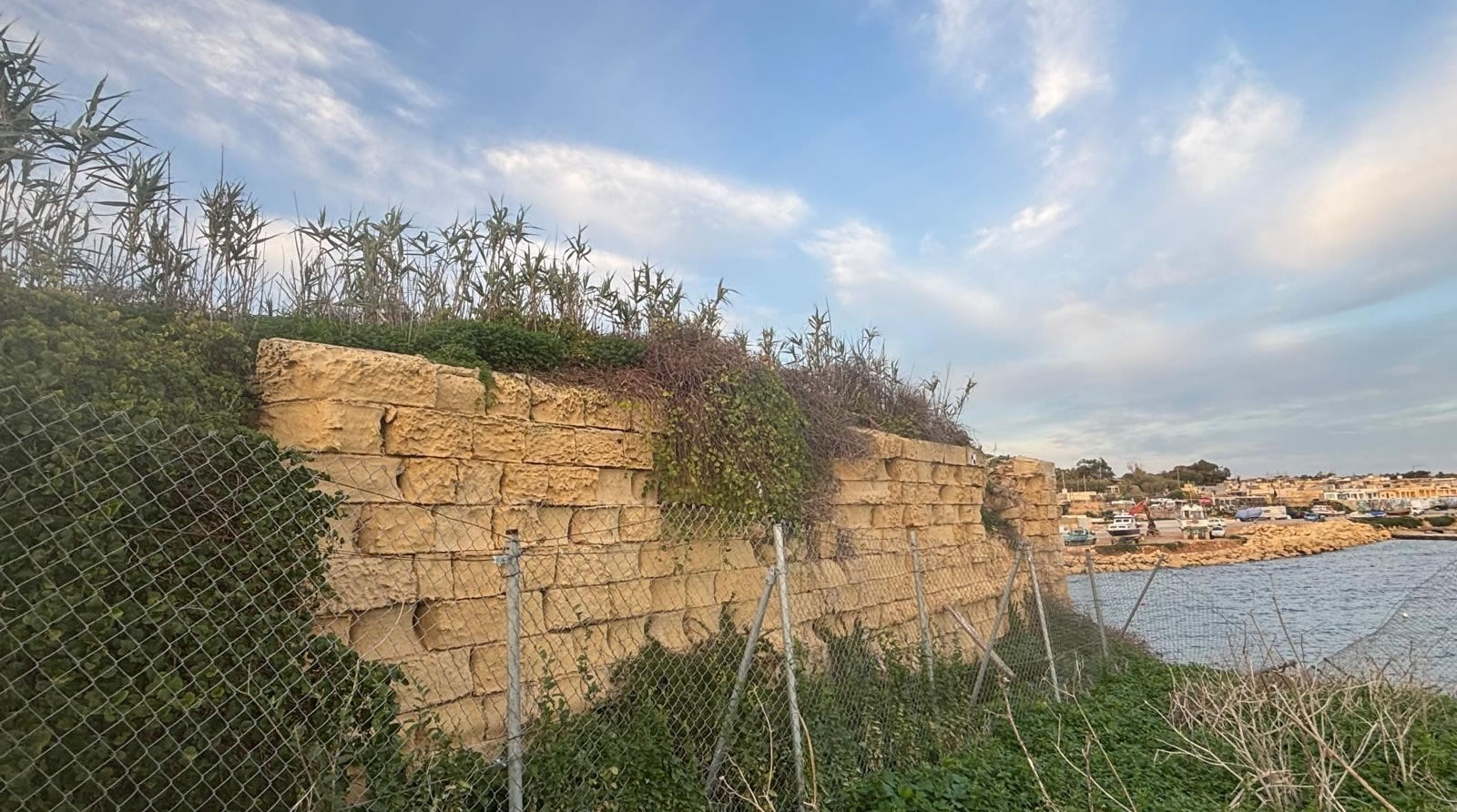
The gun platform (pentagonal plan)
A pentagonal platform gave artillery crews multiple firing angles across the bay approaches. In typical Hospitaller coastal battery design, the platform carried the guns while the rear blockhouse protected the entrance and supported the garrison.
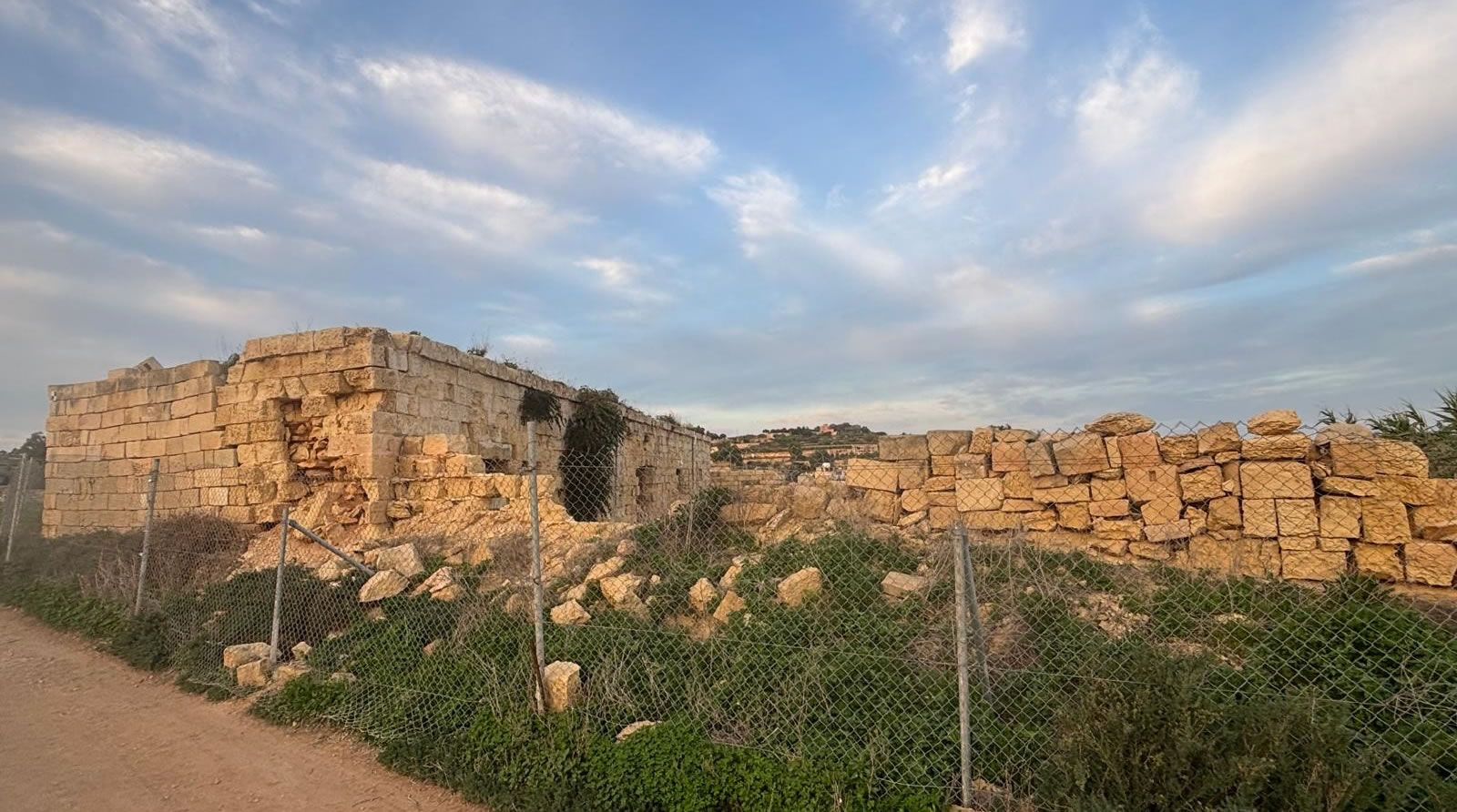
The blockhouse: one of the largest in a Maltese coastal battery (confirmed)
The NICPMI record highlights the scale and sophistication of this blockhouse:
- Three-room layout: a larger central room for accommodation with two smaller side rooms for storage (e.g., supplies).
- Roof structure: supported on 17 diaphragm arches and two cross-walls.
- Water infrastructure: an internal cistern cut into rock beneath the floor.
- Circulation: a main exterior entrance and corresponding opening leading out onto the platform.
Entrance protection and perimeter works (confirmed, now partly missing)
The inventory records that the blockhouse entrance was originally protected by a V-shaped redan (now missing), and it also notes a defensive ditch arrangement.
Confirmed later alterations (19th–early 20th century)
The NICPMI record explicitly states that various 19th and early twentieth century alterations were made to the blockhouse. These changes reflect a transition away from purely military function and into later reuse phases.
Confirmed structural loss: the collapsed left face
Today, the structure is missing its left face, which collapsed into the sea over time. :contentReference[oaicite:29]{index=29}