Overview
The Bingemma ridge is famous for rock-cut features ranging from small burial cuttings to larger chambers and “troglodytic” caves. Modern summaries of the area describe prehistoric tombs and cave-cut spaces across multiple levels, while also noting that interpretations and precise dating can vary from feature to feature.
This page focuses on a single rock-cut tomb at 35.902535, 14.361953, which you can treat as a stand-alone point of interest while still linking it to the wider Bingemma funerary landscape.
When was it probably built?
Without a published excavation report specific to this exact coordinate, the safest and most evidence-aligned conclusion is that the tomb is most likely Punic (Phoenician/Punico-Hellenistic) in origin, with a possibility of later reuse.
Why “Punic” is the best-fit working date here: scholarly discussion of Punic Malta notes that shaft-and-chamber rock-cut tombs are a characteristic burial form, and a University of Malta publication references a shaft-and-chamber tomb at Bingemma explored by Sir Temi Żammit in 1927.
Editorial phrasing you can use confidently: “Probably built in the Punic period (first millennium BC), in line with Bingemma’s documented rock-cut tomb tradition; later reuse is possible.”
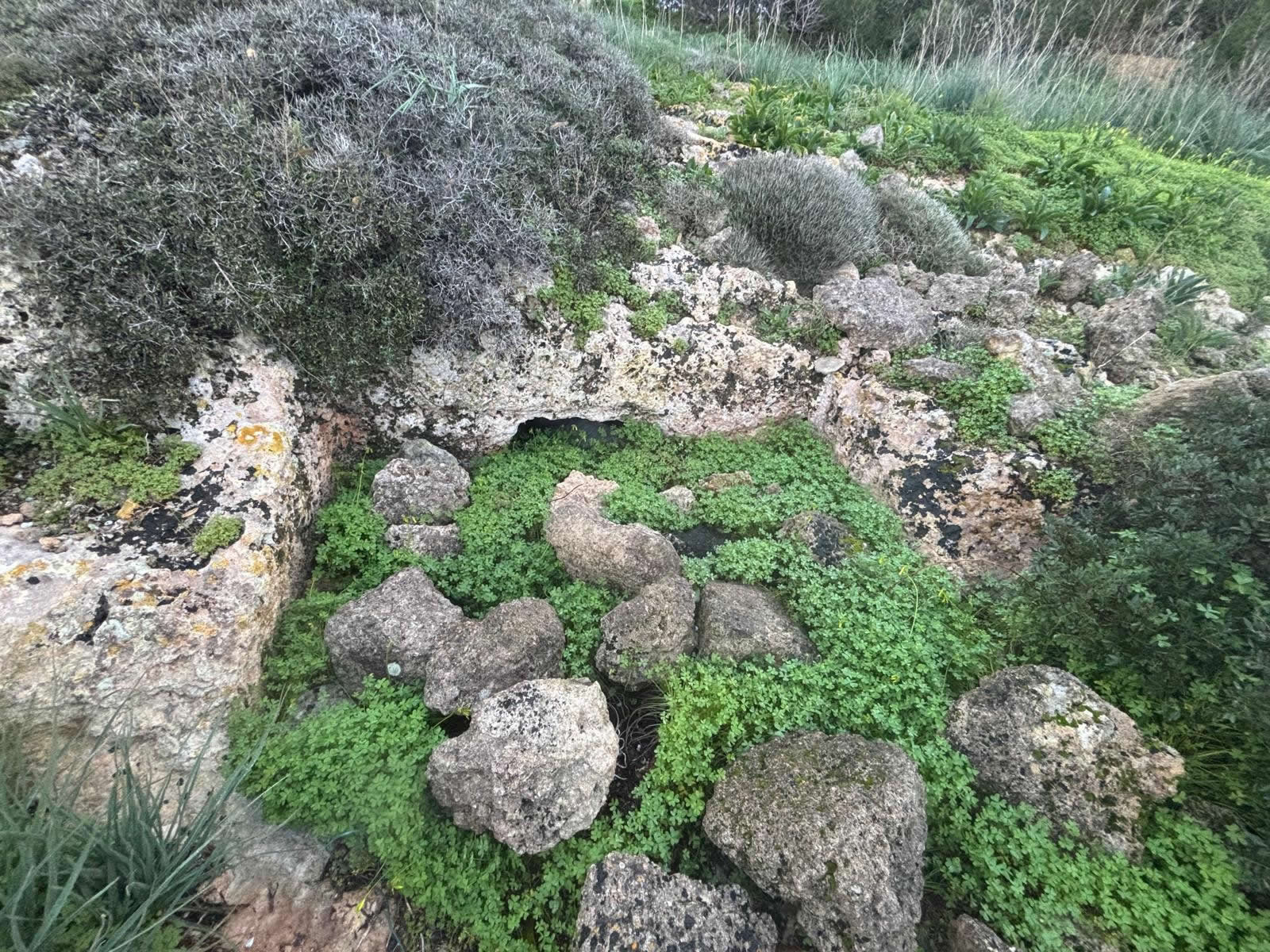
History & use through time
- Punic period (first millennium BC): The tomb most plausibly belongs to Malta’s rock-cut funerary tradition associated with Phoenician/Punic communities, typically using chambered tombs cut into limestone.
- Roman period (from 218 BC): Many Maltese tomb landscapes are labelled “Punic/Roman” in modern writing because earlier tombs were sometimes revisited, adapted, or reinterpreted under later use. (Use careful wording unless you have tomb-specific finds.)
- Post-antique reuse (possible): Bingemma features are widely described as having multiple phases of reuse (including later shelter/storage interpretations), especially where larger chambers exist nearby.
- 19th century military landscape: Fort Binġemma was built by the British (1875–1878) as part of the Victoria Lines, transforming the ridge into a defensive zone.
Local context: the chapel and wider Bingemma tomb landscape
A useful anchor for visitors is the Chapel of Our Lady of Itria (Hodegetria) on Triq Binġemma. The chapel is documented as being built on the cliff edge immediately above a Punic tomb, and it sits close to the Victoria Lines.
Multiple modern descriptions also refer to clusters of rock-cut tombs in the Bingemma area, alongside cave-cut spaces sometimes described as troglodytic sites. This strengthens the interpretation of your single-tomb point as part of a broader funerary and rock-cut landscape.
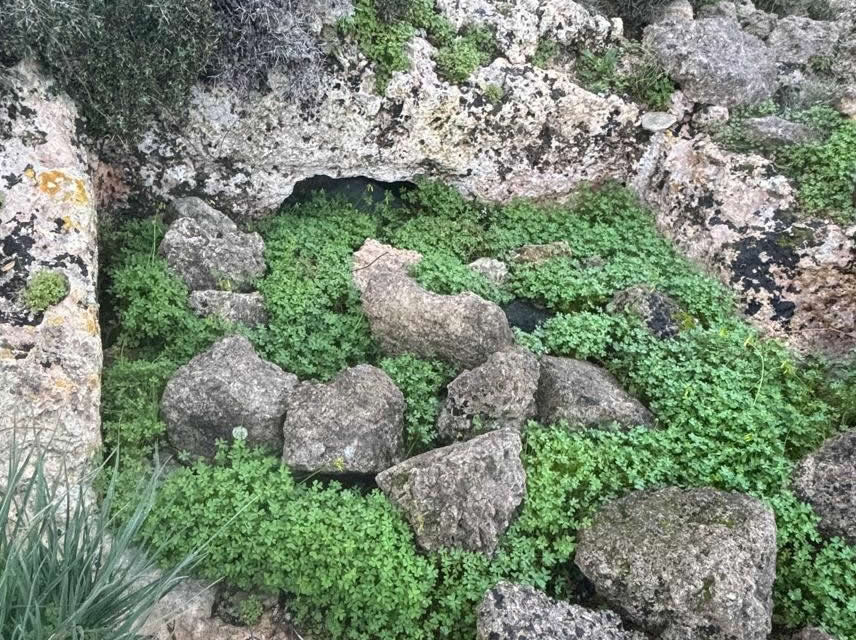
What to look for at the tomb
- Entrance cut: look for a deliberate, human-cut opening or threshold in the limestone.
- Chamber form: if visible, note whether the space feels like a small chamber rather than a natural cavity—this supports a funerary reading.
- Tool marks: subtle pick marks can sometimes be seen where the rock is softer (do not touch/scrape).
- Setting: the tomb’s position along the Bingemma ridge is typical of rock-cut use in Malta, where geology and access shaped cemetery placement.
If you can add 2–4 original photos, include alt text like: “Single rock-cut tomb near Fort Binġemma, Bingemma ridge, Rabat Malta”.
Visiting notes (respectful exploration)
- Safety: limestone can be slippery; avoid cliff edges and unstable cavities.
- Respect: do not remove stones, pottery, or soil; do not light fires or mark the rock.
- Access: follow any barriers/signage. If the immediate area is fenced or clearly private, view from public routes.
- Best time: morning or late afternoon for better light on rock surfaces.
This is a sensitive heritage feature. Appreciate it from the outside and leave it exactly as found.
FAQ
Is this tomb Punic, Roman, or prehistoric?
Bingemma sites are often described with more than one phase. For this single tomb, the best-supported working date is Punic (first millennium BC) based on documented Bingemma shaft-and-chamber tomb traditions, while later reuse is possible.
What’s nearby?
Fort Binġemma (British, 1875–1878) and the Chapel of Our Lady of Itria (founded 1600; completed 1680) are key nearby landmarks that help visitors orient within the Bingemma ridge landscape.