Overlooking the Bingemma valley near Rabat, this rural chapel—also known as Our Lady of Itria or Our Lady of the Way—has a recorded foundation in
1600 and a documented rebuild in 1680, linked to the Xara family and centuries of countryside devotion.
Coordinates: 35.903524, 14.377390Founded: 1600Desecrated: 1658Rebuilt: 1680Titular painting tradition: 1681Feast: last Sunday of October (traditional)
At a glance
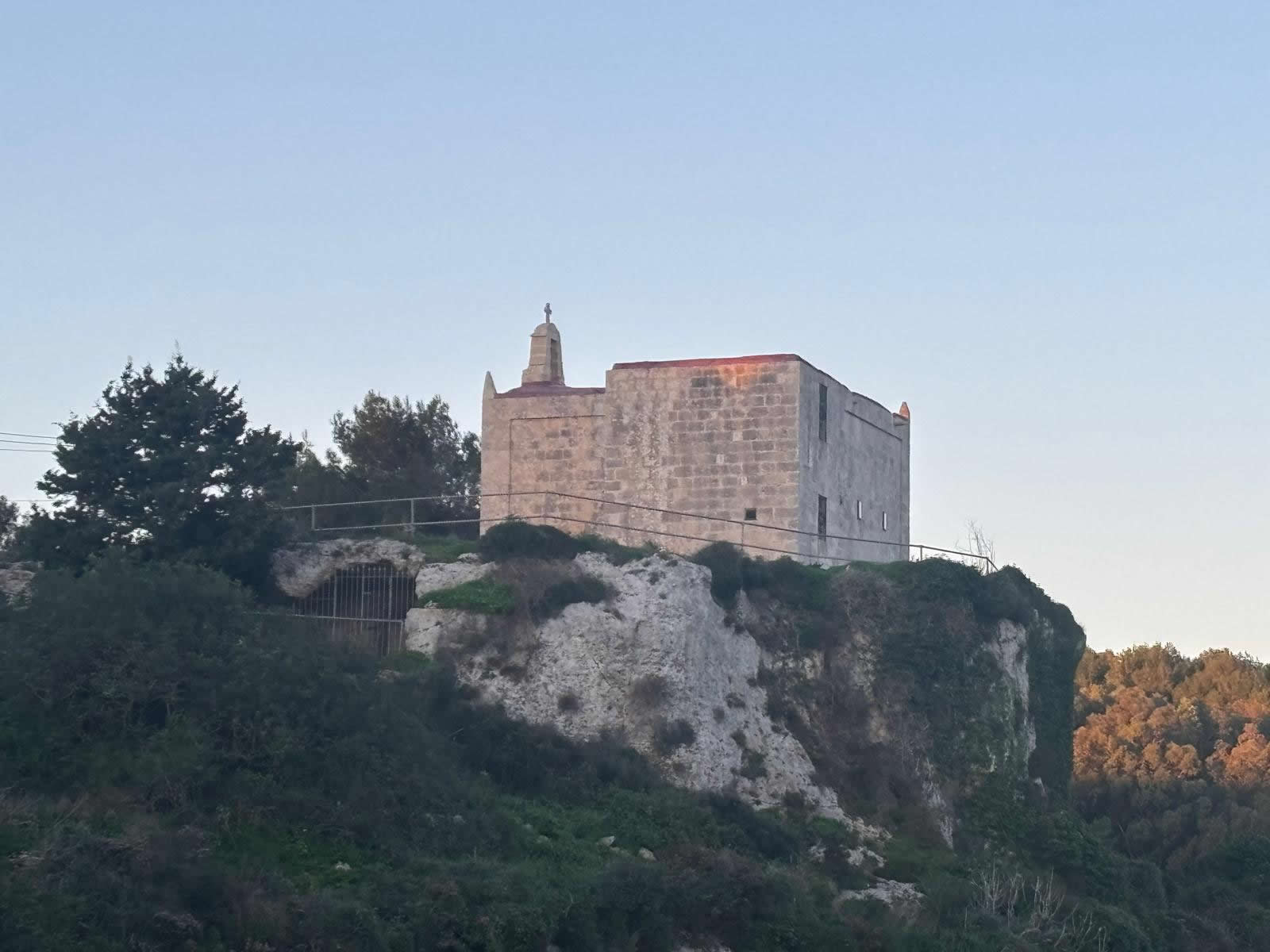
The chapel stands on a rocky outcrop above the Binġemma valley, close to countryside routes that walkers often associate with the Victoria Lines and Dwejra Lines area.
Although frequently described as “near Rabat”, it is in the Bingemma countryside between Mġarr and Rabat.
DedicationMary as Hodegetria / Itria (Our Lady of the Way)
Key build phases1600 original chapel → 1680 rebuilt chapel
SettingValley-edge site above Binġemma (near Rabat)
What makes it specialInscription recording 1600/1680 story; rural pilgrimage feel
Full detailed history
The chapel’s “confirmed” dates come from a long-retold sequence: a first chapel founded in 1600, its desecration in 1658,
and a rebuilt, larger chapel erected in 1680 using stones from the earlier building—recorded in an internal inscription tradition.
1600: the first chapel on the site
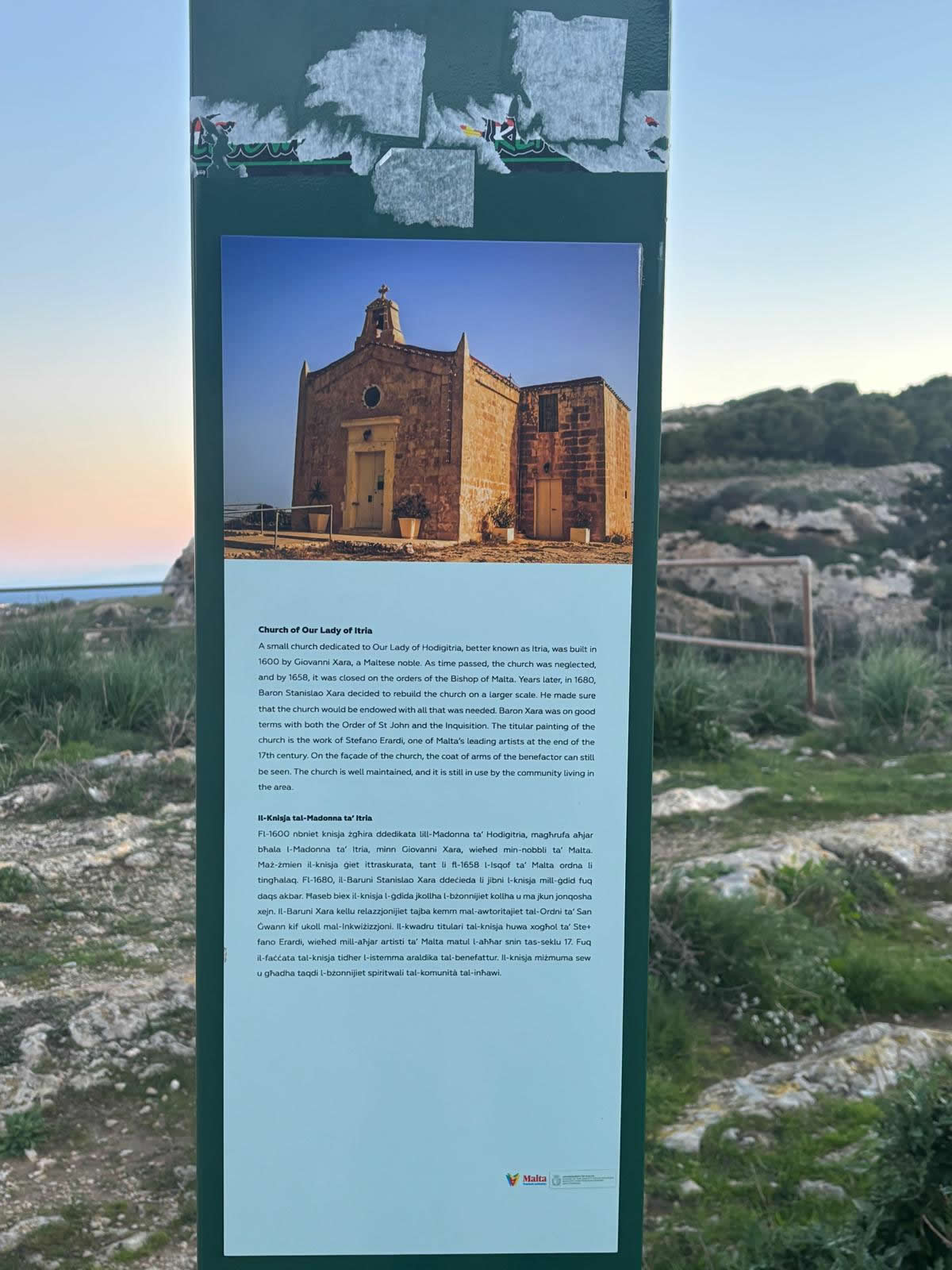
A small chapel was founded in 1600 by the nobleman Giovanni Maria Xara on his land in the Bingemma countryside.
It was dedicated to the Blessed Virgin under the title of Hodegetria—a title that in Western usage is often expressed as
Our Lady of the Way, and in Malta is commonly called Itria.
Early function: a countryside chapel for farmers and villagers
Rural chapels were not built for large congregations: they were practical spiritual anchors for people working the land.
Accounts of early pastoral expectations mention that the chapel was to be fitted for Mass so that worship could take place for
farmers and villagers in the locality.
1658: neglect and desecration
Over time the original 1600 chapel deteriorated. In 1658 it was declared obsolete and desecrated by the bishop of the period,
a fate shared by several rural chapels when maintenance and regular use could not be guaranteed.
1680: rebuilding with the same stones (the chapel you see today)
In 1680 the chapel was rebuilt as a larger structure a short distance from the earlier building. Tradition attributes this project
to Baron Stanislaw Xara, who reused stones from the first chapel and added new material, creating the rural landmark that survives today.
The story is commemorated by an internal Latin inscription often cited in descriptions of the chapel.
1681: the titular painting tradition
Devotion in the rebuilt chapel is also associated with a titular painting tradition dated to 1681 (linked in local accounts to
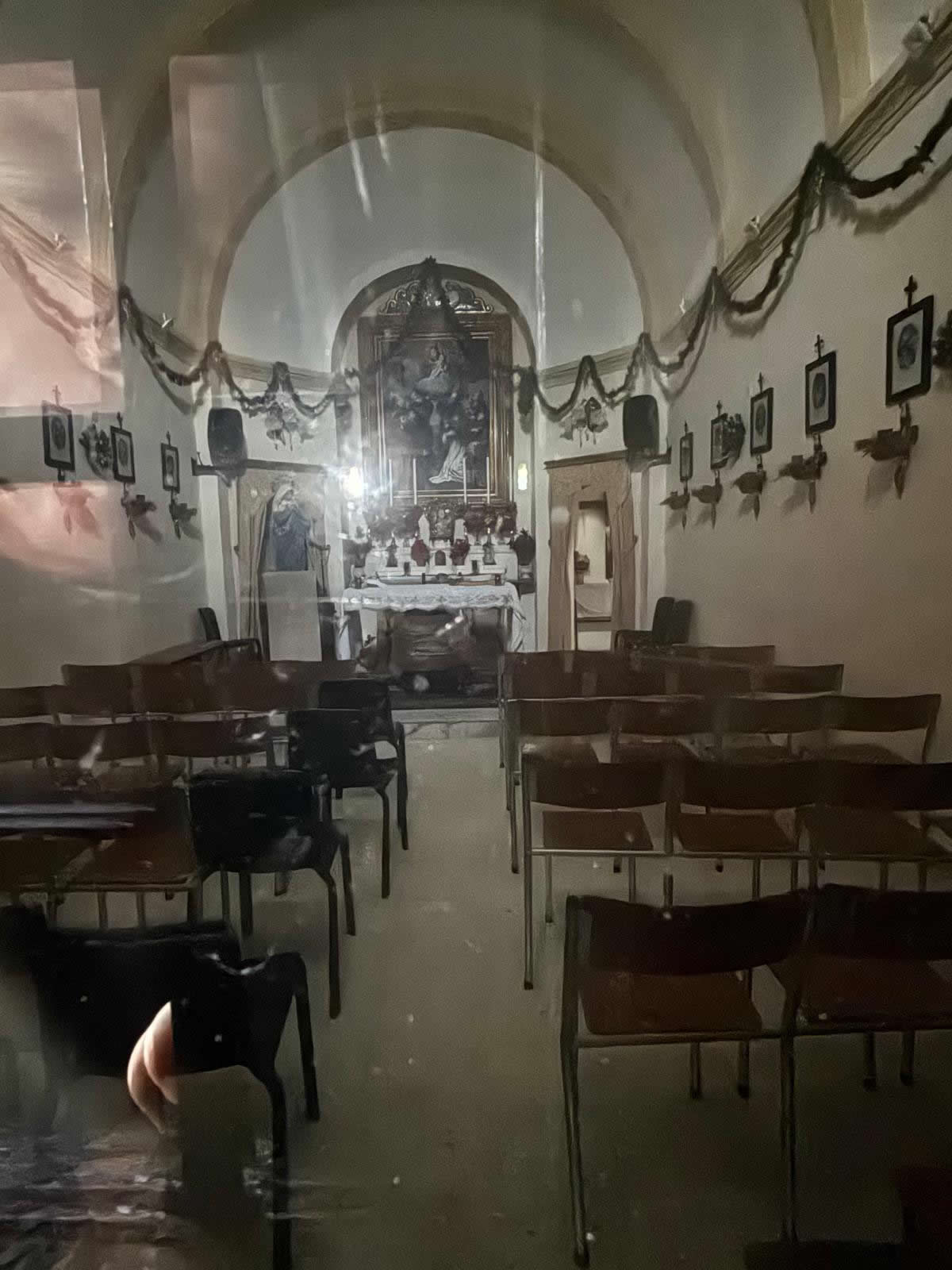
Stefano Erardi). For preservation and security reasons, the original is commonly said to be kept elsewhere, with a copy or photographic reproduction used in the chapel.
18th–19th centuries: steady upkeep and notable additions
Later visitations described the rebuilt chapel as well equipped for worship, supported by the family and heirs responsible for its upkeep.
In 1870, the Stations of the Cross were established by Countess Maria Antonia Sant through a papal approval tradition,
deepening the chapel’s devotional character.
2000: the “Millennium” marker
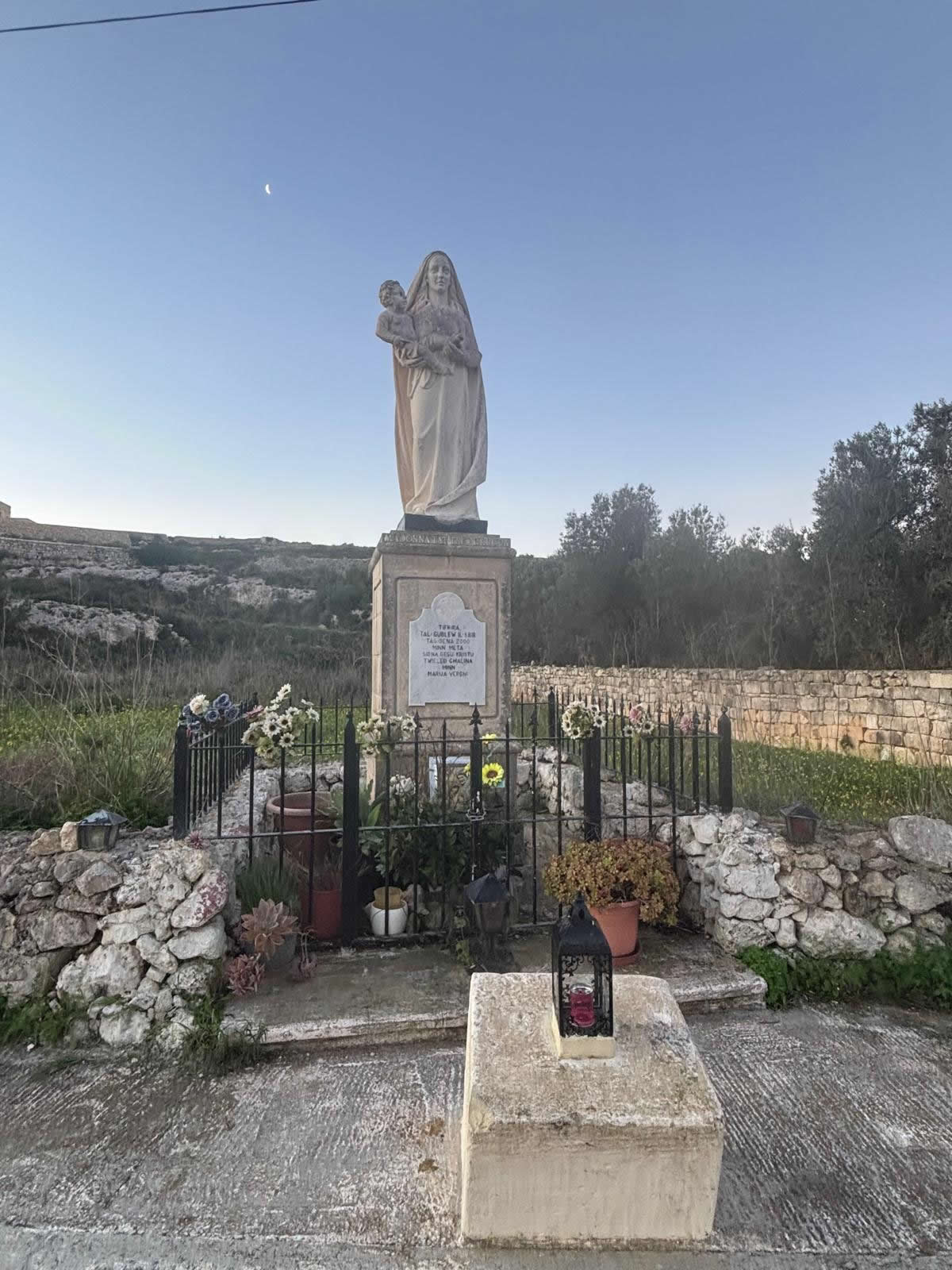
Around the year 2000, a statue of Our Lady with the Child Jesus was placed in the field in front of the chapel in connection with the new millennium,
becoming an additional point of devotion and a landmark for passing walkers.
Construction and architectural character
A limestone countryside chapel on a dramatic edge
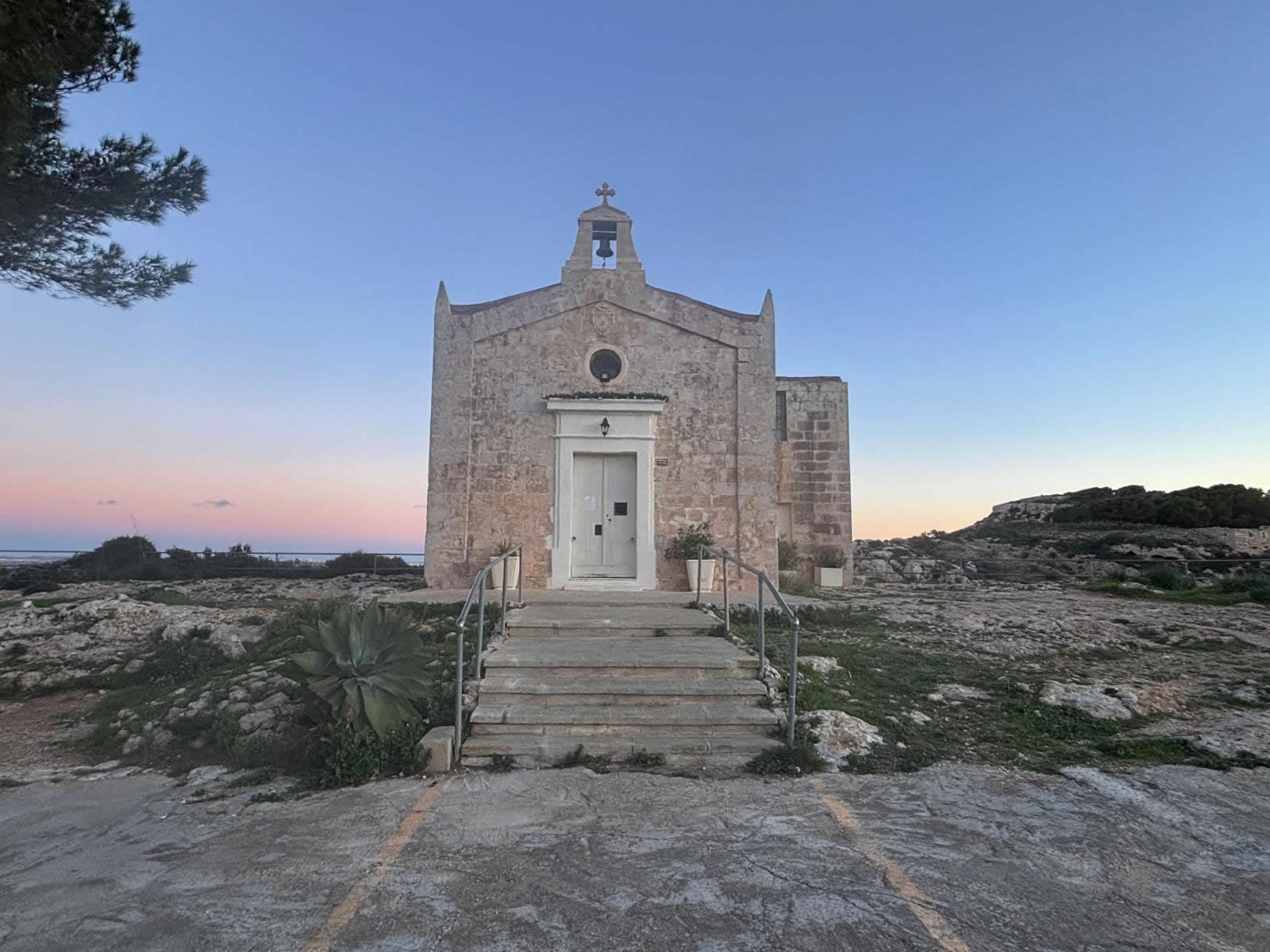
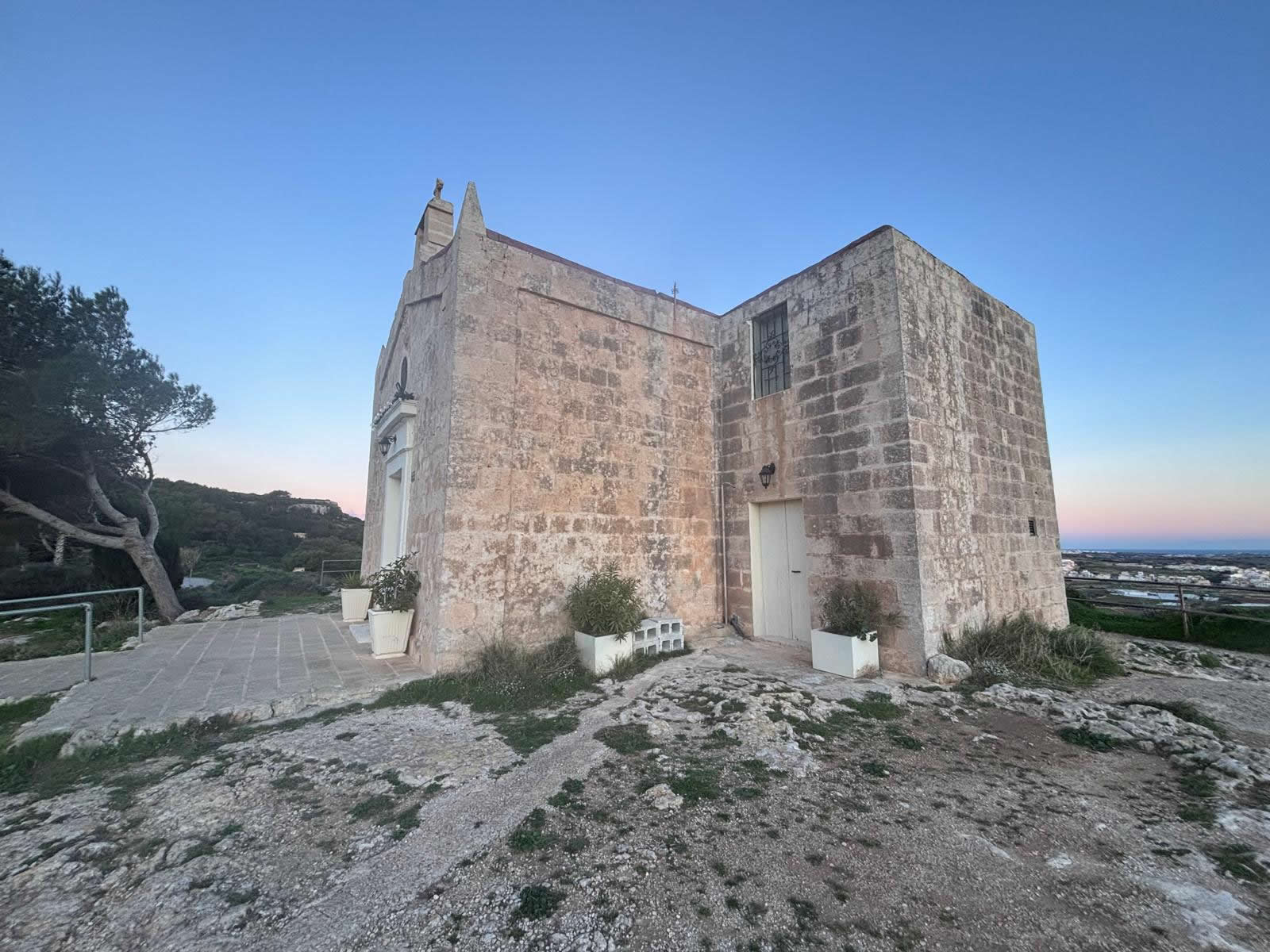
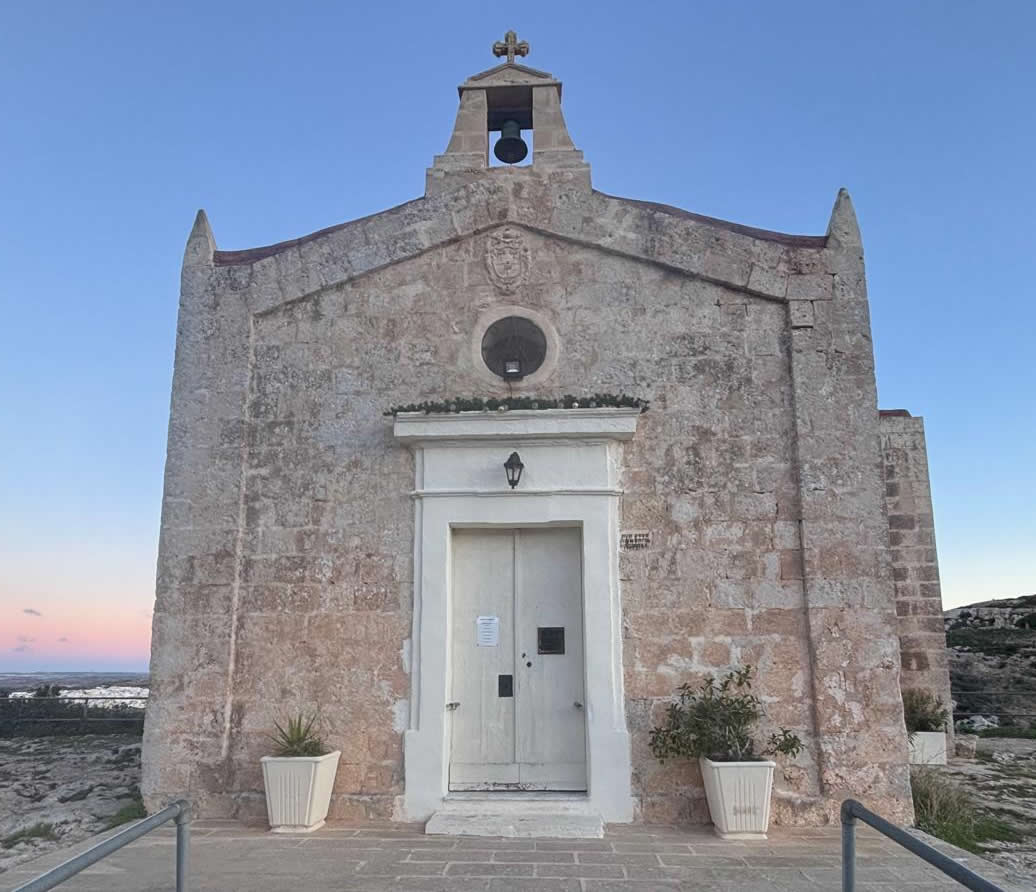
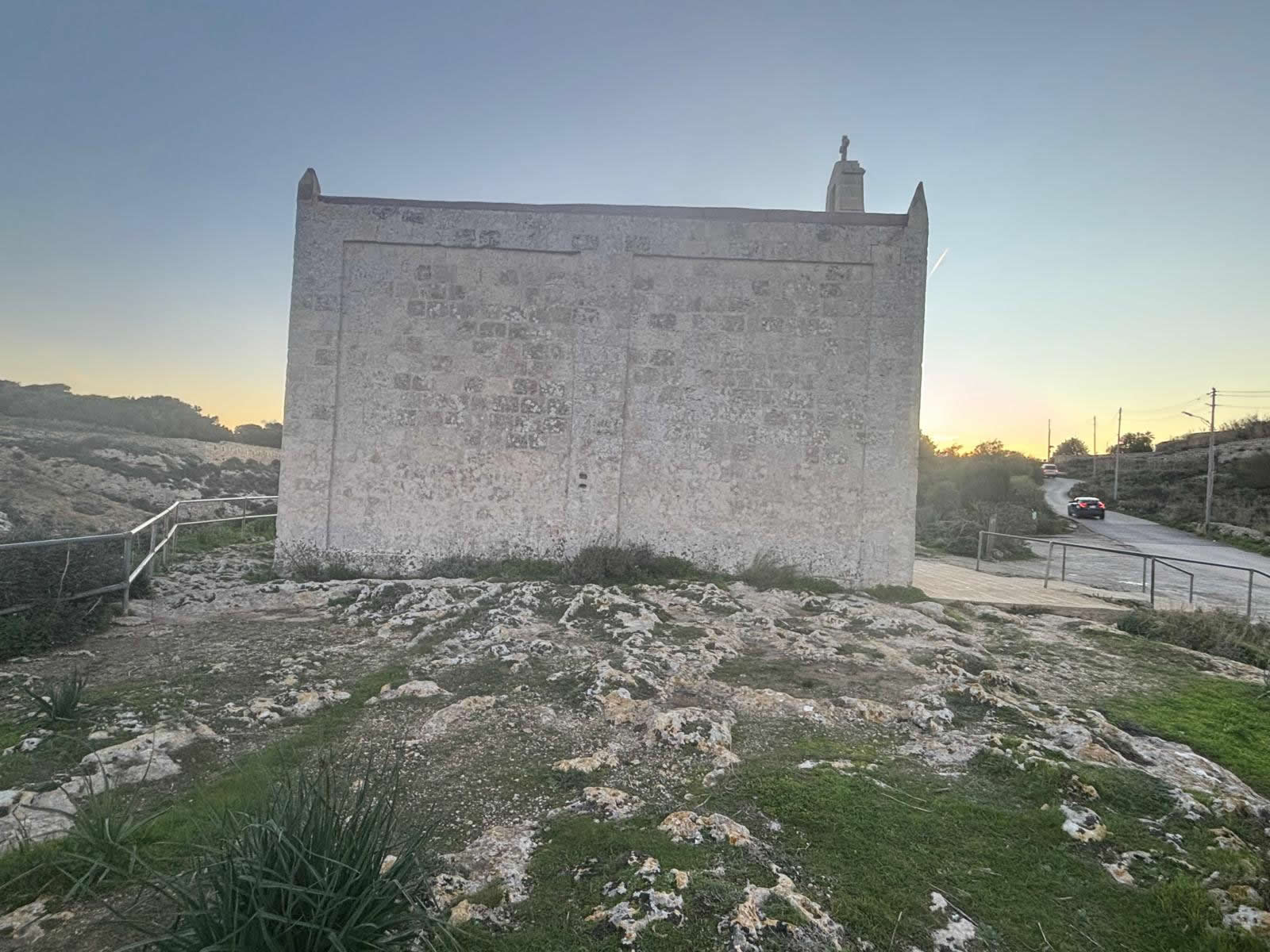
The chapel is built in Malta’s traditional limestone and sits at the edge of a rock above the valley. A small parvis (forecourt) with steps leads to the entrance.
The façade is intentionally simple—typical of chapels built for countryside devotion rather than display.
Identifying features
A small bell-cote with a bronze bell
Distinctive triangular stone detailing at the upper corners of the façade
A round window above the door and heraldic association in local descriptions
Later fabric and practical additions
Descriptions commonly note a sacristy and an upper room added after the main chapel’s construction (material clues such as steel beams are often cited),
reflecting practical needs for occasional clergy use.
Restoration and conservation
Unlike major parish churches, rural chapels are typically preserved through periodic maintenance rather than one celebrated “single restoration date”.
The Hodegetria chapel’s continuity is strongly tied to private and ecclesiastical stewardship across centuries—repairing stonework, roof coverings,
and interior fittings as required by weather exposure and age.
If you have an official restoration plaque date, architectural report, or parish notice confirming a specific restoration campaign (year, scope, contractor),
add it to the timeline below for stronger documentation and SEO value.
How the chapel is used today
Today, the chapel remains a quiet devotional site in open countryside—visited by walkers, photographers and those who keep Marian traditions alive.
The titular feast is traditionally celebrated on the last Sunday of October, often with a triduum, a bonfire on the eve of the feast,
and a small local procession (customs can vary by year and organisers).
Timeline of key dates (confirmed / widely cited)
Date / period
Event
1600
First chapel founded on the site by Giovanni Maria Xara and dedicated to Our Lady of Hodegetria/Itria.
1658
Original chapel desecrated due to deterioration and neglect.
1680
Rebuilt chapel constructed nearby (larger), traditionally using stones from the earlier building.
1681
Titular painting tradition associated with the rebuilt chapel.
1722
Pastoral visitation tradition notes the chapel as well-equipped and regularly served.
28 Dec 1870
Stations of the Cross established by Countess Maria Antonia Sant (papal approval tradition).
2000
“Millennium” statue placed in the field in front of the chapel (local commemoration).
Last Sunday of October
Traditional feast of Our Lady of Itria/Hodegetria (customs vary).
What to see nearby
Bingemma countryside & cave shelters: an atmospheric rural landscape with historic niches and caves.