📍 HMS Cachalot Submarine Memorial
Location Map Coordinates 35.902231, 14.519625
HMS Cachalot (N83) was a Grampus-class minelaying submarine of the Royal Navy that served with distinction in the Mediterranean during the Second World War. Designed to lay offensive minefields in enemy waters, she undertook hazardous patrols against Axis shipping before becoming closely associated with Malta during the Siege of Malta. Although lost in July 1941, HMS Cachalot is remembered on the Royal Navy Submarine Roll of Honour at the National War Museum, Fort St Elmo, Valletta.
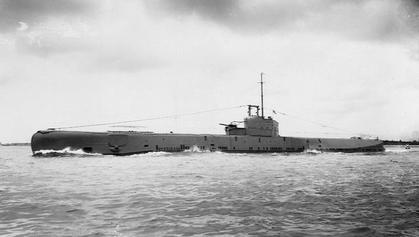
HMS Cachalot (N83) is commemorated on the Royal Navy Submarine Roll of Honour in Malta. The memorial lists both named submarines and separately identifies a number of wartime submarines known only by their construction numbers, including P.33. As these were different vessels, this page is dedicated solely to the history of HMS Cachalot.
Construction and Design

Ordered under the Royal Navy's 1935 building programme, HMS Cachalot formed part of the six-boat Grampus class. Unlike conventional attack submarines, the class was specifically designed to lay large defensive and offensive minefields in enemy shipping lanes while retaining the ability to attack surface vessels with torpedoes.
Constructed by Vickers-Armstrong at Barrow-in-Furness, she was launched on 2 December 1937 and commissioned into the Royal Navy on 22 February 1939, only months before the outbreak of the Second World War.
Technical Specifications
| Name | HMS Cachalot |
|---|---|
| Pennant Number | N83 |
| Class | Grampus-class minelaying submarine |
| Builder | Vickers-Armstrong, Barrow-in-Furness |
| Launched | 2 December 1937 |
| Commissioned | 22 February 1939 |
| Length | 293 ft 6 in (89.5 m) |
| Beam | 25 ft (7.6 m) |
| Displacement | 1,520 tons surfaced 2,062 tons submerged |
| Speed | 15.5 knots surfaced 8.75 knots submerged |
| Complement | Approximately 59 officers and ratings |
| Primary Role | Minelaying submarine |
Second World War Service
Following the outbreak of war, HMS Cachalot joined the Royal Navy's Mediterranean submarine force. Her principal role was to lay minefields in strategic sea lanes used by Italian merchant ships and naval vessels. These operations required exceptional navigation and courage, as the submarine often operated close to heavily defended enemy ports and coastal waters.
The submarine undertook a number of successful patrols during 1940 and 1941, contributing to Britain's efforts to disrupt Axis supply routes between Italy and North Africa. Like many submarines operating from Malta, she also transported military stores and personnel during the darkest months of the Siege of Malta.
Operations from Malta
During the summer of 1941 HMS Cachalot became closely associated with Malta, then enduring one of the most intense periods of the Axis siege. The island depended heavily upon submarines to transport urgently needed supplies, personnel and mail between Malta and Alexandria, while simultaneously carrying out offensive operations against enemy shipping.
On 16 July 1941 HMS Cachalot arrived in Malta carrying aviation spirit, military stores, dehydrated food and other essential supplies that were difficult to deliver by surface ships because of the constant threat posed by enemy aircraft and submarines. After unloading her cargo she embarked passengers, mail and military stores for the return voyage to Alexandria.
The submarine sailed from Malta on 26 July 1941, combining her transport mission with offensive patrol duties in the eastern Mediterranean.
The Final Patrol
While returning towards Alexandria, HMS Cachalot received orders to intercept an Italian convoy operating off the Libyan coast. During the evening of 29 July 1941 she encountered the Italian torpedo boat Generale Achille Papa. The submarine attempted to manoeuvre into an attack position but was detected before she could fire effectively.
The Italian warship immediately counter-attacked, opening fire before deliberately ramming the submarine. Seriously damaged and unable to dive safely, HMS Cachalot was forced to surface. With little prospect of escape, the commanding officer ordered confidential documents destroyed before the crew abandoned ship.
Loss of HMS Cachalot
After the crew entered the water, scuttling charges were detonated to prevent the submarine falling intact into enemy hands. HMS Cachalot sank on 30 July 1941 in the Mediterranean north-east of Tripoli.
Most of the officers, crew and passengers survived the sinking and were rescued by the Italian Navy before becoming prisoners of war. Only one member of the ship's company lost his life during the action, making the loss unusual among Royal Navy submarines operating from Malta, many of which disappeared with all hands.
Remembered in Malta
Although HMS Cachalot was lost at sea off the Libyan coast, her close association with Malta during the siege ensured her place in the island's wartime history. She is commemorated on the Royal Navy Submarine Roll of Honour displayed at the National War Museum, Fort St Elmo, Valletta.
The memorial honours submarines from the Royal Navy, the Free French Naval Forces and the Royal Hellenic Navy that operated from Malta during the Second World War. Together these submarines played a vital role in attacking Axis supply convoys and maintaining Allied control of the Mediterranean.
Timeline
| 1935 | Ordered under the Royal Navy's naval construction programme. |
|---|---|
| 2 December 1937 | Launched at Vickers-Armstrong, Barrow-in-Furness. |
| 22 February 1939 | Commissioned into the Royal Navy. |
| 1939–1941 | Conducted Mediterranean patrols and mine-laying operations. |
| 16 July 1941 | Arrived in Malta carrying essential military supplies. |
| 26 July 1941 | Sailed from Malta for Alexandria carrying passengers, stores and mail. |
| 30 July 1941 | Damaged by the Italian torpedo boat Generale Achille Papa and scuttled. |
Did You Know?
- The Grampus class was designed specifically to lay large minefields in enemy waters.
- HMS Cachalot was one of only six submarines of her class built for the Royal Navy.
- Unlike many submarines lost from Malta, most of her crew survived and became prisoners of war.
- Her final operational voyage began in Malta after delivering urgently needed supplies during the Siege of Malta.
- The Malta memorial associates Cachalot with P.33; however, official Royal Navy records identify HMS Cachalot as pennant number N83.
Related Pages
- Royal Navy Submarine Roll of Honour
- HMS Tigris
- HMS Olympus
- HMS Upholder
- HMS Urge
- Malta Military Memorial Catalogue
Sources
Information on this page has been compiled from Royal Navy historical records, published accounts of Mediterranean submarine operations, the Commonwealth War Graves Commission, the National War Museum, Fort St Elmo, and the inscription on Malta's Royal Navy Submarine Roll of Honour as well as https://submarineremembrance.uk/.
Explore More Maltese Maritime History
- Discover comprehensive defense relics, locations, and historical summaries via the Malta War Memorials Catalogue.
- Pay tribute to the silent service veterans stationed at Manoel Island on our dedicated WWII Submarine Roll of Honour.