📍 HMS P.311 Submarine Memorial
Location Map Coordinates 35.902231, 14.519625
HMS P.311 was a Royal Navy Third Group T-class submarine that served with the famous 10th Submarine Flotilla based at Malta during the Second World War. She is unique in Royal Navy history as the only T-class submarine never to receive an official name, although she had been selected to become HMS Tutankhamen shortly before her final patrol. She was lost with all hands during the secret Operation Principal against the Italian naval base at La Maddalena, Sardinia.
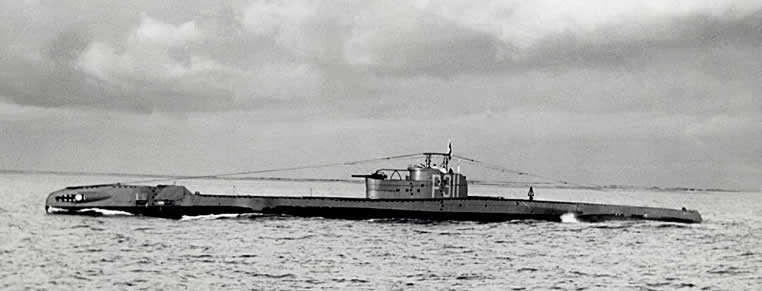
P.311 was specially adapted to carry Chariot manned torpedoes—human-guided underwater weapons designed to attack heavily defended enemy warships in harbour. Her final mission represented one of the most daring special operations undertaken by the Royal Navy's submarine service during the Mediterranean campaign.
Ship Details
| Class | Third Group T-class submarine |
|---|---|
| Pennant Number | P311 |
| Intended Name | HMS Tutankhamen (never officially assigned) |
| Builder | Vickers-Armstrongs Ltd, Barrow-in-Furness |
| Ordered | 2 September 1940 |
| Laid Down | 25 April 1941 |
| Launched | 5 March 1942 |
| Commissioned | 7 August 1942 |
| Length | 84.28 m (276 ft 6 in) |
| Beam | 7.77 m (25 ft 6 in) |
| Displacement | 1,290 tons surfaced 1,560 tons submerged |
| Speed | 15.5 knots surfaced 9 knots submerged |
| Complement | 61 officers and men |
| Armament |
11 × 21-inch torpedo tubes 17 torpedoes 1 × 4-inch deck gun Modified to carry Chariot manned torpedoes |
Service History
After completing trials during the summer of 1942, HMS P.311 joined the Royal Navy's 10th Submarine Flotilla at Malta in November. Unlike most submarines operating from the island, P.311 was selected for a highly specialised role supporting Combined Operations. Her casing was modified to carry Chariot manned torpedoes externally, enabling underwater assault teams to attack enemy warships inside heavily defended harbours.
In December 1942, Prime Minister Winston Churchill ordered that all Royal Navy submarines should receive names rather than simply pennant numbers. P.311 was chosen to become HMS Tutankhamen, but the submarine sailed on her final patrol before the new name could be formally adopted. As a result, she remains officially recorded in naval history simply as HMS P.311.
Operation Principal
On 28 December 1942, HMS P.311 sailed from Malta under the command of Lieutenant Commander Richard Douglas Cayley, DSO and Two Bars. Her mission formed part of Operation Principal, a daring Combined Operations attack on the Italian naval base at La Maddalena in northern Sardinia. The objective was to transport Chariot crews close to the harbour entrance, where they would detach from the submarine and attach explosive charges beneath the heavy cruisers Gorizia and Trieste.
Loss of HMS P.311
P.311 transmitted her final signal on 31 December 1942, reporting her position south of Sardinia. No further messages were received, and she failed to arrive at the planned rendezvous for the Chariot attack. When the submarine did not return to Malta, she was reported overdue on 8 January 1943.
For many years the exact fate of HMS P.311 remained unknown. It is now accepted that she struck an Italian mine while approaching La Maddalena, sinking with all sixty-one members of her crew and the embarked Chariot operators. In 2016, the wreck was located off Tavolara Island, Sardinia, lying largely intact with her Chariots still secured to the casing, providing compelling evidence that the special operation was never launched.
Roll of Honour – Crew Lost
HMS P.311 was lost with all hands after striking an Italian mine during Operation Principal while approaching La Maddalena, Sardinia, on 31 December 1942. The submarine's complete complement of officers and ratings is reproduced below from Malta Defiant & Triumphant – Rolls of Honour 1940–1943.
| Name | Rank / Rating |
|---|---|
| Cayley, R. D., DSO** | Lieutenant Commander – Commanding Officer |
| Adams, A. | Petty Officer Telegraphist |
| Anderson, L. | Able Seaman |
| Auty, L. | Able Seaman |
| Bennett, D. B. | Ordinary Seaman |
| Blackwell, H. H. | Stoker 1st Class |
| Bond, L. J. | Stoker 1st Class |
| Brown, J. M. | Leading Telegraphist |
| Bruce, J. | Stoker 1st Class |
| Buckley, C. | Lieutenant, RNVR |
| Bulford, T. W. | Stoker 1st Class |
| Burton, W. H. | Able Seaman |
| Carr, C. E. | Petty Officer |
| Cheeseman, B. G. | Telegraphist |
| Clark, R. W. | Able Seaman |
| Clarke, R. W. | Able Seaman |
| Cooney, W. | Able Seaman |
| Cross, B. | Stoker Petty Officer |
| Donohue, P. J. | Engine Room Artificer 3rd Class |
| Down, P. L. J. | Petty Officer |
| Dye, W. | Able Seaman |
| Evans, C. W. | Able Seaman |
| Feltham, D. A. J. | Able Seaman |
| Foulkes, R. J. | Stoker 1st Class |
| Foundling, W. | Stoker 1st Class |
| Foxon, H. R. | Stoker 1st Class |
| French, T. W. | Stoker 1st Class |
| Gee, J. | Stoker 1st Class |
| Gordon, J. H. | Lieutenant (E) |
| Griffiths, J. H. | Stoker 2nd Class |
| Hunt, E. G. | Engine Room Artificer 4th Class |
| Iddols, J. | Petty Officer |
| Johns, R. W. | Able Seaman |
| Key, A. | Able Seaman |
| Kimberley, C. | Chief Engine Room Artificer |
| King, J. C. | Petty Officer Steward |
| Lee, A. S. K., DSM | Chief Petty Officer |
| Lord, G. | Able Seaman |
| Lyth, J. L. | Leading Telegraphist |
| McClure, J. | Stoker 1st Class |
| McLean, W. | Ordinary Seaman |
| MacRae, I. N. | Lieutenant, RNVR |
| Mashent, N. | Stoker 1st Class |
| Mapplebeck, P. | Able Seaman |
| Martin, R. C. W. | Engine Room Artificer 4th Class |
| Meyerhuber, J. | Leading Telegraphist |
| Milligan, V. | Stoker Petty Officer |
| Moon, T. H. | Yeoman of Signals |
| Nesbitt, W. F. | Able Seaman |
| Newton, A. S. | Able Seaman |
| Pridham, R. W. B. | Stoker 1st Class |
| Quinn, M. | Stoker 1st Class |
| Redman, J. W. | Leading Seaman |
| Ribbands, R. | Ordinary Seaman |
| Rickwood, B. G. S. | Leading Seaman |
| Rudge, C. H. | Able Seaman |
| Sargent, J. | Lieutenant, RNVR |
| Short, H. C. | Leading Stoker |
| Silver, R. H. S. | Lieutenant |
| Skippon, G. L. | Leading Cook (S) |
| Squire, A. G. | Leading Stoker |
| Stretton-Smith, G. | Chief Stoker |
| Sutherland, W. F. | Lieutenant, RNVR |
| Trevethan, B. | Able Seaman |
| Vokins, C. H. | Leading Stoker |
Legacy
HMS P.311 occupies a unique place in Royal Navy history. She was the only T-class submarine never to receive an official name, despite being selected to become HMS Tutankhamen. Her loss also marked one of the Royal Navy's most ambitious clandestine operations in the Mediterranean, combining conventional submarine warfare with the use of Chariot human torpedoes against heavily defended enemy warships.
The discovery of her wreck off the coast of Sardinia in 2016 finally resolved one of the longest-standing mysteries of the Mediterranean submarine campaign. Found resting upright on the seabed with her Chariot containers still attached, the wreck confirmed that the submarine was lost before the special attack could be carried out. The crew remain on eternal patrol and are commemorated on the Malta Submarine Memorial at Fort St Elmo.
Photograph
A photograph of HMS P.311, together with images of the Chariot human torpedo equipment where available, will be added here.
Related Pages
Sources
- Malta Defiant & Triumphant – Rolls of Honour 1940–1943.
- Royal Navy submarine service records.
- Imperial War Museums.
- Commonwealth War Graves Commission.
- uboat.net – Allied Warships – HMS P.311.
- Research relating to the discovery of HMS P.311 (2016).