Marsalforn War Monument
Commemorating the WWII Air Raid Victims of Marsalforn Bay – 3rd March 1942
Location Map Coordinates 36.071378, 14.258944
Commemorating the WWII Air Raid Victims of Marsalforn Bay – 3rd March 1942
| Field | Memorial Record Details |
|---|---|
| Monument Name | Marsalforn WWII Attack Memorial / Marsalforn War Monument |
| Locality | Marsalforn (Żebbuġ Local Council), Gozo, Malta |
| Exact Location | Triq il-Port (Promenade / Shorefront Area), Marsalforn |
| Sculptor / Designer | Mario Cassar (Gozitan Artist) |
| Commissioned By | Marsalforn Representative Committee (Żebbuġ Local Council) |
| Date of Unveiling | 2019 |
| Primary Material | Carved Maltese Hardstone (Globigerina / Coralline) |
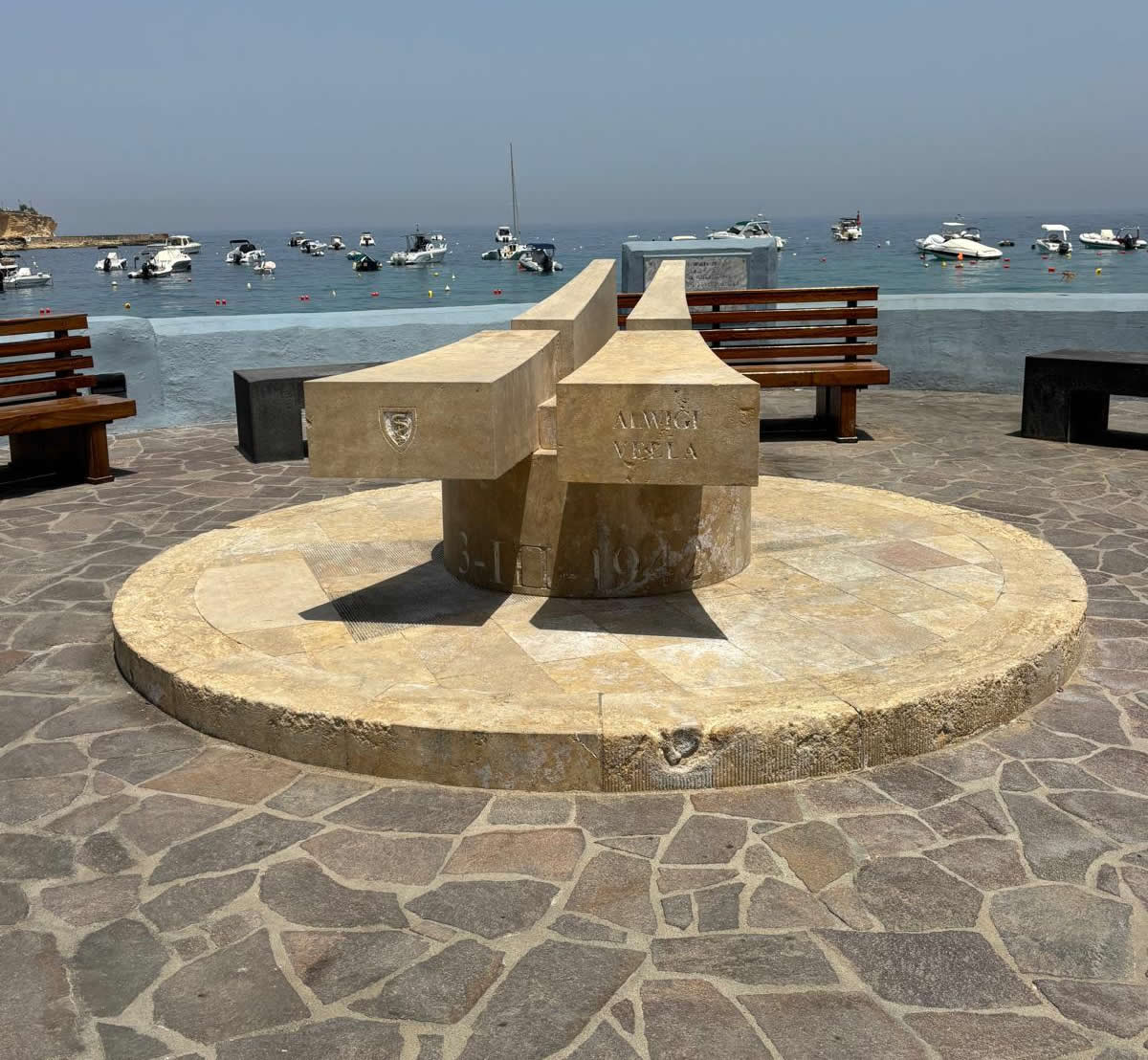
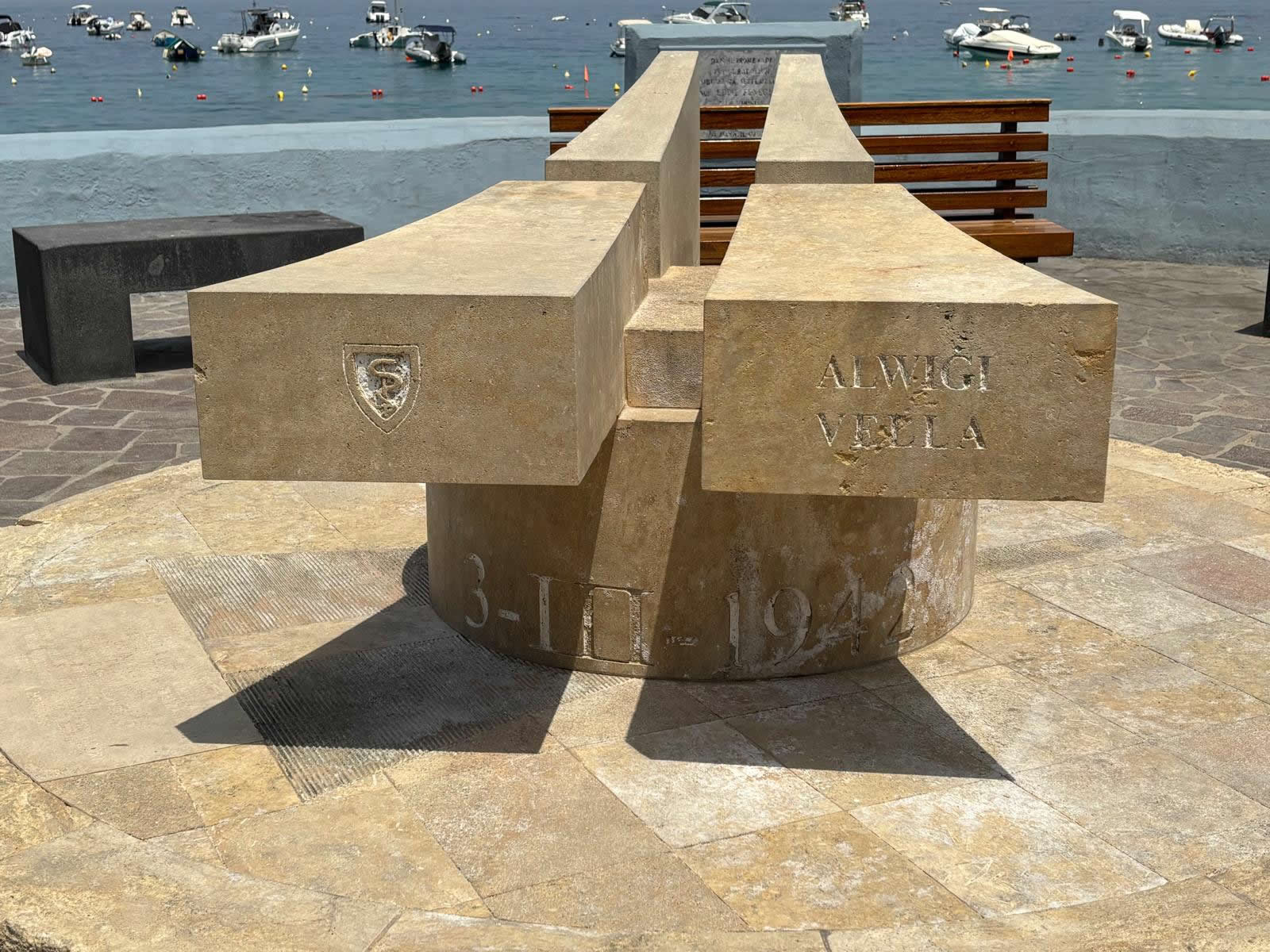
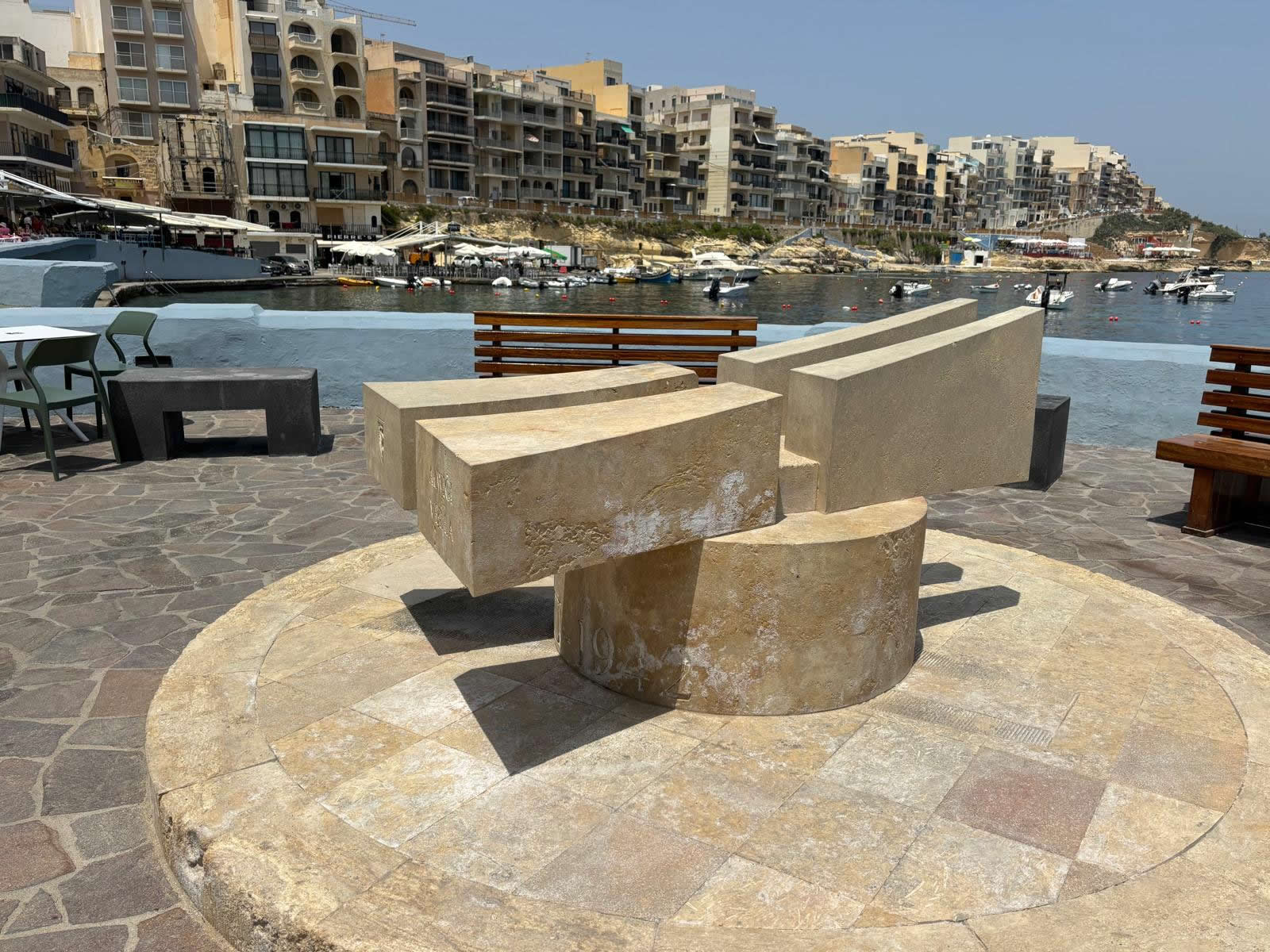
| Design Concept | Stylized silhouette blending heavy land artillery and a fishing vessel hull, loaded with a cross symbol aimed toward the seaward horizon. |
| Condition | Excellent (Maintained publicly) |
| Casualty Field | Record Information |
|---|---|
| Primary Casualty Name | Luigi Vella |
| Status / Service | Civilian Victim (Local Fisherman) |
| Date of Attack | 3rd March 1942 (3:15 PM) |
| Date of Death | 4th March 1942 (Died from fatal chest injuries) |
| Location of Incident | 4 Miles off Marsalforn Bay, Gozo |
| Hostile Action | Strafed by two Luftwaffe Messerschmitt 110 aircraft four times while fishing on an unarmed boat. |
| Injured Survivors |
• Salvu Grech (Fisherman – Seriously Injured) • Anton Grech (Fisherman – Seriously Injured) |
| First Aid Site | Rescued by fellow fishermen and administered emergency care in the sea cave now housing "Smugglers Cave" Restaurant. |
| Commemorated On | Marsalforn War Monument (Triq il-Port) & National WWII Civilian Roll of Honour |
During World War II, the small fishing village of Marsalforn on the northern coast of Gozo was subjected to multiple enemy air attacks, despite having no heavy military infrastructure. Being the principal maritime inlet on Gozo's northern shore, fishermen routinely set sail from Marsalforn Bay to maintain local food supply during the height of the Axis blockade of the Maltese archipelago.
"On 3rd March 1942 at 3:15 pm, two German Messerschmitt 110 aircraft repeatedly strafed an unarmed local fishing boat four miles off Marsalforn Bay. Luigi Vella succumbed to his chest wounds the following day."
The attack on 3rd March 1942 remains one of the most tragic localized events in Marsalforn's war history. Three local fishermen—Salvu Grech, Anton Grech, and Luigi Vella—were on board their wooden fishing vessel when two Luftwaffe Messerschmitt 110 fighter-bombers swooped low over the sea, executing four strafing runs. The Grech brothers sustained heavy injuries, while Luigi Vella received a fatal shot to the chest.
Brave local fishermen in nearby boats rushed to escort the crippled vessel back into Marsalforn Bay. Emergency first aid was provided inside the natural sea cave at the edge of the shore—a location that today houses the well-known "Smugglers Cave" restaurant. Despite medical intervention, Luigi Vella passed away the following day on 4th March 1942.
In 2019, Gozitan artist Mario Cassar was commissioned by the Marsalforn Representative Committee (within the Żebbuġ Local Council) to design a permanent monument along Triq il-Port. Carved out of local hardstone, the sculpture resembles a piece of heavy land artillery merged with the hull of a vessel. Rather than symbolizing destruction, the monument points toward the open horizon "loaded" with the symbol of the Christian cross—representing both human suffering and spiritual redemption.
This page forms part of eMalta's ongoing documentation of the historical, cultural and religious heritage of Malta and Gozo.
Information has been compiled through site visits, field research, historical publications, archival records, maps, plans and other reference sources.
All locations that currently exist featured on eMalta have been personally visited and documented. Where historic sites no longer exist, information has been researched from archival sources and contemporary records.
Images used on eMalta include original photography as well as historical illustrations, maps and photographs reproduced with permission from archives, institutions and copyright holders where applicable. Individual image credits and archive reference numbers are provided where available.