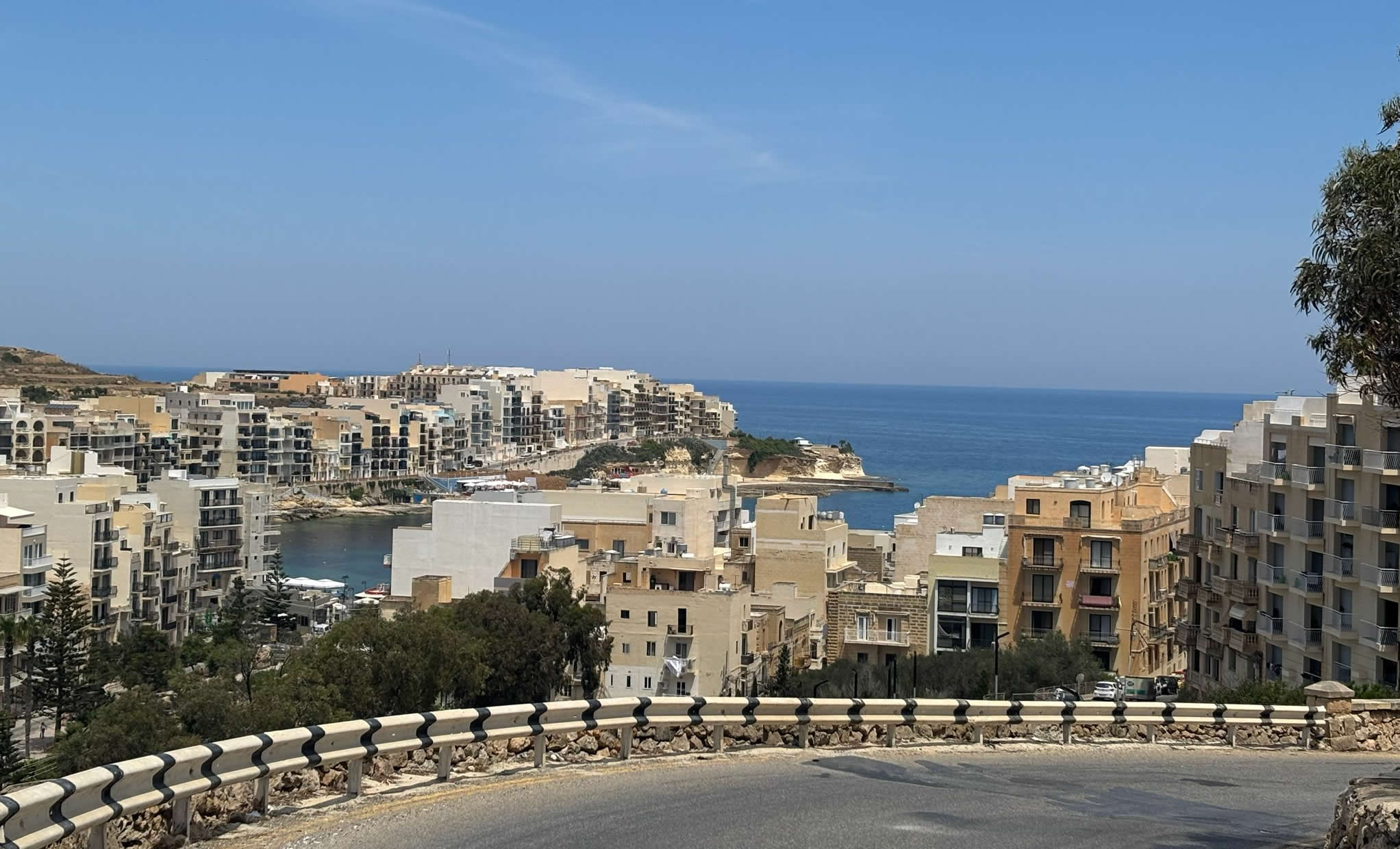
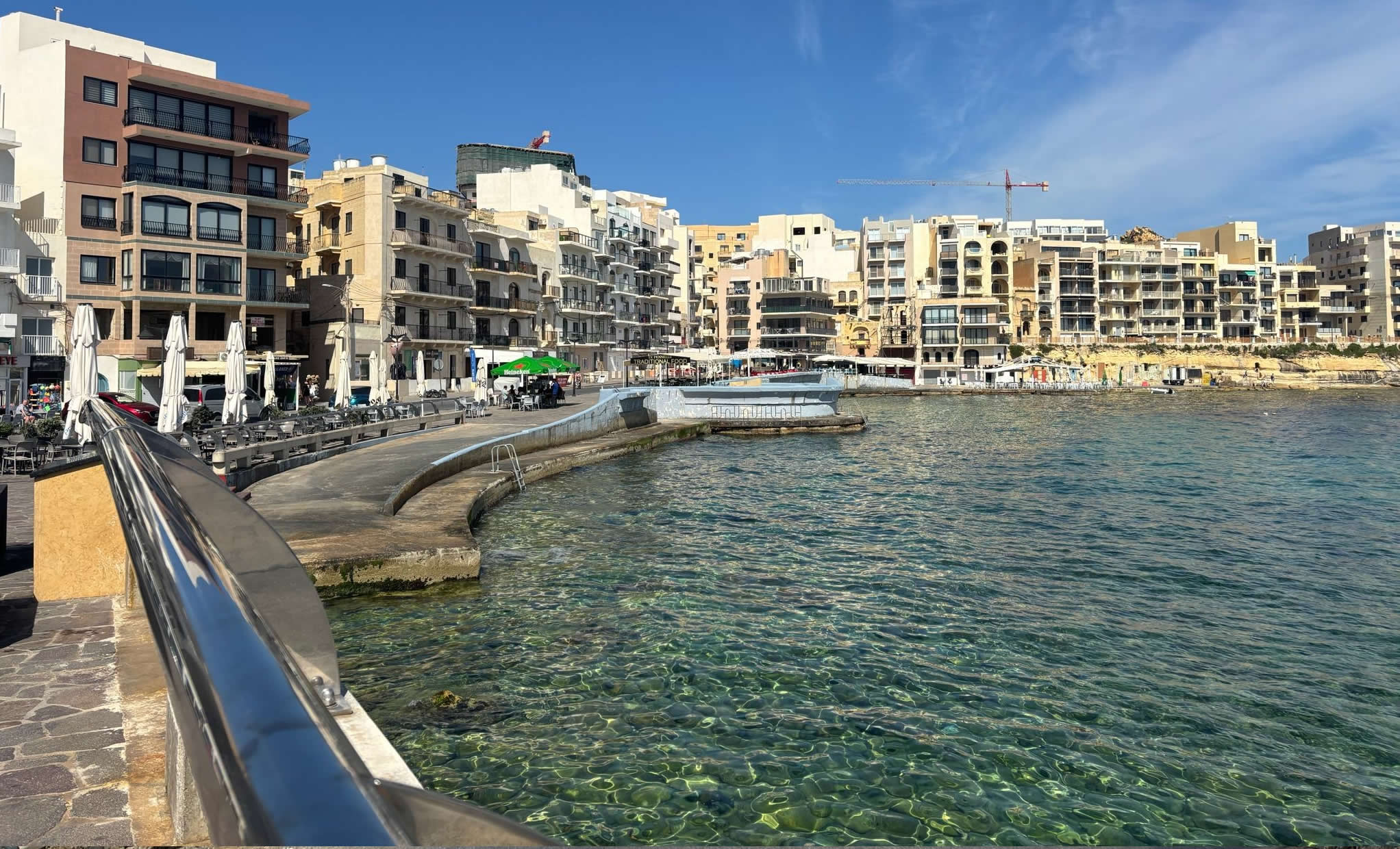
Marsalforn stands proudly as Gozo’s premier seaside resort, beautifully blending its ancient roots as a prominent Roman and medieval shipping port with vibrant, modern Mediterranean tourism. Centered around a picturesque, crescent-shaped bay, the town still breathes the soul of a working fishing village. Visitors at Il-Menqa can watch local fishermen tending to their traditional, brightly colored luzzu boats before sampling the day's fresh catch at the numerous open-air, harbor-side restaurants flanking the lively promenade. It also sits beside two iconic bays—Qbajjar and Xwejni—famous for Gozo’s rock-cut salt pans.
Island: GozoSetting: Bay + harbour resort Name recorded: 1486 Historic role: Gozo’s main port until 16th c.Tourism growth: late 1960s–70s Nearby: Qbajjar & Xwejni salt pans
Quick orientation: Marsalforn lies between the hilltop villages of Xagħra and Żebbuġ, and it forms part of the Żebbuġ local council area.
Overview
Marsalforn began as a sheltered anchorage and coastal settlement, then grew into a fishing village and finally a tourism-driven resort.
Its identity still revolves around the harbour—especially the Menqa area—where fishing boats and daily marine routines remain part of the scene.
What Marsalforn is known for
Harbour life and fishing culture alongside modern restaurants and seafront apartments.
Diving and swimming across Marsalforn Bay and the rocky coastline toward Qbajjar and Xwejni.
Xwejni salt pans, a signature Gozo landscape and living tradition.
Tas-Salvatur Statue,The spot has hosted several different monuments over time.
Qolla l-Bajda Battery, After the Great Siege of 1565, the Order of St John began fortifying Malta heavily.
St Paul’s Church, Dedicated to St Paul the Apostle, the church embodies centuries of devotion, maritime tradition, and local identity.
Il-Qolla s-Safra, (“the Yellow Hillock”) is a distinctive natural knoll on Gozo’s north coast, overlooking the built-up shoreline between Marsalforn and Qbajjar.
Full detailed history of Marsalforn
Antiquity and early harbour use
Marsalforn’s bay is described as having been used for anchorage since antiquity, benefiting from a naturally sheltered coastal shape.
Several summaries also place Marsalforn’s early story within a broader Roman-era context on Gozo.
Marsalforn as Gozo’s main port (to the 16th century)
Multiple sources state that until the 16th century Marsalforn functioned as Gozo’s most important port.
It is described as a point where food supplies from Sicily were unloaded and where passengers embarked for routes to Sicily and beyond.
Late 16th–early 17th century: strategic proposals
In the period of the Knights of St John, accounts note that officials considered shifting Gozo’s focus toward a new town overlooking Marsalforn’s port,
but these plans were not realised due to local opposition and practical concerns.
From port to fishing village
As Mġarr developed as Gozo’s principal harbour, Marsalforn’s role diminished and it is commonly described as remaining for centuries a quieter coastal settlement,
strongly linked to fishing and small-scale harbour life.
20th century: tourism and urban growth
Marsalforn’s transformation into a resort accelerated in the 20th century. Visitor-focused sources describe the town as a postcard seaside destination
since the early tourism years of the late 1960s–1970s.
Heritage-trail material adds that heavy urbanisation included apartment blocks, hotels and restaurants, with sustained building through the late 20th century.
World War II
During World War II, Marsalforn is recorded as having been bombed in 1942.
Marsalforn’s best-known landmark is the church dedicated to St Paul Shipwrecked. Visit Gozo states the foundation stone of the present church
was laid in 1730 (with earlier origins and later rebuilding/enlargement over time).
Xwejni salt pans (near Qbajjar)
Just beyond Qbajjar, the coastline becomes a chequerboard of rock-cut salt pans. Visit Gozo describes the site as about 350 years old in its current form
and frames the method as an age-old tradition with roots reaching back to Phoenician-era practices and Roman-era development.
Things to see and do in Marsalforn
Promenade walks and harbour atmosphere
A simple walk along the bay is the classic Marsalforn experience—especially near Il-Menqa—where fishing activity and the harbour setting are part of the everyday scene.
Swimming and snorkelling
Marsalforn has a small beach area and several rocky swimming points. Visitor guidance highlights different swimming zones and notes that exposed rocky points should be avoided in rough weather.
Diving
Marsalforn is widely described as one of Gozo’s main bases for diving, supported by multiple dive centres and easy access to coastal entries.
Walk to Qbajjar and Xwejni
A favourite short coastal route is the walk from Marsalforn to Qbajjar and onward to Xwejni to view the salt pans (best seen year-round, and actively harvested in summer).
Location
Timeline
Antiquity
Harbour described as used for anchorage since antiquity; Roman-era context is frequently referenced.
1486
Name recorded in a notarial deed (as reported in a historical article).
To 16th century
Described as Gozo’s most important port, linked to Sicily supply routes and embarkation.
1730
Foundation stone of the present St Paul’s Church laid (with earlier origins and later rebuilding/enlargement).
Late 1960s–1970s
Tourism era highlighted as a turning point in Marsalforn’s modern identity.
20th century (late)
Urbanisation and expansion with hotels/apartments; continuing development noted in heritage material.