Preserving the Uncarved Coastline and Multi-Generational Traditions of Gozo
Geographic Location and Technical Data
Tucked away along the rugged south-eastern coastline of Gozo, the Ras il-Ħobż Salt Pans offer a striking contrast to the more frequently visited tourist paths of the sister island. Situated within the limits of the historic village of Għajnsielem, this coastal shelf faces the open horizontal expanse of the Mediterranean Sea. The site is highly regarded by marine geologists, environmentalists, and cultural researchers alike due to its pristine state and relative isolation from heavy urban footprint.
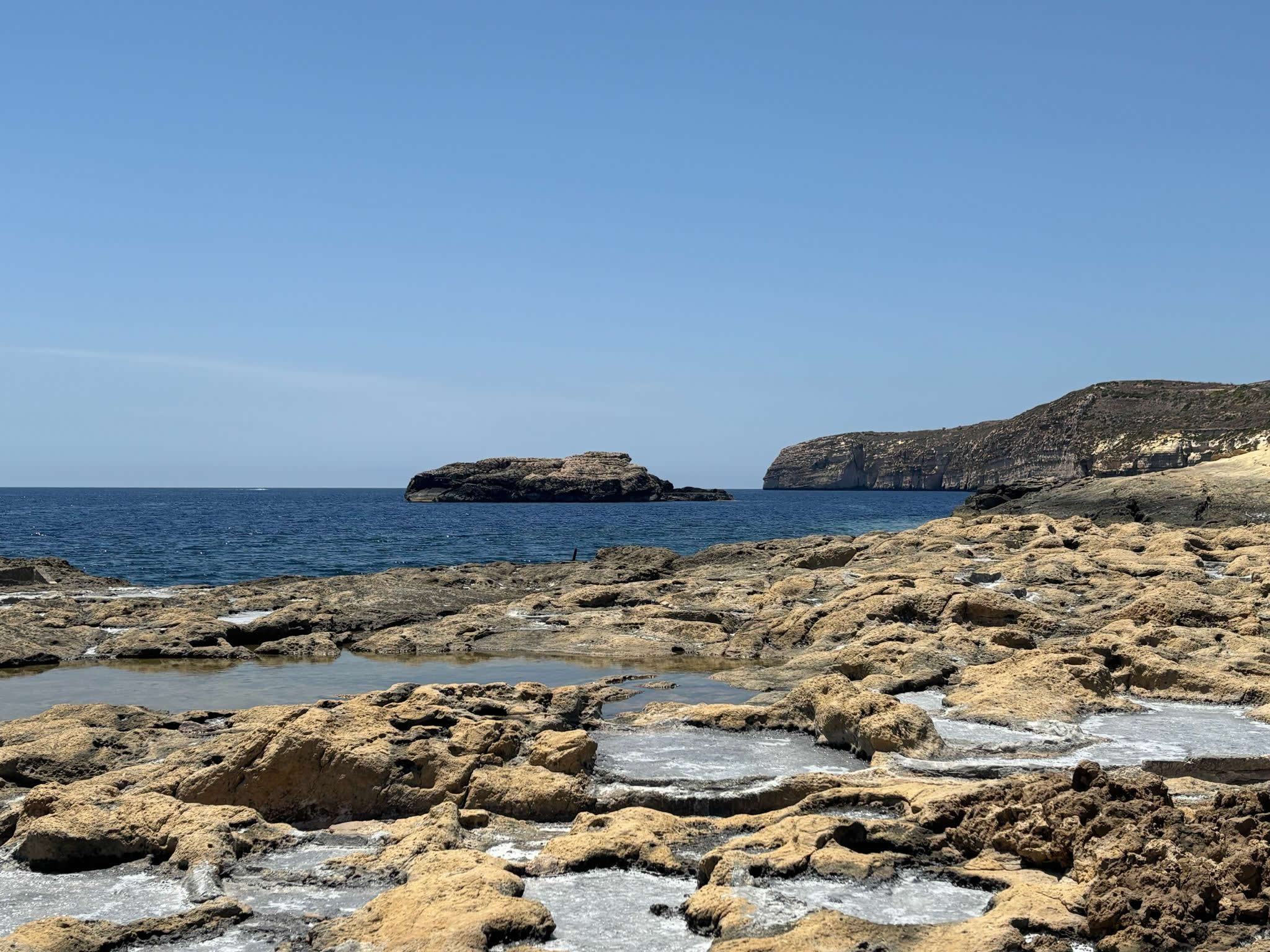
| Site Index Data Sheet | |
|---|---|
| Official Site Name | Ras il-Ħobż Salt Pans (Għajnsielem, Gozo) |
| GPS Coordinates | 36.015944, 14.279363 |
| Typology | Natural Geological Hollows (Non-Excavated / Uncut) |
| Operational Tenure | Continuous Active Family Management (100+ Years) |
| Water Feeding System | Manual Manual/Mechanical Sea Water Irrigation Filling |
| Primary Crop | 100% Raw Fleur de Sel / Traditional Coarse Sea Salt |
The Uncut Coastline: Geological and Historic Origins
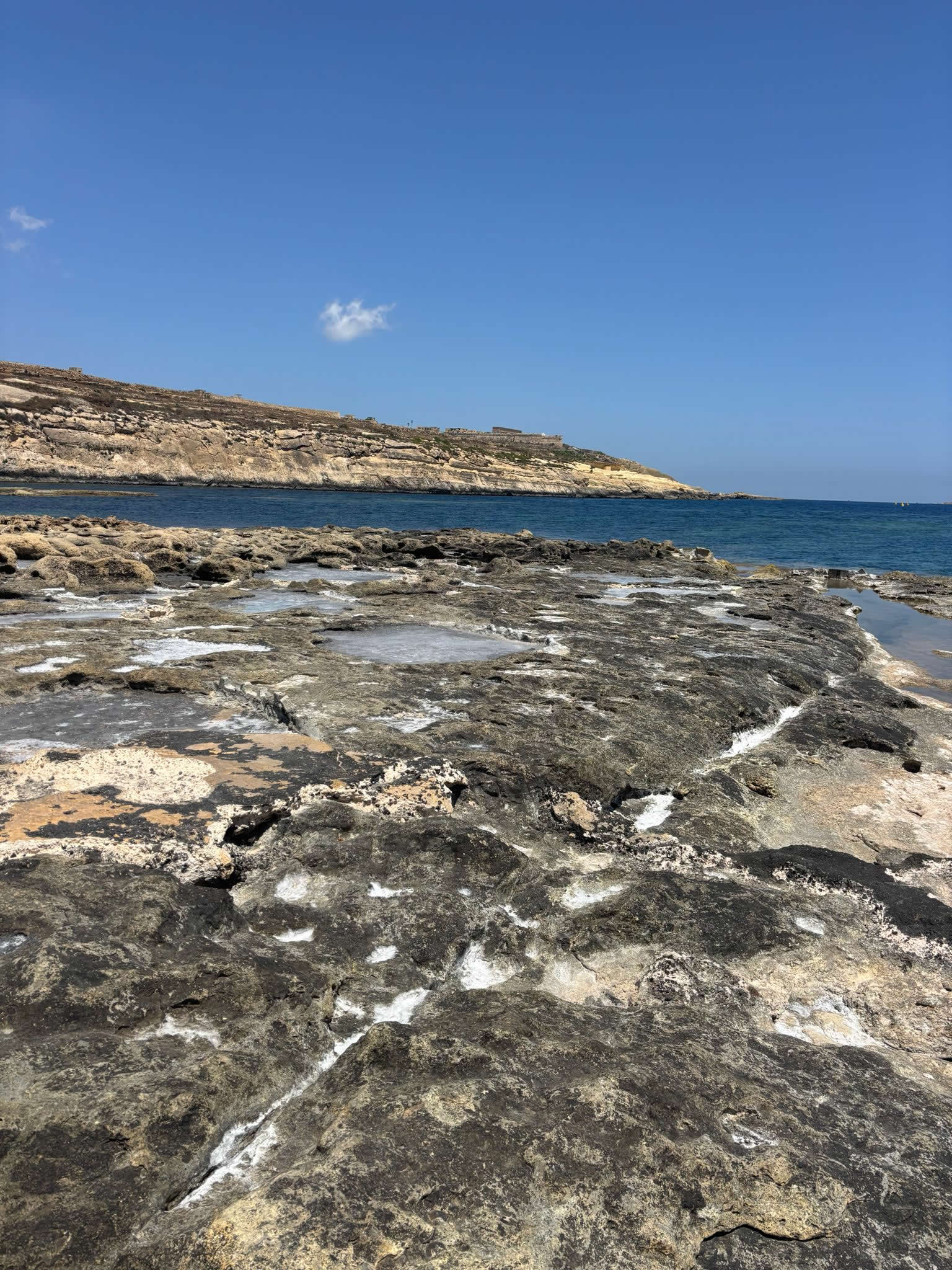
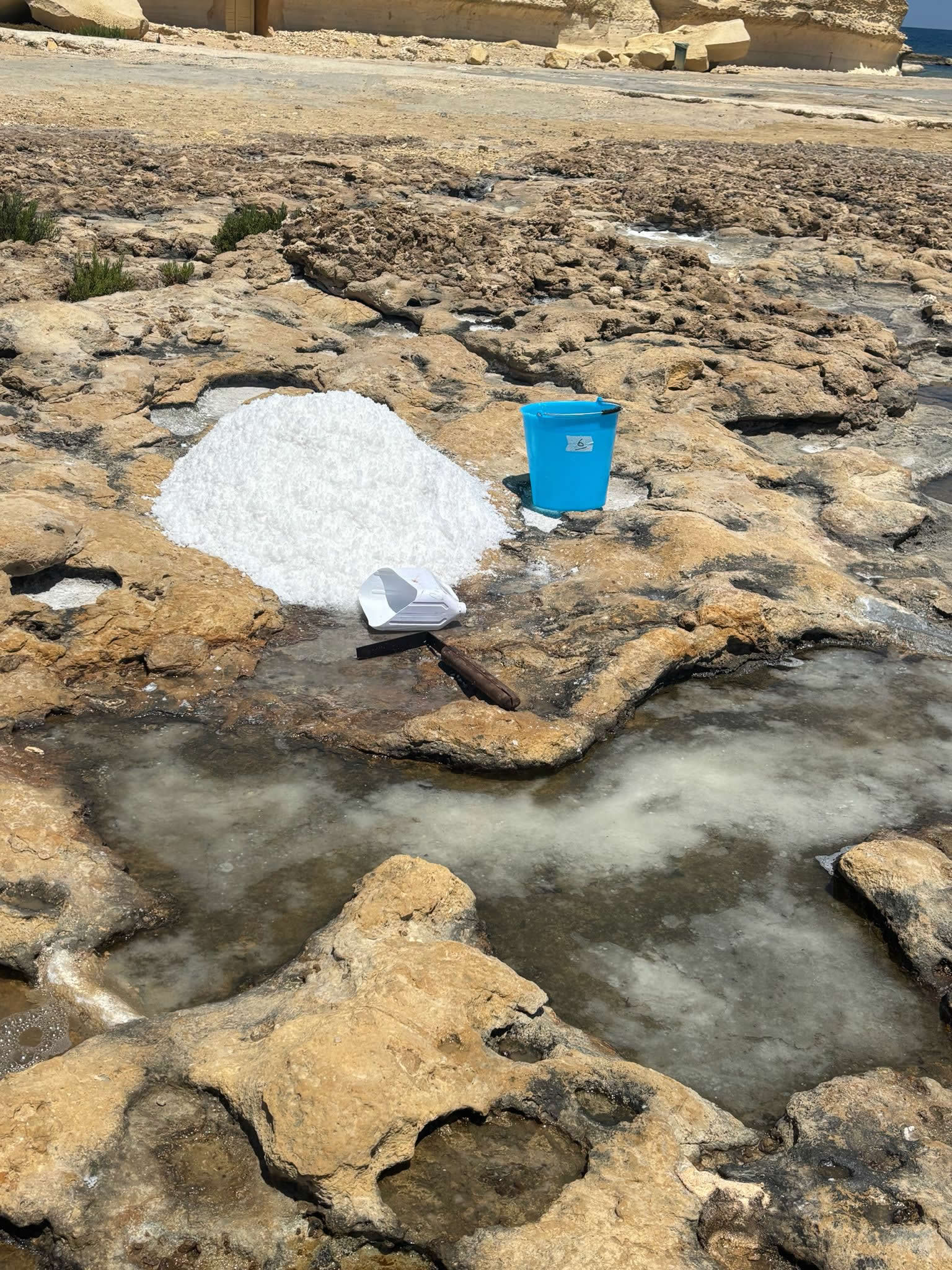
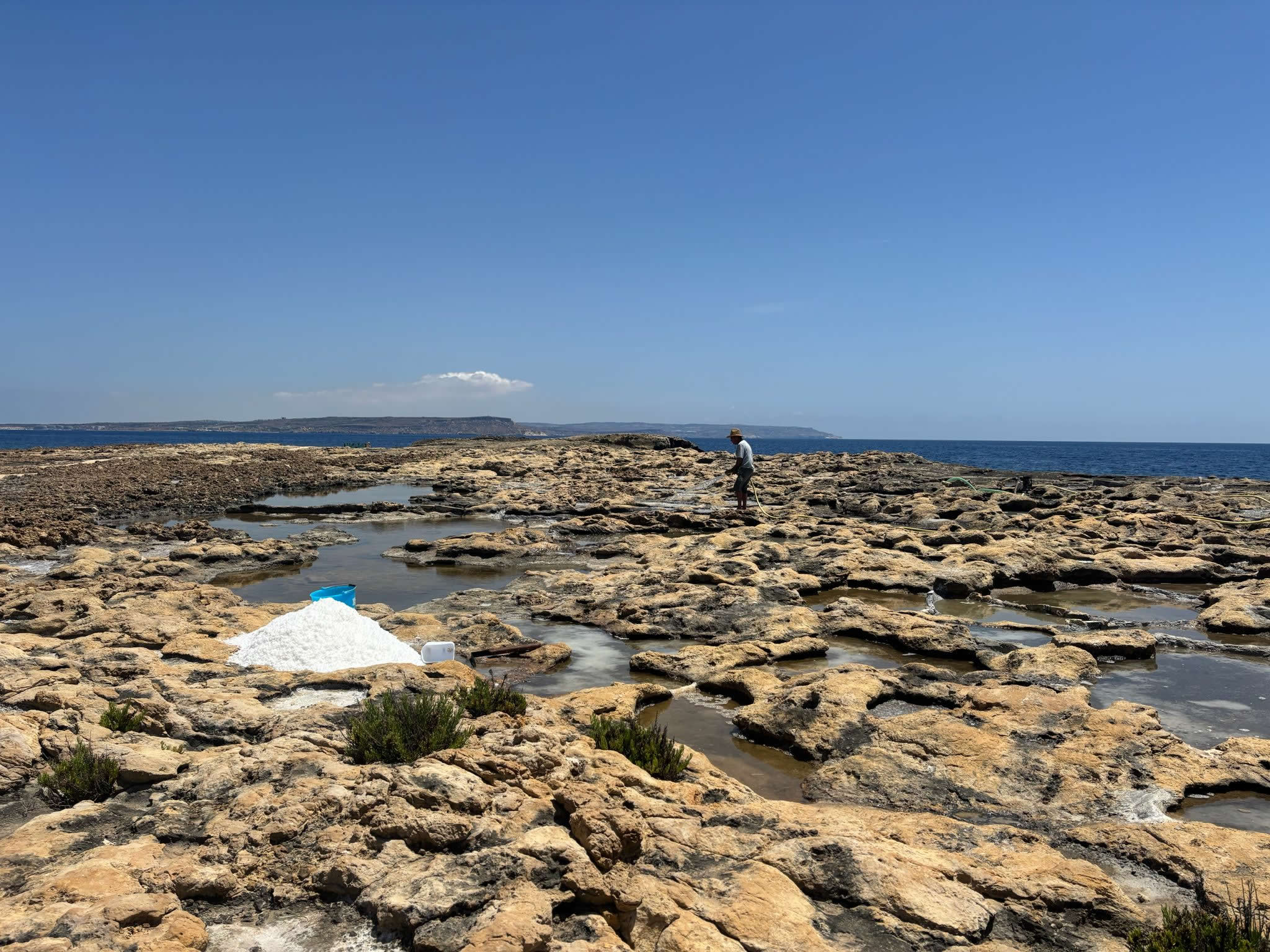
What makes the salt pans at Ras il-Ħobż exceptionally unique compared to other coastal sites across Gozo—such as the famous salt pans of Xwejni or Marsalforn—is their structural formation. While the majority of Malta's salt pans are artificial rock-cut matrices painstakingly carved directly into the golden Globigerina limestone by human hands across centuries, the pans at Ras il-Ħobż are completely natural and uncut.
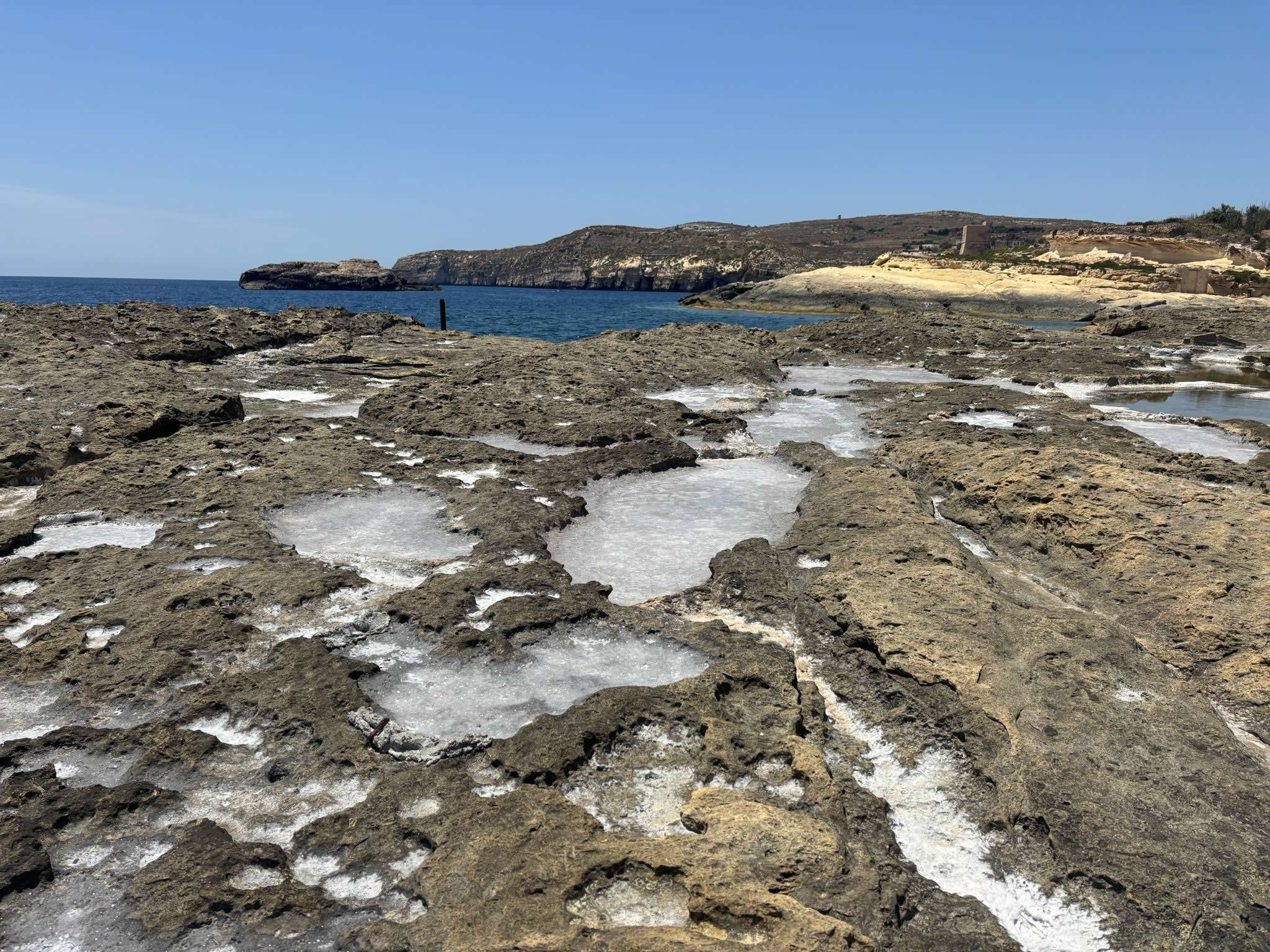
The coastal shelf here consists of highly durable Lower Coralline Limestone. Over millennia, the aggressive action of salt-laden winds, wave battering, and natural chemical dissolution formed shallow, perfectly level rock depressions. Recognizing the optimal natural geometry of these depressions, early coastal communities realized that the rock required no human cutting or tool alteration. It was already perfectly sculpted by nature to trap brine and facilitate natural solar evaporation.
The Harvesting Cycle: Human Labor and Solar Alchemy
Because these pans sit higher up on the rocky coastline to protect them from regular wave erosion, they do not automatically fill with sea water during high tides. Instead, the process relies completely on active manual intervention by the family who manages them.
Every year, as the fierce winter storms recede and the scorching heat of the Maltese summer takes over, the family begins the arduous preparation process. The pans are meticulously swept clean of wild marine debris, sediment, and winter dust. Following this, the family manually fills the natural pans with clear, unpolluted sea water pumped directly from the adjacent sea.
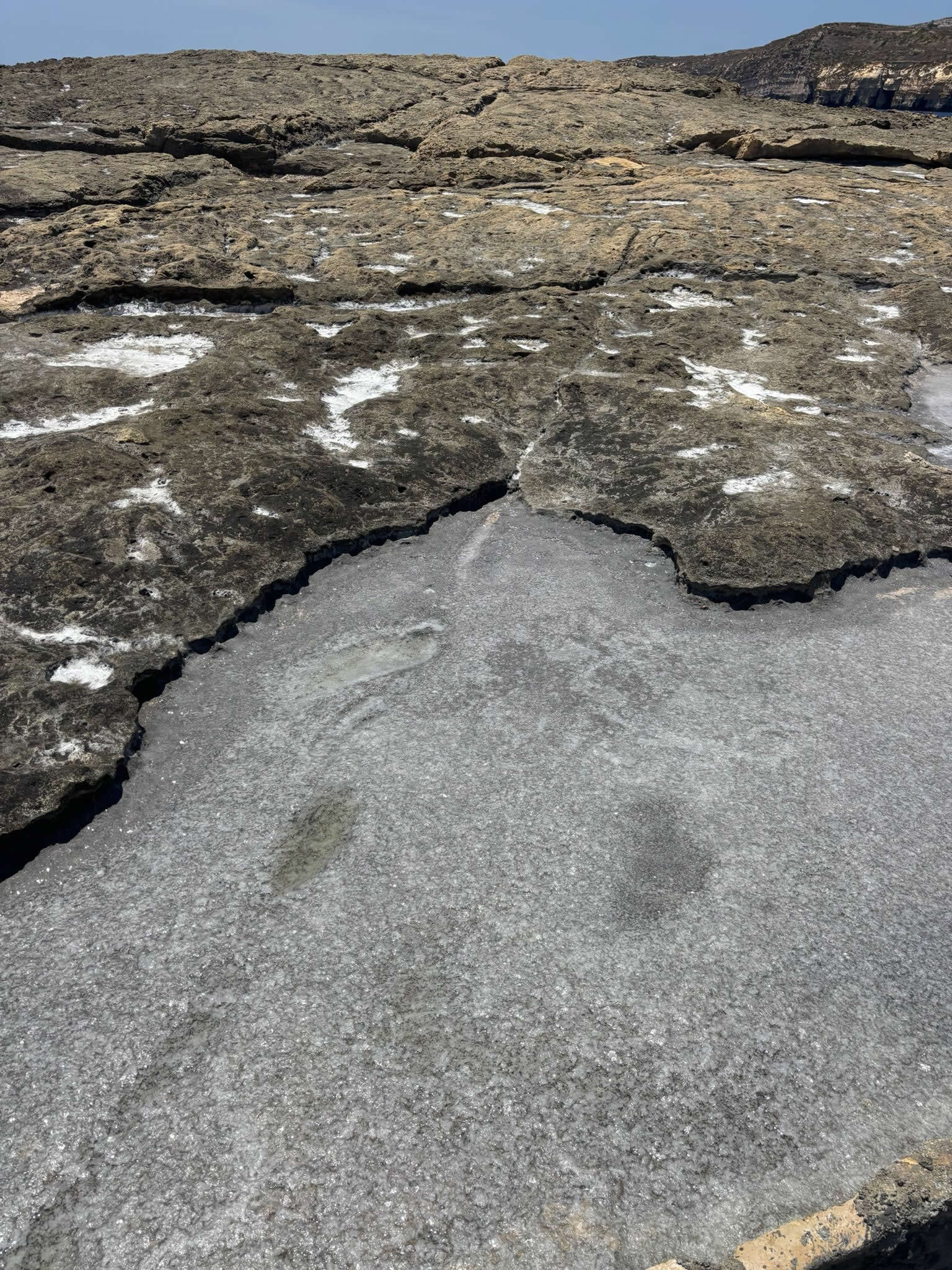
Once filled, nature takes over through a process of pure solar evaporation. Under the intense, uninterrupted Gozitan summer sun, the water levels drop day by day, increasing the brine concentration until white crystals begin to blanket the dark coralline stone. The family then gathers the salt using wooden scrapers to protect the natural rock base. It is piled into small gleaming white cones, allowed to drain, and harvested by hand—completely free of chemical processing, additives, or anti-caking agents.
Frequently Asked Questions — Ras il-Ħobż
The salt pans can be reached via coastal tracks leading down toward the Ras il-Ħobż headland in southern Għajnsielem. Because it remains an active artisanal agricultural site rather than a commercial tourist venue, visitors are urged to park responsibly on upper roads and walk down carefully to avoid damaging the natural rock structures.
No. Visitors must strictly avoid walking inside or directly across the salt pans. Because these pans are natural and actively used for food production by the family, footwear can easily contaminate the salt or damage the delicate ecosystem of the stone basins. Observing from the outer coralline edges is highly encouraged.
The active harvesting cycle takes place strictly during the dry summer months, usually starting in late May and running through August. During this period, you can see the family actively filling the pans, managing water levels, and harvesting the white salt cones.
The artisan sea salt harvested from Ras il-Ħobż is packed and distributed locally across Gozo and Malta. Buying directly on-site depends entirely on whether the family members are working the pans during your visit, but their natural harvest is widely available in traditional Gozitan artisan market stalls.