Explore This Page
- 1. Introduction & Spatial Context
- 2. Legacy of Wied il-Knejjes
- 3. The 1656 Decommission & Structural Merger
- 4. World War II Survival & The Maria Bambina Refuge
- 5. Architectural Features & Shared Bell-Cot
- 6. Lost Artworks & Epigraphic Commemorations
- 7. Contemporary Use & Feast Repository
- 8. Connectivity to Maltese Chapel History
- 9. Frequently Asked Questions
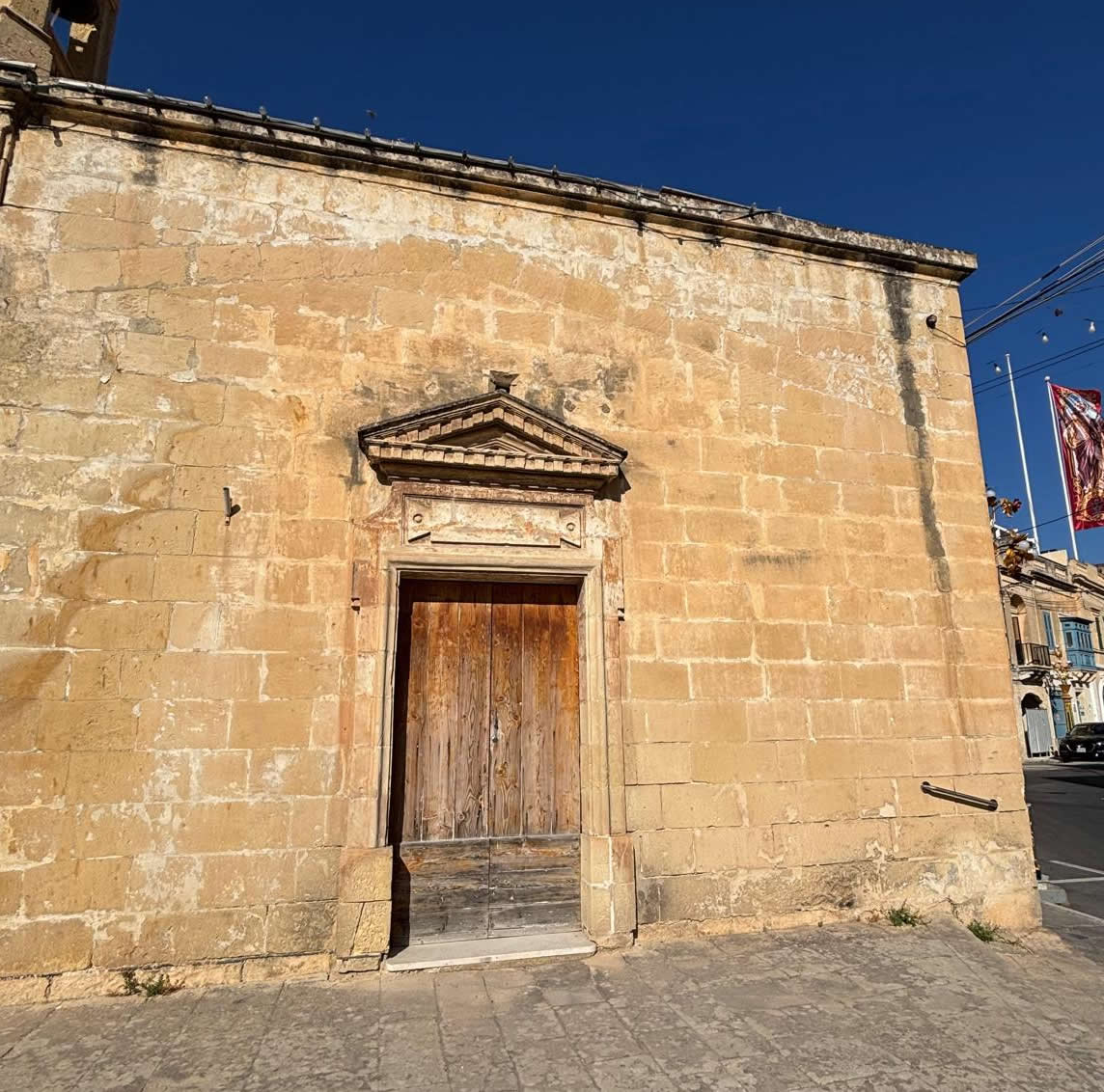
1. Introduction & Spatial Context
The old urban fabric of the town of Luqa preserves remarkable reminders of ancient religious engineering. Among these historical treasures, few layouts are as fascinating as the physically conjoined "twin chapel" complex standing on Triq il-Karmnu at the precise geographic coordinates of 35.860619, 14.487771. While many architectural guides treat wayside shrines as isolated, standalone monuments, this unique urban site presents two separate historical dedications joined side-by-side along a shared limestone wall.
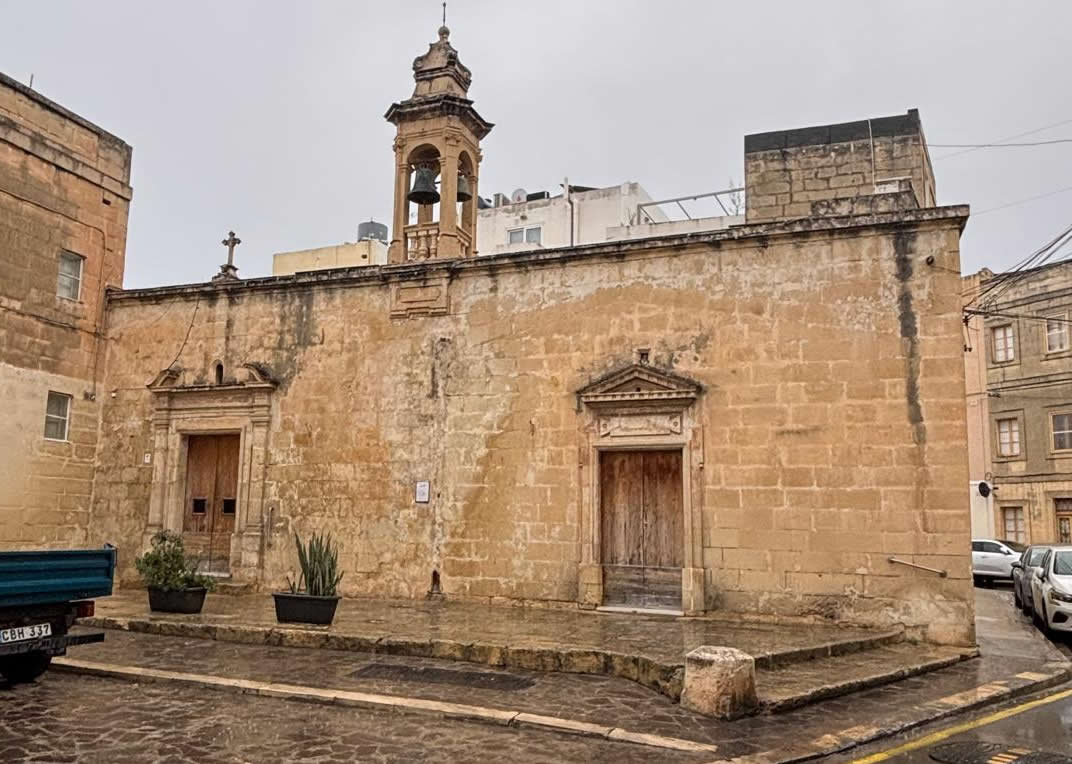
This specific page documents the independent history, wartime heroism, and long-term administrative trajectory of the Chapel of the Nativity of the Blessed Virgin Mary (known locally as *it-Twelid tal-Verġni*). This historic temple is physically anchored to the famous Chapel of Saint Mary (Tal-Ftajjar). Together, these two buildings form an exceptional structural partnership that has survived sweeping civic changes, severe military conflicts, and centuries of architectural evolution.
2. Legacy of Wied il-Knejjes
To understand the origins of this dual sanctuary layout, one must explore the early topography of Luqa. In the centuries preceding the modern expansion of housing estates and airport facilities, this exact quarter of the town was known by the descriptive title of 'Wied il-Knejjes' (The Valley of the Churches). Local folklore and early ecclesiastical records confirm that this sector housed the earliest cluster of domestic dwellings in the locality, forming the original cradle of the parish.
Because the local population was heavily concentrated along this natural slope, multiple tiny chapels were erected within meters of one another to satisfy family vows, provide burial spaces, and host localized feast days. Rather than building a single large church, early families preferred compact, parallel sanctuaries. This choice eventually resulted in the conjoined structures we see standing together on Triq il-Karmnu today.
3. The 1656 Decommission & Structural Merger
As the century progressed, managing numerous micro-chapels across the rural Maltese diocese became difficult for parish priests. Many independent shrines suffered from a lack of secure doors, reliable funding, and stable roofs. In 1656, a major administrative overhaul occurred under the authority of the Bishop of Malta, Miguel Juan Balaguer Camarasa.
Noticing that several standalone chapels in the *Wied il-Knejjes* area were falling into neglect, Bishop Balaguer issued a formal decree of profanation (*iprofanati*), systematically decommissioning them from active liturgical use. This sweep included the historic Chapel of Saint Nicholas and the early structural iteration of the Nativity of the Madonna chapel.
However, rather than abandoning the memory of these sites, the Bishop ordered a consolidation. The altars, spiritual obligations, and historical records of these closed shrines were formally integrated into the conjoined Santa Marija tal-Ftajjar footprint. This critical merger linked the structural fates of the two buildings together, paving the way for the conjoined architectural layout preserved on Triq il-Karmnu today.
4. World War II Survival & The Maria Bambina Refuge
The most dramatic chapter in the history of the Nativity of the Blessed Virgin Mary chapel occurred during the height of World War II. Because Luqa hosted a primary military airfield utilized by the British Royal Air Force, the town was targeted relentlessly by Axis bombers between 1940 and 1943.
A catastrophic air raid completely leveled the grand, central Parish Church of St. Andrew, turning the town's primary sanctuary into ruins. Remarkably, amidst the surrounding destruction that leveled rows of historic houses across the old core, the conjoined twin chapels of Triq il-Karmnu stood firm, surviving the conflict structurally intact.
With the main parish church destroyed, this conjoined complex stepped forward to fulfill an essential role. From 1944 until 1957, the Nativity chapel served as a primary temporary seat for the displaced parish chapter. Most importantly, it offered joyful shelter to Luqa’s most prized artistic and religious treasure: the miraculous titular statue of Maria Bambina (the infant Mother of God). For over a decade, this small space served as the emotional and spiritual heart of the community while the town slowly rebuilt its grand parish church.
| Historical Era / Date | The Nativity Chapel Structural Milestones | Interconnected Parochial Impact |
|---|---|---|
| Early 1600s | Initial Construction Phase | Erected parallel to the older medieval foundations of the neighboring Santa Marija shrine. |
| 1656 | Balaguer Profanation Decree | Administrative merger consolidates local altars, physically linking the two conjoined structures. |
| 1667 | Artistic Renewal Mandate | Church authorities commission fresh canvas art to replace deteriorating wall frescoes across the complex. |
| 1942 | Wartime Air Raid Survival | Escapes the destruction that leveled the nearby central Parish Church of St. Andrew. |
| 1944–1957 | Sanctuary for the Maria Bambina | Serves as the temporary parish seat, hosting the town's highly venerated titular statue for 13 years. |
| Late 20th Century | Feast Warehouse Transition | The internal space is optimized to protect the town's valuable annual festival street decorations. |
5. Architectural Features & Shared Bell-Cot
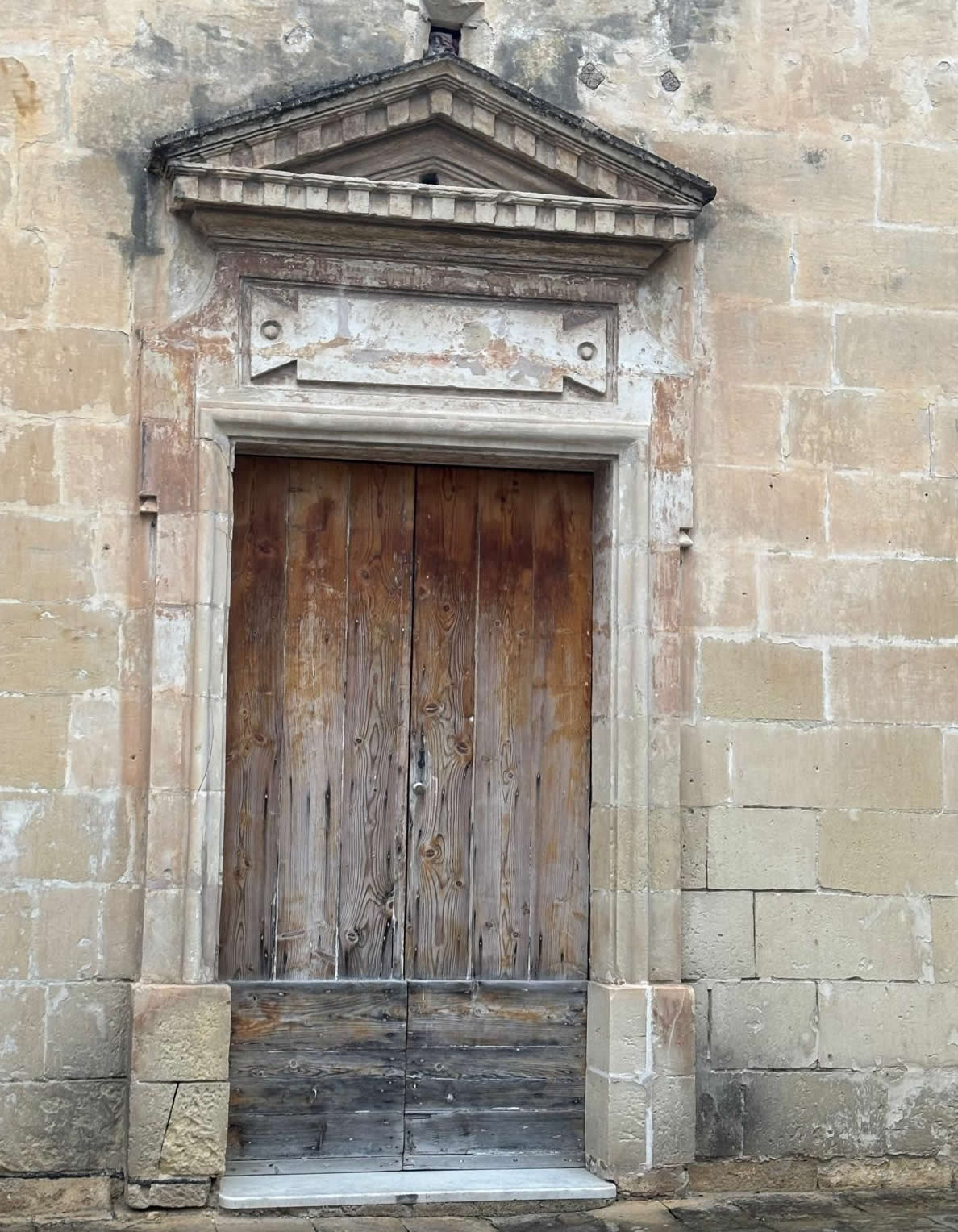
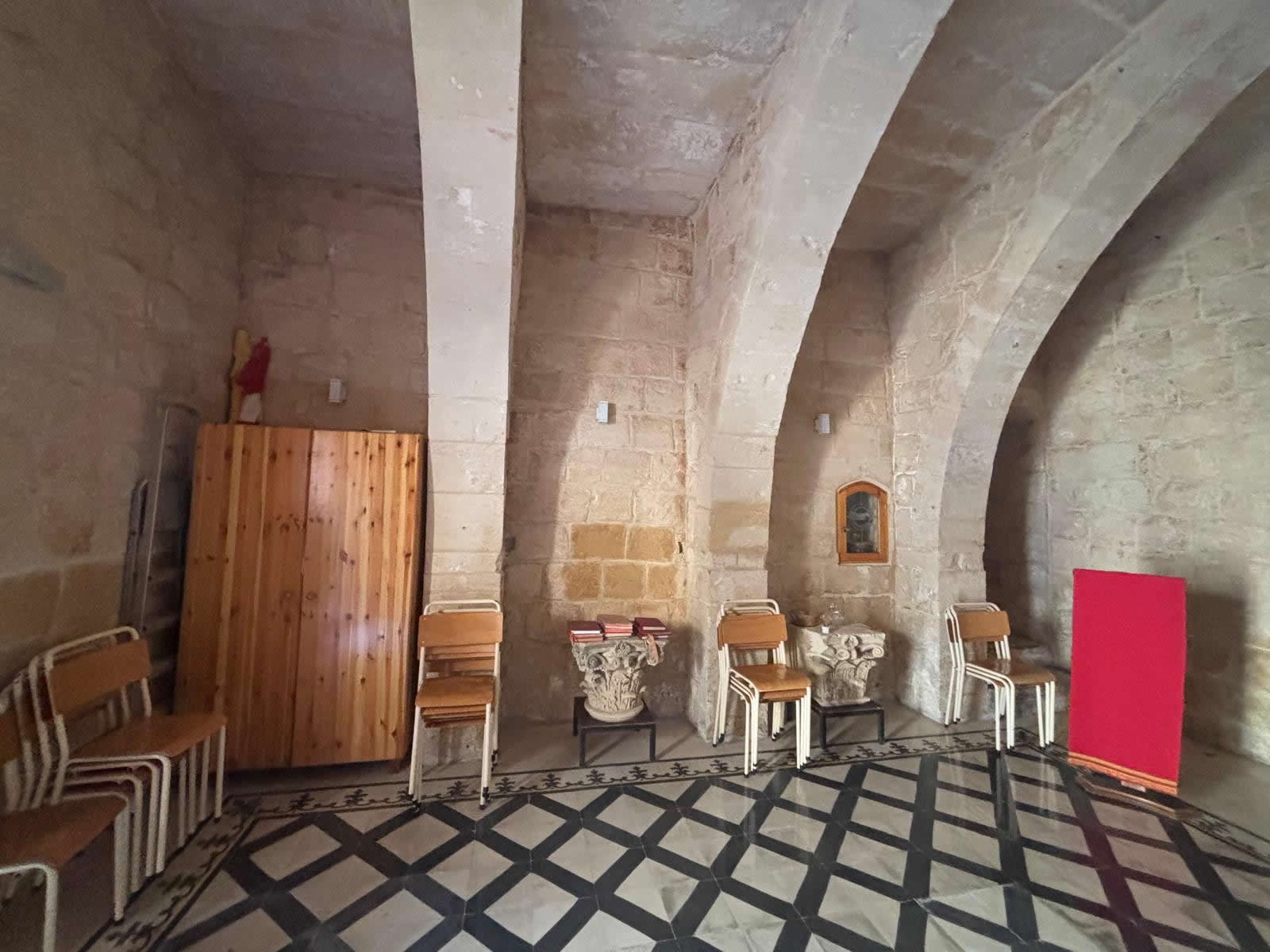
Architecturally, the Chapel of the Nativity of the Blessed Virgin Mary offers a classic study in early modern Maltese vernacular construction. The front facade is beautifully coordinated with its conjoined partner. Both facades show a restrained, flat design built using high-quality globigerina limestone (*franka*) blocks that have aged to a warm golden tone.
The most striking exterior feature is the beautiful stone bell-cot (kampnar) rising directly from the shared wall line between the two chapels. This central bell-cot, which still holds an original bronze bell, acts as a visual bridge linking the twin roofs together.
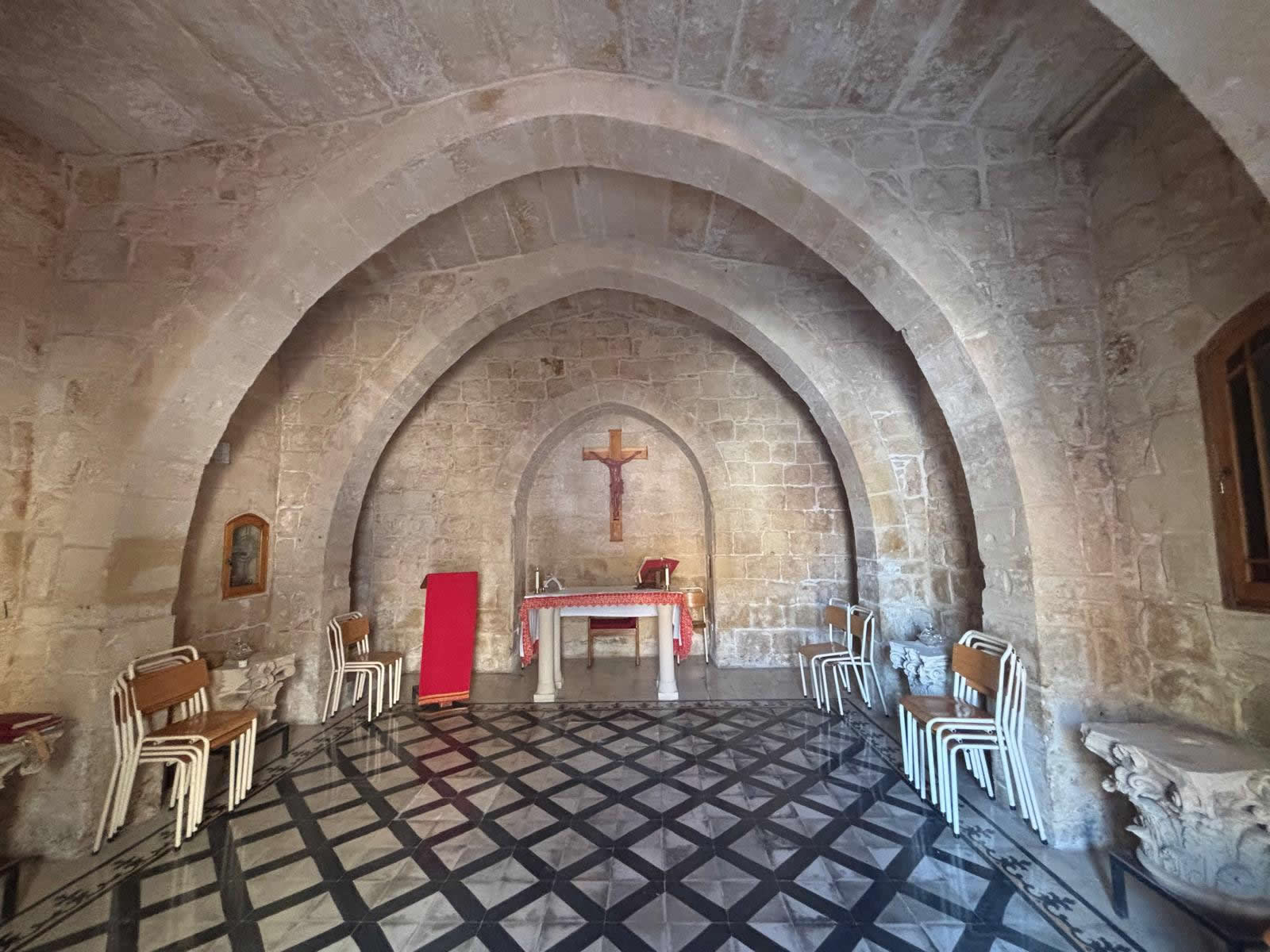
The main doorway of the Nativity chapel features a simple rectangular design. Just above the lintel sits a small circular window, or oculus, built to cast a focused beam of daylight onto the internal altar space. Inside, the building features a clean rectangular nave covered by traditional flat stone roof slabs (*xorok*) resting securely on sturdy stone arches.

6. Lost Artworks & Epigraphic Commemorations
Like its conjoined partner, the interior of the Nativity chapel was historically decorated with rich wall paintings and early modern altarpieces. Archival records mention that prior to the late 17th-century updates, the interior walls featured fragments of old frescoes designed to instruct the local illiterate farming population in theological history.
Following the structural reorganizations ordered by the church diocese in 1667, many of these fading wall decorations were covered with protective lime washes to make room for framed canvas works. While the adjacent *Tal-Ftajjar* chapel holds a famous titular piece by late-Baroque master Giuseppe D'Arena, the Nativity structure focuses on commemorating its historic milestones through its spatial layout and unique connection to the town's wartime survival.
7. Contemporary Use & Feast Repository
In the modern era, the functional use of the Nativity of the Blessed Virgin Mary chapel has evolved to support Luqa's vibrant cultural life. While the adjacent Santa Marija tal-Ftajjar chapel remains dedicated to regular devotional openings and historic preservation masses, the interior of the Nativity chapel has been repurposed for community heritage storage.
Today, the structural space serves as a secure warehouse repository for storing the town's elaborate annual feast decorations (*armar*). This role is highly appropriate: a building that once provided a vital wartime sanctuary for the town's processional statue now works to preserve the precious street decorations, carved pavilions, and lights used to celebrate that same heritage every summer.

Latin Transcription
HIC CINERA MARIAE VIDUAE AZZOPARDI FILIA MARIA ANNA MEMOR SERVAT
English Translation
"Here, a mindful daughter, Maria Anna, preserves the ashes of Maria, widow Azzopardi."
8. Connectivity to Maltese Chapel History
The twin chapel complex of Triq il-Karmnu remains a premier destination for architectural historians studying early modern Malta. To see how this unique conjoined layout fits into the wider tapestry of old religious buildings across the archipelago, you can browse our master guide on the oldest chapels in Malta and Gozo.
By exploring these interconnected links, readers can appreciate how the Chapel of the Nativity of the Blessed Virgin Mary stands as a monumental symbol of endurance—surviving wartime air raids, adapting to modern community needs, and standing proudly alongside its historic companion.
Latin Transcription
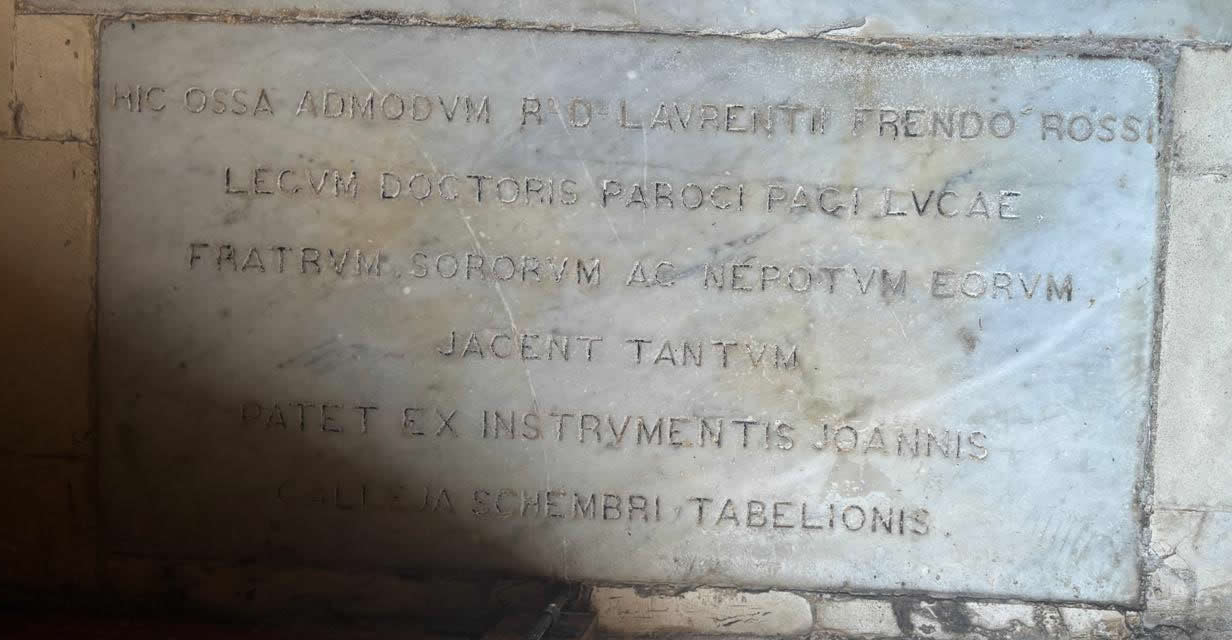
HIC OSSA ADMODVM R.D. LAVRENTII FRENDO ROSSI LEGVM DOCTORIS PAROCHI PAGI LVCAE FRATRVM SORORVM AC NEPOTVM EORVM JACENT TANTVM PATET EX INSTRVMENTIS JOANNIS CALLEJA SCHEMBRI TABELIONIS
English Translation
"Here lie only the bones of the Very Reverend Father Lawrence Frendo Rossi, Doctor of Laws, Parish Priest of the village of Luqa, [and] of their brothers, sisters, and nephews.
[This] is evident from the public deeds of John Calleja Schembri, Notary."
9. Frequently Asked Questions (FAQ)
Research & Documentation
- Researcher: Paul Berman
- Last Updated: 2026
This page forms part of eMalta's ongoing documentation of the historical, cultural and religious heritage of Malta and Gozo.
Information has been compiled through site visits, field research, historical publications, archival records, maps, plans and other reference sources.
All locations that currently exist featured on eMalta have been personally visited and documented. Where historic sites no longer exist, information has been researched from archival sources and contemporary records.
Images used on eMalta include original photography as well as historical illustrations, maps and photographs reproduced with permission from archives, institutions and copyright holders where applicable. Individual image credits and archive reference numbers are provided where available.