📍 Location
Location Map Coordinates 35.824059, 14.479709
An Exhaustive Survey of Żurrieq's Ancient Medieval Shrine and Ecclesiastical Cemetery Landscape
WGS84 Reference Grid: 35.824059 Latitude, 14.479709 Longitude.
1. Introduction, Chronological Foundations, and Radical Age Distinction
The ancient southern town of Żurrieq is celebrated as one of the oldest structural and cultural population hubs in the Maltese islands. Its landscape features wind-swept coastal cliffs, traditional Maltese houses, and a rich collection of archaeological relics stretching from the Phoenician, Punic, and Roman eras. Within this deeply historic area lies the serene compound of Iċ-Ċimiterju ta' San Leone (San Leone Cemetery), known for housing the ancient Chapel of St Leo (Il-Kappella ta' San Leun). To contextualize this site within the broader national grid of historic properties, visitors may cross-examine our comprehensive directory of Verified Maltese Burial Grounds and Municipal Yards.

A crucial detail defines this sacred space: the Chapel of St Leo is significantly older than the cemetery that surrounds it. The chapel does not owe its existence to the cemetery; rather, the cemetery was deliberately built around this pre-existing medieval sanctuary. Documented accounts show that the original chapel was built deep in the medieval period—standing strong by the mid-15th century (the 1400s), an era when the site sat in open countryside between small farming hamlets. Centuries later, when local population growth and sanitary laws required outdoor burial grounds, the church authorities made a conscious choice. Instead of breaking ground on an empty plot, they acquired the fields around this highly respected wayside shrine. By incorporating the old chapel into the new design, they preserved the medieval building and seamlessly transformed it into the architectural and spiritual centerpiece of the parish cemetery.

To see how this rare dynamic compares to other multi-layered medieval structures, wayside shrines, and early Christian historical settings across the islands, you can view our Definitive Matrix of Historic Maltese Chapels and Sanctuaries.
2. Topography, Boundary Enclosures, and Cemetery Layout
The San Leone Cemetery is built from durable, weathered local globigerina limestone blocks. Tall, thick stone boundary walls fully enclose the burial plots, separating the resting places from the neighboring farm plots, rural lanes, and modern roads.

The main entrance features a stylized wrought-iron gate set between heavy stone pillars carved with traditional funerary motifs. Inside, the cemetery grounds follow a clean, traditional layout divided by stone paths. Family vaults and common graves are marked by carved marble slabs, fine bas-relief carvings, and integrated candle boxes. Tall, slender Mediterranean cypresses grow along the walks, framing the view and drawing the eye naturally toward the old stone chapel at the center of the grounds.

3. The Chapel of St Leo: Architectural Profile & Medieval Vernacular Elements
The Chapel of St Leo stands as a beautiful example of late medieval Maltese church design, offering a clear window into the islands' early structural history. Its layout reflects a period before the grand baroque style introduced by the Knights of St. John swept across Malta.
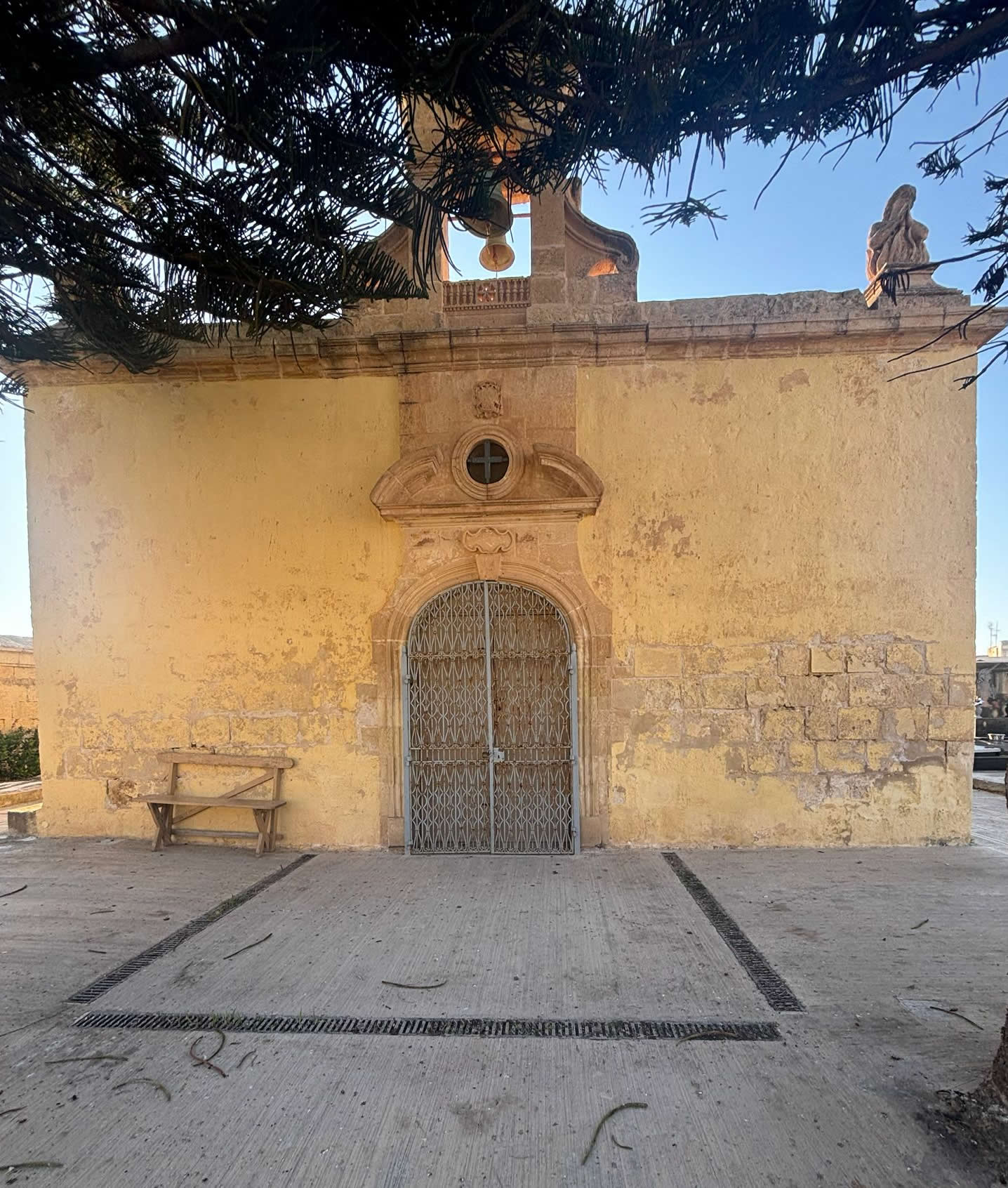
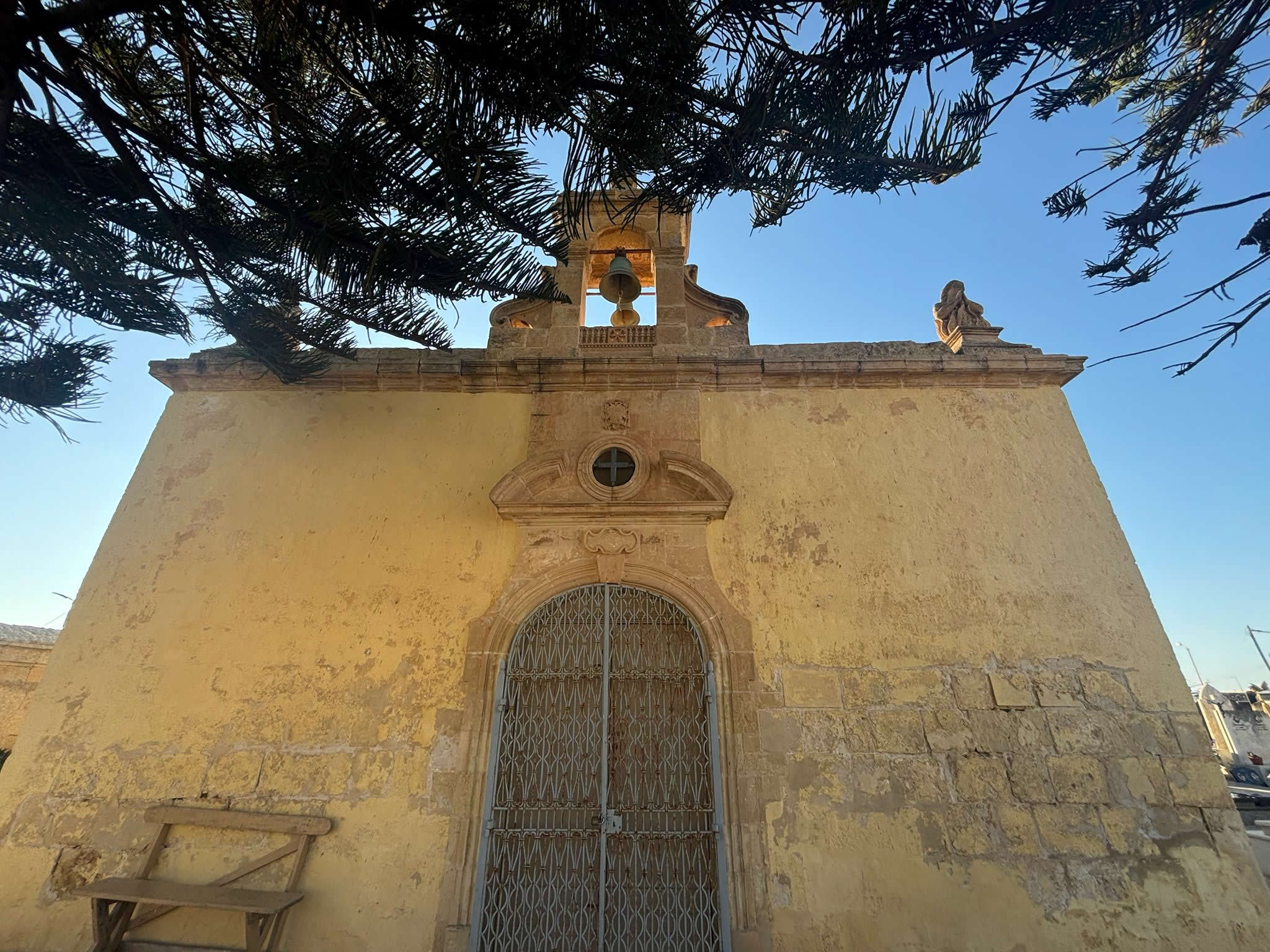
The exterior facade features a simple, unadorned surface typical of early rural chapels. Its main entrance is a modest rectangular doorway topped by a heavy, flat stone lintel. Resting directly above the roofline is a traditional stone bell-cot (kampnar) with a single arch that holds a small bronze bell, which tolls to signal the start of committal services. Inside, the single nave is divided by heavy, pointed stone arches (diaphragm arches) that support flat stone slabs (xorok) to form the roof. This clever design distributes the weight down to the thick outer walls without requiring external buttresses, keeping the interior dry and structurally sound for over five hundred years.

Historical Plaque Documentation
Historical Context & Administrative Timeline From The Text:
- 1436: The earliest recorded archival mention of this beneficial chapel, cementing its genuine late-medieval origins.
- c. 1666: The chapel was completely rebuilt anew by its legal beneficiary, Dun Salvatore Fenech (holder of a doctorate in Canon and Civil law, indicated by J.U.D.), dedicated to Pope Saint Leo II.
- 1952: Under Archpriest Mons. Salvatore Gauci, the highly ancient surrounding grounds were officially altered and restructured into the formal parish cemetery to address public health requirements for the town.
- 1990: The modern church-run cemetery layout underwent a major physical extension under Archpriest Canon Michael Agius, adding 500 family crypts/plots to the inventory.
4. Sacred Interior Contents, Altars, and Art
Inside, the chapel features a clean, simple layout that highlights its ancient stone masonry. At the back of the chancel sits a beautiful stone altar finished with local marble accents. The altar is typically dressed in traditional white linens and holds tall brass candlesticks used during Catholic committal services.
The chapel plays a central role in the village's religious customs on November 2nd—All Souls' Day (Jum il-Mejtin). On this day, the Żurrieq parish clergy gathers at the cemetery to celebrate special memorial masses inside the chapel and lead prayer processions to bless family graves with holy water, drawing local residents to honor their ancestors.

5. Church Governance and Ecclesiastical Administration
A vital administrative feature of the San Leone Cemetery is its status as a fully church-run property. Unlike public municipal cemeteries run by civil government offices or public health boards, this property is owned and run directly by the Archdiocese of Malta via the local Żurrieq Parish Office (dedicated to St. Catherine of Alexandria).
This church-led setup means that all operations inside the cemetery walls are governed by Canon Law and national health standards. The parish administration manages the official grave registries, handles vault allocations, and oversees the legal assignment of family plots. Revenue from donations and plot fees is reinvested into the physical preservation of the complex, funding masonry work on the soft globigerina limestone facade, stone cleaning, and roof waterproofing to ensure this historic site is fully protected for future generations.

6. Restoration Milestones and Structural Preservation
Over its long history, the Chapel of St Leo has required careful restoration to protect it from weather and the natural wear of time. The soft globigerina limestone common to early Maltese buildings is highly vulnerable to rising dampness, salt crystallization, and wind erosion, which can damage old masonry if left unchecked.
To protect the building, major restoration projects have been carried out by heritage specialists in cooperation with church authorities. These projects focused on carefully replacing damaged stones with matching local limestone, cleaning centuries of dust from the interior arches, and applying breathable lime-based mortars to block moisture. The roof was also treated with traditional waterproofing methods (deffun) to prevent water leaks, successfully preserving the chapel's authentic medieval character while keeping it fully functional for modern parish needs.

7. Technical and Administrative Dataset Profile
The reference chart below tracks the verified administrative, geographical, and operational parameters of the Żurrieq facility:
| Administrative Survey Parameter | Field Inventory Reference Data |
|---|---|
| Official Nomenclature | Iċ-Ċimiterju ta' San Leone (San Leone Cemetery) |
| Enclosed Chapel Title | Chapel of St Leo (Kappella ta' San Leun) |
| WGS84 Reference Grid | 35.824059 Latitude, 14.479709 Longitude |
| Ownership Classification | Church-Run / Administered by Żurrieq Parish Office |
| Age Dynamic | Chapel is Medieval (c. 15th Century); Cemetery is Considerably Later |
| Primary Construction Material | Maltese Globigerina Limestone Block Masonry |
| Architectural Style | Maltese Vernacular Medieval Nave with Diaphragm Arches |
| Key Liturgical Observance | All Souls' Day Gravetime Memorial Services (November 2nd) |
8. Frequently Asked Questions (FAQ)
❓ Who should I contact for grave administration or deeds at San Leone Cemetery?
Because the cemetery is completely church-run, all inquiries regarding plot maintenance, grave deeds, and burial records must be directed to the St. Catherine Parish Office in Żurrieq rather than civil government entities.
❓ Is the Chapel of St Leo open for daily public mass?
No, the chapel does not host standard daily parish masses. It functions as an operational funerary building for final committal blessings and opens for public services on All Souls' Day.
❓ Is the chapel older than the cemetery itself?
Yes, the Chapel of St Leo dates back to at least the 15th century, making it centuries older than the cemetery. The parish later developed the burial grounds around this existing medieval sanctuary.
❓ What traditional architecture can be seen inside the chapel?
The interior features classic medieval Maltese architecture, including heavy pointed diaphragm arches that support flat stone ceiling slabs (xorok) across a single nave.