📍 Location
Location Map Coordinates 36.073350, 14.257721
Introduction
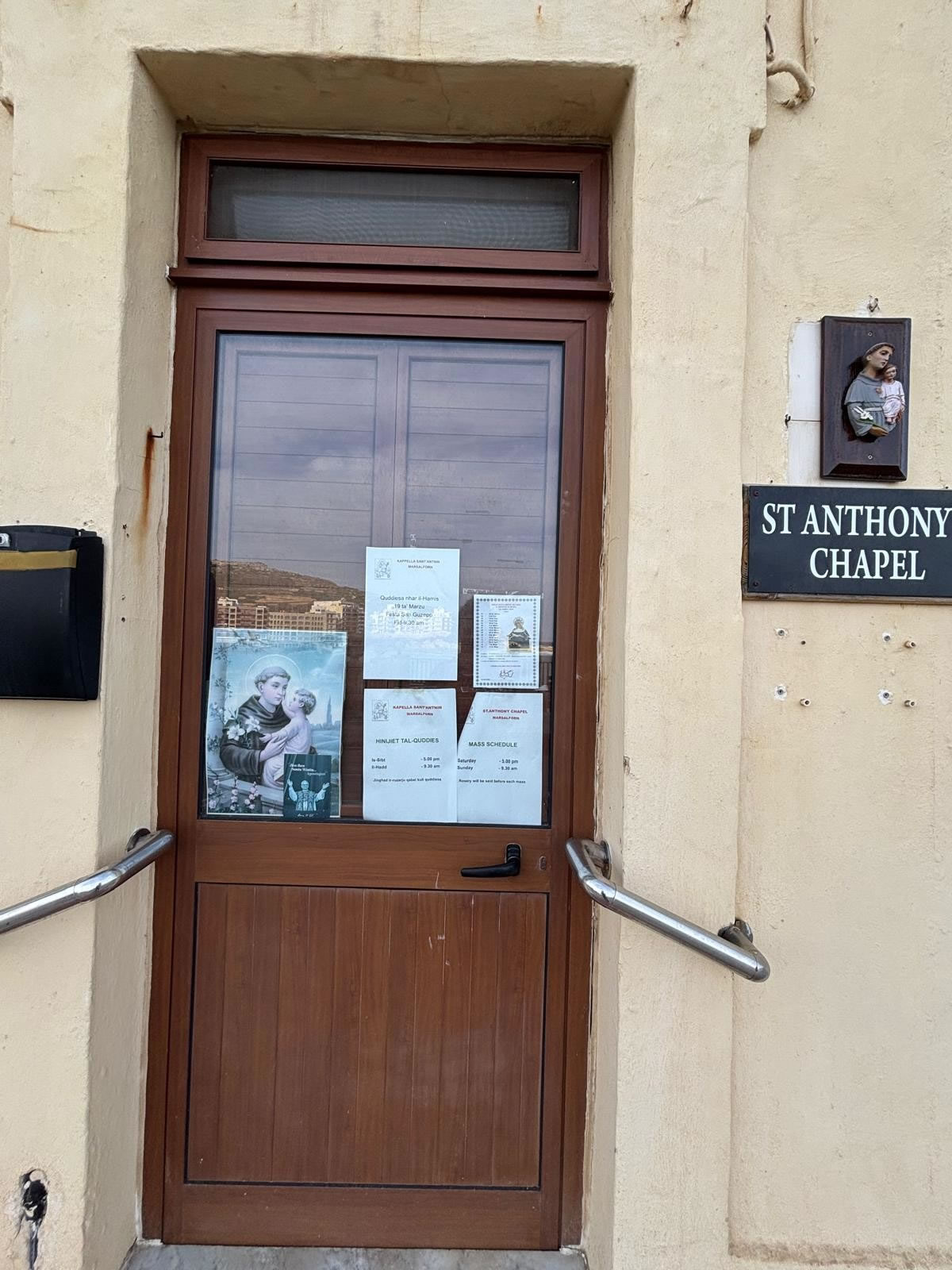
The Chapel of St Anthony of Padua in Marsalforn is a small yet culturally significant religious site situated along one of Gozo’s most popular coastal villages. Though modest in scale, the chapel represents a longstanding tradition of devotional architecture closely tied to fishing communities and maritime life.
Dedicated to Saint Anthony of Padua, one of the most beloved saints in Maltese religious culture, the chapel reflects both spiritual devotion and the daily realities of life in Marsalforn, a historic fishing port.
Historical Context of Marsalforn
Marsalforn developed over centuries from a small fishing settlement into one of Gozo’s main seaside hubs. Historically, the village was sparsely populated, with seasonal fishermen and salt pan workers forming the core of its early community.
Religious structures in such coastal areas were typically small chapels rather than full parish churches. These provided essential spiritual services for residents who lived far from inland villages such as Xagħra and Żebbuġ.
The development of chapels in Gozo often dates back several centuries, with many documented as early as the 16th century in similar rural or coastal settings. :contentReference[oaicite:0]{index=0}

Dedication to St Anthony of Padua
The chapel is dedicated to St Anthony of Padua, a 13th-century Franciscan friar widely venerated for his preaching, miracles, and role as a patron saint of lost items and the poor.
In Malta and Gozo, devotion to St Anthony is particularly strong. Coastal communities often invoked his protection for fishermen and seafarers, making his dedication especially appropriate for a village like Marsalforn.
Feast celebrations associated with St Anthony, typically held in June, are an important part of Maltese religious tradition and often include processions, blessings, and communal gatherings.

Construction and Development
While precise construction records for the Marsalforn chapel are limited, it is likely that the original structure dates from the late 19th or early 20th century, a period when Marsalforn began to expand as a settlement.
Many chapels in Gozo followed a similar pattern of development:
- Initial construction as a small rural or coastal shrine
- Gradual enlargement as the local population increased
- Periodic restoration following structural damage or environmental exposure
This evolutionary approach reflects the community-driven nature of chapel building in Malta, where local residents often contributed labour and funding.
Architecture and Design
The chapel’s architecture is typical of small Maltese coastal chapels, characterised by simplicity and functionality rather than grandeur.
Key features likely include:
- A single rectangular nave
- A modest façade with a central doorway
- Use of local limestone
- Minimal external decoration
Such chapels were designed to withstand coastal conditions while providing a practical space for worship.
Interior and Artworks
The interior of the chapel is focused around a central altar dedicated to St Anthony of Padua. In many Maltese chapels, altarpieces or statues of the titular saint form the primary artistic feature.
Typical elements include:
- A statue or painting of St Anthony holding the Child Jesus
- Simple decorative elements reflecting local craftsmanship
- Candles and devotional offerings from visitors
In Gozo, religious artworks often combine imported artistic influences with local traditions, creating a distinctive style.
Religious Function and Use
Historically, the chapel served the spiritual needs of Marsalforn’s residents, particularly fishermen who required a nearby place of worship.
Functions of the chapel include:
- Private prayer and devotion
- Occasional Mass and religious services
- Feast celebrations dedicated to St Anthony
Even today, such chapels remain important centres of local identity and religious practice.
Restoration and Preservation
Like many coastal structures in Malta, the chapel has likely undergone periodic restoration to address wear caused by sea air and environmental exposure.
Across Gozo, restoration projects often focus on:
- Stone cleaning and repair
- Structural reinforcement
- Preservation of artworks
These efforts ensure that chapels remain functional and accessible for future generations.
Cultural Importance
The chapel plays a vital role in preserving Marsalforn’s cultural and religious heritage. It represents:
- The spiritual life of a coastal community
- The importance of small chapels in Maltese history
- The enduring devotion to St Anthony of Padua
Such chapels are often overlooked but are essential to understanding the everyday religious practices of Malta and Gozo.
Visitor Experience
Visitors to Marsalforn can discover the chapel as part of a broader exploration of the village and its surroundings.
The chapel offers:
- A quiet and reflective atmosphere
- A glimpse into local religious traditions
- A contrast to larger parish churches
Its coastal setting enhances its charm, making it a meaningful stop for those interested in heritage and spirituality.
Conclusion
The Chapel of St Anthony of Padua in Marsalforn may be modest in size, but it holds significant historical, cultural, and religious value. As a reflection of Gozo’s coastal heritage and enduring faith, it remains an important part of the island’s rich tapestry of chapels.