📍 Location
Location Map Coordinates 36.024696, 14.281377
Home > Chapels & Heritage > Għajnsielem Cemetery
Location: Għajnsielem, Gozo, Malta | Coordinates: 36.024696, 14.281377
Introduction
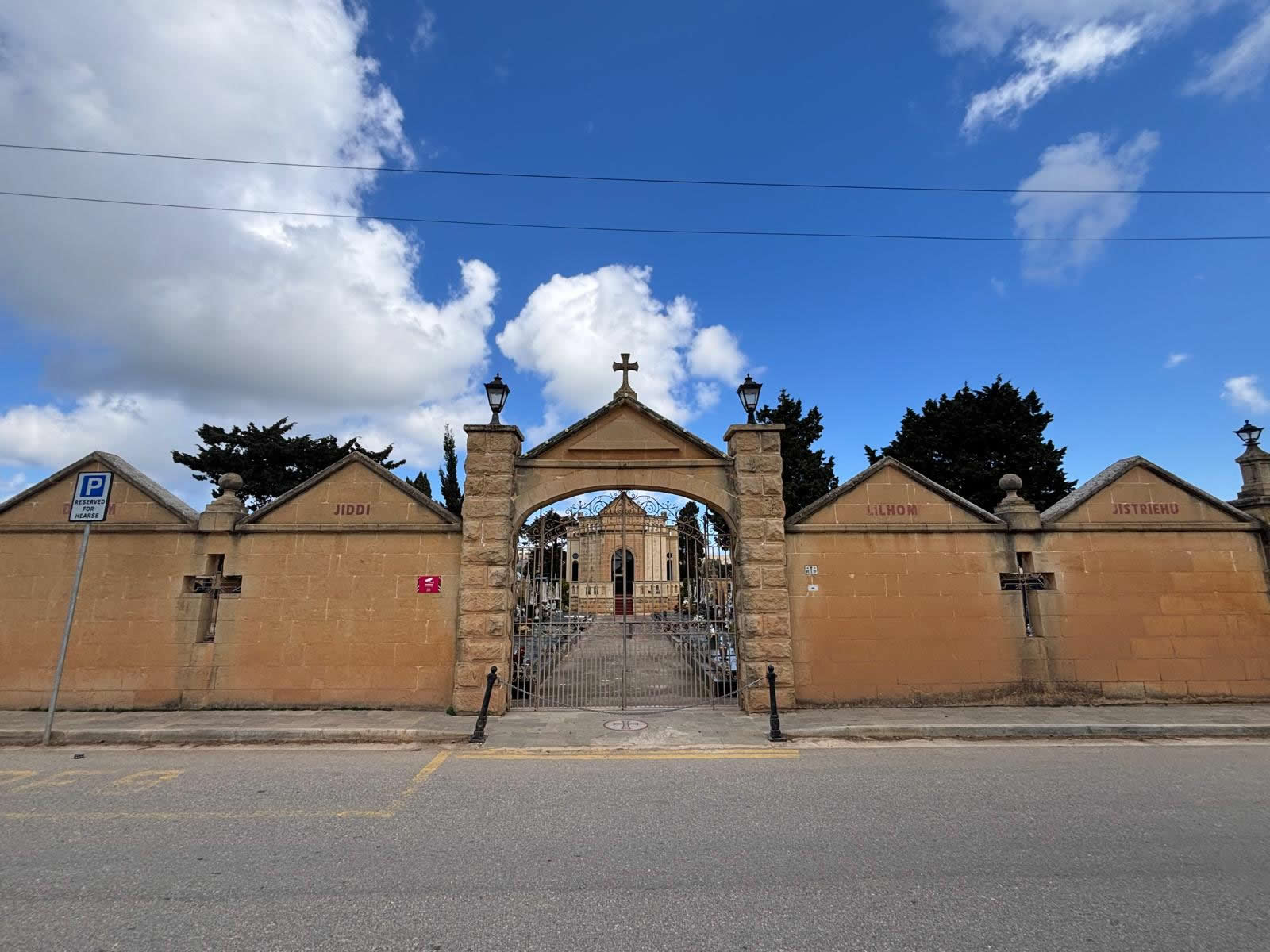
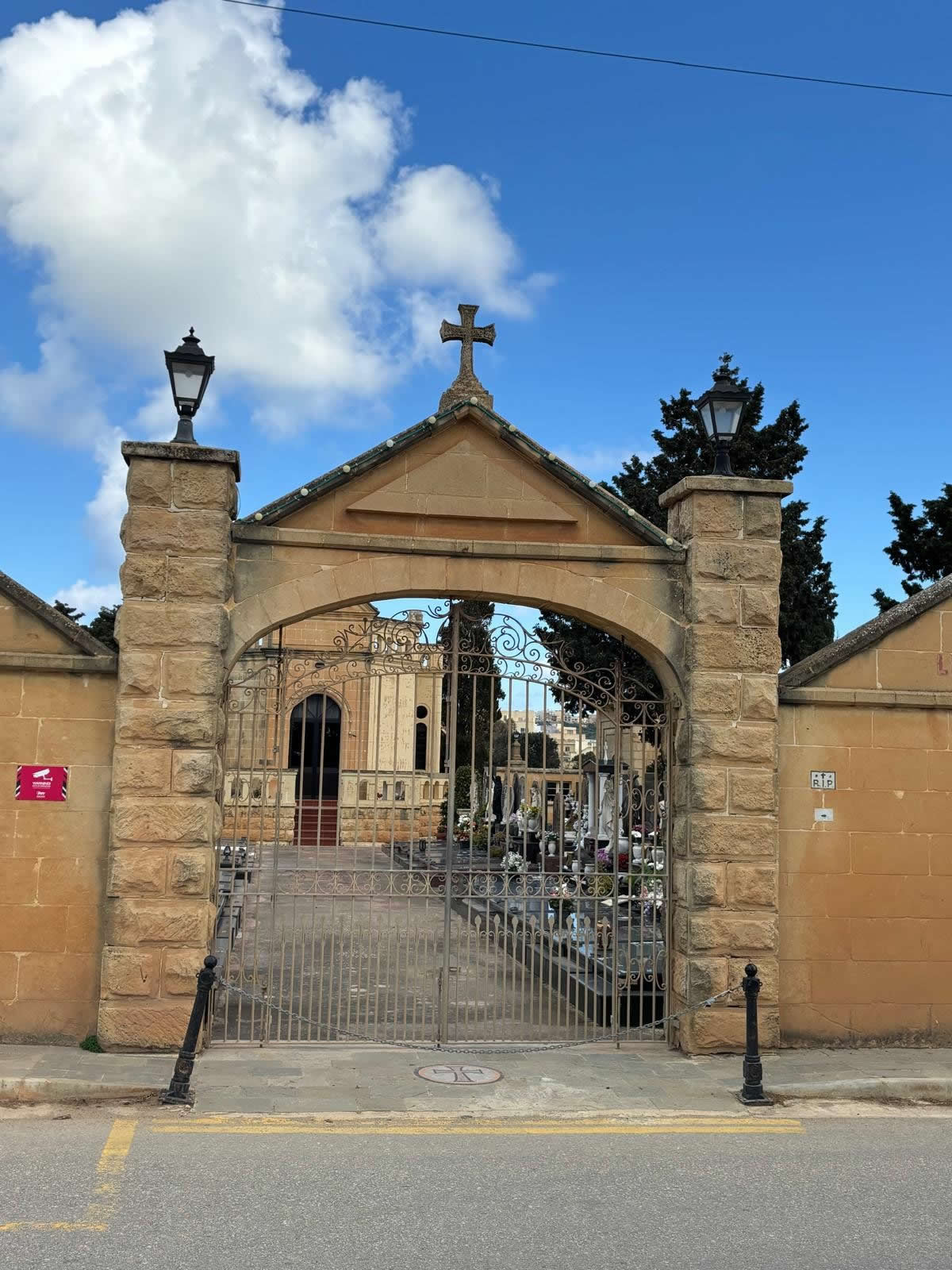
Għajnsielem Cemetery is one of the principal burial grounds in Gozo, serving the village of Għajnsielem and surrounding areas. Situated in a tranquil rural setting, the cemetery reflects centuries of Maltese funerary traditions and religious customs.
Beyond its function as a burial site, the cemetery represents an important cultural and historical resource, preserving the memory of generations and offering insight into the social and religious life of the community.
Historical Development
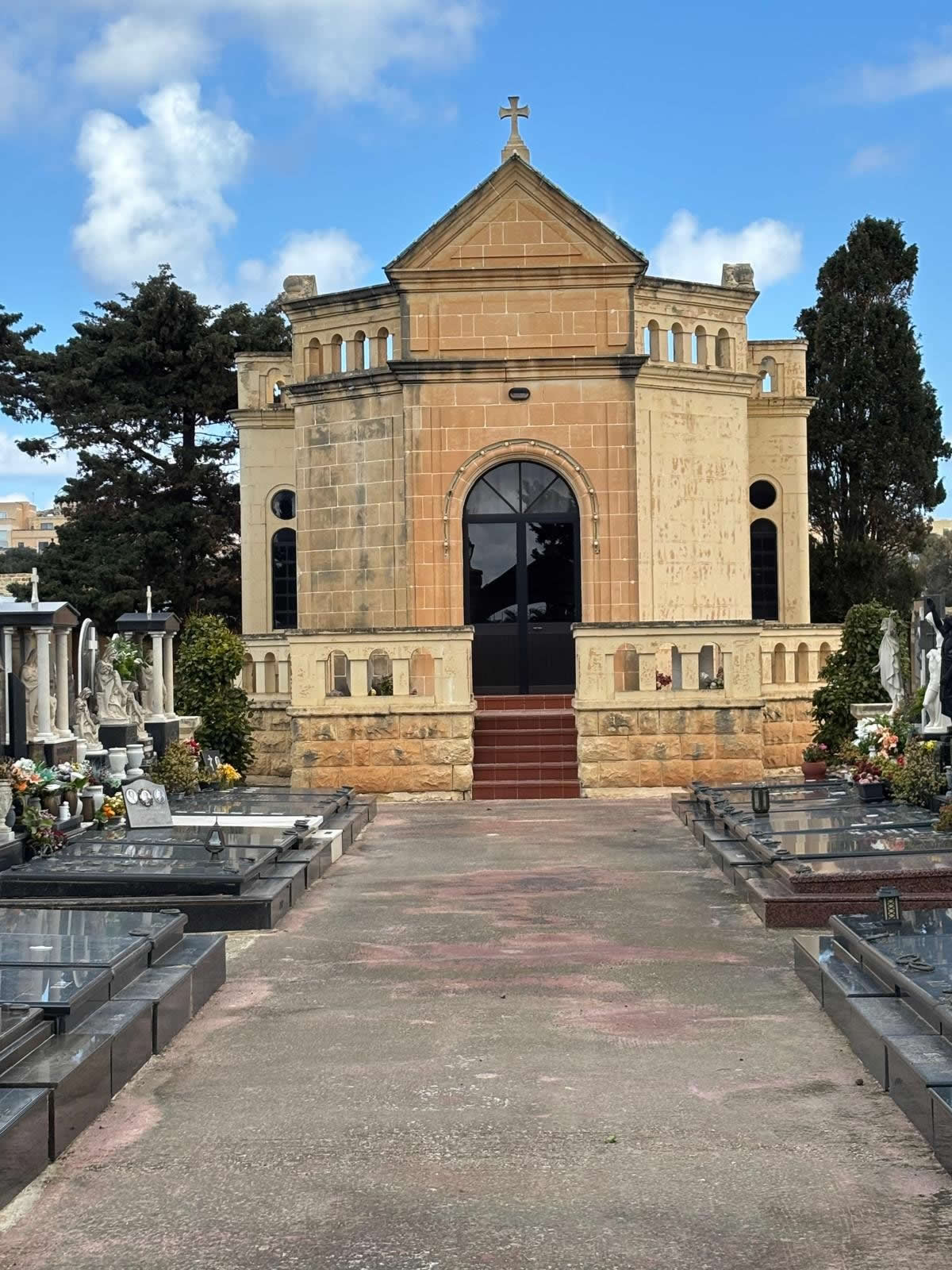
The establishment of Għajnsielem Cemetery is closely linked to broader changes in burial practices across Malta during the 19th century. Prior to this period, burials commonly took place within churches or in small churchyards.
However, due to concerns regarding hygiene and public health, new regulations required the creation of dedicated cemeteries outside village centres. This led to the development of burial grounds such as the Għajnsielem Cemetery.
The cemetery gradually expanded over time to accommodate the growing population of the village, reflecting the demographic development of Għajnsielem.
Layout and Design
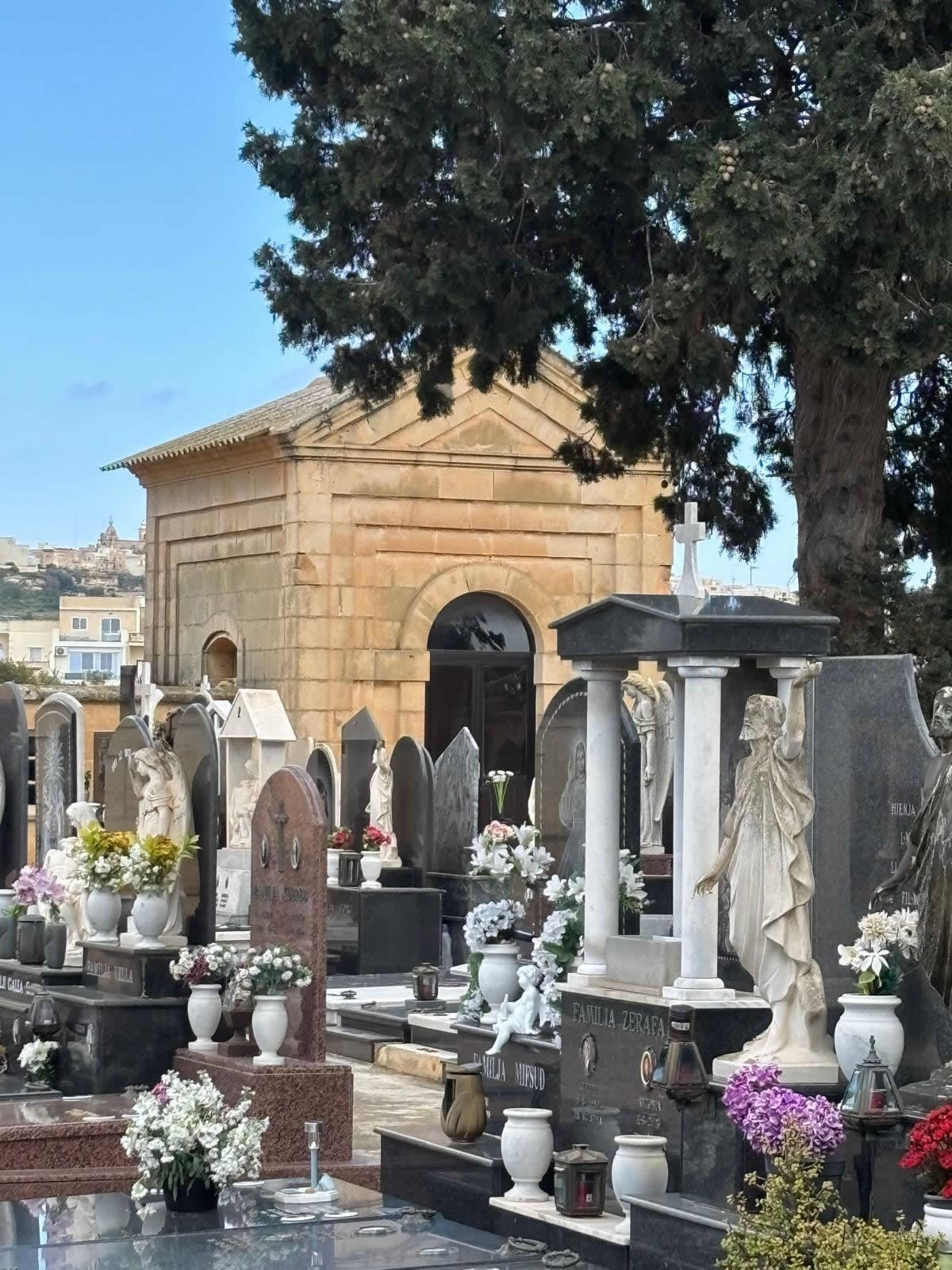
The cemetery is organised in a structured layout, with pathways dividing sections of tombs and burial plots. This arrangement reflects both practical considerations and traditional Catholic burial customs.
Family tombs are a prominent feature, often constructed from local limestone and marked by inscriptions, crosses, and decorative elements.
The overall design emphasises order, dignity, and respect for the deceased, creating a peaceful and contemplative environment.
Funerary Architecture
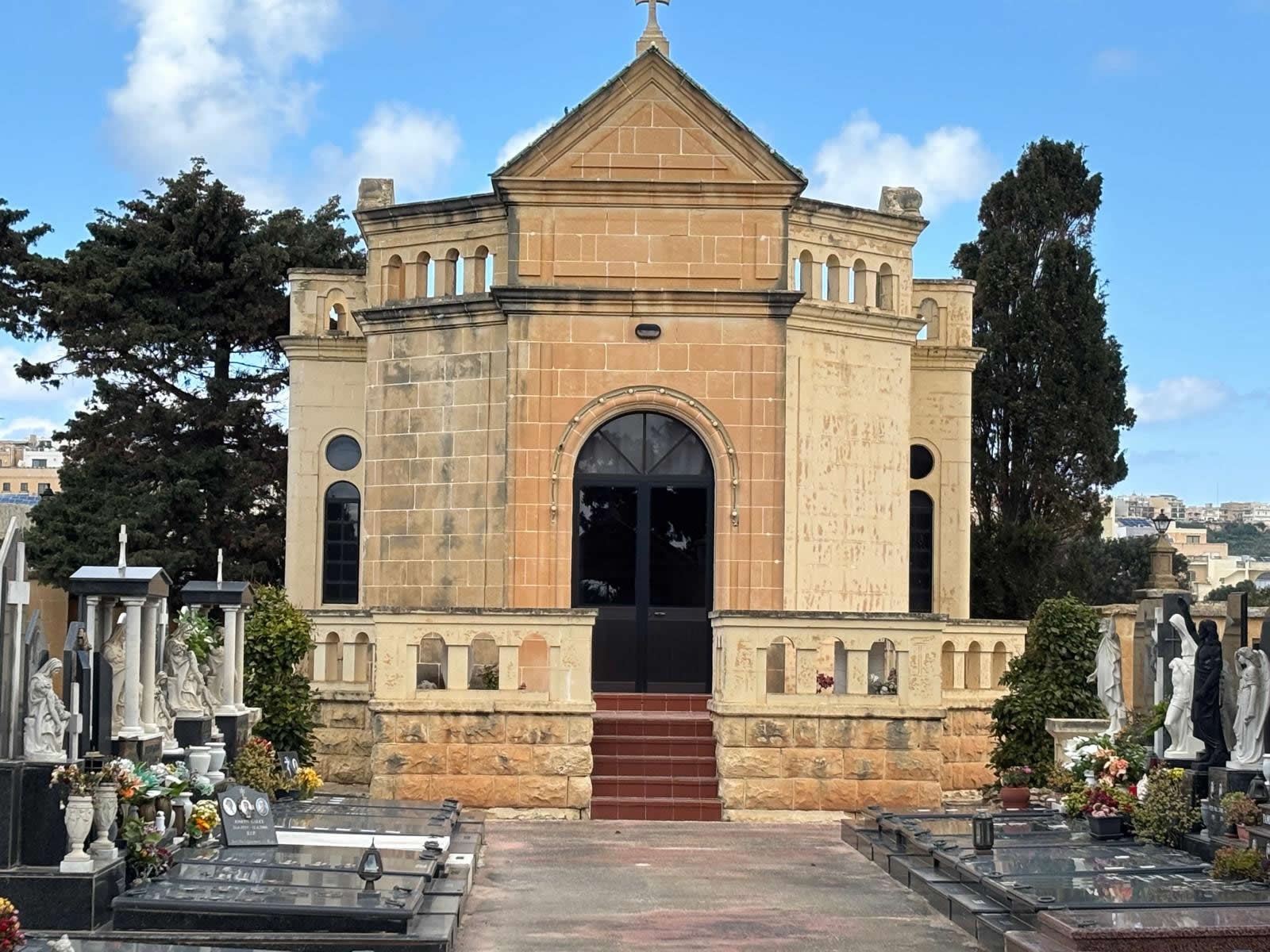
One of the most striking aspects of Għajnsielem Cemetery is its funerary architecture. Tombs range from simple slabs to elaborate family vaults, showcasing a variety of styles influenced by Maltese, Italian, and broader European traditions.
Many tombstones feature carved inscriptions in Maltese, Italian, or Latin, providing valuable historical information about the individuals buried there.
Decorative elements such as crosses, angels, and religious symbols are common, reflecting the strong Catholic identity of the community.
Religious Significance
As a Catholic cemetery, Għajnsielem Cemetery is closely connected to the parish church of Our Lady of Loreto. Religious rituals associated with death and remembrance, including funerals and commemorations, are an integral part of its function.
The cemetery is particularly significant during All Souls’ Day, when families visit the graves of their loved ones to pray and place flowers and candles.
This practice highlights the enduring importance of remembrance and spiritual connection in Maltese culture.
Artworks and Symbolism
The cemetery contains numerous examples of symbolic art, reflecting beliefs about death, resurrection, and eternal life. Common motifs include the cross, representing salvation, and angels, symbolising guidance to the afterlife.
Inscriptions often include religious phrases and expressions of hope, illustrating the deep spiritual values of the community.
These artistic and symbolic elements contribute to the cemetery’s cultural and historical richness.
Restoration and Preservation
Over time, the cemetery has required maintenance and restoration to preserve its structures and monuments. Exposure to the elements can lead to the deterioration of stonework and inscriptions.
Efforts by local authorities and the parish have focused on conservation, ensuring that the cemetery remains both functional and historically significant.
Role in the Community
Għajnsielem Cemetery continues to serve as an active burial ground, maintaining its role within the community. It is a place of remembrance, reflection, and continuity, linking past generations with the present.
The cemetery also provides valuable insights into the social history of the village, including family lineages and demographic changes over time.
Visitor Experience
Visitors to the cemetery can experience a शांत and respectful environment, ideal for quiet reflection. The site offers an opportunity to explore local history through its inscriptions and monuments.
Its rural setting enhances its atmosphere, providing a sense of peace and connection with the surrounding landscape.
Carmela Azzopardi Muscat
BIRTH 3 Aug 1870
DEATH 11 Dec 1940 (aged 70)
Conclusion
Għajnsielem Cemetery stands as an important part of Gozo’s cultural and religious heritage. Its historical development, architectural features, and ongoing use make it a significant site within the island’s network of heritage locations.
As both a place of burial and a repository of collective memory, it continues to play a vital role in the life of the community.
Frequently Asked Questions
When was the cemetery established?
It developed during the 19th century as burial practices changed.
Is it still used today?
Yes, it remains an active cemetery serving the local community.
What can visitors see?
Visitors can see historic tombs, inscriptions, and religious symbolism.
Why is it important?
It reflects the history, traditions, and cultural identity of Għajnsielem.