📍 Location
Location Map Coordinates 35.887680, 14.521470
Introduction
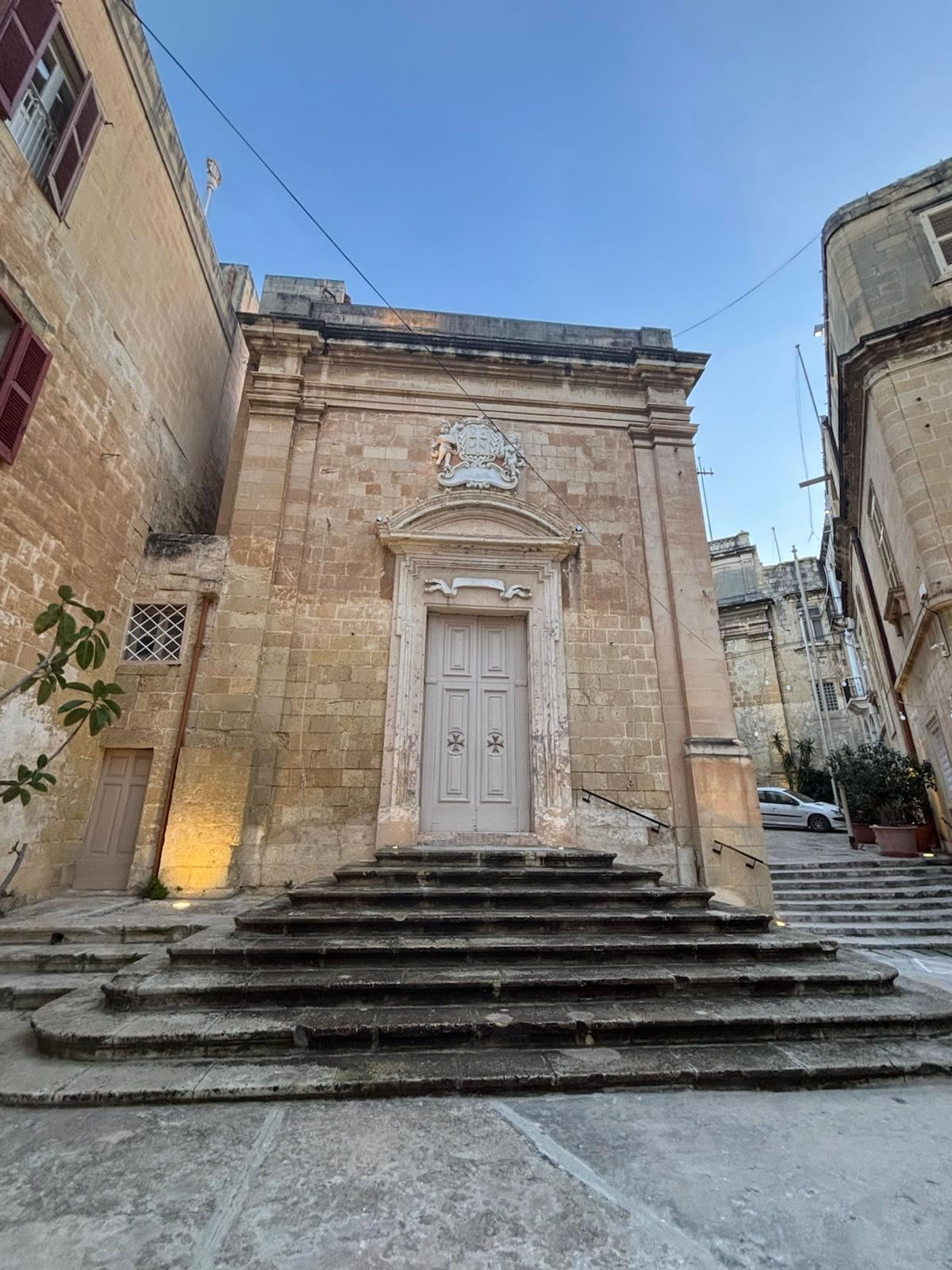
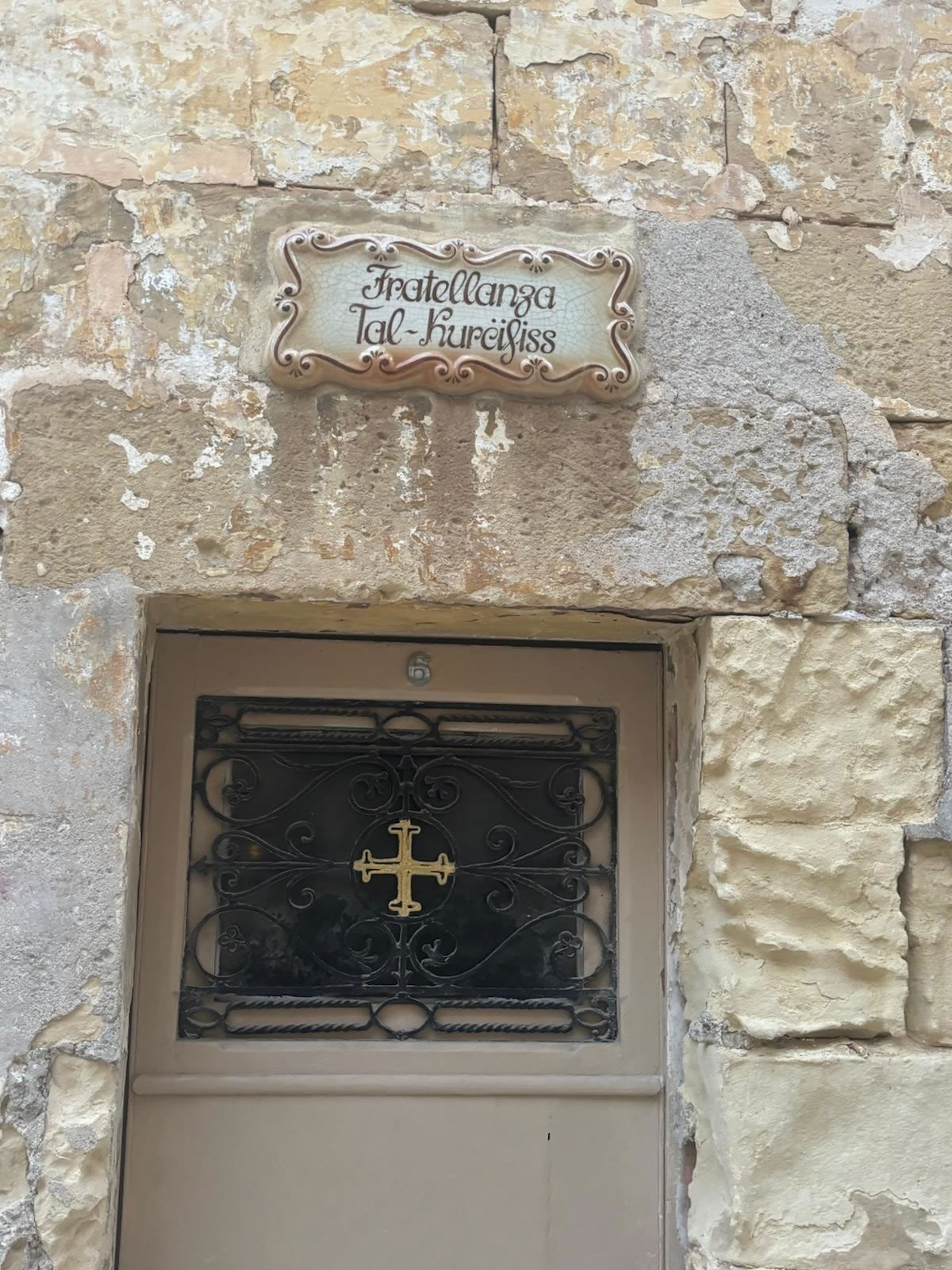
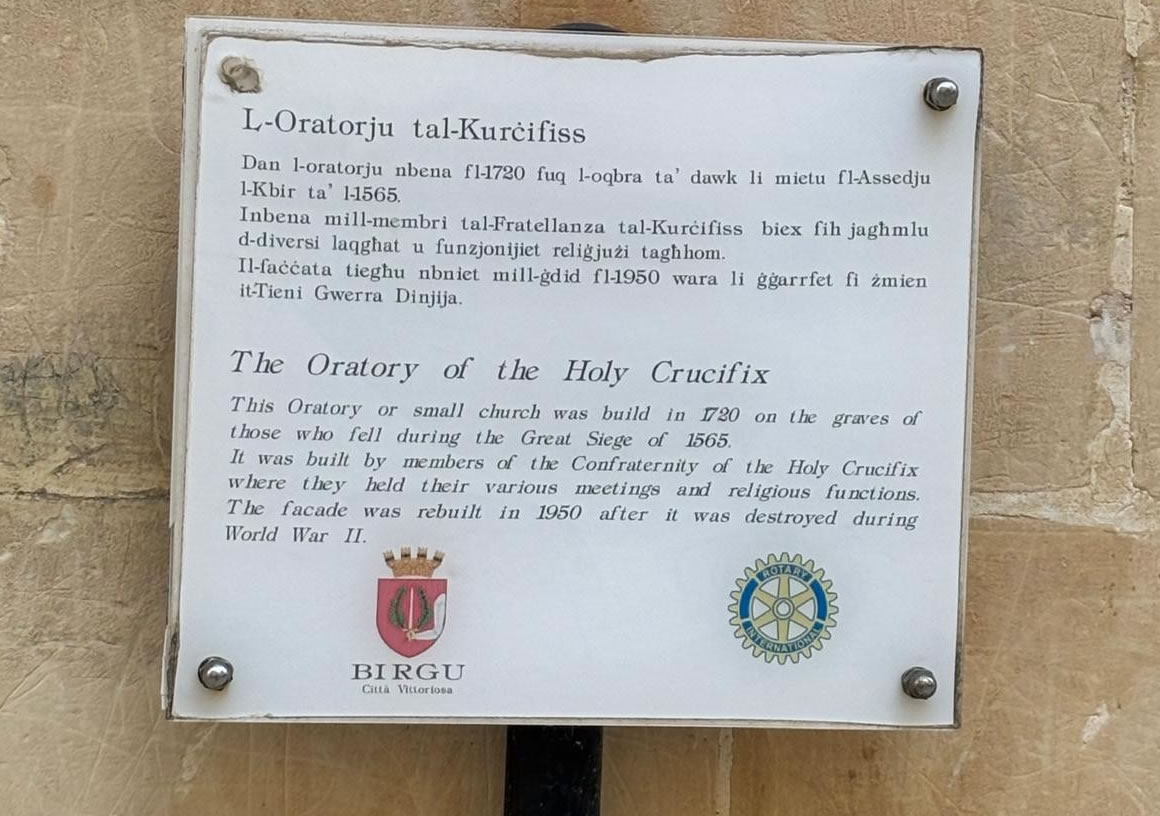
The Oratory of the Holy Cross in Birgu, one of Malta’s historic Three Cities, is a significant 18th-century religious structure closely tied to the island’s deep-rooted Good Friday traditions. Built by the Confraternity of the Holy Crucifix, the oratory remains an important centre of devotion connected with the Passion of Christ.
Historical Background
During the early 18th century, devotion to the Passion of Christ increased significantly across Malta. Religious confraternities played a crucial role in promoting these devotions, particularly through processions and public acts of faith.
In Birgu, the Confraternity of the Holy Crucifix became one of the most active religious groups, receiving official permission in 1718 to organise the Good Friday procession, a tradition that continues to this day.
Construction and Foundation
The Oratory of the Holy Cross was constructed between 1720 and 1724. The first stone was laid in 1720, and the building was completed four years later.
The oratory was officially blessed on 29 February 1724 in the presence of the papal inquisitor Antonio Ruffo, marking its formal inauguration as a place of worship and confraternity activity.
Historical Timeline
- 1718: Permission granted for Good Friday procession
- 1720: Foundation stone laid
- 1724: Construction completed
- 29 February 1724: Official blessing and inauguration
- 1869: Neoclassical niche added with Agony in the Garden statue
Architecture
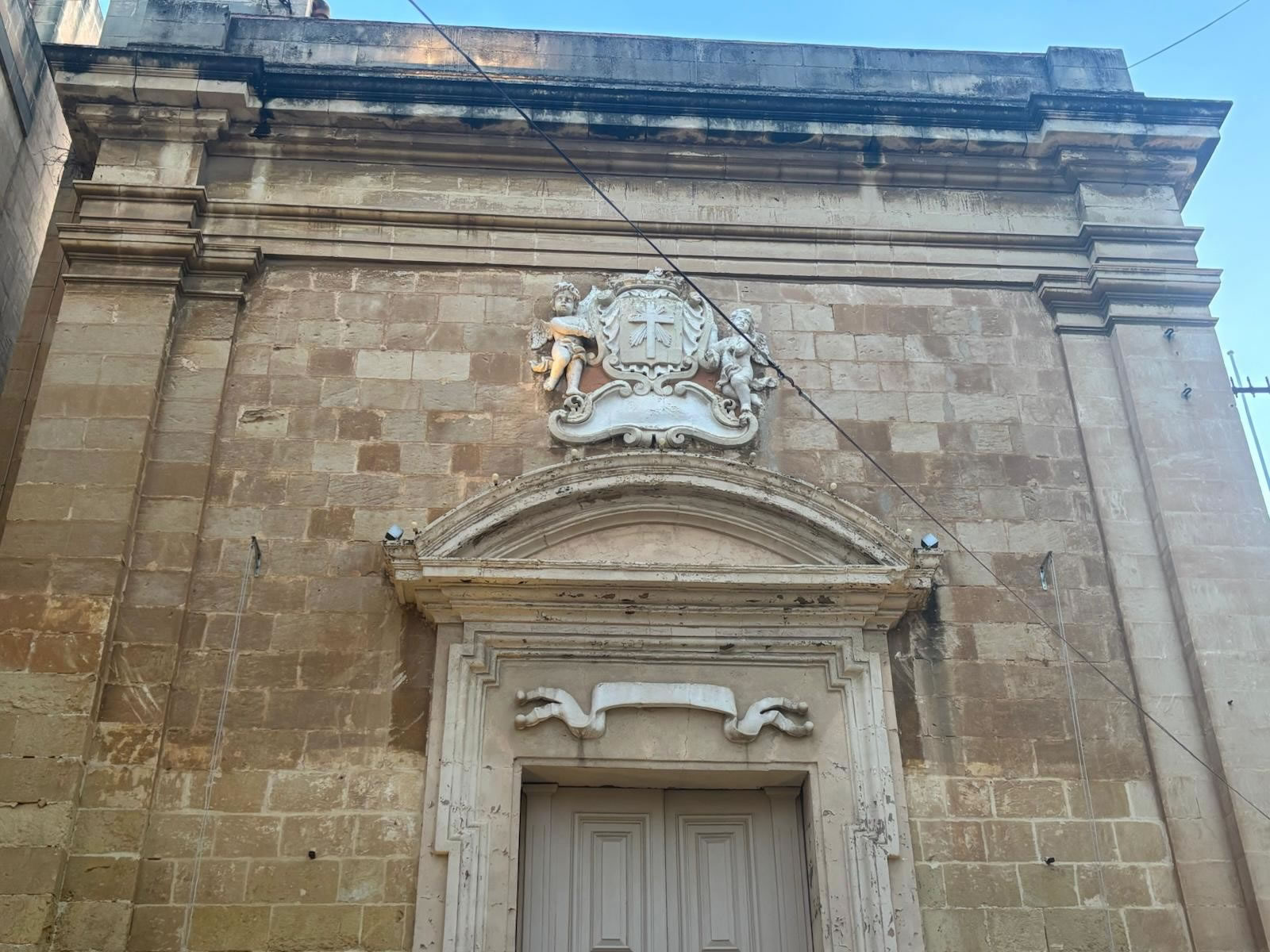
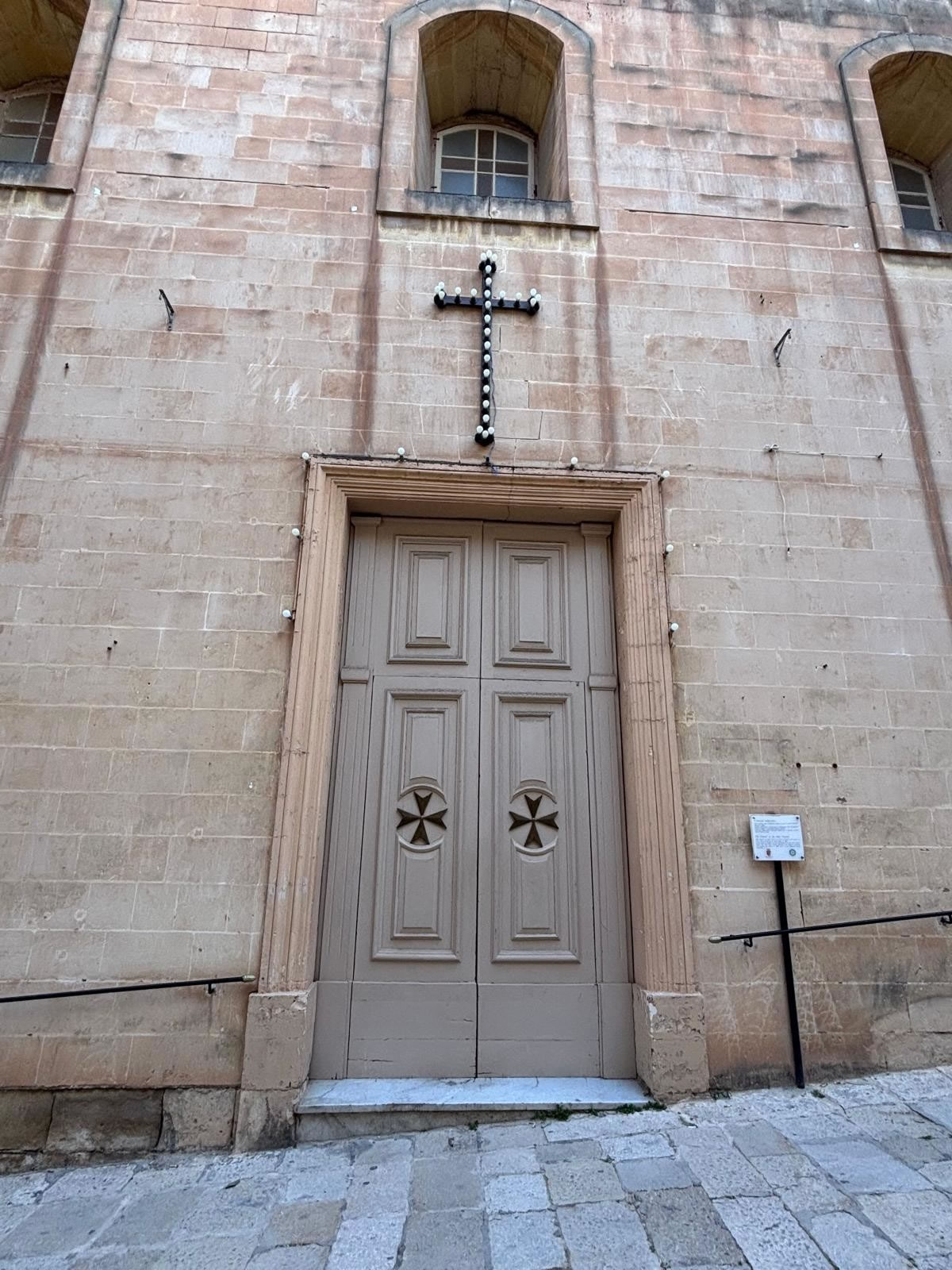
The Oratory is a fine example of Maltese Baroque architecture, constructed using local limestone. Its relatively modest façade reflects its function as a confraternity space rather than a parish church.
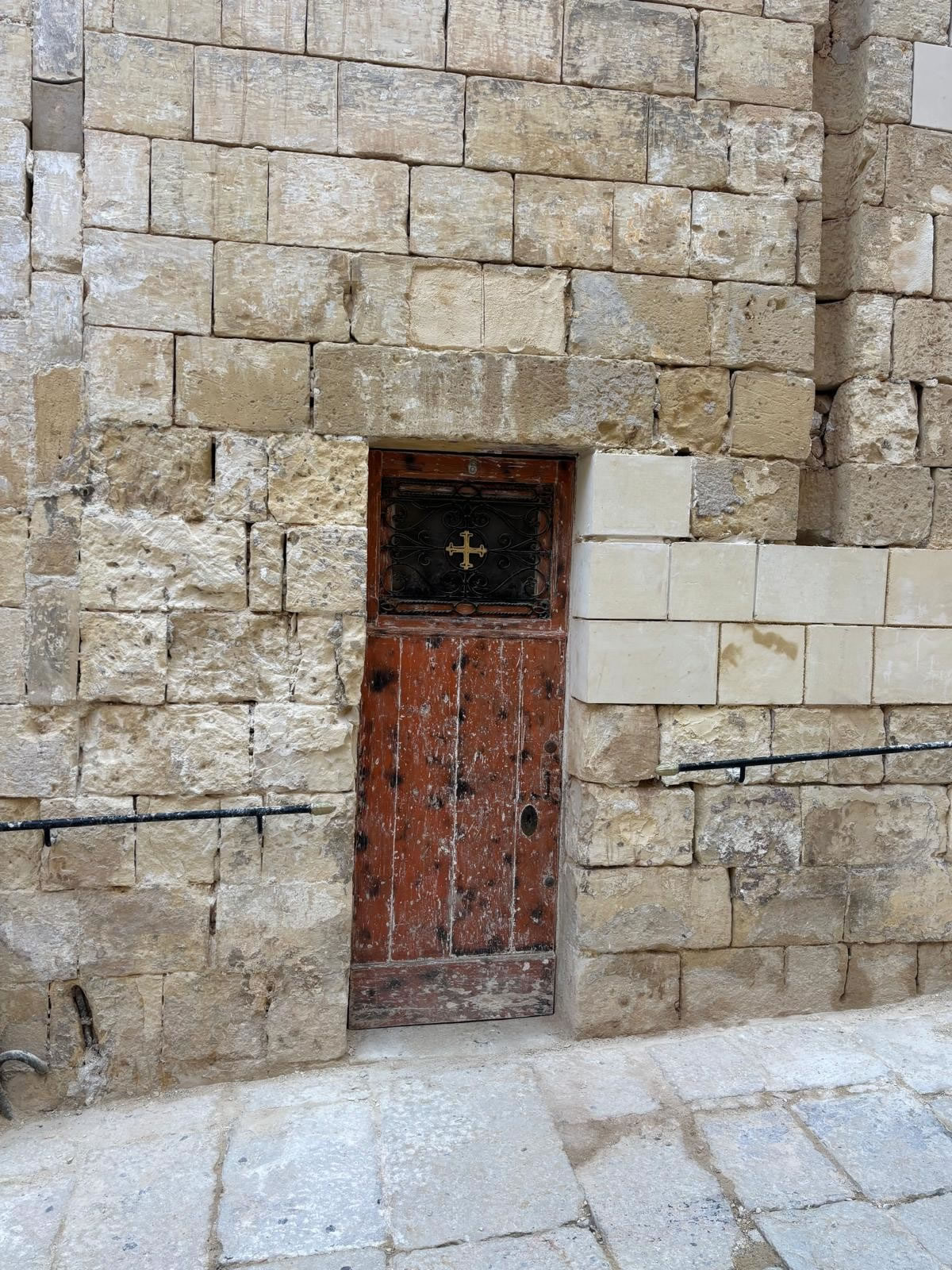
Internally, the building was designed to accommodate meetings, spiritual reflections, and the storage of processional statues. The layout is practical yet artistically refined, consistent with similar oratories across Malta.
Artworks and Interior Features
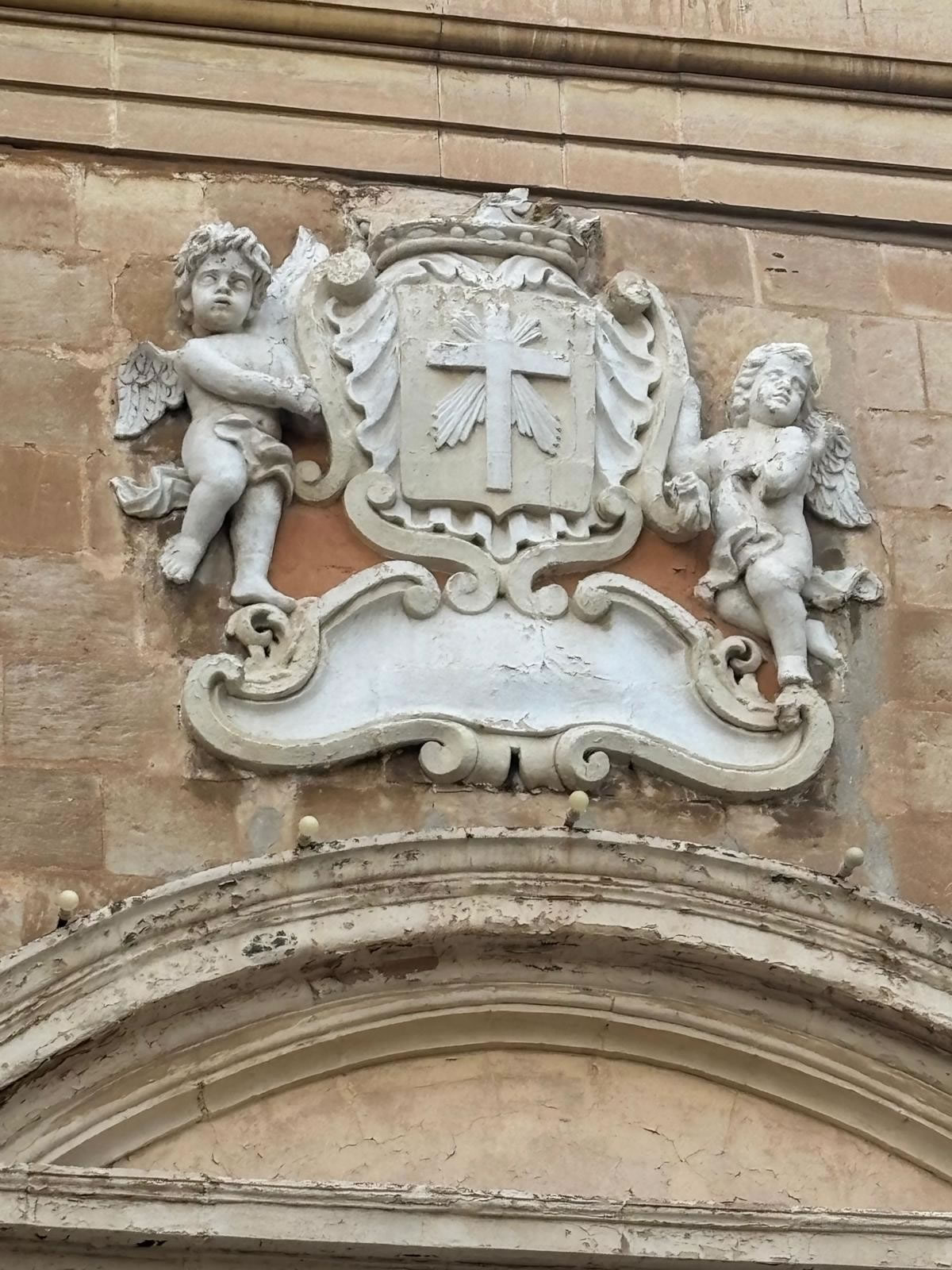
The Oratory houses several important religious artworks, particularly those connected to the Passion of Christ. Among its most notable features are:
- Good Friday statues dressed in real fabric
- Devotional sculptures representing the Passion
- Neoclassical niche (1869) housing the Agony in the Garden
These statues are unique in Malta for their use of real textiles, enhancing their realism and emotional impact.
Role in Good Friday Traditions
The Oratory plays a central role in Birgu’s Good Friday celebrations, one of Malta’s most important religious events. The statues housed in the oratory are carried in solemn procession through the streets, accompanied by music and large crowds of devotees.
Locally, the Oratory has even been referred to as “Heaven,” reflecting its role as the resting place of the sacred statues throughout the year.
Restoration and Preservation
Like many historic Maltese religious buildings, the Oratory has undergone maintenance and restoration over the centuries. These efforts ensure the preservation of both its architectural fabric and its valuable artworks.
Visitor Information
The Oratory is located near the Collegiate Church of St Lawrence in Birgu, making it easily accessible within the historic city centre. Visitors exploring the Three Cities will find it an essential stop for understanding Malta’s religious traditions.
Conclusion
The Oratory of the Holy Cross stands as a remarkable testament to Malta’s religious devotion, artistic heritage, and community traditions. From its early 18th-century origins to its continued role in Good Friday celebrations, it remains one of the most culturally significant chapels in Birgu.