📍 Location
Location Map Coordinates 35.860387, 14.532424
Location: Żejtun, Malta
Coordinates: 35.860387, 14.532424
Date of Construction: 1658
Founder: Clemente Tabone
Dedication: Saint Clement (Pope Clement I)
Introduction
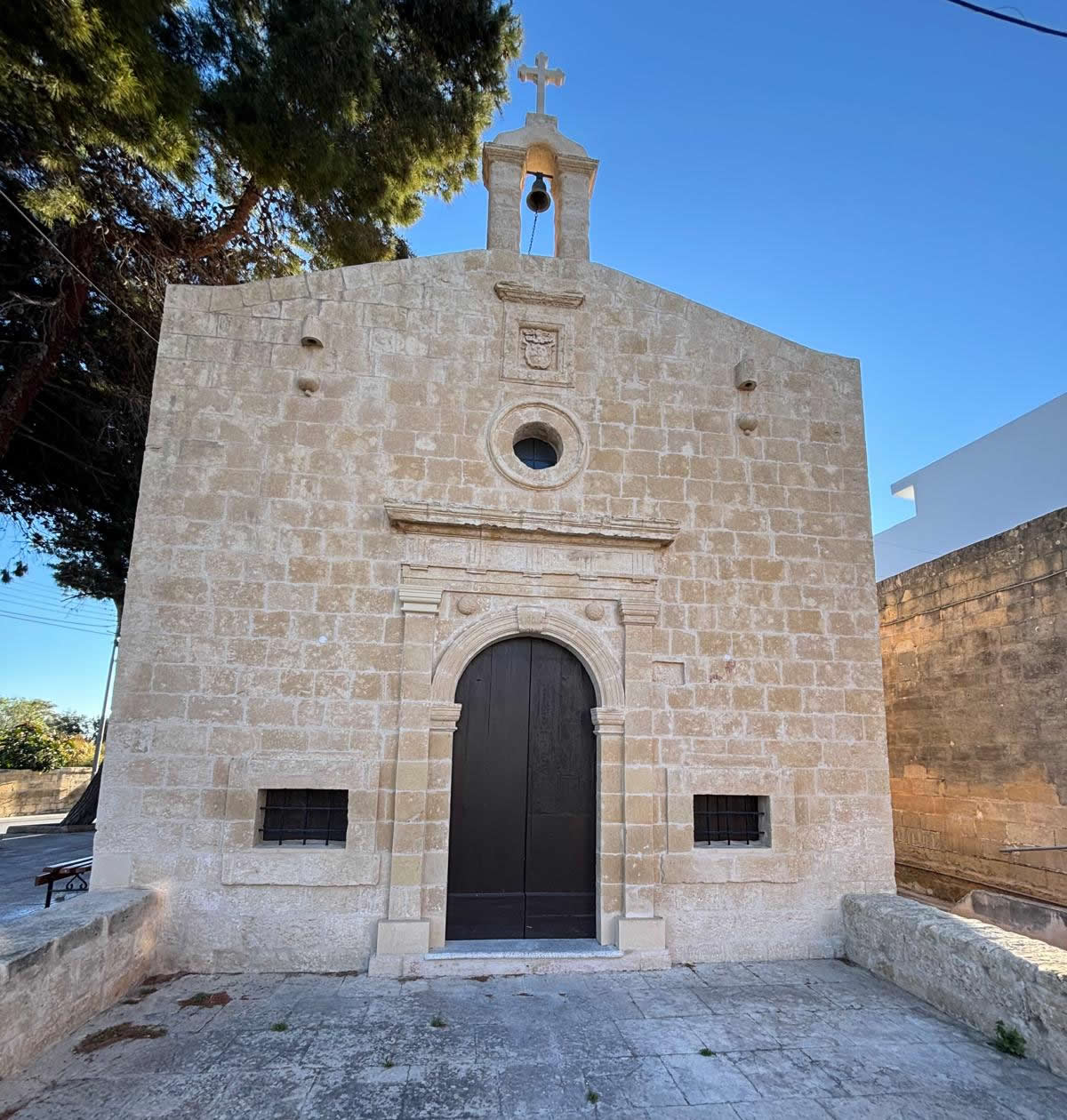
Il-Kappella ta' San Klement is one of the most historically significant rural chapels in Żejtun, Malta. Built in t1658, the chapel stands not only as a place of devotion but also as a monument tied directly to one of the most dramatic events in Maltese history — the Ottoman raid of 1614.
Situated in the countryside surrounding Żejtun, the chapel reflects the strong tradition of private religious patronage that shaped much of Malta’s rural ecclesiastical landscape during the period of the Order of St John.

Historical Background
The origins of the chapel are closely linked to the Ottoman raid of 1614, when a large fleet of Ottoman forces landed in nearby St Thomas Bay and advanced inland towards Żejtun. This attack represented one of the most serious incursions into Malta after the Great Siege of 1565.
Local militia units, known as the Dejma, were mobilised in response to warning signals fired from coastal watchtowers such as San Lucian Tower. Among those who took part in the defence was Clemente Tabone, a member of a prominent landowning family in Żejtun.
According to historical tradition, Tabone made a vow during the battle that if he survived the attack, he would build a chapel dedicated to Saint Clement, the patron saint whose intercession he invoked during the conflict.
True to his word, Tabone commissioned the construction of the chapel in 1658, several decades after the raid, establishing a lasting spiritual and historical monument tied to this event.
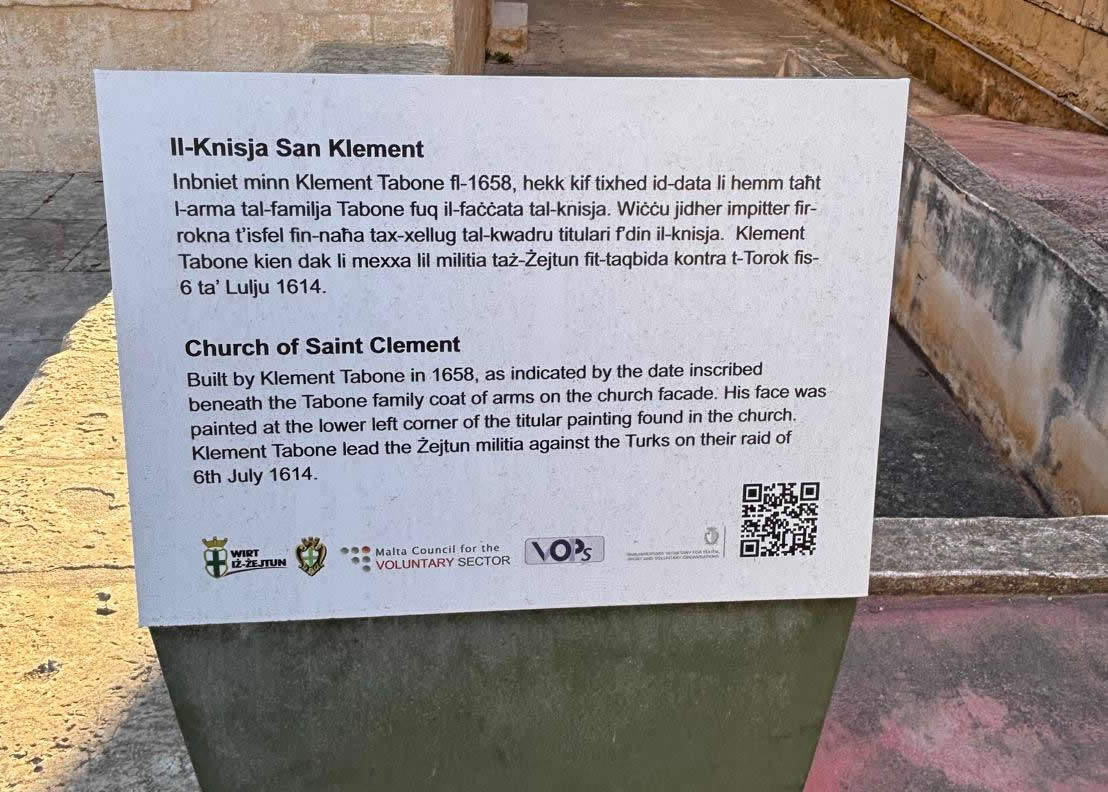
Clemente Tabone and the Legacy of the 1614 Raid
Clemente Tabone’s role in the defence of Żejtun is an important element of local historical identity. The Ottoman attack of 1614 brought destruction to the surrounding countryside and tested the island’s defensive systems. Żejtun’s elevated position overlooking key bays made it strategically important, a factor that had already shaped its development since ancient times.
The chapel therefore serves as both a devotional structure and a memorial to survival, resilience, and faith. It embodies the deeply personal nature of religious vows during times of conflict in early modern Malta.
Religious Function and Use
From its foundation, the chapel was intended to serve the rural population living in dispersed hamlets around Żejtun. These communities often relied on small chapels rather than travelling to the parish church for regular worship.
Historical records indicate that:
- Mass was celebrated regularly, particularly on the feast of Saint Clement (23 November)
- The chapel was endowed by its founder to ensure its upkeep
- Oil lamps and liturgical items were maintained through private funding
Tabone himself ensured that the chapel remained active, funding religious services and establishing devotional practices associated with the feast day.
In modern times, the chapel no longer hosts regular Mass, reflecting broader changes in rural population patterns, but it remains an important heritage site and is still used occasionally for religious observances.
Architectural Features
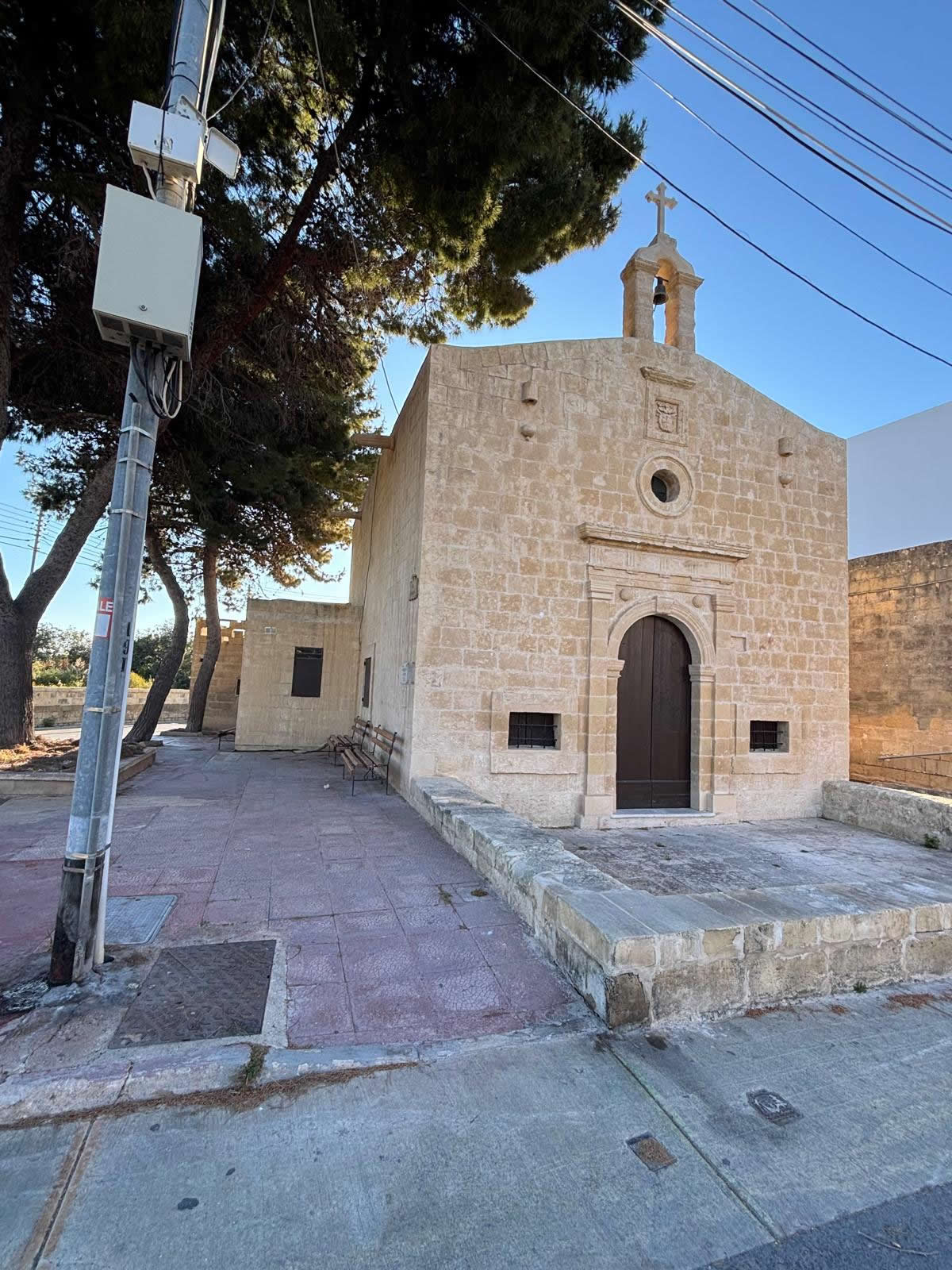
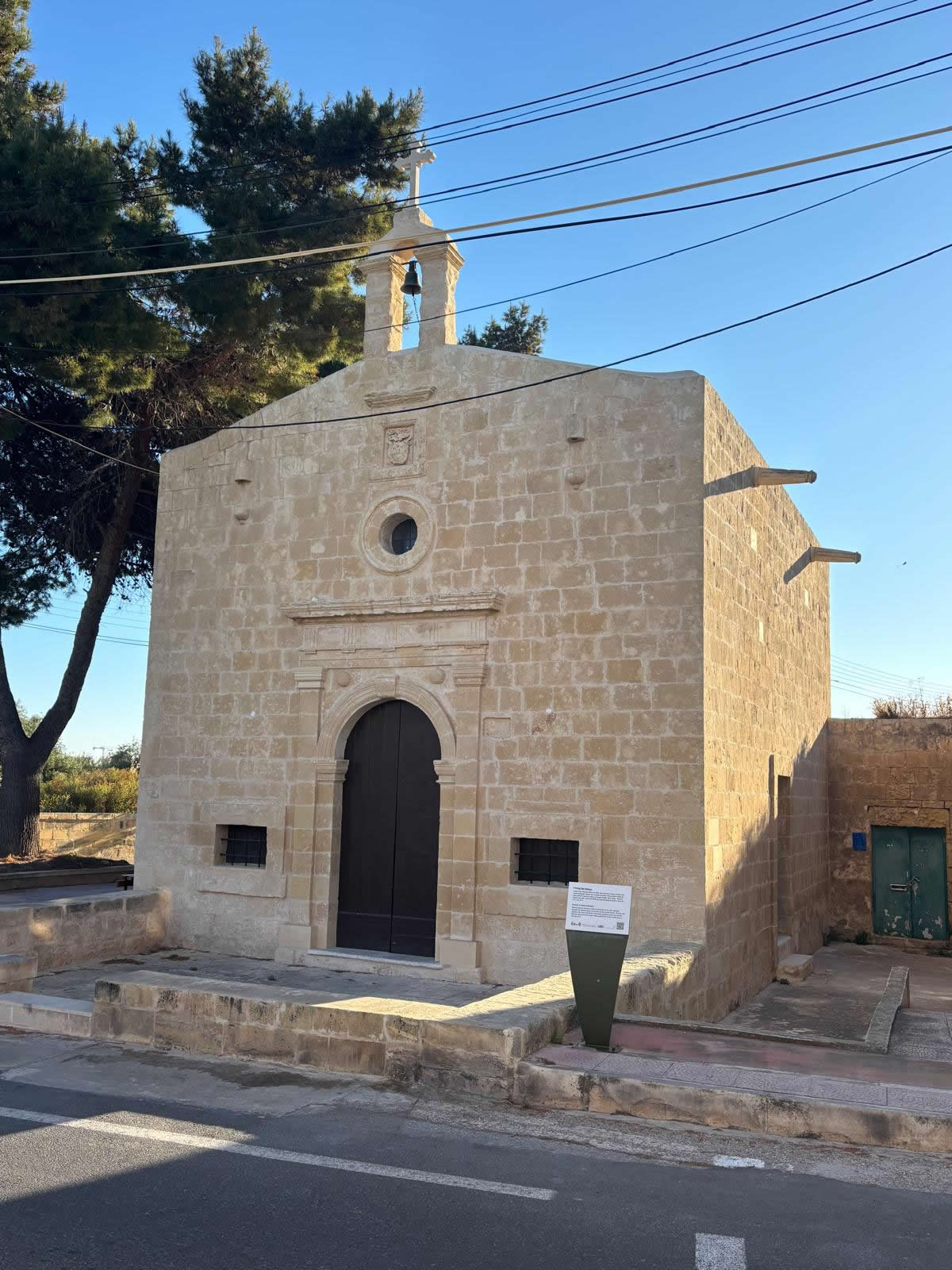
The architecture of San Klement Chapel is characteristic of mid-seventeenth century Maltese rural chapels, combining simplicity with functional design.
Exterior
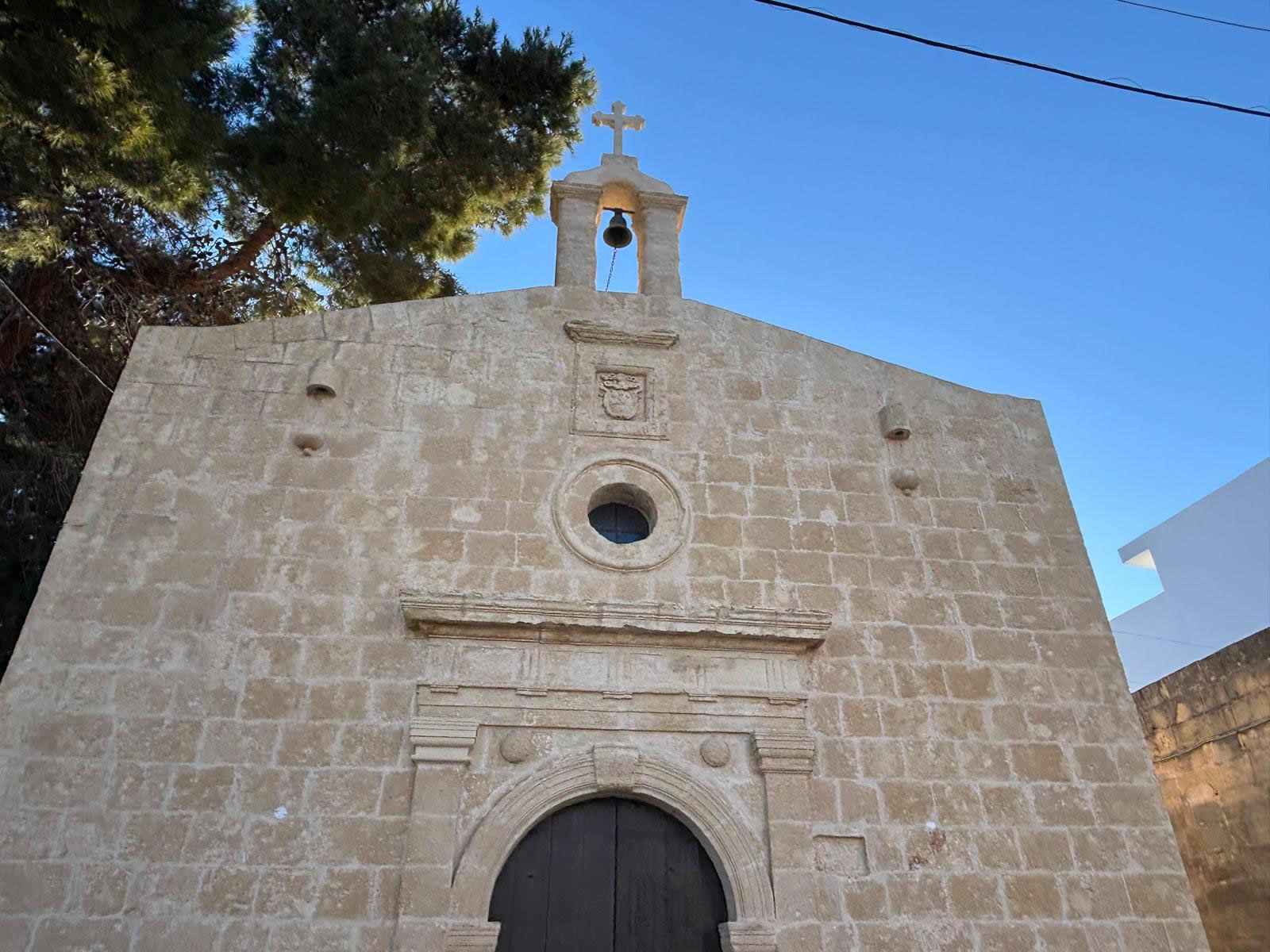
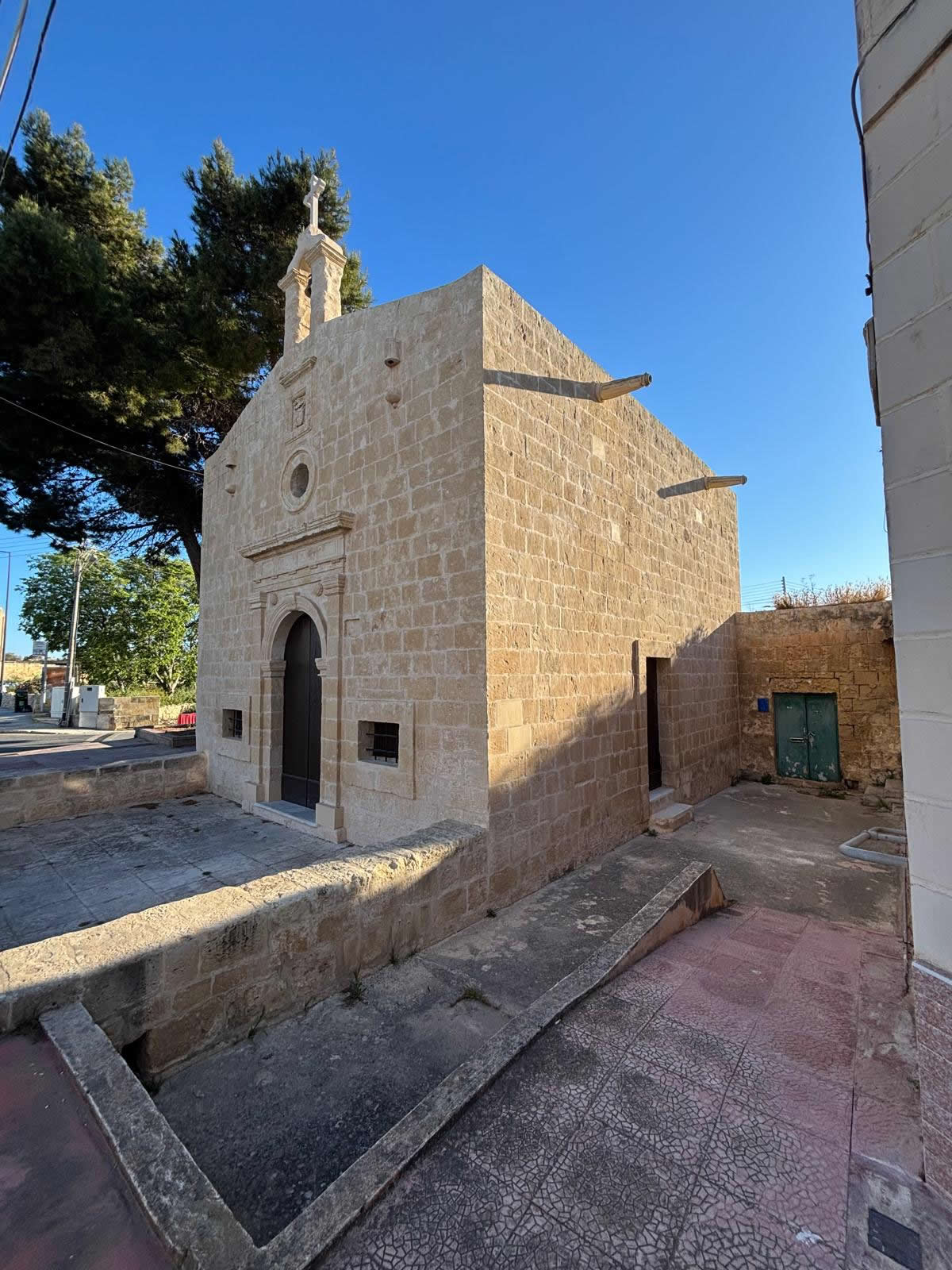
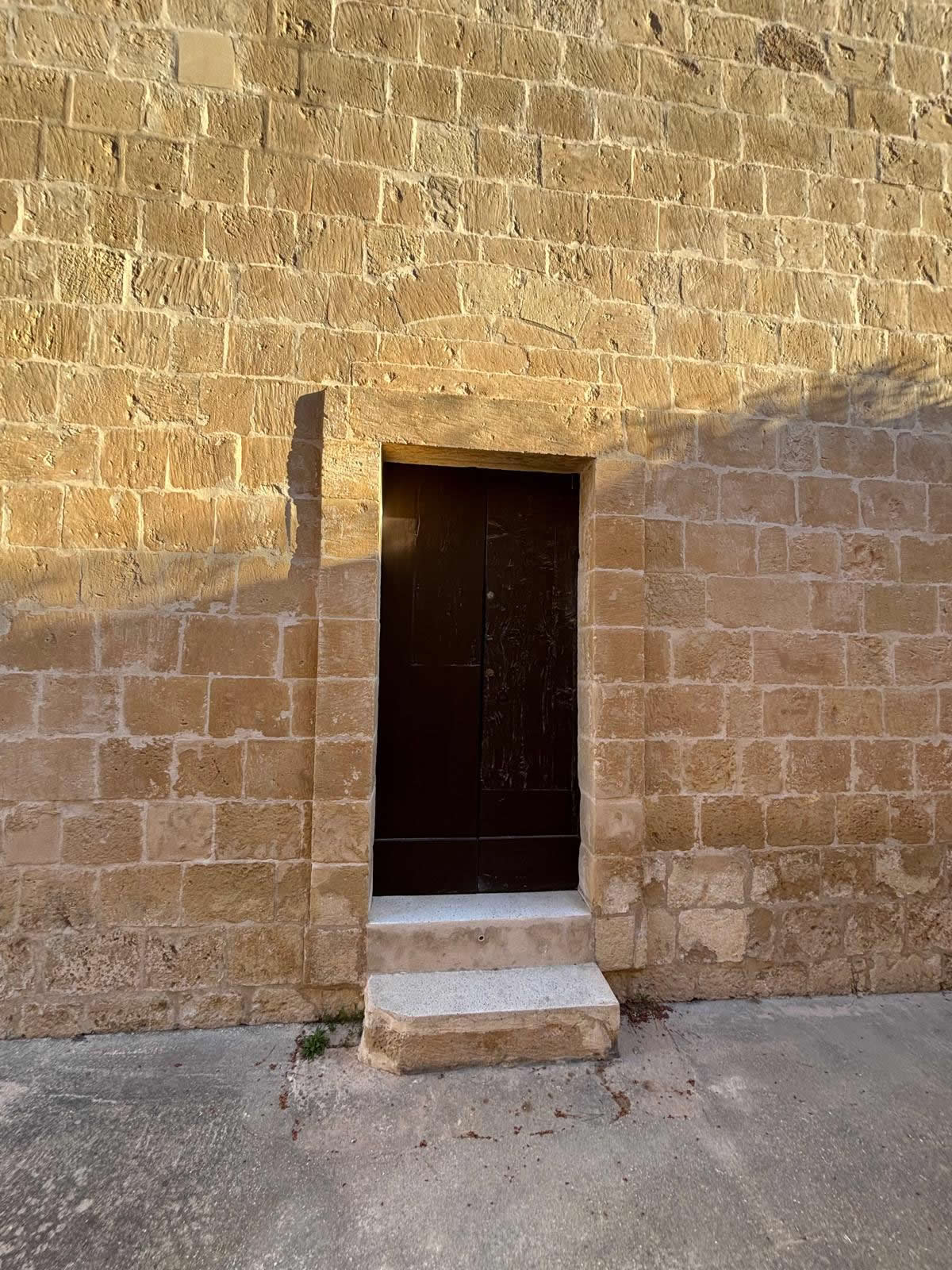
- Simple rectangular façade
- Central entrance doorway
- Small bell-cot above the façade
- Traditional limestone construction
- Positioned within open agricultural land
The chapel’s placement in the countryside reflects its original function as a devotional centre for farmers and travellers.
Interior
The interior follows a single-nave layout typical of small Maltese chapels. Though modest in scale, it was originally equipped with all necessary liturgical furnishings by its founder.
The space is designed to emphasise the altar, which serves as the focal point of devotion.
Artistic Works
One of the most significant artistic features of the chapel is its titular painting, attributed to the prominent Maltese Baroque artist Stefano Erardi. The painting depicts Saint Clement alongside the Virgin Mary and the Christ Child, with the figure of Clemente Tabone included in a devotional pose.
Another notable artwork within the chapel is a depiction of the Pietà, attributed to Francesco Zahra, one of the leading artists of eighteenth-century Malta.
These artworks elevate the chapel beyond a simple rural structure, connecting it to the wider artistic traditions of Maltese Baroque ecclesiastical art.
Architectural Evolution and Preservation
Unlike many other chapels in Malta, which underwent extensive rebuilding, San Klement Chapel has largely retained its original form. This makes it particularly valuable as a relatively intact example of seventeenth-century rural architecture.
Over the centuries, maintenance and minor restorations have ensured the chapel’s survival, preserving both its structural integrity and its historical significance.
The Chapel in the Context of Żejtun
Żejtun itself is one of Malta’s oldest settlements, with origins stretching back to Phoenician and Roman times. The town historically consisted of several small hamlets, including Bisqallin and Ħal Bisbut, which were later unified into a single locality.
The presence of multiple chapels across the Żejtun countryside reflects this fragmented settlement pattern. Each chapel served a specific community, reinforcing local identity while contributing to the broader religious landscape.
San Klement Chapel is part of this network, alongside other historic chapels such as:
- St Gregory’s Church (San Girgor)
- St Nicholas Chapel (San Niklaw)
- St Angelo’s Chapel
Together, these sites form a rich tapestry of religious heritage that defines the character of Żejtun.
Modern Significance
Today, Il-Kappella ta' San Klement is recognised as an important cultural and historical monument. It continues to attract visitors interested in Malta’s religious heritage, as well as those exploring the historical events associated with the Ottoman raid of 1614.
Its continued preservation ensures that it remains a visible reminder of Malta’s past, linking the landscape to the lived experiences of its inhabitants.
Conclusion
Il-Kappella ta' San Klement stands as a powerful symbol of faith, resilience, and historical memory. Built in 1658 as the fulfilment of a personal vow made during a time of conflict, the chapel encapsulates the deep connection between religion and daily life in early modern Malta.
Through its architecture, artworks, and historical associations, the chapel continues to offer valuable insight into the cultural heritage of Żejtun and the wider Maltese Islands.
Frequently Asked Questions
When was San Klement Chapel built?
The chapel was built in 1658 by Clemente Tabone.
Why was the chapel built?
It was built as a vow after the Ottoman raid of 1614, following Tabone’s survival.
Who is the chapel dedicated to?
The chapel is dedicated to Saint Clement (Pope Clement I).
Is the chapel still in use?
It is not used for regular Mass but is occasionally used for religious events.
What artworks are inside the chapel?
The chapel contains paintings attributed to Stefano Erardi and Francesco Zahra.
© emalta.com – Guide to Churches and Chapels of Malta