📍 Location
Location Map Coordinates 35.848885, 14.547425
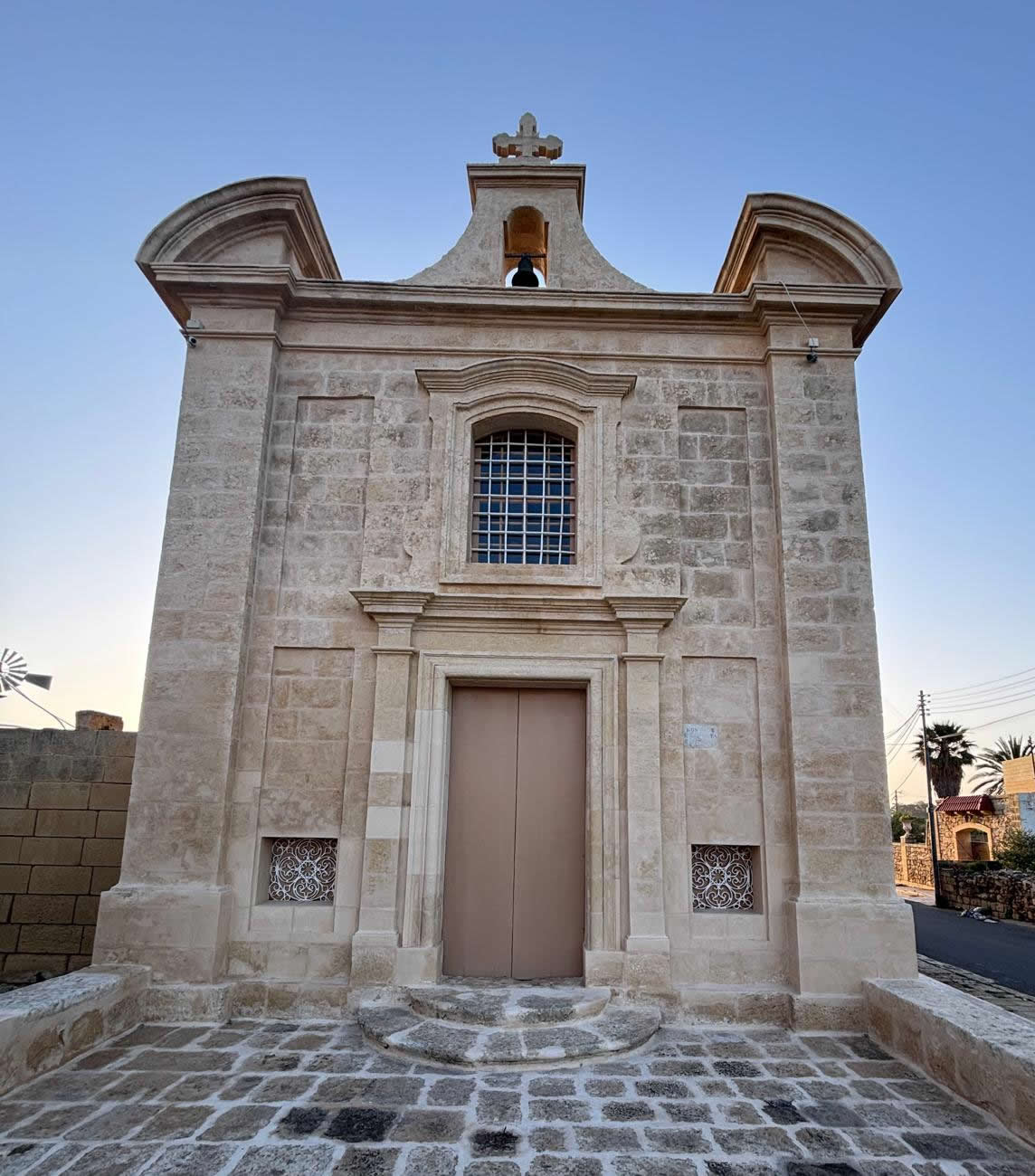
The Kappella San Niklaw (Chapel of Saint Nicholas) is one of the most historically significant rural chapels in Malta, located on the outskirts of Żejtun in the area historically known as Ħal-Ġinwi. With origins dating back to the early 16th century and possibly earlier medieval devotion, this chapel stands as a testament to Malta’s deep-rooted Christian traditions and rural ecclesiastical heritage.
Historical Origins and Early Development
The devotion to Saint Nicholas in Malta is believed to have been introduced during the Middle Ages, likely through Sicilian influence. By around the year 1500, the surrounding area was already known as San Niklaw, indicating an established religious presence.
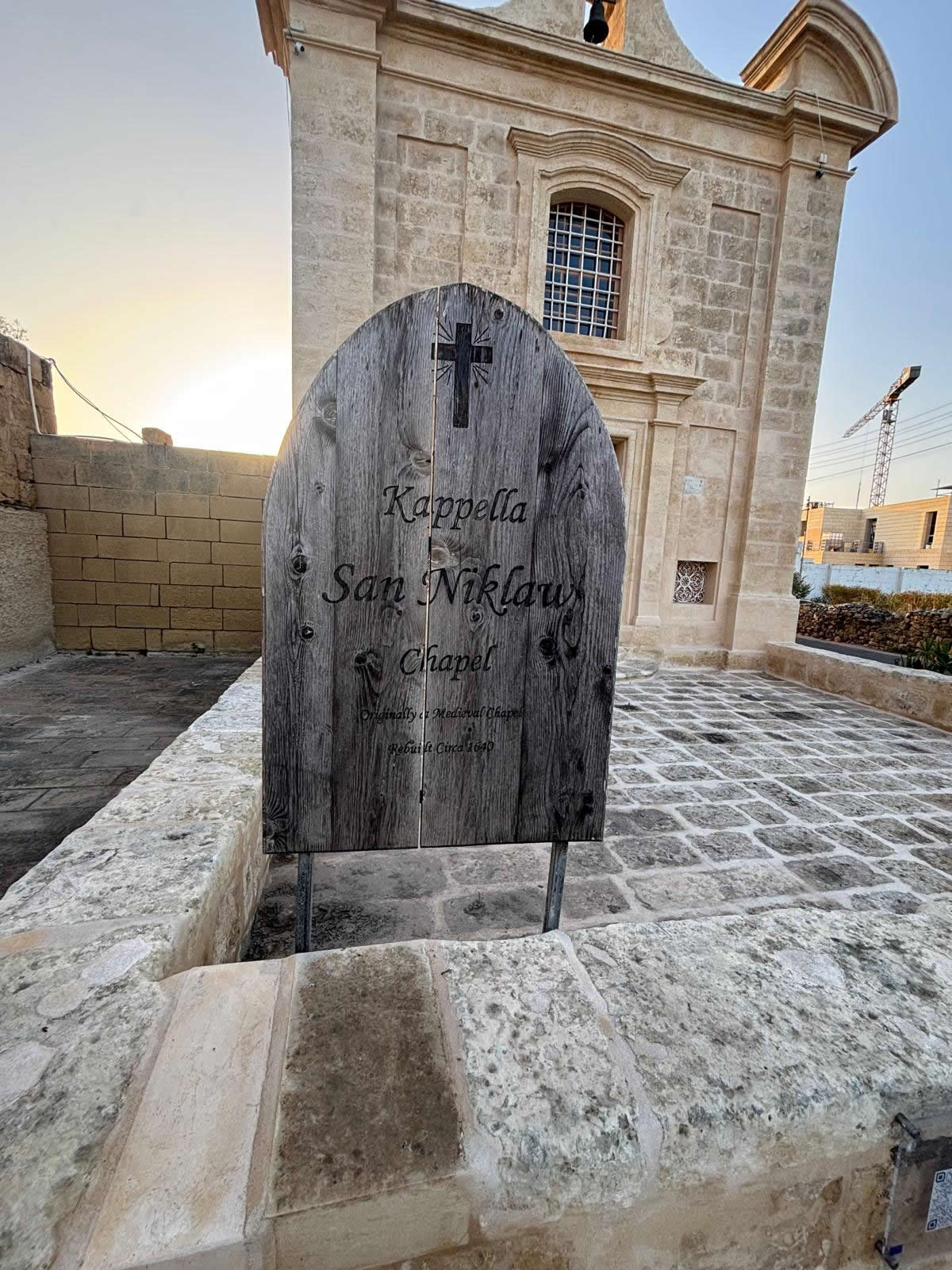
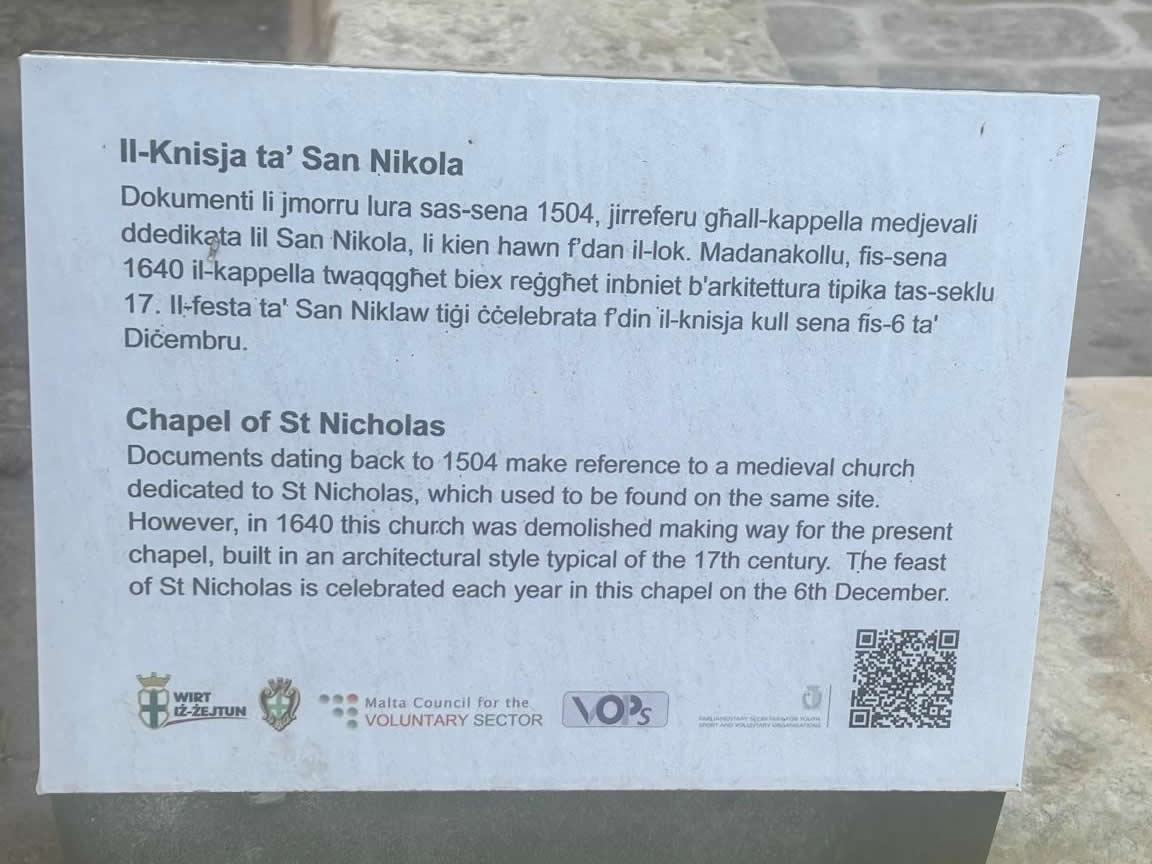
Historical records indicate that an early chapel was constructed in 1504. This early structure served a scattered rural population living in hamlets that have since disappeared. The chapel became an important spiritual centre for agricultural communities in southeastern Malta.
During the Apostolic Visit of Inquisitor Pietro Dusina in 1575, the chapel was officially recorded. The report confirms that regular religious services, including mass and vespers, were held, demonstrating its active role in community worship.
17th Century Reconstruction
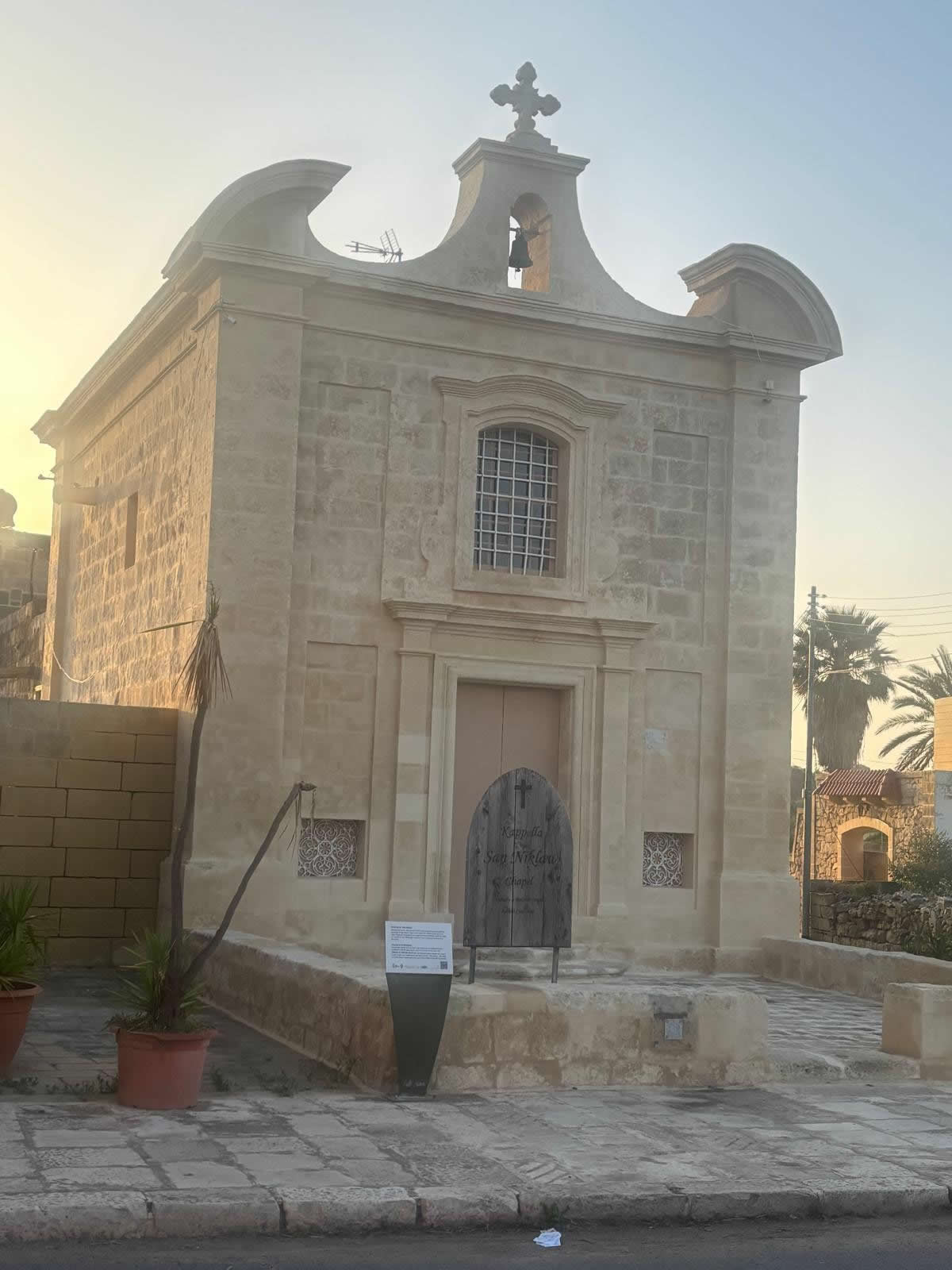
The present structure of Kappella San Niklaw dates to 1640, reflecting a period of widespread rebuilding and architectural development across Malta during the early Baroque period. Earlier chapels on the site had fallen into disrepair and were eventually replaced with a more durable and architecturally refined building.
The reconstruction followed the typical Maltese rural chapel style, combining simplicity with subtle Baroque influences. The chapel's modest scale reflects its purpose as a community place of worship rather than a parish centre.
Architecture and Design
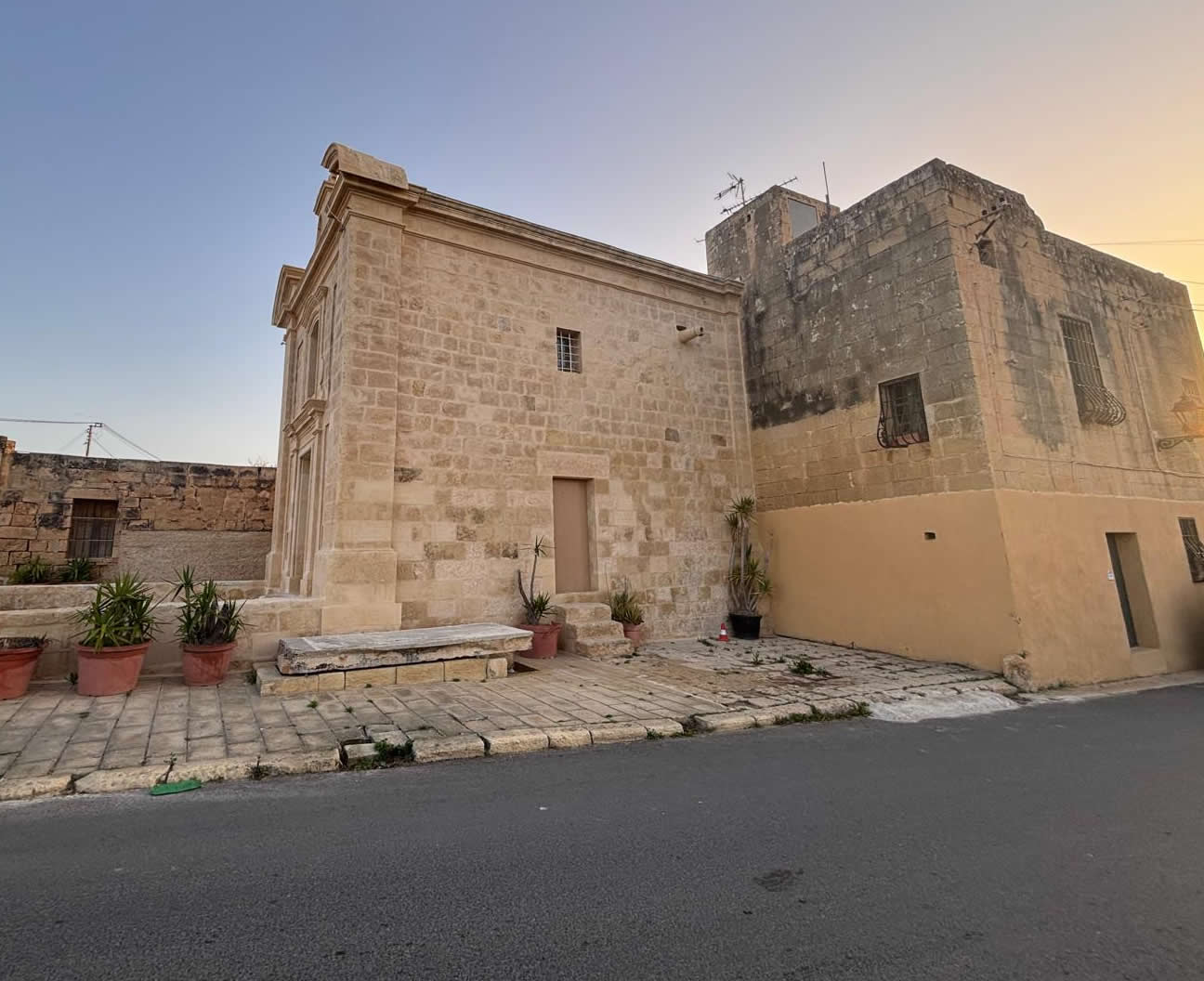
Kappella San Niklaw is an excellent example of a traditional Maltese countryside chapel. Its architecture is characterised by:
- A simple rectangular plan
- Locally quarried limestone construction
- A plain façade with restrained decorative elements
- A small bell cote crowning the structure
- A single nave interior focused on the altar
The architectural restraint of the chapel reflects both the rural setting and the limited resources of the communities it served. Despite this simplicity, the chapel possesses a strong sense of proportion and harmony typical of Maltese ecclesiastical architecture.
Interior and Artistic Elements
While modest in scale, the interior of Kappella San Niklaw holds religious and artistic significance. The focal point is the main altar dedicated to Saint Nicholas, Bishop of Myra, a saint widely venerated across Europe.
Traditionally, such chapels contained paintings or devotional images depicting the saint, often showing Saint Nicholas in episcopal vestments performing acts of charity. Although artworks may have changed or been restored over time, the devotional essence remains intact.
The chapel’s interior design emphasises intimacy and spiritual reflection, consistent with its rural character.
Role in the Local Community
Historically, the chapel served small agricultural communities in the Żejtun countryside. It provided a vital place for worship for farmers and families who lived far from the main parish church.
Even today, the chapel retains its religious function. Mass is still celebrated on specific occasions, including:
- The feast of Saint Nicholas on 6th December
- Monthly masses (traditionally on the first Friday)
- Christmas Eve celebrations
These traditions preserve the chapel’s connection to the local community and its enduring spiritual relevance.
Ownership and Restoration
In modern times, Kappella San Niklaw forms part of the San Niklaw Estate, a privately owned agricultural and heritage property. The estate has played an important role in preserving the chapel and maintaining its structure.
Restoration efforts have ensured that the chapel remains in good condition while respecting its historical authenticity. These works typically involve careful stone conservation, structural reinforcement, and maintenance of traditional features.
Cultural and Heritage Importance
Kappella San Niklaw is an important part of Malta’s network of historic rural chapels. These chapels collectively illustrate:
- The spread of Christianity in rural Malta
- The importance of local devotion and patron saints
- The architectural evolution of small ecclesiastical buildings
Its early origins, documented history, and continued use make it a valuable cultural asset within Żejtun’s historical landscape.
Visiting Kappella San Niklaw
Located at coordinates 35.848885, 14.547425, the chapel lies in a शांत rural area surrounded by fields and countryside paths. Visitors can experience a peaceful atmosphere away from urban centres, making it ideal for those interested in history, architecture, and religious heritage.
As the chapel is situated on private property, visitors are encouraged to respect access guidelines and the surrounding environment.
Frequently Asked Questions (FAQ)
When was Kappella San Niklaw built?
The earliest chapel on the site dates to 1504, while the present structure was built in 1640.
Where is Kappella San Niklaw located?
It is located in Żejtun, Malta, at coordinates 35.848885, 14.547425.
Is the chapel still in use?
Yes, it is still used for religious services, especially during the feast of Saint Nicholas and special occasions.
Who owns the chapel today?
The chapel forms part of the privately owned San Niklaw Estate.
What is the significance of Saint Nicholas?
Saint Nicholas is a widely venerated Christian saint known for his generosity and miracles, and he is the patron saint of sailors, children, and merchants.