📍 Location
Location Map Coordinates 35.886030, 14.404063
Introduction
The chapel inside the Mdina Cathedral Museum is one of Malta’s most refined yet lesser-known Baroque religious spaces. Located within the former seminary building adjacent to St Paul’s Cathedral, this chapel is not visible from the outside and forms an integral part of the museum complex.
Often described as a “museum within a museum,” the chapel stands out for its artistic richness, architectural ingenuity, and historical significance. Its enclosed nature reflects its original function as a private place of worship for seminarians preparing for the priesthood.
Origins and Construction (18th Century)
The chapel was constructed as part of the seminary building developed between 1733 and 1742 under the patronage of Bishop Paul Alphéran de Bussan.
The seminary itself was established in response to reforms introduced by the Council of Trent, which required dioceses to provide structured education for clergy. Within this context, the chapel was designed as the spiritual centre of the institution, where seminarians would gather daily for prayer and religious instruction.
By the mid-18th century, the chapel had become a fully developed liturgical space, reflecting the artistic and architectural trends of Baroque Malta.

Architectural Design and Layout
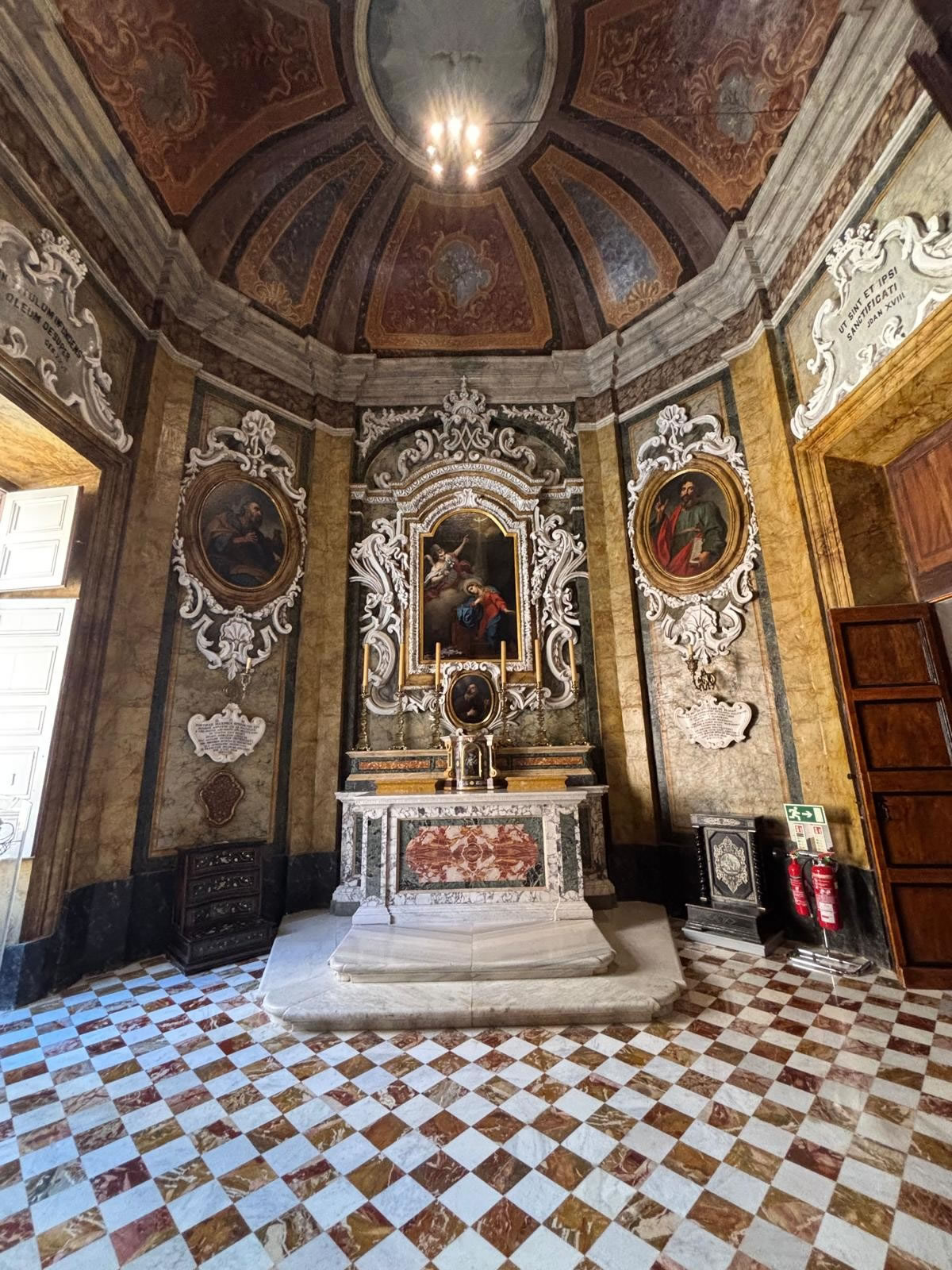
The chapel is notable for its distinctive octagonal plan, a relatively rare design in Maltese ecclesiastical architecture. Located on the piano nobile (first floor) of the seminary, it was strategically positioned to be easily accessible to residents while remaining secluded from the public.
One of its most remarkable features is the illusionistic dome. Rather than a traditional stone cupola, the chapel employs a trompe-l’oeil painted dome, created using canvas stretched over a structural framework.
This technique creates the visual impression of a grand Baroque dome, enhancing the sense of space and grandeur within a relatively compact interior. The effect demonstrates the ingenuity of 18th-century artists and architects in achieving dramatic visual impact with limited resources.

Additional architectural features include:
- Richly decorated stone surfaces with marbled finishes
- Symmetrical layout enhancing liturgical focus
- Carefully proportioned space designed for acoustics and prayer
The overall design reflects the Baroque emphasis on theatricality, emotion, and spiritual engagement.

Artworks and Decorative Programme
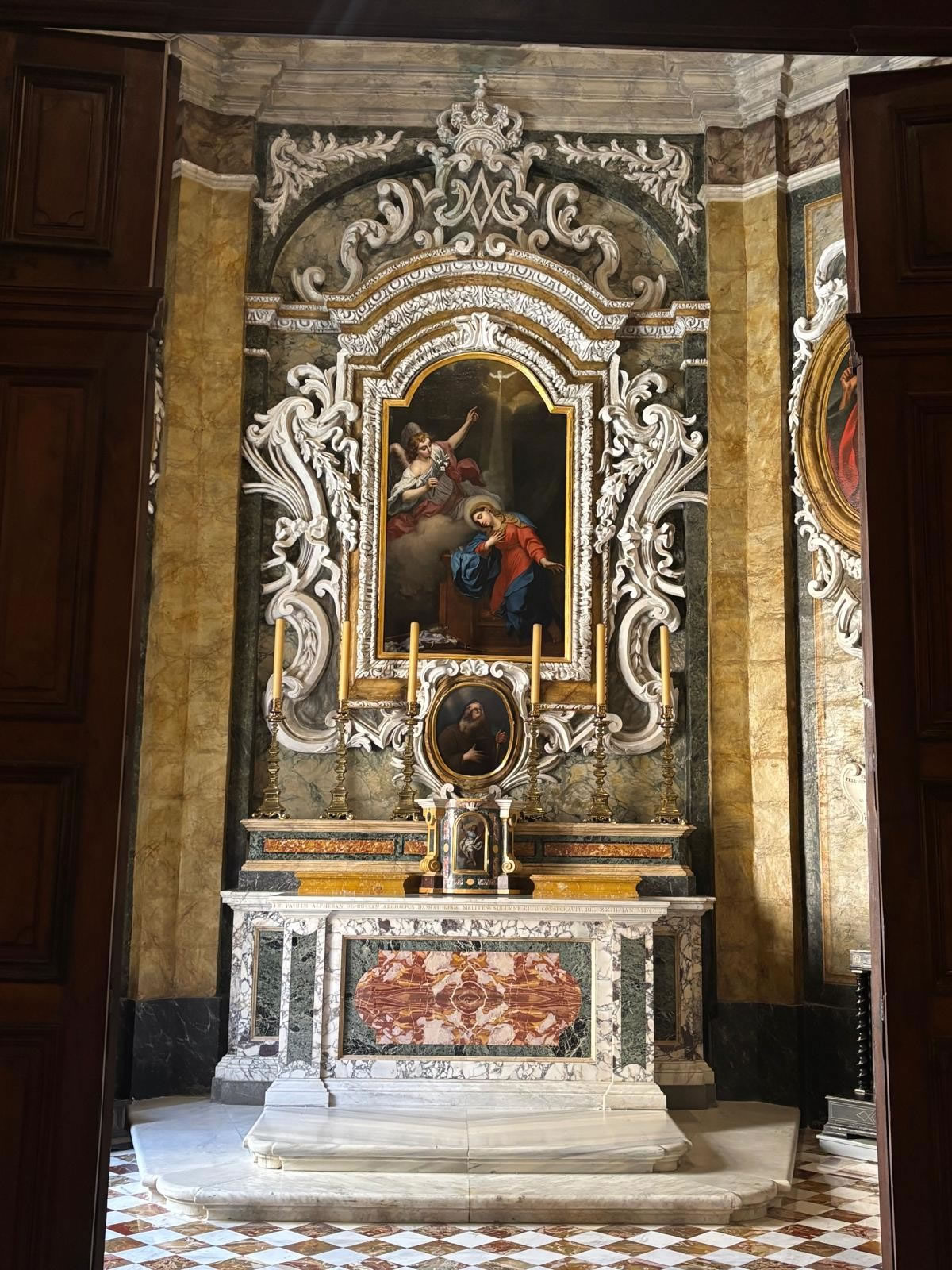
The chapel is renowned for its exceptional collection of paintings commissioned in the 18th century by Bishop Alphéran de Bussan. These works were executed by Antoine Favray, one of the most prominent artists active in Malta during this period.
Completed around 1749, the series consists of five principal paintings forming the core of the chapel’s decorative programme.
Main Altarpiece
The central artwork is the Annunciation, a composition noted for its refined colour palette and expressive quality. It represents one of Favray’s most important works in Malta and serves as the focal point of the chapel.
Flanking Saints
- Saint Peter
- Saint Paul
These figures reinforce the theological identity of the Maltese Church and its connection to apostolic tradition.
Additional Paintings
- Saint Francis de Sales
- Saint Charles Borromeo
These saints were associated with ecclesiastical reform and education, making them particularly relevant within a seminary context.
A smaller elliptical painting by Francesco Zahra, depicting Saint Francis de Paola, adds further artistic depth to the chapel’s collection.
Together, these works create a cohesive visual narrative centred on devotion, education, and spiritual transformation.
Religious Function and Use
Originally, the chapel served as the primary place of worship for seminarians studying at the Mdina seminary. It was here that:
- Daily Mass was celebrated
- Liturgical prayers were conducted
- Students received spiritual formation
The chapel also held personal significance for Bishop Alphéran de Bussan, who was deeply attached to the seminary. Historical accounts indicate that his heart was interred within the chapel, further emphasising its importance. }
This intimate connection between patron, institution, and sacred space highlights the chapel’s role as both a spiritual and symbolic centre.
Transformation into a Museum Space
Following the closure of the seminary in the 19th century, the building underwent several functional changes before being transformed into the Cathedral Museum in 1969.
The chapel was preserved as part of the museum complex and is now accessible to visitors as a historical and artistic exhibit.
Today, it is often described as a “museum within a museum,” showcasing not only religious art but also the architectural and cultural heritage of the seminary itself.
Restoration and Conservation
Over time, the chapel has undergone careful restoration to preserve its delicate decorative elements. Particular attention has been given to the painted dome and structural features.
In recent years, conservation efforts have included work on the chapel’s cupola and decorative finishes, ensuring the long-term stability and visual integrity of the space.
These restoration projects reflect a broader commitment to safeguarding Malta’s cultural heritage while making it accessible to the public.
Unique Characteristics
The chapel inside the Mdina Cathedral Museum is unique among Maltese chapels for several reasons:
- Its octagonal Baroque design
- The use of a trompe-l’oeil dome instead of a real cupola
- Its location within a seminary building rather than as a standalone structure
- Its role as both a liturgical space and museum exhibit
These features make it a rare example of integrated religious and educational architecture.
Visitor Experience
Visitors to the Mdina Cathedral Museum can explore the chapel as part of the museum route. The space offers a quiet and reflective atmosphere, allowing visitors to appreciate its artistic and architectural details up close.
The chapel’s relatively small size enhances its intimacy, providing a contrast to larger and more monumental churches found elsewhere in Malta.
Its location within Mdina, known as the “Silent City,” further contributes to its unique ambiance.
Conclusion
The chapel inside the Mdina Cathedral Museum stands as a remarkable example of Baroque religious architecture and artistic achievement. From its origins as a seminary chapel in the 18th century to its present role as a museum highlight, it encapsulates the spiritual and cultural history of Malta.
Its combination of architectural innovation, artistic excellence, and historical significance makes it an essential part of any exploration of Mdina’s heritage.