📍 Location
Location Map Coordinates 35.900008, 14.518049
Introduction
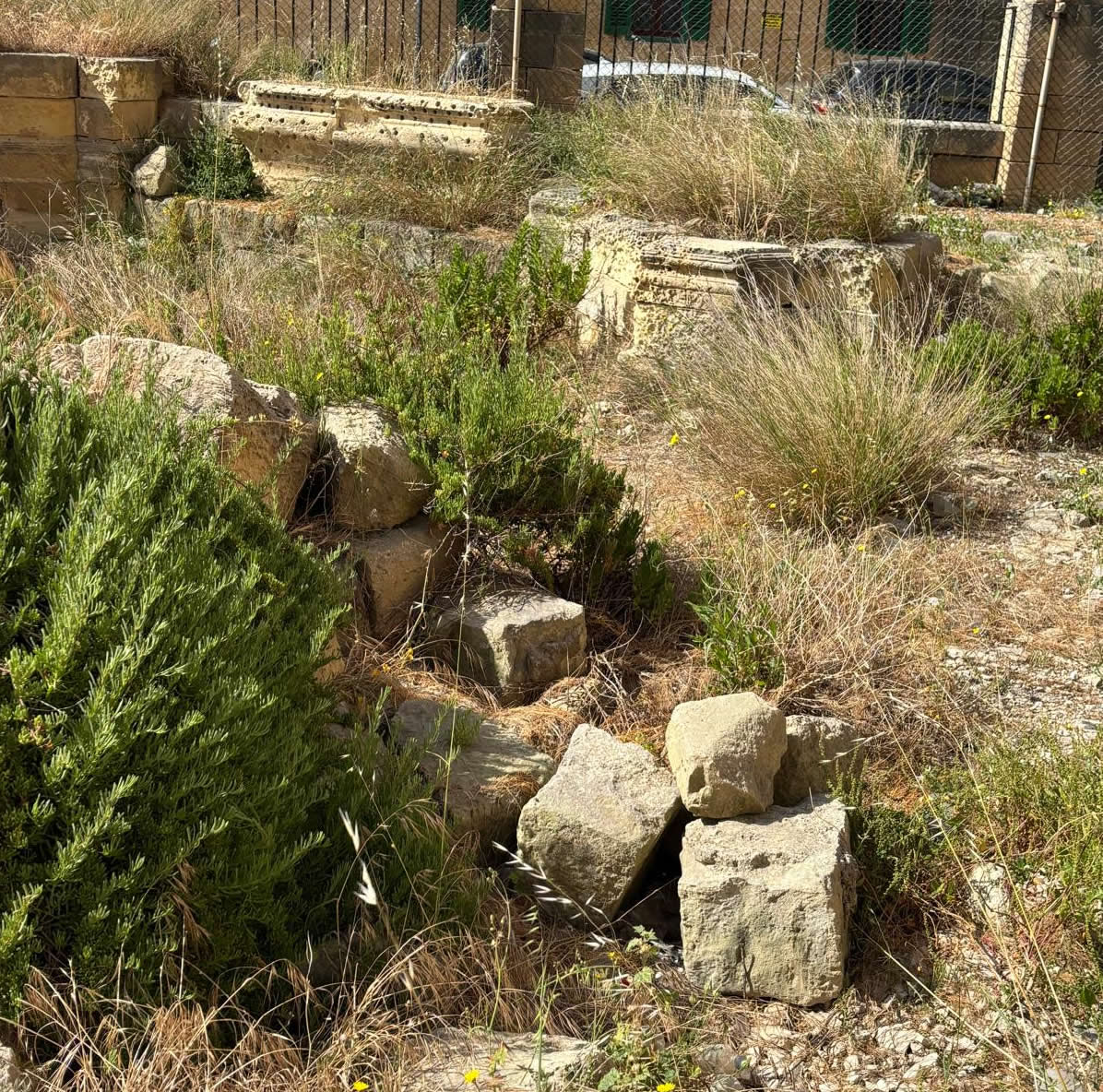
The Nibbia Chapel, once one of Valletta’s most unusual and evocative religious sites, is today reduced to a small collection of ruins hidden within a fenced section of the Evans Building car park. Despite its modest surviving remains, the chapel holds a profound place in Malta’s history, embodying the intersection of faith, medicine, death, and memory.
Known historically as the Chapel of Bones, it stood beside the cemetery of the Sacra Infermeria, the great hospital of the Order of St John. Over centuries, it evolved from a devotional chapel into one of the most striking ossuaries in Europe, before being destroyed during the Second World War.
Today, the site remains largely inaccessible and enclosed, yet it continues to attract historians, archaeologists, and visitors interested in Malta’s rich cultural heritage.

Origins and Foundation (1619)
The chapel was founded in 1619 by Fra Giorgio Nibbia, a Knight of the Order of St John, who financed its construction as an act of piety and charity.
It was dedicated to Our Lady of Mercy and built adjacent to the cemetery used by the nearby Sacra Infermeria. Its primary function was to provide a place of prayer for the souls of deceased patients who had died in the hospital, reflecting the Hospitaller mission of care for both body and soul.
Fra Giorgio Nibbia himself was buried at the site, further cementing the chapel’s personal and spiritual significance.

The Sacra Infermeria and Medical Context
The proximity of the chapel to the Sacra Infermeria is crucial to understanding its role. This hospital, operated by the Knights, was among the most advanced medical institutions of its time, treating patients from across Europe.
The chapel formed part of a wider funerary and medical landscape in Valletta, where death, healing, and religious devotion were closely intertwined.

Baroque Reconstruction (1731)
By the early 18th century, the original chapel was dismantled and rebuilt in 1731 in the Baroque style, attributed to architect Romano Carapecchia.
The rebuilt structure featured:
- An octagonal plan
- A central dome
- Decorative pilasters and classical elements
- A refined Baroque façade
This transformation aligned the chapel with the broader Baroque identity of Valletta during the period of the Knights of St John.
The Chapel of Bones (1852)
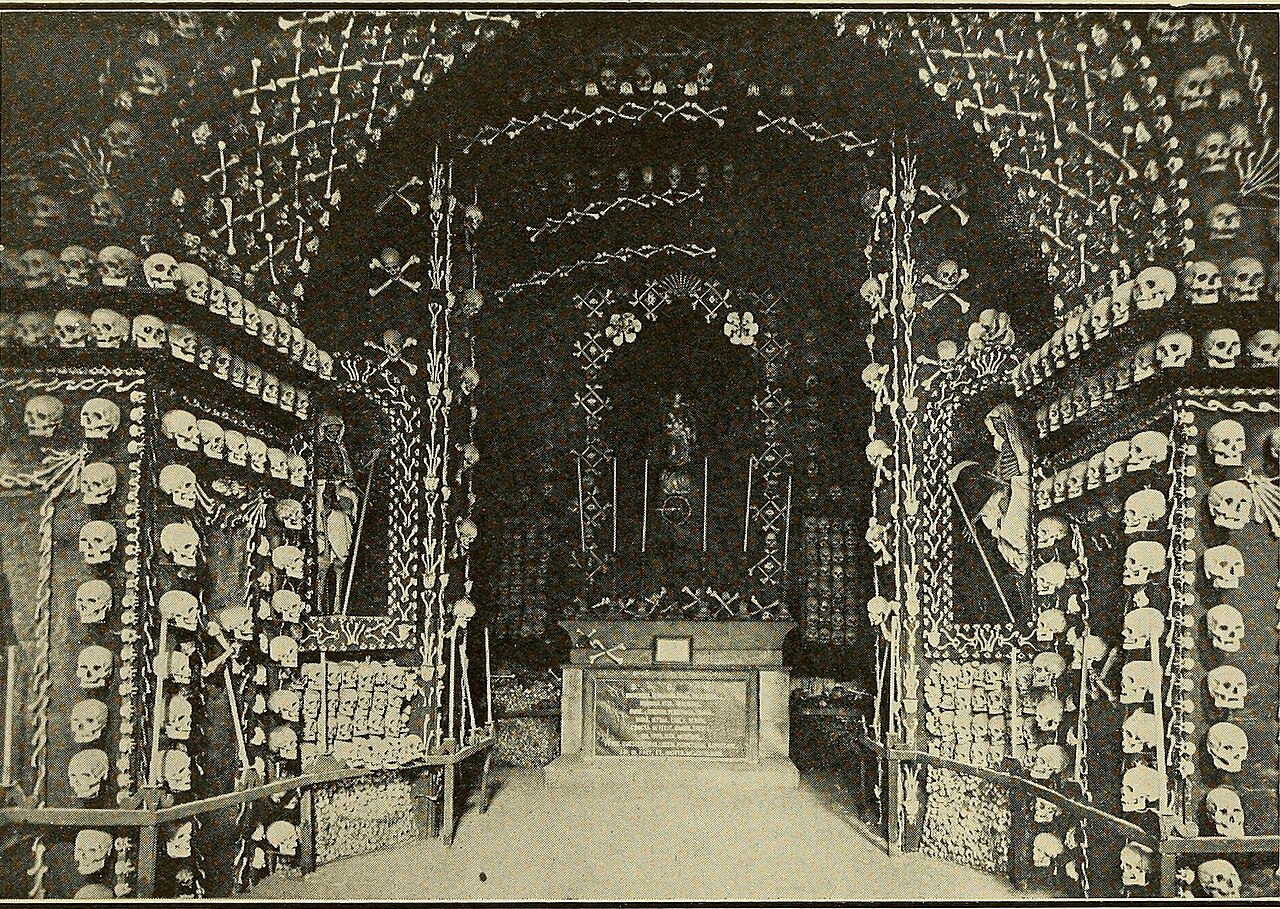
The most remarkable phase in the chapel’s history began in 1852, when the hospital chaplain arranged human remains from the nearby cemetery within the crypt.
These bones were not simply stored—they were arranged in decorative patterns along the walls, forming symbolic designs that reflected Christian themes of mortality and resurrection.
This transformation earned the chapel its famous nickname: Il-Kappella tal-Għadam — The Chapel of Bones.
Far from being macabre in intent, the ossuary served as a powerful reminder of the transience of life, echoing the Latin concept of memento mori.
By the late 19th and early 20th centuries, the chapel had become a notable attraction, frequently visited by locals and travellers alike.

Architecture and Crypt
The chapel was a compact but striking Baroque structure built from Maltese limestone. Its interior led to a vaulted underground crypt which served as an ossuary.
The crypt:
- Contained thousands of human bones
- Featured artistic arrangements forming religious symbols
- Included an altar and inscriptions reflecting mortality
Although the superstructure has been lost, it is widely believed that parts of the crypt may still survive beneath the modern surface, hidden below the current site.
Destruction During World War II (1941)
On 14 February 1941, during intense aerial bombardment of Valletta in the Second World War, the chapel was severely damaged.
This marked the beginning of its decline. Although remnants survived the bombing, the structure was ultimately demolished in the late 1970s, leaving only fragments of its foundations.
Some human remains were reportedly relocated to the Addolorata Cemetery, though the exact fate of the crypt remains uncertain.
Modern Site and Current Condition
Today, the remains of the Nibbia Chapel are located within a fenced and largely neglected area of the Evans Building car park in Valletta.
Visible elements include:
- Sections of foundation walls
- The sarcophagus of Fra Giorgio Nibbia
- Fragmentary architectural remains
The site has been scheduled as a protected monument, but access is restricted and the area is not formally open to the public.
Despite occasional restoration efforts, the remains have suffered from neglect and environmental exposure.
Folklore and Cultural Memory
Over time, the chapel became associated with local legends, including stories of a headless knight said to haunt the area—an example of how historical sites can inspire folklore rooted in their atmosphere and past.
These stories, while not historically verified, contribute to the cultural identity of the site and reflect its lasting impression on Maltese memory.
Cultural and Historical Significance
The Nibbia Chapel represents a unique convergence of:
- Religious devotion and funerary practice
- Medical history linked to the Knights of St John
- Baroque architectural heritage
- Ossuary traditions and memento mori symbolism
Its association with the Sacra Infermeria makes it particularly significant within the broader context of Malta’s healthcare and humanitarian history.
Even in ruin, it remains one of Valletta’s most intriguing lost landmarks.
Visiting the Site
The remains of the Nibbia Chapel can be viewed from outside the fenced area near the Evans Building in Valletta.
Coordinates: 35.900008, 14.518049
Access is restricted, and visitors should respect the site’s protected status. The surrounding area includes several important landmarks, including the Lower Barrakka Gardens and the Mediterranean Conference Centre.
Conclusion
Although little survives of the Nibbia Chapel today, its historical and cultural importance remains immense. From its origins as a charitable chapel serving hospital patients to its transformation into the haunting Chapel of Bones, it tells a powerful story about life, death, and faith in Malta.
Now confined to a fenced corner of a modern car park, the site stands as both a reminder of Valletta’s layered past and a call for continued preservation of its fragile heritage.
Frequently Asked Questions
Where is the Nibbia Chapel located?
It is located in Valletta near the Evans Building at coordinates 35.900008, 14.518049.
Why was it called the Chapel of Bones?
Because its crypt was decorated with human skeletal remains arranged in artistic patterns.
Can you visit the chapel today?
The site is fenced off and not accessible, but remains can be viewed from outside.
What remains of the chapel today?
Only foundations, fragments, and the sarcophagus of its founder survive.