📍 Location
Location Map Coordinates 35.899624, 14.515790

The Oratory of the Rosary is a historically and artistically significant chapel located within St Dominic’s Priory in Valletta, Malta. Positioned at coordinates 35.899624, 14.515790, it forms part of the Dominican complex adjacent to St Dominic’s Church, one of the principal religious institutions in the capital.

Origins and Dominican Context
The oratory is closely associated with the Dominican Order, which established its presence in Valletta shortly after the foundation of the city in the late 16th century.
The Dominicans played a central role in promoting devotion to the Rosary, a practice deeply rooted in their spirituality and widely encouraged following the Counter-Reformation.
The Archconfraternity of the Holy Rosary, founded around 1575, was attached to the Dominican parish and used the oratory as its spiritual centre.
The Confraternity and Its Charitable Mission
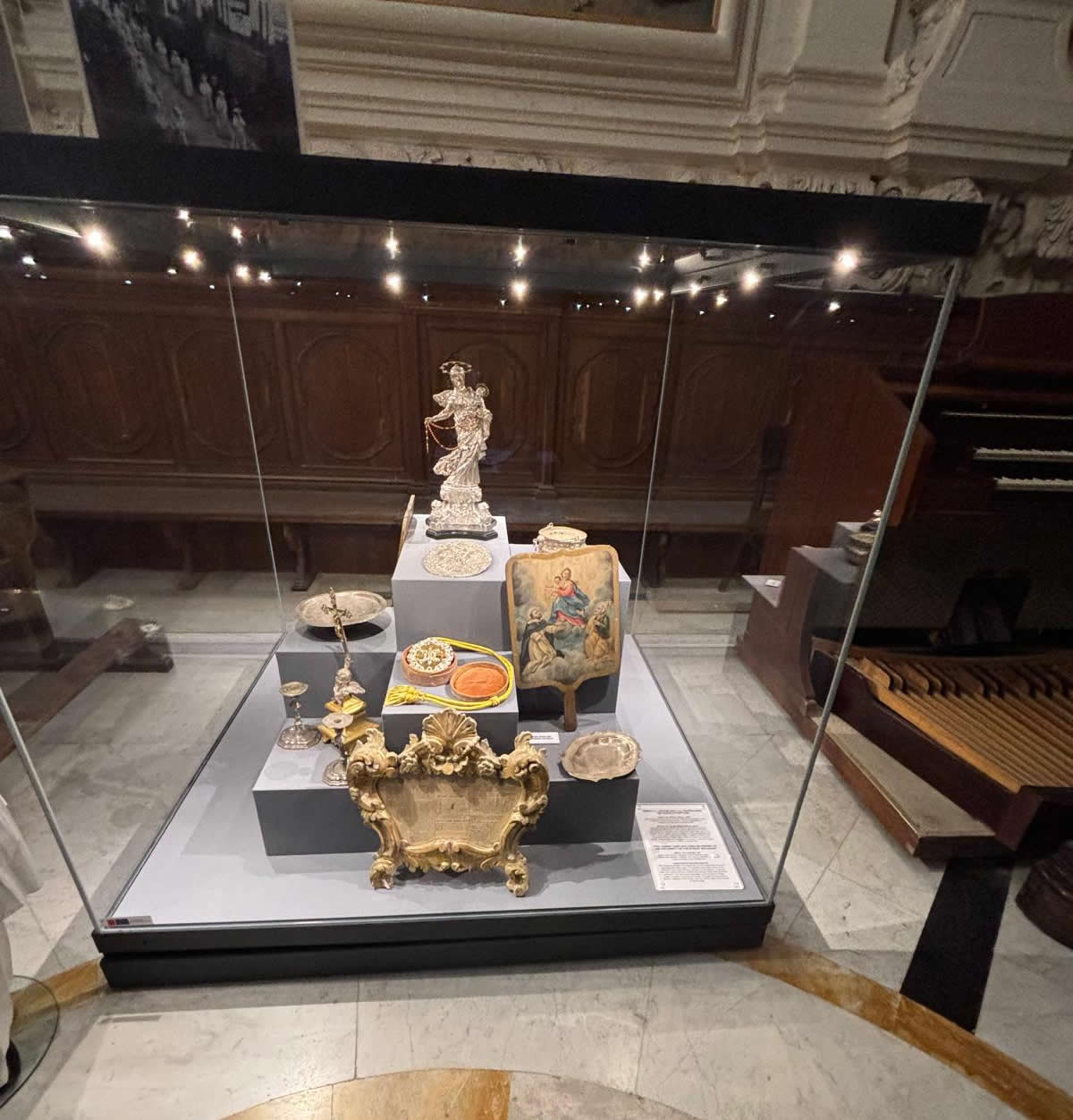
The confraternity was not only a devotional society but also an important charitable organisation. One of its most distinctive roles was assisting families of individuals condemned to capital punishment.
Members provided spiritual support, material assistance, and accompaniment during difficult times, reflecting the Christian values of mercy and compassion. This humanitarian work formed a key part of the confraternity’s identity and legacy.
Architectural Character
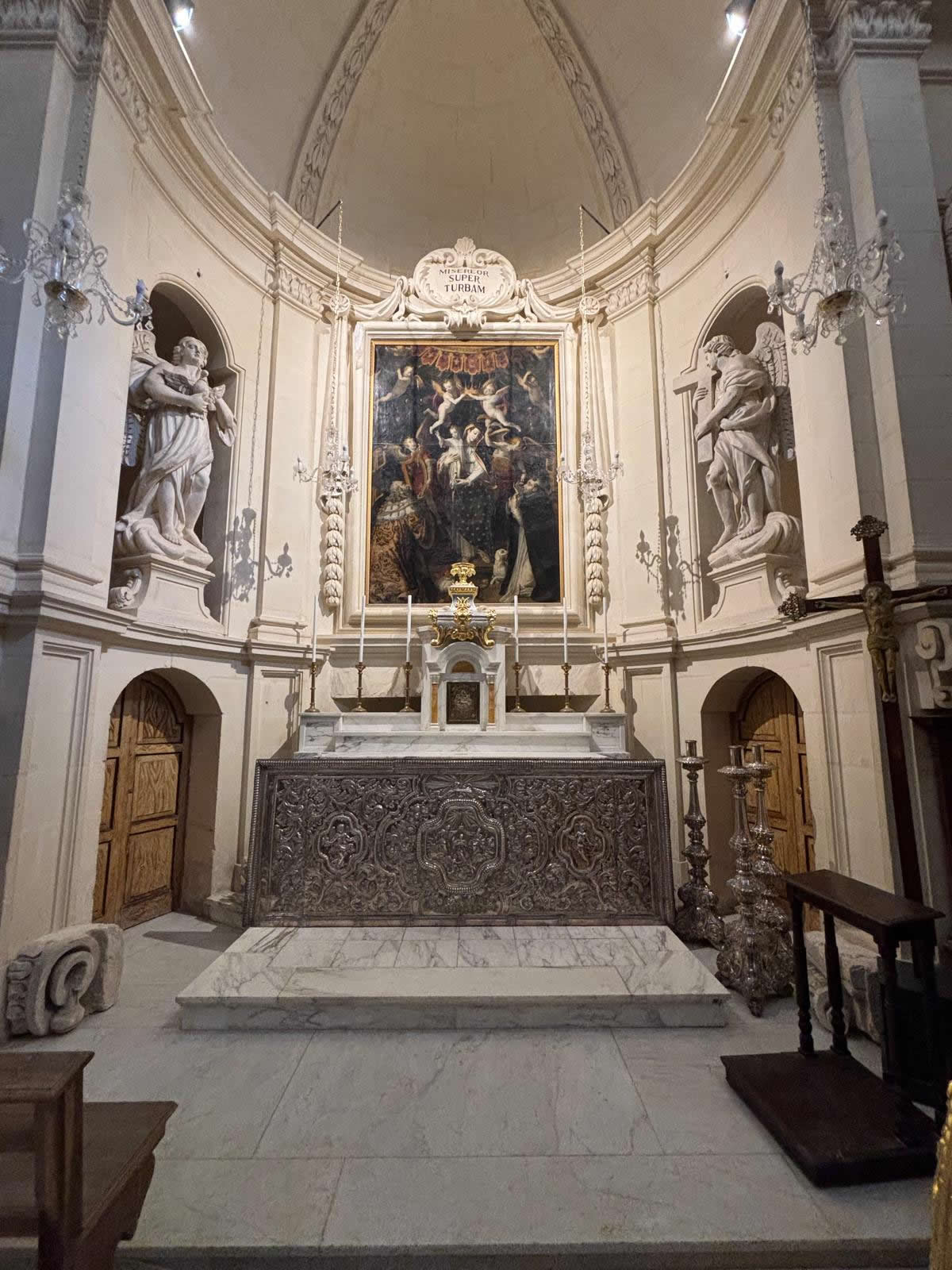
The Oratory of the Rosary follows the traditional layout of confraternity oratories in Malta. Unlike large parish churches, it is designed as a more intimate space for prayer and meetings.
Key architectural features include:
- A rectangular plan with a central altar
- Rich decorative interior typical of Baroque influence
- Wall surfaces adapted for extensive painted cycles
- Integration within the priory complex

Artistic Programme and Iconography
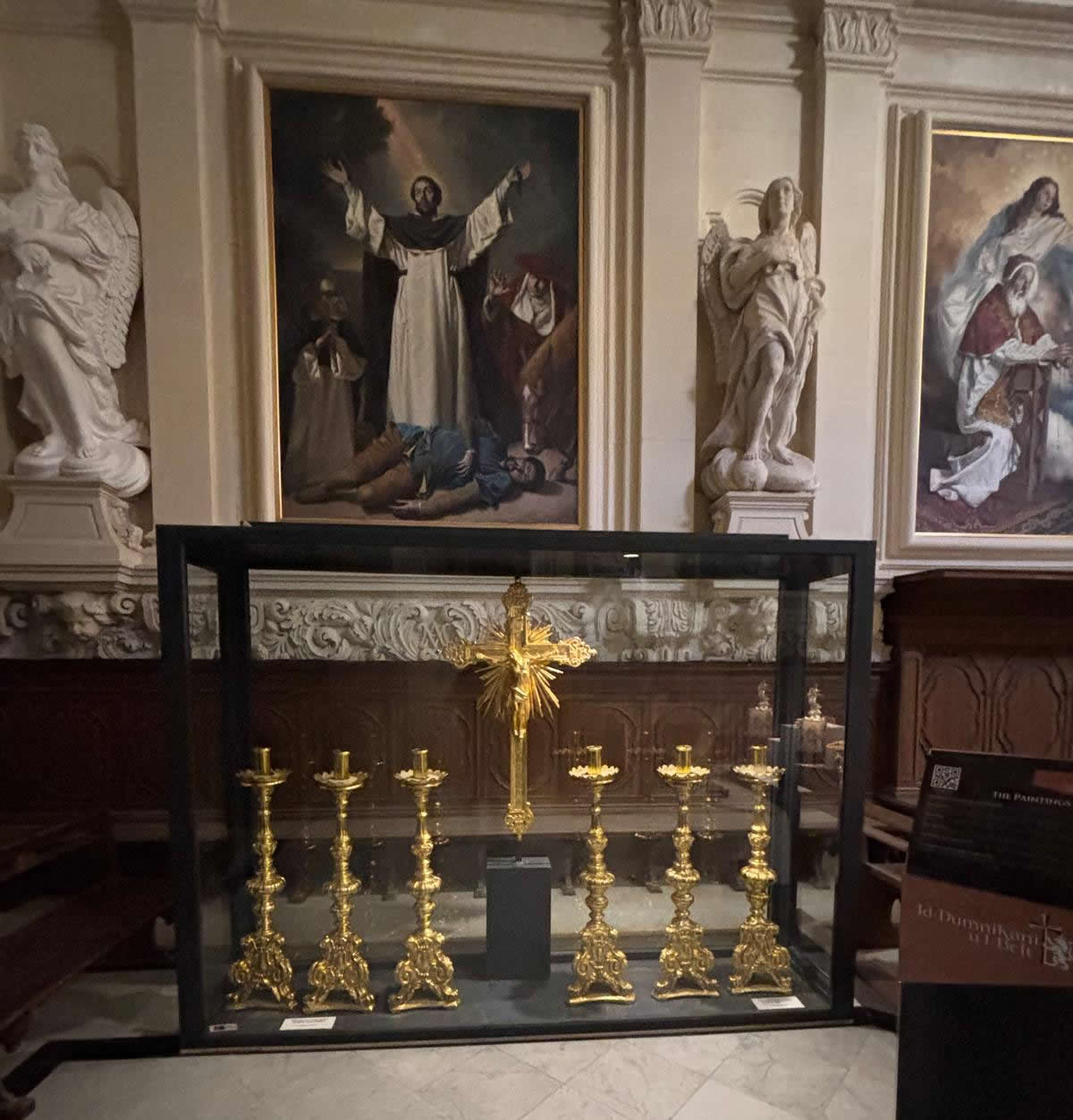
One of the most striking aspects of the oratory is its artistic decoration. The interior includes modern artworks that depict:
- The miracles of St Dominic
- The Battle of Lepanto (1571)
The inclusion of Lepanto is particularly significant. The victory of the Christian fleet over the Ottoman Empire was widely attributed to the intercession of the Virgin Mary through the Rosary. This event cemented the Rosary’s importance in Catholic devotion.
The artistic cycle therefore serves both a devotional and historical purpose, linking local religious practice with wider European events.
The Battle of Lepanto and Marian Devotion
The Battle of Lepanto remains one of the most celebrated naval victories in Christian history. Its association with the Rosary led to the establishment of the feast of Our Lady of the Rosary, commemorated annually in the Catholic Church.
Within the oratory, depictions of Lepanto reinforce the message of divine intervention and the power of prayer, themes central to Dominican spirituality.

Liturgical and Devotional Life
The oratory continues to serve as a place of prayer, particularly for members of the Dominican community and associated confraternities. Devotions typically include:
- Recitation of the Rosary
- Participation in feast celebrations
- Private prayer and reflection
The annual feast of Our Lady of the Rosary is celebrated with particular solemnity in Valletta, including liturgical services and processions.
Relationship with St Dominic’s Basilica
The oratory forms part of the larger Dominican complex, which includes the Basilica of St Dominic. Founded in 1571, the church and priory have played a central role in Valletta’s religious life since the city’s early years.
This close relationship enhances the significance of the oratory, placing it within one of Malta’s most historically important ecclesiastical settings.
Restoration and Preservation
Like many historic religious spaces in Valletta, the Oratory of the Rosary has undergone conservation efforts to preserve its artworks and structure. These efforts ensure the continued appreciation of its artistic and historical value.
Preservation work typically focuses on:
- Cleaning and stabilising painted surfaces
- Maintaining structural integrity
- Protecting decorative elements from environmental damage
Modern Relevance
Today, the Oratory of the Rosary remains an important cultural and spiritual site. It represents:
- The legacy of Dominican spirituality in Malta
- The historical role of confraternities
- The integration of art, faith, and social service
Its continued use and preservation highlight the enduring importance of Valletta’s religious heritage.
Latin Inscription
SACELLVM HOC
VIRGINI SANCTAE A ROSARIO
ANNO MDCLXXXXVII CONDITVM
EXARDESCENTE BELLO FVNDITVS EVERSVM
ANNO MCMXLI
SODALES EIVSDEM VIRGINIS
QVI
OB VARIA PIETATIS OFFICIA
ERGA DAMNATOS CAPITIS
CLORIOSVM A MISERICORDIA NOMEN
OBTINVERVNT
NE SEDE SVA DIV ORBATI MANEANT
NOVVM NOVOQVE CVLTV EXORNATVM
ANNO MCMLV
EXSTRVENDVM CVRAVERUNT
English Translation
This chapel,
dedicated to the Blessed Virgin of the Rosary,
was built in the year 1697.
Destroyed to its foundations during the raging war
in the year 1941,
the members of the same confraternity of the Virgin,
who,
through their various works of piety
towards those condemned to death,
had obtained the glorious name of mercy,
lest they remain deprived of their place,
caused it to be rebuilt and adorned
with renewed devotion
in the year 1955.

Location and Access
Location: St Dominic Street, Valletta
Coordinates: 35.899624, 14.515790
The oratory is located within St Dominic’s Priory and may be accessed as part of the church complex.
Conclusion
The Oratory of the Rosary in Valletta is a remarkable example of a Dominican confraternity chapel, combining rich history, meaningful charitable work, and powerful artistic expression. Its connection to the Rosary devotion and the Battle of Lepanto gives it both local and international significance.
As part of the Dominican Priory, it continues to serve as a place of prayer while preserving an important chapter of Malta’s religious and cultural history.

Frequently Asked Questions
What is the Oratory of the Rosary?
A Dominican confraternity chapel located in St Dominic’s Priory in Valletta.
What artworks does it contain?
It features depictions of the miracles of St Dominic and the Battle of Lepanto.
What was its charitable role?
The confraternity supported families of condemned prisoners.
Where is it located?
Inside St Dominic’s Priory, next to St Dominic’s Church in Valletta.
To explore more historic chapels across the Maltese Islands, visit our directory: Oldest Chapels in Malta and Gozo.