📍 Location
Location Map Coordinates 35.922317, 14.454266
Introduction
The Santa Marija (Ta’ Bernarda) Chapel, located at coordinates 35.922317, 14.454266 in the historic core of Għargħur, Malta, is one of the village’s oldest and most culturally significant religious structures. Dedicated to the Assumption of the Blessed Virgin Mary, the chapel reflects centuries of Marian devotion and forms an integral part of Għargħur’s religious heritage.
The chapel is commonly known as “Ta’ Bernarda”, a name derived from its benefactor Bernarda Cauchi, whose endowment in the 16th century ensured its construction and continued use.
Despite its modest size, the chapel encapsulates key elements of Maltese history, including medieval origins, early parish life, architectural simplicity, and modern restoration efforts.
Medieval Origins and Early Development
The origins of Santa Marija Ta’ Bernarda date back to at least the 15th century, making it one of the earliest religious sites in Għargħur.
During this period, Għargħur was a rural settlement under the jurisdiction of Naxxar, and small chapels such as this one served as essential centres of worship for dispersed agricultural communities.
Historical records indicate that the chapel was rebuilt multiple times during the 16th century, always maintaining its original medieval plan.
The presence of this chapel among those recorded in the 1575 apostolic visitation highlights its importance within the early religious network of Għargħur, which included several chapels dedicated to different saints and Marian devotions.
The Legacy of Bernarda Cauchi
The chapel’s distinctive name originates from Bernarda Cauchi, a benefactor who left a legacy in 1571 to support its construction or rebuilding.
This act of patronage reflects a common practice in Maltese religious history, where individuals funded chapels as expressions of faith, social status, or spiritual devotion.
Bernarda Cauchi’s contribution ensured that the chapel would continue to serve the community, and her name remains permanently associated with the site.
Later rebuilding works, particularly in the 17th century (around the 1650s), further solidified the chapel’s structure and appearance.
Architectural Design and Features
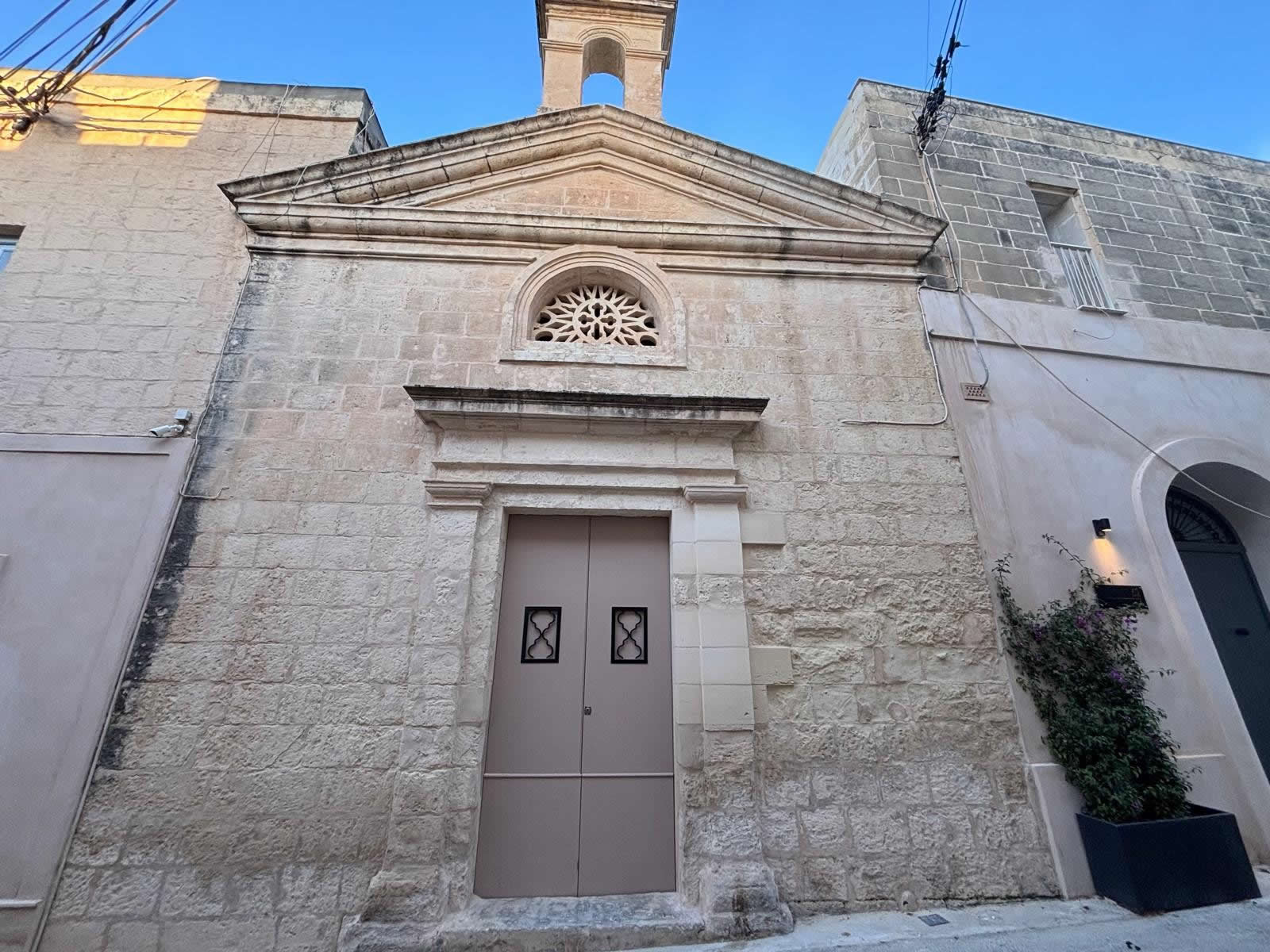
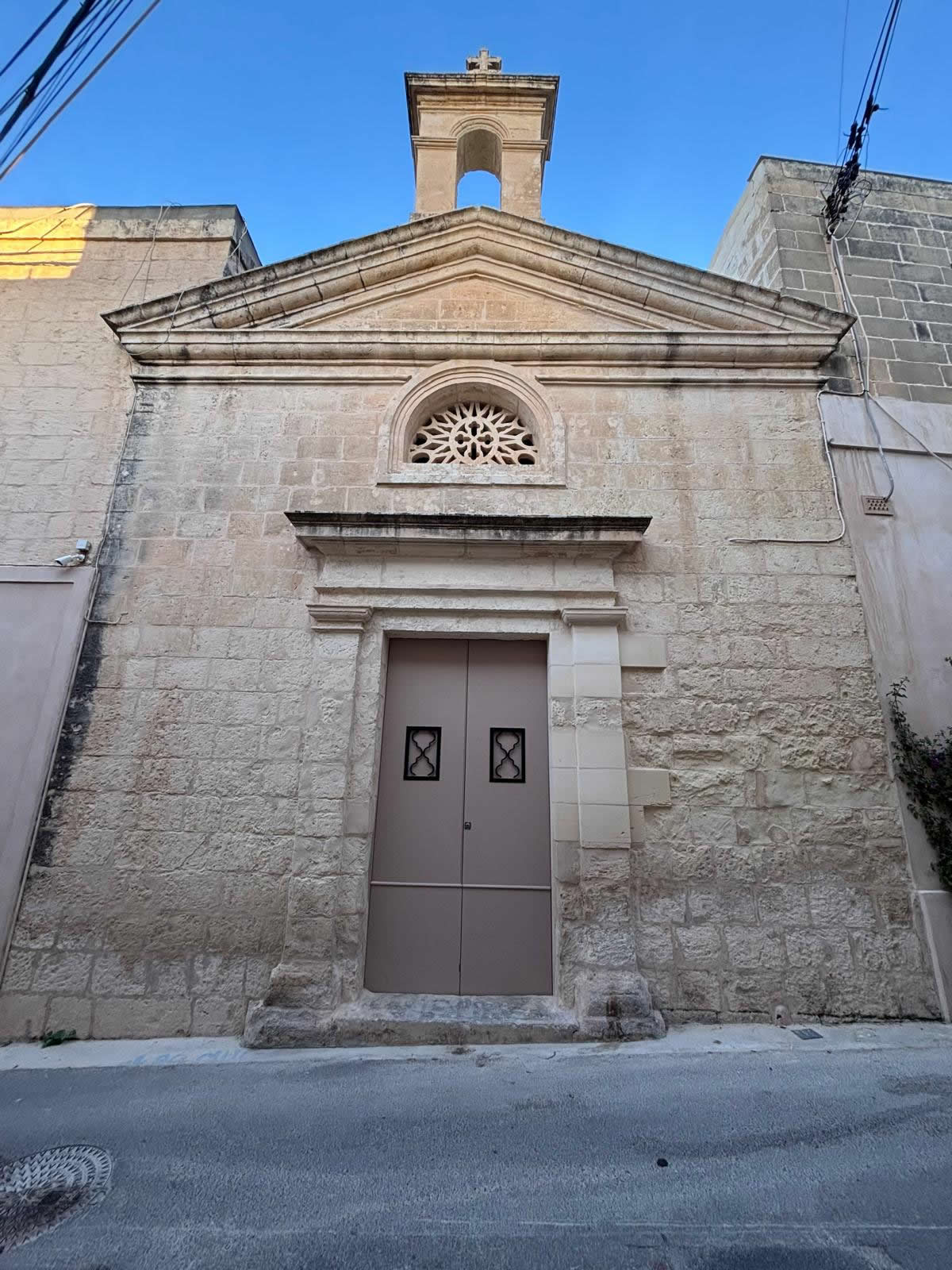
Santa Marija Ta’ Bernarda is an excellent example of a traditional Maltese rural chapel, characterised by simplicity and functional design.
Exterior Architecture
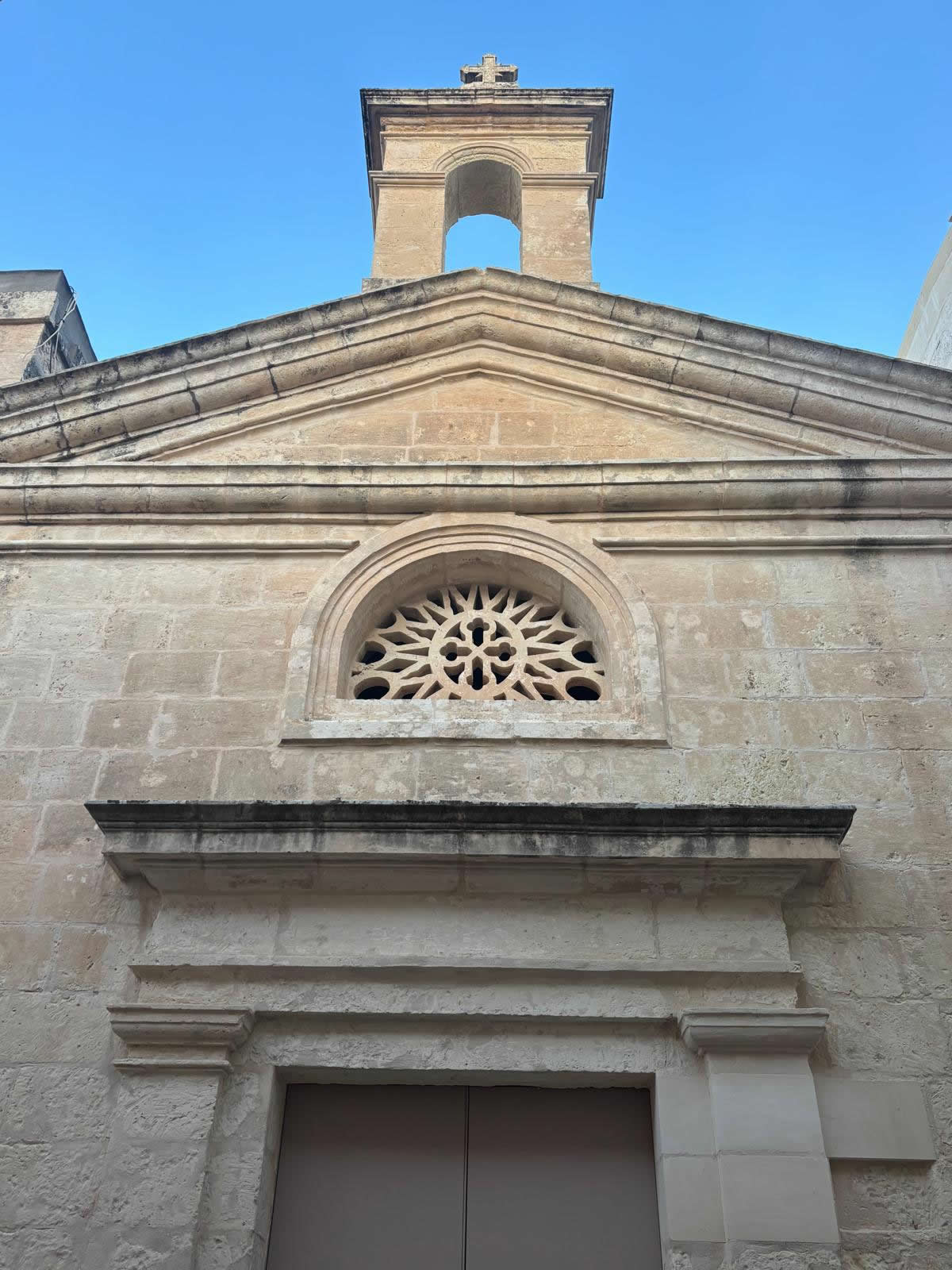
- Plain limestone façade with minimal ornamentation
- Entrance framed by two pilasters
- Triangular pediment crowning the façade
- Central bell cote with a small bell and cross
- Distinctive semicircular window above the doorway
The façade’s restrained design reflects the chapel’s rural origins and devotional purpose rather than architectural grandeur.
Interior Layout
- Single nave plan
- Stone flagstone flooring
- Central altar dedicated to the Virgin Mary
The chapel’s interior is simple and contemplative, designed to facilitate prayer and reflection rather than elaborate ceremonial display.
Religious Role and Marian Devotion
The chapel is dedicated to the Assumption of the Virgin Mary, one of the most important Marian feasts in Malta. This dedication aligns with the strong tradition of Marian devotion found throughout the Maltese Islands.
Historically, the chapel would have been used for:
- Daily prayers and local Masses
- Feast celebrations related to the Assumption
- Private devotional practices
Its central location within the village made it easily accessible to residents, reinforcing its role as a focal point of spiritual life.
Connection to Burial Practices
Records from a pastoral visit in 1634 indicate that the chapel once included a cemetery.
This highlights the historical practice of burial in or near chapels, which was common in Malta before the establishment of larger, dedicated cemeteries outside village centres.
The presence of a burial ground further emphasises the chapel’s importance as both a spiritual and communal site.
Decline and Restoration
Like many historic chapels in Malta, Santa Marija Ta’ Bernarda experienced periods of deterioration due to age, weathering, and reduced use.
In recent years, restoration projects have been undertaken to preserve the chapel. These included:
- Structural repairs and stone conservation
- Cleaning and restoration of façade surfaces
- Installation of improved lighting and audio systems
These works were supported in part by European Union funding, ensuring the chapel’s continued use and preservation.
Additional restoration of interior paintings has also been planned, further enhancing the chapel’s cultural value.
Artworks and Interior Elements
Although modest, the chapel contains important devotional elements typical of Maltese Marian chapels:
- A titular painting of the Assumption of the Virgin Mary
- Traditional altar furnishings
- Religious imagery reflecting Marian themes
These elements contribute to the chapel’s spiritual atmosphere and historical authenticity.
Cultural and Historical Importance
Santa Marija Ta’ Bernarda holds a special place in Għargħur’s history. It represents:
- One of the earliest chapels in the village
- The role of private patronage in religious construction
- The continuity of Marian devotion over centuries
- The evolution of burial practices in Malta
Together with other chapels in Għargħur, it forms part of a unique concentration of historic religious buildings within a single locality.
Location and Setting
📍 Coordinates: 35.922317, 14.454266 📍 Location: Għargħur village centre, Malta
Unlike many rural chapels located on the outskirts, Santa Marija Ta’ Bernarda is situated within the village core, reflecting its importance to the local community.
Its central position contrasts with other Għargħur chapels such as Taż-Żellieqa, highlighting the diversity of chapel placement across the locality.
Modern Use
Today, the chapel remains an active part of Għargħur’s religious and cultural landscape. While not used for daily services, it continues to host occasional Masses and devotional gatherings.
It also forms part of Malta’s heritage tourism network, attracting visitors interested in:
- Historic chapels
- Maltese religious traditions
- Architectural heritage
Explore more historic chapels: Oldest Chapels of Malta & Gozo
Frequently Asked Questions (FAQ)
When was Santa Marija Ta’ Bernarda Chapel built?
It dates back to the 15th century and was rebuilt several times, including in the 17th century.
Who was Bernarda Cauchi?
She was the benefactor who funded the chapel through a legacy in 1571.
What is the chapel dedicated to?
It is dedicated to the Assumption of the Virgin Mary.
Did the chapel have a cemetery?
Yes, historical records indicate it once included a burial ground.
Has the chapel been restored?
Yes, it has undergone modern restoration funded partly by EU initiatives.
To explore more historic chapels across the Maltese Islands, visit our directory: Oldest Chapels in Malta and Gozo.