📍 Location
Location Map Coordinates 35.903303, 14.500257
The Silent Sentinel of the Lazzaretto Cemetery (Il-Ħofra)
Introduction
The history of St. George’s Chapel is inextricably linked to the Lazzaretto on Manoel Island (formerly Isolotto). Built during the rule of the Order of St. John, the Lazzaretto served as a quarantine facility for passengers, crew, and goods arriving from plague-infested regions.
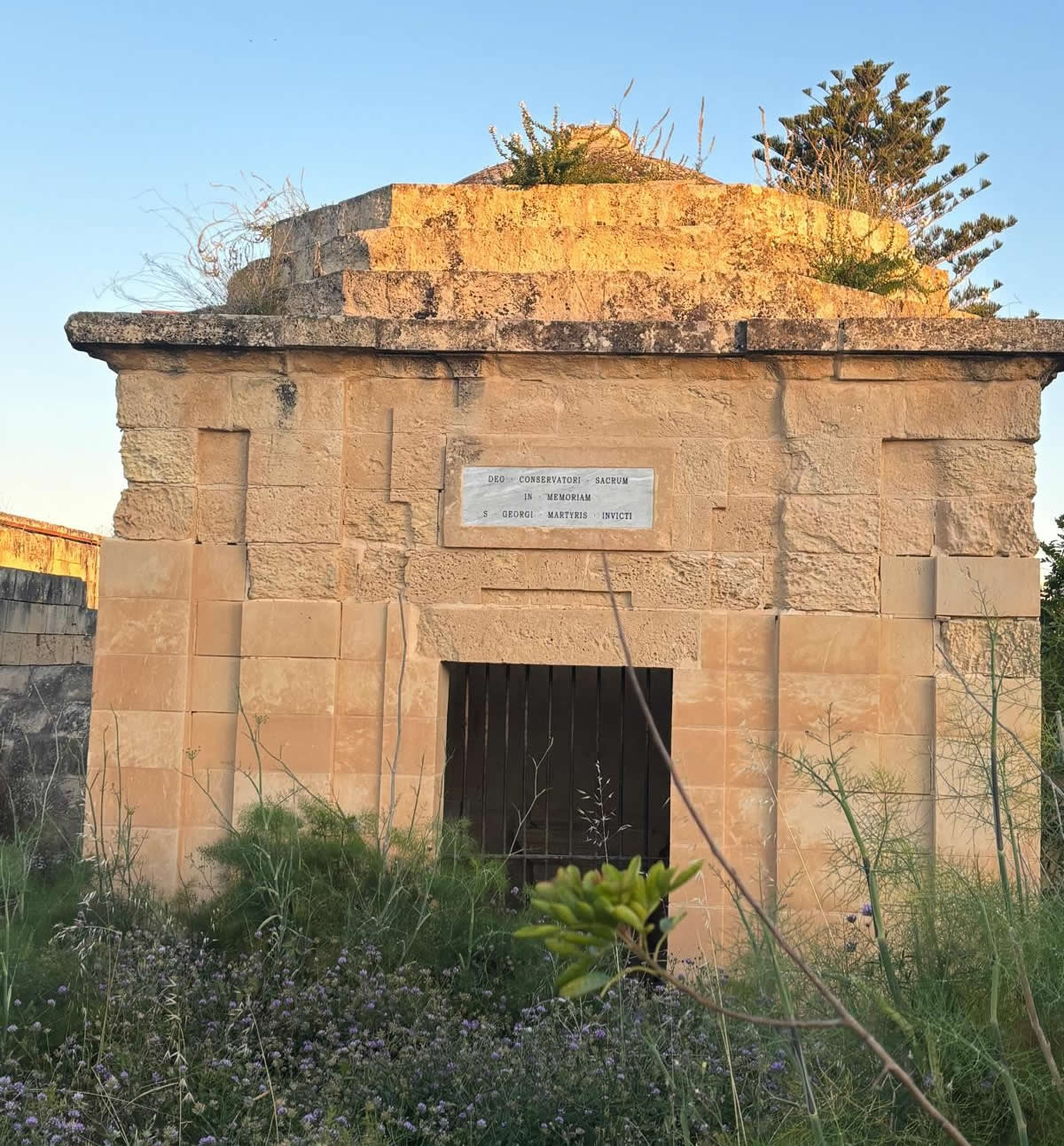
By the early 19th century, during the British Protectorate, the need for a dedicated burial ground for those who succumbed while in quarantine became urgent. This led to the establishment of the cemetery popularly known as "Il-Ħofra" (The Pit/Hole), due to its location in a reclaimed ditch or hollowed-out area near the quarantine buildings.
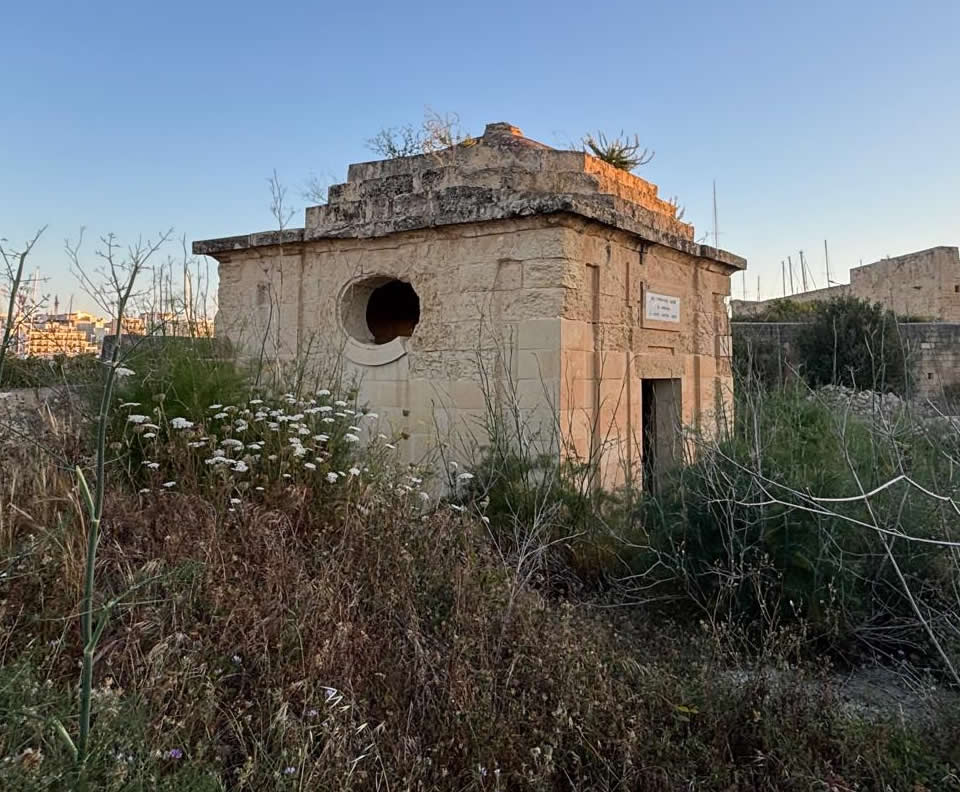
Positioned on Manoel Island—an islet in Marsamxett Harbour—the chapel is associated with early post-Great Siege developments and later with the island’s transformation into a quarantine station (Lazzaretto). Today, it survives as a largely overlooked heritage structure, offering insight into burial practices and religious life linked to epidemic control and maritime isolation.
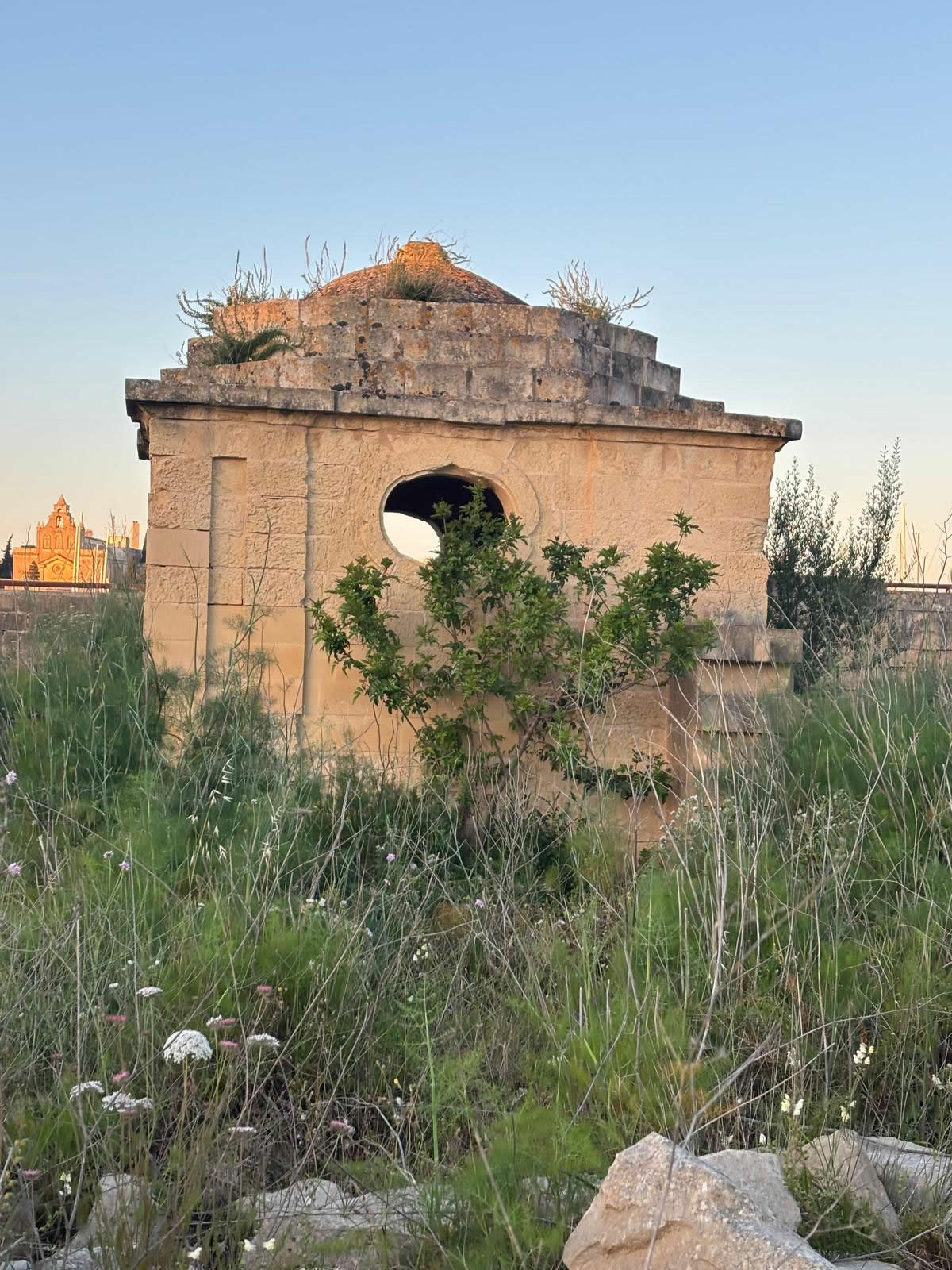
Current Condition of the Chapel (2026 On-Site Survey)
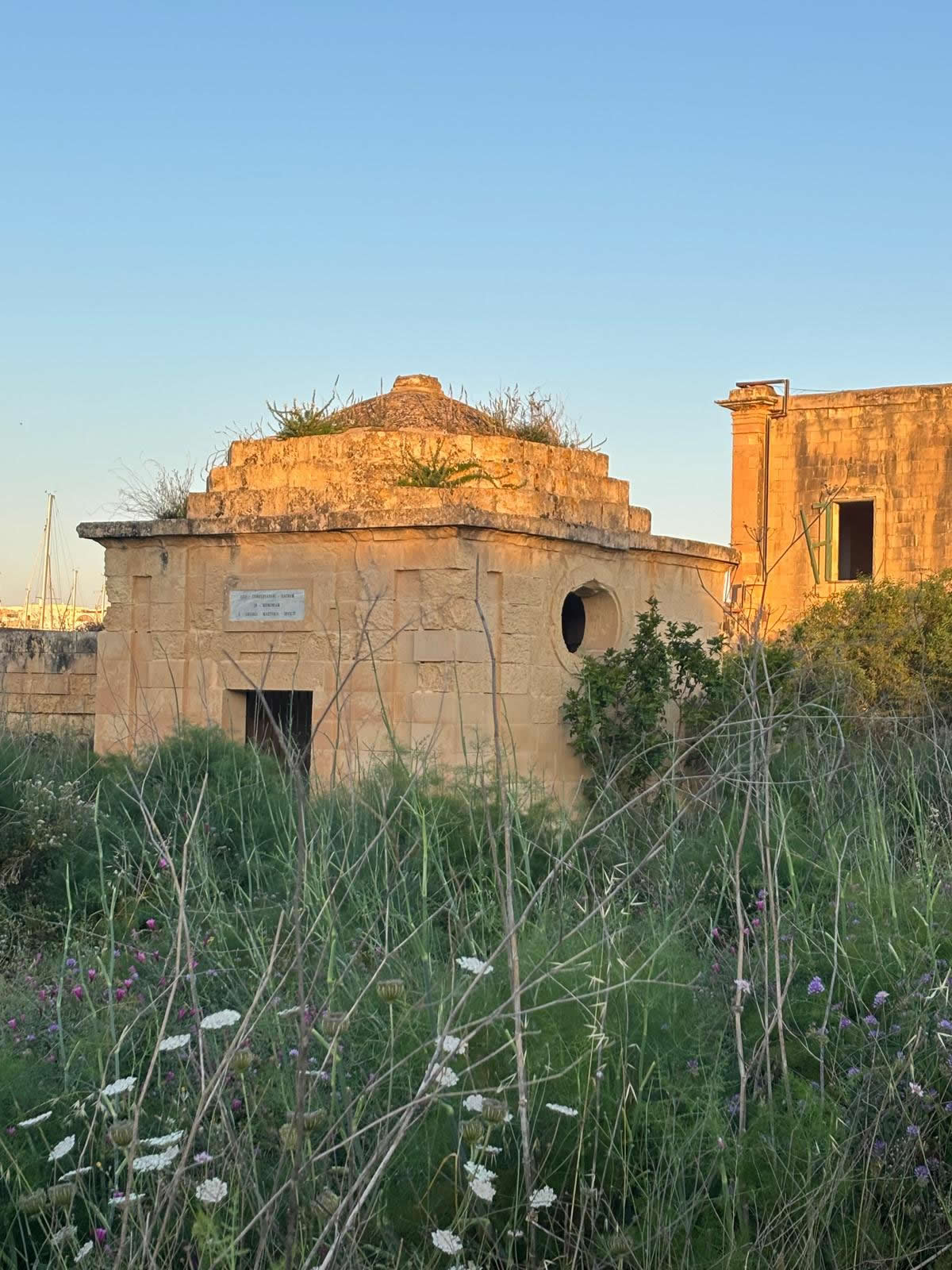
During an on-site visit conducted in 2026, St George’s Chapel was found to remain standing, with its overall structure largely intact. The building retains its defining form, including its walls and roofline, allowing it to be clearly identified within the surrounding landscape despite visible neglect.
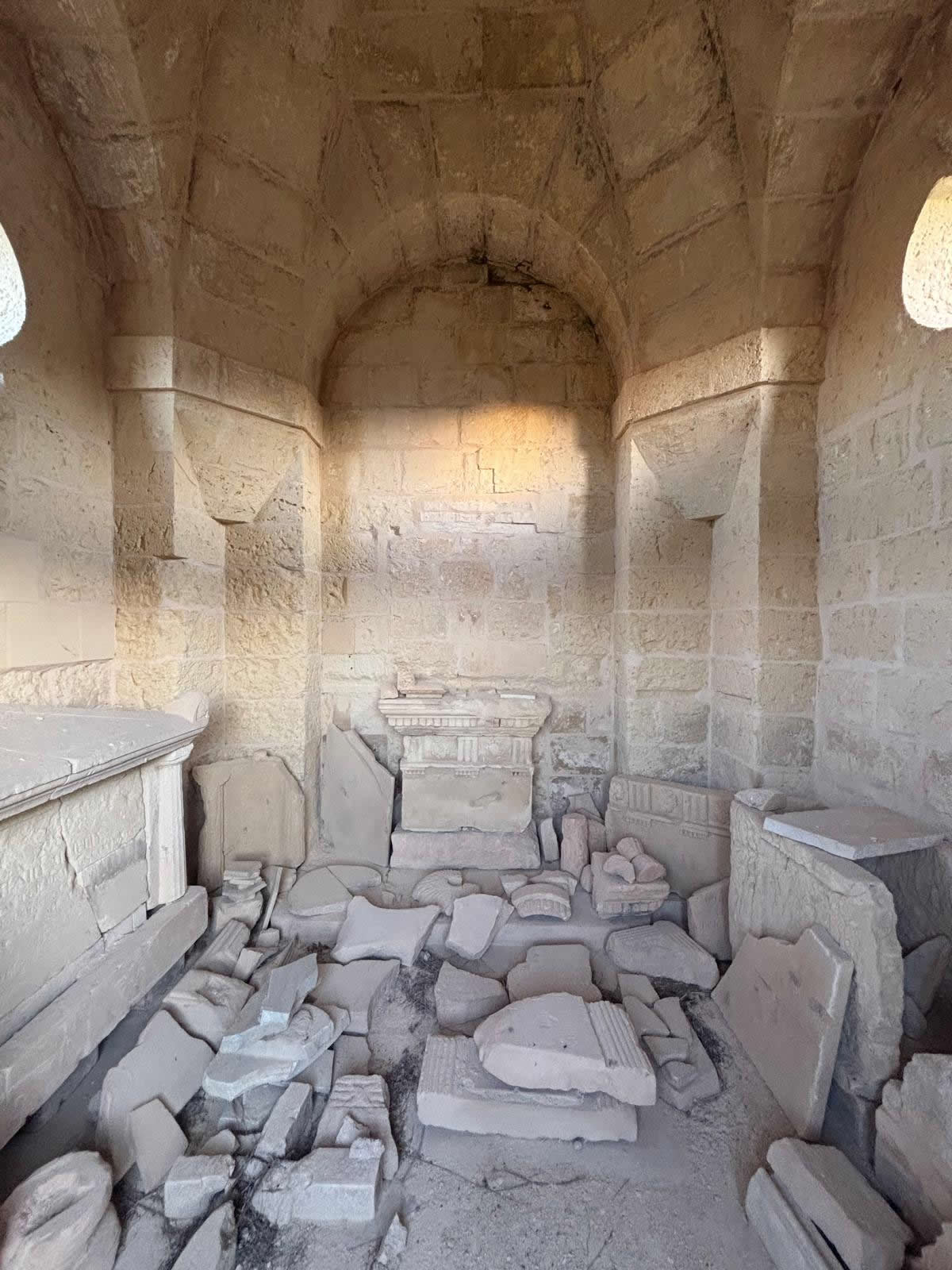
The original entrance has been replaced with a metal-barred door, allowing partial visibility into the interior while preventing physical access. Through this barrier, the chapel appears largely stripped of internal fittings, with very few surviving features visible.
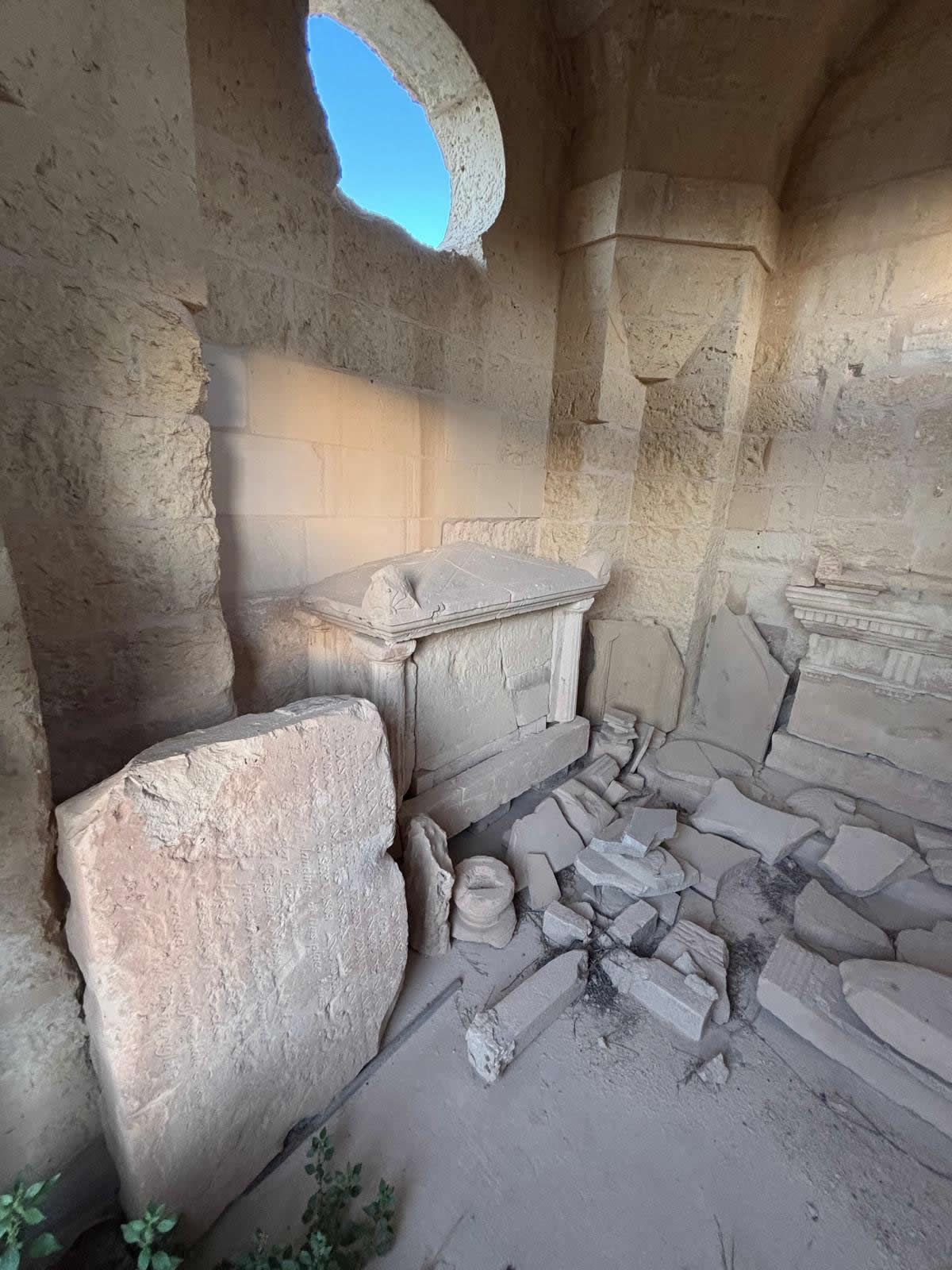
One notable surviving element is a single cracked tombstone positioned inside the chapel, located directly in front of the altar area. This tombstone appears to be the only clearly identifiable internal feature remaining, suggesting that other original furnishings or memorial elements have either been removed or lost over time.
Worn Tombstone Inside the Chapel
The stone tablet on the left has the followingPartial Inscription (Line-by-Line as Visible)
Line 1: ... [illegible] ...
Line 2: ... CAPTAIN ...
Line 3: OF THIS 23 ...
Line 4: ELDEST SON OF THE LATE REV. EDMUND ...
Line 5: RECTOR ...
Line 6: 18 SEPT 1808
Line 7: TWO DAYS AFTER LANDING AT THIS PLACE
Line 8: ... WHOSE MEMORY ...
Line 9: ... AGED ... YEARS ...
Line 10: ... FRIENDS ...
Line 11: ... [illegible] ...
Line 12: ... [illegible] ...
Line 13: ERECTED BY ...
Interpretation
This inscription commemorates a captain, likely associated with a military unit referenced as “23”. The deceased is identified as the eldest son of the late Rev. Edmund, indicating that his father was a clergyman who had already passed away at the time of the memorial’s erection.
The inclusion of “late” before Rev. Edmund adds important context, confirming that the family was already in mourning prior to this burial and strengthening the memorial character of the inscription.
Line 5, containing “RECTOR”, further identifies Rev. Edmund as holding a formal ecclesiastical position, likely within the Anglican Church, consistent with early 19th-century British clerical titles.
Line 6 records the clearly legible date 18 September 1808, followed by line 7: “two days after landing at this place”. This strongly suggests the individual died shortly after arriving on Manoel Island.
This detail aligns closely with Manoel Island’s historical role as a quarantine station (Lazzaretto), where individuals arriving by sea were isolated and sometimes succumbed shortly after landing.
The remaining lines follow standard early 19th-century funerary conventions, including references to remembrance, age at death, friends, and the phrase “erected by”, indicating a dedication likely commissioned by relatives or companions.
Observed and recorded during an on-site visit in 2026.
The sarcophagus
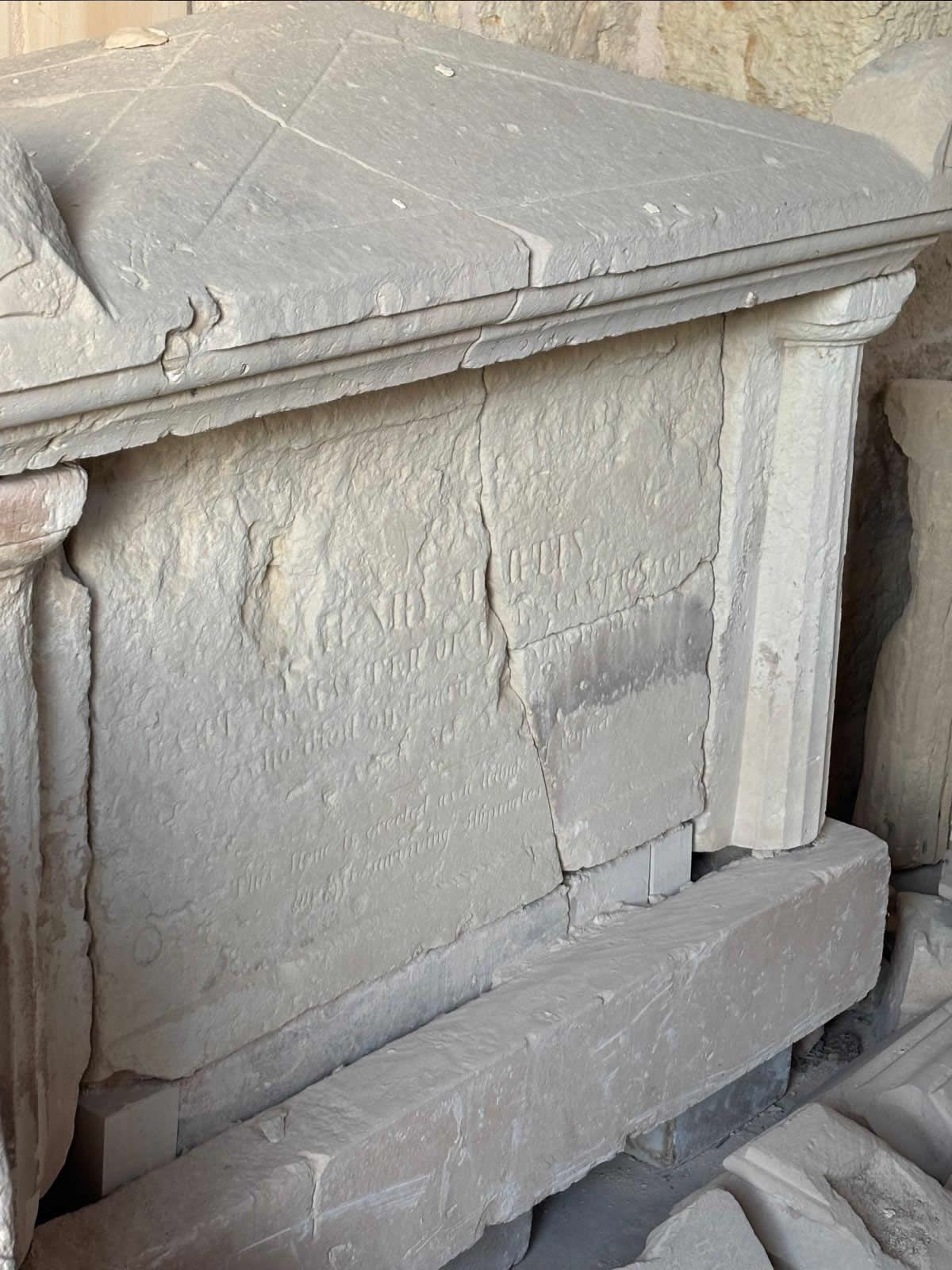
The text that can be recognised is below
who died offillegible
This stone is erected as a tribute
by his surviving shipmates
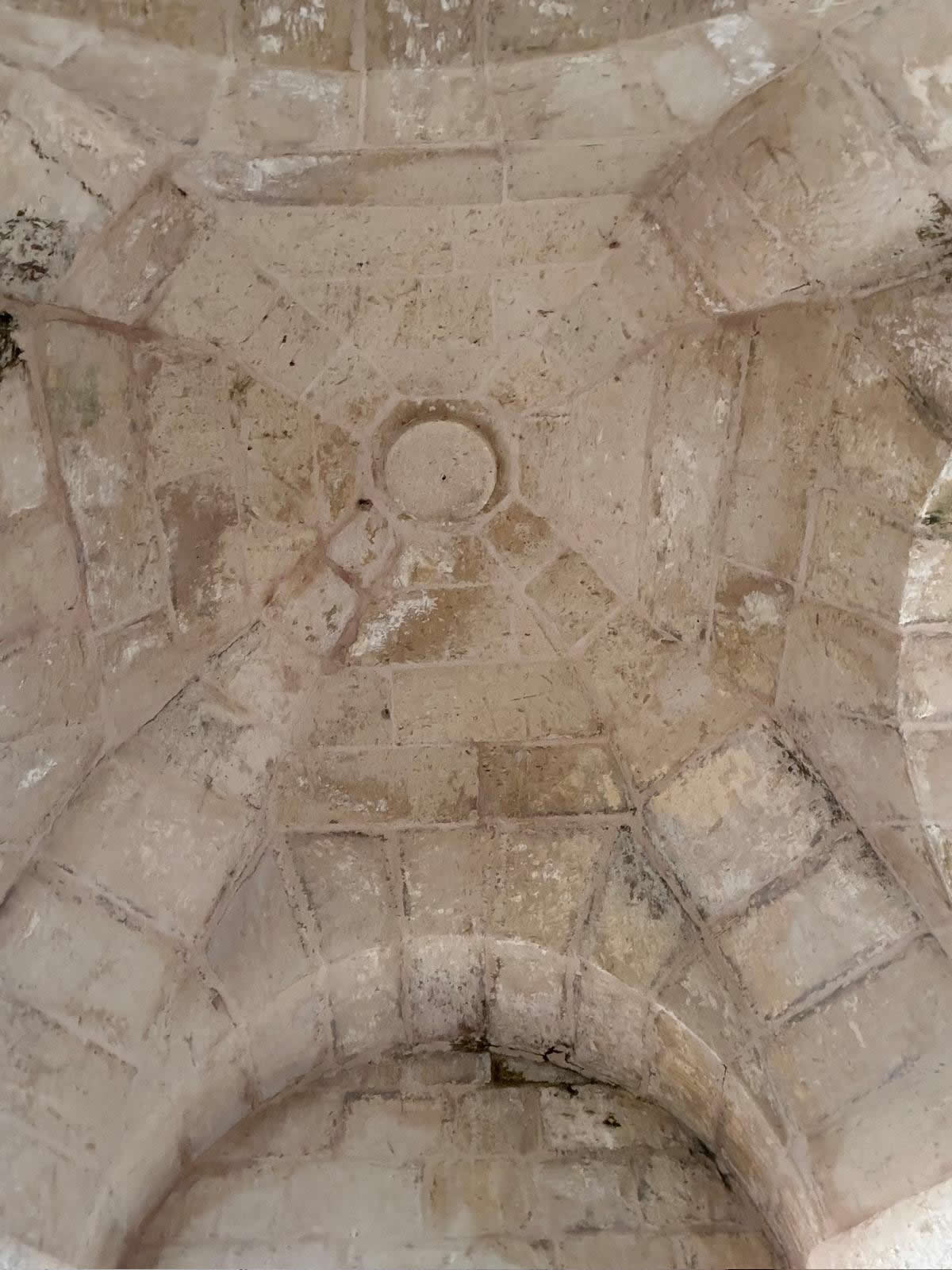
More photos of the interior
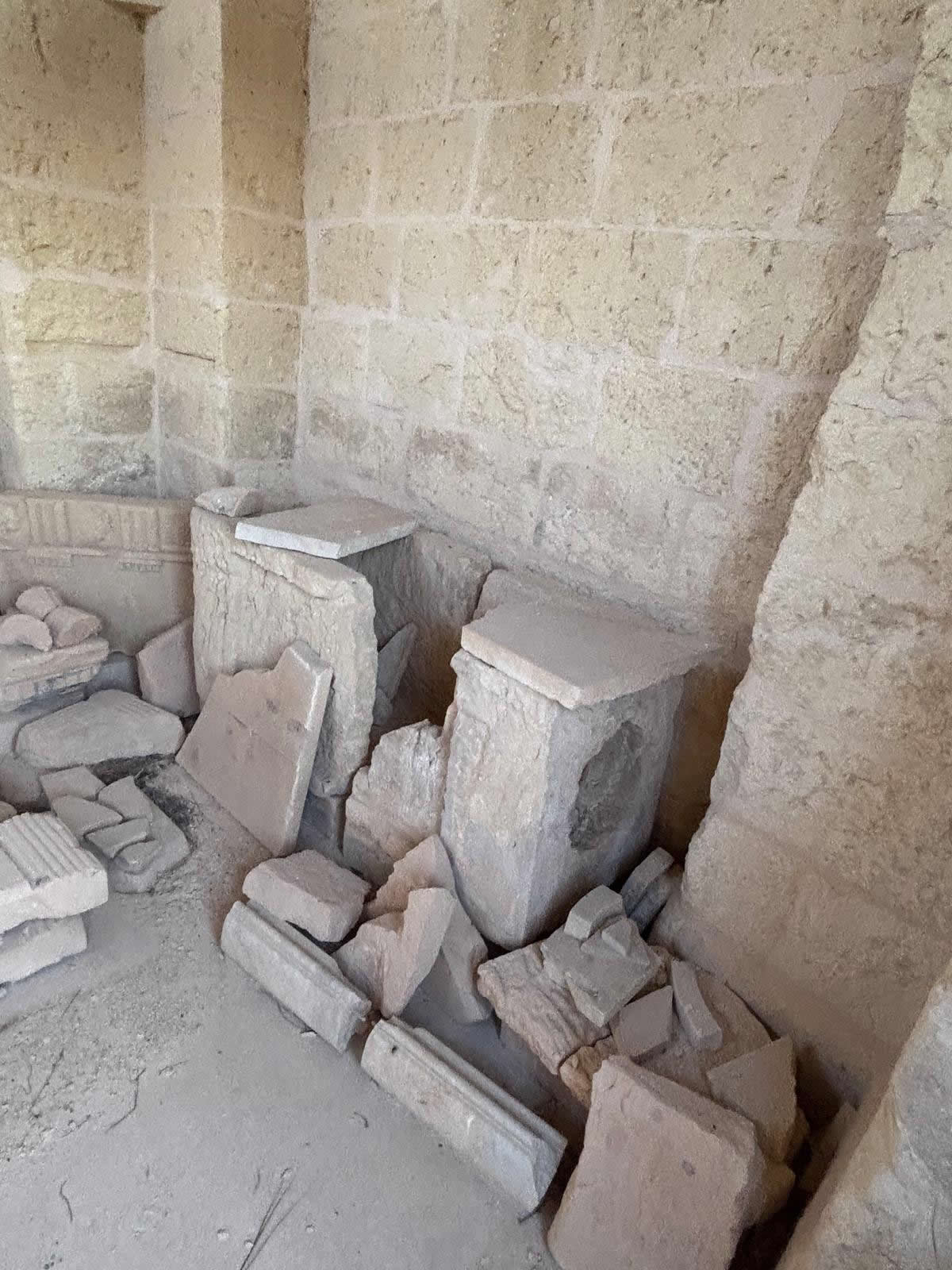
The exterior limestone shows signs of weathering and ageing consistent with prolonged exposure and limited maintenance. No active conservation works were observed at the time of the visit.
Observations based on an on-site visit conducted in 2026.
Tal-Ħofra Cemetery – Present Condition
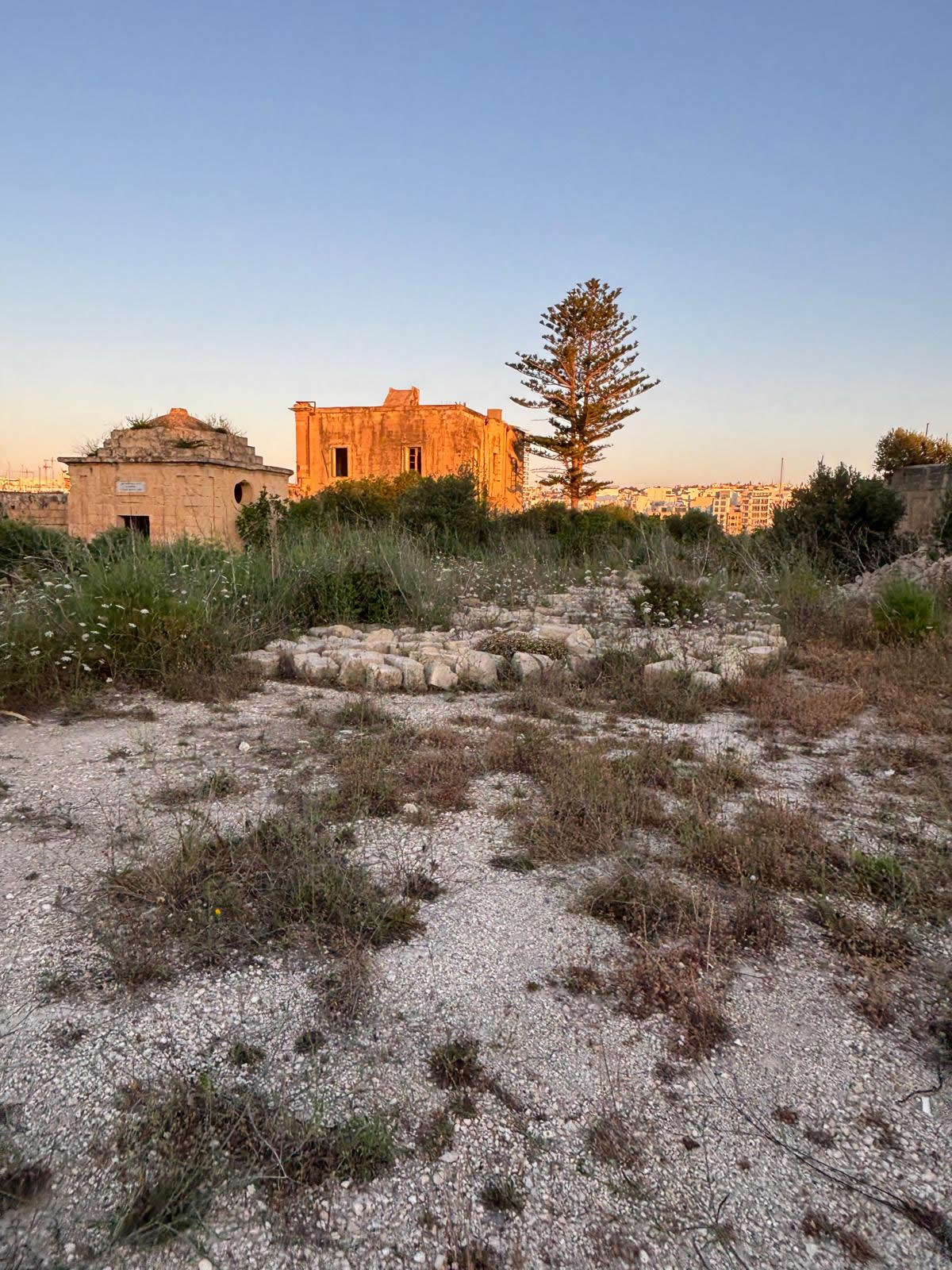
The Tal-Ħofra Cemetery surrounding the chapel is currently heavily overgrown, with dense vegetation covering much of the site and obscuring its original layout. While the chapel itself remains visible, the surrounding burial ground has become increasingly difficult to interpret due to natural overgrowth.
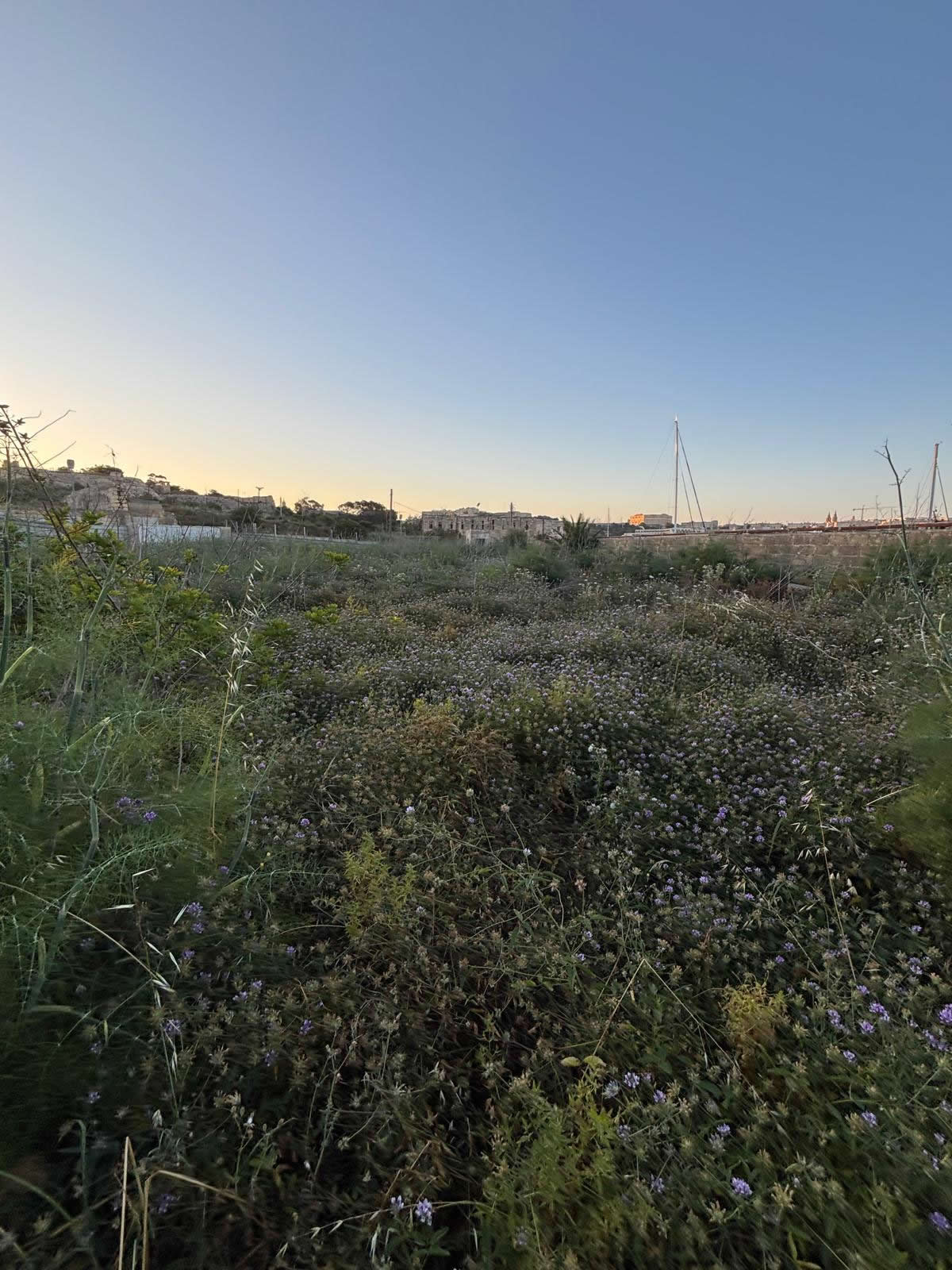
Despite its current neglected appearance, the site was reportedly restored approximately a decade ago. However, the lack of ongoing maintenance has resulted in vegetation reclaiming the area, significantly reducing visibility of any surface-level burial features.
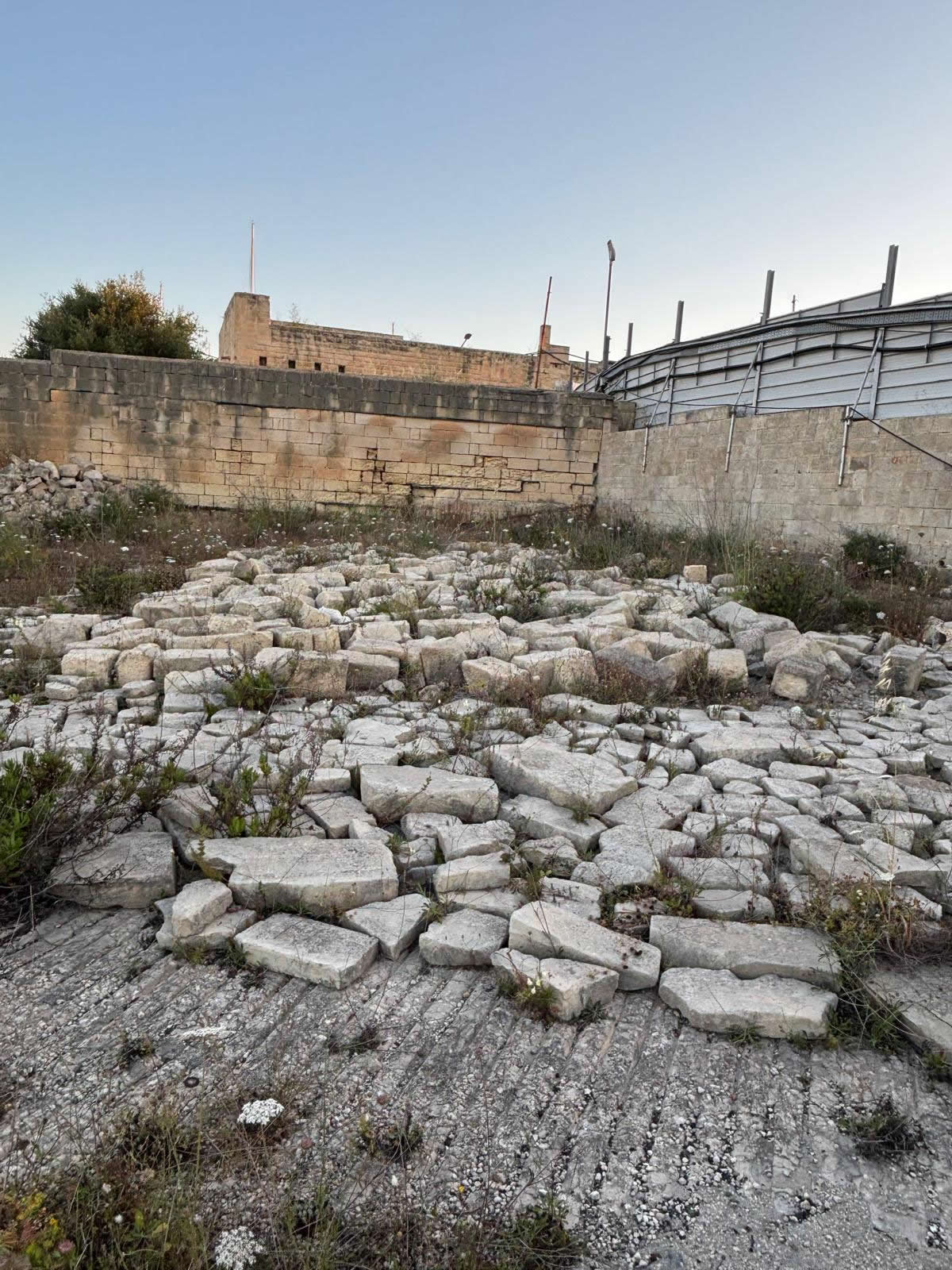
No clearly identifiable tombstones were observed within the cemetery area during the 2026 visit, with the exception of the cracked tombstone located inside the chapel itself. This suggests that either external grave markers have deteriorated, been removed, or are now concealed beneath the overgrowth.
The present condition highlights the vulnerability of smaller heritage burial sites on Manoel Island, particularly those outside the main restored zones.
Historical Background
Manoel Island has played multiple roles throughout Maltese history. Originally known as the Bishop’s Island, it later became associated with the Order of St John, who developed it into a quarantine station (Lazzaretto) during the 17th century.
Its strategic position in Marsamxett Harbour made it important during and after the plague. The presence of early structures, including St George’s Chapel, reflects the initial phases of occupation and use following this pivotal event.
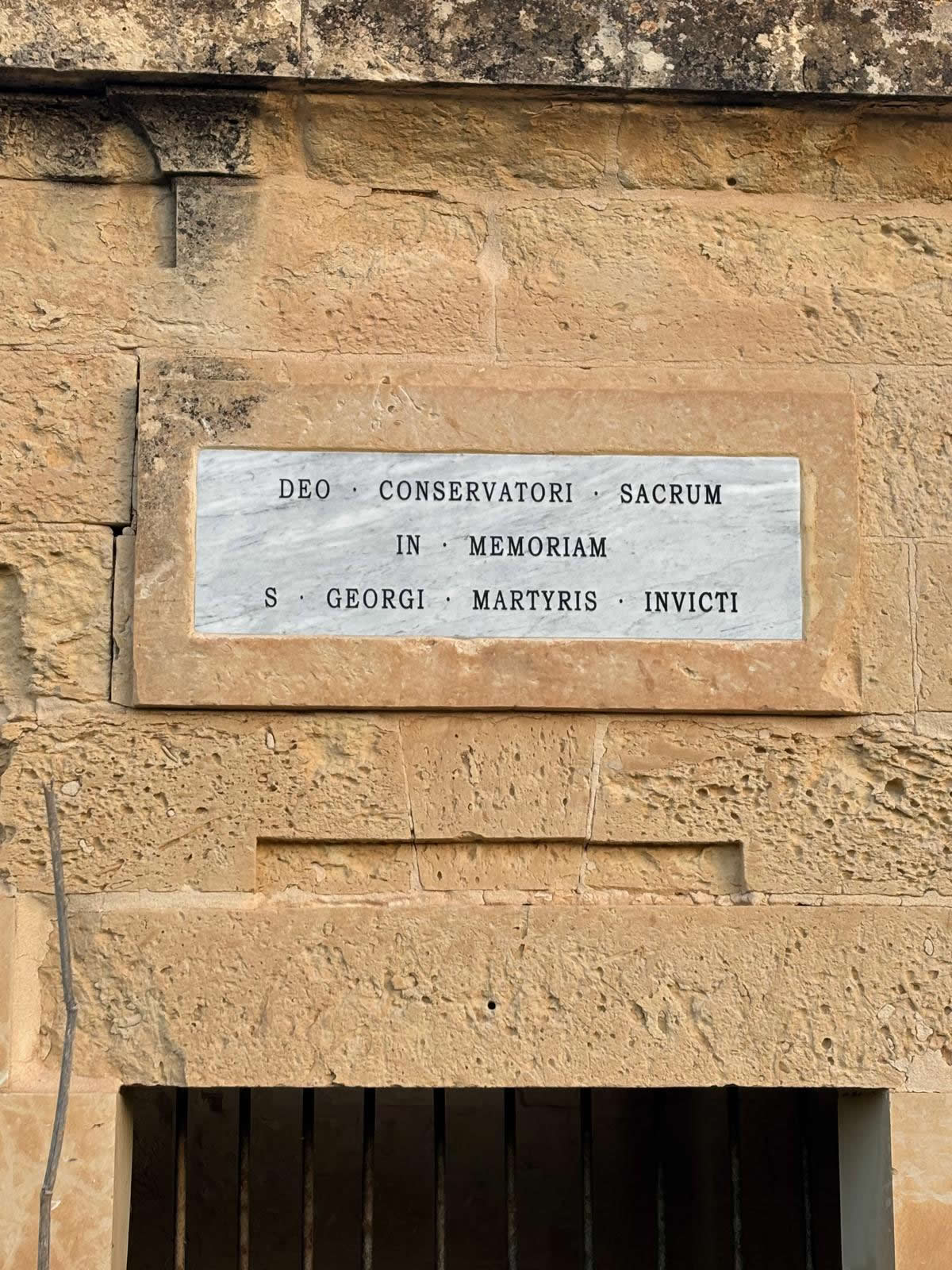
Marble Inscription Above the Chapel Entrance
Original Latin Text
DEO · CONSERVATORI · SACRUM
IN · MEMORIAM
S · GEORGI · MARTYRIS · INVICTI
English Translation
Sacred to God, the Protector,
in memory of
Saint George, the unconquered martyr.
This inscription is positioned above the entrance to the chapel and remains clearly legible.
Origins of St George’s Chapel
Historical references indicate that St George’s Chapel existed by the early 19th century, with depictions appearing in early maps dated around 1813. This places its construction shortly after the plague, a period marked by rebuilding and consolidation across the islands.
The dedication to St George, a saint associated with protection and military virtue, aligns with the broader cultural and religious context of the time.
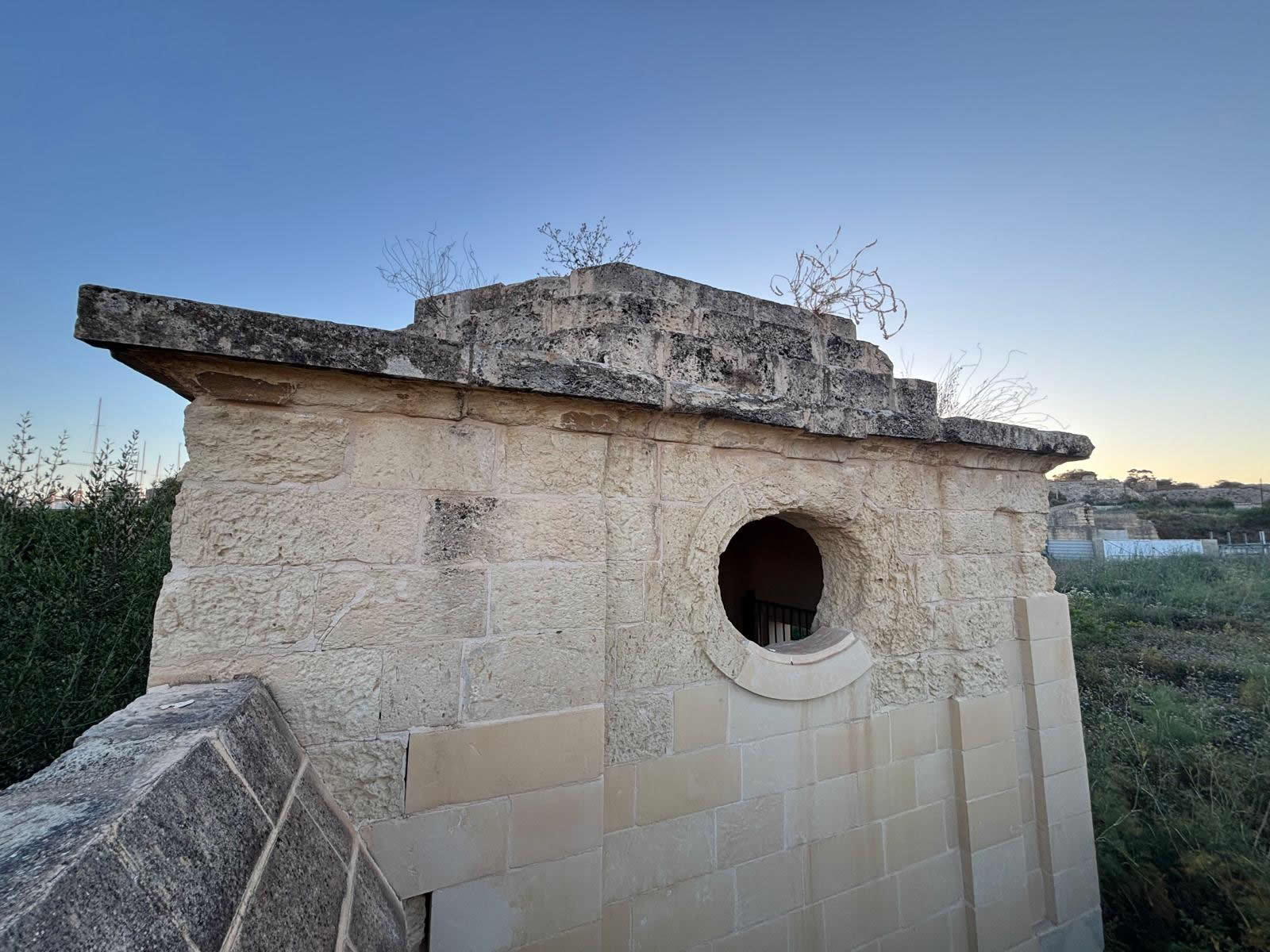
Architecture
The chapel follows a simple rectangular layout typical of small Maltese rural chapels. Built using local limestone, its design prioritises functionality over ornamentation.
Based on its current remains, the structure appears to have been modest in scale, likely featuring a basic façade and a single internal space. Its simplicity reflects its role within a cemetery rather than as a major parish church.
Function Within the Lazzaretto
When Manoel Island became a quarantine station, the chapel would have taken on increased importance. It likely served individuals undergoing quarantine, as well as staff and clergy working on the island.
Its location within a cemetery suggests a strong funerary function, particularly during outbreaks of plague and other infectious diseases.
Decline and Survival
Over time, as the importance of the Lazzaretto declined and the island’s use changed, St George’s Chapel fell into disuse. Like many minor structures on Manoel Island, it experienced prolonged neglect.
Despite this, the chapel has survived into the present day, making it a rare example of a small, early post-siege religious structure still standing in situ.
Conclusion
St George’s Chapel at Tal-Ħofra Cemetery represents a quiet but meaningful fragment of Malta’s layered history. From its probable origins in the early 19th century to its later association with quarantine practices, the chapel reflects key aspects of life on Manoel Island.
Its current state, while neglected, does not diminish its historical value. Instead, it highlights the importance of documentation, preservation, and continued awareness of lesser-known heritage sites across Malta.
Frequently Asked Questions
When was St George’s Chapel built?
It likely dates to shortly after 1813 and is documented by the 1814.
Is the chapel still standing?
Yes, it remains standing as of 2026, though in a neglected condition.
What is Tal-Ħofra Cemetery?
A burial ground associated with Manoel Island’s quarantine station.
Can you visit the chapel?
Access depends on Manoel Island conditions, but it can be viewed externally.