📍 Location
Location Map Coordinates 35.887681, 14.521762
Introduction
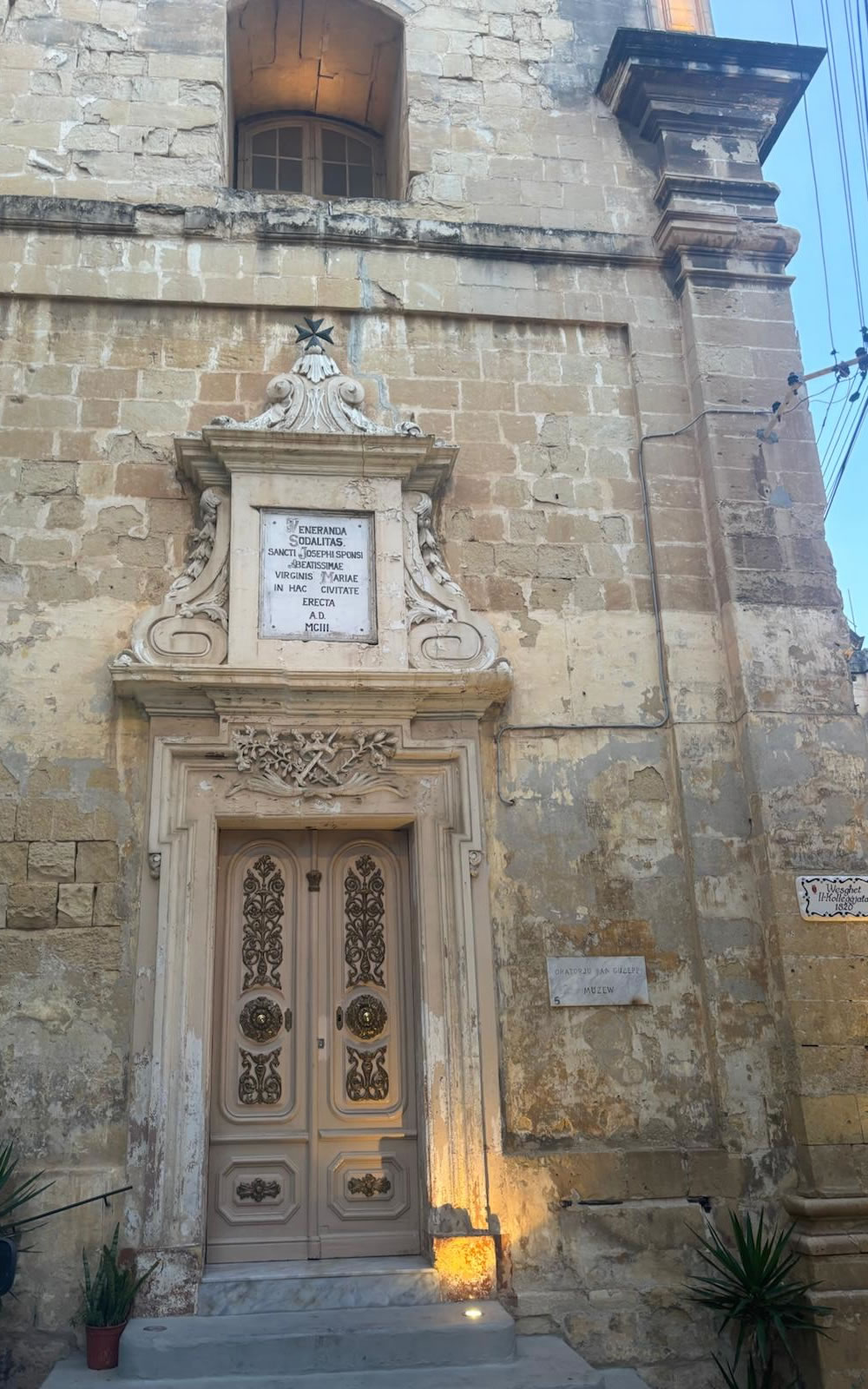
The St. Joseph Oratory in Birgu is one of Malta’s most historically layered religious sites, combining medieval origins, Greek religious traditions, Baroque architecture, and modern heritage preservation. Located close to the parish church of St Lawrence, the oratory is today best known as the Birgu Parish Museum, yet its roots extend back centuries before the arrival of the Knights of St John.
This remarkable chapel reflects the multicultural and religious diversity of early Malta, particularly the presence of the Greek community that settled on the island following the fall of Rhodes.
Medieval Origins and Early Chapels (Pre-1530)
The site of the present oratory was originally occupied by two medieval churches:
- Church of St Catherine of Alexandria
- Church of the Visitation of Our Lady to St Elizabeth
These churches formed part of the early religious landscape of Birgu, which was already an important settlement before the arrival of the Knights of St John in 1530.
Their presence highlights the long-standing Christian tradition in the area and the importance of Birgu as a religious centre even in the late medieval period.
The Greek Community and Our Lady of Damascus (1530–18th Century)
When the Knights of St John arrived in Malta in 1530, they were accompanied by a community of Greek Rite Catholics from Rhodes.
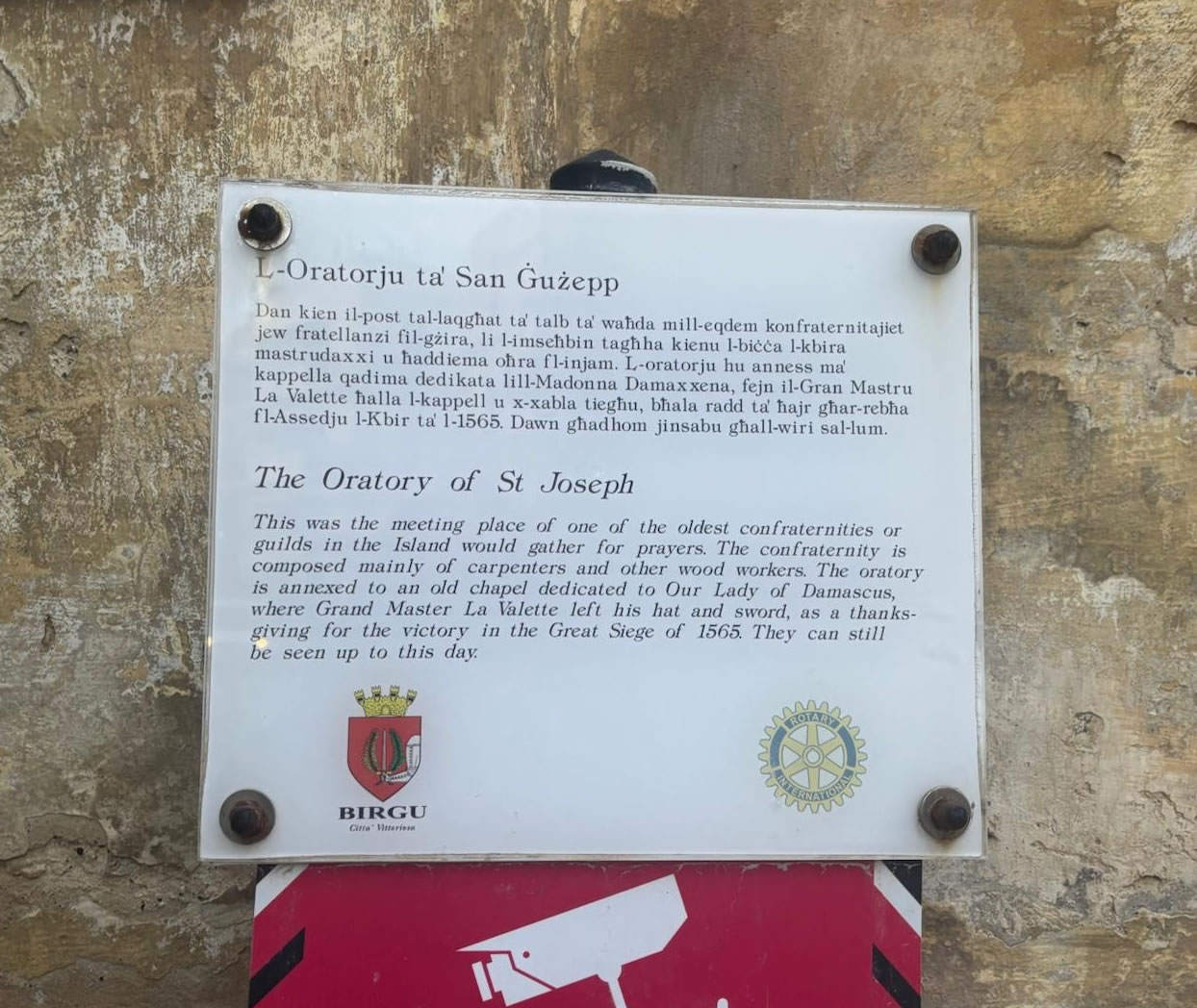
The Church of St Catherine was entrusted to this Greek community and became known as the Church of Our Lady of Damascus (Damaxxena), after a revered icon brought from Rhodes.
During this period:
- The chapel served as a parish church for Greek Catholics
- Both Latin and Byzantine rites were celebrated
- The site became a focal point for cultural and religious exchange
The Greek presence in Birgu gradually declined by the late 17th and 18th centuries, but elements of their church survived and remain integrated within the present oratory.
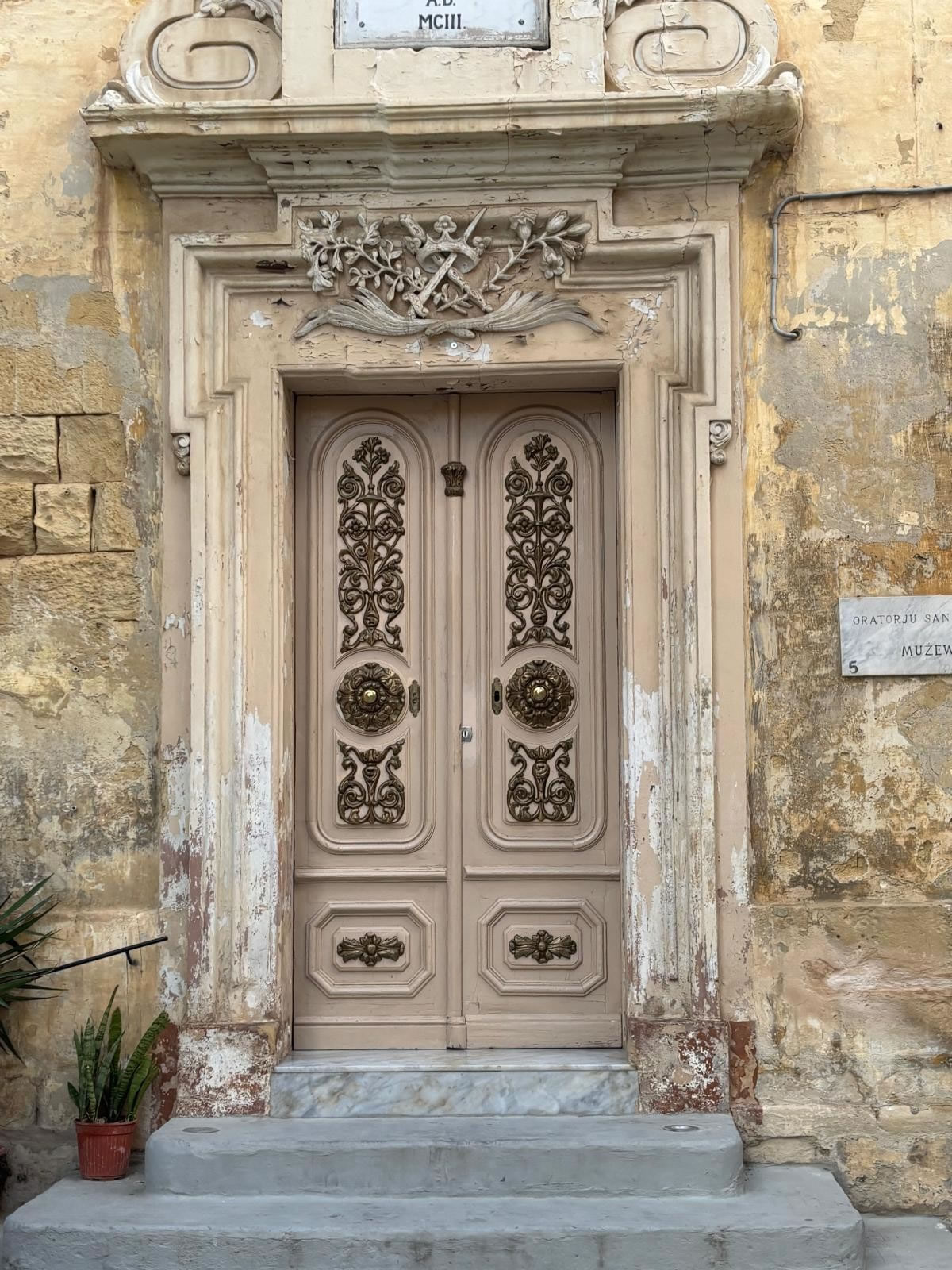
Transformation into the Oratory of St Joseph (1832)
A major transformation occurred in 1832, when the Confraternity of St Joseph, associated with carpenters and craftsmen, acquired the site.
The confraternity undertook:
- The demolition of the Church of the Visitation
- The construction of a new Baroque oratory
- The integration of the Church of Our Lady of Damascus into the new structure
The choice of St Joseph as patron reflected the strong presence of skilled workers in Birgu, particularly those employed in shipbuilding and naval activities.
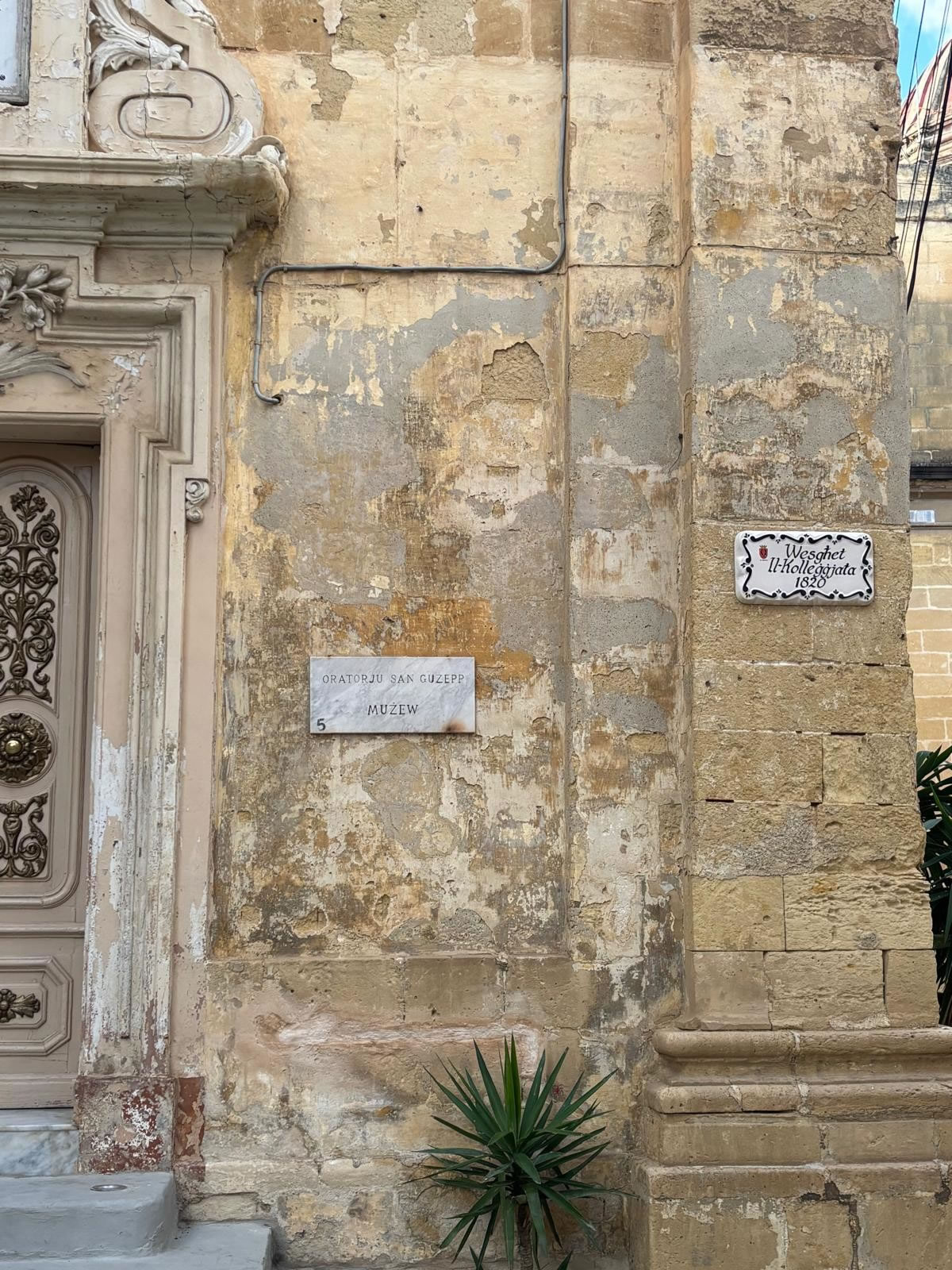
Architecture and Design
Façade
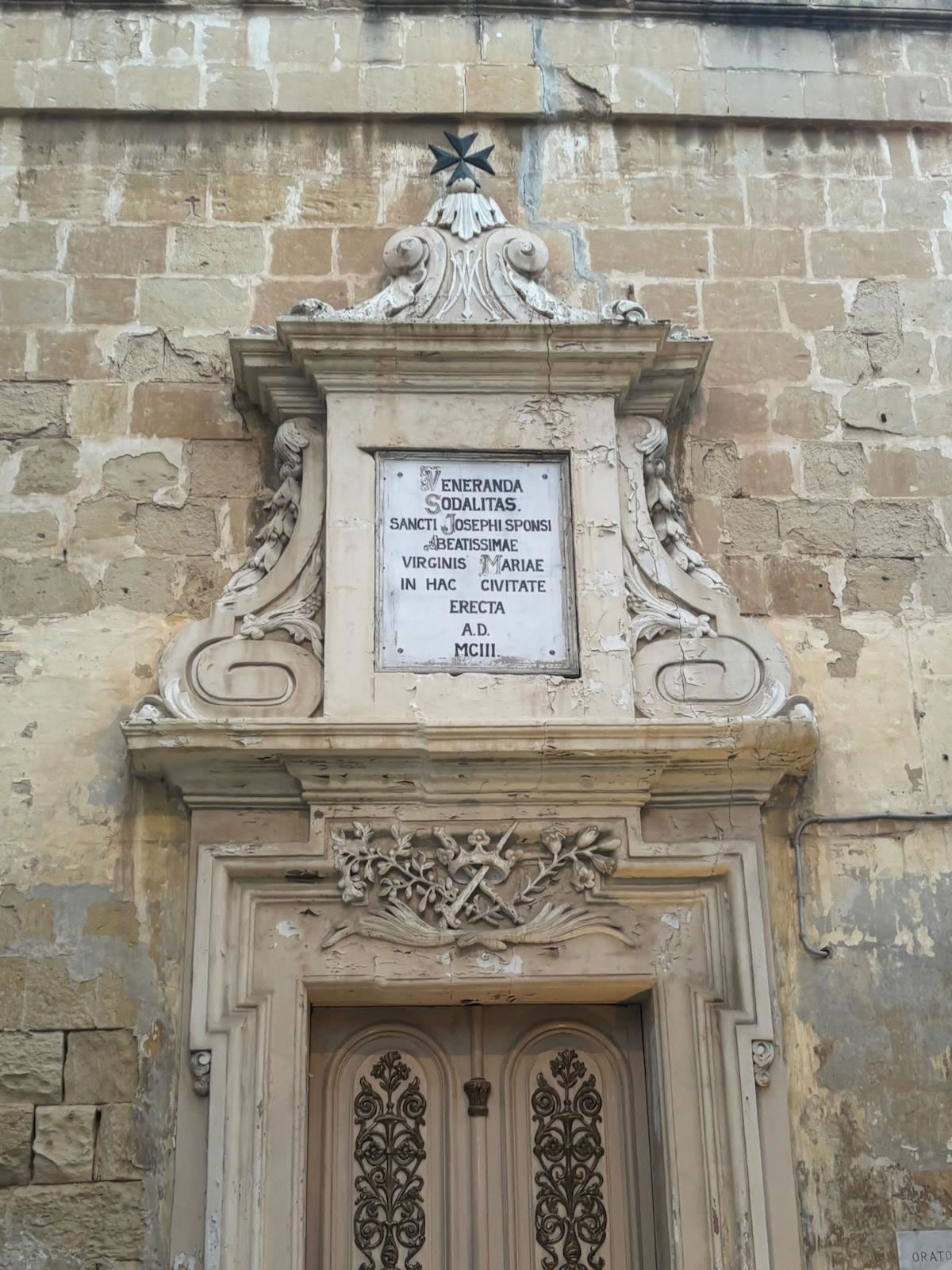
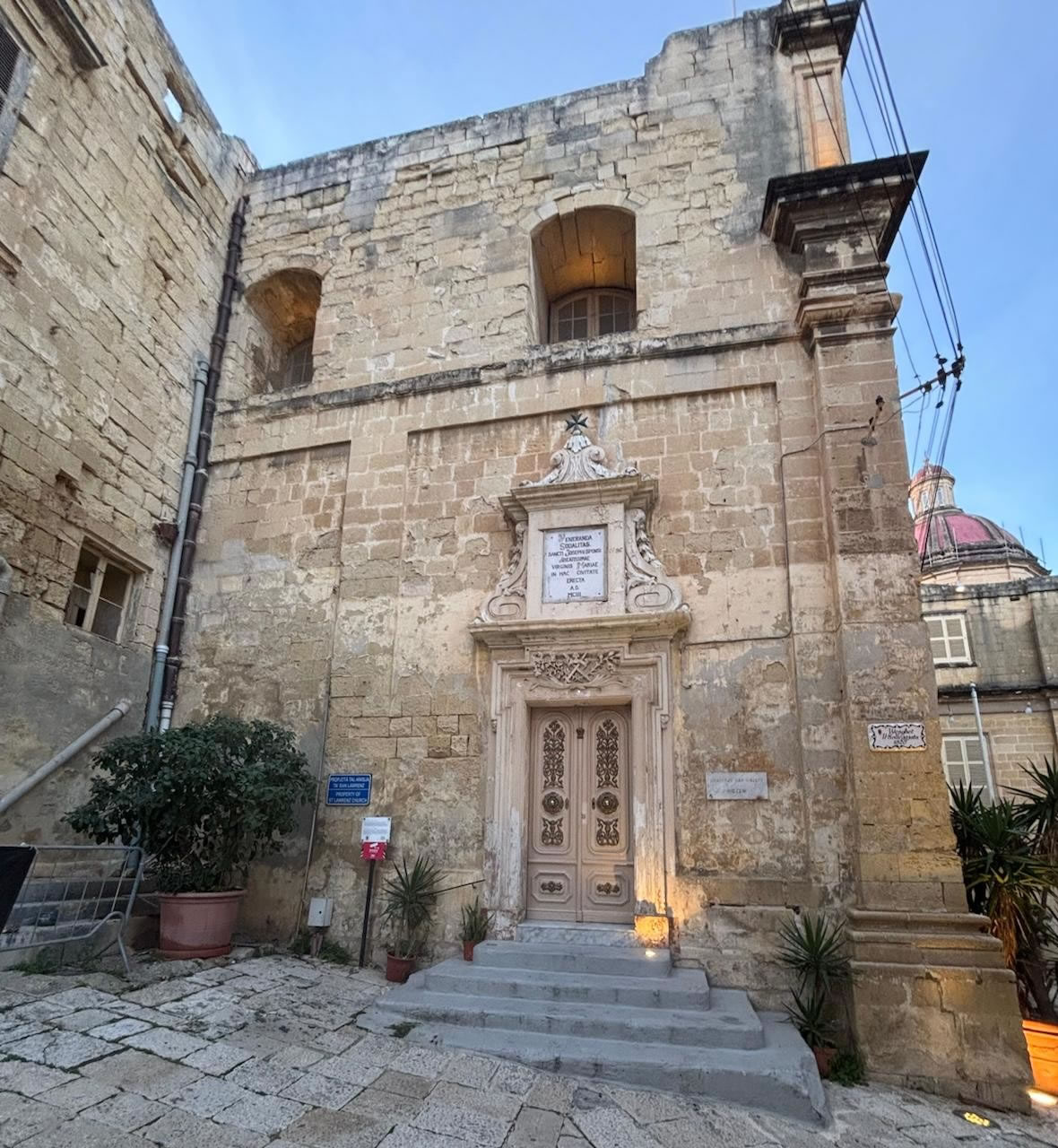
The façade of the oratory is elegant and balanced, divided into three vertical sections by Tuscan pilasters.
- Central doorway reached by steps
- Oval window above the entrance
- Bellcote crowning the structure
These features reflect the restrained Baroque style typical of 19th-century Maltese ecclesiastical architecture.
Interior
The interior is richly decorated in the Baroque tradition:
- A single nave divided by Ionic columns
- Vaulted سق ceilings with quadripartite sections
- Decorative emblems linked to St Joseph
The main altar features a wooden reredos and a painting of St Joseph with the Child Jesus, originally from the parish church.
Integration of the Older Chapel
One of the most unique aspects of the oratory is the preservation of the earlier Greek chapel within the structure. This allows visitors to experience multiple historical layers within a single building.
Artworks and Treasures
The oratory houses an impressive collection of religious and historical artefacts, many of which are now displayed as part of the parish museum.
Key Highlights
- Medieval Byzantine icons
- Paintings from various churches in Birgu
- Liturgical vestments and silverware
- The sword and hat of Grand Master Jean de Valette
These objects provide a direct connection to Malta’s past, particularly the period of the Great Siege of 1565.
World War II Damage and Restoration
During World War II (1940–1944), the oratory suffered significant damage due to aerial bombardment.
Following the war, restoration works were carried out to preserve the structure and its contents, ensuring the survival of this important heritage site.
Conversion into Parish Museum (1990)
In 1990, the oratory was officially converted into the Birgu Parish Museum.
This transformation allowed:
- Preservation of historical artefacts
- Public access to the building
- Educational use for visitors and researchers
Today, the museum plays an important role in showcasing Birgu’s religious and cultural heritage.
Religious and Cultural Significance
The St Joseph Oratory is significant for several reasons:
- It preserves elements of medieval and Greek religious traditions
- It reflects the role of confraternities in Maltese society
- It connects directly to the history of the Knights of St John
Its layered history makes it one of the most unique chapels in Malta.
Visiting Information
The oratory is located in the historic centre of Birgu and can be easily visited alongside other nearby landmarks.
- Location: Birgu (Vittoriosa)
- Coordinates: 35.887681, 14.521762
- Use: Parish museum and heritage site
- Access: Open to visitors (check local times)
Conclusion
The St. Joseph Oratory in Birgu is far more than a simple chapel. It is a living record of Malta’s diverse religious history, from medieval Latin Christianity and Byzantine traditions to Baroque confraternities and modern heritage conservation.
Its transformation from medieval churches to a Greek parish, then to a Baroque oratory and finally a museum, reflects the dynamic history of Birgu itself. Today, it stands as a testament to Malta’s resilience, faith, and cultural richness.