📍 Location
Location Map Coordinates 35.884004, 14.529784
Introduction
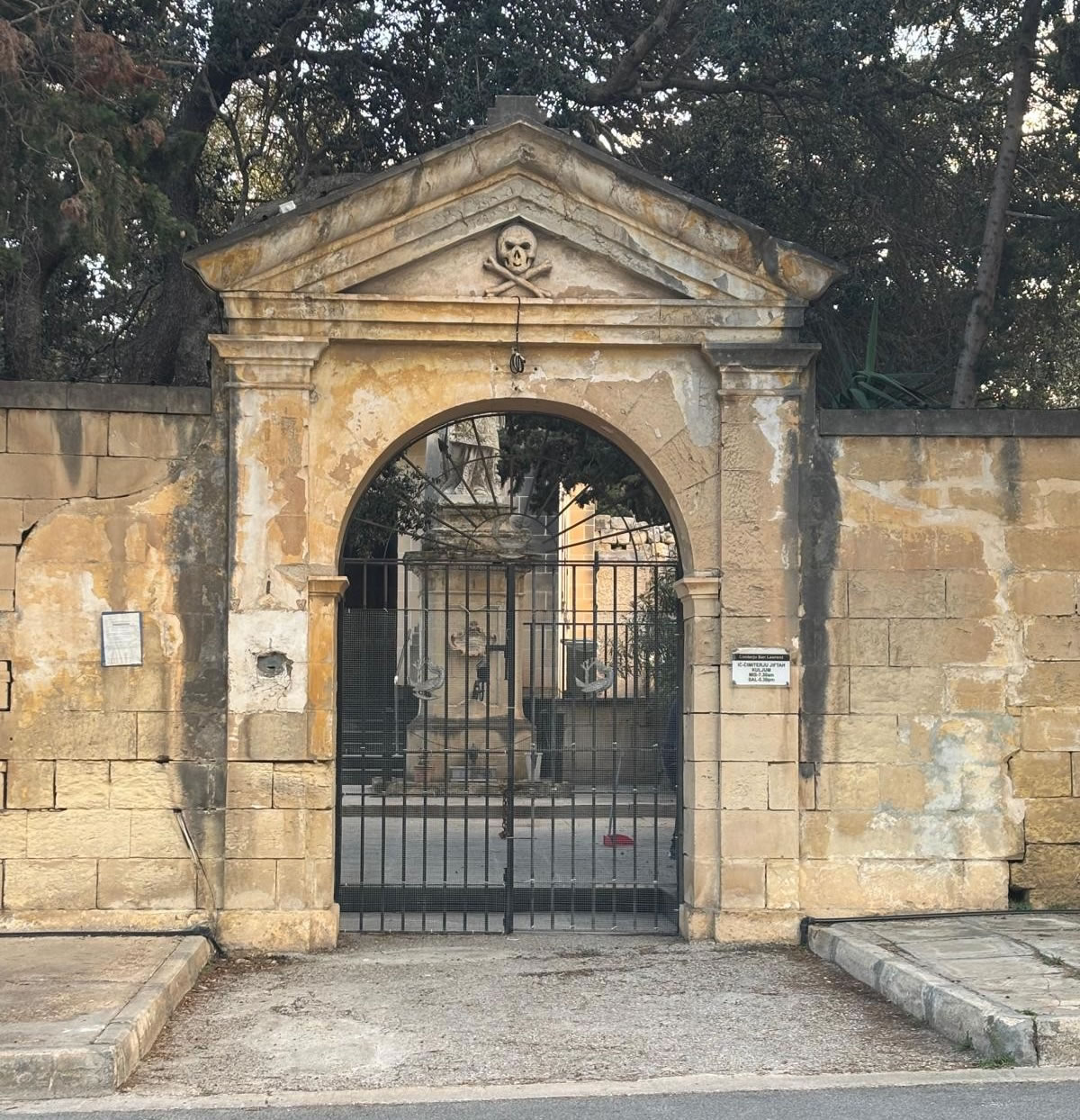
The St Lawrence Cemetery and Chapel in Birgu (Vittoriosa) form an important yet often overlooked part of Malta’s religious and funerary heritage. Closely associated with the historic Parish Church of St Lawrence, this site reflects centuries of burial traditions, religious devotion, and community life in one of Malta’s oldest urban settlements.
Historical Background
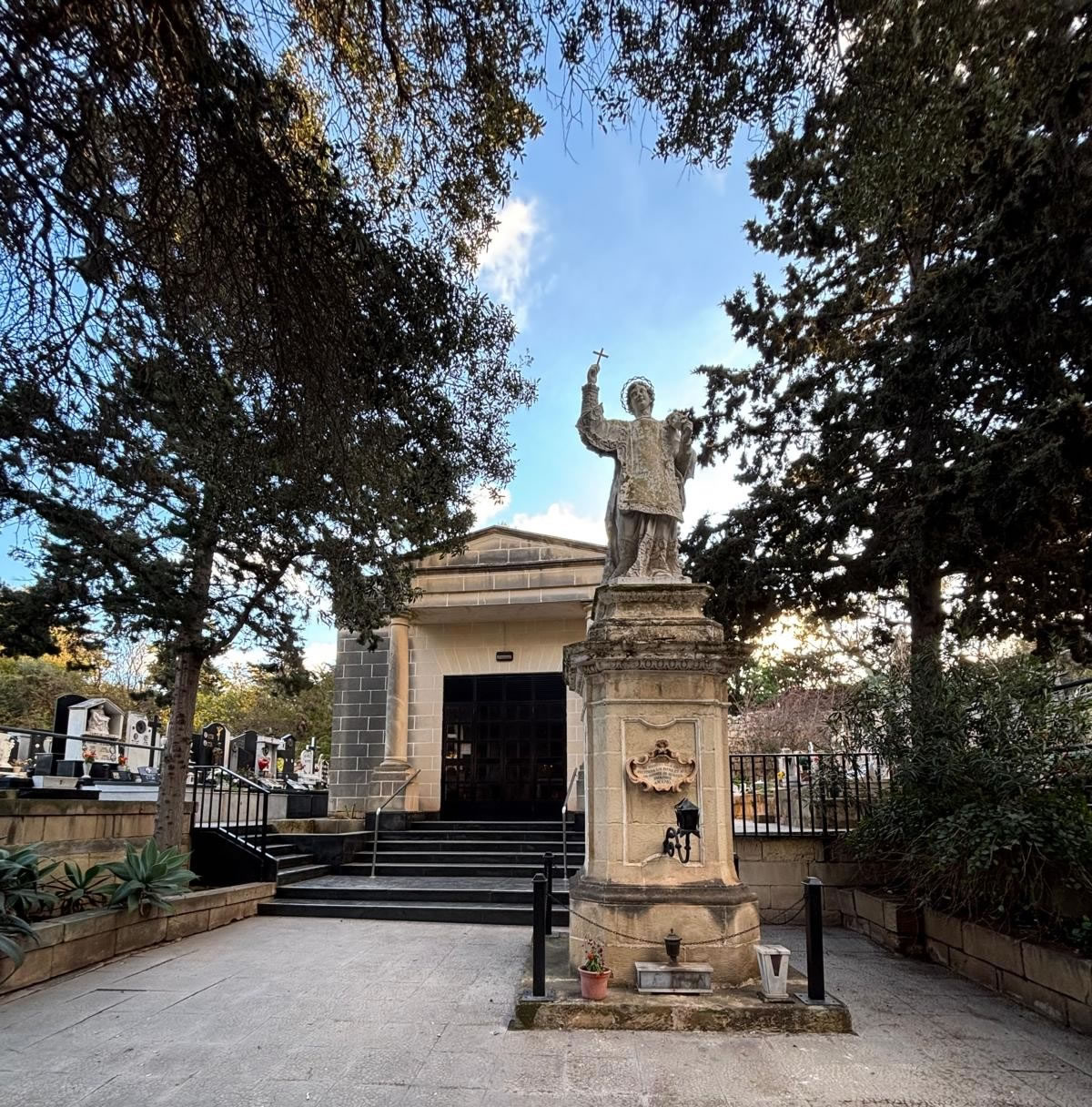
Birgu is one of Malta’s most ancient towns and served as the early centre of the Order of St John following their arrival in 1530. The Parish Church of St Lawrence, one of the oldest Christian sites on the island, played a central role in the religious life of the community.
During the Great Siege of 1565, the area surrounding St Lawrence Church was used as a burial ground for victims of war and disease. This early use established a long-standing association between the parish and funerary practices in Birgu.
Development of the Cemetery
As the population of Birgu grew during the 16th and 17th centuries, the need for more organised burial spaces became increasingly important. While early burials took place within church precincts, changing health regulations and urban development led to the establishment of designated cemetery areas outside the main church.
The St Lawrence Cemetery developed as part of this transition, providing a dedicated burial ground linked to the parish. It reflects broader European trends where cemeteries were gradually moved away from densely populated centres.
The Cemetery Chapel
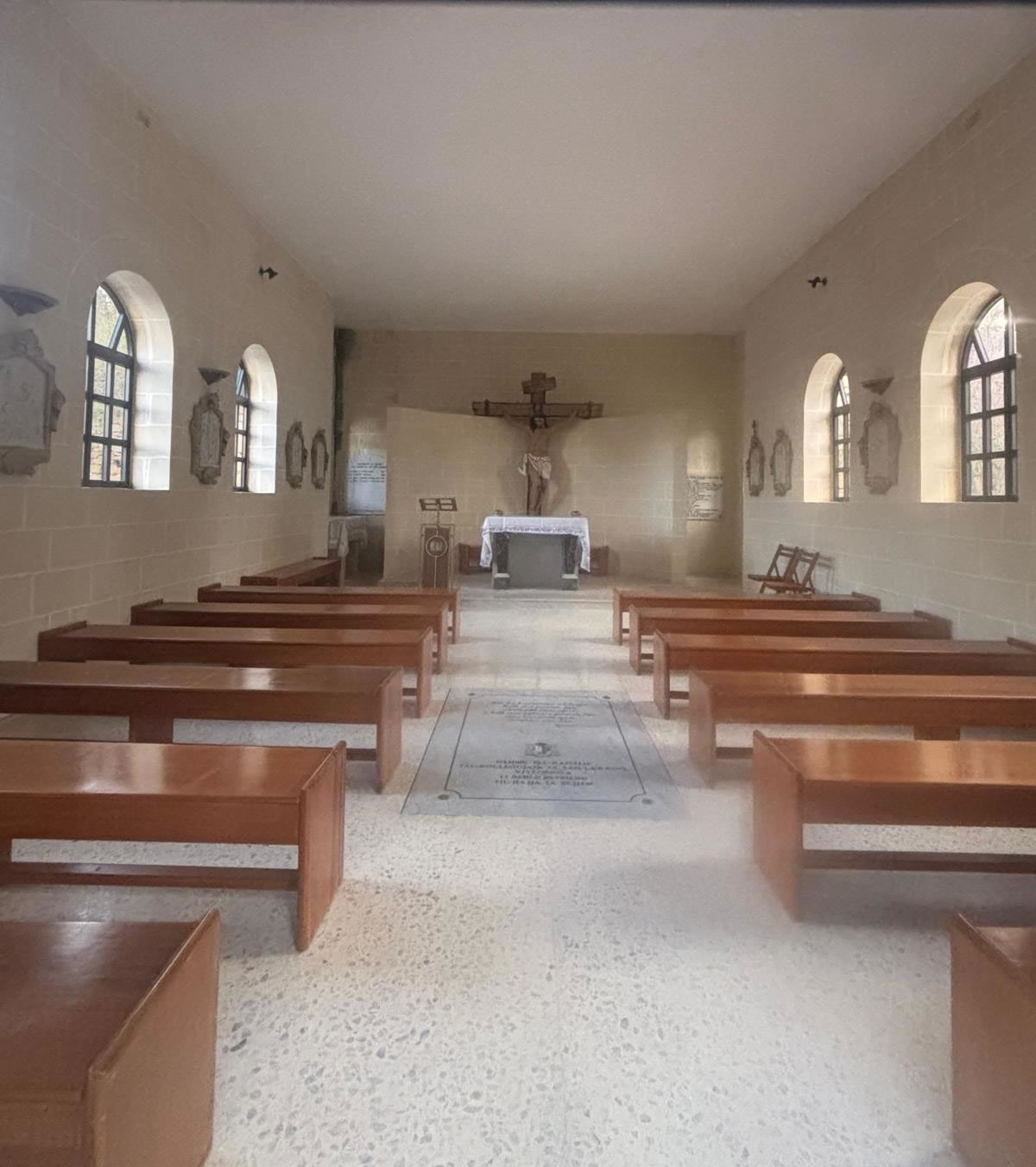
A chapel was constructed within or adjacent to the cemetery to serve the spiritual needs of funerary rites. This chapel would have been used for:
- Funeral Masses
- Prayers for the deceased
- Commemorative services
Such chapels were an essential feature of Maltese cemeteries, providing a sacred space for mourning and remembrance.
Architectural Features
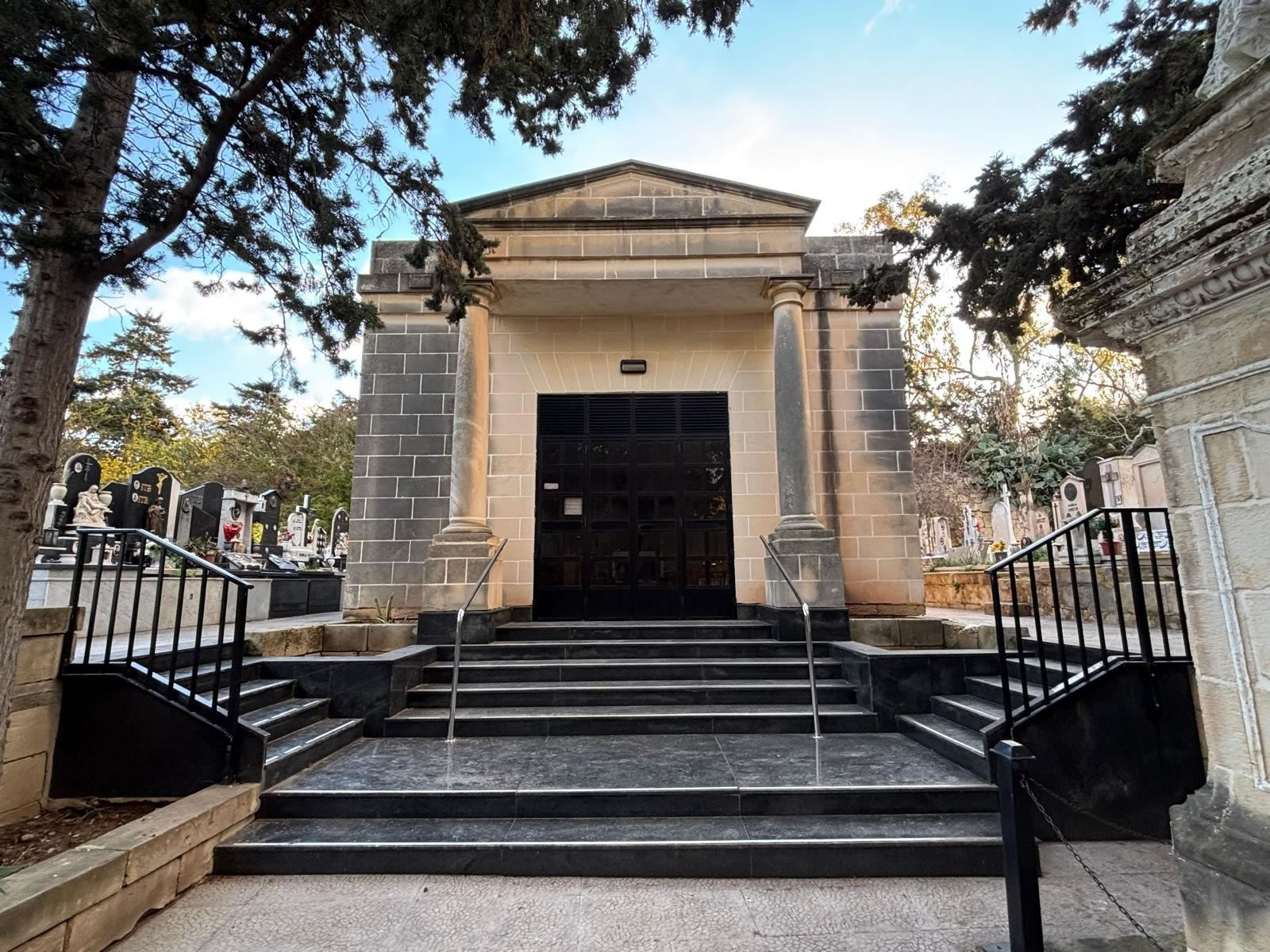
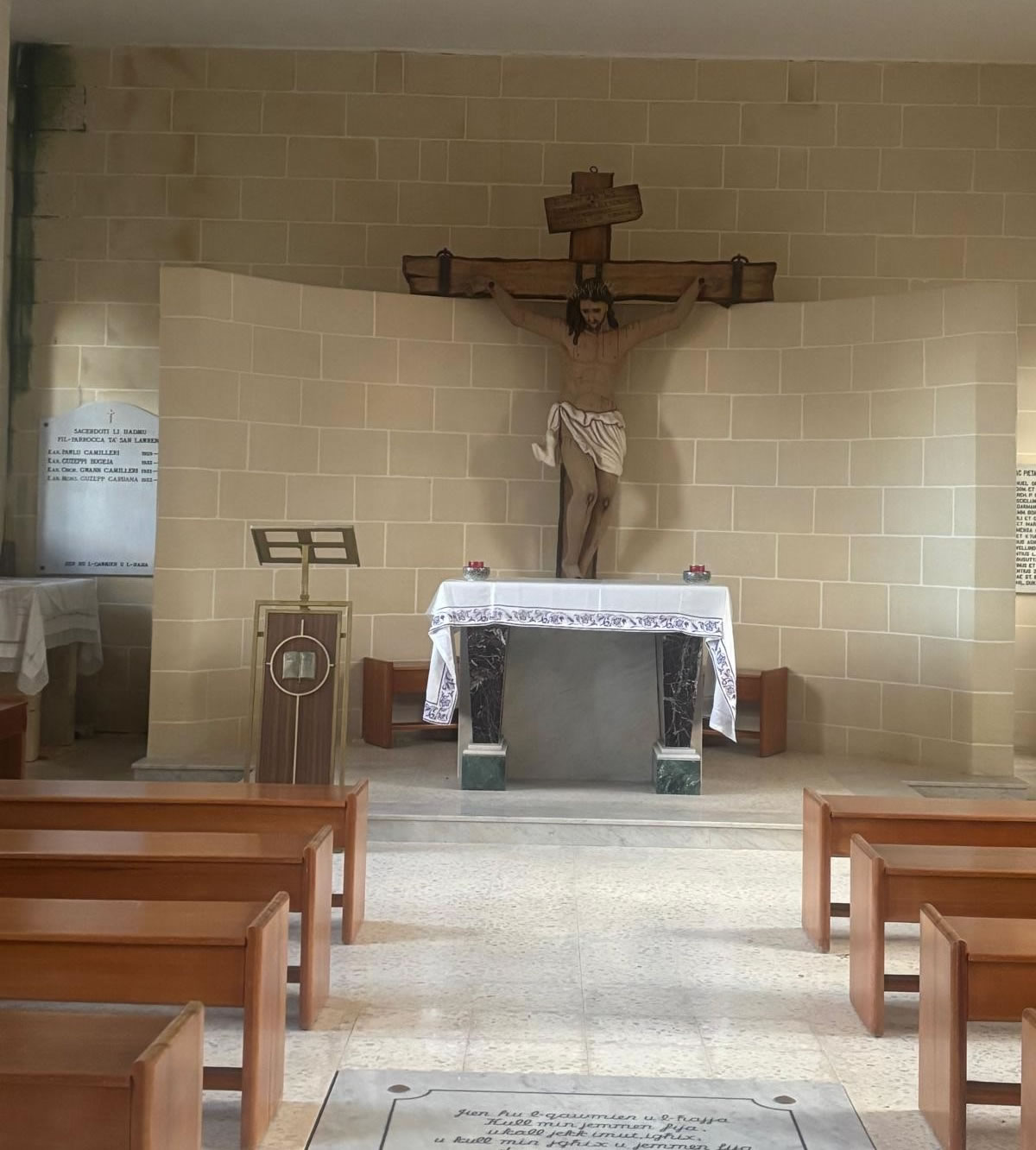
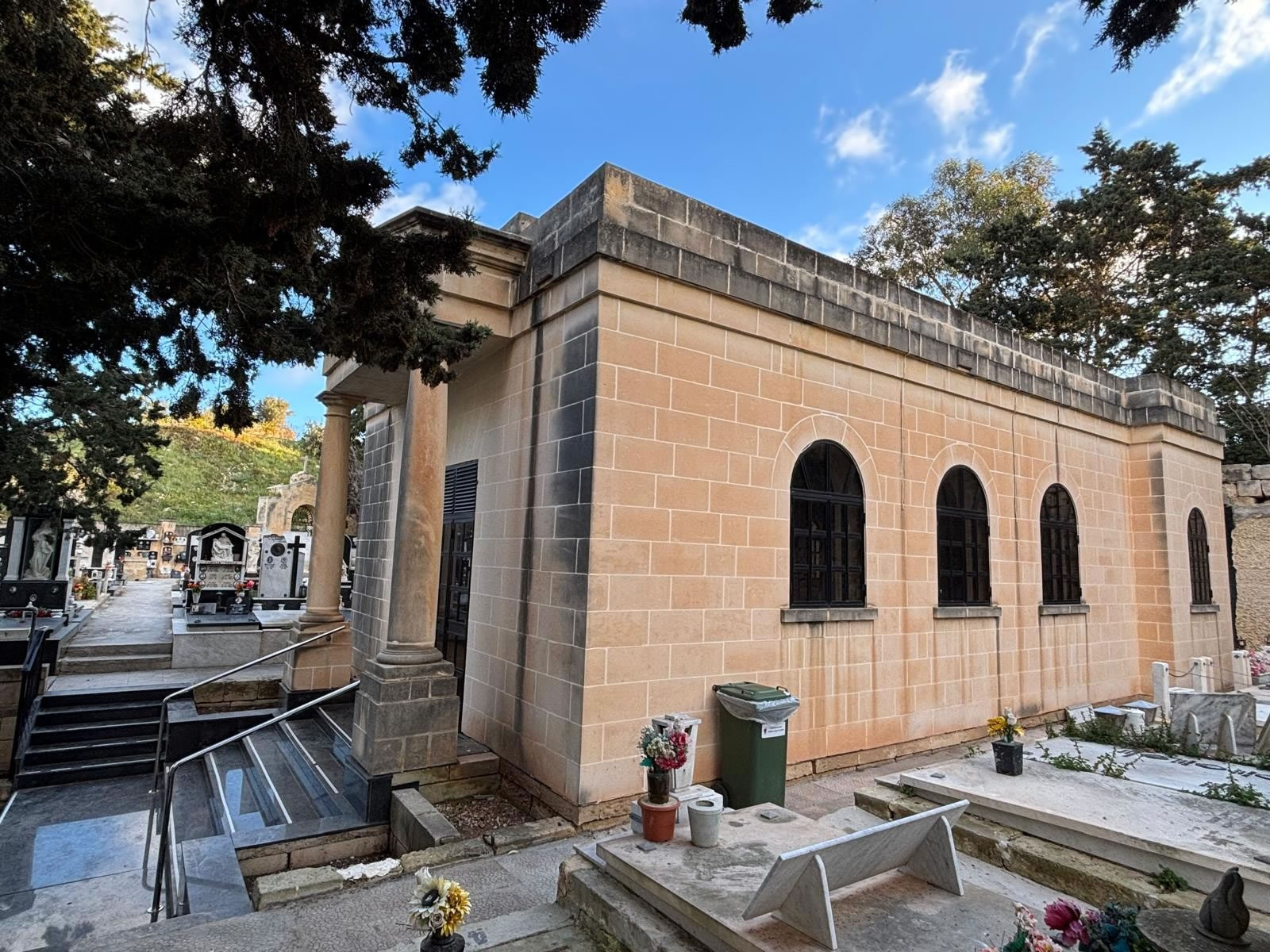
The chapel associated with St Lawrence Cemetery reflects modest ecclesiastical architecture typical of cemetery chapels in Malta:
- Simple façade with religious symbolism
- Use of Maltese limestone
- Compact interior designed for small gatherings
- Altar dedicated to Christian burial rites
The cemetery itself would traditionally include:
- Gravestones and memorial plaques
- Family burial plots
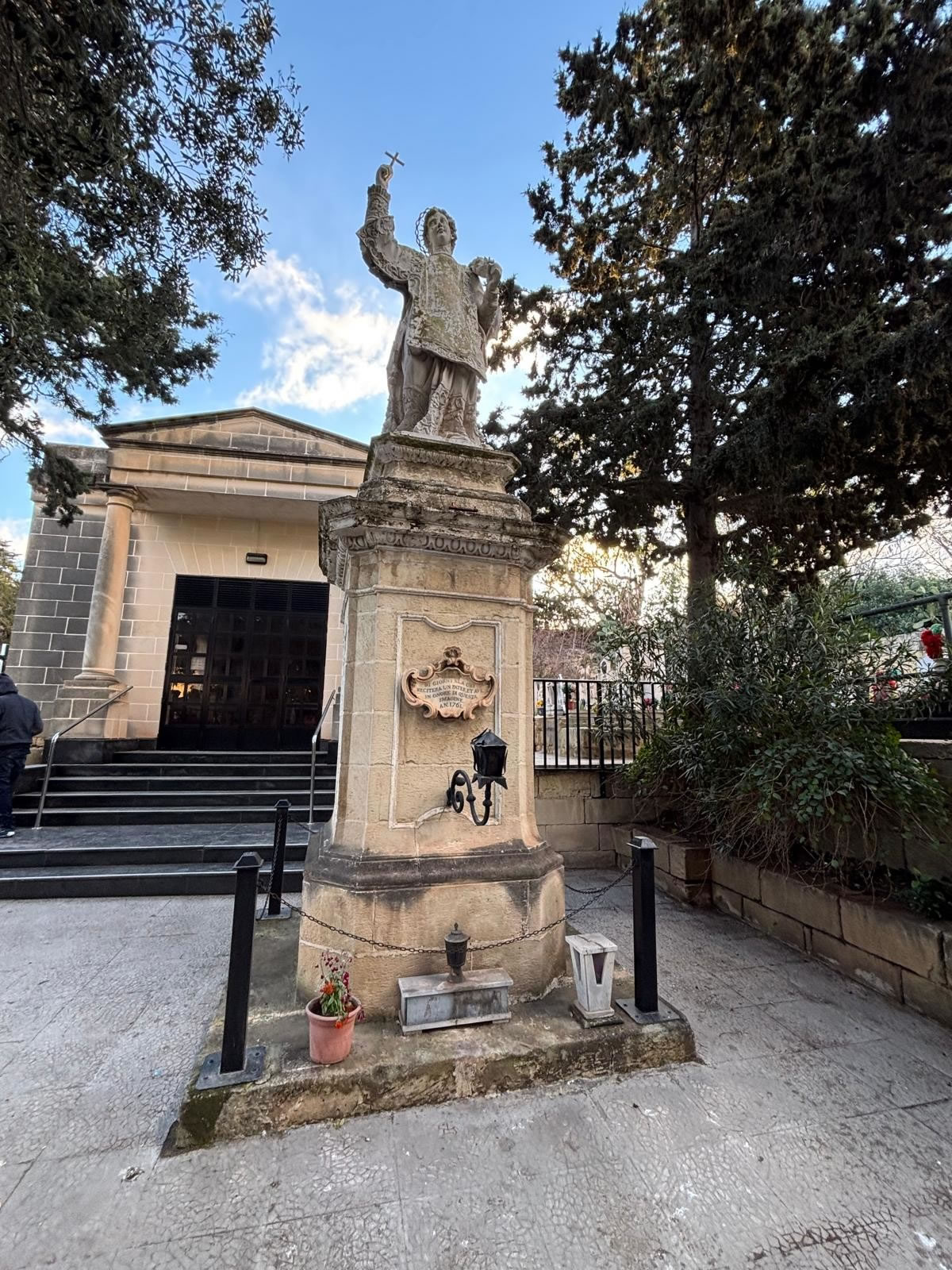
- Stone crosses and religious markers
Religious and Cultural Significance
The cemetery and chapel form an integral part of the religious landscape of Birgu. Burial practices in Malta have historically been closely tied to parish life, with cemeteries serving as extensions of the church community.
The site reflects:
- The Catholic emphasis on remembrance of the dead
- The importance of burial within consecrated ground
- The continuity of community identity across generations
Connections to St Lawrence Church
The cemetery’s strong link to St Lawrence Parish underscores its importance. The parish itself dates back centuries and served as the conventual church of the Order of St John before the construction of Valletta.
This connection highlights the cemetery’s role in the broader religious and historical narrative of Birgu.
Restoration and Preservation
Like many historic sites in Malta, the cemetery and chapel have undergone periods of maintenance and restoration to preserve their structure and heritage value. These efforts ensure that the site remains a place of historical and cultural importance.
Preservation work typically includes:
- Cleaning and stabilisation of gravestones
- Structural repairs to chapel buildings
- Protection of inscriptions and historical markers
Use in Modern Times
Today, the St Lawrence Cemetery and Chapel continue to represent an important part of Birgu’s heritage. While modern burial practices may have shifted to larger cemeteries, the site remains significant for:
- Historical research
- Cultural tourism
- Religious remembrance
Historical Timeline
- 16th century: Area used for burials during the Great Siege
- 17th century: Expansion of burial practices outside church
- 17th–18th century: Development of cemetery and chapel
- 19th century: Continued use and organisation of burial grounds
- 20th century: Restoration and preservation efforts
- Modern era: Cultural and historical site
Oldest grave in the cemetery according to Find a Grave records
Thomas McSweeney Executed 8th June 1837Other burials in the 1800's are below
| Name | Date of Death | Age | Rank / Occupation | Regiment / Ship | Notes |
|---|---|---|---|---|---|
| Ann ALLICOTT | 17 February 1863 | 31 years | Wife of Private W. Allicott | 2nd Battalion, 15th Regiment | Military family burial. |
| Edward BRENNAN | 24 November 18** | 4 years | Child burial | 2nd Battalion, 24th Regiment | Date partially illegible on surviving record. |
| Alfred CASSON | 17 October 1854 | Unknown | Able Seaman | Royal Navy | Killed during the bombardment of Sebastopol during the Crimean War. |
| William H. CAWN | 17 September 1854 | 17 years | Sailmaker's Boy | Royal Navy | Died of cholera. |
| Edward J. CONLAN | 24 November 1864 | 23 years | Ship's Corporal | HMS Liffey | Gravestone erected by his beloved brother and friend John Walherlake. |
| W. ELLIOTT | 25 November 1871 | 42 years 7 months | Private | 64th Regiment | Born 28 April 1829. Monument erected by his wife. |
| Jeremiah FIELDS | 26 March 1861 | 30 years | Private | 22nd Regiment | Military burial. |
| George FOSTER | 20 October 1864 | 28 years 8 months | Sergeant | 2nd Battalion, 4th King's Own Regiment | Military burial. |
| John William GIFFORD | 3 July 1872 | 1 year 11 days | Son of Colour Sergeant Gifford | 74th Royal Highlanders | Child burial. |
| Winifred GORMAN | 5 November 1867 | Unknown | Daughter of Colour Sergeant N.T. Gorman | 64th Regiment | Family burial. |
| James GROGAN | 23 April 1859 | 22 years | Seaman | HMS Marlborough | Naval burial. |
| Edward HANLEY | 9 September 1861 | 25 years | Private | 2nd Battalion, 15th Regiment | Accidentally died at Vittoriosa Hospital. Memorial erected by N.C.O.s and Privates of the 2/15th and 2/22nd Regiments. |
| Thomas HARRISON | 17 October 1854 | Unknown | Able Seaman | Royal Navy | Killed during the bombardment of Sebastopol. |
| Ellen HORGAN | 3 September 1872 | 9 months | Daughter of John and Hannah Horgan | 1st Battalion, 18th Royal Irish Regiment | Infant burial. |
| Wilhelmina Adelaide JEFFREY | 2 April 1871 | 16 days | Daughter of A. Craig and Adelaide Jeffrey | Military family | Bled to death. |
| Martin LILDERRY (? EILDERRY) | 12 December 1860 | Unknown | Private | 1st Company, 2nd Battalion, 3rd Regiment, The Buffs | Name partially uncertain. |
| Ellen McCARTHY | 4 July 1871 | 32 years | Wife of Jeremiah McCarthy | 2nd Battalion, 24th Regiment | Military family burial. |
| Matthew McGRATH | 31 August 1850 | 39 years 6 months | Ropemaker | HMS Marlborough | Naval burial. |
| Thomas McSWEENEY | 8 June 1837 | 23 years | Unknown | HMS Rodney | Executed aboard HMS Rodney. |
| John MALEY | 11 December 1860 | 24 years | Seaman | HMS Orion | Naval burial. |
| Isabella MITCHELL | 16 January 1869 | 25 years 10 months | Wife of Colour Sergeant Thomas Mitchell | 87th Royal Irish Fusiliers | Military family burial. |
| John O'DONNELL | 22 October 1865 | 10 months | Son of Sergeant Stephen Hanora O'Donnell | 29th Regiment | Infant burial. |
| Francis Thomas PURCELL | 9 March 1869 | 1 year 11 months | Son of Sergeant Major W. Purcell | 48th Regiment | Child burial. |
| William SALTER (? SADLER) | 22 April 1854 | Unknown | Able Seaman | Royal Navy | Described as the first man killed during the bombardment of Odessa. |
| John SULLIVAN | 18 October 1863 | 11 years 9 months 9 days | Son of Andrew and Catherine Sullivan | 100th Prince of Wales's Royal Canadian Regiment | Family burial. |
| David TWOMEY | 18 May 1856 | 32 years | Sailmaker's Mate | HMS Terrible | Burst a blood vessel. Shares gravestone with William H. Cawn. |
| John WELCH | November 1855 | Unknown | Unknown | HMS Unknown | Fell from aloft. Ship name partially illegible. |
| Martin WHEALAN | 29 April 1864 | 27 years | Seaman | HMS Liffey | Naval burial. |
Visitor Information
Location: Birgu (Vittoriosa), Malta
Coordinates: 35.883960, 14.529786
The cemetery and chapel can be explored as part of a visit to Birgu, one of Malta’s most historically rich towns, offering insight into both religious and social history.
Conclusion
The St Lawrence Cemetery and Chapel in Birgu provide a fascinating glimpse into Malta’s funerary traditions and religious heritage. Rooted in centuries of history, the site reflects the deep connection between faith, community, and remembrance that characterises Maltese culture.
Though less prominent than larger churches, it remains a meaningful and historically significant location within the fabric of Birgu.
Last updated: March 2026