📍 Location
Location Map Coordinates 35.828184, 14.472076
Tracing the 15th-Century Architecture of San Luqa and the Extramural 1837 Cholera Burial Grounds
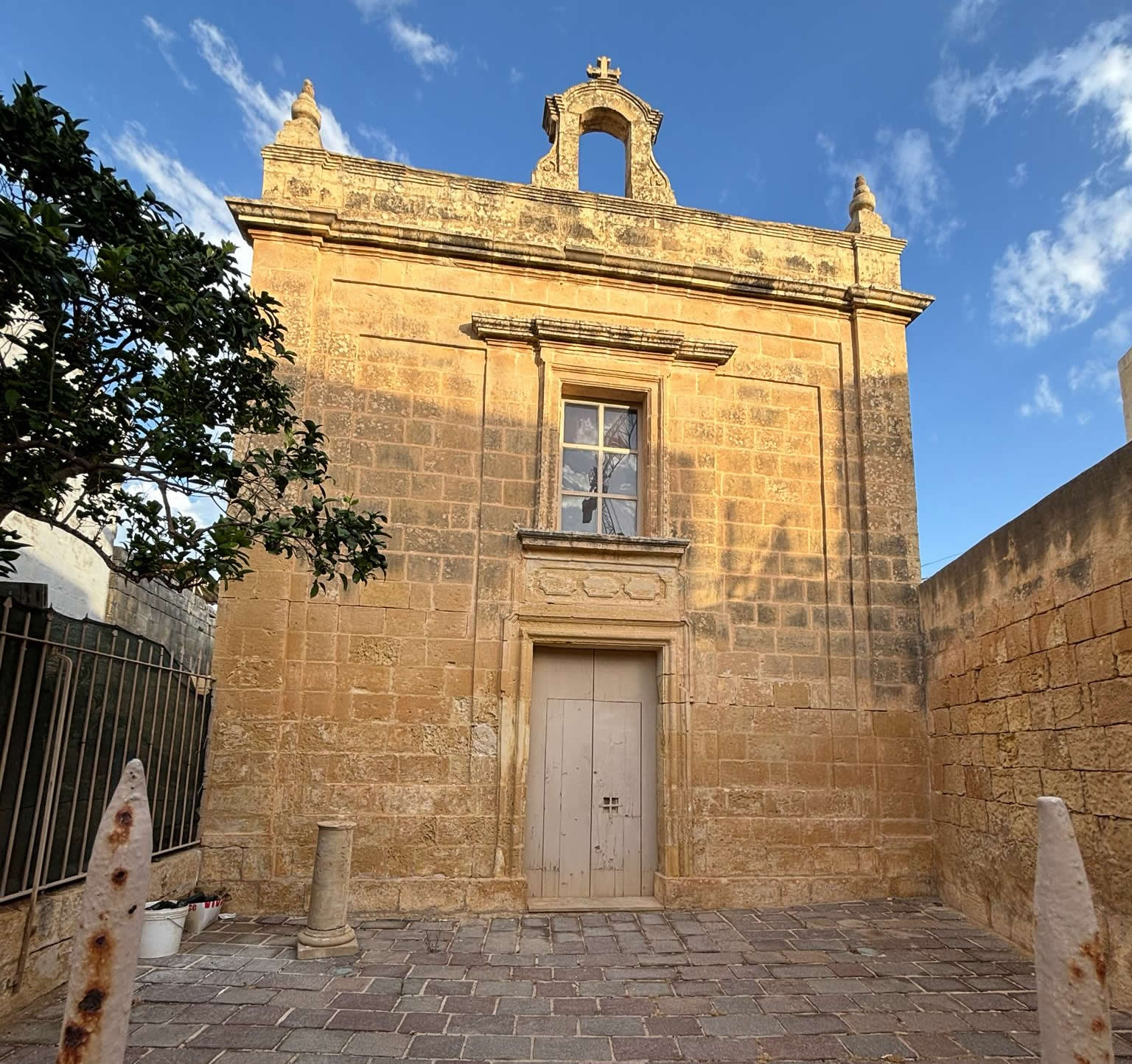
1. Spatial Orientation and Site Profile
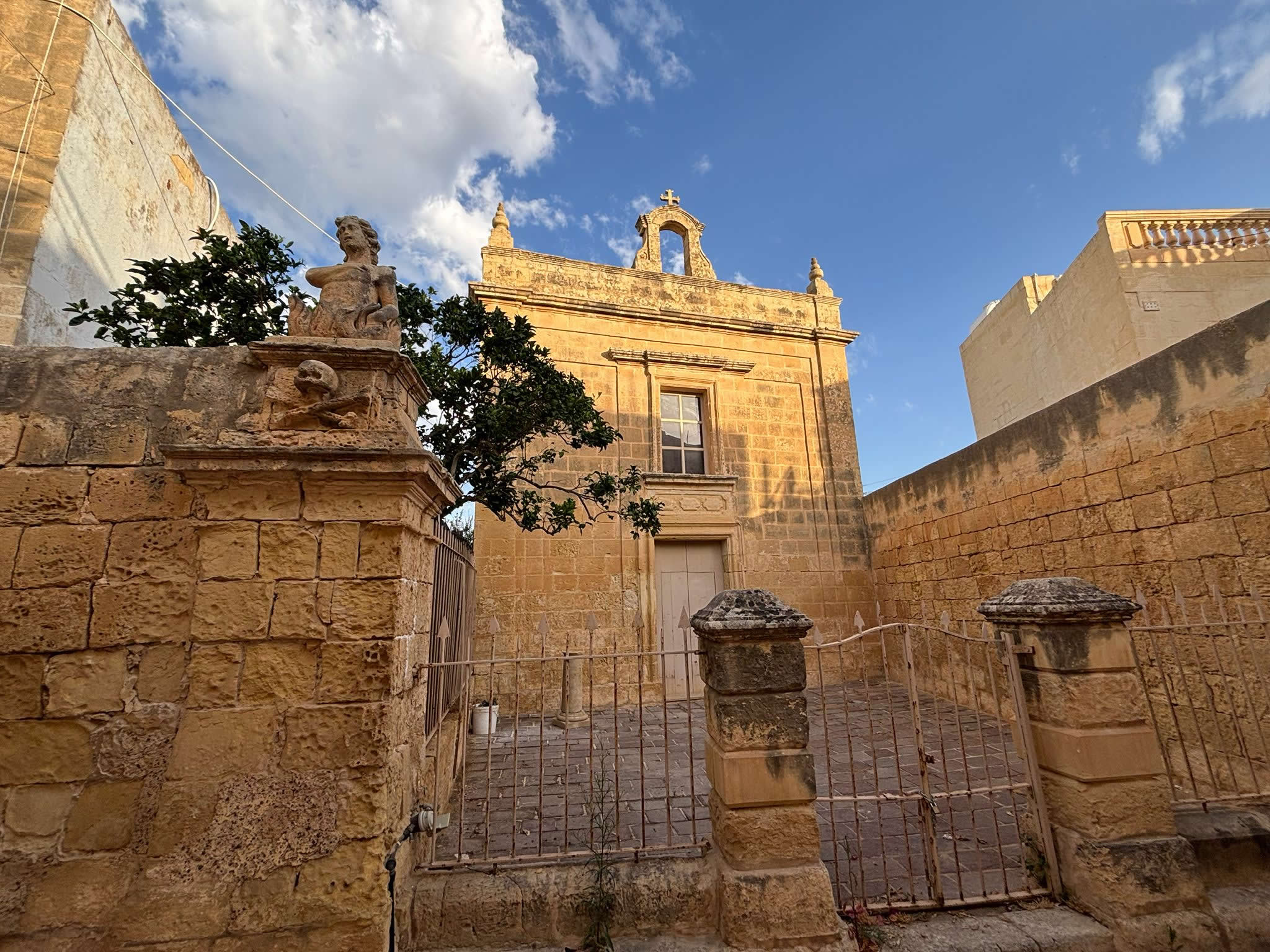
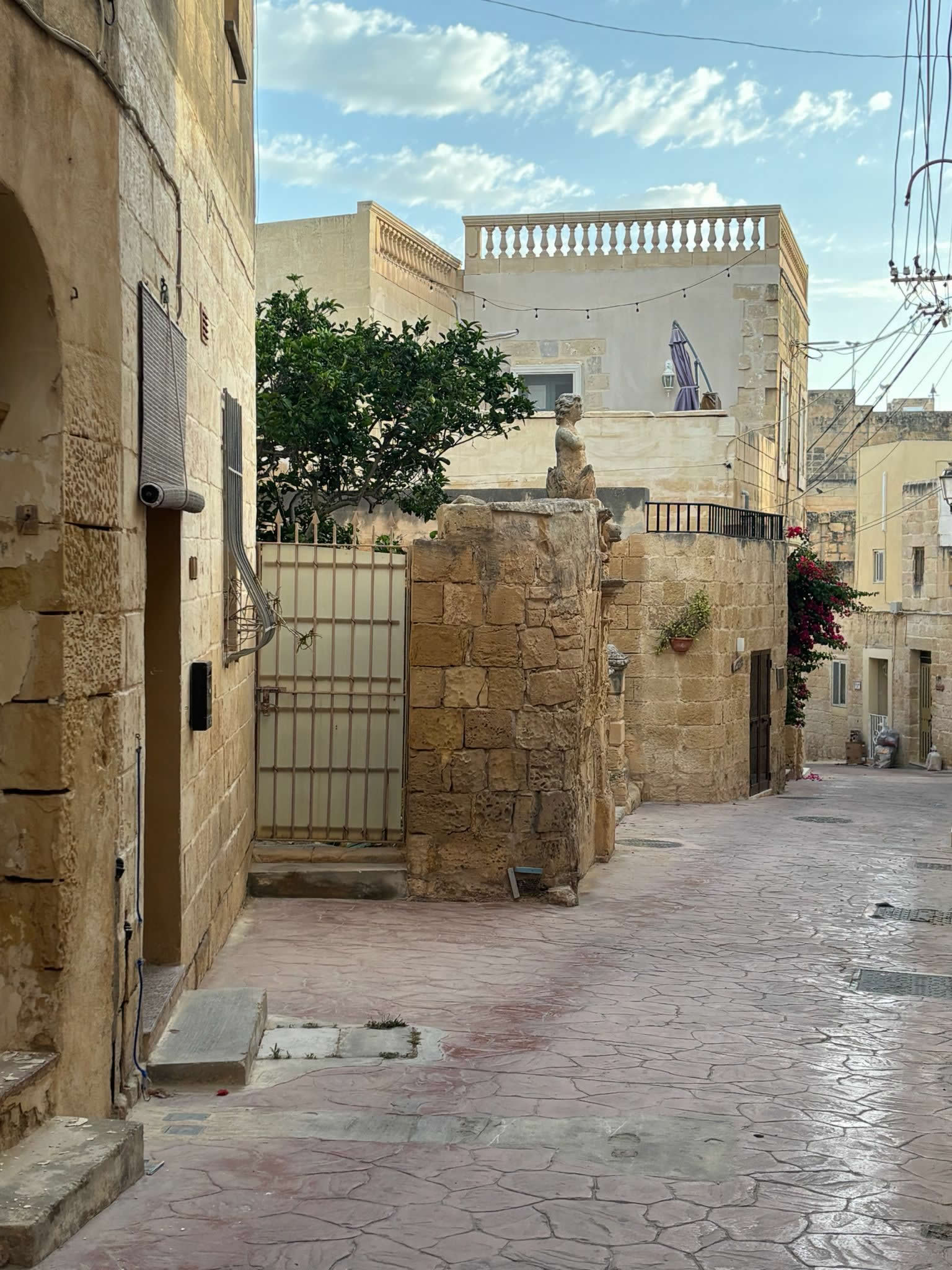
The highly significant St. Luke’s Chapel (referred to locally as *Il-Kappella ta' San Luqa*) sits tucked away in the southern, historical layout of Żurrieq, one of Malta's oldest continuous rural settlements. Situated at the corner of *Triq San Luqa*, this building represents the architectural transition between the late medieval period and the early modern era. Its position outside the immediate central parish square points to a time when decentralized rural hamlets constructed their own branch sanctuaries to serve local farmers and landowners.
Geographically, the chapel stands on a rock platform that gently drops down toward the southern cliff faces of the island. This specific location played an important role in its secular history, serving as a boundary marker between the sprawling limits of medieval Żurrieq and the fields leading toward the adjacent village of Qrendi.
| Site Survey & Archival Data Sheet | |
|---|---|
| Official Dedication | St. Luke the Evangelist (San Luqa) |
| Locality Identification | Żurrieq, Southern Region, Malta |
| Geographical Coordinates | 35.828184, 14.472076 |
| First Archival Mention | c. 15th Century (Re-edified in subsequent eras) |
| Epidemic Function | Extramural Quarantine Burial Ground (1837 Asiatic Cholera Outbreak) |
| Architectural Typology | Maltese Late-Medieval Vernacular with Early Renaissance Details |
| Current Canonical Status | Active Subsidiary Historical Sanctuary |
2. Historical Chronicles: Medieval Foundations to the 17th Century
The foundation of a shrine dedicated to St. Luke on this site reaches back into the late medieval history of the Maltese islands. While the current facade reflects late-16th and 17th-century updates, structural elements inside point to a much older 15th-century building footprint. During this early period, before the arrival of the Order of St. John in 1530, the southern region of Malta was divided into a network of small, scattered farming hamlets (*halal*), each relying on small stone chapels for daily devotions and spiritual shelter.
When Apostolic Delegate Monsignor Pietro Dusina conducted his famous pastoral inspection of Malta's churches in 1575, he noted that the southern countryside contained numerous small, underfunded chapels. Many of these buildings lacked proper doors, altars, or stable financial incomes, leading Dusina to close down those deemed unfit for mass. However, the devotion to St. Luke in Żurrieq remained strong enough among local farming families to protect the chapel from abandonment. Local benefactors repeatedly funded necessary repairs to keep the sanctuary operational for seasonal feasts and agricultural blessings.
By the mid-17th century, the chapel underwent structural updates to match the evolving religious styles brought by the Counter-Reformation. The interior was modified to create a clean, dignified space focused on a single stone altar, ensuring the historic building could continue to serve the community through changing times.
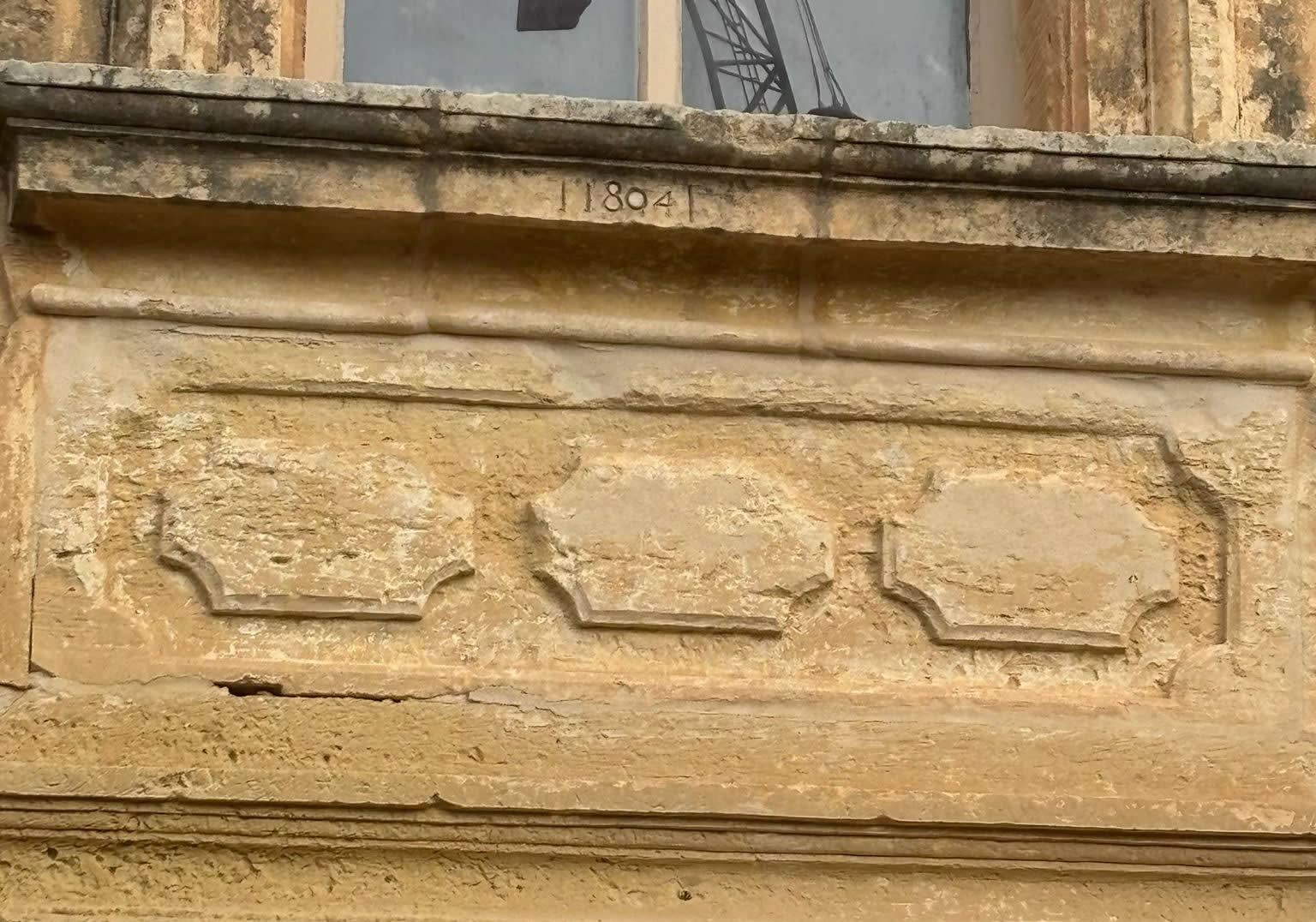
3. The 1837 Asiatic Cholera Crisis: The Qrendi Burial Connection
The most somber and historically significant chapter in the chapel's timeline occurred during the late 1830s under British colonial administration. In the summer of 1837, a catastrophic wave of Asiatic Cholera swept across the Maltese islands, causing widespread panic and a high mortality rate. Because the disease spread rapidly through dense population centers, public health officials quickly banned traditional burials inside village church crypts to prevent the contamination of vital local water tables.
To handle the rising death toll, colonial authorities established emergency, extramural quarantine burial fields across rural areas. The open fields directly adjacent to St. Luke’s Chapel in Żurrieq were quickly requisitioned to serve as a secure regional plague and cholera cemetery. This site was chosen because of its open, wind-swept location and its relative isolation from the dense residential cores of the southern villages.
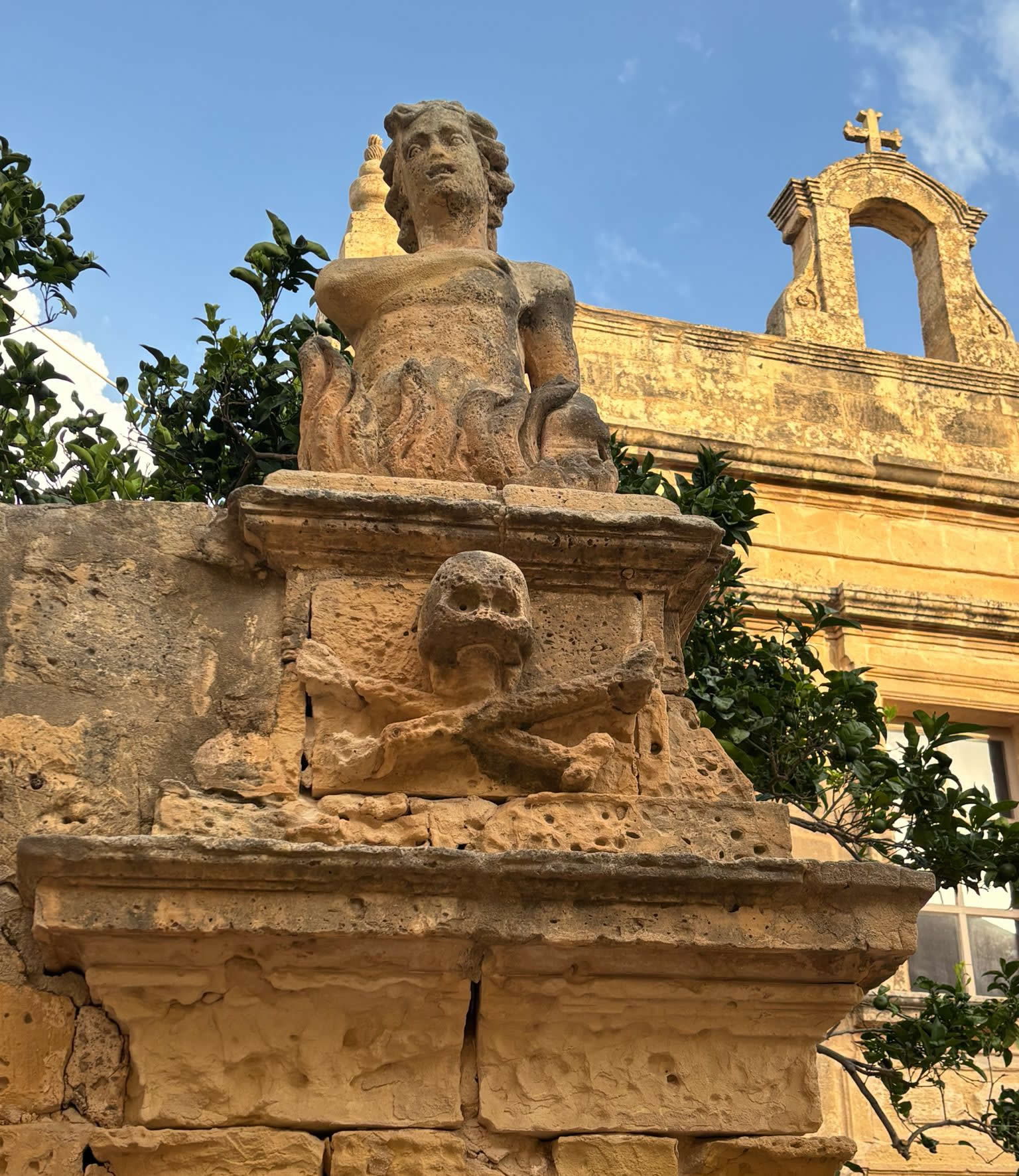
As decades passed and Malta centralized its modern cemetery systems, the physical grave markers in the fields surrounding the chapel were cleared, and parts of the open ground were absorbed into the town's expanding footprint. However, a prominent visual clue remains on the chapel’s parvis terrace: a stone bust representing a human soul in purgatory, complete with carvings of a skull and crossbones. In Maltese religious architecture, this distinct funerary iconography was strictly used to mark the boundaries of mass burial fields and epidemic quarantine grounds, leaving a lasting monument to those resting beneath the site.
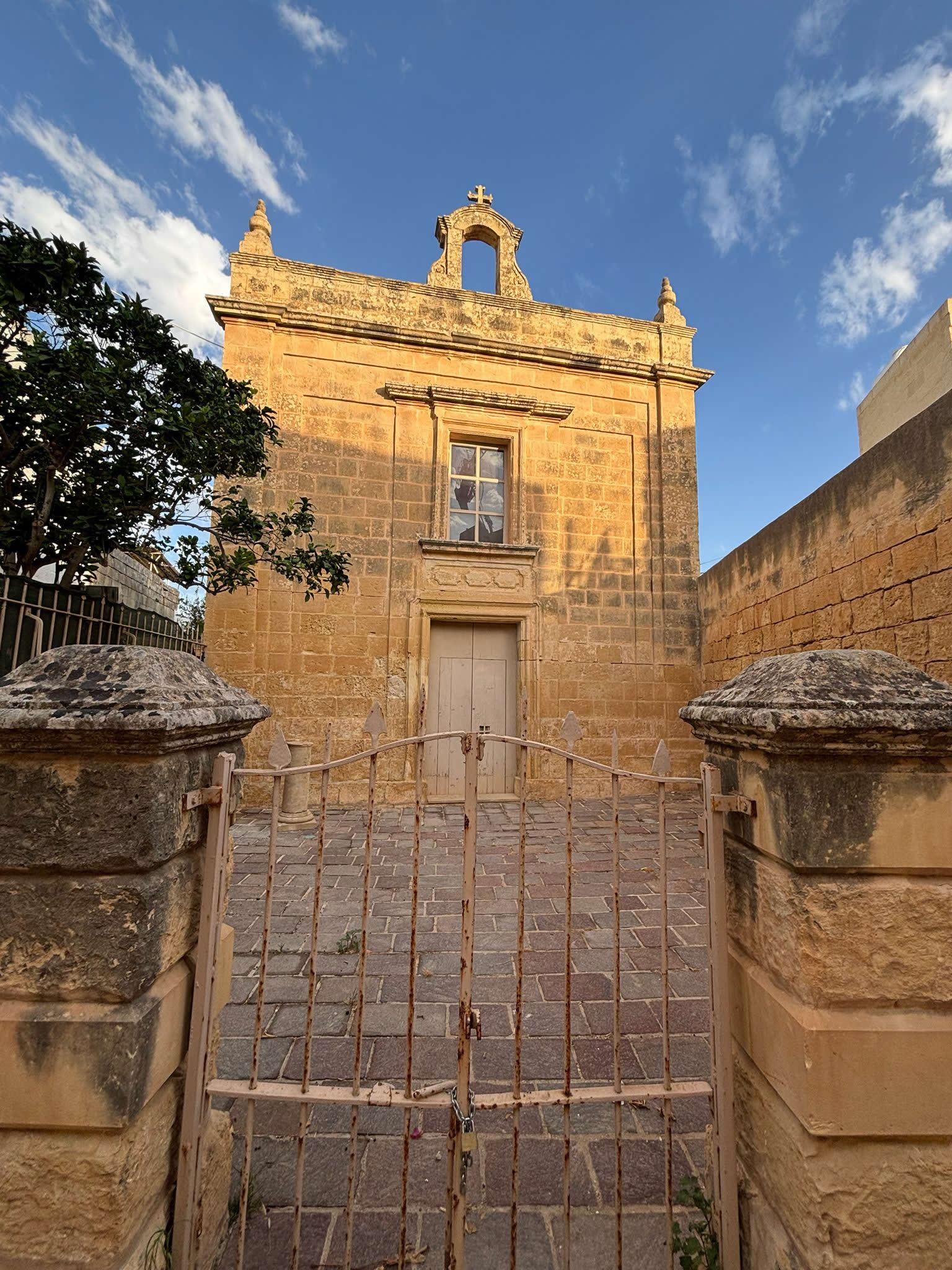
4. Architectural Analysis: Vernacular Transitions
From an architectural standpoint, St. Luke’s Chapel serves as a text-book example of Maltese vernacular design, displaying the transition from simple medieval methods to early Renaissance styling. The exterior proportions are intentionally low-slung, built to withstand strong coastal winds while making practical use of local Globigerina limestone blocks.
The External Elevation
The front facade is clean and unadorned, relying on simple lines rather than complex Baroque carvings. The main square door sits in the center, flanked by small low-level windows that allowed passing farmers to look inside and pray even when the chapel doors were locked. Directly above the main portal, a circular window (*oculus*) draws light into the interior hall. The top of the facade features a simple, classic stone bell-cot (*kampanard*), which once held a single bronze bell used to coordinate community events and prayer calls.
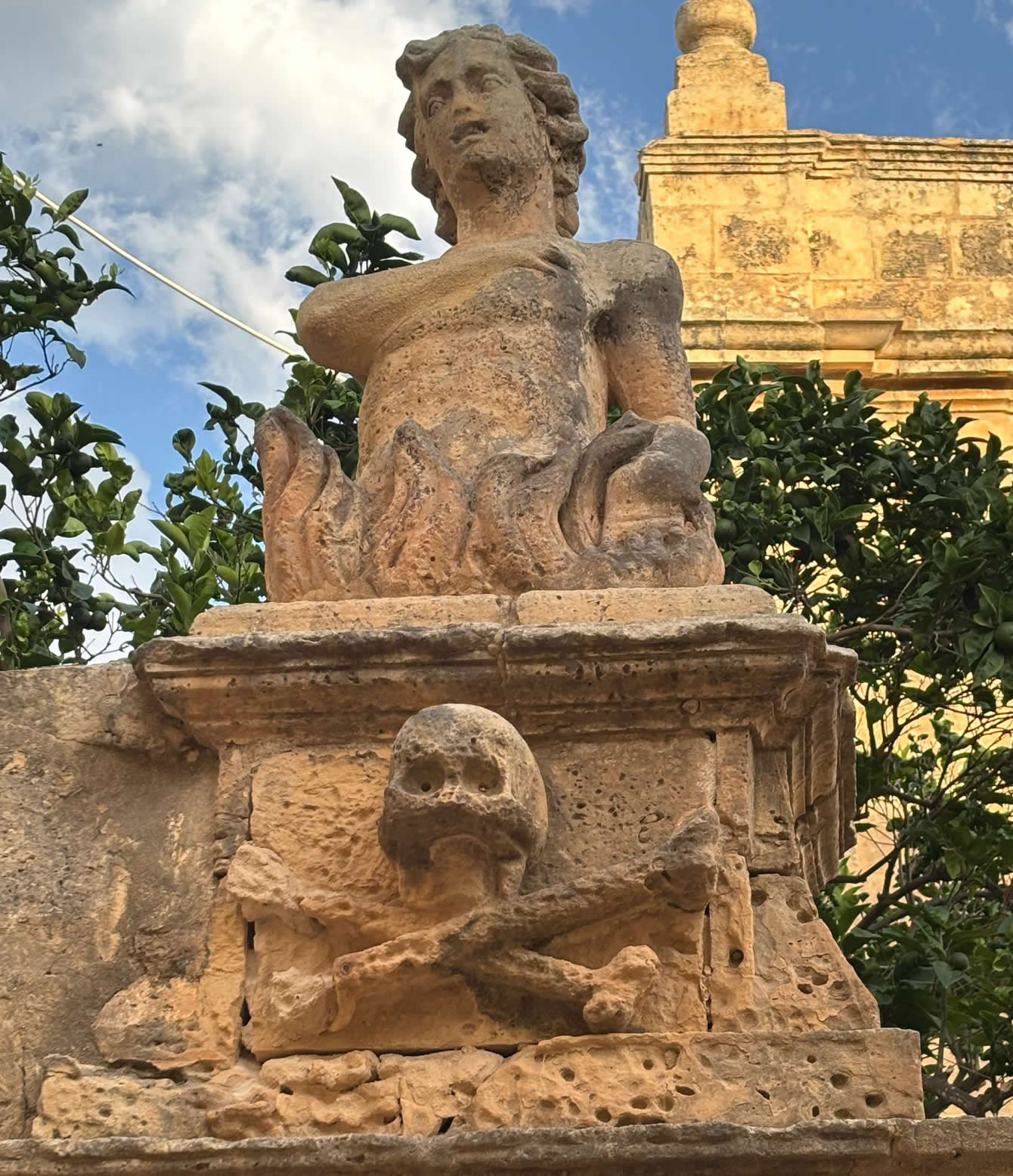
Qrendi Cholera Register 1837 links to burials here
Interior Vaulting and Masonry
Inside, the chapel opens into a single-nave room covered by a classic stone barrel vault. The roof is supported by heavy, parallel stone arches (*frasmij*) that rise directly from thick internal pilasters built into the walls. This robust construction method was typical of late-medieval Maltese builders, who lacked large timber beams and relied entirely on stone arches to bridge internal spans. The altar space sits at the far end of the nave, framed by a simple stone cornice that highlights the room's quiet focus.
5. Interior Artworks and Titular Iconography
The internal focus of the chapel centers on its single stone altar and the titular oil painting that hangs directly above it. The artwork represents classical religious iconographies, showing St. Luke the Evangelist accompanied by his traditional symbolic attribute, the winged ox, which represents sacrifice and strength.
The style of the painting displays the warm tones and soft lighting choices common in late-Renaissance and early-Baroque art across the Mediterranean. The composition is designed to bring a sense of comfort and stability to a rural parish that faced regular hardships, from variable agricultural harvests to the threat of sudden disease. While the canvas has undergone essential conservation work over the years to protect it from rising damp and humidity, it remains a valuable piece of local heritage that reflects the artistic traditions of the southern region.
6. Modern Restoration and Current Community Role
Like many rural stone buildings across Malta, St. Luke's Chapel suffered from long-term exposure to the elements, with rising damp and wind-driven salt erosion damaging the outer limestone walls. To prevent lasting decay, the chapel was included in professional restoration initiatives managed by local heritage authorities.
Restoration specialists carefully cleaned the historic facade using gentle, dry methods to remove built-up soot and grime without scratching the aged stone. Damaged mortar joints were refilled using a traditional lime-based mixture that matches the original materials, allowing the building to breathe and naturally release trapped moisture. The roof structure was also waterproofed to protect the interior vaulting and painting from leaks. Today, the chapel serves as an important historical landmark, opening for its annual feast day and heritage events to offer students and visitors a clear look at the deep history and cultural endurance of the community.
Frequently Asked Questions — St. Luke's Chapel
No, there are no regular scheduled masses held at St. Luke's Chapel. The building is maintained as a subsidiary branch sanctuary by the central Żurrieq parish. It opens to the general public primarily for its annual liturgical feast day, special memorial services, and scheduled cultural heritage trail openings.
No individual headstones or visible grave outlines remain in the fields today, as the emergency quarantine cemetery was cleared of markers when modern centralized burial systems were introduced. However, the stone soul-in-purgatory bust and skull carving on the chapel parvis still stand as the official historical boundary marker for the mass burial ground.
During the 1837 Asiatic Cholera outbreak, strict sanitation laws required immediate, extramural burials outside residential cores to protect local drinking water. Because Qrendi lacked an isolated rural field that met these strict requirements, colonial health officers designated the open grounds at St. Luke's in Żurrieq to serve as a shared regional burial site for both neighboring communities.
The chapel is located at the corner of Triq San Luqa in Żurrieq. The exterior facade can be easily photographed from the public street and parvis at any time. For optimal results showing the texture of the limestone and the historic carvings, photographers should shoot in the morning light.