📍 Location
Location Map Coordinates 35.856045, 14.548929
Location: Żejtun, Malta
Coordinates: 35.856045, 14.548929
Date of Construction: 1597
Dedication: Assumption of the Virgin Mary
Introduction
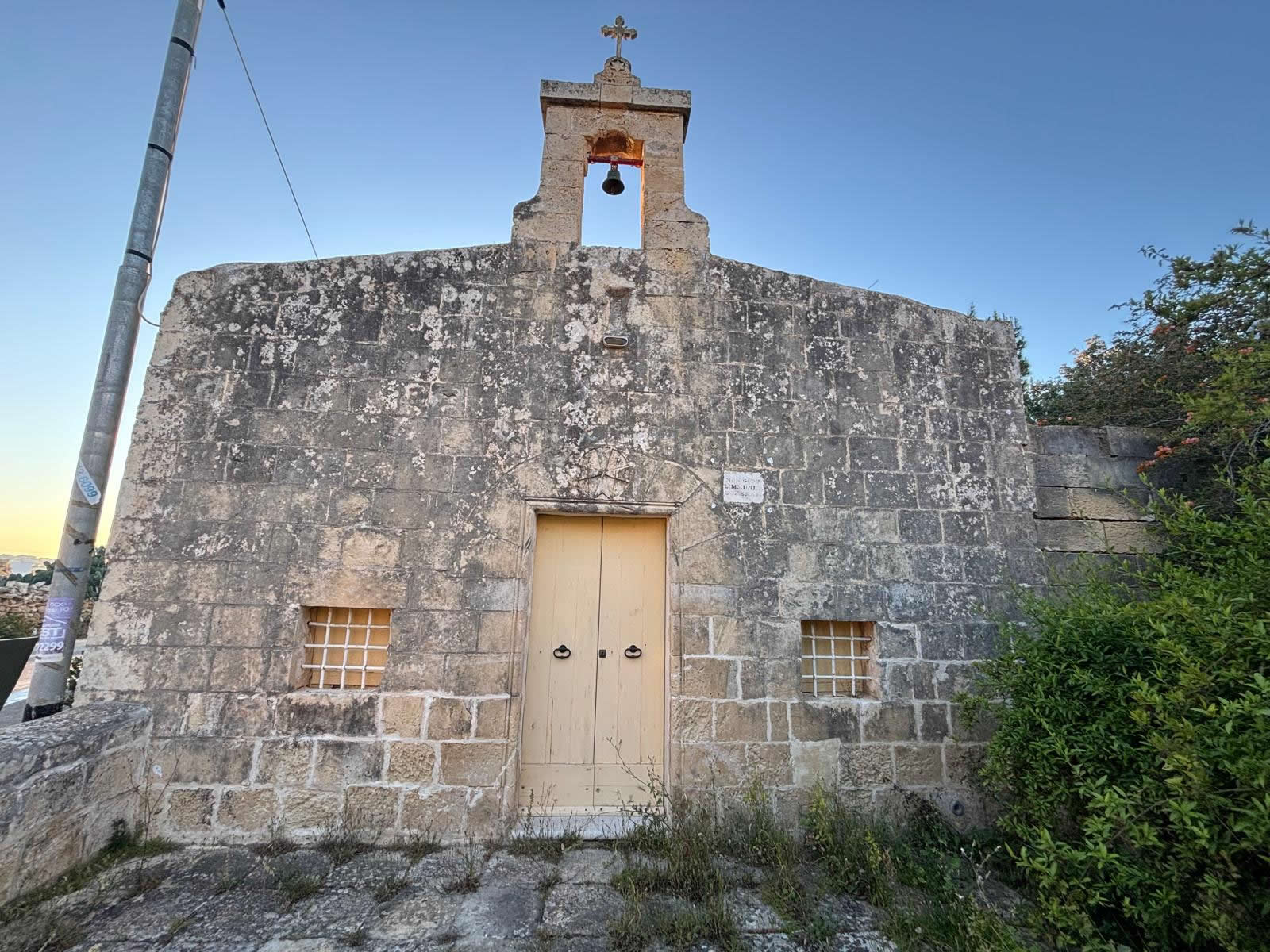
The St. Mary of Ħal Tmin Chapel (Kappella ta’ Santa Marija ta’ Ħal Tmin) is a late sixteenth-century rural chapel located on the outskirts of Żejtun in southeastern Malta. Set within a historically agricultural landscape, the chapel forms part of a network of devotional structures that once served dispersed rural communities across the Maltese countryside.
Despite its modest scale, the chapel represents a significant example of post-medieval religious architecture in Malta and offers valuable insight into the spiritual, social, and agricultural life of the region during the early modern period.
Historical Context
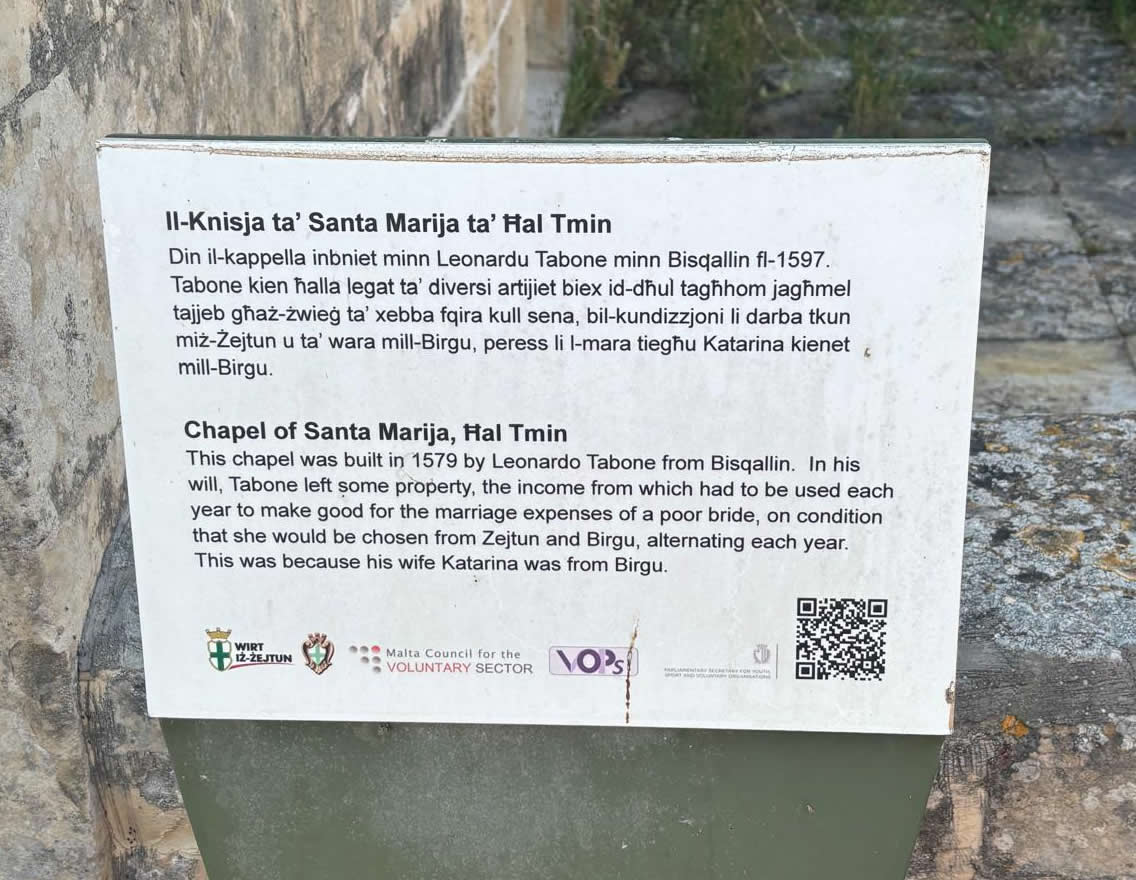
The chapel was constructed in 1597 by Leonardo Tabone, a prominent member of a well-established family in the Żejtun area. Its construction reflects the strong tradition of private patronage that characterised Maltese religious architecture during the late sixteenth century, particularly in rural zones where parish churches were often distant.
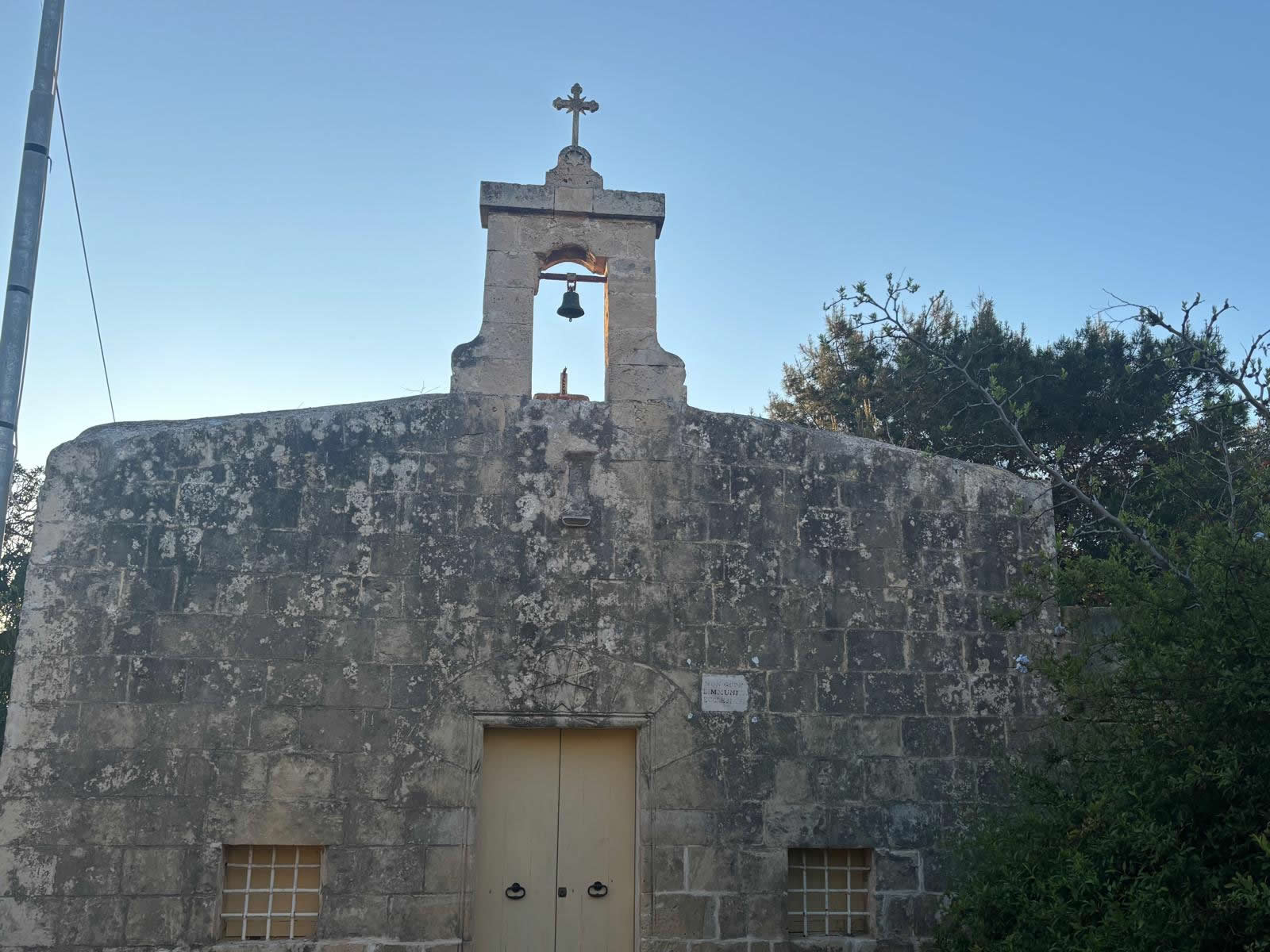
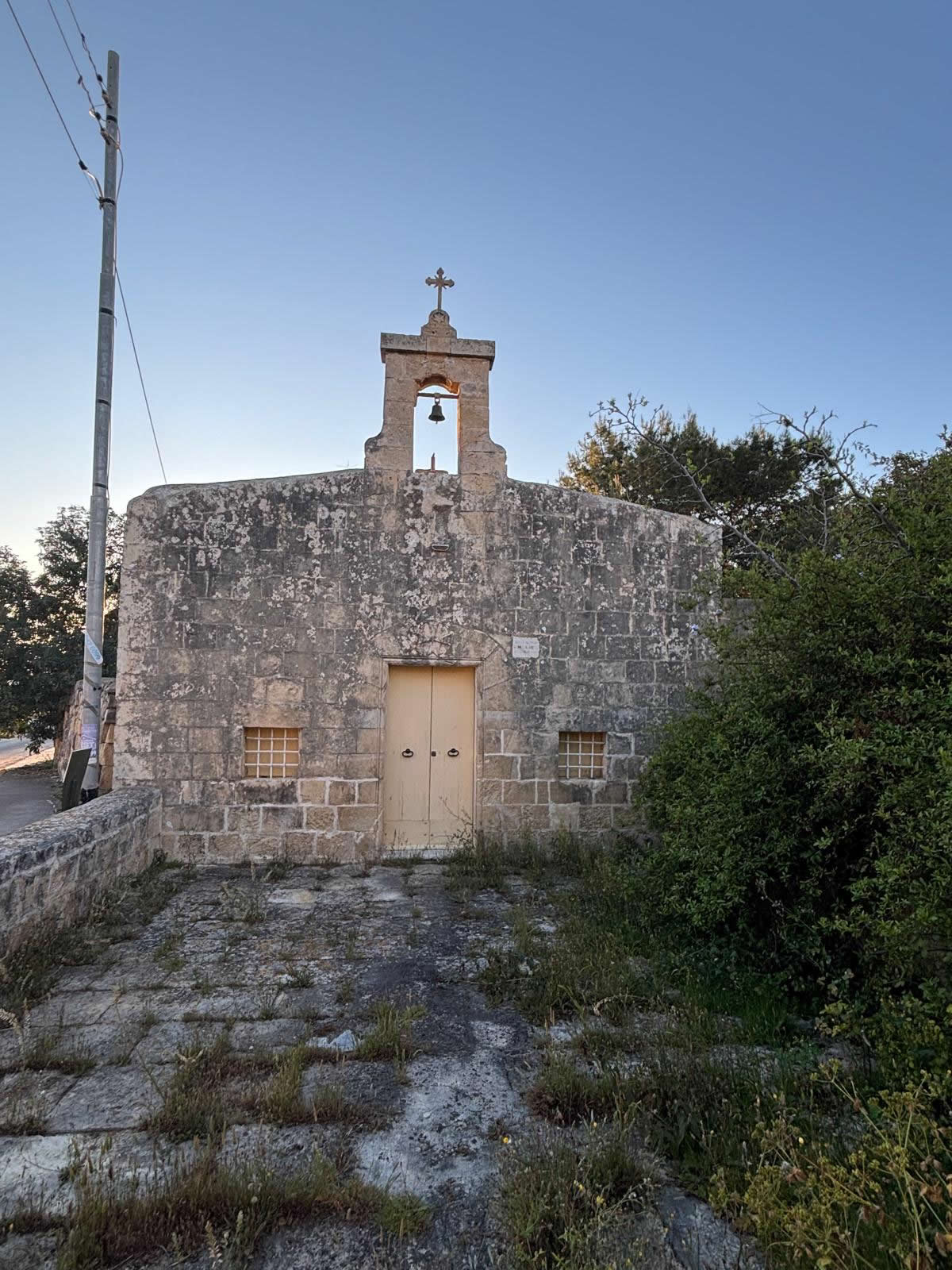
The foundation date is commemorated by an inscription carved into a limestone block above the chapel entrance, accompanied by a Maltese cross. This physical marker not only confirms the building’s age but also highlights the importance of donor identity and legacy in ecclesiastical construction.
Importantly, the chapel does not appear in the 1575 apostolic visitation report of Pietro Dusina, indicating that it did not exist prior to that date and confirming its late sixteenth-century origin. This aligns with a broader period of chapel-building across Malta following the consolidation of the islands under the Order of St John.
The Rural Settlement of Ħal Tmin
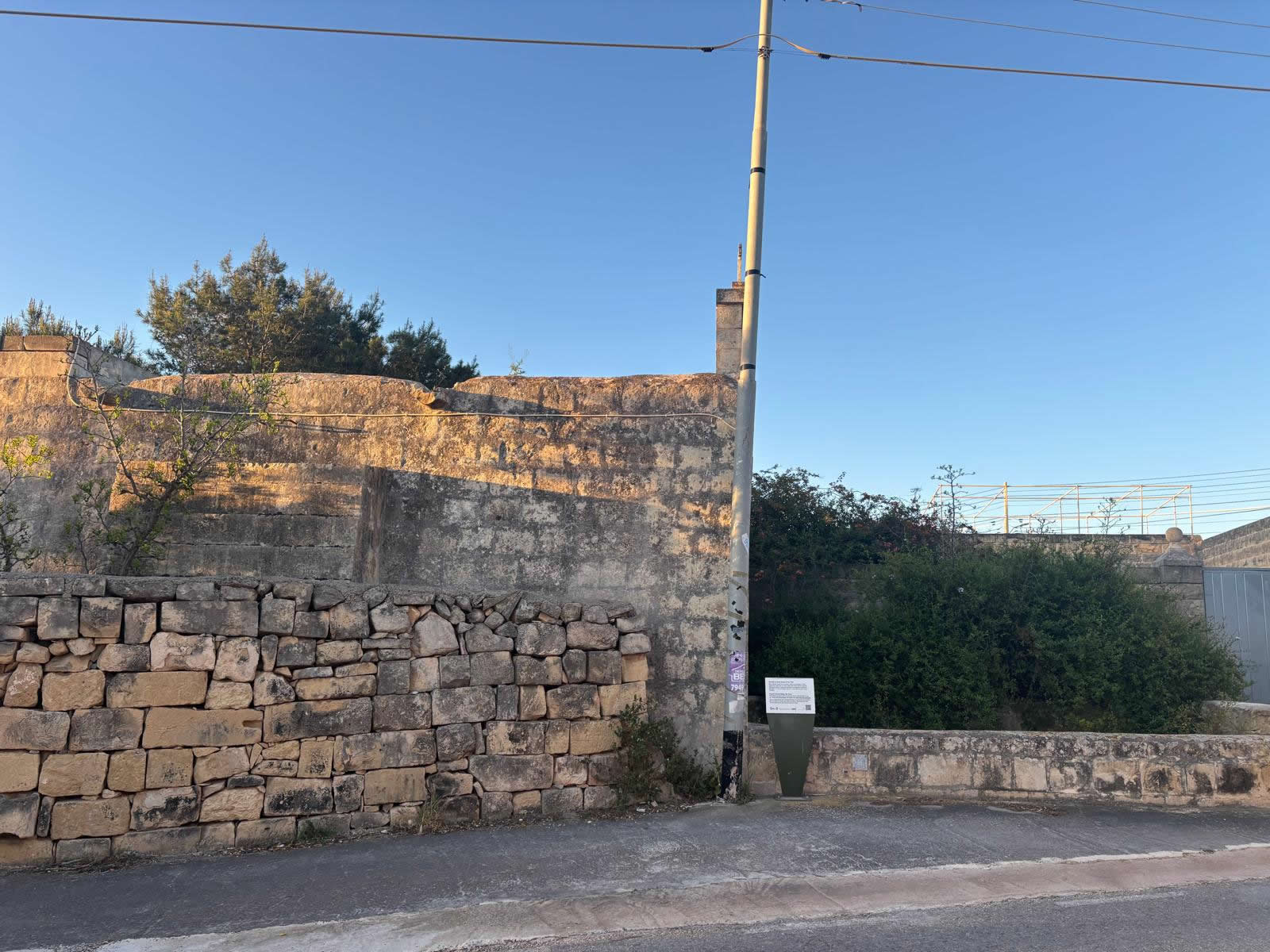
The chapel is located within the historical area of Ħal Tmin, a small rural settlement whose origins predate the chapel itself. The area is believed to have medieval and possibly earlier roots, with its name evolving from Arabic-derived forms such as “raħal timin” recorded in the late medieval period.
This agricultural hamlet formed part of the wider territory of Żejtun, which historically encompassed a large portion of southeastern Malta, including areas that later developed into separate localities.
The positioning of the chapel along the route connecting St Gregory’s Church (San Girgor) to the coast highlights its role as a waypoint for both spiritual and practical journeys, serving farmers, travellers, and local residents alike.
Religious Use and Community Role
During the seventeenth century, the chapel functioned as an active centre of religious life. Records from episcopal visitations confirm that multiple masses were celebrated annually, particularly on the feast of the Assumption and other Marian feast days.
The chapel also hosted:
- Sunday Mass
- Rosary services during October
- Lenten retreats
- Catechism instruction
These activities illustrate the chapel’s importance as a focal point for the rural population, providing regular access to religious services without requiring travel to the main parish church.
Over time, however, demographic shifts and the gradual depopulation of the surrounding countryside led to a decline in regular liturgical use. Today, the chapel is no longer used for frequent Mass but remains active for occasional religious gatherings and educational purposes.
Leonardo Tabone and His Legacy
Leonardo Tabone, the chapel’s founder, left a lasting social and religious legacy beyond the construction of the building itself. In the early seventeenth century, he established a charitable endowment designed to provide dowries for impoverished young women.
This fund, financed through agricultural income, alternated annually between beneficiaries from Żejtun and Birgu. The Żejtun recipient was required to marry within the chapel on the feast of the Assumption, reinforcing the building’s symbolic importance within the community.
Such initiatives reflect the intertwining of religious devotion, social welfare, and local identity in early modern Malta.
Architectural Features
The St. Mary of Ħal Tmin Chapel is a textbook example of late sixteenth-century Maltese rural chapel architecture, characterised by simplicity, functionality, and modest decorative elements.
Exterior
- Plain rectangular façade
- Central doorway with flanking windows
- Small parvis enclosed by a low wall
- Bell-cot (belfry) above the façade
- Slightly gabled roof
The side windows allowed for private devotion when the chapel was closed, a feature commonly found in rural Maltese chapels.
Interior
Originally, the chapel featured:
- A rectangular plan
- Stone slab roofing (xorok)
- Three supporting arches
However, significant alterations occurred following damage during the Second World War. The rear section of the chapel was repaired using modern materials, and structural changes included the removal and replacement of one of the original arches.
Additional spaces, including a sacristy and meeting room, were later added, reflecting evolving functional needs.
Artistic Elements
The principal artwork within the chapel is the titular painting depicting the Assumption of the Virgin Mary, showing the Madonna ascending to heaven surrounded by angels.
Although relatively modest compared to larger parish churches, this artwork remains central to the chapel’s devotional identity and reflects the enduring importance of Marian devotion in Maltese religious culture.
World War II Damage and Restoration
Like many structures in Malta, the chapel suffered damage during the Second World War, when aerial bombardments affected large parts of the island. The rear section of the building was particularly impacted and subsequently repaired using reinforced materials.
While these repairs ensured the survival of the chapel, they also introduced architectural changes that distinguish the modern structure from its original form.
Current Status and Heritage Value
Today, the chapel remains in good condition and is listed on the National Inventory of the Cultural Property of the Maltese Islands, recognising its historical and architectural significance.
Although no longer a regular parish chapel, it continues to serve as a venue for:
- Catechism classes
- Religious meetings
- Occasional devotional activities
Its preservation ensures that it remains an important link to Malta’s rural past and religious traditions.
Conclusion
The St. Mary of Ħal Tmin Chapel stands as a testament to the enduring legacy of Malta’s rural religious heritage. Built in 1597 through private patronage, it reflects the spiritual life of a dispersed agricultural community and the broader cultural patterns of early modern Malta.
Despite wartime damage and changing patterns of use, the chapel continues to hold historical, architectural, and cultural value, offering a tangible connection to the past in the landscape of Żejtun.
Frequently Asked Questions
When was St. Mary of Ħal Tmin Chapel built?
The chapel was built in 1597 by Leonardo Tabone.
Where is the chapel located?
It is located in Ħal Tmin, on the outskirts of Żejtun, Malta.
Is the chapel still in use?
Yes, it is used for catechism classes and occasional religious activities, though regular Mass is no longer held.
What is the chapel dedicated to?
The chapel is dedicated to the Assumption of the Virgin Mary.
Did the chapel suffer war damage?
Yes, it was partially damaged during World War II and later repaired.
© emalta.com – Guide to Churches and Chapels of Malta