📍 Location
Location Map Coordinates 35.872925, 14.445810
The Votive Stones of San Rokku: Tracking Epistemic Plague Legacy and Baroque Devotion in Casal Żebbuġ
1. Geographical Orientation and Site Index
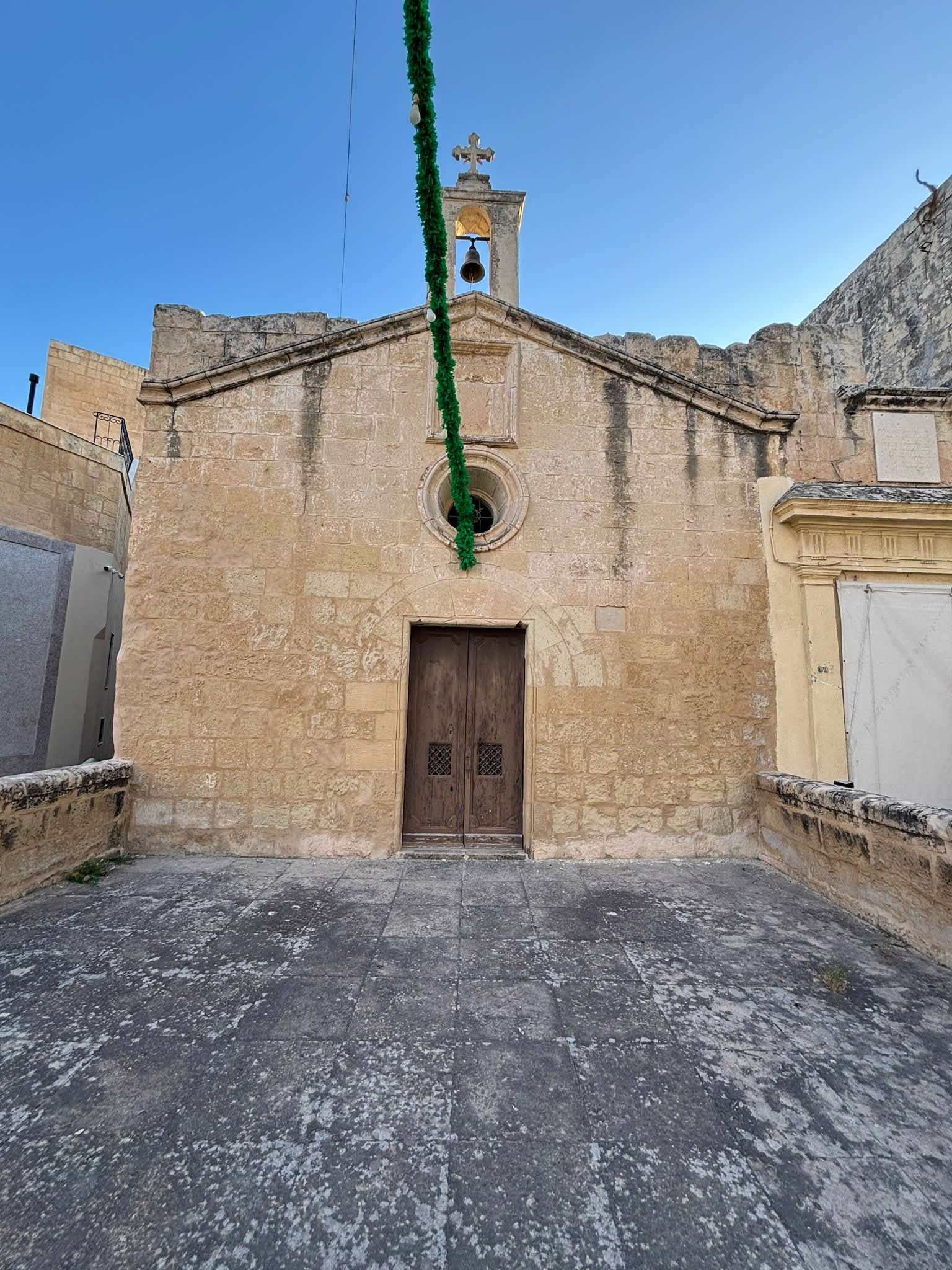
The historic St. Roque Chapel (known natively to local residents as Il-Kappella ta' San Rokku) sits prominently within the urban core of Ħaż-Żebbuġ (Casal Rohan), one of Malta's oldest inland agricultural municipalities. Situated along an ancient thoroughfare network, the chapel stands as a permanent reminder of medieval and early-modern town planning, which often placed votive structures at key crossroads or at the entrances of rural settlements.
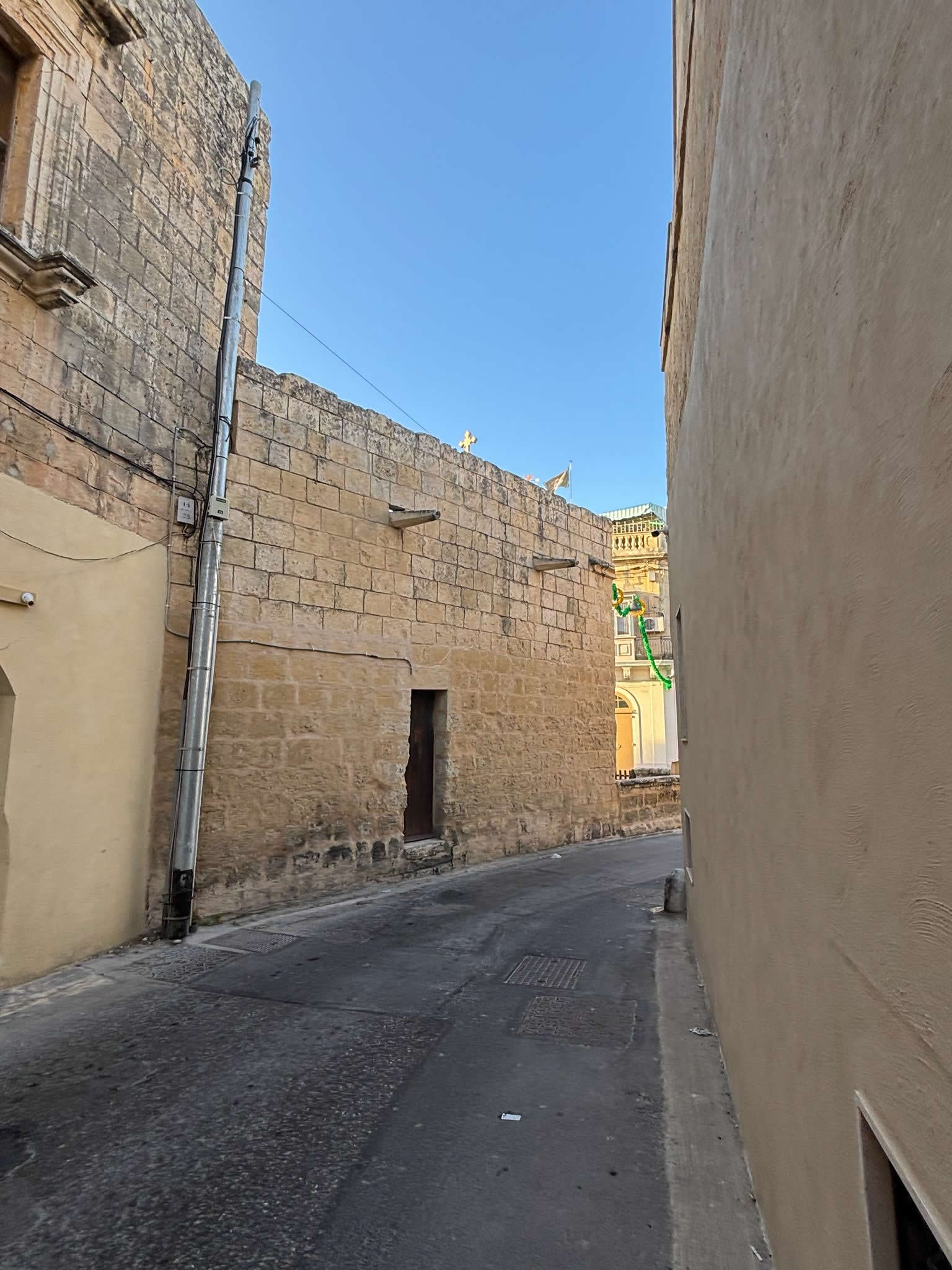
From a strict topographical perspective, the chapel occupies a corner lot that directly mirrors the expansion of Casal Żebbuġ during the height of the rule of the Order of St. John. The surrounding terrain displays the typical limestone street layout of early Maltese town centers, where narrow lanes expand out from the main parish church toward outlying agricultural fields.
| Site Survey & Archival Data Sheet | |
|---|---|
| Official Dedication | St. Roque (San Rokku / Saint Roch) |
| Locality Identification | Ħaż-Żebbuġ, Central Region, Malta |
| Geographical Coordinates | 35.872925, 14.445810 |
| Original Foundation | c. Late 16th Century (Following the 1592-93 Epidemic) |
| Current Rebuilding Era | Late 17th Century (Erected post-1675 Plague; Consecrated 1691) |
| Architectural Classification | Maltese Vernacular Baroque / Counter-Reformation Ecclesiastical Style |
| Current Canonical Status | Active Votive Chapel / Subsidiary Sanctuary |
2. Historical Origins: Pestilence, Ex-Votos, and Intercession
The history of St. Roque Chapel is deeply tied to the history of epidemic outbreaks in early modern Malta. Throughout the rule of the Knights Hospitaller, the islands suffered repeated waves of contagious diseases due to their central position along Mediterranean trade and maritime shipping lanes. To counter these threats, the population frequently relied on both public health measures and religious devotion.
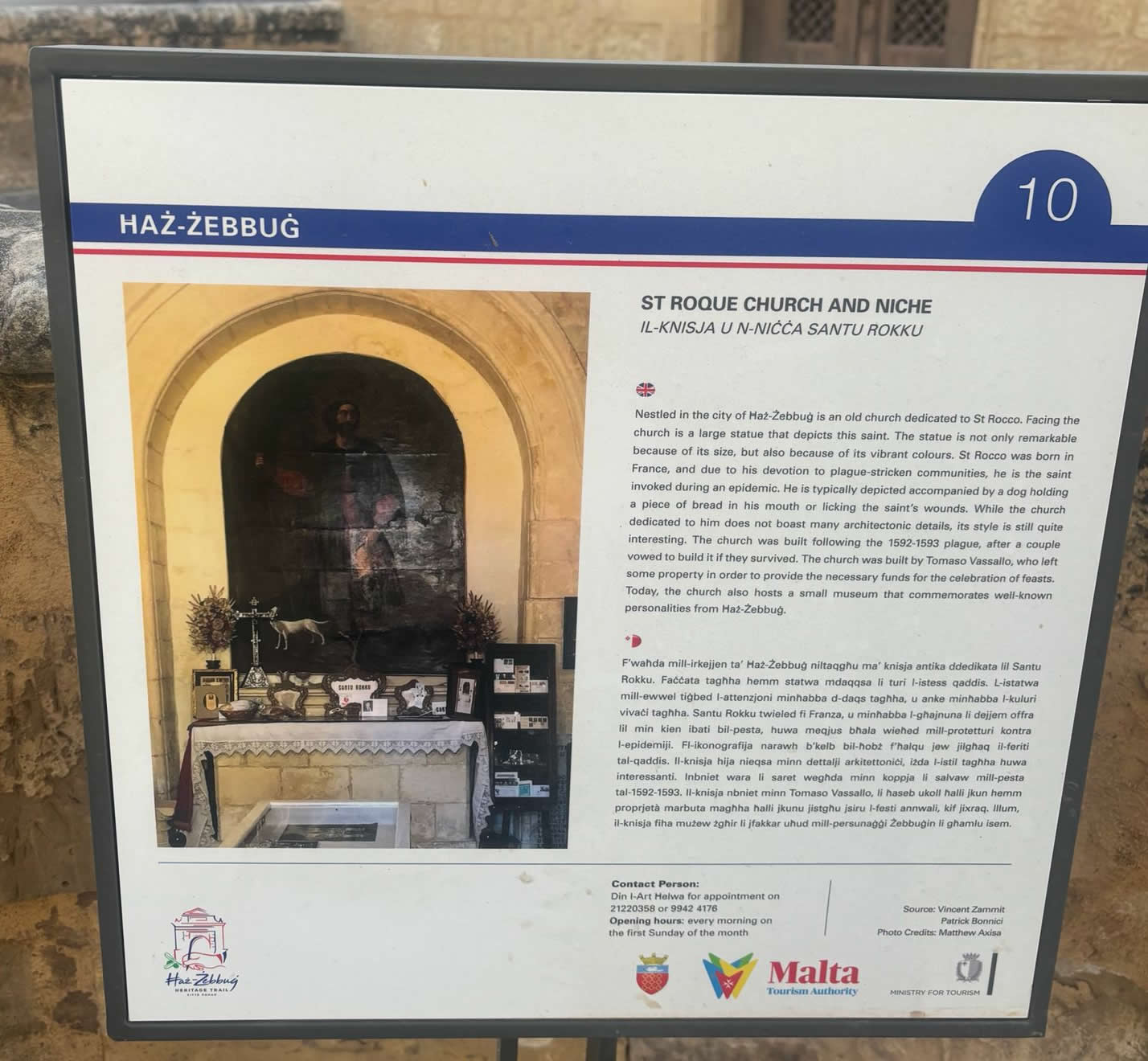
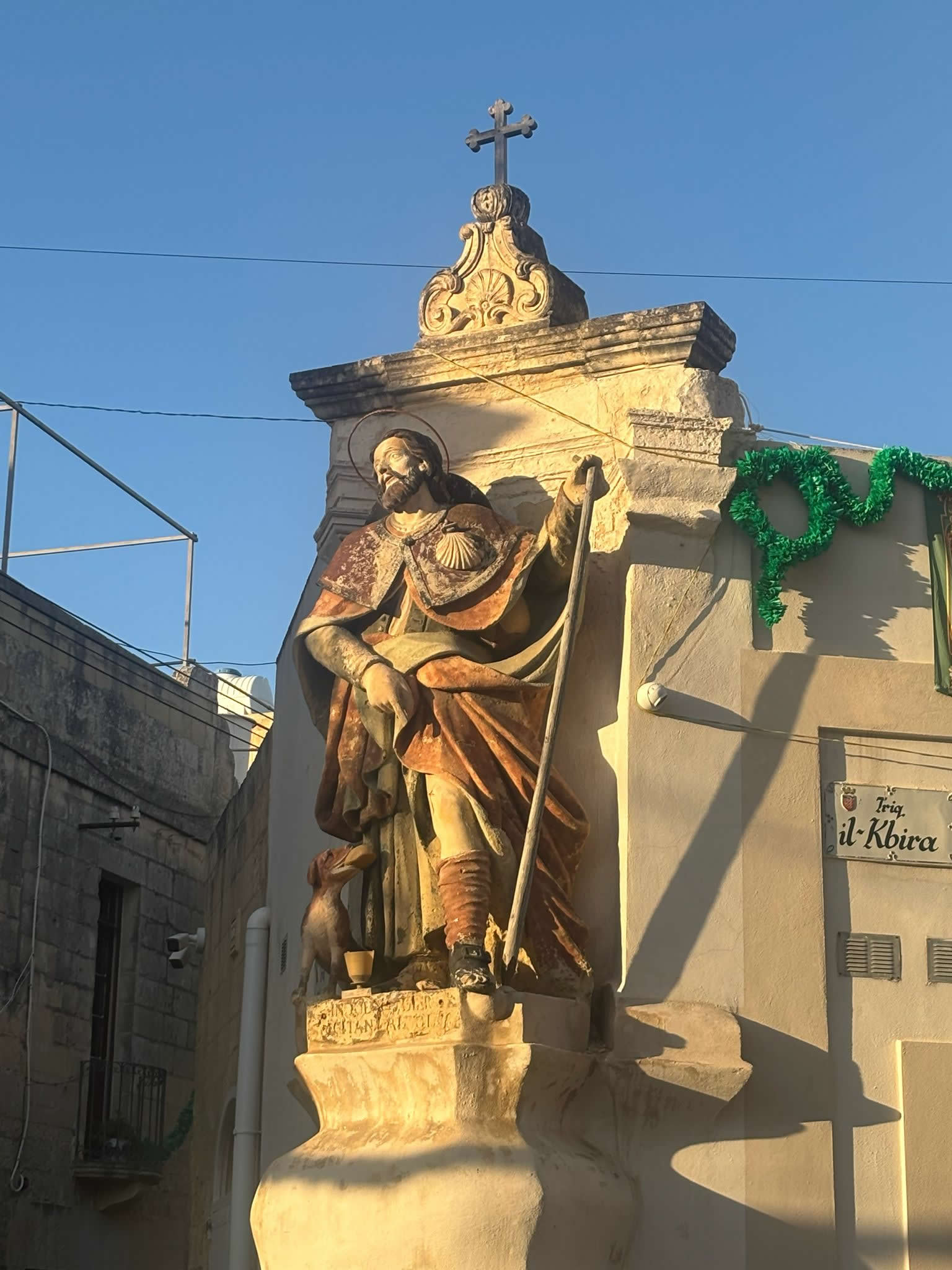
St. Roque (San Rokku) was widely revered across Europe as the primary patron saint invoked against infectious diseases, alongside St. Sebastian and St. Lazarus. According to historical tradition, the first chapel dedicated to St. Roque on this site was constructed in the wake of the devastating plague outbreak of 1592–1593. This specific epidemic severely impacted the inland farming communities of Malta, decimating families across central hamlets. In gratitude for surviving the disease, surviving members of the Żebbuġ community funded the construction of a small, simple chapel to fulfill a solemn promise made to God during the height of the crisis.
By the mid-17th century, however, the original structure had fallen into a state of structural neglect. During standard pastoral visitations conducted by diocesan authorities to check the financial and material health of rural churches, the original chapel was deemed unfit for religious services. It was officially declared profane, closed down, and subsequently demolished.
The motivation to completely rebuild the sanctuary returned during the Great Plague of 1675–1676, the deadliest epidemic in recorded Maltese history, which claimed the lives of over 11,000 citizens. Casal Żebbuġ suffered substantial population losses during this outbreak. As the community struggled to cope with the crisis, residents turned once again to traditional devotions. Work on the present-day chapel began shortly after the epidemic receded, serving as a monument to those buried in nearby fields and a symbol of collective thanksgiving. The newly designed Baroque building was completed and blessed in 1691, establishing itself as a core site of localized religious practice.
3. Architectural Evolution and Structural Components
The structural layout of St. Roque Chapel reflects the architectural traditions of 17th-century Malta, blending local building methods with the artistic influences of the Counter-Reformation. Built entirely out of locally quarried Globigerina Limestone (*Franka*), the chapel demonstrates how local stonemasons adapted European Baroque styles to suit small-scale village sanctuaries.
The External Facade
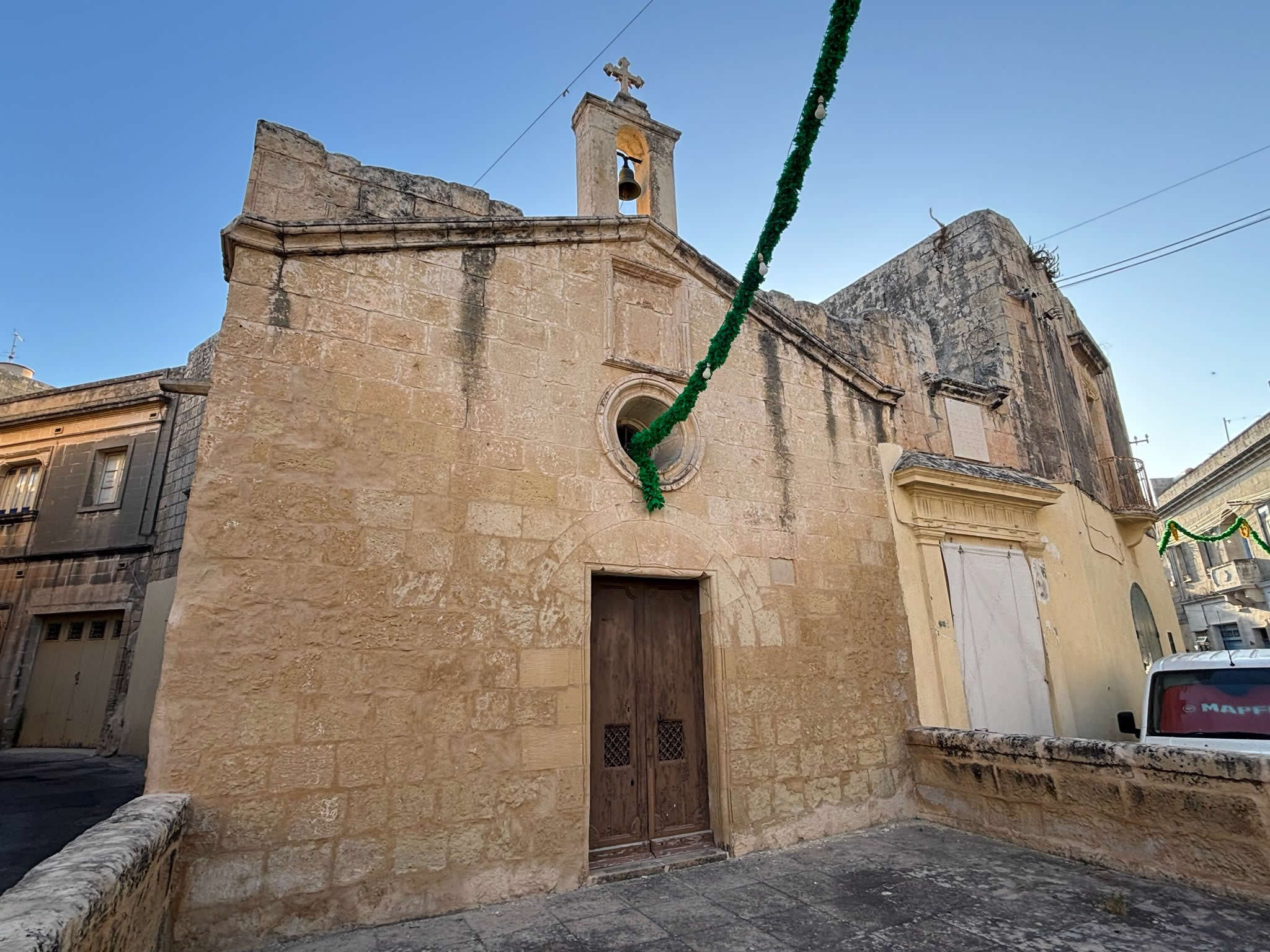
The main front elevation relies on clean, geometric symmetry. It features a central portal flanked by crisp pilasters that draw the eye upward toward an elegant, classical triangular pediment. This clear vertical focus gives the small chapel an imposing presence on the street corner.
Directly above the main doorway sits a small rectangular window, designed to cast natural light into the interior vault. The top of the building is crowned by a distinct stone bell-cot (*kampanard*), a classic feature of Maltese chapels. This structure once housed a small bronze bell used to call neighbors to prayer or to sound the alarm during times of communal crisis.
Interior Volume and Vaulting
Inside, the chapel shifts from rigid outer lines to a soft, intimate space. The interior layout uses a standard single-nave model, where a continuous barrel vault covers the main hall. This vaulting relies on heavy, hand-carved stone arches (*frasmij*) that transfer the massive weight of the roof safely down into thick, solid stone walls.
The sanctuary area is clearly separated from the rest of the hall by a shallow steps profile. The interior stone carvings feature subtle decorations, including stylized floral patterns and cornices that frame the altar space, adding to the quiet solemnity of the room.
4. Fine Art Collections and Titular Iconography
The primary focal point of the chapel's interior is its titular altarpiece, a striking oil painting that serves as both a devotional object and a direct historical record of the community's past struggles. The canvas sits within a heavily carved stone frame above the single stone altar.
The painting depicts St. Roque in traditional pilgrim attire, gesturing toward the plague sore on his thigh, accompanied by his faithful dog. Standing alongside him is St. Sebastian, shown pierced by arrows, representing physical suffering and martyrdom. The inclusion of St. Lazarus further underscores the themes of illness, recovery, and divine hope.
The canvas features deep shadows and dramatic lighting, a style directly influenced by the Baroque art trends popular across the Maltese islands during the 17th century. While the exact identity of the artist remains a subject of ongoing archival study, the painting shows clear connections to the school of art that developed in Malta under the influence of prominent master painters like Mattia Preti.
5. Modern Restoration and Preservation Efforts
Over the centuries, exposure to natural elements and rising damp—a common structural threat across Malta's historic limestone buildings—led to gradual decay. The exterior facade suffered from wind erosion, while salt crystallization began to damage the intricate stone carvings around the main portal.
To safeguard the historic site for future generations, the chapel was included in a series of targeted preservation programs managed by local councils and heritage groups. Expert restoration teams carefully cleaned the stone surfaces using non-invasive techniques to remove centuries of grime without scratching the original limestone.
The restoration process successfully repaired structural cracks in the roof, replaced eroded stones with matching local limestone, and applied protective layers to shield the facade from moisture damage. These efforts have restored the chapel's structural integrity, allowing it to remain an active element of the village's historic streetscape.
6. Contemporary Community Role and Liturgical Use
Today, St. Roque Chapel remains an active sacred space within the parish network of Żebbuġ. Rather than serving as a quiet museum piece, the building continues to host regular religious services, including special anniversary masses, communal prayers, and quiet reflection periods for local residents.
The chapel plays a prominent role during the annual feast of St. Roque, when the surrounding streets are decorated to celebrate the town's enduring heritage. It stands as an important educational landmark, offering visitors and students an insightful glimpse into the artistic traditions, history, and architectural legacy of Malta's historic villages.
Frequently Asked Questions — St. Roque Chapel
No, there are no regular scheduled mass times at St. Roque Chapel. As a subsidiary historical sanctuary, the chapel is kept closed during the standard liturgical week. It opens its doors to the public exclusively for special annual events, private devotional services, and during the liturgical feast of St. Roque in August.
The front facade of the chapel faces narrow historical streets. To capture optimal architectural shots showing the full vertical lines of the building, photographers should use wide-angle lenses during the mid-to-late afternoon when daylight hits the front portal directly.
Yes, Ħaż-Żebbuġ features a dense network of historic chapels, including the Chapel of Our Lady of Light (Madonna tad-Dawl) and the Chapel of St. Joseph. Together with St. Roque, these structures form a walkable heritage trail illustrating the historical growth of the village.
While Malta's grand harbor area suffered extensive bombardment during WWII, the inland rural core of Żebbuġ escaped major destruction. St. Roque Chapel suffered no direct hits, allowing its 17th-century interior vaulting and original stonework to remain completely intact.