📍 Location
Location Map Coordinates 35.895721, 14.530652
A historic cemetery chapel overlooking Malta’s Grand Harbour and connected to the devastating cholera epidemic of 1837.

Introduction
Ta’ Wied Għammieq Chapel is one of the lesser-known yet historically important religious sites in Kalkara, Malta. Located on the eastern side of the Grand Harbour overlooking dramatic coastal cliffs and the sea approaches towards Fort Ricasoli, the chapel forms part of the historic Wied Għammieq Cemetery complex. The site combines religious devotion, funerary heritage, public health history, and Maltese ecclesiastical architecture within a uniquely atmospheric landscape.
Although modest in scale compared to the monumental churches of the Three Cities, Ta’ Wied Għammieq Chapel occupies an important place in Maltese history because of its connection to the cholera epidemic of 1837. During this devastating outbreak, hundreds of victims were buried within the cemetery surrounding the chapel. Over time, the site became both a place of mourning and a spiritual refuge for the local community.
Today, the chapel remains an active Roman Catholic place of worship and continues to host religious services while preserving the memory of those buried in the adjoining cemetery. The isolated and contemplative setting contributes greatly to its character, making it one of the most evocative heritage chapels in the Kalkara area.
Location and Setting
The chapel is situated in the area known as Wied Għammieq in Kalkara, Malta, at coordinates 35.895721, 14.530652. The cemetery and chapel stand on elevated terrain overlooking the Mediterranean coastline and parts of the entrance to the Grand Harbour.
The surrounding landscape historically consisted of rural valleys, defensive military zones, and coastal approaches linked to Fort Ricasoli. The isolated setting made the area suitable for quarantine-related burials during periods of epidemic disease in Malta. Even today, the site retains a solemn atmosphere due to its position away from the densely urbanised sections of Kalkara.
The location also provides panoramic views across the harbour region, creating a striking contrast between the peaceful cemetery grounds and the heavily fortified maritime landscape historically associated with war, disease, and defence.

Origins of the Chapel and Cemetery
The exact construction date of Ta’ Wied Għammieq Chapel is not fully documented, although the present cemetery complex largely developed during the 19th century. The chapel was established to serve the religious needs of those connected with the cemetery and the surrounding communities.
During the British colonial period, Malta experienced several outbreaks of infectious diseases, including cholera. Authorities frequently used isolated coastal areas for quarantine hospitals and emergency burials. Wied Għammieq became closely associated with this difficult chapter in Maltese history.
Historical reports indicate that during the cholera epidemic of 1837, infected patients from Fort Ricasoli and nearby medical facilities were buried within the cemetery grounds. Approximately 855 victims were interred there after Fort Ricasoli had been adapted to receive infected elderly patients from the Ospizio in Floriana.
The cemetery therefore became one of the principal cholera burial grounds in the Grand Harbour region. The chapel served as the spiritual centre of the cemetery, offering prayers, funeral rites, and memorial services for the deceased.

The 1837 Cholera Epidemic in Malta
Cholera represented one of the most feared diseases of the 19th century. Malta’s position as an important Mediterranean naval and trading hub made it especially vulnerable to epidemics arriving through maritime routes.
The outbreak of 1837 caused widespread panic across the islands. Medical knowledge regarding the disease remained limited at the time, and strict quarantine measures were imposed. Military facilities and isolated areas around the harbour were adapted for medical and burial purposes.
Wied Għammieq Cemetery became one of the principal emergency burial grounds associated with the epidemic. The site remains historically important because it preserves the memory of hundreds of cholera victims buried during this period of crisis.
The chapel itself became deeply connected with funeral ceremonies, remembrance prayers, and religious processions connected to the epidemic. This tragic association transformed the site into a symbol of both loss and resilience within the Maltese collective memory.
The cemetery later continued to be used for burials beyond the cholera period, gradually expanding into a larger funerary landscape connected with Kalkara and neighbouring harbour communities.

Architecture of the Chapel
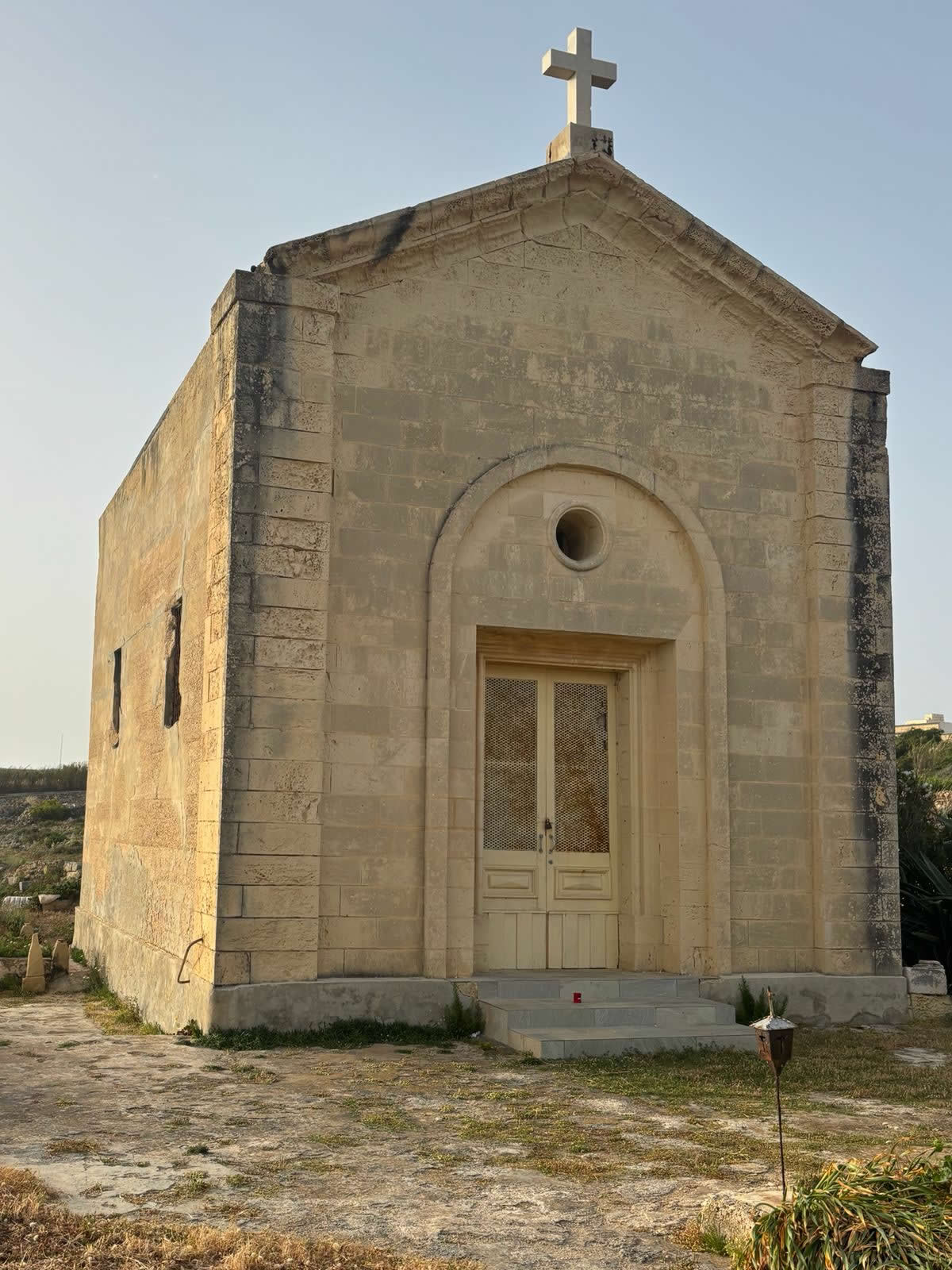
Ta’ Wied Għammieq Chapel reflects the restrained and functional architectural style common among Maltese cemetery chapels and rural ecclesiastical structures of the 19th century. The building was designed primarily for devotional use rather than monumental display.
Constructed in traditional Maltese limestone, the chapel features a simple façade with balanced proportions and modest decorative detailing. The entrance portal is understated, emphasising solemnity appropriate to its funerary setting.
Internally, the chapel maintains a quiet devotional atmosphere. The sanctuary and altar area are compact yet dignified, suitable for funeral masses and small religious gatherings. Traditional religious imagery and liturgical furnishings contribute to the chapel’s spiritual character.
The surrounding cemetery walls and pathways form an important part of the overall heritage setting. Together, the chapel and cemetery create a unified historic landscape linked to remembrance and contemplation.

Religious Use and Community Importance
Despite its historical association with epidemics and burials, Ta’ Wied Għammieq Chapel remains an active place of worship. Sunday Mass and devotional services continue to take place at the chapel, preserving its religious role within the Kalkara community.
The chapel also attracts visitors interested in Maltese history, funerary heritage, and religious architecture. Families connected to those buried in the cemetery still visit the site for remembrance and prayer.
In Malta, cemetery chapels often occupy an important emotional and spiritual role within local communities. Ta’ Wied Għammieq Chapel continues this tradition by serving as both a sacred space and a place of historical memory.
Present Condition and Access
Today, Ta’ Wied Għammieq Chapel is generally kept closed and is not regularly open for public worship. Although the surrounding cemetery is opened daily by a caretaker or local attendant, the chapel itself usually remains locked except on rare special occasions.
Historical sources indicate that Sunday Mass was once celebrated at the chapel, particularly during the late 20th and early 21st centuries. However, regular liturgical use appears to have declined significantly over recent years and the chapel is no longer considered an active worship centre in the same way as parish churches or functioning chapel communities.
Despite this, the cemetery continues to receive visitors, particularly relatives of those buried there, historians, photographers, and people interested in Malta’s funerary heritage. The isolated setting and historic atmosphere remain an important part of the site’s identity.
The chapel today survives primarily as a heritage structure associated with the cemetery and the cholera burial grounds of the 19th century rather than as a fully functioning religious chapel with a regular congregation.
Restoration and Preservation
Over the years, concerns have periodically been raised regarding the condition of the chapel and cemetery. Exposure to sea air, weathering, and limited maintenance affected sections of the structure and cemetery boundary walls.
Reports published during the early 21st century highlighted deterioration within parts of the cemetery complex, including damage to walls and sections of the chapel roof. These concerns drew attention to the need for conservation of this historically significant site.
Heritage preservation efforts in Malta increasingly recognise the importance of smaller chapels and cemeteries, particularly those linked to major historical events such as epidemics. Ta’ Wied Għammieq forms an important part of Malta’s funerary and public health heritage.
Ongoing religious use has helped ensure the survival of the chapel, although continued conservation remains essential for protecting the site for future generations.
Artistic and Cultural Heritage
While Ta’ Wied Għammieq Chapel does not contain the elaborate Baroque artistic programmes found in larger Maltese churches, its cultural value lies in its authenticity and historical context.
The chapel reflects the spiritual traditions surrounding death, remembrance, and burial in Maltese society. Religious processions, cemetery visits, and memorial masses historically formed an important part of local devotional culture.
The surrounding cemetery landscape also contributes significantly to the site’s heritage value. Historic graves, memorial inscriptions, and burial layouts preserve important evidence relating to Maltese social history, public health crises, and funerary traditions.
Together, the chapel and cemetery create a rare surviving testimony to Malta’s response to 19th-century epidemics and the role of religion in times of national hardship.
Visiting Ta’ Wied Għammieq Chapel
Visitors to Ta’ Wied Għammieq Chapel experience a unique combination of history, spirituality, and landscape. The quiet setting overlooking the sea and Grand Harbour contrasts sharply with the crowded urban centres of the harbour region.
The chapel is particularly appealing to those interested in Maltese military history, cemetery heritage, religious architecture, and the social history of epidemics in Malta.
Conclusion
Ta’ Wied Għammieq Chapel in Kalkara stands as one of Malta’s most historically evocative cemetery chapels. Closely connected to the cholera epidemic of 1837 and the broader history of disease, burial, and spirituality in Malta, the chapel preserves an important chapter of the islands’ past.
Its modest architecture, dramatic coastal setting, and continued religious use combine to create a site of exceptional heritage value. Although often overlooked by visitors exploring Malta’s larger churches and monuments, Ta’ Wied Għammieq Chapel remains a deeply meaningful place of remembrance and reflection.
As Malta continues to preserve its religious and historical heritage, the conservation of sites such as Ta’ Wied Għammieq Chapel remains essential for understanding the human stories that shaped the islands across centuries of hardship, faith, and resilience.
Frequently Asked Questions
Where is Ta’ Wied Għammieq Chapel located?
The chapel is located in Kalkara, Malta, at coordinates 35.895721, 14.530652 near Wied Għammieq Cemetery overlooking the Grand Harbour.
Why is the cemetery historically important?
The cemetery became a major burial site during the 1837 cholera epidemic in Malta, with hundreds of victims buried there.
Is the chapel still active?
Although historically used for religious services connected with the cemetery, the chapel today is generally closed and mainly survives as a historic and devotional landmark.
What makes the site unique?
The combination of religious heritage, epidemic history, cemetery landscape, and dramatic coastal views makes the site one of the most distinctive chapel locations in Malta.