📍 Location
Location Map Coordinates 35.875763, 14.541865
An Architectural, Historical, and Legal Exposition of Żabbar's Church-Run Burial Sanctuary and its 1676 Mortuary Chapel
WGS84 Reference Grid: 35.875763 Latitude, 14.541865 Longitude.
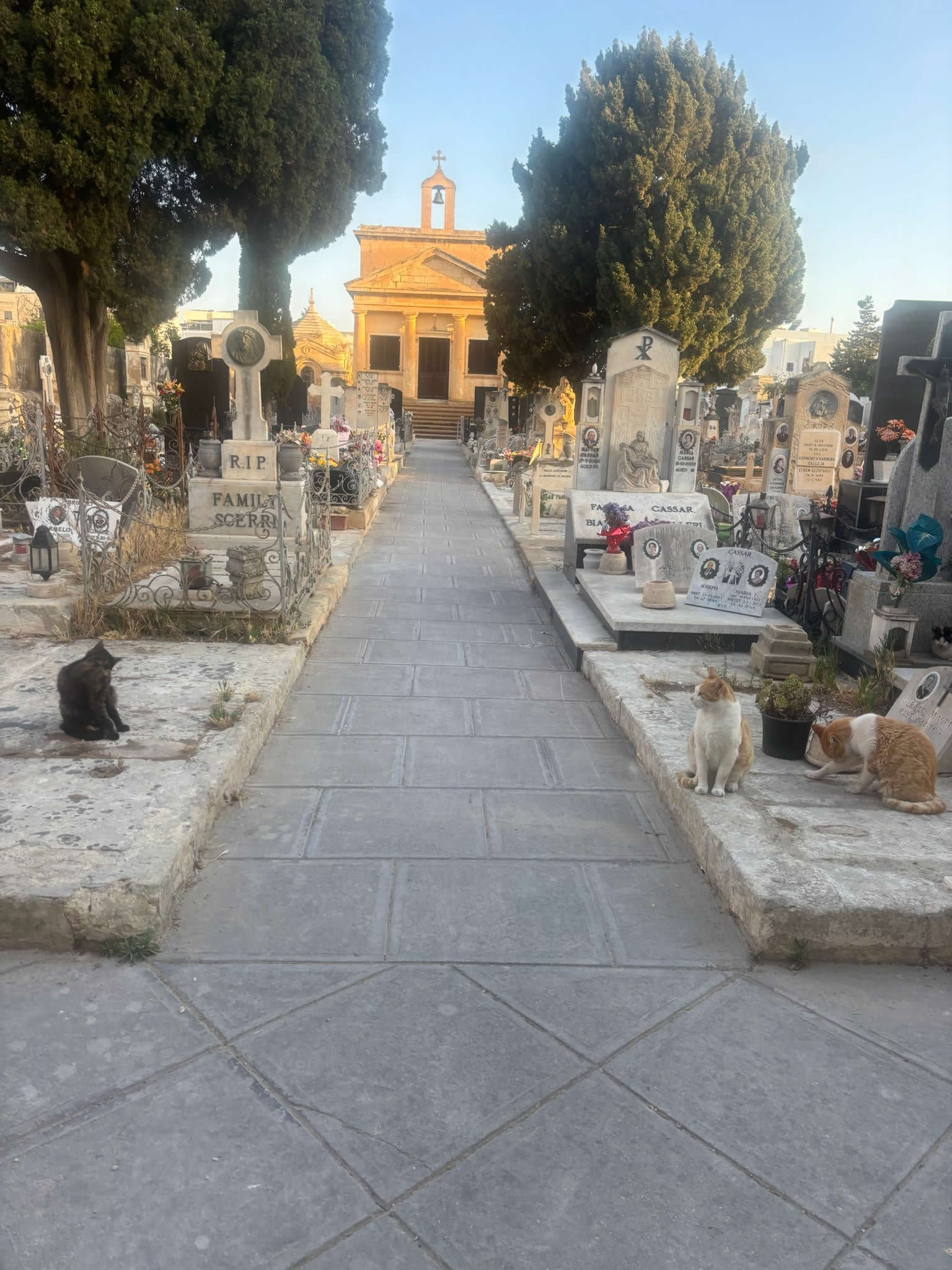
1. Introduction and Southeastern Historical Footprint
The historical town of Ħaż-Żabbar (Città Hompesch), located in the southeastern region of Malta, is characterized by its intense devotion to the Virgin Mary, formalized by its massive Baroque Parish Sanctuary of Our Lady of Graces. Over the centuries, as the town grew from an agricultural hamlet dependent on Żejtun into a major municipal city, its public health and religious infrastructures had to adjust to a rising population. For generations, deceased citizens were laid to rest inside the deep subterranean vaults and ossuaries carved directly into the floorboards of the main parish church.
By the mid-to-late 17th century, the strain on indoor crypts became unsustainable, a crisis made significantly worse by the devastating outbreaks of the plague that swept across the harbor districts. To address these sanitary challenges, the parish authorities designated an extramural parcel of land to handle local interments safely outside the living urban core. This site became the Żabbar Cemetery, centered around a beautiful mortuary shrine built specifically to offer a final place of rest. To see how this location connects to the broader network of early modern and medieval sacred landmarks across the Maltese islands, please consult our Definitive Matrix of Historic Maltese Chapels and Sanctuaries.
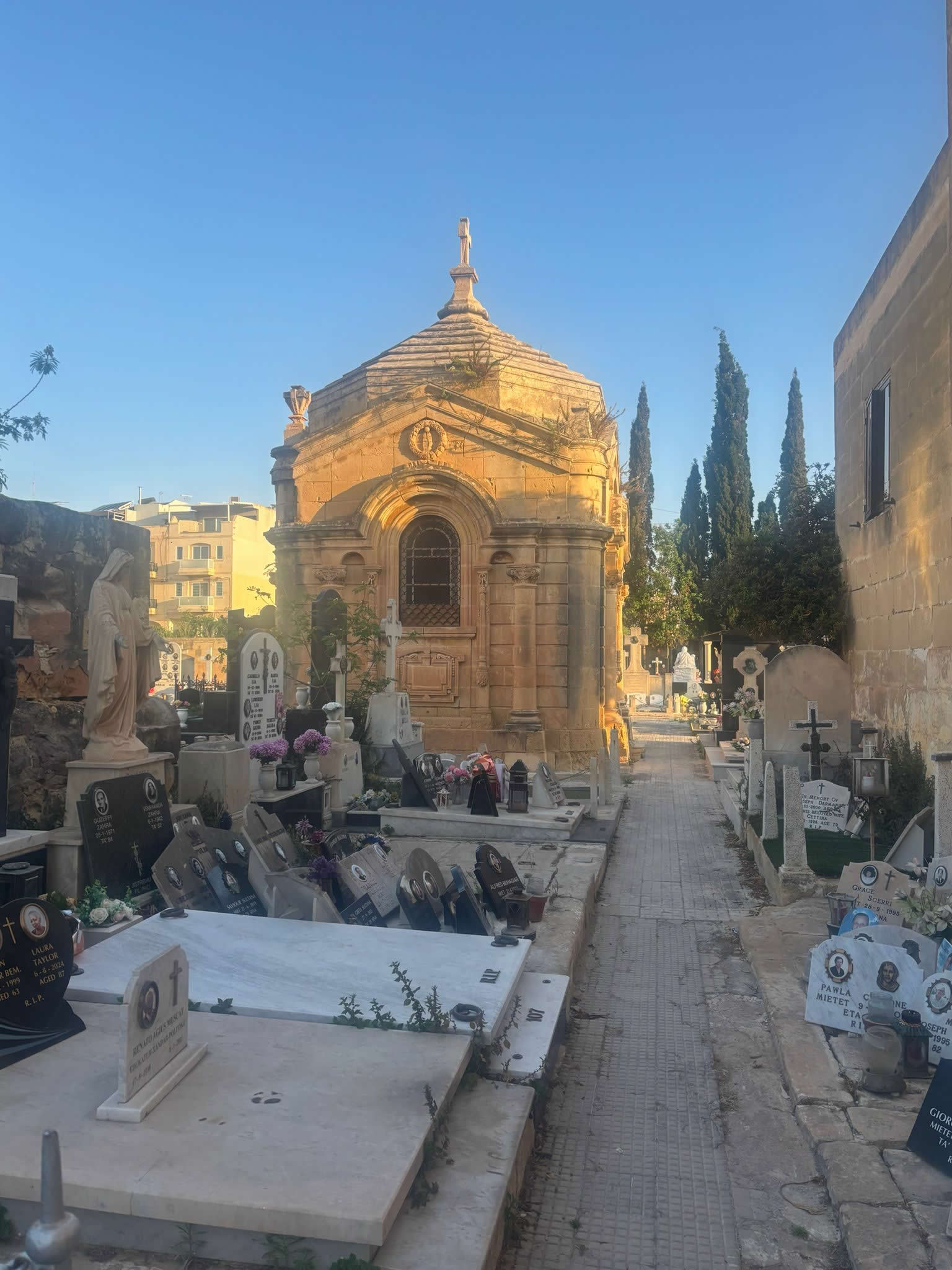
2. Chronological Evolution: A Chapel Built Long Before the Cemetery
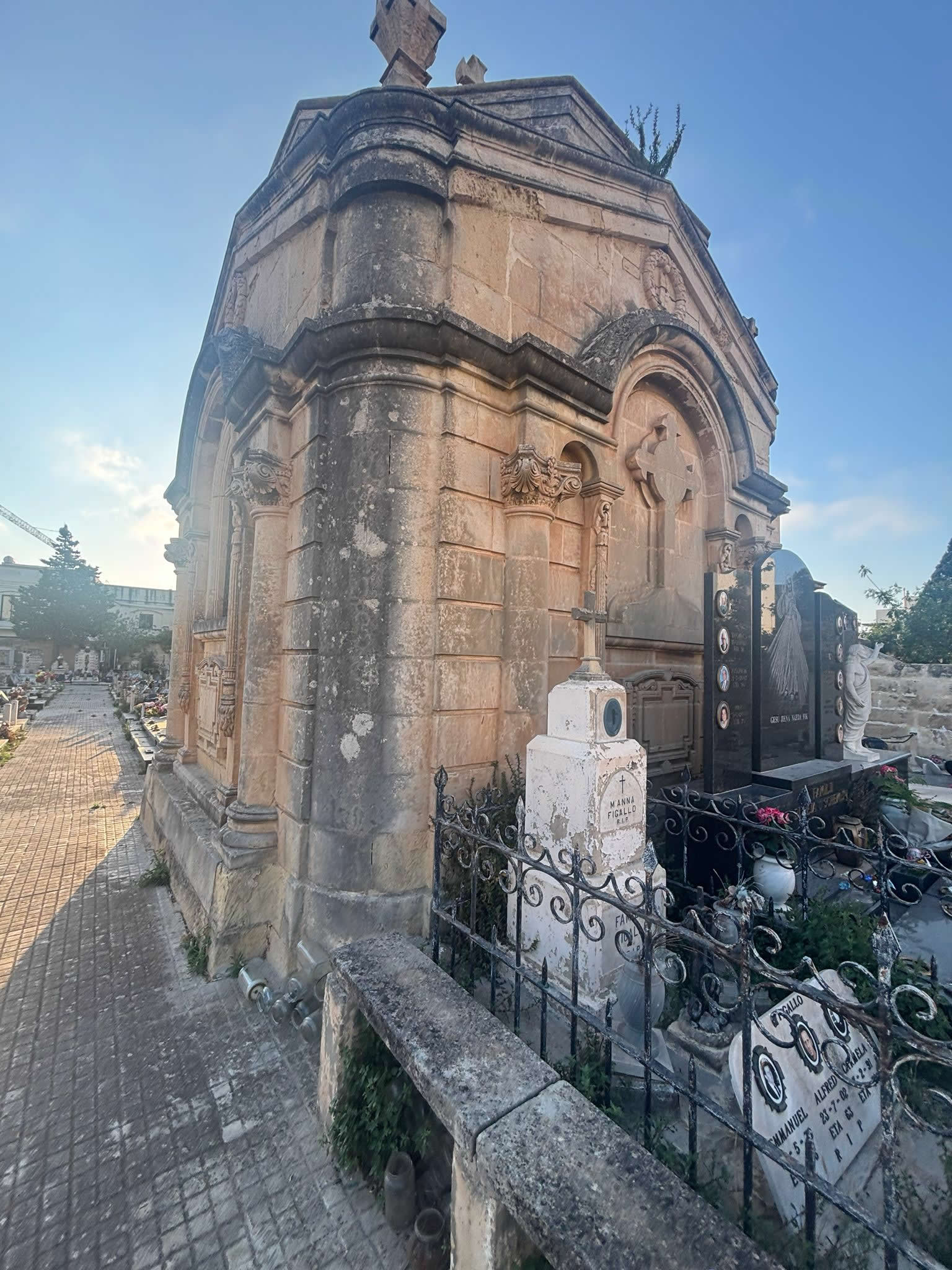
The Madonna tal-Ħniena Chapel was erected in 1676, a year marked by intense religious devotion across Malta following a catastrophic plague outbreak. During this era, the plot of land was completely open countryside, located well away from the village houses. The chapel functioned for generations as an isolated wayside sanctuary, drawing pilgrims from across the southeastern plain who came to seek spiritual comfort, divine protection, and shelter under the title of Our Lady of Mercy.
Centuries later, when 19th-century public health regulations and expanding municipal demands forced the Catholic Church to establish dedicated, outdoor burial grounds for Żabbar, the parish made a deliberate choice. Instead of developing a completely clear plot of land, they acquired the fields surrounding the historic 1676 wayside shrine. By building the new cemetery around the old chapel, the parish preserved the historic structure and seamlessly turned it into the architectural and spiritual centerpiece of the new burial complex. This shift beautifully combined the chapel's original role as a country shrine with its new duty as a quiet funerary committal station.
3. Madonna tal-Ħniena Chapel: 1676 Architectural Survey
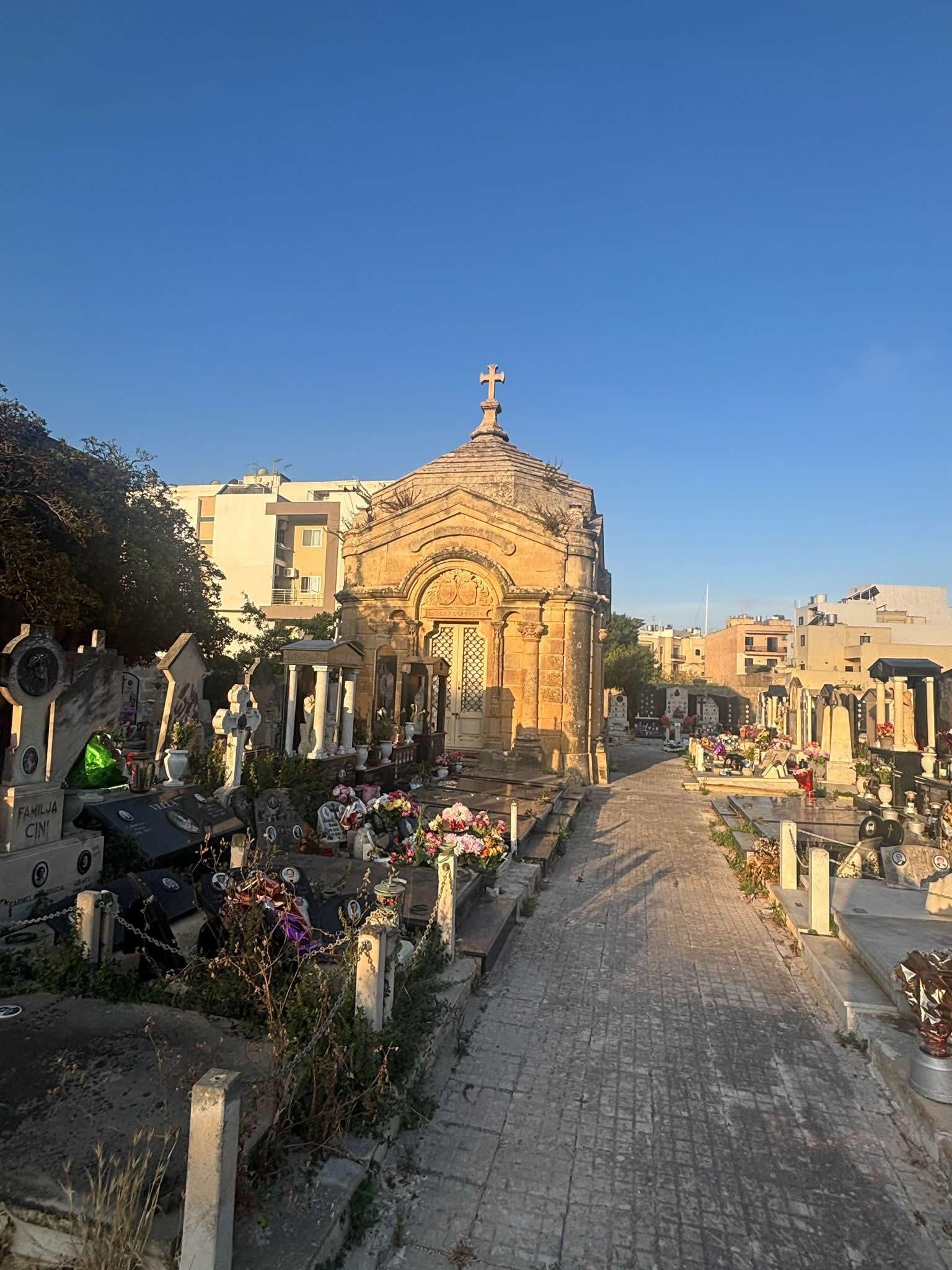
The spiritual and structural heart of the cemetery is the Madonna tal-Ħniena Chapel (Il-Kappella tal-Madonna tal-Ħniena, or *Our Lady of Mercy*). This building was carefully designed to be completely enclosed within the cemetery walls, sitting symmetrically along the central access path where incoming processions arrive.
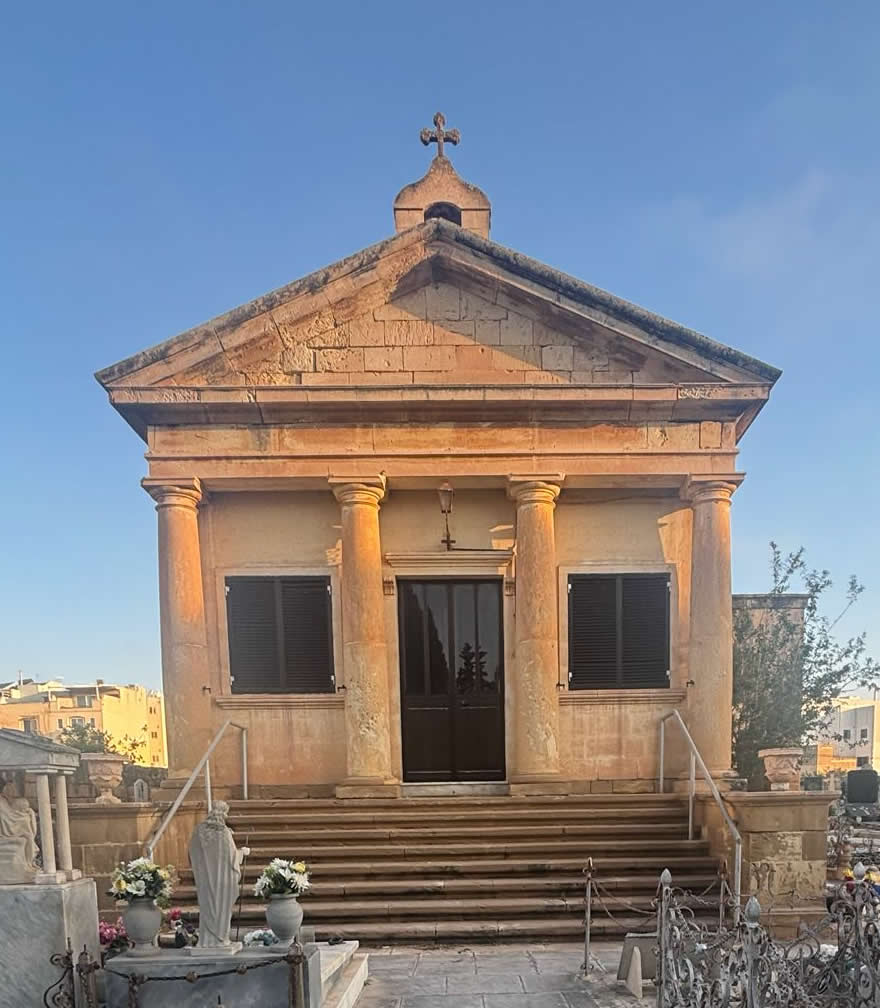
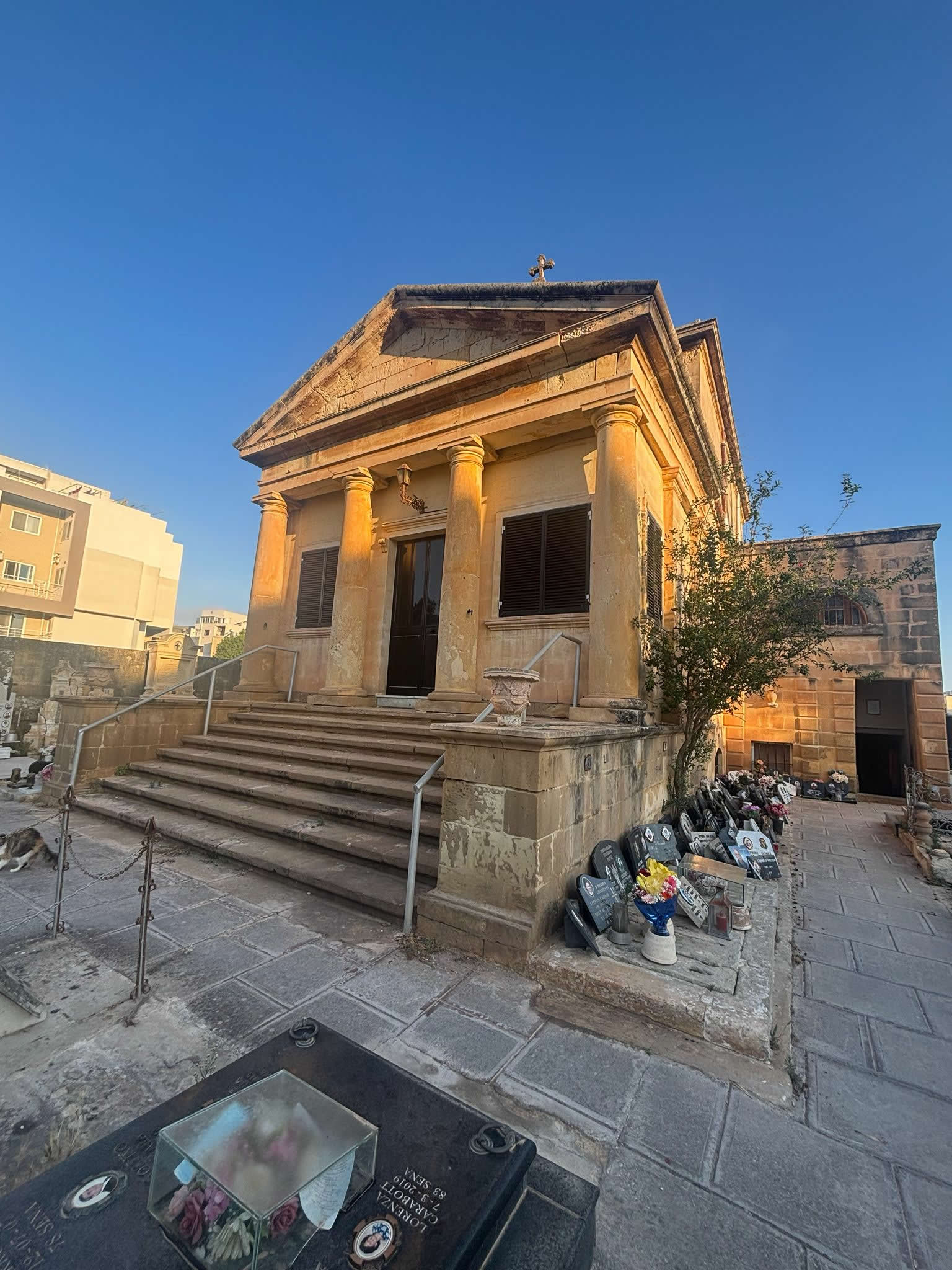
The chapel was built in the year 1676, an era defined by deep spiritual reflection following severe plague epidemics. Architecturally, the chapel features a clean, dignified facade that blends late Renaissance simplicity with early Baroque proportions. The main entrance is a square door frame capped by a sturdy stone lintel and a small horizontal window designed to bring natural light into the nave. At the top of the roof sits a traditional stone bell-cot (kampnar), its single bronze bell tolled exclusively to mark the arrival of a funeral cortege or to close final committal services. The main structure utilizes a series of interior diaphragm arches that support a heavy, stone-slabbed barrel vault, ensuring excellent structural stability that has protected the building from shifting soils for centuries.
4. Sacred Contents and Liturgical Furnishings
Inside the chapel, the interior layout is arranged to support quiet funeral liturgies and committal ceremonies. The main focus of the nave is a stone altar set against the back wall. The altar is typically dressed in traditional white linen cloths and flanked by tall brass liturgical candlesticks holding heavy funeral tapers.
While the building is kept securely closed during regular maintenance periods to preserve its interior features, it remains an essential focal point for the city in November. On November 2nd, All Souls' Day (Jum il-Mejtin), the Żabbar parish clergy gathers at the cemetery to celebrate special memorial masses inside the chapel and lead prayer tracks to bless family graves with holy water, drawing hundreds of locals to pay their respects.
5. Church Governance and Parish Administration
A vital administrative feature of the Żabbar Cemetery is its status as a fully church-run property. Unlike modern public cemeteries run by civil government offices or public health boards, this property is owned and run directly by the Archdiocese of Malta via the Żabbar Parish Office (Sanctuary of Our Lady of Graces).
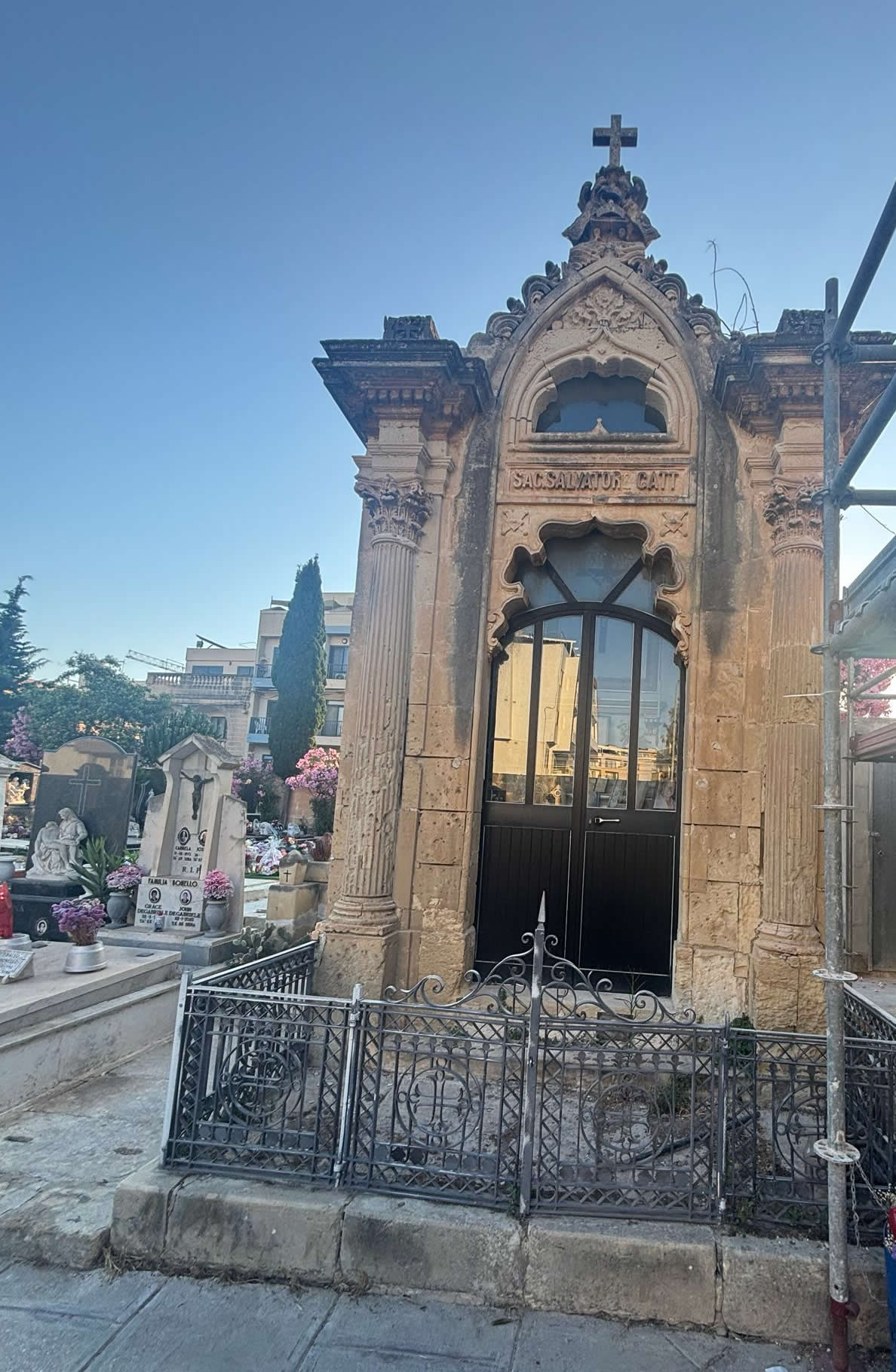
This church-led setup means that all operations inside the cemetery walls are governed by Canon Law and national health standards. The parish administration manages the official grave registries, handles vault allocations, and oversees the legal assignment of family plots. Revenue from donations and plot fees is reinvested into the physical preservation of the complex, funding masonry work on the soft globigerina limestone facade, stone cleaning, and roof waterproofing to ensure this historic site is fully protected for future generations.
6. Technical and Administrative Dataset Profile
The reference chart below tracks the verified administrative, geographical, and operational parameters of the Żabbar facility:
| Administrative Survey Parameter | Field Inventory Reference Data |
|---|---|
| Official Nomenclature | Żabbar Parish Cemetery / Ċimiterju tal-Ħniena |
| Enclosed Chapel Title | Madonna tal-Ħniena Chapel (Our Lady of Mercy) |
| WGS84 Reference Grid | 35.875763 Latitude, 14.541865 Longitude |
| Ownership Classification | Church-Run / Administered by Żabbar Parish Office |
| Operational Status | Fully Active / In Daily Parish Liturgical Use |
| Primary Construction Material | Maltese Globigerina Limestone Block Masonry |
| Architectural Style | Solemn 17th-Century Funerary Vernacular Architecture |
| Key Liturgical Observance | All Souls' Day Gravetime Memorial Services (November 2nd) |
7. Frequently Asked Questions (FAQ)
❓ Which came first, the chapel or the cemetery at Żabbar?
The Madonna tal-Ħniena Chapel was built long before the cemetery. The chapel was constructed in 1676 as an isolated country wayside shrine, whereas the church-run cemetery grounds were developed around the chapel much later to incorporate its sacred presence.
❓ Who should I contact for grave transfers or maintenance at Żabbar Cemetery?
Because the cemetery is completely church-run, all inquiries regarding plot maintenance, grave deeds, and burial records must be directed to the Żabbar Parish Office rather than civil government entities.
❓ Is the Madonna tal-Ħniena Chapel open for daily public mass?
No, the chapel does not host standard daily parish masses. It functions as an operational funerary building for final committal blessings and opens for public services on All Souls' Day.
❓ Can visitors enter the cemetery grounds freely?
Yes, the cemetery grounds are open to the public during regulated daytime hours, providing a quiet, respectful space for visitors to pray and tend to family graves.