📍 Location
Location Map Coordinates 35.868777, 14.511979
Analyzing the Elliptical Mid-Century Evolution and Liturgical Heritage of the Knisja tal-Erwieħ
1. Geographical Orientation and Site Index
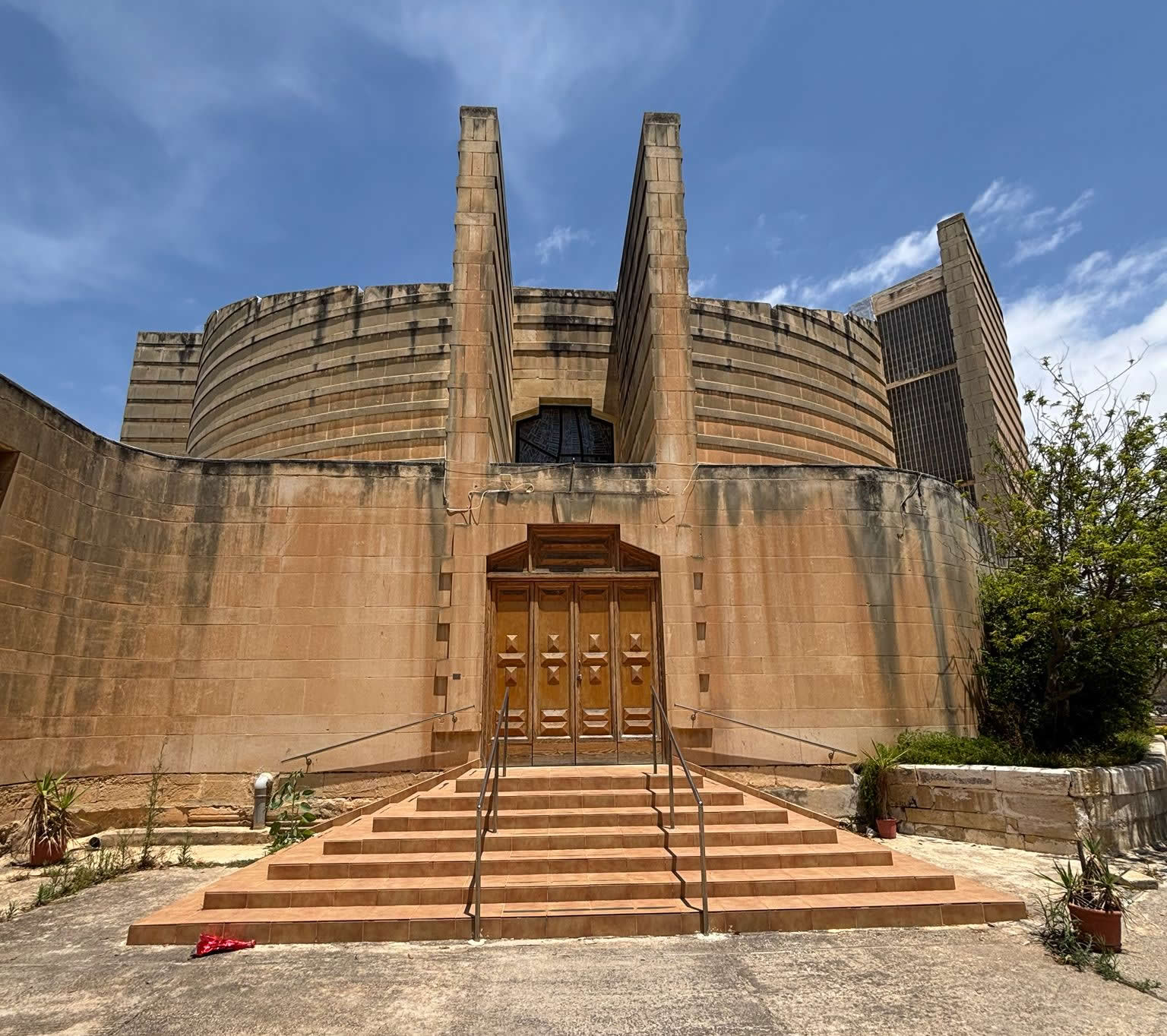
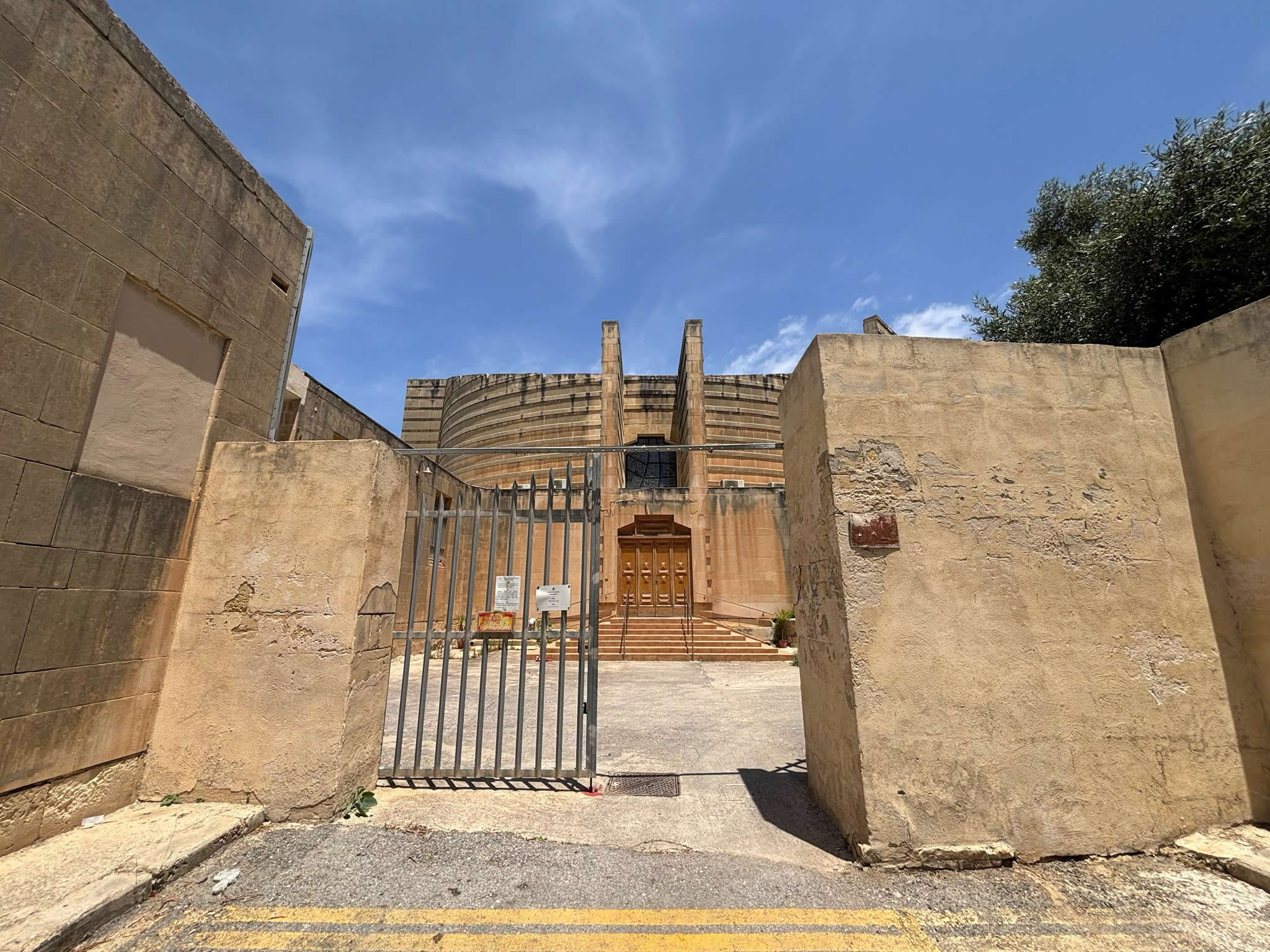
The highly significant Church of All Souls—officially titled the Church of the Risen Lord and known natively to local parishioners as Il-Kknisja tal-Qawmien or Knisja tal-Erwieħ—stands prominently within the historic core of Tarxien. Situated at a crucial cultural intersection, the building immediately borders the world-famous, UNESCO-listed Tarxien Neolithic Temples. This physical proximity creates a striking, layered landscape where one of the world's oldest free-standing stone complexes sits side-by-side with a bold piece of 20th-century Catholic modernism.
From a strict topographical perspective, the church is located along *Triq Santa Tereza*. While its geographical footprint places it directly at the edge of the old village boundary limits, urban expansion has woven the sanctuary seamlessly into a dense residential and cultural hub. The site serves as a vital focal point for the local community, attracting both international heritage travelers and daily worshippers.
| Sanctuary Survey & Archival Data Sheet | |
|---|---|
| Official Canonical Name | Church of the Risen Lord (Knisja tal-Qawmien ta' Kristu) |
| Common Vernacular Title | Church of All Souls / Knisja tal-Erwieħ |
| Locality Identification | Tarxien, Southeastern Region, Malta |
| Geographical Coordinates | 35.868777, 14.511979 |
| Original Foundation Era | c. 1675 (Initial Chapel of the Holy Souls) |
| Modern Reconstruction Year | 1964 (Commencement of current elliptical structure) |
| Architectural Classification | Maltese Ecclesiastical Modernism / Post-Conciliar Liturgical Style |
| Current Operational Status | Active Subsidiary Parish Church / Community Sanctuary |
2. Historical Chronicles: From 17th-Century Chapel to Post-War Boom
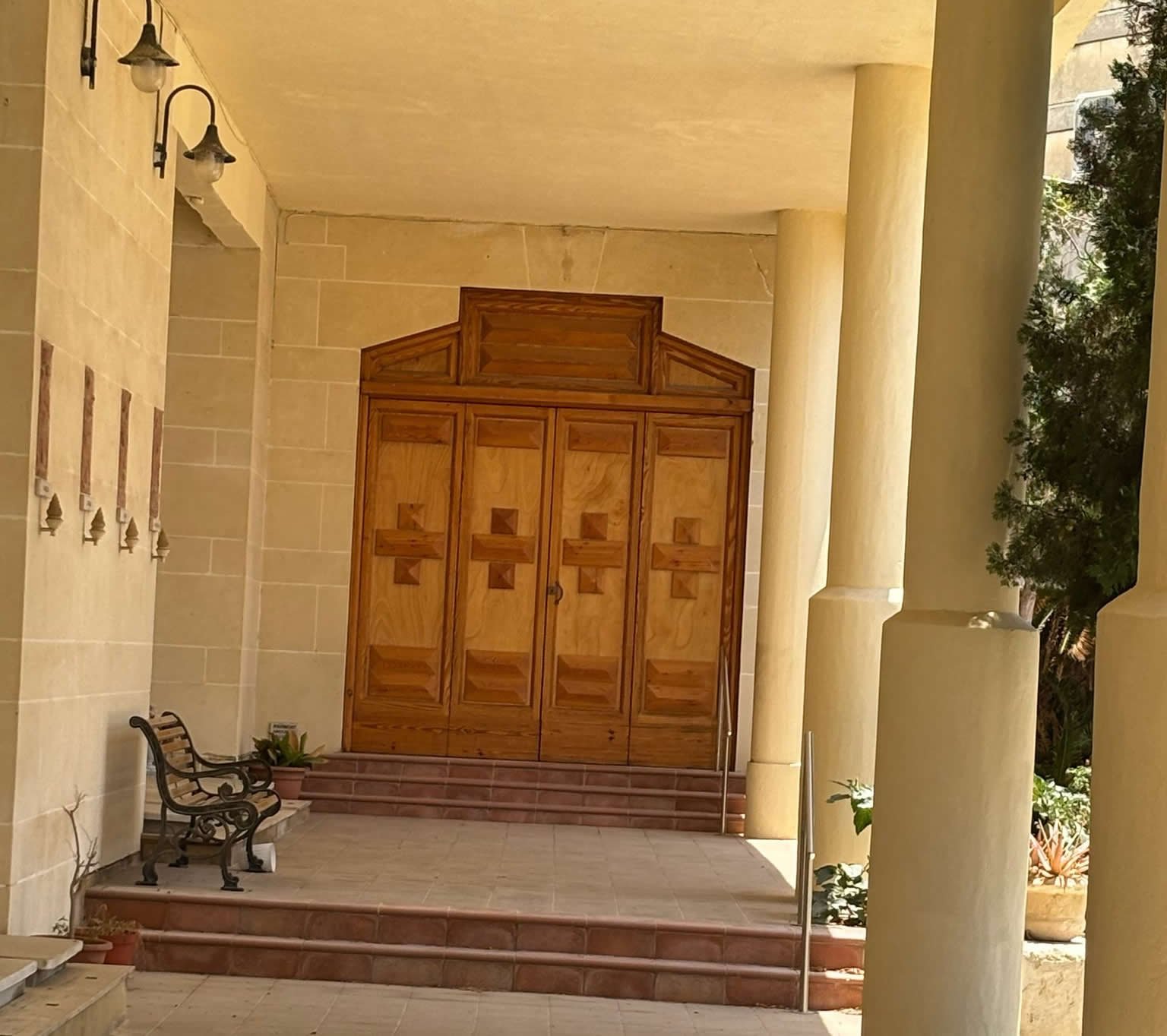
The spiritual legacy of this site is deeply rooted in the historical development of Tarxien, which was officially established as an independent parish way back in 1592. As the community grew over the next century, localized religious practices began to diversify outside the central parish church. In 1675, an initial, smaller chapel was erected on this plot of land. This original structure was explicitly dedicated to the Holy Souls in Purgatory (*L-Erwieħ*), serving as a localized sanctuary for prayer, intercession, and funeral liturgies linked to the nearby communal resting places.
For nearly three centuries, this modest, traditional chapel met the spiritual needs of the surrounding rural neighborhood. It stood as a classic example of Maltese vernacular architecture—compact, thick-walled, and deeply tied to the rhythms of village life. However, the mid-twentieth century brought massive social and demographic changes to the southern region of Malta. Following the end of World War II, towns like Tarxien, Paola, and Fgura experienced unprecedented population booms as families shifted away from the war-damaged harbor zones into new residential developments.
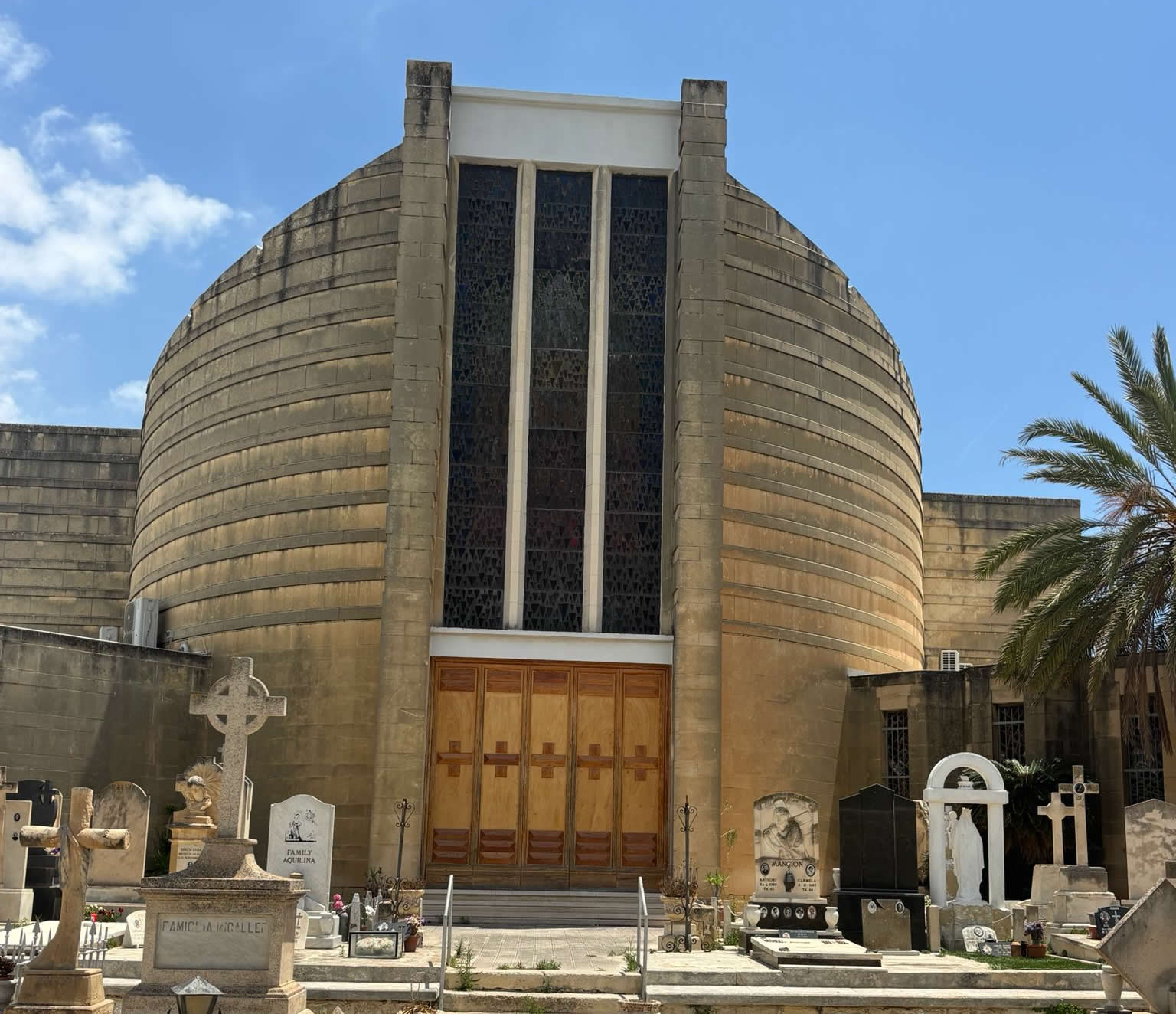
By the early 1960s, it became glaringly evident that the historic 1675 chapel could no longer handle the massive crowds of worshippers arriving for Sunday mass. The space was physically tiny and poorly ventilated for Malta's intense summer heat. Rather than simply patching up the old stone building, ecclesiastical authorities and local community leaders made the forward-thinking decision to embark on a complete transformation. In 1964, construction officially commenced on a brand-new, vastly larger church building designed specifically to embrace both the growing community and the progressive liturgical movements of the era.
3. Architectural Analysis: The Bold Elliptical Modernist Layout
Architecturally, the Church of All Souls represents a dramatic, deliberate departure from the traditional design philosophies that had dominated Maltese church building for centuries. Instead of replicating the classic Latin or Greek cross-shaped layouts, towering stone domes, and elaborate Baroque stone carvings found across the islands, the designers opted for a striking modernist approach centered on an elliptical (oval) floor plan.
This choice of an elliptical geometry was not merely an aesthetic statement; it was deeply theological and functional. Initiated during the height of the Second Vatican Council (Vatican II), the design aimed to break down the traditional visual barriers between the clergy at the altar and the congregation in the pews. By utilizing a continuous, curved interior hall, the seating wraps naturally around the sanctuary platform, fostering a deep sense of communal unity, active participation, and shared liturgical focus.
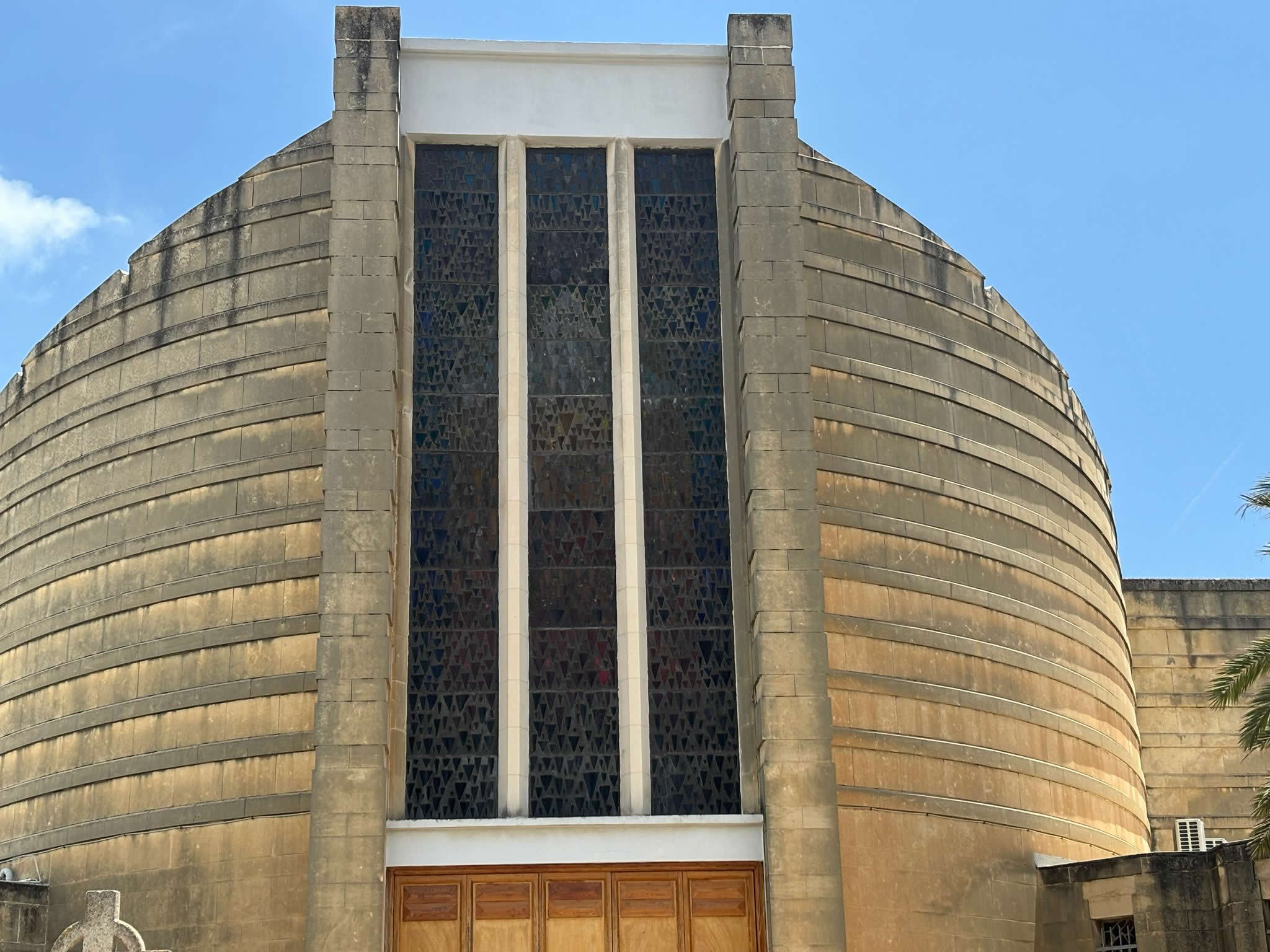
The building's exterior is defined by a series of repeating vertical pillars and clean glass fields that allow abundant natural light to flood the interior hall. This bright, open atmosphere directly contrasts with the dark, mysterious interiors of older traditional chapels. Furthermore, modern updates have outfitted the interior with advanced air-conditioning infrastructure, making it a uniquely comfortable and welcoming space for worshippers during the peak summer months—a practical feature that is highly appreciated by local churchgoers.
4. Fine Art Collections, Titular Painting, and Iconography
The interior of the Church of All Souls is curated to reflect its dual theological focus: honoring the memory of the faithful departed while boldly celebrating the promise of the resurrection. The sanctuary area is characterized by an elegant simplicity, ensuring that the primary focus is directed toward the main stone altar table.
The primary focal point of the church's artwork is its titular depiction of the Risen Christ. This powerful composition commands the central sanctuary wall, moving away from traditional, mournful funerary art to present a message of hope, light, and spiritual victory over death. The artistic choices rely on long, expressive lines and a vibrant color palette that matches the mid-century modern aesthetic of the surrounding building.
In addition to the main titular artwork, the church features custom-designed Stations of the Cross that wrap smoothly around the curved interior walls. These panels are executed in a stylized, minimalist format, omitting heavy Baroque gold framing to ensure they blend harmoniously with the raw limestone textures and clean concrete details of the modern structure.
5. Spatial Separation from the Surrounding Cemetery Grounds
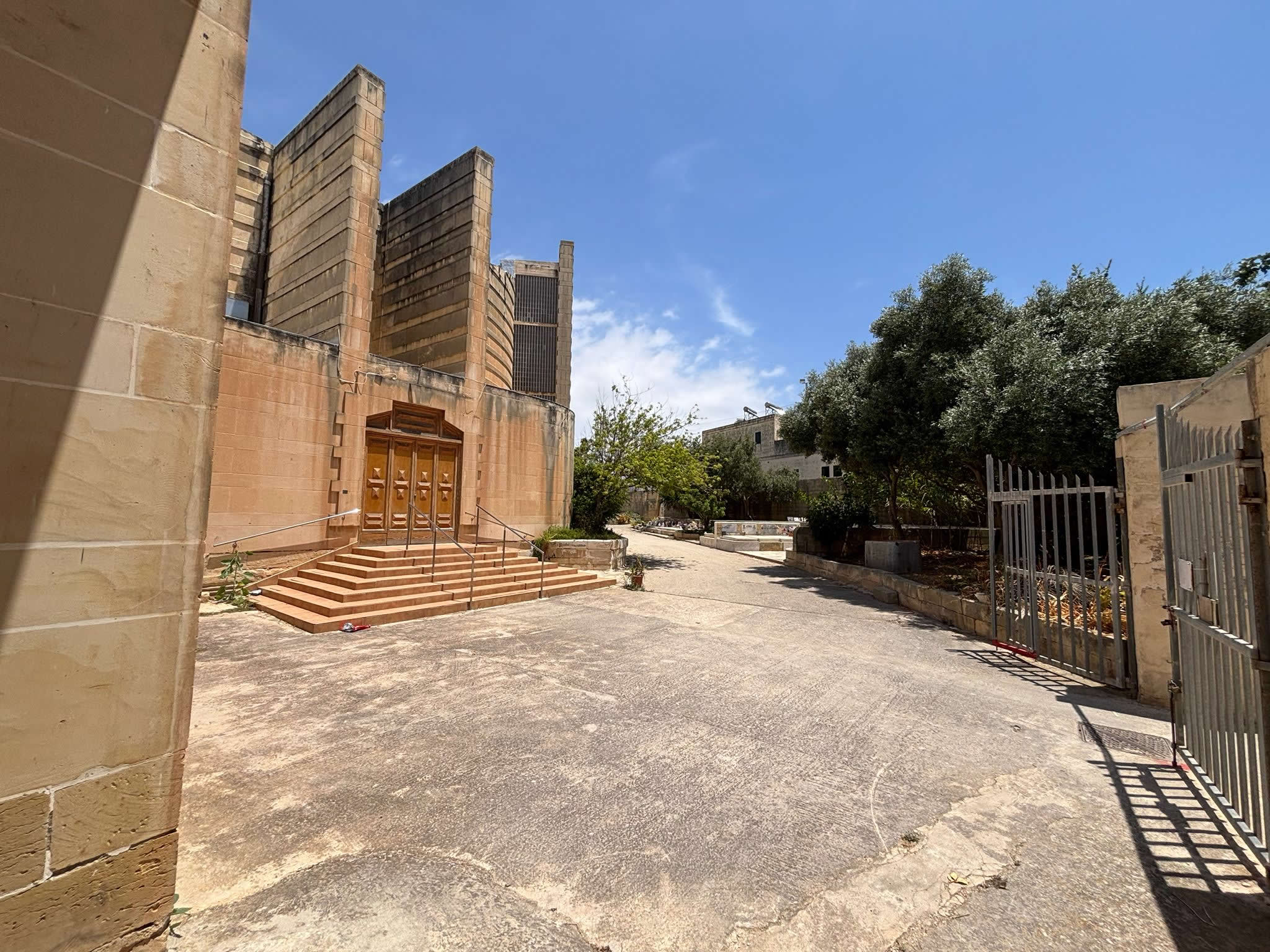
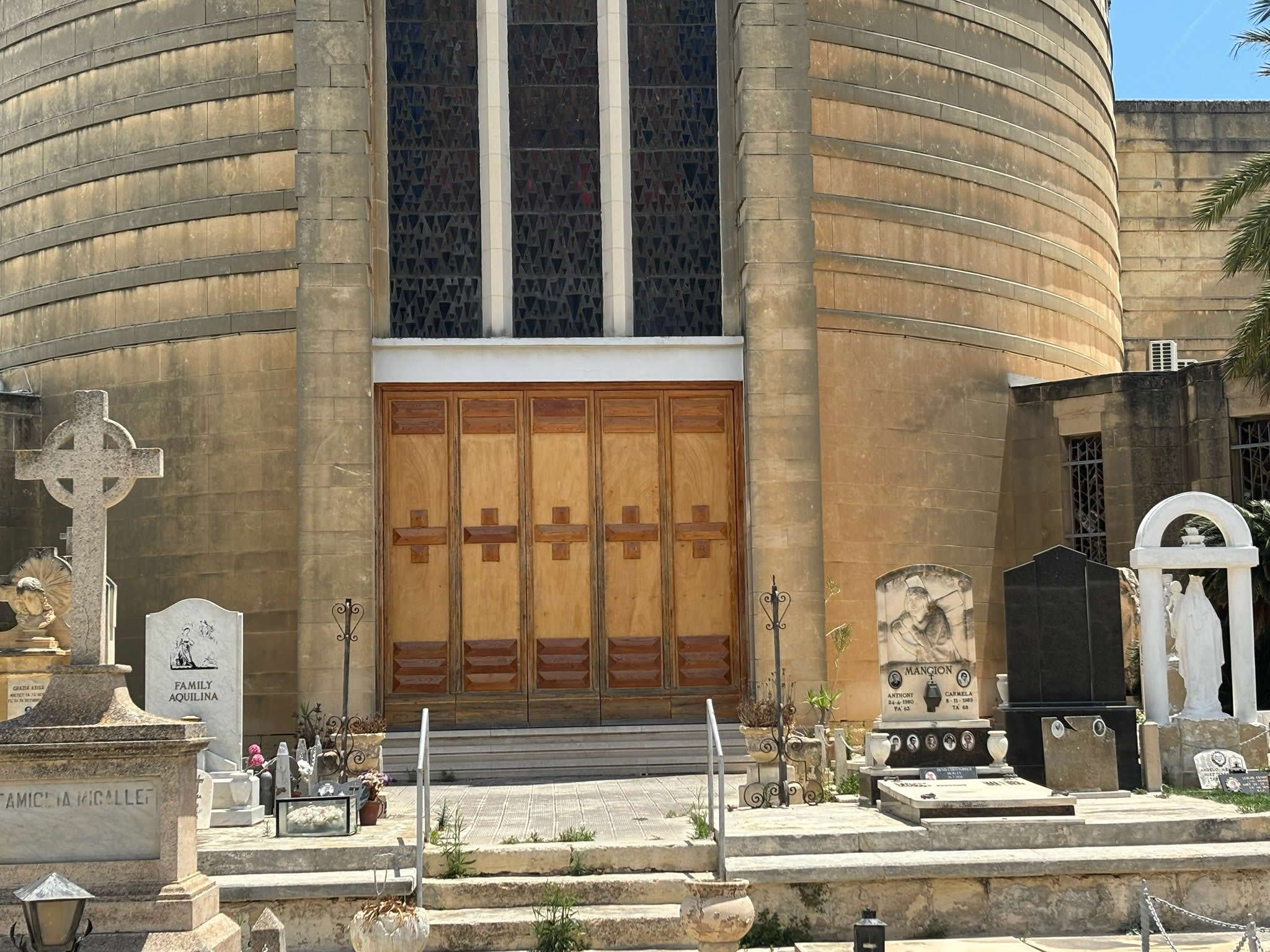
To fully understand the identity of the Church of All Souls, it is necessary to establish a clear spatial and administrative distinction between the church building itself and the extensive burial grounds that frame its outer borders. While the church is affectionately called the *Knisja tal-Erwieħ* due to its historical roots and physical location, it functions as a completely independent pastoral house of worship.
The church building is optimized strictly for active community worship, large-scale liturgical gatherings, seasonal sacraments, and daily mass. The physical architecture is entirely self-contained.
The complex, fascinating story of the adjacent burial grounds—including their 17th-century expansion histories, private family tombs, and prominent monument profiles—is a distinct subject altogether. For an in-depth exploration of the burial architectures, tomb directories, and structural conservation of the neighboring graves, please access our dedicated standalone archive: The Historic Tarxien Cemetery In-Depth Profile.
6. Contemporary Pastoral Role and Active Community Use
Today, the Church of All Souls remains an incredibly active and vibrant sanctuary within the wider pastoral network of Tarxien. Rather than functioning as a passive historical monument, the building hums with daily activity, serving a large portion of the town's residential community through regular morning and evening masses, wedding liturgies, and youth catechism groups.
The church plays a particularly prominent national role during specific times of the liturgical year. During Holy Week, the community coordinates highly anticipated religious events, including immersive passion pageants and artistic exhibitions that utilize the church’s unique wide interior layout to accommodate massive crowds of visitors.
Additionally, the month of November marks a deeply spiritual season for the sanctuary. Throughout the traditional month of remembrance, the church hosts specialized memorial services and devotional prayers, maintaining its ancient 1675 vow to serve as a beacon of prayer, communal comfort, and spiritual hope for families remembering their loved ones.
Frequently Asked Questions — Church of All Souls
No, they are completely separate churches. The main Tarxien Parish Church is dedicated to the Annunciation and features traditional 17th-century Baroque architecture. The Church of All Souls (Church of the Risen Lord) is a subsidiary church situated next to the Tarxien Temples, famous for its unique 1964 modern elliptical design.
Yes, the church is located right next to the main entrance gate of the Tarxien Temples on Triq Santa Tereza. Worshippers and architecture enthusiasts are welcome to step inside to view the modern elliptical interior during normal opening hours and scheduled mass times, provided they respect the quiet sanctity of the space.
Unlike the vast majority of Malta's historic churches, which feature traditional cross-shaped layouts and heavy stone carvings, this church utilizes a bold mid-century modern design based on an elliptical floor plan. This circular format was engineered to bring the congregation closer to the altar, reflecting post-Vatican II architectural progressive ideas.
While the church borders the burial grounds, the cemetery itself is managed under a separate administrative profile. Detailed information regarding family vaults, prominent burials, and the layout of the graves can be found on our dedicated page for The Historic Tarxien Cemetery.