📍 Location
Location Map Coordinates 35.844719, 14.552446

The Church of Our Lady of Tas-Silġ, also known as Madonna tas-Silġ or Our Lady of the Snows, is a small but historically significant rural chapel located on a hill overlooking Marsaxlokk Bay in southeastern Malta. Situated at coordinates 35.844719, 14.552446, this church forms part of one of the most ancient sacred landscapes in the Maltese Islands, adjacent to the renowned Tas-Silġ archaeological complex.
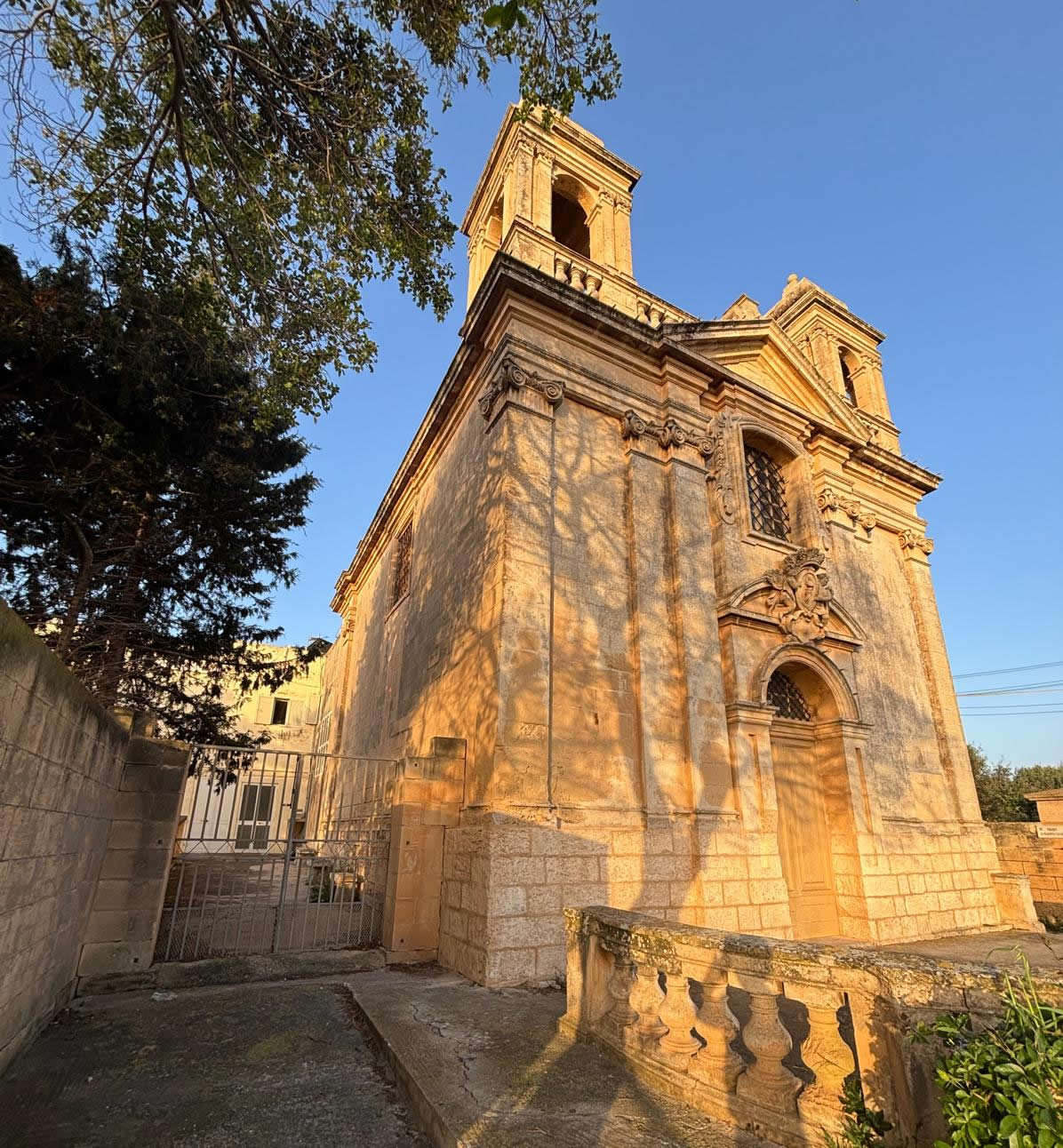
Origins and Early Chapel (17th Century)
The origins of the present chapel date back to around 1650, when a small rural church was first constructed to serve the spiritual needs of local farmers and fishermen in the Marsaxlokk and Żejtun region. At the time, this part of Malta was sparsely populated and frequently exposed to coastal raids, yet it retained its importance as a sacred area due to its long-standing religious associations.
The dedication to Our Lady of the Snows reflects a devotion that originated in Rome, linked to the Basilica of Santa Maria Maggiore and the legendary miraculous snowfall associated with Pope Liberius in the 4th century.
Rebuilding in 1833
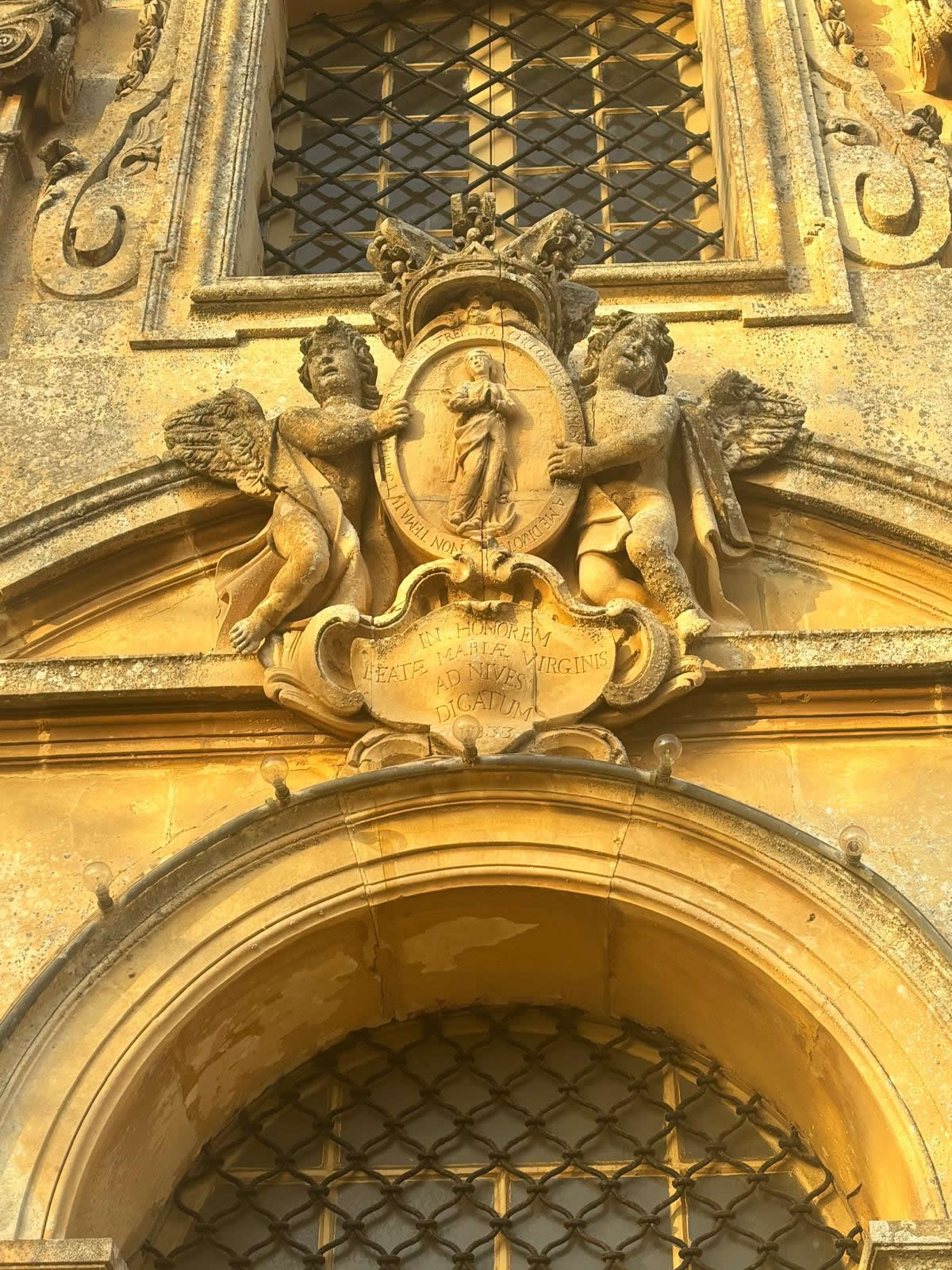
The current structure largely dates from 1833, when the chapel was rebuilt through the patronage of Marchioness Angiolina Muscat Cassia Dorell. This reconstruction replaced the earlier building while preserving the religious dedication and the strategic location overlooking the bay.
The rebuilt chapel reflects typical rural Maltese ecclesiastical architecture of the 19th century: modest in scale, yet carefully constructed in local limestone, with a simple façade and a single nave interior designed for intimate worship.

Location and Sacred Landscape
The church stands within the wider context of Tas-Silġ, a site of exceptional historical depth. Archaeological evidence shows that the hill has been used continuously for religious purposes for over 4,000 years, from prehistoric temples through Phoenician, Roman, and Byzantine periods.
The presence of the chapel near the remains of a Byzantine basilica reinforces the continuity of Christian worship on this site, replacing earlier pagan cults dedicated to deities such as Astarte and Juno.

Architecture and Structure
The Church of Our Lady of Tas-Silġ is a modest single-nave chapel reflecting the rural devotional architecture typical of Malta’s countryside churches. Its architectural features include:
- A simple rectangular plan with a pitched roof
- Traditional Maltese limestone construction
- A small altar dedicated to the Virgin Mary
- Minimal decorative elements, emphasising devotion rather than grandeur
The simplicity of the structure is characteristic of chapels built for agricultural communities rather than urban congregations.
Interior and Artworks
Inside the chapel, the focal point is the main altar dedicated to the Blessed Virgin Mary under the title of Our Lady of the Snows. While the chapel does not contain large-scale artworks comparable to parish churches, it holds devotional significance through its imagery and religious symbolism.
The interior likely once included traditional Maltese devotional elements such as:
- Painted or sculpted representation of the Virgin Mary
- Simple altar decorations
- Religious offerings from local devotees
The spiritual value of the chapel lies more in its continuity of worship and location than in artistic richness.
Religious Role and Use
Historically, the chapel served:
- Farmers working nearby agricultural land
- Fishermen operating from Marsaxlokk Bay
- Seasonal religious gatherings and private devotion
The church has traditionally been under the care of the Carmelite Order, reflecting its connection to broader ecclesiastical structures in Malta.
Today, the chapel does not function as a parish church and is not used for regular daily Mass. However, it remains an important site for occasional religious visits, private prayer, and heritage appreciation.
Connection to Marsaxlokk
Marsaxlokk itself developed as a fishing village in the 19th century, eventually becoming a parish in 1897. Before this development, rural chapels such as Tas-Silġ played a crucial role in providing spiritual services to scattered communities.
The church’s elevated position provides panoramic views of Marsaxlokk Bay, reinforcing its symbolic connection between faith, land, and sea.
Cultural and Historical Importance
The Church of Our Lady of Tas-Silġ is significant not only as a standalone religious structure but also as part of a broader historical continuum. It represents:
- The persistence of Christian devotion in Malta’s rural areas
- The transformation of ancient sacred sites into Christian places of worship
- The integration of religious life with maritime and agricultural communities
Its proximity to one of Malta’s most important archaeological sites adds to its cultural value, linking modern religious practice with prehistoric and classical traditions.
Conservation and Present State
The chapel remains a preserved historical structure, though it is relatively simple and not heavily restored compared to larger churches. Its rural setting has helped maintain its authenticity, though like many minor chapels, it requires ongoing conservation to ensure its survival.
Nearby Points of Interest
- Tas-Silġ Archaeological Site
- Marsaxlokk Harbour
- Delimara Peninsula
- Fort Tas-Silġ
Frequently Asked Questions (FAQ)
When was the Church of Our Lady of Tas-Silġ built?
The original chapel dates to around 1650, while the present structure was rebuilt in 1833.
What does “Tas-Silġ” mean?
“Silġ” means “snow” in Maltese, referring to the title “Our Lady of the Snows.”
Is the church still in use today?
The chapel is not used for regular Mass but may be visited for private devotion or historical interest.
Why is this location important?
It lies within one of Malta’s oldest sacred landscapes, used continuously for religious purposes for thousands of years.
Who built the current chapel?
The present church was rebuilt in 1833 through the patronage of Marchioness Angiolina Muscat Cassia Dorell.
Conclusion
The Church of Our Lady of Tas-Silġ stands as a quiet yet powerful testament to Malta’s enduring spiritual heritage. From its origins in the 17th century to its reconstruction in the 19th century, and its connection to a site of ancient worship stretching back millennia, this modest chapel embodies the continuity of faith across time.
Overlooking Marsaxlokk Bay, it remains a place where history, archaeology, and devotion intersect — offering visitors a unique glimpse into the layered religious identity of the Maltese Islands.