📍 Location
Location Map Coordinates 35.889232, 14.520595
Introduction
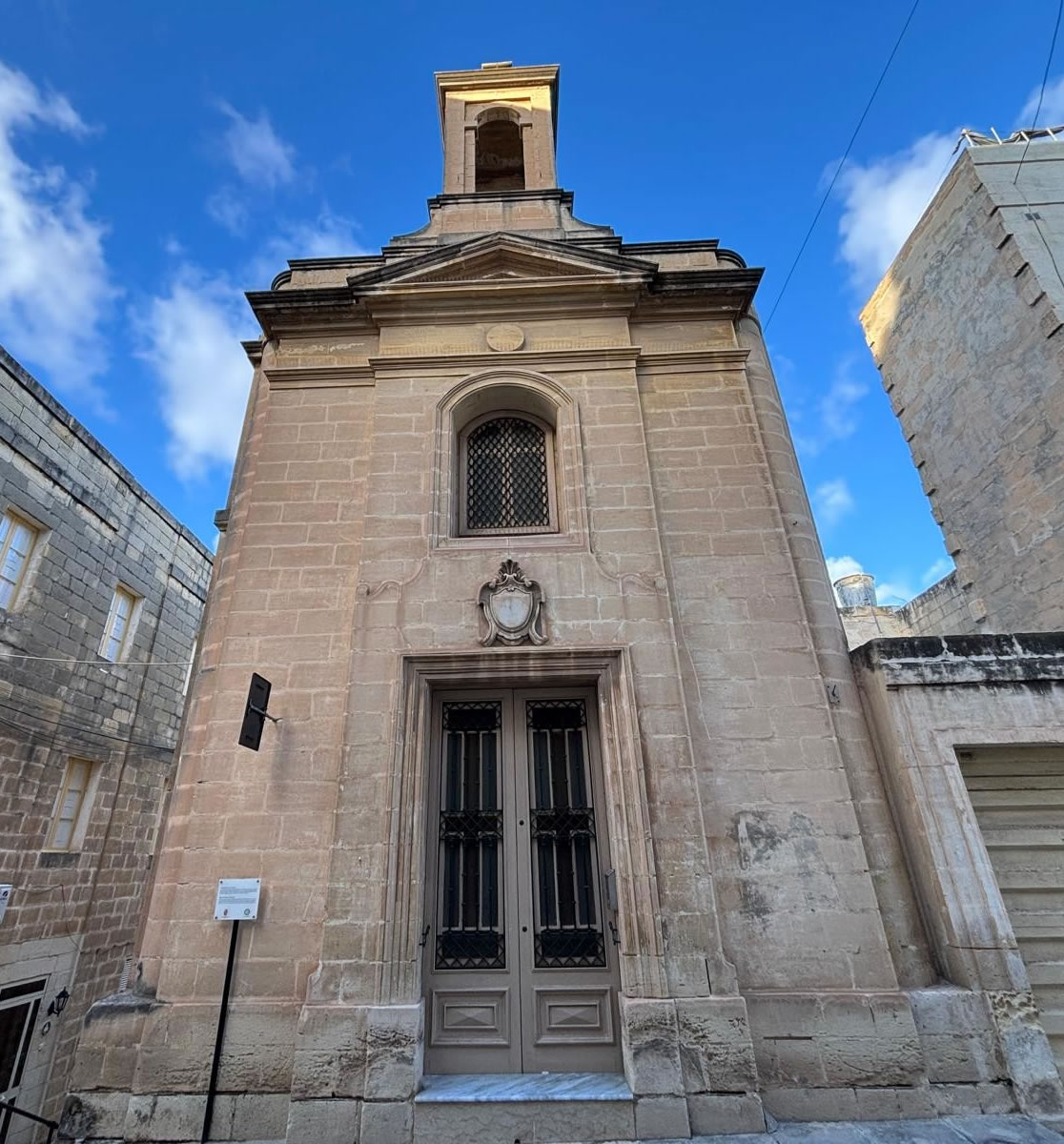
The Holy Trinity Church, known in Maltese as Trinità Qaddisa, is a historic place of worship located in the fortified city of Birgu (Vittoriosa), Malta. Though modest in size compared to some of the island’s grand Baroque churches, it possesses a rich and layered history that spans over five centuries.
The church stands as a testament to Malta’s enduring religious heritage, having evolved from a medieval chapel into an 18th-century Baroque structure, before suffering destruction during World War II and ultimately being rebuilt in the 20th century.
Medieval Origins (15th Century)
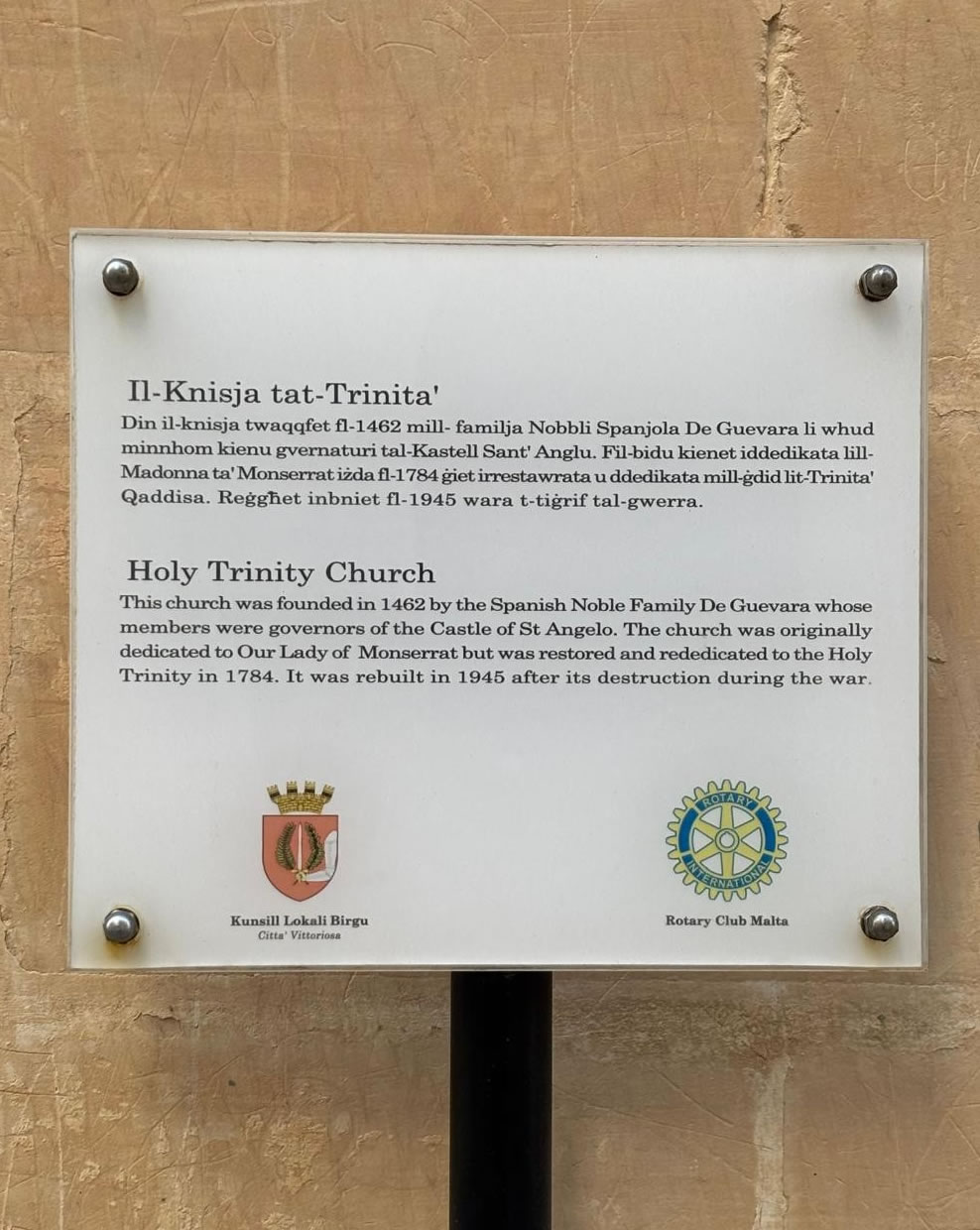
The origins of the Holy Trinity Church can be traced back to the second half of the 15th century, when a chapel dedicated to Our Lady of Monserrat was constructed on the site.
This early dedication reflects the influence of Catalan and Spanish devotion in Malta during this period, as the island was under the Crown of Aragon.
The original structure:
- Faced towards the Birgu Marina
- Served a local religious community
- Was one of several small chapels scattered across medieval Birgu
By 1575, during the pastoral visit of Monsignor Pietro Dusina, the church was reported to be in need of maintenance, indicating that it had already aged considerably.
Early Modifications and Rededication (17th Century)
In the early modern period, the church underwent gradual changes reflecting the evolving religious landscape of Malta.
In 1658, the church was officially rededicated to the Holy Trinity, marking a significant shift in its identity.
This change in dedication may have been influenced by theological emphasis on Trinitarian devotion during the Counter-Reformation, a period when the Catholic Church sought to reaffirm key doctrines.
During this time:
- The church continued to serve the local population
- Minor structural modifications were made
- It remained part of Birgu’s growing network of churches
18th-Century Reconstruction (1784)
A major transformation occurred in the 18th century, when the church was completely rebuilt.
In 1784, the noblewoman Lucrezia Gauci Falzon financed the construction of a new church dedicated to the Holy Trinity.
The new structure featured:
- A distinctive circular plan
- Baroque decorative elements
- Symbolic artistic representations of the Holy Trinity
The church was also adorned with:
- Angelic figures flanking the titular painting
- Decorative sculptural elements reflecting Trinitarian symbolism
This rebuilding reflects the prosperity and religious devotion of Birgu during the period of the Knights of St John.
19th and Early 20th Century Use
Throughout the 19th century and into the early 20th century, the church remained an active place of worship for the local community.
During this period:
- The sacristy was enlarged in 1898
- The church continued to host regular liturgical services
- It formed part of Birgu’s dense religious and social life
By the early 20th century, it remained a well-frequented church up until the outbreak of the Second World War.
Destruction During World War II (1942)
One of the most dramatic moments in the church’s history occurred during World War II.
In 1942, intense aerial bombardments over the Grand Harbour area caused severe damage and eventual destruction of the church.
Among the losses:
- The 18th-century structure was largely destroyed
- Artworks and architectural features were damaged or lost
- A historic bell dating back to 1523 was displaced during the bombing
This bell was later recovered and eventually returned to Birgu, where it became part of the local heritage collection.
Reconstruction in the 20th Century (1960)
Following the war, the church was rebuilt in 1960, marking a new chapter in its history.
The new structure was designed by Professor R.V. Galea and reflects mid-20th-century ecclesiastical architecture.
Key features of the rebuilt church include:
- A simplified architectural style compared to the Baroque predecessor
- A three-bayed nave and defined presbytery
- A white marble altar
Although different in style, the new church preserves the spiritual continuity of the original site.
Artworks and Interior Features
The modern church contains several artistic and decorative elements:
- Main altar painting by Rafel Bonnici Calì
- Stone sculptures created by Ġiġi Depasquale
- Symbolic representations of the Holy Trinity
These works reflect both continuity and renewal, combining traditional themes with modern artistic interpretation.
Architecture
The present church reflects a blend of historical continuity and modern design:
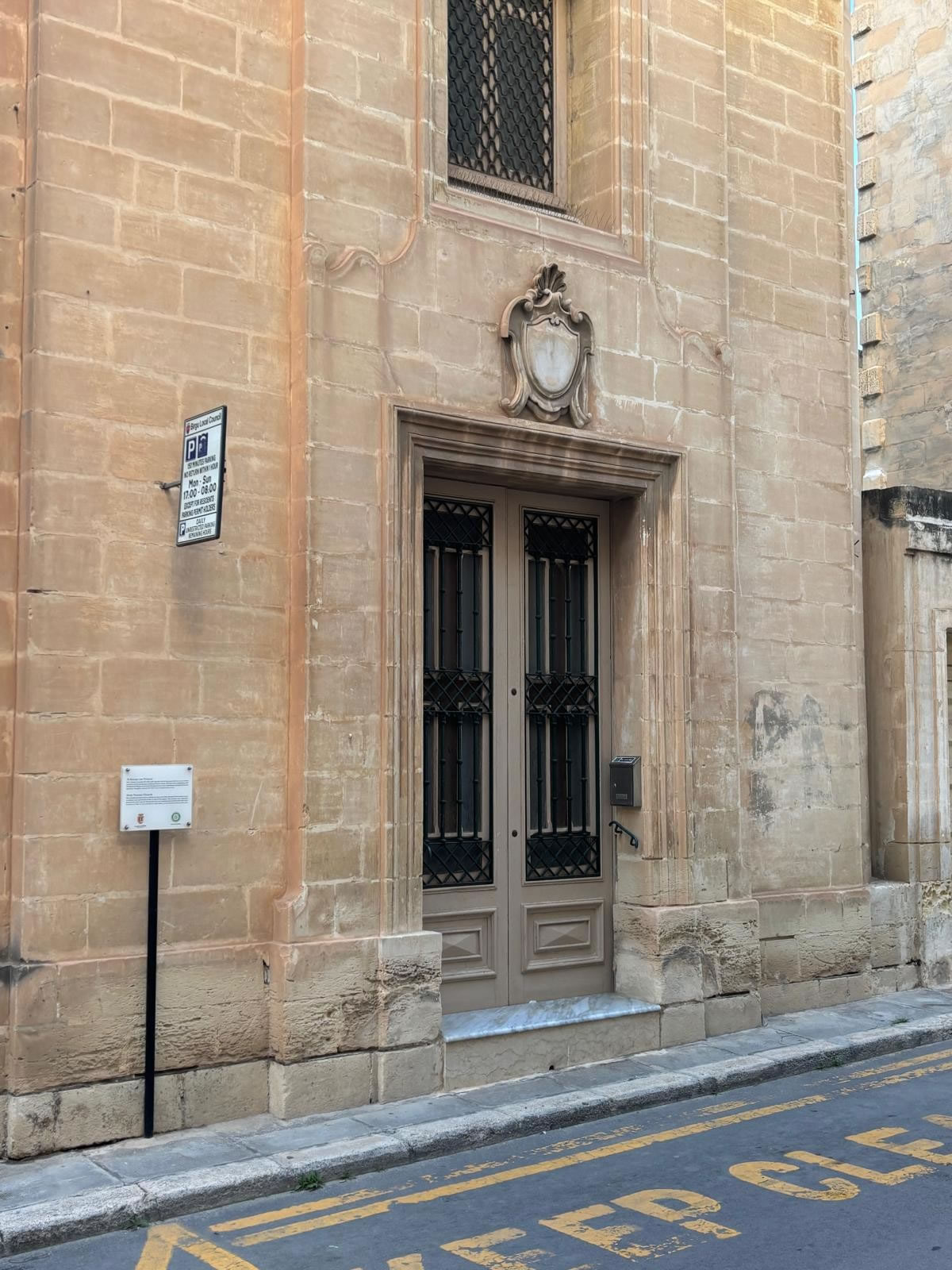
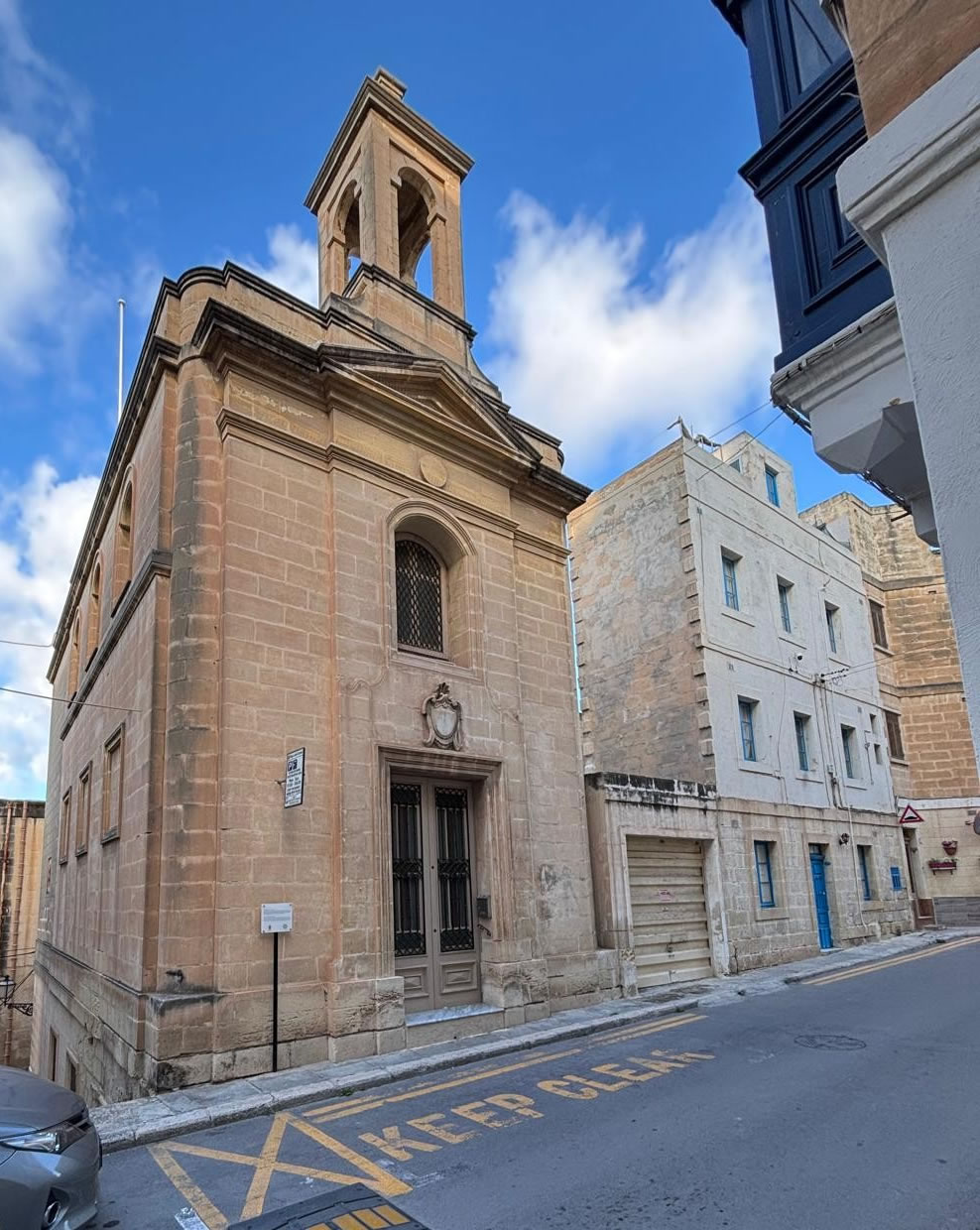
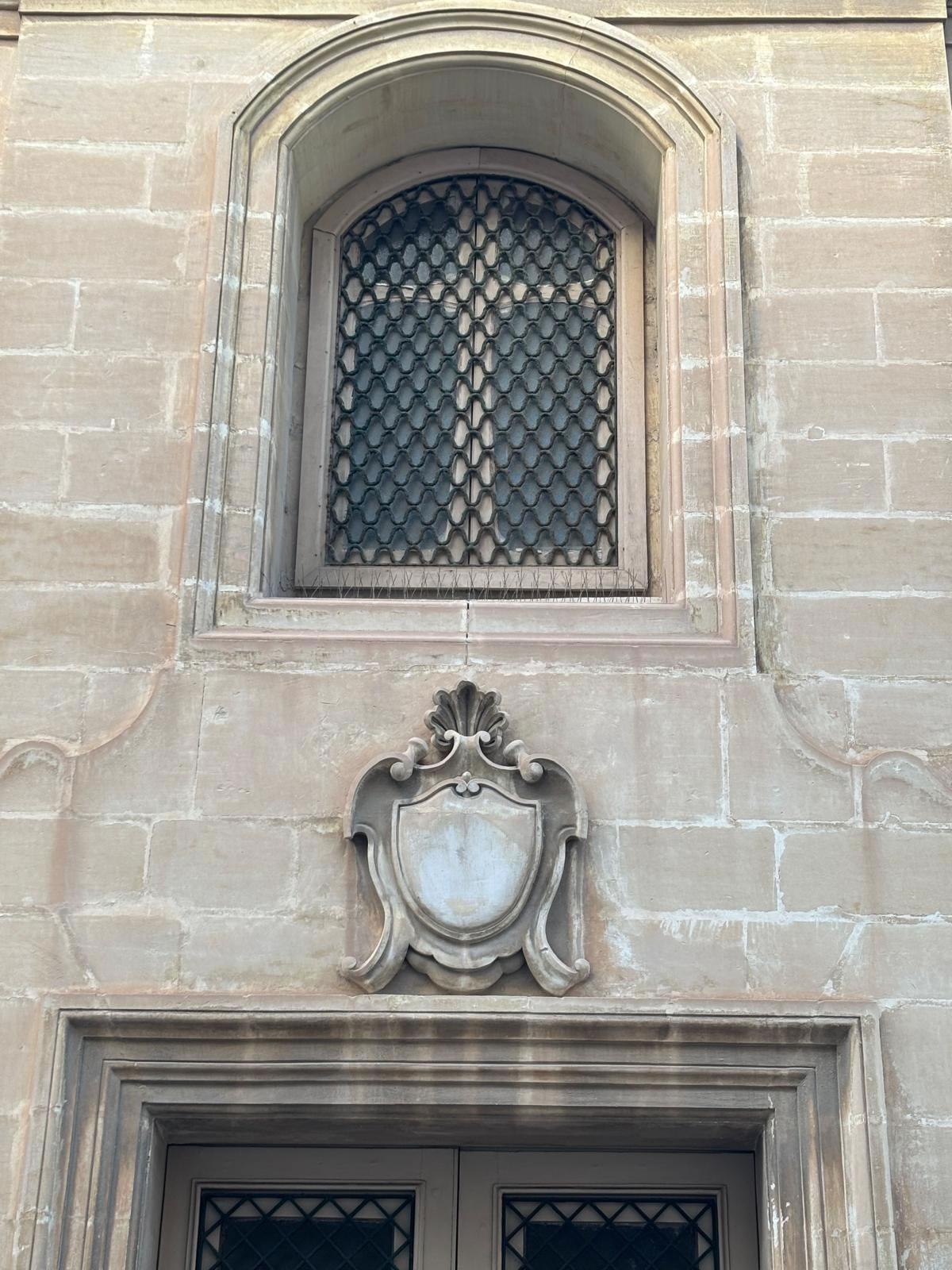
- A façade composed of vertical elements including door, window, pediment, and bellcote
- A structured interior divided into nave and presbytery
- Use of Maltese limestone
While simpler than earlier versions, the architecture maintains a dignified ecclesiastical presence.
Modern Role and Use
Today, the Holy Trinity Church continues to serve the community in various ways:
- Occasional religious services
- Community and pastoral activities
- Use by religious groups, including the Greek Catholic community in recent years
In 1970, it also served as headquarters for the Catholic Action Movement, reflecting its ongoing social role.
Cultural and Historical Significance
The Holy Trinity Church is an important part of Malta’s heritage for several reasons:
- Its origins date back to the medieval period
- It reflects the influence of Spanish devotion in Malta
- It demonstrates resilience through destruction and rebuilding
Its story mirrors that of Birgu itself—a city shaped by faith, war, and renewal.
Visiting Information
Visitors exploring Birgu can include the Holy Trinity Church as part of a walking tour of the city’s historic streets.
- Location: Birgu (Vittoriosa)
- Coordinates: 35.889235, 14.520603
- Access: Within Birgu historic centre
- Use: Active church (limited services)
Conclusion
The Holy Trinity Church in Birgu is a powerful symbol of Malta’s enduring religious heritage. From its medieval origins as a chapel dedicated to Our Lady of Monserrat to its transformation into a Baroque church and its eventual reconstruction after wartime destruction, it represents centuries of faith and resilience.
Though modest in scale, its historical depth and cultural significance make it an essential part of Birgu’s rich ecclesiastical landscape. For visitors and historians alike, the church offers a meaningful glimpse into Malta’s past and its enduring spiritual traditions.