📍 Location
Location Map Coordinates 35.880579, 14.396763

The Knisja ta’ Sant’Agata, located in Rabat, Malta, at coordinates 35.880579, 14.396763, is one of the most historically and spiritually significant churches in the Rabat–Mdina area. Dedicated to St Agatha, the Sicilian virgin and martyr, the church forms part of a wider complex closely associated with early Christian heritage on the island.

Historical and Religious Context
The historical and religious significance of the area surrounding the Knisja ta’ Sant’Agata in Rabat is deeply rooted in Malta’s earliest phases of civilisation. The site lies within the wider landscape of the ancient Roman city of Melite, which occupied the area now shared by Rabat and Mdina. During the Roman period (from the 2nd century BC onwards), burial practices strictly prohibited interment within city walls, leading to the development of extensive cemeteries and funerary complexes in the surrounding outskirts.
This tradition laid the foundation for one of the most important early Christian archaeological zones in Malta. With the gradual spread of Christianity across the Roman Empire, burial sites evolved into sacred spaces of worship and remembrance. The Rabat area, in particular, became a focal point for subterranean burial systems, now known as catacombs, which were carved into the soft limestone bedrock.

The nearby Catacombs of St Agatha form a central element of this historical context. These catacombs date from approximately the 3rd to 7th centuries AD and represent one of the largest and most complex early Christian burial systems in Malta. They include a network of interconnected galleries, tomb chambers, and decorated spaces, some of which contain early frescoes and symbolic Christian imagery.
These underground structures were not only places of burial but also served as sites for communal gatherings, commemorative rituals, and expressions of faith. The presence of agape tables—stone tables used for funerary meals—indicates that early Christian communities gathered here to honour their dead and reaffirm their religious identity.
The association of this site with St Agatha adds a further layer of spiritual and cultural significance. According to long-standing tradition, the Sicilian martyr sought refuge in Malta during the persecutions of the 3rd century. While historical verification of her presence remains uncertain, the strength and continuity of this tradition have made her one of the most venerated saints in Malta.
The development of a church dedicated to St Agatha above or near these catacombs reflects a common pattern in early Christian and medieval Europe, where sacred architecture was established in proximity to burial sites associated with saints or martyrs. This practice reinforced the spiritual connection between the living community and the memory of the faithful departed.
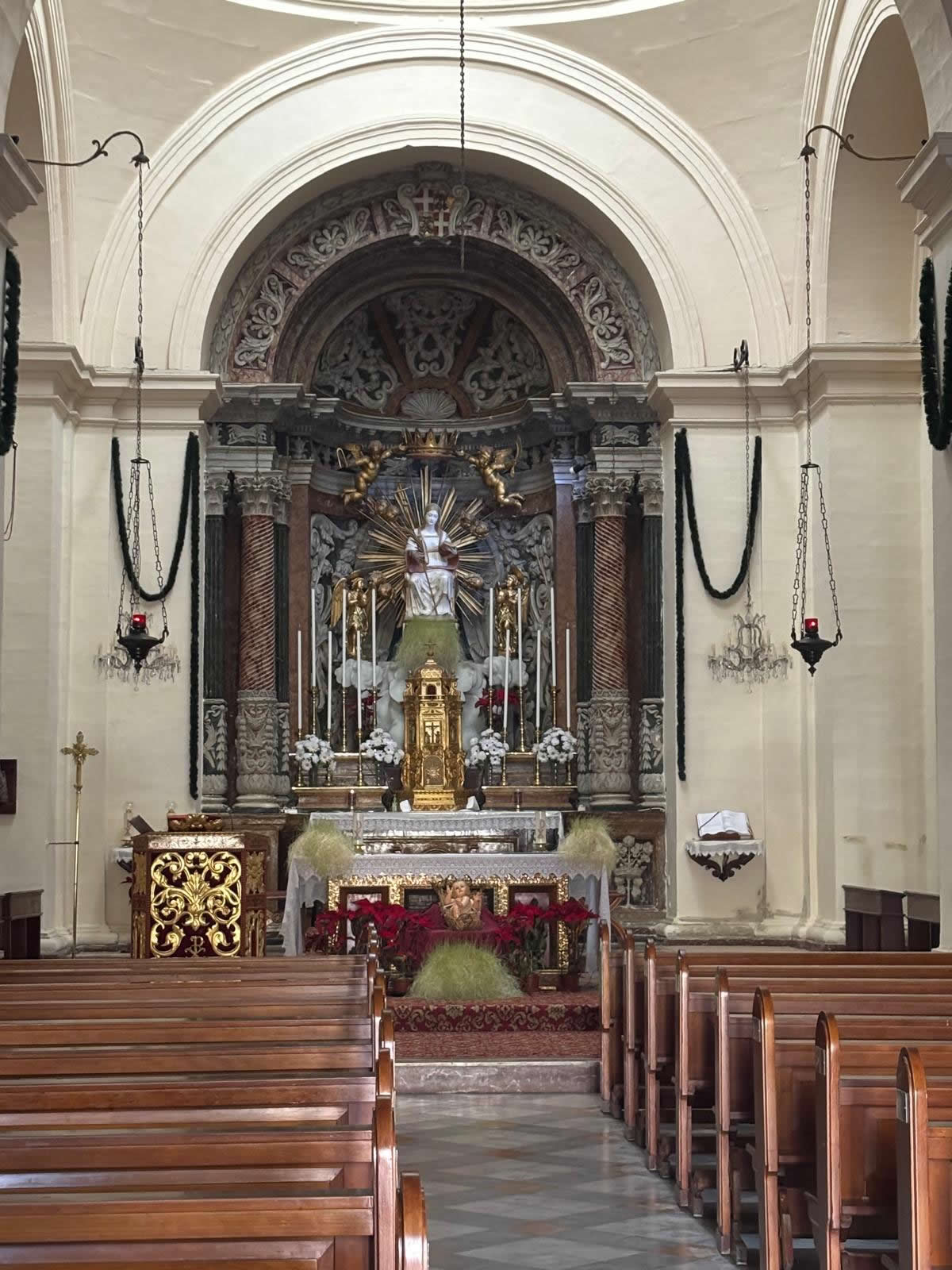
Throughout the medieval period and into the early modern era, Rabat continued to function as an important religious centre. Its proximity to Mdina, the island’s administrative and ecclesiastical capital, ensured that it remained closely linked to Malta’s evolving religious institutions. The Church of St Agatha, therefore, exists within a landscape shaped by centuries of continuous devotion, burial practices, and ecclesiastical development.
The enduring use of the site—from Roman burial grounds to early Christian catacombs and later church construction—illustrates a remarkable continuity of sacred space. This layering of historical phases makes the Church of St Agatha not merely a standalone building, but part of a much broader and deeply rooted religious environment that has shaped Malta’s spiritual identity over millennia.

Dedication to St Agatha
The Knisja ta’ Sant’Agata is dedicated to St Agatha, one of the most venerated early Christian martyrs of the 3rd century. Born in Catania, Sicily, she suffered persecution during the reign of the Roman Emperor Decius and was martyred around the year 251 AD. Her steadfast faith and refusal to renounce Christianity made her a powerful symbol of courage, purity, and unwavering devotion.

St Agatha’s cult spread rapidly throughout the Mediterranean, particularly in regions closely connected to Sicily, including Malta. The geographical proximity between Malta and Sicily, combined with strong historical, cultural, and ecclesiastical ties, contributed to the deep-rooted veneration of the saint on the island.

According to long-standing local tradition, St Agatha sought refuge in Malta while fleeing persecution in Sicily. It is believed that she stayed in the Rabat area, where she continued to practise her faith in secrecy. Although this tradition cannot be definitively confirmed through historical documentation, it has been preserved through centuries of devotion and remains a central element of Maltese religious identity.

This association led to the dedication of both the nearby catacombs and the church to St Agatha, reinforcing the site as a place of pilgrimage and spiritual reflection. The connection between the saint and the underground burial complexes reflects early Christian practices of linking holy figures with sacred spaces, particularly those associated with martyrdom and refuge.
St Agatha is widely regarded as a protector against fire, natural disasters, and illness. In Malta, she has traditionally been invoked for protection during times of crisis, further strengthening her importance within local devotion. Her feast day, celebrated on 5th February, remains an important occasion in the liturgical calendar and is marked by religious observances both in Malta and in Sicily.
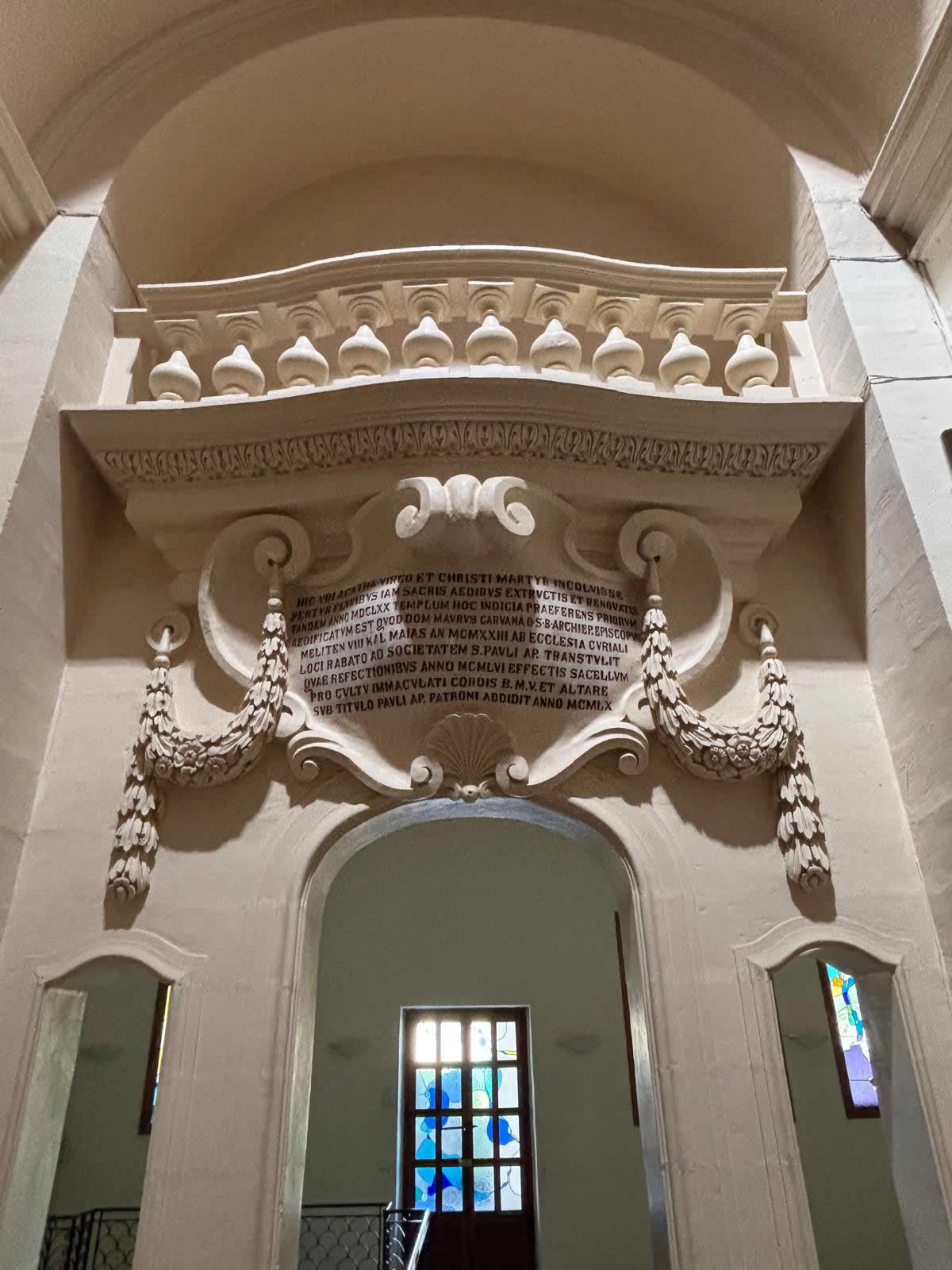
Within the church, devotion to St Agatha is expressed through the main altar, devotional imagery, and liturgical celebrations. Artistic representations typically depict the saint with symbols of her martyrdom, such as the palm branch and other traditional iconographic elements associated with her suffering and triumph.
The dedication of the church to St Agatha is therefore not merely nominal but reflects a deeply embedded tradition that connects Malta to the wider Christian world. It embodies centuries of faith, cultural exchange, and the enduring legacy of one of Christianity’s most revered female martyrs.

Origins and Development
The origins of Knisja ta’ Sant’Agata are closely tied to the early Christian use of the surrounding area. While the present structure reflects later architectural developments, the site itself has been associated with Christian worship for centuries.
The church likely evolved from earlier devotional spaces connected to the catacombs, gradually developing into a more formal place of worship.

Architectural Features
The church exhibits characteristics typical of Maltese ecclesiastical architecture, including:
- Use of local limestone
- A simple yet dignified façade
- An interior designed for intimate worship
Its scale reflects its role as a secondary church rather than a major parish structure, yet its historical importance far exceeds its size.

Artworks and Interior Iconography
The interior of the Knisja ta’ Sant’Agata reflects a devotional environment centred on the life, martyrdom, and enduring veneration of St Agatha. While modest in scale compared to major parish churches, the artistic programme of the church is rich in symbolic meaning and closely aligned with traditional Catholic iconography.

The Main Altar and Titular Representation
At the heart of the church stands the main altar, dedicated to St Agatha. The titular artwork—whether in the form of a painting or statue—typically depicts the saint as a youthful virgin, dressed in flowing robes that symbolise purity and spiritual strength. She is often shown holding the palm of martyrdom, a universal Christian symbol representing victory over persecution and death.
Another key element frequently associated with St Agatha’s iconography is the representation of her suffering, recalling the torture she endured during her martyrdom. These elements are not presented for dramatic effect alone but serve as visual theology, inviting reflection on faith, sacrifice, and resilience.

Symbolism of Martyrdom and Faith
The imagery within the church reinforces themes central to early Christian belief. The palm branch signifies triumph through faith, while the serene expression often depicted on the saint’s face conveys spiritual endurance despite suffering. These artistic choices reflect the broader Baroque and post-Tridentine emphasis on engaging the faithful emotionally and spiritually through visual means.
In some representations, additional symbolic elements may be present, such as:
- The lily, representing purity and chastity
- The crown, symbolising heavenly reward
- Architectural or background elements referencing her Sicilian origins
Secondary Altars and Devotional Imagery
Although the church is relatively small, it may include secondary devotional elements such as side altars or niches. These often feature images of the Virgin Mary, Christ, or other saints, reflecting the wider context of Catholic devotion in Malta.
Such elements provide a broader spiritual framework, linking the specific devotion to St Agatha with the universal themes of redemption, intercession, and divine grace.
Liturgical Furnishings
The liturgical furnishings of the church contribute to its devotional atmosphere. These typically include:
- A stone or marble altar aligned with traditional orientation
- Candlesticks used during Mass and devotional services
- A tabernacle, emphasising the centrality of the Eucharist
The arrangement of these elements reflects centuries of Catholic liturgical practice, designed to guide the faithful in prayer and contemplation.
Integration with the Catacomb Tradition
The church’s interior cannot be fully understood without considering its relationship to the nearby Catacombs of St Agatha. The artistic focus on martyrdom, resurrection, and eternal life echoes the themes found in early Christian funerary art within the catacombs.
This continuity reinforces the idea that the church is part of a broader sacred landscape, where the memory of the dead and the hope of resurrection are central themes.
Atmosphere and Devotional Experience
Despite its modest size, the church creates a powerful sense of intimacy and reflection. The combination of soft natural light, traditional stone construction, and devotional imagery contributes to a contemplative environment.
Visitors and worshippers alike encounter a space that encourages quiet prayer and spiritual focus, in keeping with the long-standing traditions of the Rabat–Mdina religious landscape.
Artistic and Cultural Value
The artworks and interior of Knisja ta’ Sant’Agata, while not as monumental as those found in larger churches, are of significant cultural importance. They represent:
- The continuity of devotional art in Malta
- The enduring veneration of early Christian martyrs
- The integration of theology and artistic expression
Together, these elements make the church an important example of how even smaller ecclesiastical spaces in Malta preserve and communicate deep layers of religious meaning through art.
Liturgical Life and Use
The church remains active, with early morning Mass held regularly. Services typically take place:
- Weekdays: early morning (around 6:30 am)
- Sunday: morning Mass
This continued use highlights the church’s ongoing importance within the local community.
Relationship with the Catacombs
One of the defining features of the Church of St Agatha is its close relationship with the nearby catacombs. These underground burial sites provide a direct link to early Christian Malta and offer insight into ancient funerary practices.
The church and catacombs together form a unified heritage site, combining architectural, archaeological, and spiritual elements.
Cultural and Heritage Importance
Knisja ta’ Sant’Agata represents several key aspects of Maltese heritage:
- Continuity of Christian worship from antiquity to the present
- Connection to early Christian burial practices
- Devotion to a widely venerated saint
Its location within the Rabat–Mdina area further enhances its significance, placing it within one of Malta’s richest historical landscapes.
Location and Access
Location: Rabat, Malta
Coordinates: 35.880579, 14.396763
The church is easily accessible from Rabat and is situated near the entrance to St Agatha’s Catacombs.
Conclusion
The Church of St Agatha in Rabat is a remarkable example of Malta’s layered religious heritage. From its association with early Christian catacombs to its continued use today, it embodies the enduring presence of faith on the island.
As both a historical and living place of worship, it remains an essential part of Malta’s ecclesiastical and cultural identity.
Frequently Asked Questions
Where is the Church of St Agatha located?
It is located in Rabat, Malta, near the St Agatha catacombs.
What is its significance?
It is associated with early Christian burial sites and devotion to St Agatha.
Is it still active?
Yes, regular Mass is celebrated.