📍 Location
Location Map Coordinates 35.922775, 14.451035
A historic chapel of St John the Baptist beside the Għargħur cemetery, rooted in early parish life and Maltese funerary tradition
Introduction
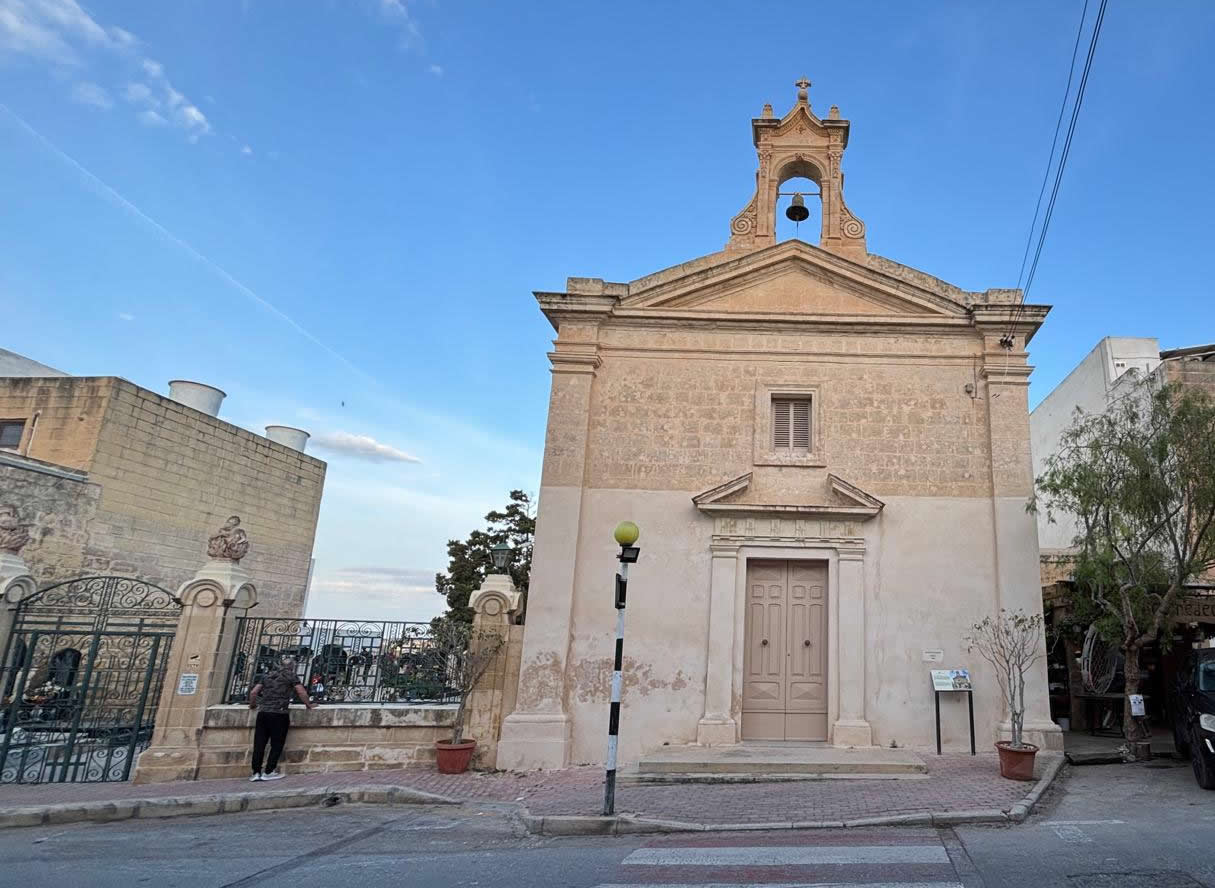
The San Ġwann il-Battista Church in Għargħur, located at coordinates 35.922775, 14.451035, is a historically significant religious structure closely associated with the village cemetery. Though modest in scale compared to the parish church of St Bartholomew, it plays an important role in Għargħur’s religious and cultural landscape.
Dedicated to St John the Baptist, one of Christianity’s most revered saints, the chapel reflects both the early development of Għargħur as a parish and the enduring traditions surrounding death, burial, and remembrance in Malta.
Situated next to the Għargħur cemetery, the church forms part of a broader funerary complex, linking spiritual rituals with the physical resting place of the community’s deceased.
Early Origins and Historical Background
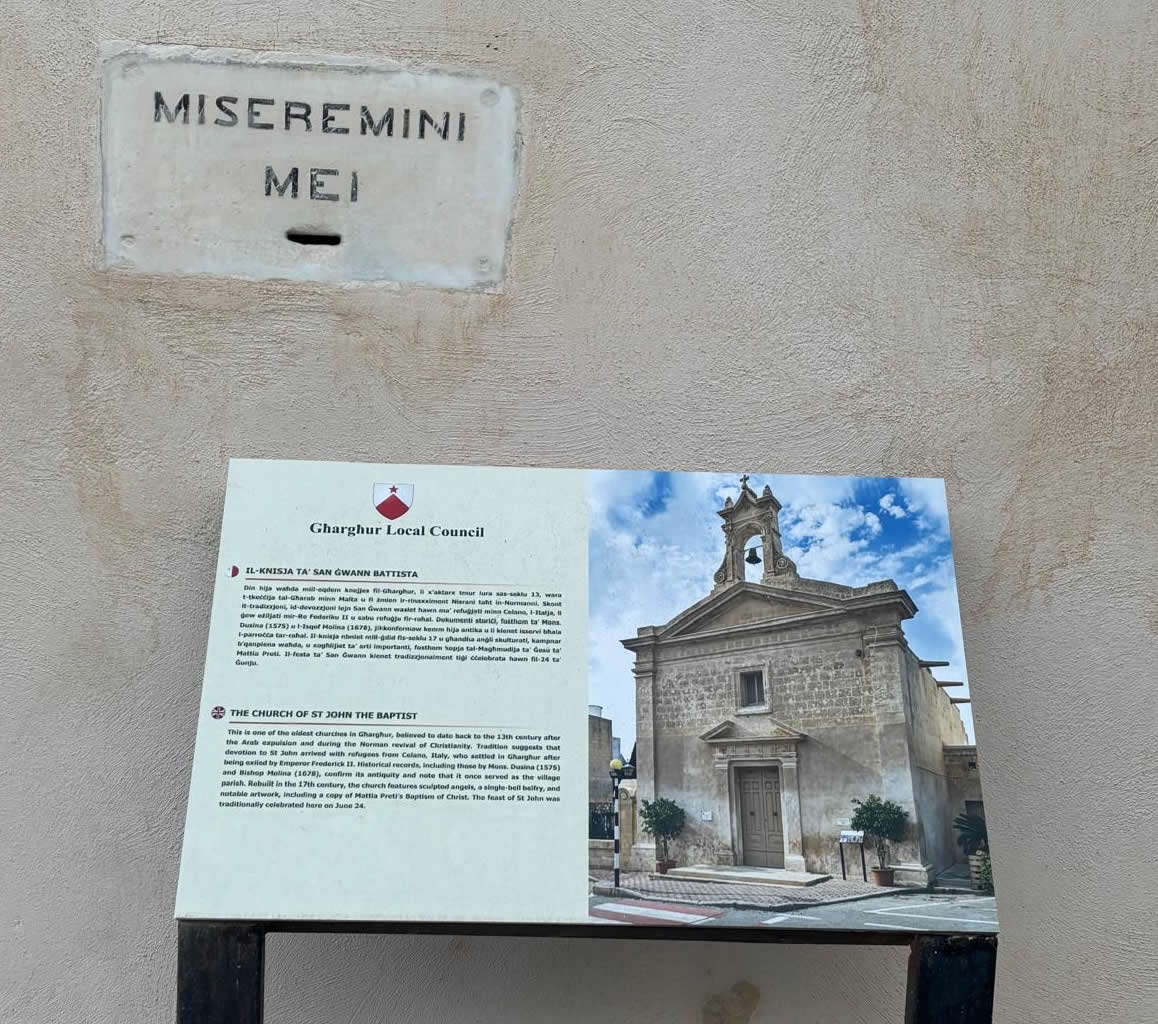
The origins of San Ġwann il-Battista Church are closely tied to the early religious development of Għargħur. During the apostolic visitation of 1575, the village was recorded as having several small chapels, including one dedicated to St John the Baptist.
At that time, Għargħur was not yet an independent parish and fell under the jurisdiction of Naxxar. However, the presence of multiple chapels demonstrates that the area already had a well-established religious life.
When Għargħur was formally established as a parish in 1610, the chapel of St John the Baptist temporarily served as the parish church before the construction of the larger church dedicated to St Bartholomew.
This early role gives San Ġwann il-Battista a special historical importance as one of the foundational religious buildings of the village.
Development and Cemetery Association
Over time, as the parish church of St Bartholomew became the central place of worship, San Ġwann il-Battista Church assumed a more specialised role. Its location next to the cemetery naturally led to its association with funerary rites.
In Malta, the shift from burials within church interiors to designated cemeteries outside village centres occurred gradually between the 18th and 19th centuries. This change was driven by public health concerns and increasing population density.
As a result, chapels like San Ġwann il-Battista became integral to burial practices, serving as:
- Places for funeral blessings
- Spaces for prayer before burial
- Sites for commemorative liturgies
Its proximity to the cemetery makes it a key element of Għargħur’s funerary landscape.
Architectural Characteristics
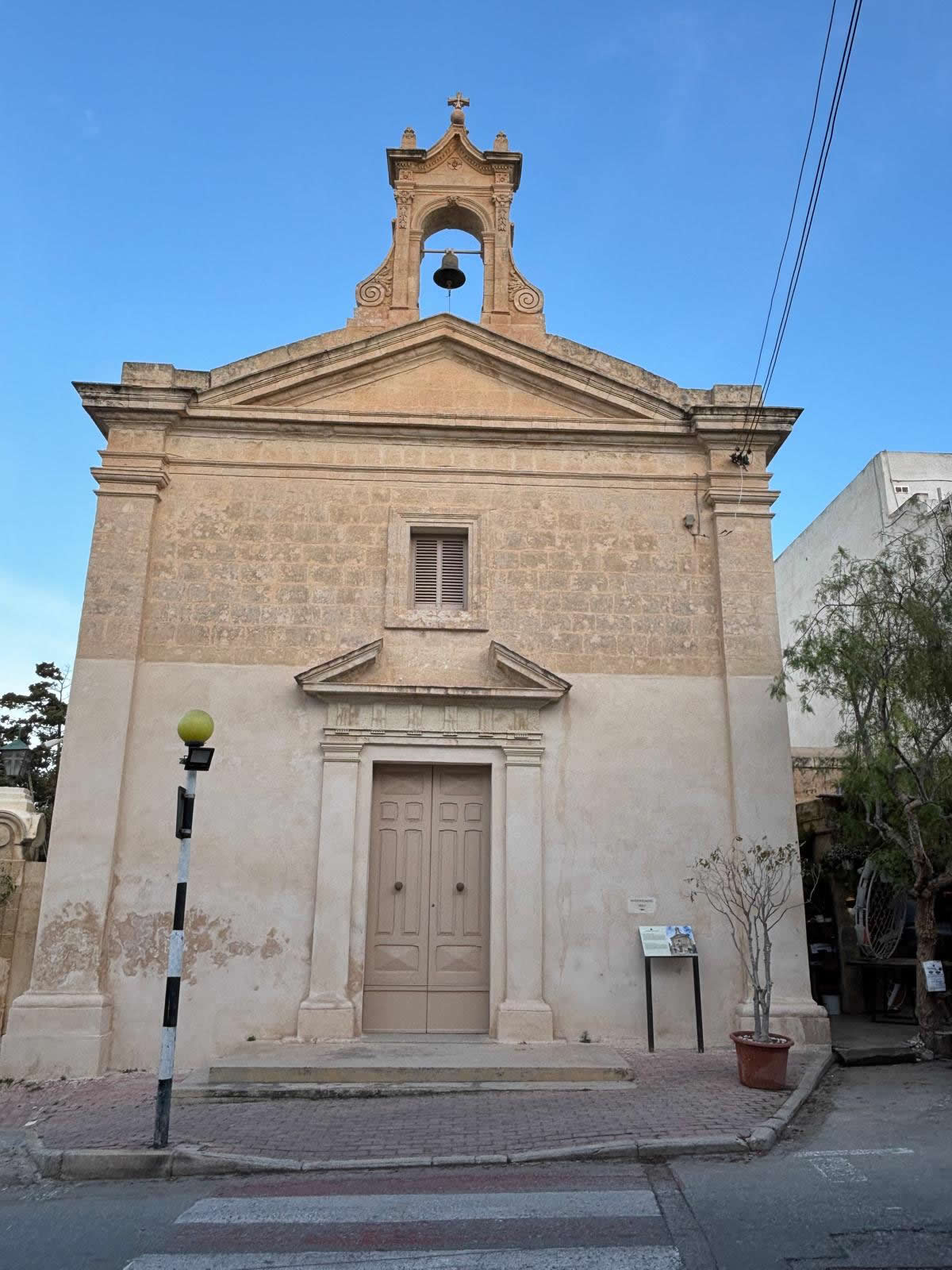
The church reflects the architectural simplicity typical of small Maltese chapels.
Exterior
- Traditional Maltese limestone construction
- Plain façade with minimal ornamentation
- Simple doorway framed in stone
- Possible bell cote or cross at roof level
Interior
- Single nave layout
- Small altar dedicated to St John the Baptist
- Subdued decorative scheme
This restrained design emphasises the chapel’s functional and devotional role rather than architectural grandeur.
Dedication to St John the Baptist
The dedication to St John the Baptist carries deep symbolic meaning. As the forerunner of Christ and a figure associated with repentance and renewal, St John is particularly relevant in the context of death and spiritual preparation.
His presence in funerary chapels underscores themes of:
- Spiritual purification
- Transition from earthly life to eternal life
- Hope and redemption
Devotion to St John the Baptist has been strong in Malta for centuries, reflected in numerous churches and chapels dedicated to him across the islands.
Religious Function and Use
San Ġwann il-Battista Church continues to serve an important religious function, particularly in connection with the cemetery.
Typical uses include:
- Funeral rites and blessings
- All Souls’ Day commemorations
- Private prayer and remembrance
Although not a primary parish church, it remains a sacred space for reflection and mourning.
Located beside the Għargħur Cemetery, this church forms part of a wider heritage network of chapels. Explore more: Oldest Chapels of Malta & Gozo
Artworks and Interior Elements
While relatively simple, the chapel may contain traditional devotional elements typical of Maltese churches:
- Painting or statue of St John the Baptist
- Altar furnishings used for funeral rites
- Candles and votive offerings
The emphasis is on spiritual atmosphere rather than elaborate artistic decoration, in keeping with its role as a funerary chapel.
Restoration and Preservation
Like many historic chapels in Malta, San Ġwann il-Battista Church has likely undergone conservation efforts to preserve its structure.
Typical restoration work includes:
- Stone cleaning and repair
- Structural stabilisation
- Maintenance of interior elements
Such efforts are essential in maintaining Malta’s extensive network of historic religious buildings.
Cultural and Community Significance
San Ġwann il-Battista Church holds a special place in the cultural life of Għargħur. It represents:
- The village’s early religious history
- Continuity of burial traditions
- A place of communal memory and reflection
For many residents, the chapel is deeply connected to personal and family histories, making it an important site of emotional and cultural significance.
Location and Setting
📍 Coordinates: 35.922775, 14.451035 📍 Location: Għargħur Cemetery, Malta
The church is situated in a शांत rural setting on the edge of the village, offering a quiet environment appropriate for reflection and remembrance.
Its proximity to the cemetery reinforces its role within the funerary landscape of Għargħur.
Modern Role
Today, San Ġwann il-Battista Church continues to be used for religious purposes, particularly those connected to death and remembrance.
It also contributes to Malta’s cultural tourism, attracting visitors interested in:
- Historic chapels
- Religious heritage
- Traditional Maltese burial practices
Frequently Asked Questions (FAQ)
Where is San Ġwann il-Battista Church located?
It is located next to the Għargħur cemetery at coordinates 35.922775, 14.451035.
What is its historical significance?
It served as the early parish church of Għargħur before the construction of St Bartholomew’s Church.
What is the church used for today?
It is mainly used for funerary rites and remembrance services.
Who is the church dedicated to?
It is dedicated to St John the Baptist.
Is the church still active?
Yes, it remains an active religious site connected to the cemetery.