📍 Location
Location Map Coordinates 35.880579, 14.396763
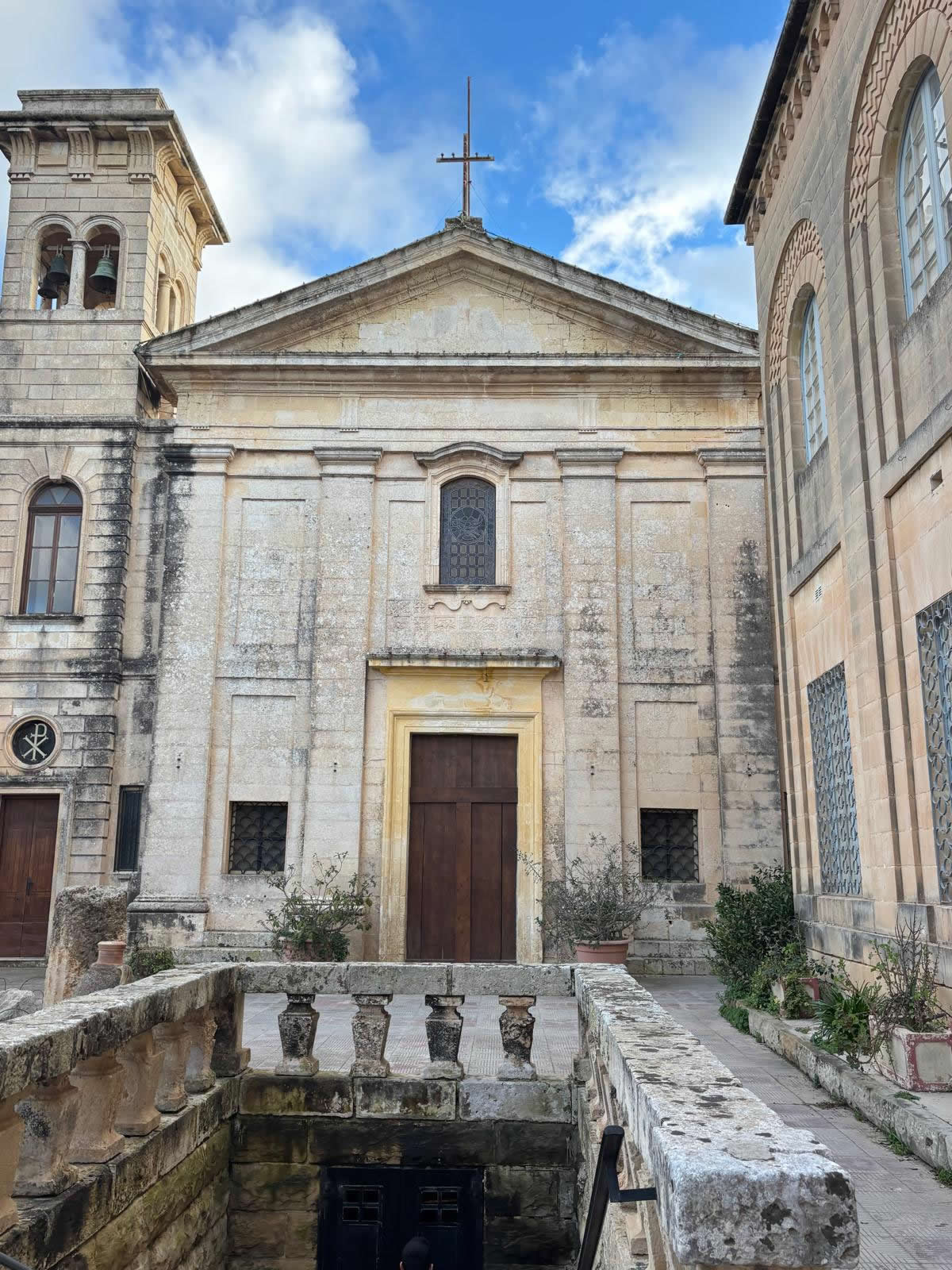
The St Agatha Crypt in Rabat, Malta, is one of the most remarkable early Christian underground churches on the island. Hewn directly into the living limestone, the crypt represents a unique example of an underground basilica, combining archaeological, artistic, and religious significance in a single sacred space.
Origins and Early Development
The origins of the crypt can be traced back to a natural cave that was in use during the early Christian period. According to tradition, this cave was associated with St Agatha, who is believed to have taken refuge in Malta during the persecutions of the Roman Emperor Decius (249–251 AD).
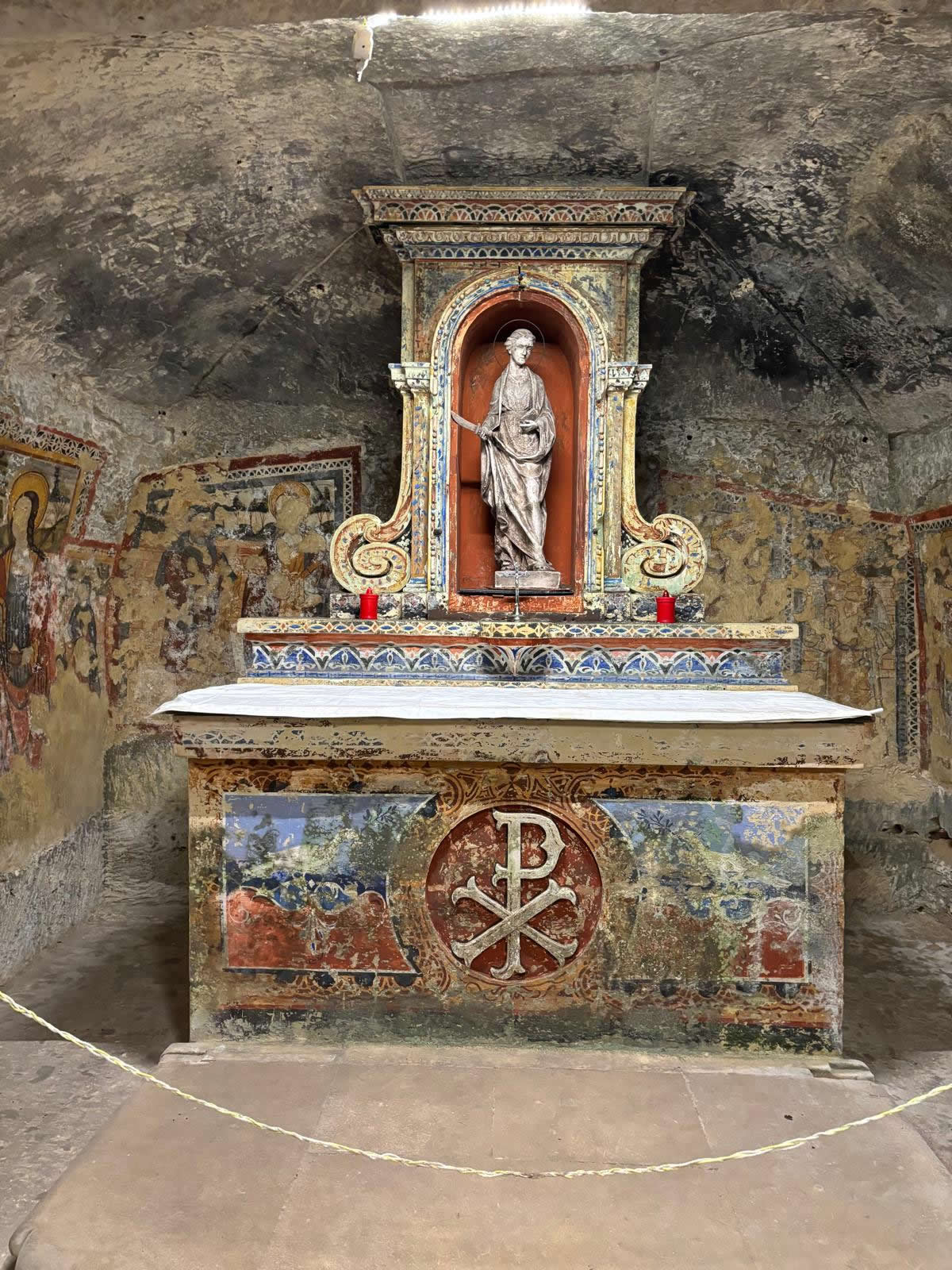
During the 4th or 5th century, this natural cave was enlarged and transformed into a structured place of worship. Over time, it developed into a fully functioning underground church, serving both liturgical and devotional purposes for early Christian communities.
The crypt continued to evolve throughout the medieval period, expanding in size and artistic decoration, eventually becoming one of the most important sacred spaces in Rabat.
Architectural Layout and Underground Basilica
The St Agatha Crypt is carved entirely out of the local globigerina limestone, forming a self-contained underground sanctuary. Its layout reflects the transformation from a simple cave into a basilica-like structure, complete with:
- A central worship space
- A defined sanctuary area
- Rock-cut architectural elements
The semicircular arrangement at the far end of the crypt creates a focal point for the altar, echoing the apse of above-ground churches. This design illustrates how early Christians adapted natural spaces into structured liturgical environments.
The Altars of St Agatha Crypt
The Main Altar
At the far end of the crypt stands the main altar dedicated to St Agatha, which forms the spiritual centre of the space. This altar has undergone several phases of development:
- An original rock-cut altar, dating back to early Christian use
- A later altar structure built above it
- A significant reconstruction in 1666 to accommodate a statue of the saint
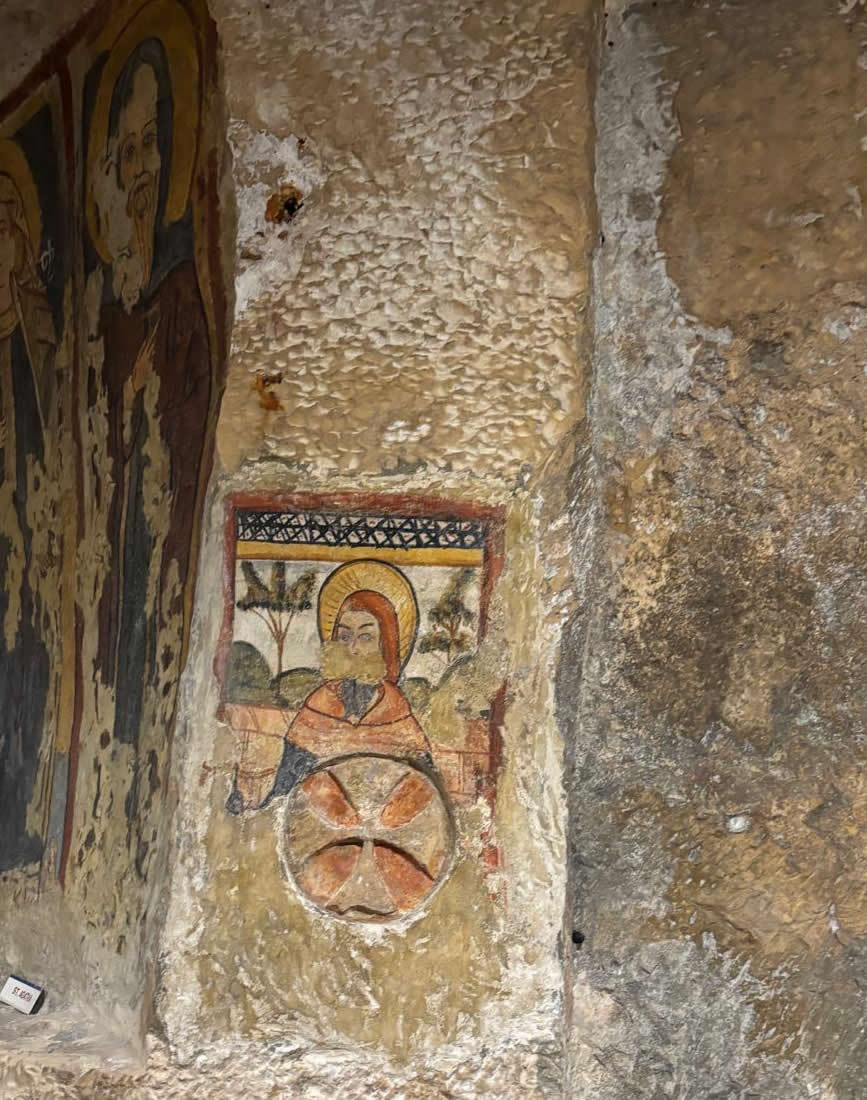
This layering of altars is particularly important, as it demonstrates the continuous use of the crypt across centuries. The altar remained in active liturgical use until at least the 17th century, with records indicating its use up to 1647.
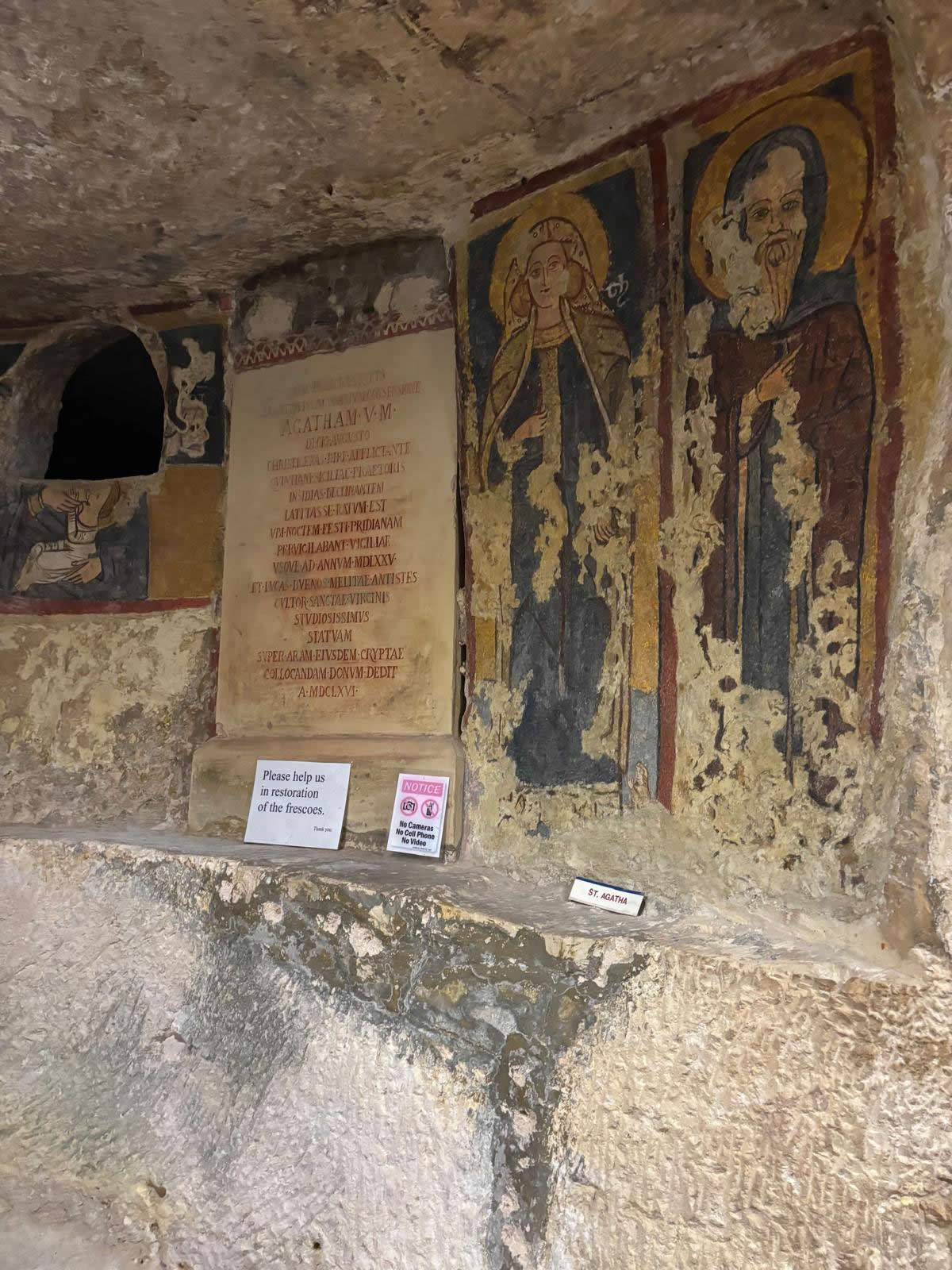
The 17th-century altar was specifically designed to house an alabaster statue of St Agatha, donated by Bishop Lucas Buenos. This statue depicted the saint during her martyrdom and was crafted in Trapani, Sicily.
Today, the original statue is preserved in the museum, while a modern representation occupies its place within the crypt.
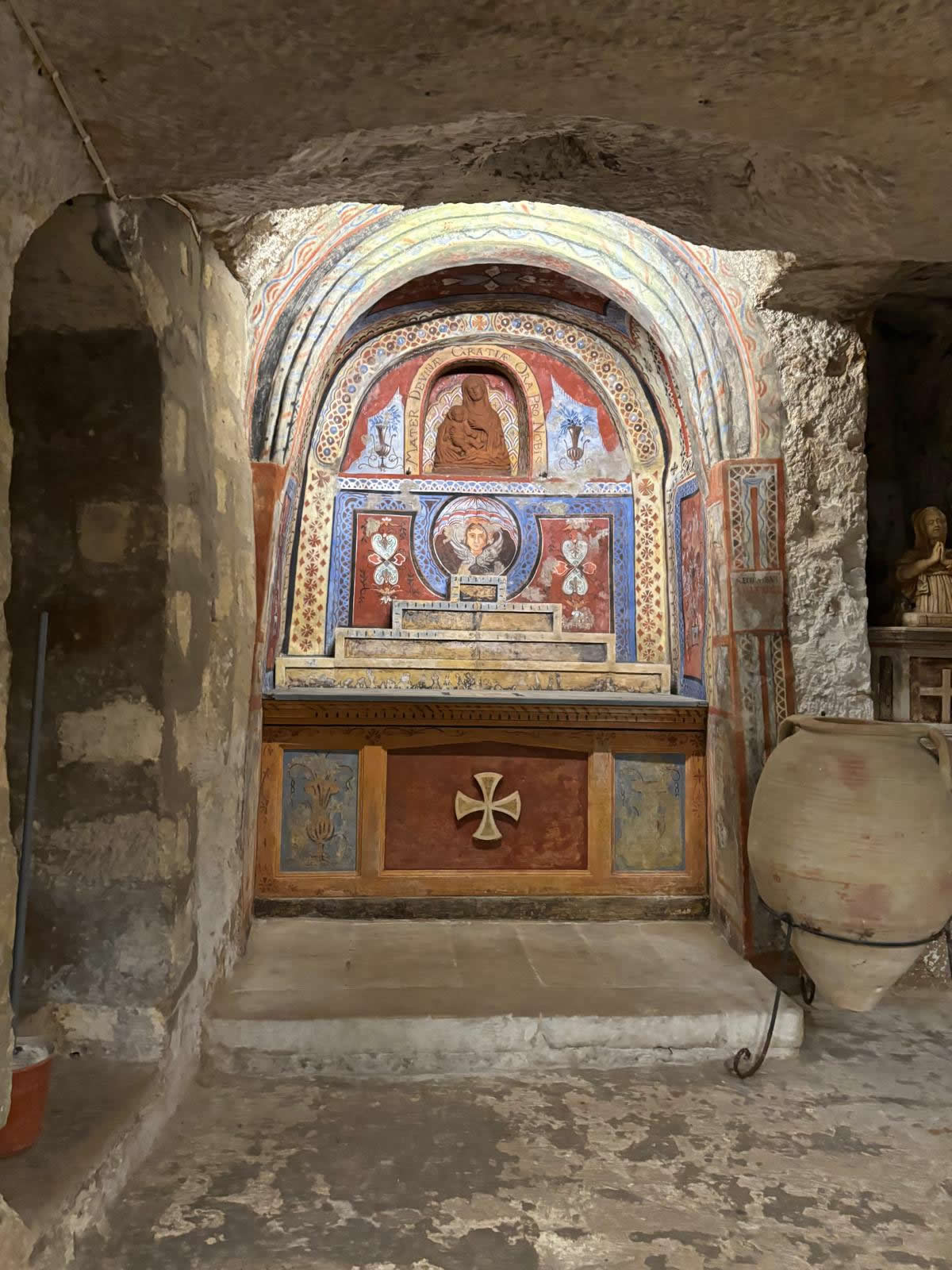
The Side Altar
Historical records, including a pastoral visit in 1575, indicate that the crypt originally contained multiple altars. However, only two survive today:
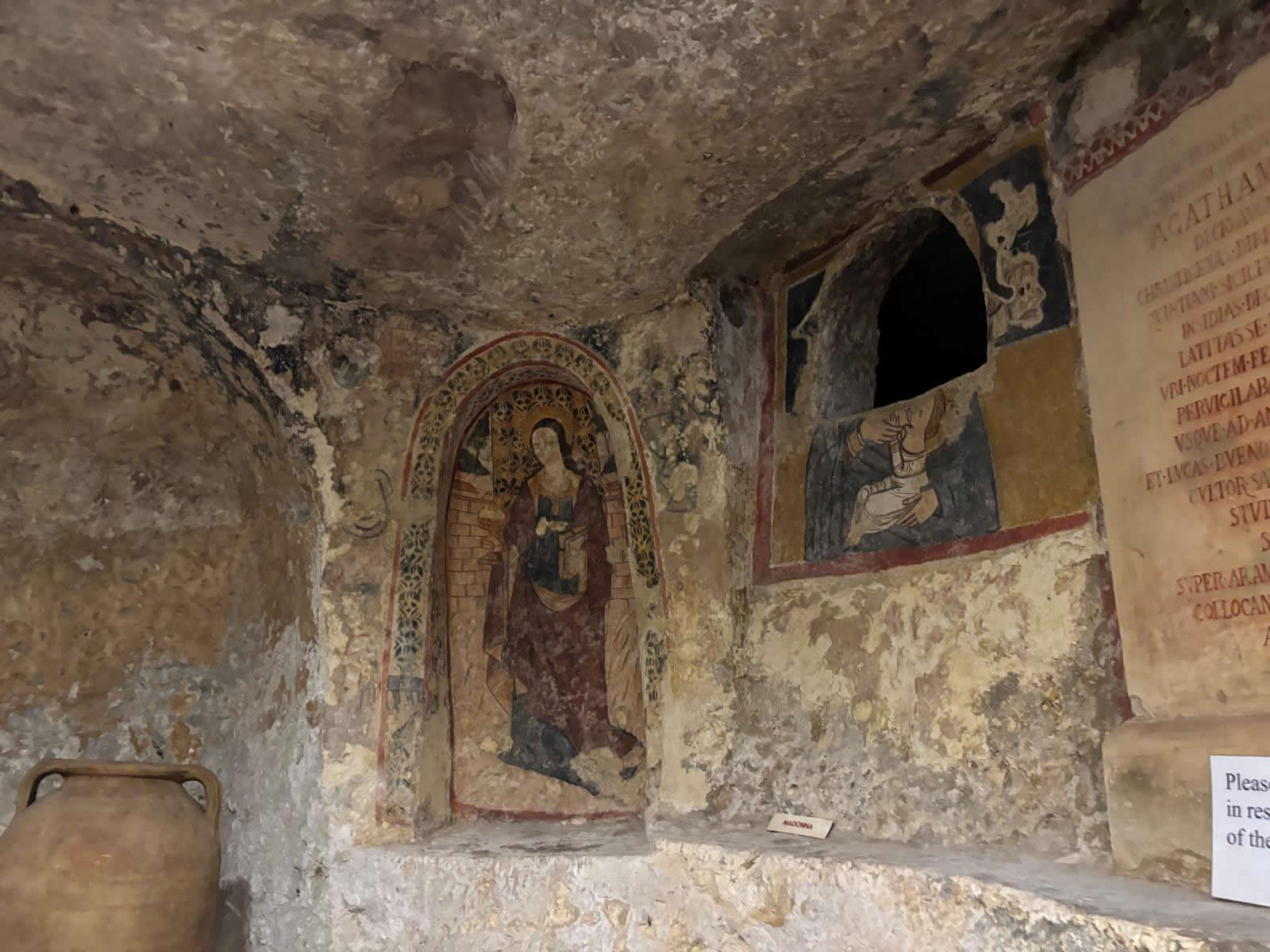
- The main altar dedicated to St Agatha
- A secondary altar dedicated to Our Lady, Mother of Divine Grace
The presence of this Marian altar reflects the integration of broader Catholic devotion within the crypt, complementing the central focus on St Agatha.
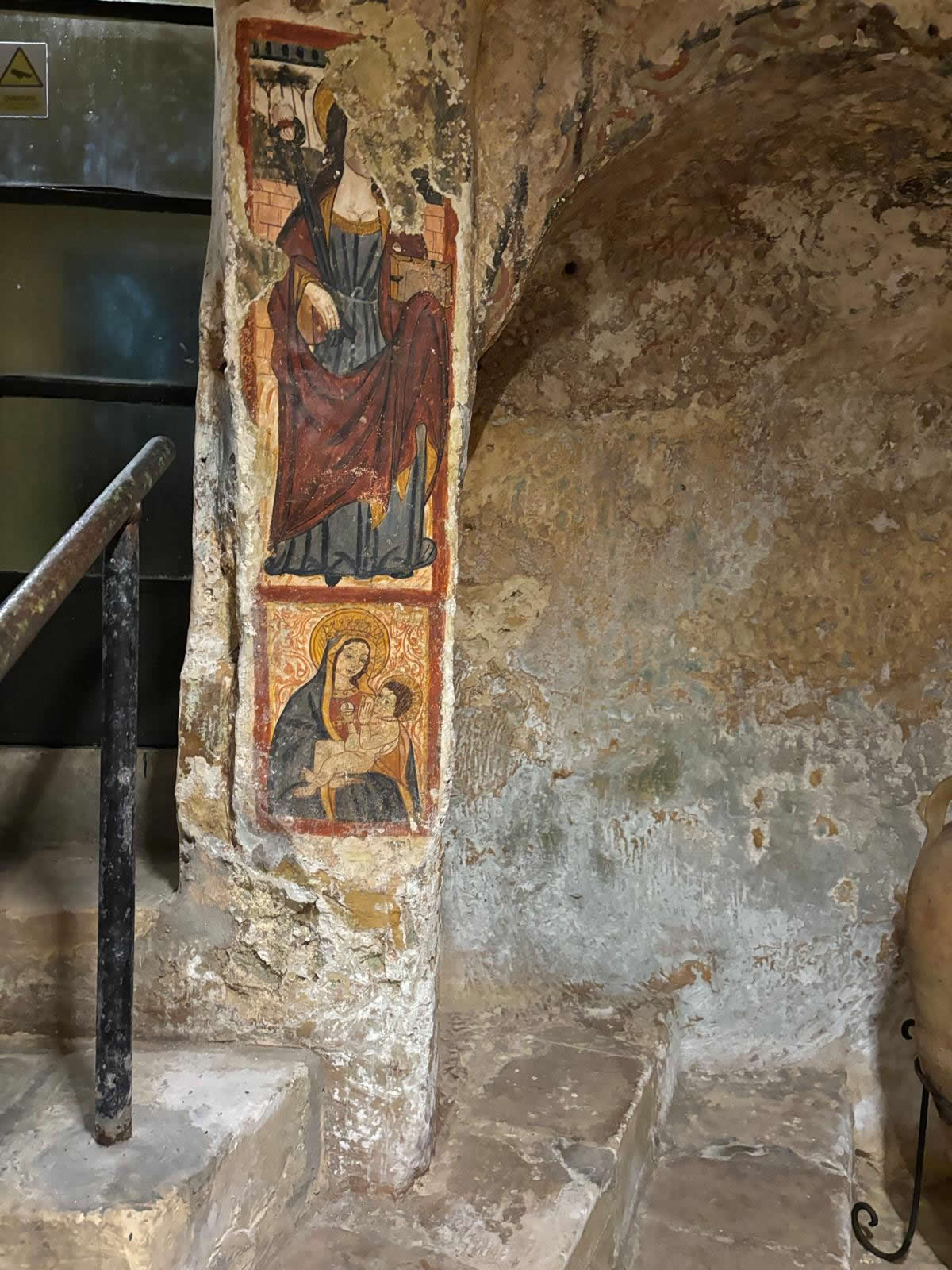
Frescoes and Artistic Programme
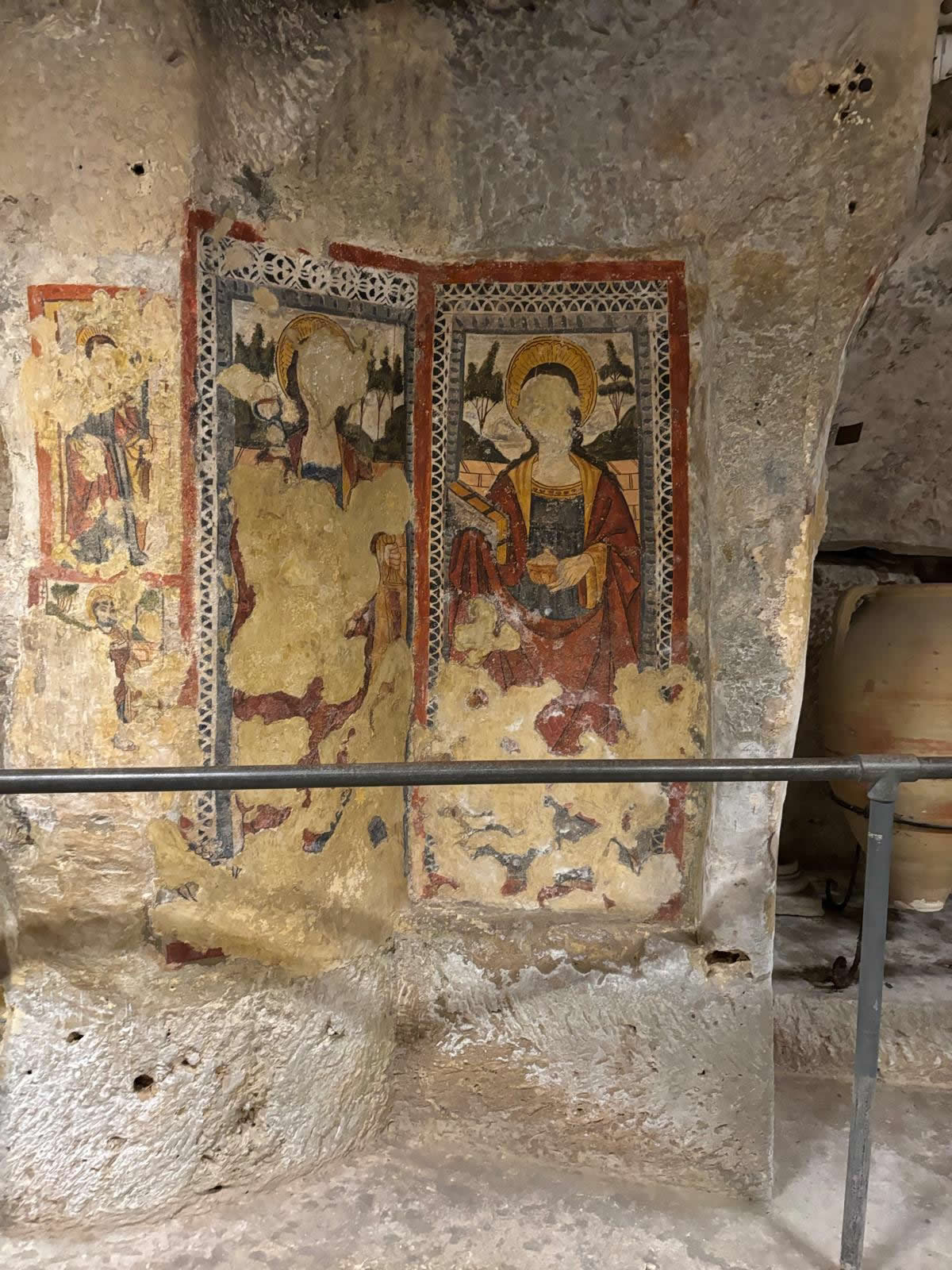
One of the most remarkable features of the St Agatha Crypt is its extensive collection of frescoes, which span several centuries and represent a blend of artistic traditions.
Medieval Frescoes
The earliest frescoes date back to the 12th century and are executed in a Byzantine style, characterised by:
- Frontal figures
- Stylised features
- Strong symbolic representation
These paintings reflect the influence of Eastern Christian art in Malta during the medieval period.
15th-Century Additions
A significant group of frescoes was added around 1480, attributed to the Sicilian painter Salvatore D’Antonio.
These later works introduce elements of Western artistic influence, creating a unique fusion of styles within the crypt.
Iconography
The frescoes depict approximately 30 saints, including:
- Multiple representations of St Agatha
- Bishops and early Church figures
- Virgin and martyr saints
This concentration of saintly imagery transforms the crypt into a visual narrative of Christian devotion, emphasising themes of martyrdom, faith, and salvation.
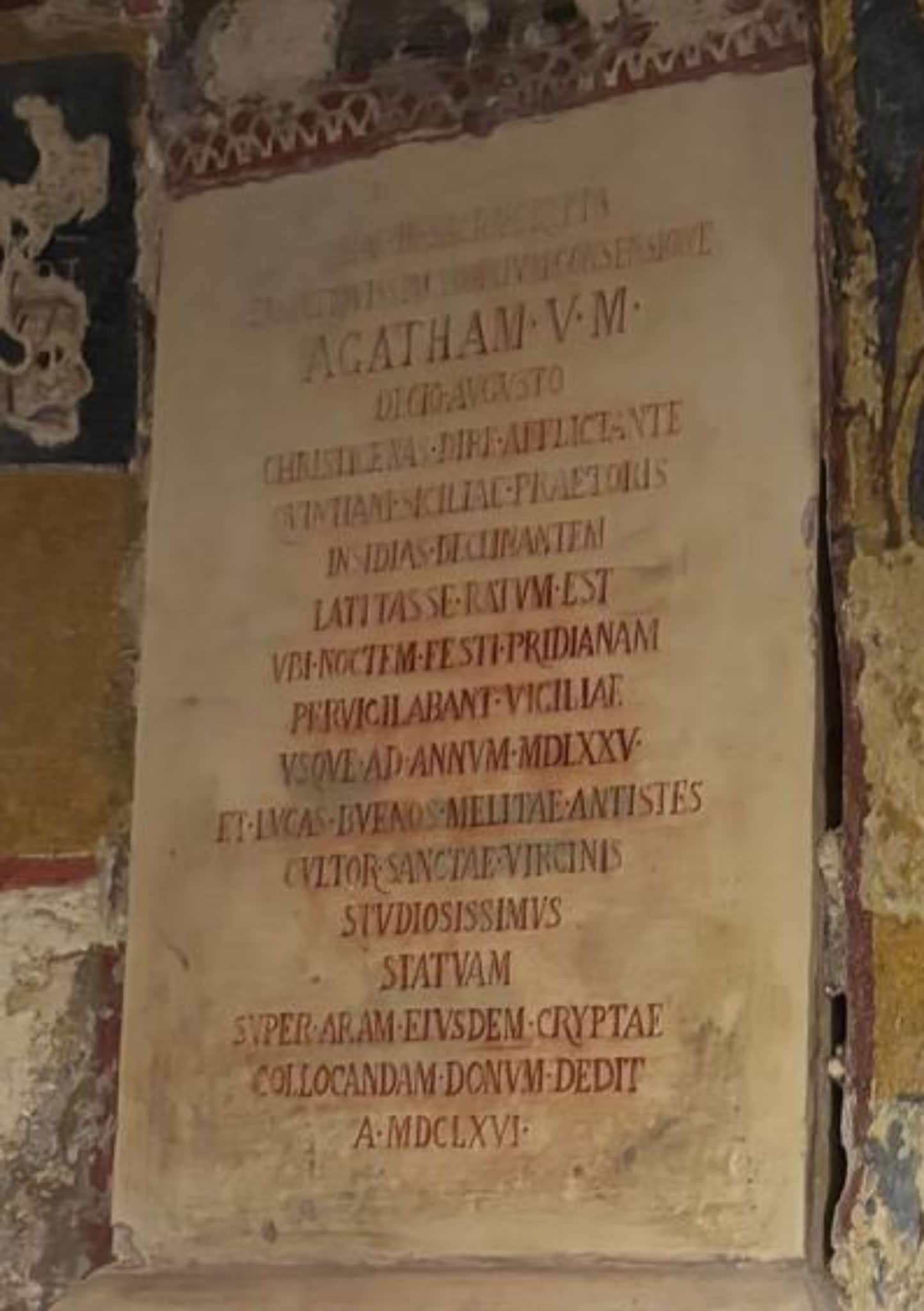
Latin Inscription
AGATHAM V.M.
DIE OCTAVO
CHRISTIANI REI APPLICANTE
QVINTIANO MALTAE PRAEFECTO
IN VDIAS DELITANTEM
LATITASSE INVENIT
VBI NOCTEM FESTI PRIDIANAM
PERVIGILABANT VIGILIAE
VSQVE AD ANNUM MDLXXV
FR. LVCAS BVENOS MELITAE ANTISTES
CVLTOR SANCTAE VIRGINIS
STVDIOSISSIMVS
STATVAM
SVPER ARAM EIVSDEM CRYPTAE
COLLOCANDAM DONVM DEDIT
A. MDCLXVI
English Translation
(He found) Agatha, Virgin and Martyr,
on the eighth day,
when Quintianus, prefect of Malta,
was pursuing the Christian cause,
hidden in the caves,
where she had concealed herself.
There, on the eve of her feast,
vigils were kept throughout the night,
down to the year 1575.
Brother Lucas Buenos, Bishop of Malta,
a most devoted promoter
of the cult of the Holy Virgin,
gave as a gift
a statue to be placed
above the altar of the same crypt,
in the year 1666.