📍 Location
Location Map Coordinates 35.842344, 14.485786
An Extensive Historical, Architectural, and Artistic Monograph of Kirkop’s Ecclesiastical Crown Jewel
WGS84 Coordinates: 35.842344 Latitude, 14.485786 Longitude.
1. Historical Origins and Ecclesiastical Evolution
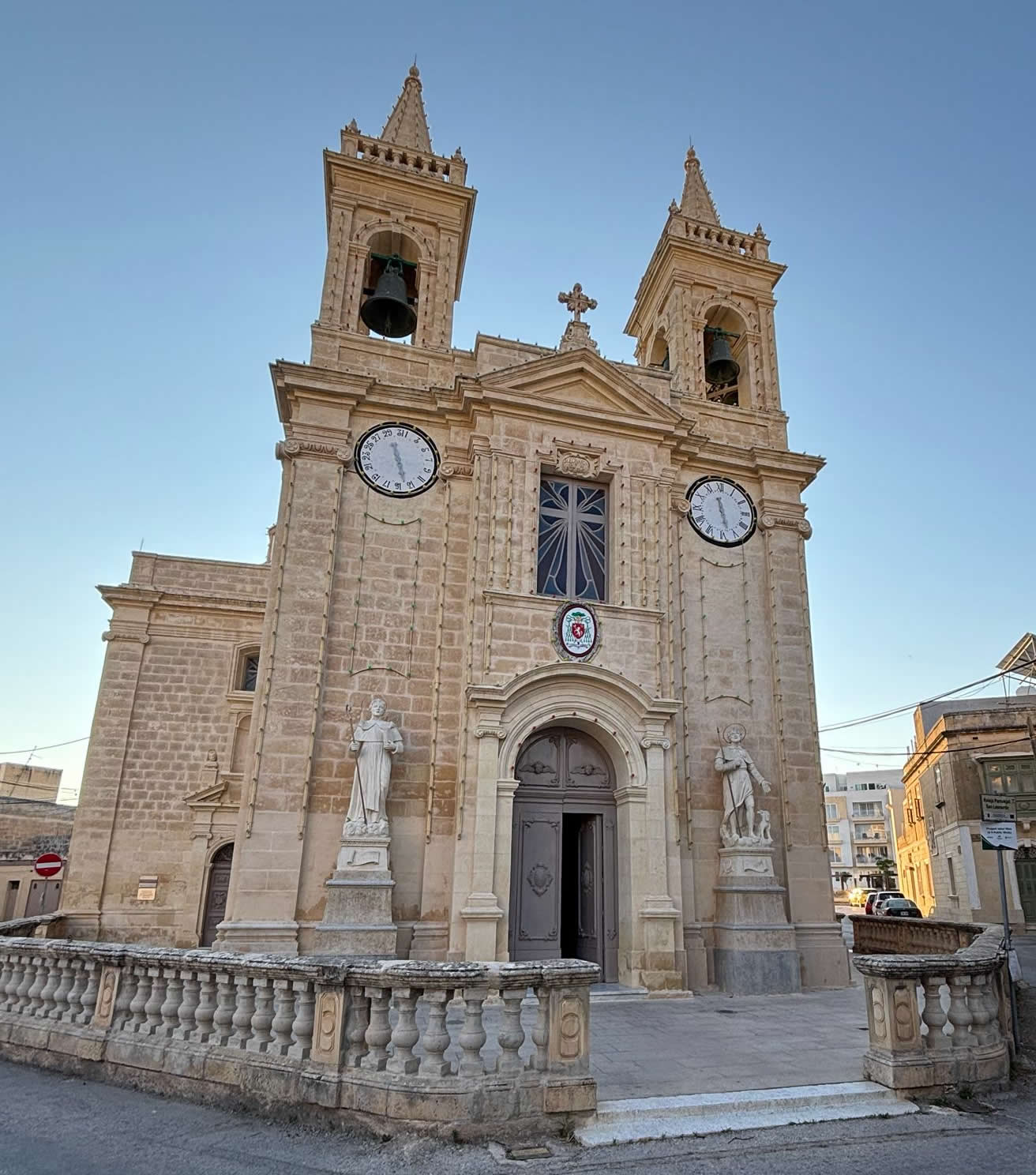
The St. Leonard's Parish Church (known in the vernacular as Il-Knisja Parrokkjali ta' San Leonardu) stands as the historic, spiritual, and communal centerpiece of the ancient village of Kirkop. Long before achieving independent parish status, the community was part of the large medieval parish boundaries of Bir Miftuħ (today part of Gudja), which administered most of the rural hamlets scattered across the southern lowlands of Malta.
The turning point for the locality arrived on May 29, 1592, when Bishop Tommaso Gargallo officially declared Kirkop an independent parish. This major administrative decision was driven by the village's steady population growth and the practical difficulties local farmers faced when trying to travel along rough rural pathways to attend mandatory Sunday services at Bir Miftuħ during the winter months.
The new parish was dedicated to Saint Leonard of Noblac (San Leonardu), a popular sixth-century Frankish saint widely revered across medieval Europe as the patron protector of political prisoners, captives, and rural families. This particular dedication points to deep historical ties dating back to the late medieval Aragonese period in Malta, long before the arrival of the Order of St. John.
2. Chronological Construction and Enlargement Timeline
The physical church building seen today is the result of multiple successive expansion campaigns that transformed a modest Renaissance country church into a grand, complex Baroque monument.
Following the 1592 declaration, the parish initially used a small, pre-existing medieval church building on the site. However, as the population grew, the community required a significantly larger house of worship. Construction on a brand-new, expanded church building commenced in the early 17th century, resulting in a single-nave church that was completed around 1620.
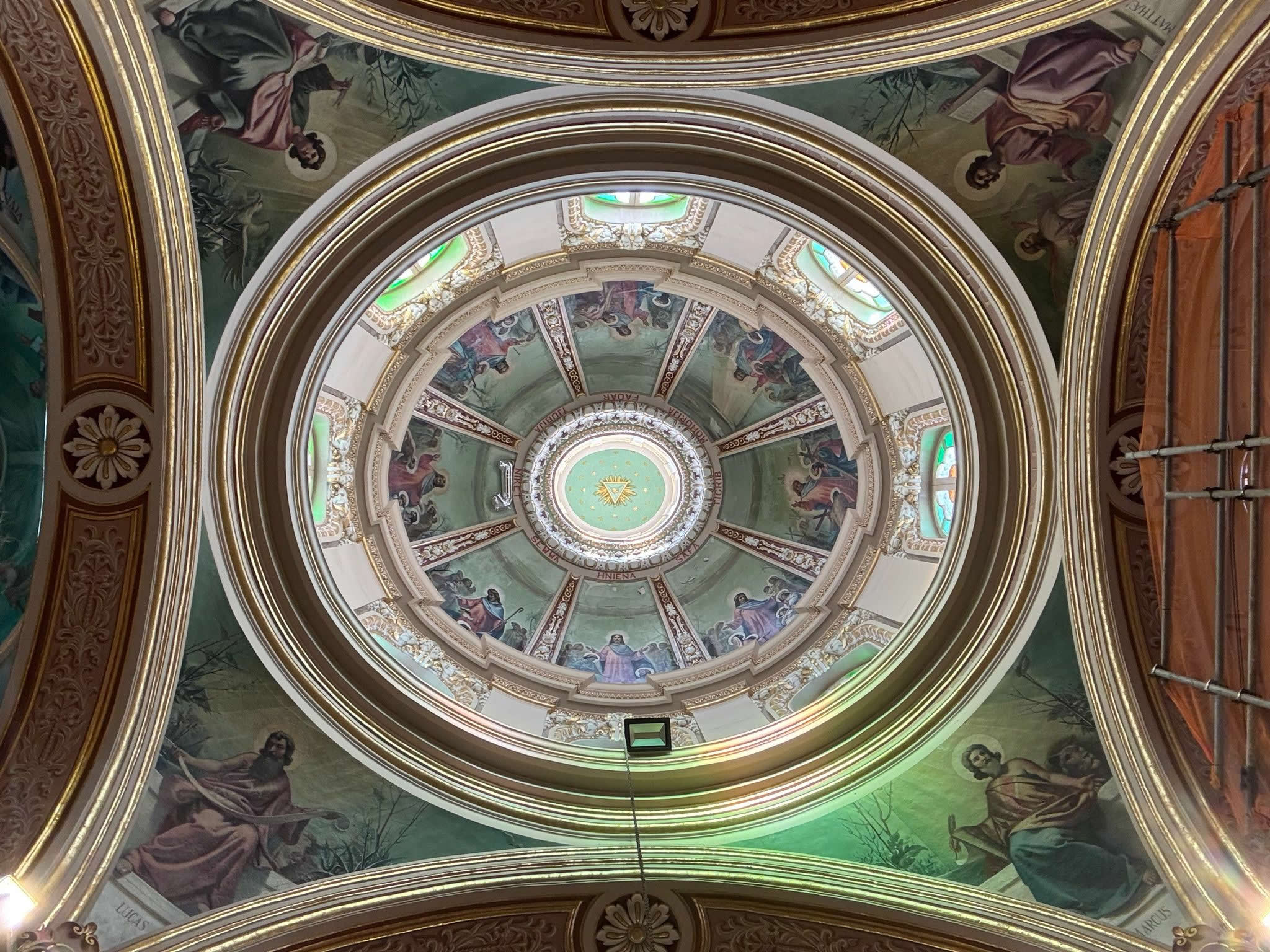
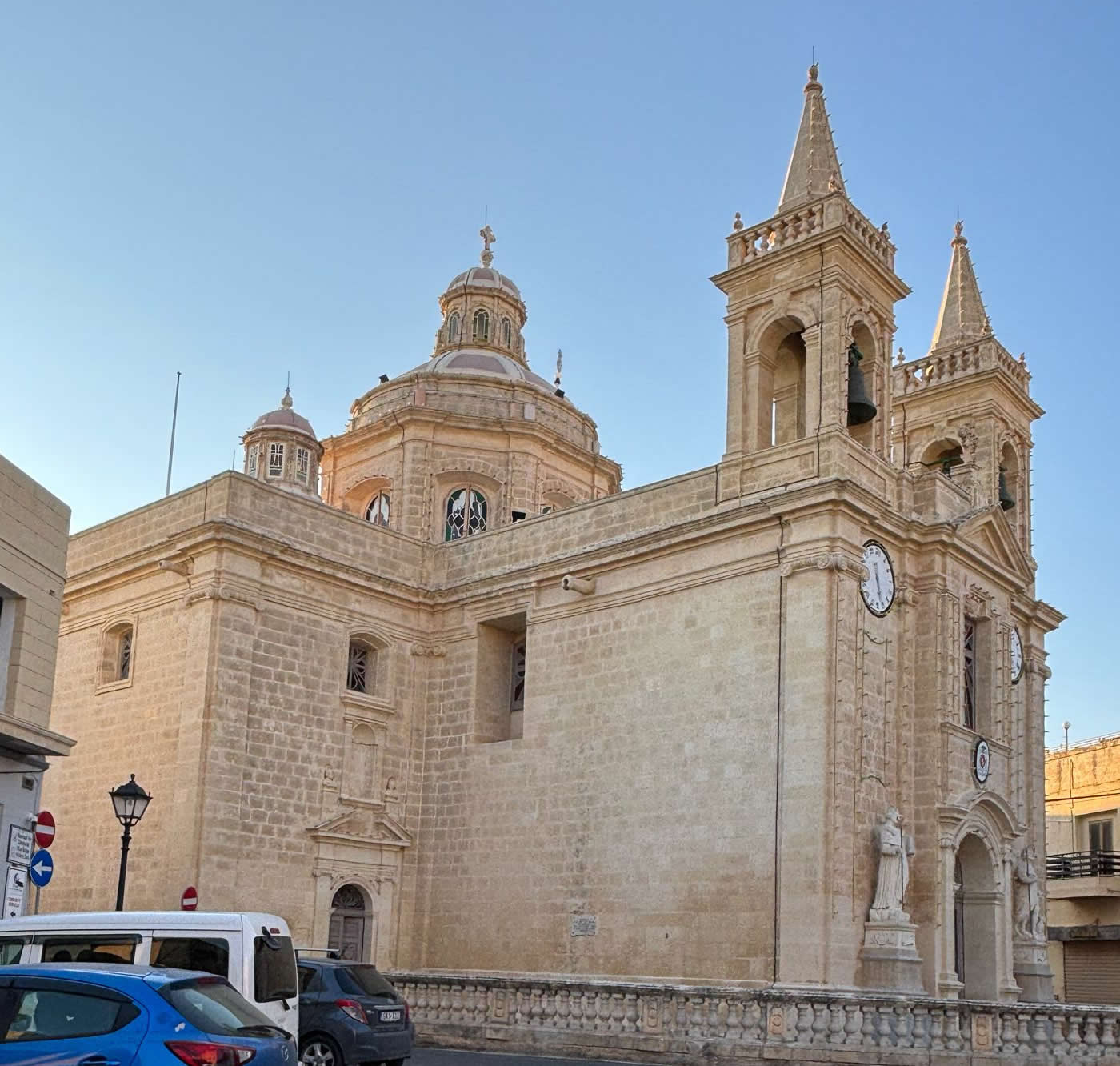
The church underwent a massive structural transformation between 1706 and 1710. During this construction phase, the church layout was expanded from its simple, single-nave footprint into a formal Latin cross design. Master masons added two prominent side transepts, an extended rear choir area, and built a dome over the central crossing point. To frame the newly expanded front plaza, workers added twin Baroque bell towers to the facade, giving the church a balanced, imposing presence in the heart of the village. This intensive building phase culminated on November 10, 1782, when Bishop Vincenzo Labini formally consecrated the church, sealing its status as a protected sacred monument.
3. Architectural Survey and Spatial Composition
Architecturally, St. Leonard's Parish Church is a textbook example of high Maltese Baroque provincial styling, showing clear layout influences from master builders working in the tradition of Lorenzo Gafà.
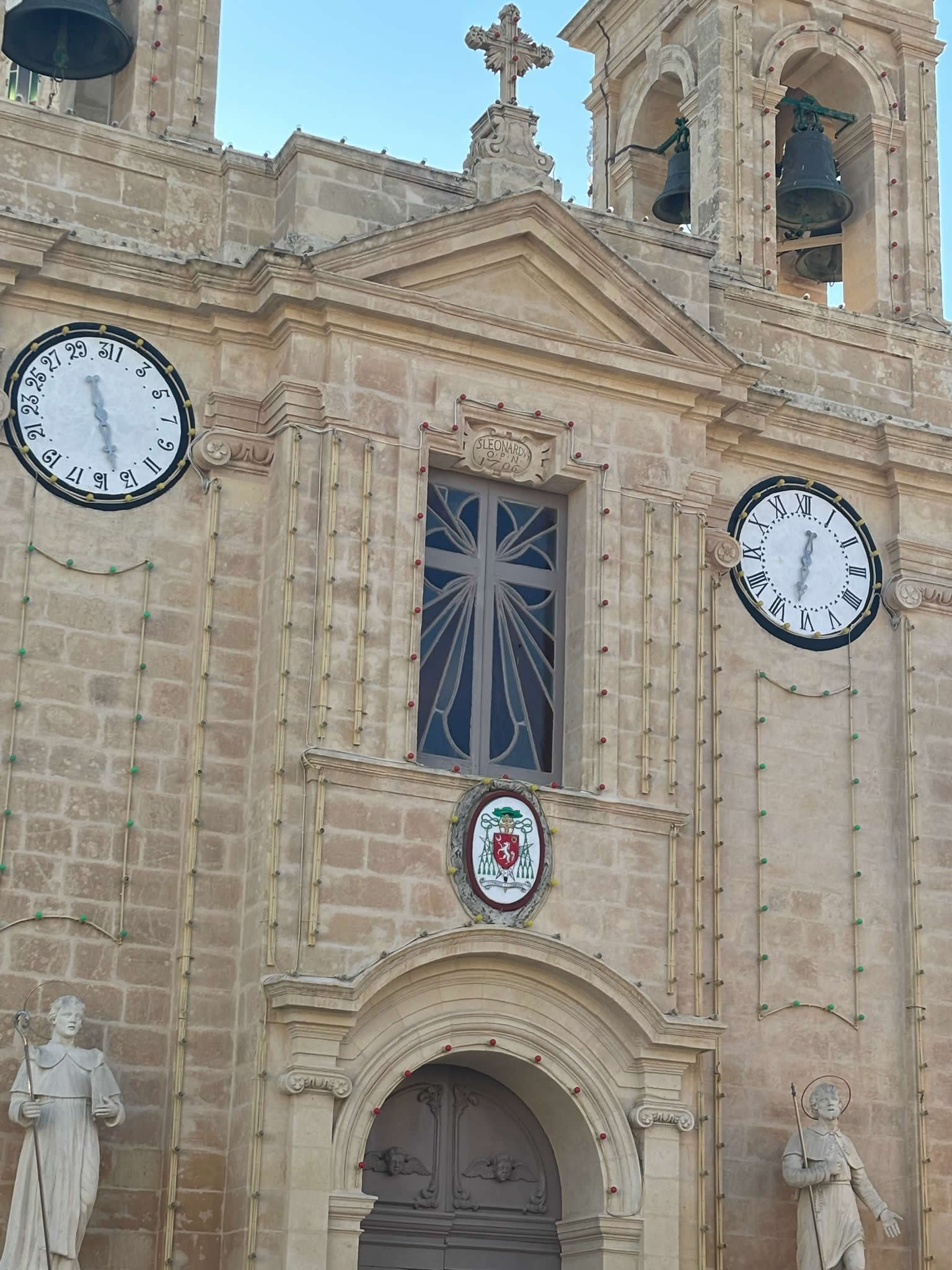
The exterior front facade is divided into two distinct levels using crisp globigerina limestone (ġebla tal-franka) masonry. The lower level is framed by stout Corinthian pilasters standing on thick stone bases, anchoring the main entrance doorway. The upper tier features more delicate pilasters that curve inward toward a central window, which is topped by an ornamental broken pediment. The entire structure is capped by twin bell towers equipped with louvered stone windows and stone spires, which house the historic parish bells used to mark liturgical feasts and daily village life.
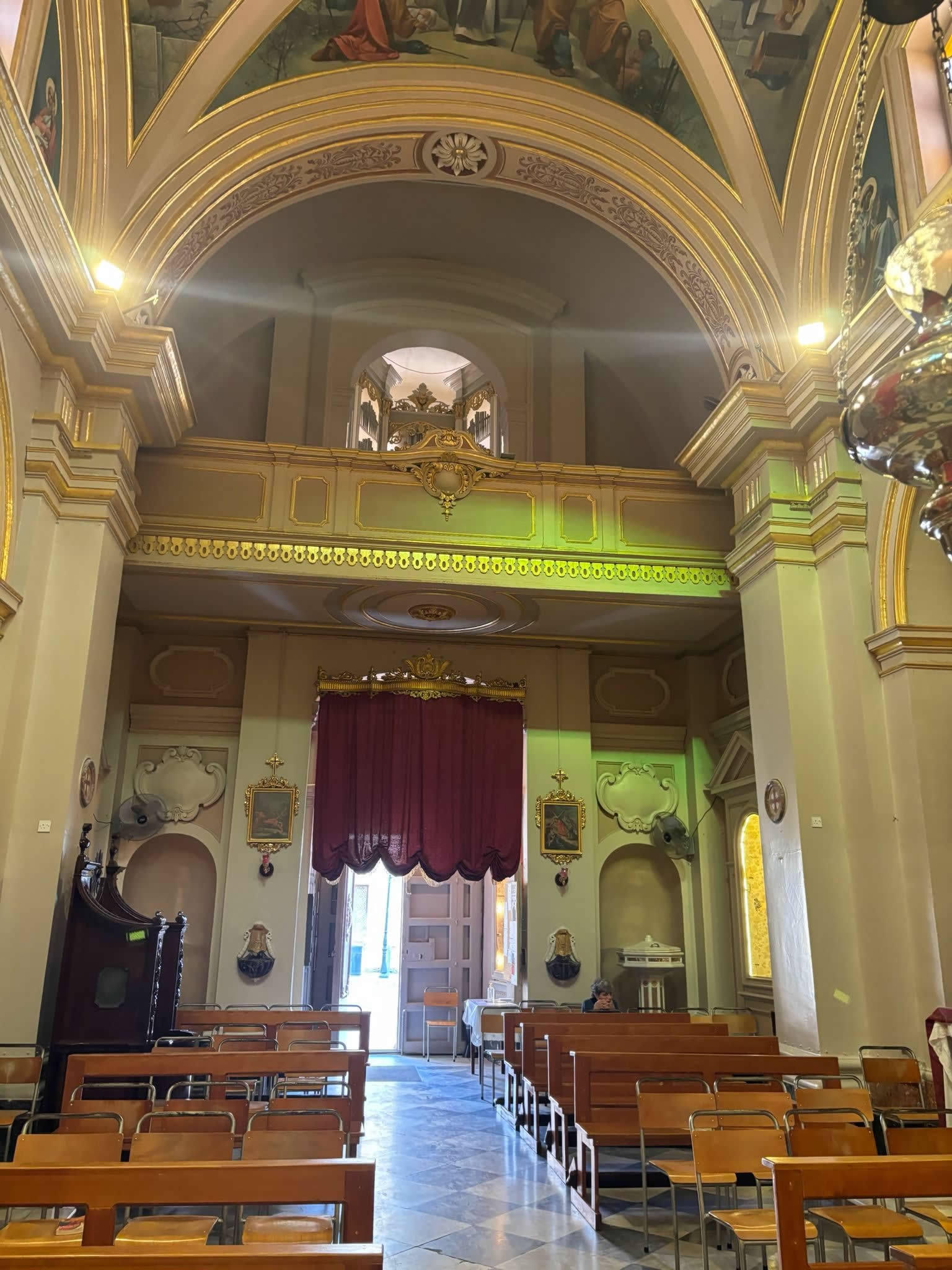
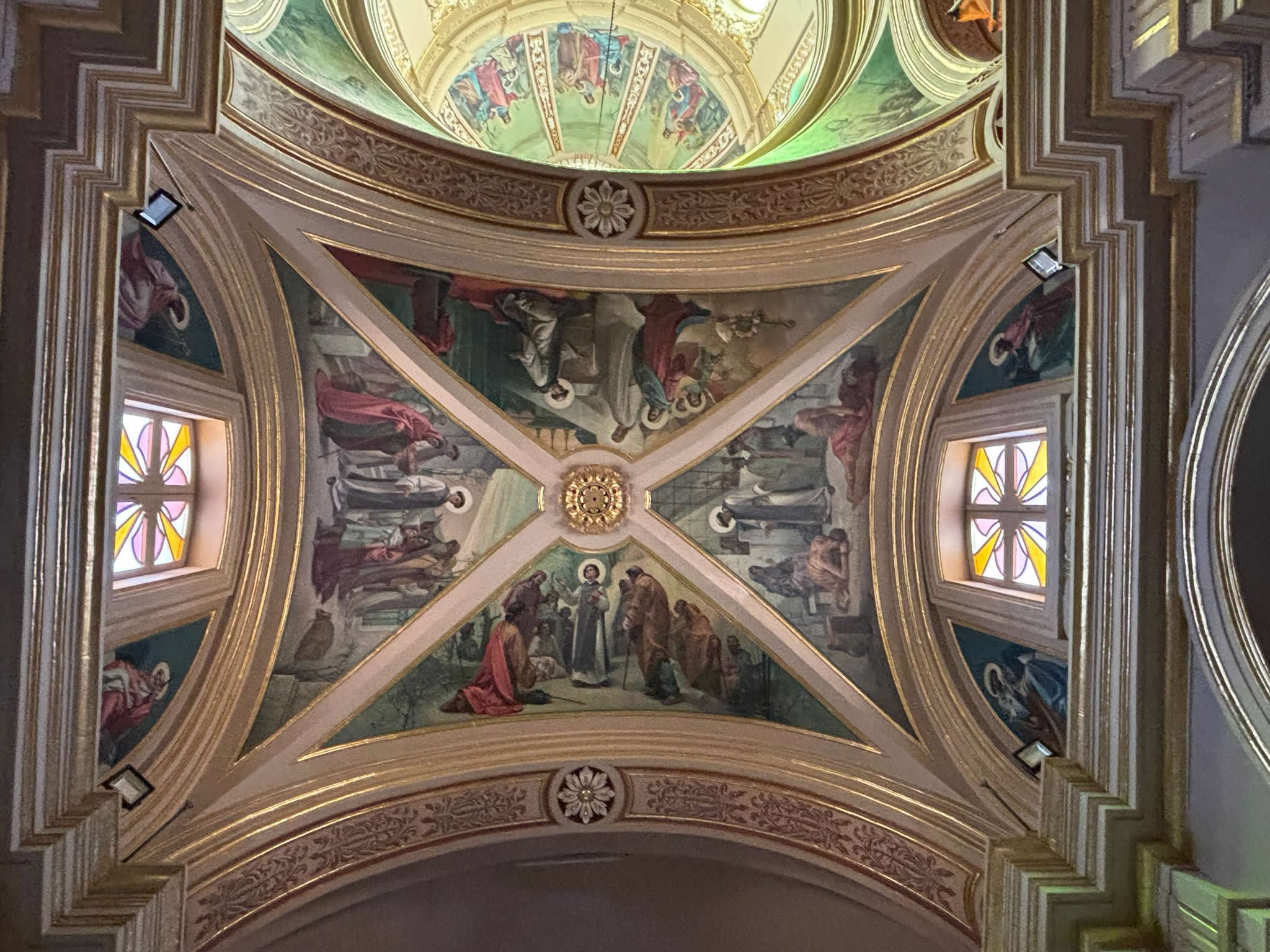
Inside, the church is organized around a grand central nave covered by a continuous stone barrel vault. This vault is reinforced by heavy transverse stone arches that transfer the massive weight of the stone roof down to thick wall piers. The intersection of the nave and transepts forms a wide, open crossing topped by a high dome sitting on an octagonal drum. This dome features a row of small windows that flood the sanctuary floor below with soft afternoon light, highlighting the intricate details of the interior decoration.
4. Liturgical Treasures, Statues, and Fine Arts
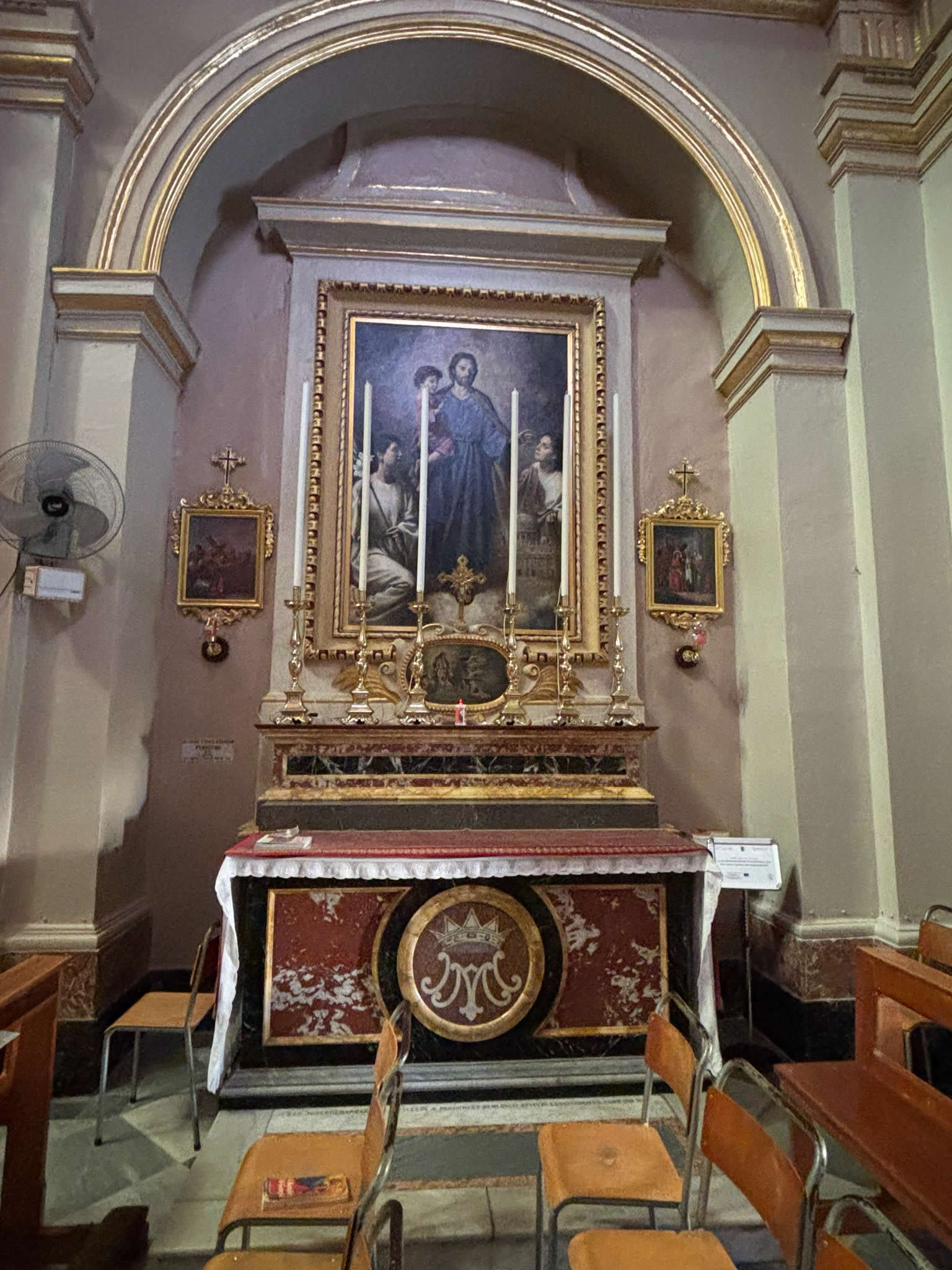
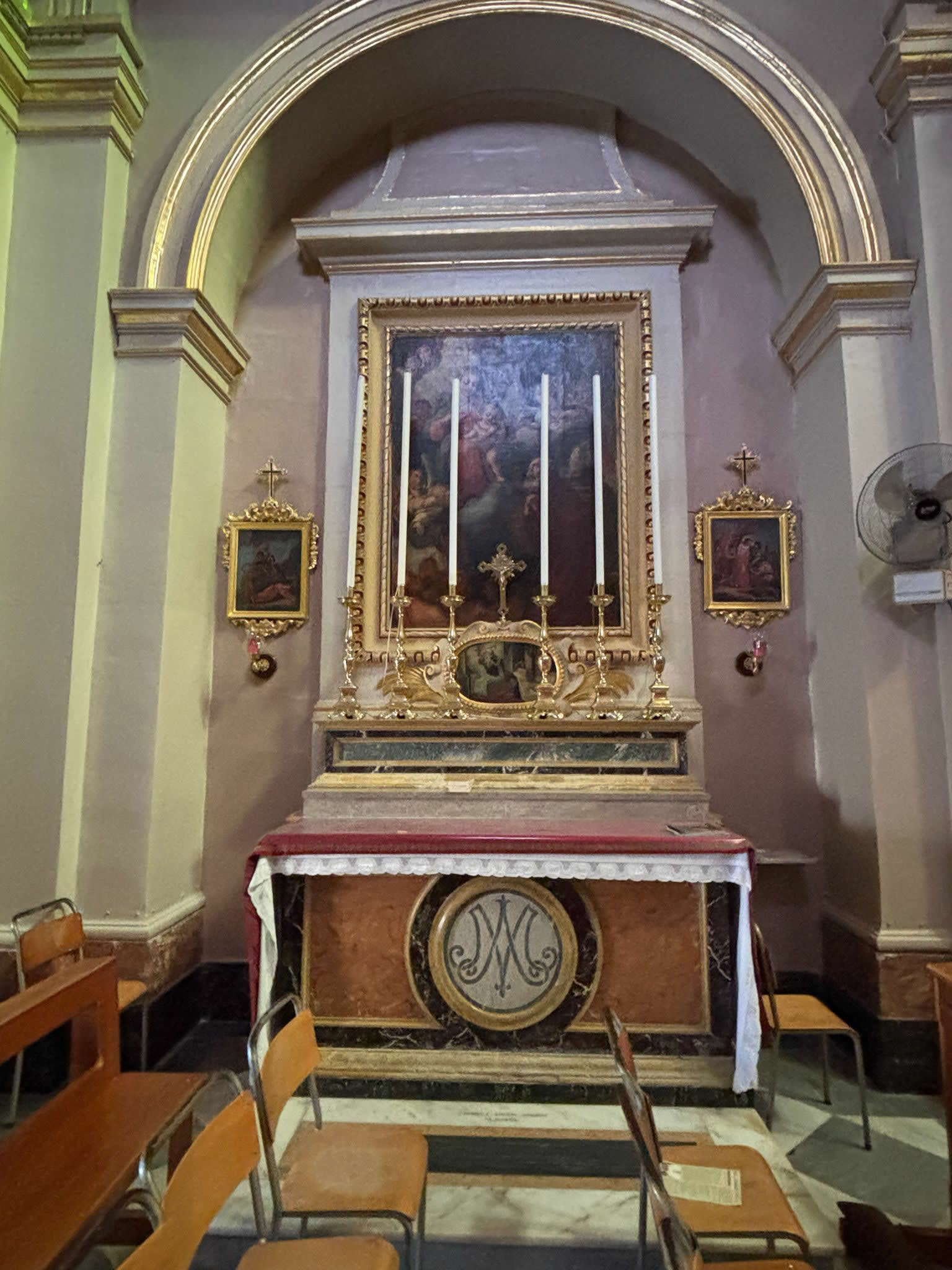
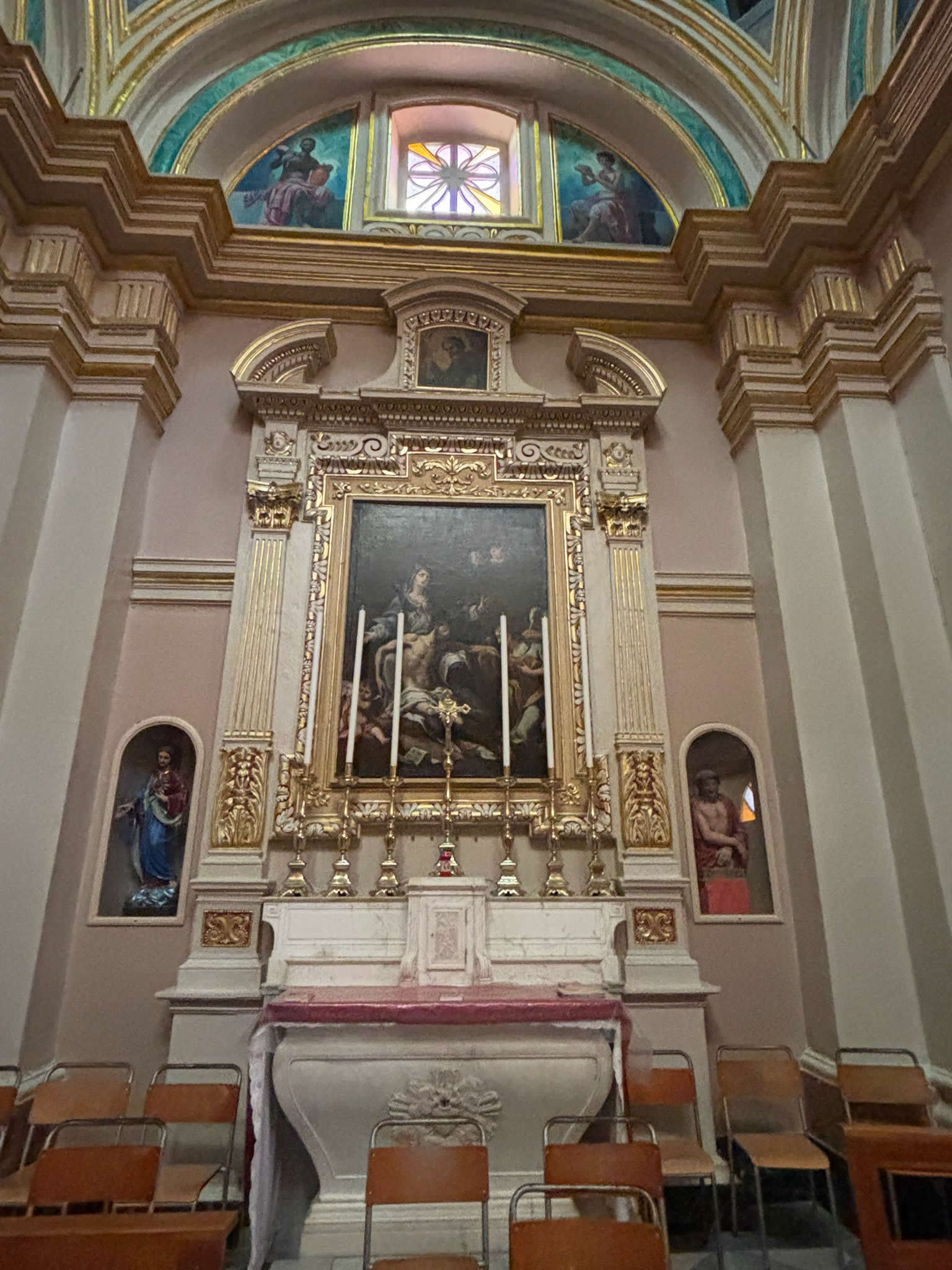
The interior of St. Leonard's is packed with rich ecclesiastical art, showing the deep historical devotion and generosity of Kirkop’s traditional families over the centuries.
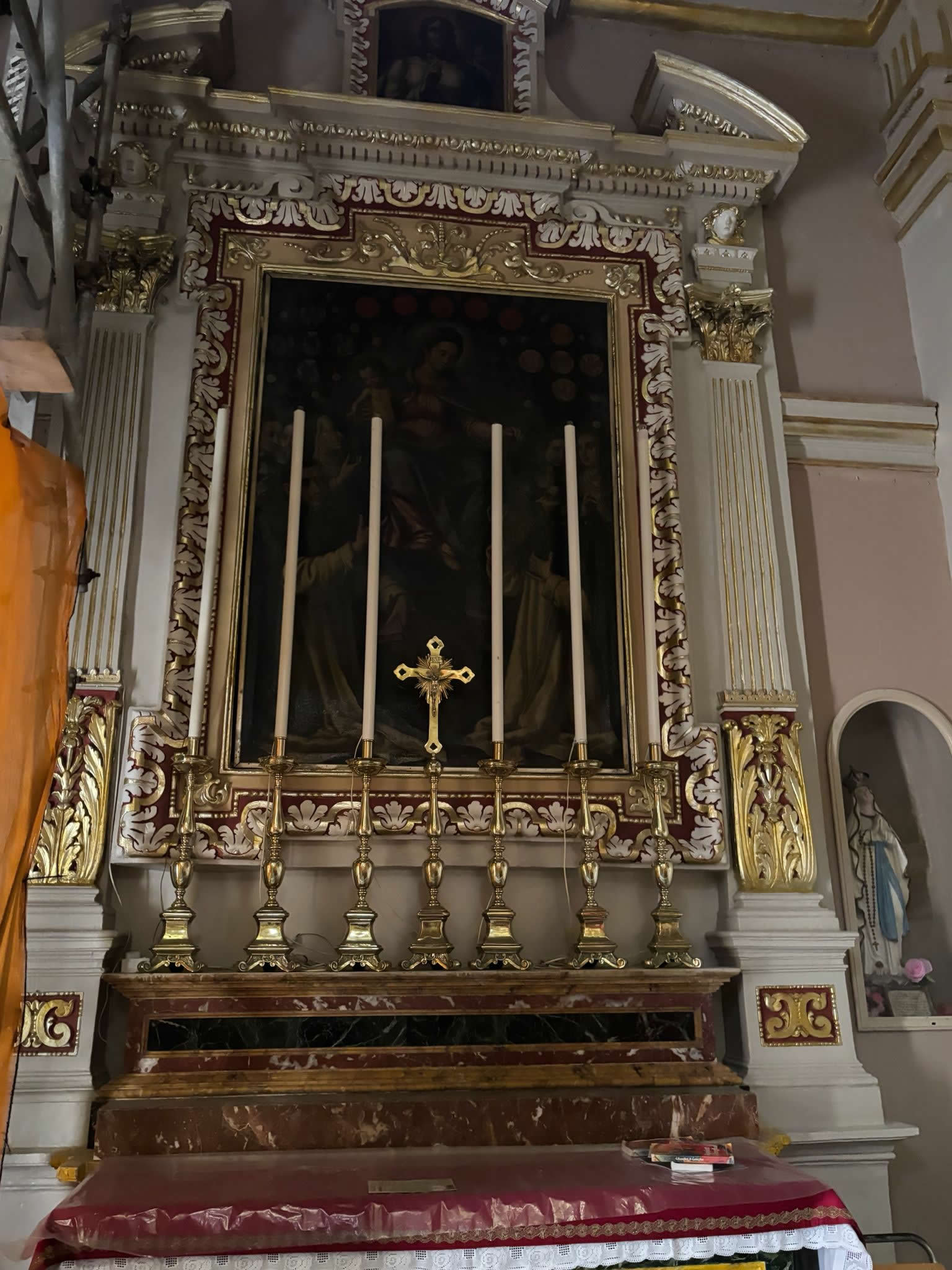
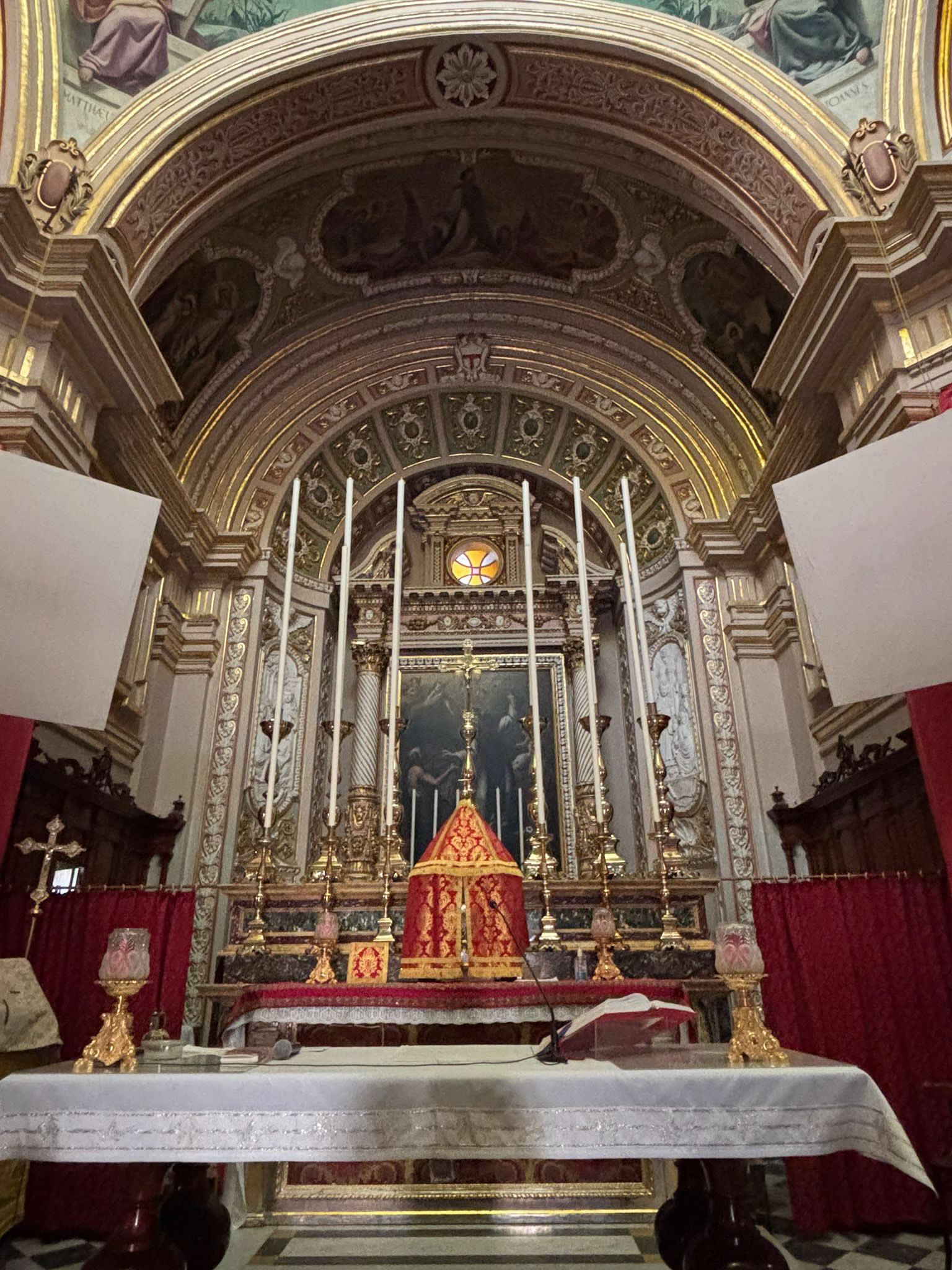
The artistic centerpiece of the church is its grand titular altarpiece painting, prominently framed in carved stone directly above the main high altar. This large oil-on-canvas masterpiece, painted by an anonymous late 17th-century artist, depicts Saint Leonard in the vestments of a monk, holding broken iron chains—a symbol of his divine power to liberate Christian prisoners from captivity. The composition is rounded out by figures of the Virgin Mary, infant angels, and early Christian martyrs, serving as a powerful visual aid for the congregation.
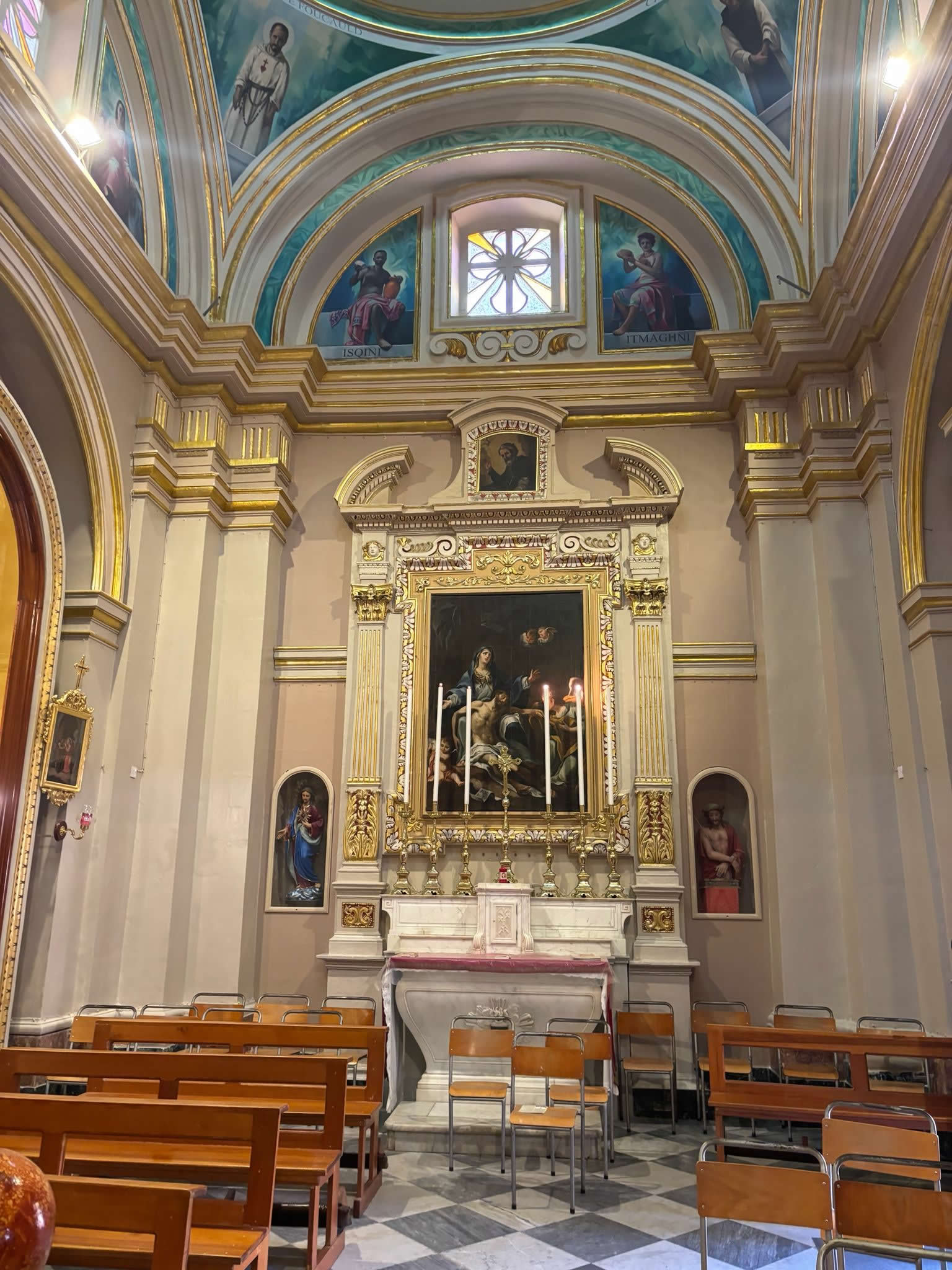
The church's most treasured processional piece is the life-sized titular statue of Saint Leonard. This masterful wooden sculpture was carved by the world-famous Maltese Baroque sculptor Melchiorre Gafà (the exceptionally talented brother of architect Lorenzo Gafà). Carved during the mid-17th century, the statue shows Saint Leonard holding a book of the Gospels and iron shackles, displaying the lifelike drapery and emotional depth characteristic of Gafà's finest Roman Baroque style.
Other notable side altars house important regional artworks, including a dramatic painting of the *Ananias and Sapphira* event and an expressive canvas dedicated to Our Lady of the Rosary, which is attributed to the circle of the renowned Maltese artist Rocco Buhagiar.
5. Modern Restoration Campaigns and Contemporary Use
Exposure to environmental pollution, traffic vibrations from the nearby airport corridor, and natural rising damp took a toll on the church's delicate globigerina limestone over the years. By the early 2000s, parts of the exterior facade were showing signs of severe stone erosion, and soot buildup was beginning to obscure the fine detail of the upper stone carvings.
To preserve the building for future generations, the Restoration Directorate, working in close partnership with the Kirkop Parish Committee and regional heritage volunteers, launched an extensive, multi-year conservation campaign. Expert restorers utilized non-invasive techniques to clean the stone, removing decades of black crust from the facade without scratching the underlying historic masonry. Workers carefully scraped out old, brittle cement patches from the joints and replaced them with flexible, traditional lime mortars that allow the stone to breathe naturally. They also replaced structurally unstable stone blocks with fresh limestone pieces hand-carved to match the original architecture, and installed modern waterproof barriers to protect the lower walls from rising damp.
Today, St. Leonard's Parish Church remains a fully active house of worship and the vibrant cultural core of Kirkop. The building opens daily for morning and evening masses, serves as the main venue for community concerts and events, and functions as the focal point for the annual village feast celebrated every August, standing as a pristine monument to Malta's living religious heritage.
6. Technical Monument Profile Matrix
The table below organizes the verified factual data and architectural history of the Kirkop Parish Church:
| Technical Survey Parameter | Field Inventory Reference Data |
|---|---|
| Official Nomenclature | St. Leonard's Parish Church (San Leonardu) |
| WGS84 Coordinate Grid | 35.842344 Latitude, 14.485786 Longitude |
| Parish Foundation Date | May 29, 1592 (Separated from Bir Miftuħ) |
| Consecration Date | November 10, 1782, by Bishop Vincenzo Labini |
| Architectural Form | Latin Cross with Transepts, Choir, Dome, and Twin Bell Towers |
| Primary Building Material | Maltese Globigerina Limestone (Ġebla tal-Franka) |
| Titular Statue Sculptor | Melchiorre Gafà (Mid-17th Century, Wood) |
| Primary Liturgical Feast | Feast of Saint Leonard (Celebrated annually in August / November) |
| Current Protection Status | Listed National Monument / Grade 1 Protected Heritage Status |
To see how St. Leonard's Parish Church fits into the broader network of historic houses of worship across the Maltese islands, view our complete inventory on the Maltese Churches Master Directory Matrix.
7. Frequently Asked Questions (FAQ)
❓ Why is the Kirkop Parish Church dedicated to Saint Leonard?
The dedication dates back to deep historical roots in the late medieval Aragonese period, when Saint Leonard of Noblac was widely invoked across rural Malta as the patron protector of captives and farming families.
❓ What makes the titular statue of Saint Leonard unique?
The lifelike processional statue was carved out of wood by the world-renowned Maltese Baroque sculptor Melchiorre Gafà, making it one of the most historically significant pieces of 17th-century art in the region.
❓ When was the church expanded into its current Latin cross layout?
The major structural expansion took place between 1706 and 1710, adding the side transepts, rear choir area, central dome, and the distinctive twin bell towers on the front facade.
❓ Is the church open to the public for visits?
Yes, St. Leonard's is an active parish church that opens daily for religious services. Visitors are welcome to respectfully explore the architecture and historical artworks outside of scheduled mass times.