📍 Location
Location Map Coordinates 35.891001, 14.409953
A historic Commonwealth military cemetery preserving the memory of British servicemen, wartime casualties, and military families connected with Malta’s strategic role during the First and Second World Wars.
Introduction
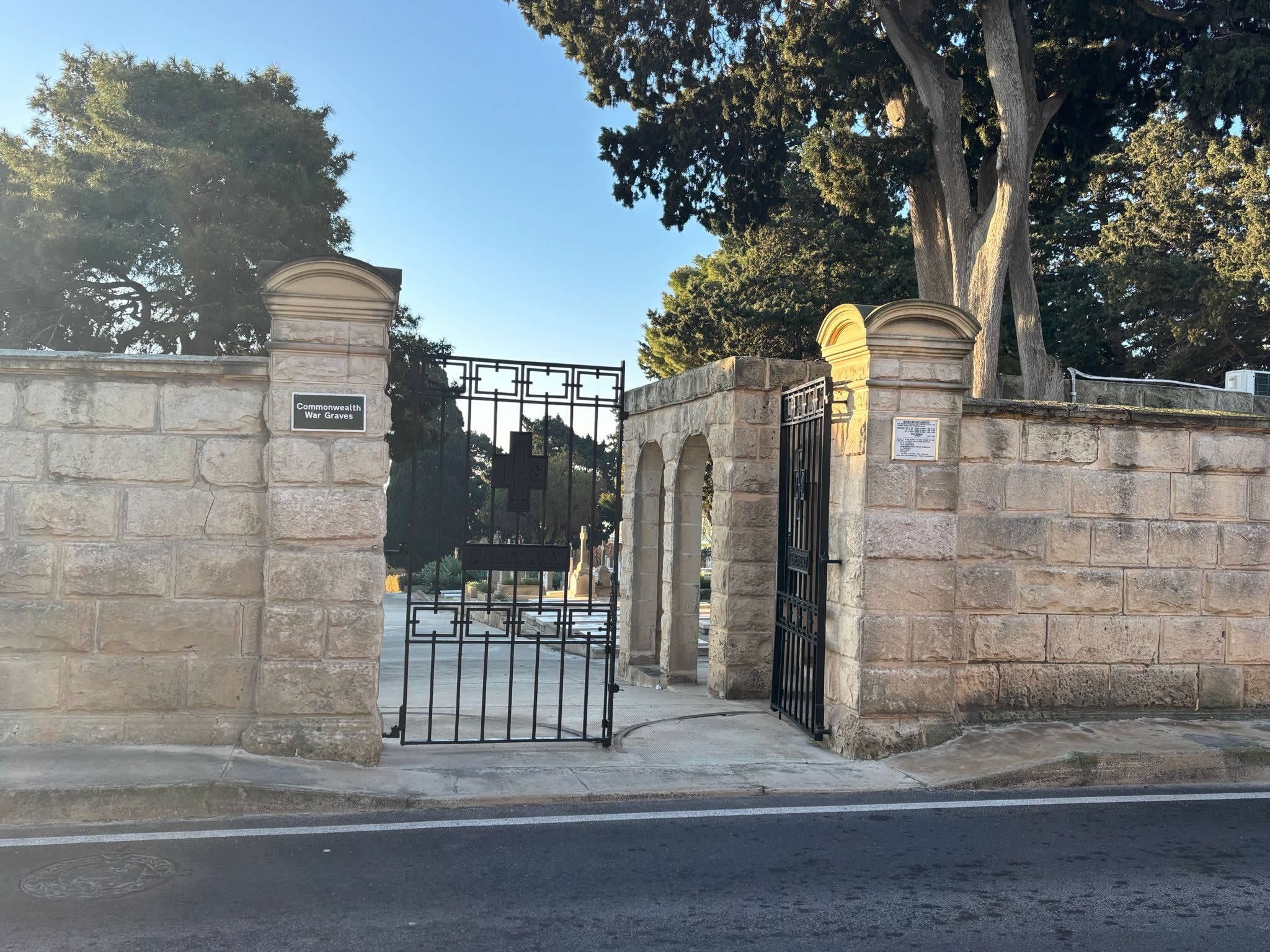
Imtarfa Military Cemetery is one of Malta’s most important historic military burial grounds and an important site of remembrance connected with the British military presence on the island. Located near Mdina and Rabat in the locality of Imtarfa, the cemetery preserves the graves of Commonwealth servicemen, military families, civilians connected with the armed forces, and wartime casualties from both the First and Second World Wars.
Although less widely known than Pietà Military Cemetery or Capuccini Naval Cemetery, Imtarfa Military Cemetery occupies a highly significant place within Malta’s military heritage landscape. The cemetery reflects Malta’s role as a major British fortress colony, military hospital centre, and strategic base in the Mediterranean throughout the 19th and 20th centuries.
Today the cemetery remains under the care of the Commonwealth War Graves Commission (CWGC) and preserves over 1,400 interments and commemorations, including 253 Commonwealth war graves.
Location and Setting
Imtarfa Military Cemetery is situated in Imtarfa, Malta, at coordinates 35.891001, 14.409953, close to Triq Buqana and the former British military barracks area of Mtarfa.
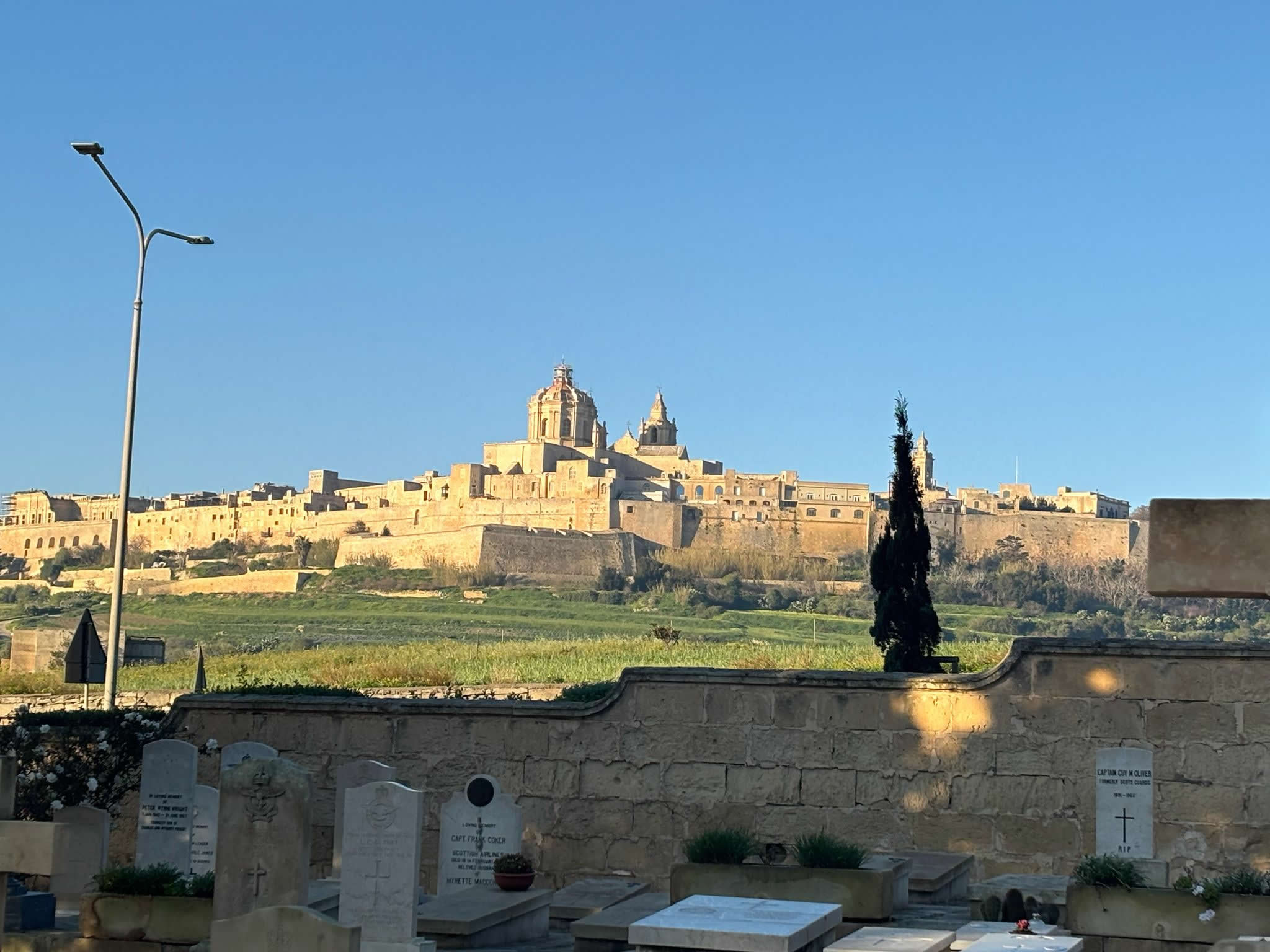
The cemetery lies on elevated terrain overlooking the countryside surrounding Mdina and Rabat. Unlike the dense harbour-region military cemeteries linked to the Royal Navy and dockyards, Imtarfa’s setting reflects its connection to the British Army, inland barracks, and military medical facilities established in central Malta.
The peaceful rural surroundings give the cemetery a quieter and more secluded character compared with Malta’s coastal war cemeteries. Mature trees, limestone walls, landscaped pathways, and rows of Commonwealth headstones create a solemn atmosphere dedicated to remembrance and reflection.
Its position near the former military hospital and barracks complex made the cemetery especially suitable for the burial of servicemen stationed in central Malta.
Origins of the Cemetery
The origins of Imtarfa Military Cemetery date to the late 19th century during the expansion of British military infrastructure in Malta. The nearby Mtarfa Barracks and military hospital formed part of Britain’s extensive military network on the islands.
Malta had become one of the British Empire’s most strategically important Mediterranean possessions following the establishment of British rule in the early 19th century. Large numbers of British Army personnel were stationed on the island, requiring dedicated hospitals, barracks, and burial grounds.
Imtarfa developed into an important military zone associated primarily with the British Army rather than the Royal Navy. The cemetery was established to serve military personnel stationed in the surrounding barracks and medical facilities.
The cemetery gradually expanded over the decades and eventually included both war graves and non-war military burials, together with graves belonging to the families of servicemen stationed in Malta.
British Military Presence in Malta
During the Victorian and Edwardian periods Malta served as a major imperial fortress colony protecting Britain’s Mediterranean trade routes and naval interests.
The British military developed extensive infrastructure across the islands, including:
- fortifications and coastal batteries,
- naval dockyards,
- army barracks,
- military hospitals,
- ammunition depots,
- and training facilities.
Imtarfa became closely connected with army operations and military medical services. Soldiers stationed at nearby barracks, together with their families, formed a substantial British military community in the area.
The cemetery therefore reflects the daily life of Malta’s garrison society, preserving not only military graves but also the burial places of wives, children, and dependants connected with British servicemen.
First World War Burials
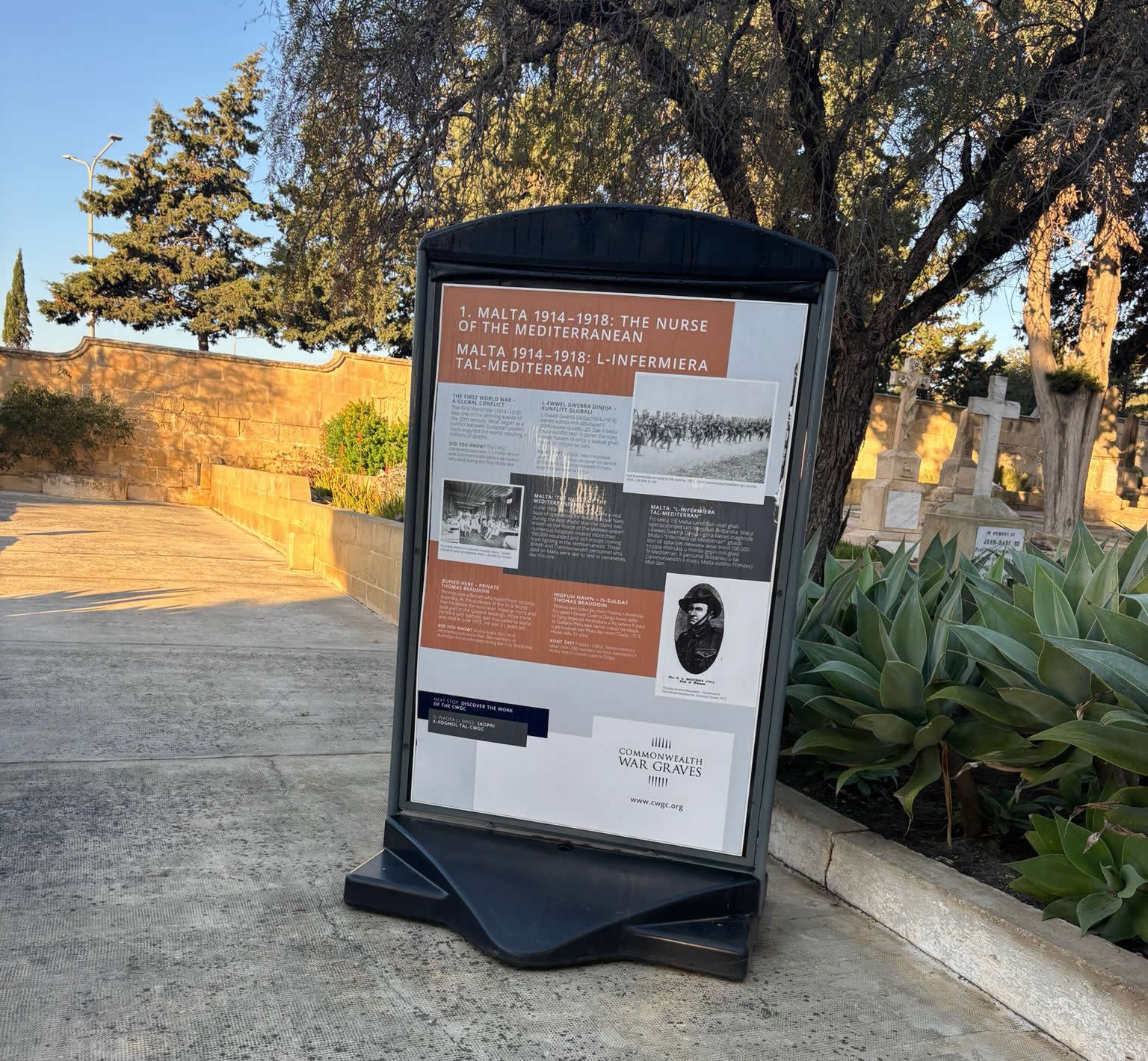
During the First World War Malta became internationally known as the “Nurse of the Mediterranean” because of the enormous number of wounded and sick servicemen treated in Maltese hospitals. From 1915 onward, casualties from Gallipoli, Salonika, and other Mediterranean campaigns were transported to Malta for medical treatment.
Military hospitals and convalescent centres across Malta and Gozo dealt with more than 135,000 wounded or sick servicemen during the war.
Many soldiers unfortunately died from wounds, disease, or complications after arrival in Malta. Imtarfa Military Cemetery received a number of these wartime burials, particularly those associated with nearby military medical facilities.
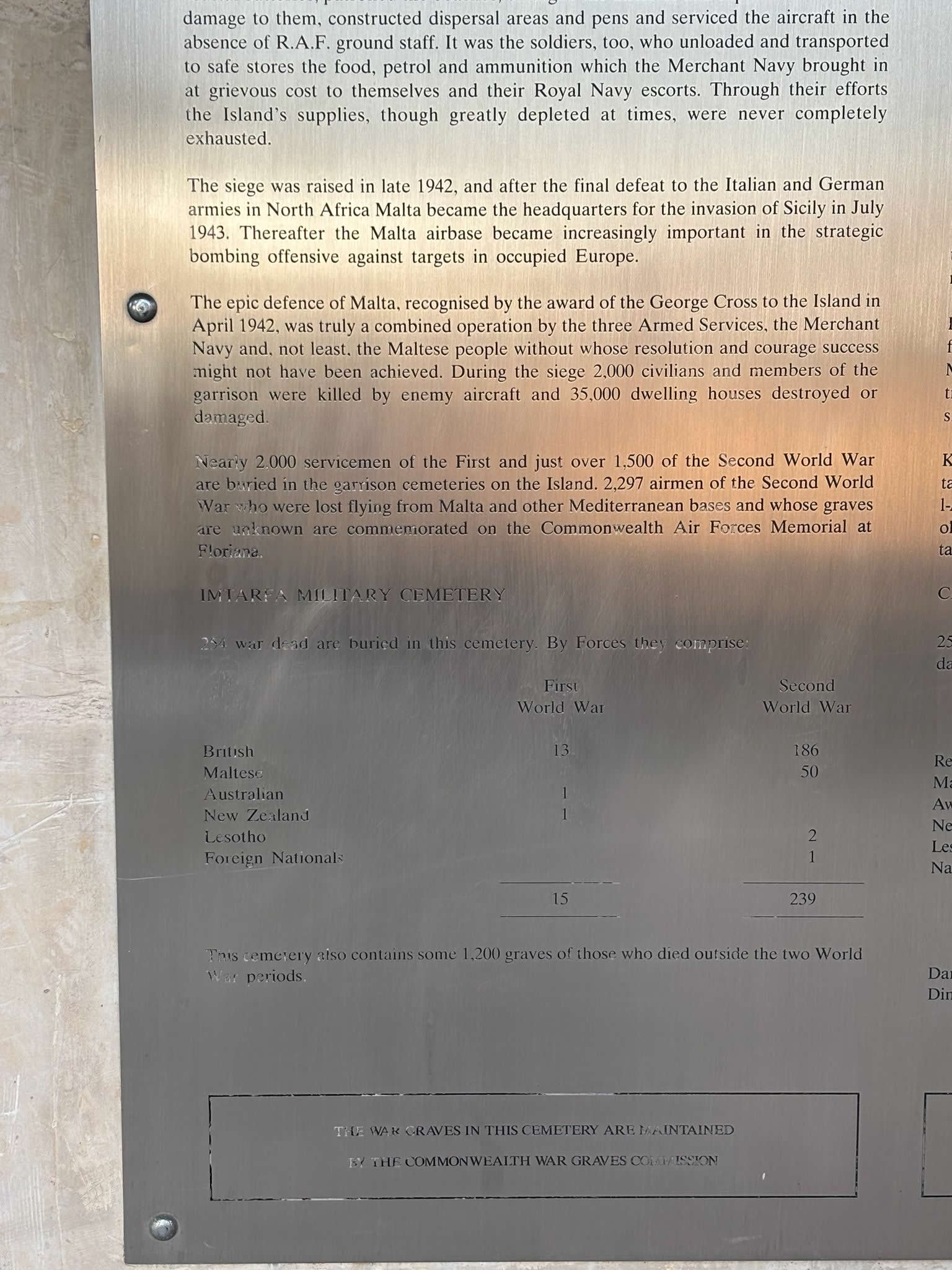
The cemetery contains 15 Commonwealth burials from the First World War.
Although smaller than Pietà Military Cemetery in terms of First World War burials, Imtarfa remains historically important because it reflects the wider military medical network operating in Malta during the conflict.
Second World War and the Siege of Malta
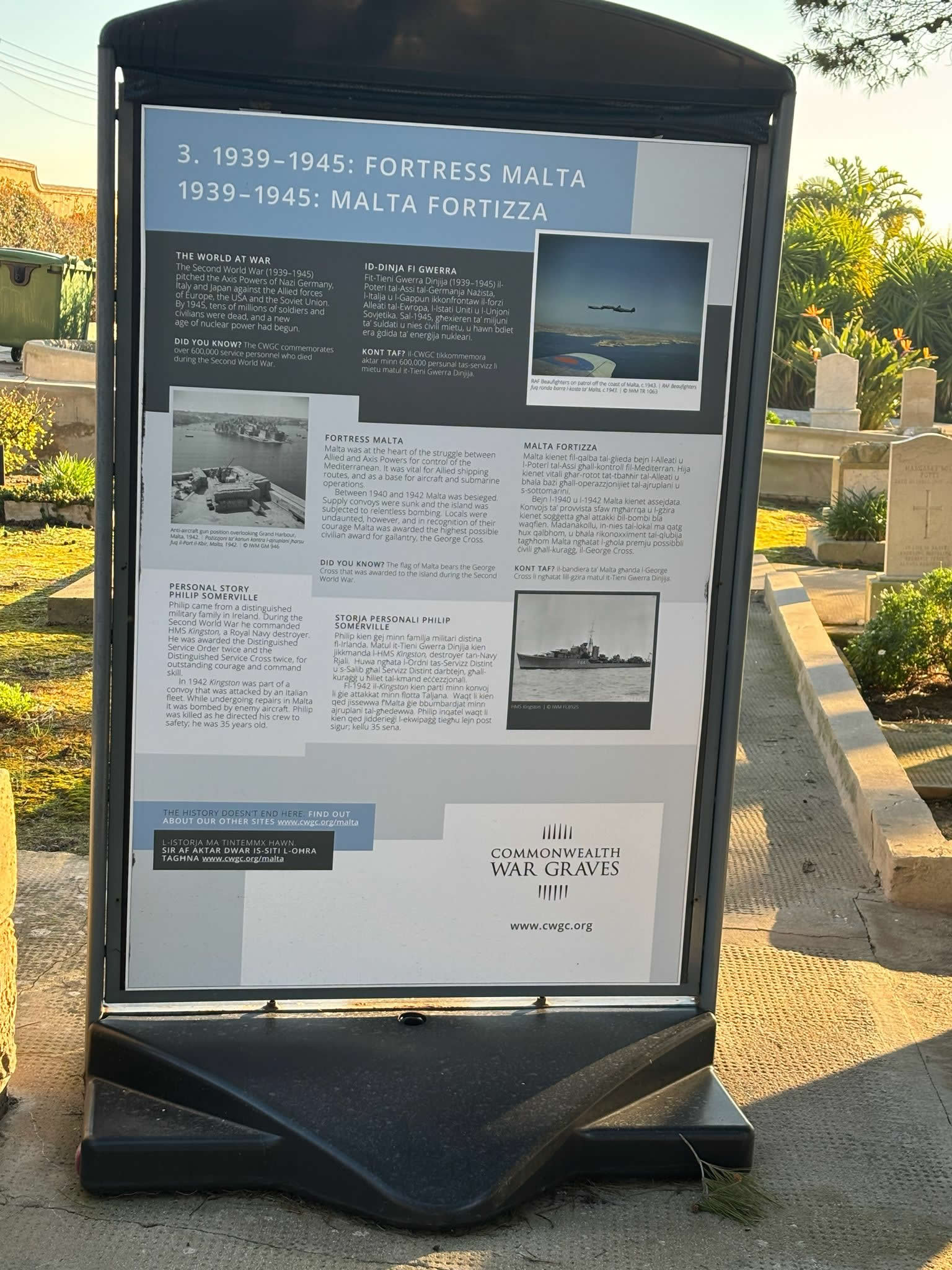
The Second World War transformed Malta into one of the most heavily bombed places on earth. Between 1940 and 1942 the islands endured continuous aerial bombardment and naval blockade during the Siege of Malta.
The British military installations around Mtarfa and Rabat formed part of the defensive network protecting the island. Nearby airfields, barracks, and military facilities became potential targets during Axis attacks.
Imtarfa Military Cemetery contains 238 Commonwealth burials from the Second World War.
Many graves belong to servicemen connected with Malta’s wartime defence, including army personnel, RAF servicemen, and military staff stationed on the island during the siege years.
Historical records also indicate that some Commonwealth War Graves Commission headstones suffered damage from nearby bombing during the war.
The cemetery therefore preserves important evidence relating to Malta’s wartime experience and the dangers faced by military personnel stationed on the island.
Non-War Graves and Military Families
One of the most distinctive features of Imtarfa Military Cemetery is the large number of non-war burials contained within the cemetery grounds.
The Commonwealth War Graves Commission cares for approximately 1,203 non-war graves at the site.
These burials include:
- family members of servicemen,
- children of military personnel,
- civilian dependants,
- retired military staff,
- and peacetime military burials.
Some graves belong to infants and young children born to military families stationed in Malta, providing a poignant reminder that military communities included entire families rather than only serving personnel.
These civilian and family graves make Imtarfa Military Cemetery particularly important for understanding the social history of Malta’s British garrison community during the colonial period.
Architecture and Layout
Imtarfa Military Cemetery reflects the orderly design principles commonly associated with British military cemeteries of the late 19th and early 20th centuries.
The cemetery is enclosed by traditional Maltese limestone walls and organised into carefully arranged grave plots separated by pathways and landscaped areas.
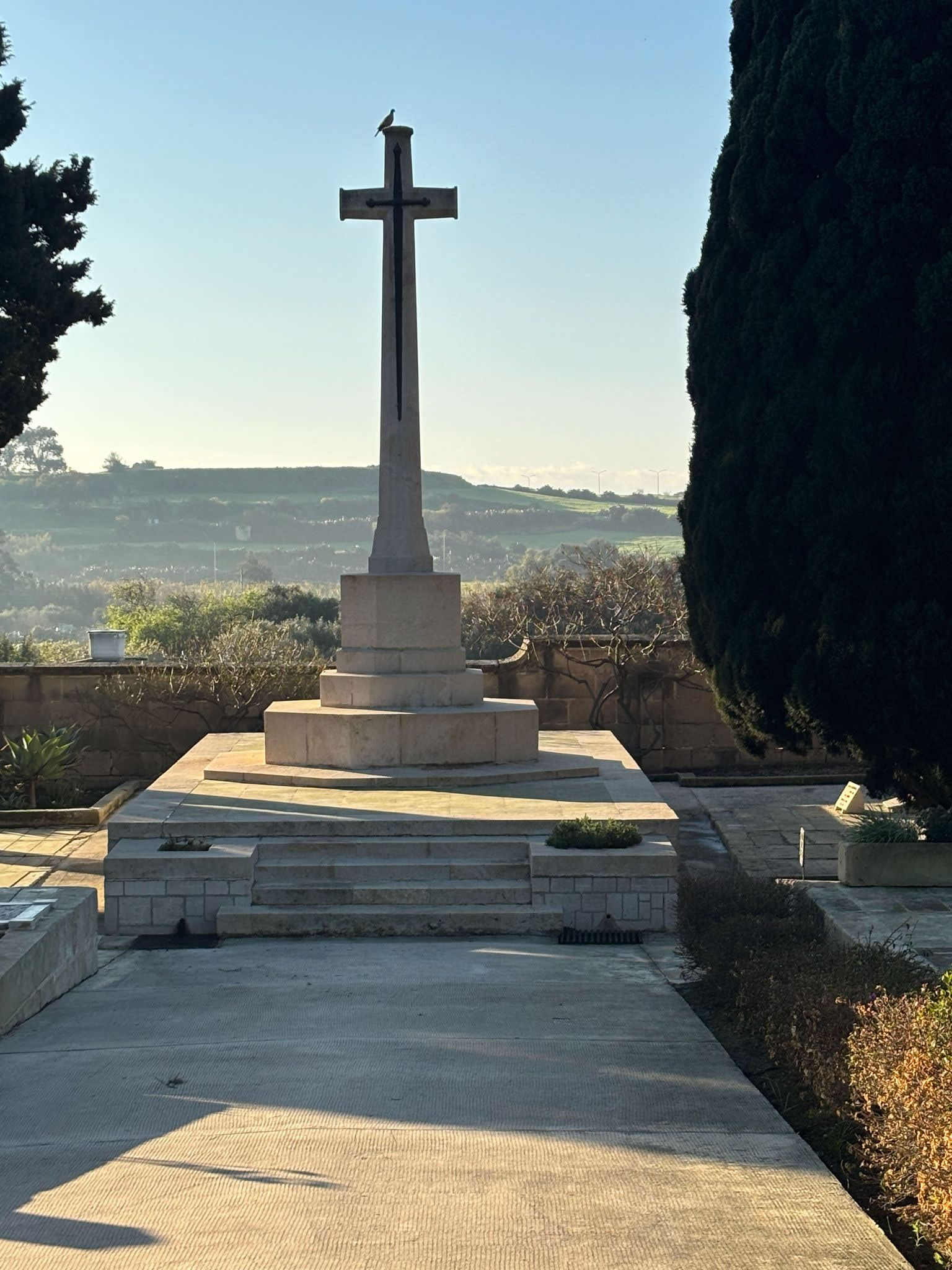
Rows of Commonwealth War Graves Commission headstones create a dignified and uniform appearance reflecting military ideals of equality in death regardless of rank or social background.
The cemetery’s rural setting contributes greatly to its atmosphere. Mature trees, shrubs, and landscaped lawns soften the otherwise formal military layout and create one of Malta’s most peaceful military memorial landscapes.
Unlike the larger harbour cemeteries connected with naval activity, Imtarfa’s architecture and setting emphasise quiet reflection rather than monumental display.
Notable Burials
Several notable individuals are buried within Imtarfa Military Cemetery.
Among the best-known is Lieutenant Colonel Hugh Alexander Pollock, husband of the famous author Enid Blyton. Pollock served in both the First and Second World Wars.
The cemetery also contains casualties connected with the Avro York crash associated with Winston Churchill’s Yalta Conference delegation during the Second World War. Captain Albany Kennett Charlesworth is among those buried there.
Other graves relate to military aviation accidents, wartime service in Malta, and the everyday lives of the British military community stationed on the islands.
Oldest grave in the cemetery according to Find a Grave records
Lieutenant Arthur Walter Jauncey Died 6th August 1884Commonwealth War Graves Commission
The cemetery is maintained by the Commonwealth War Graves Commission (CWGC), the international organisation responsible for commemorating Commonwealth servicemen and women who died during the two world wars.
CWGC maintenance ensures that the cemetery remains carefully preserved with regular conservation of gravestones, landscaping, pathways, and memorial features.
The cemetery contains:
- 15 Commonwealth First World War graves,
- 238 Second World War Commonwealth burials,
- 1 Dutch war grave,
- and more than 1,200 non-war military-related burials.
The cemetery therefore represents one of Malta’s most diverse military burial grounds.
Restoration and Preservation
Over the decades conservation efforts have focused on preserving the cemetery’s historic character while repairing environmental and wartime damage.
Exposure to Malta’s climate, vegetation growth, and the passage of time have required ongoing restoration work to maintain the headstones and structural features.
The Commonwealth War Graves Commission continues to preserve the cemetery to high international standards while respecting the historic landscape and its importance as a place of remembrance.
The cemetery today remains one of Malta’s best-preserved British military burial grounds.
Oldest grave in the cemetery according to Find a Grave records
Lieutenant Arthur Walter Jauncey Died 6th August 1884Visiting Imtarfa Military Cemetery
Visitors to Imtarfa Military Cemetery experience a quieter and more secluded atmosphere than many of Malta’s larger war cemeteries.
The cemetery attracts:
- military historians,
- genealogists,
- Commonwealth visitors,
- descendants of servicemen,
- photographers,
- and visitors interested in Malta’s wartime heritage.
Its location near Mdina and Rabat also makes it an important stop for those exploring the wider military and colonial history of inland Malta.
Visitors should behave respectfully because the cemetery remains an active memorial and burial landscape.
Conclusion
Imtarfa Military Cemetery stands as one of Malta’s most important surviving military cemeteries and a powerful reminder of the island’s strategic role within the British Empire during the First and Second World Wars.
The cemetery preserves not only the graves of wartime casualties but also the social history of the British military community that once formed a major part of Maltese life.
From Commonwealth war graves to the burials of military families and civilian dependants, Imtarfa Military Cemetery reflects the human dimension of Malta’s military past.
Today it remains an important place of remembrance, international heritage, and historical reflection within Malta’s wider military landscape.
Frequently Asked Questions
Where is Imtarfa Military Cemetery located?
The cemetery is located in Imtarfa, Malta at coordinates 35.891001, 14.409953.
How many war graves are there?
The cemetery contains 253 Commonwealth war graves from the First and Second World Wars.
Who maintains the cemetery?
The cemetery is maintained by the Commonwealth War Graves Commission.
Why is Imtarfa Military Cemetery important?
It preserves wartime burials, military family graves, and important evidence relating to Malta’s British military history.