📍 Location
Location Map Coordinates 35.917493, 14.371025
Historic Burial Ground of Mġarr, Malta

Introduction
Mġarr Cemetery is the principal burial ground serving the rural village of Mġarr in north-western Malta. Located at coordinates 35.917493, 14.371025, the cemetery reflects the growth, religious traditions and community history of one of Malta’s most distinctive agricultural localities. Today the cemetery consists of both historic and modern sections, illustrating more than a century of development as the village population expanded.
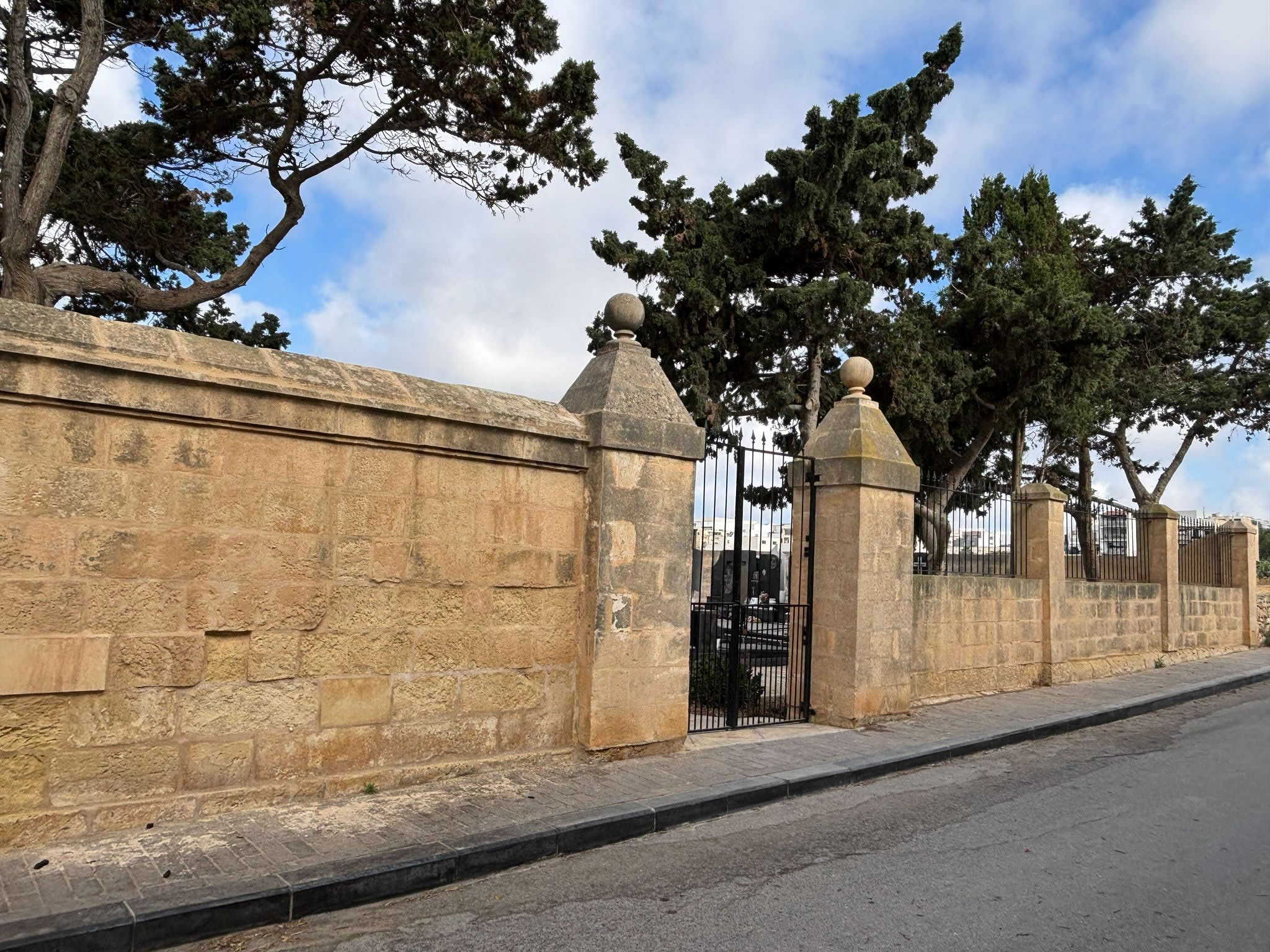
Among its most striking features is the original cemetery entrance, characterised by imposing limestone boundary walls, decorative architectural pillars, religious symbolism and elegant wrought-iron gates. This historic entrance remains one of the most visually distinctive cemetery gateways in rural Malta and preserves the character of the cemetery's earlier phase of development.
The Development of Mġarr
Mġarr remained a relatively isolated farming community for much of its history. Surrounded by fertile valleys, agricultural land and countryside, the locality developed separately from Malta's larger urban centres. Historical records show that Mġarr became an independent parish in 1893 after previously forming part of Mosta Parish. :contentReference[oaicite:0]{index=0}
The growth of the village during the late nineteenth and early twentieth centuries created the need for expanded religious, civic and burial infrastructure. As the population increased, dedicated cemetery facilities became increasingly important for the community.
Origins of the Cemetery
Like many Maltese village cemeteries, Mġarr Cemetery developed outside the historic village core in accordance with nineteenth-century public health reforms which gradually moved burials away from church interiors and densely populated areas.
The cemetery likely emerged during the period when Malta adopted modern cemetery planning practices under British administration. These reforms followed growing concerns regarding sanitation, overcrowding and disease prevention.
Although precise construction records for the earliest section remain difficult to trace, the architectural style of the original enclosure suggests development during the late nineteenth or early twentieth century.
The Historic Cemetery Walls
One of the defining features of Mġarr Cemetery is its original high perimeter wall. Constructed from traditional Maltese limestone, the wall provided both enclosure and dignity to the burial ground.
The elevated boundary created a clear separation between the world of the living and the sacred resting place of the deceased. This architectural concept remains deeply rooted within Catholic cemetery traditions throughout Malta.
The wall also protected the cemetery from livestock, weather exposure and external disturbance, particularly important in a rural agricultural locality such as Mġarr.
The Original Entrance
The older entrance is among the cemetery's most important architectural elements. The gateway features:
- Large limestone entrance pillars
- Decorative urn-shaped finials
- Religious Chi-Rho symbols
- Wrought iron gates
- Curved architectural pediments
- Traditional stone craftsmanship
The design conveys both dignity and permanence while reflecting the funerary architectural styles commonly employed in Malta during the late nineteenth and early twentieth centuries.
The Chi-Rho monograms visible on the entrance pillars are among Christianity's oldest symbols, representing Christ through the Greek letters XP.
Religious Symbolism
Religious symbolism plays an important role throughout the cemetery. Catholic burial traditions in Malta frequently incorporate crosses, saints, Marian imagery and scriptural inscriptions.
The entrance itself serves as a symbolic threshold between earthly life and eternal rest. The use of Christian motifs reflects the strong religious identity of Mġarr and its parish community.

Expansion of the Cemetery
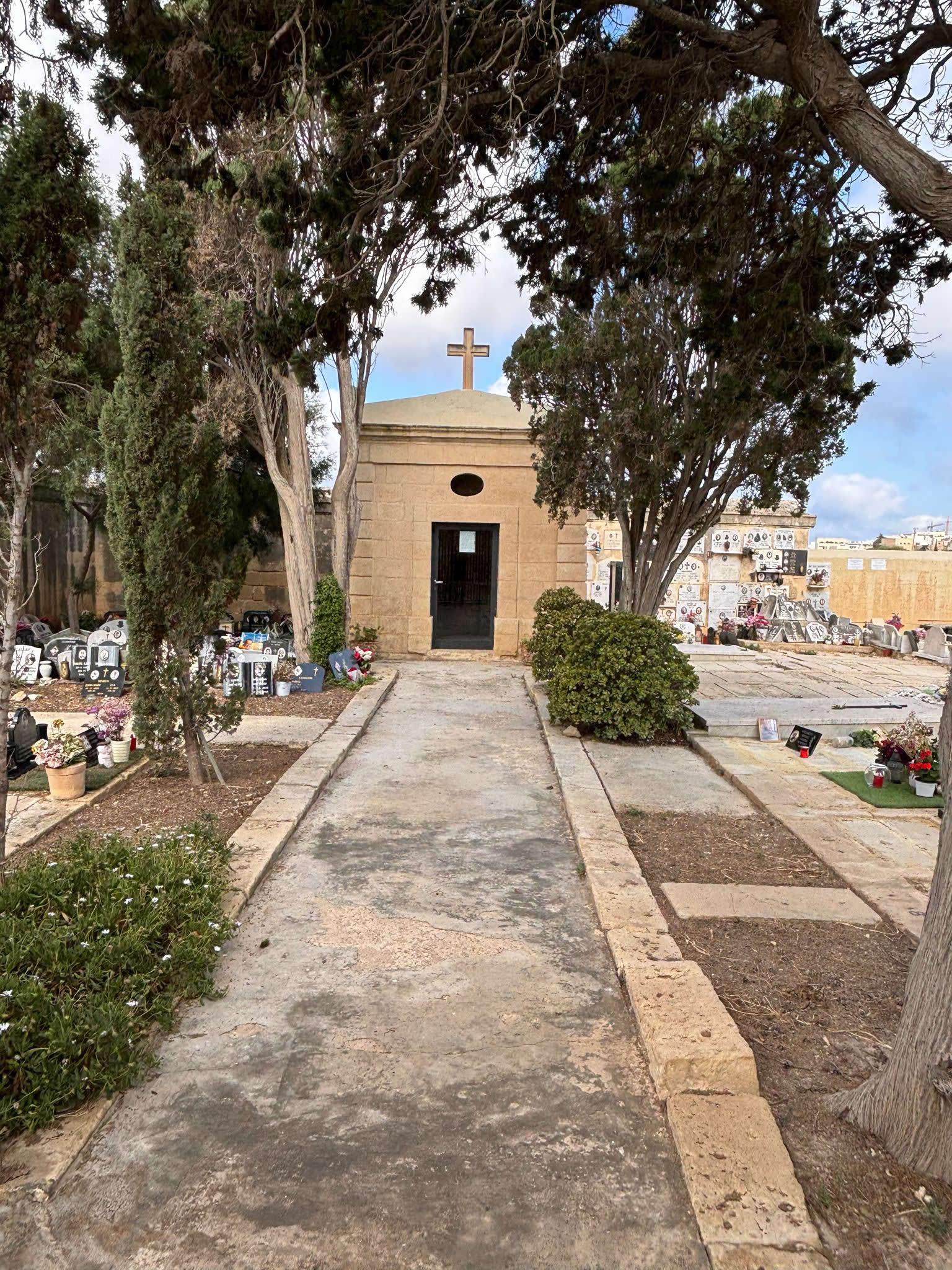
As Mġarr continued to grow during the twentieth century, additional burial space became necessary. The original cemetery enclosure eventually reached capacity, leading to the development of new sections beyond the historic walls.
These expansions altered the overall layout of the cemetery while preserving the older core section.
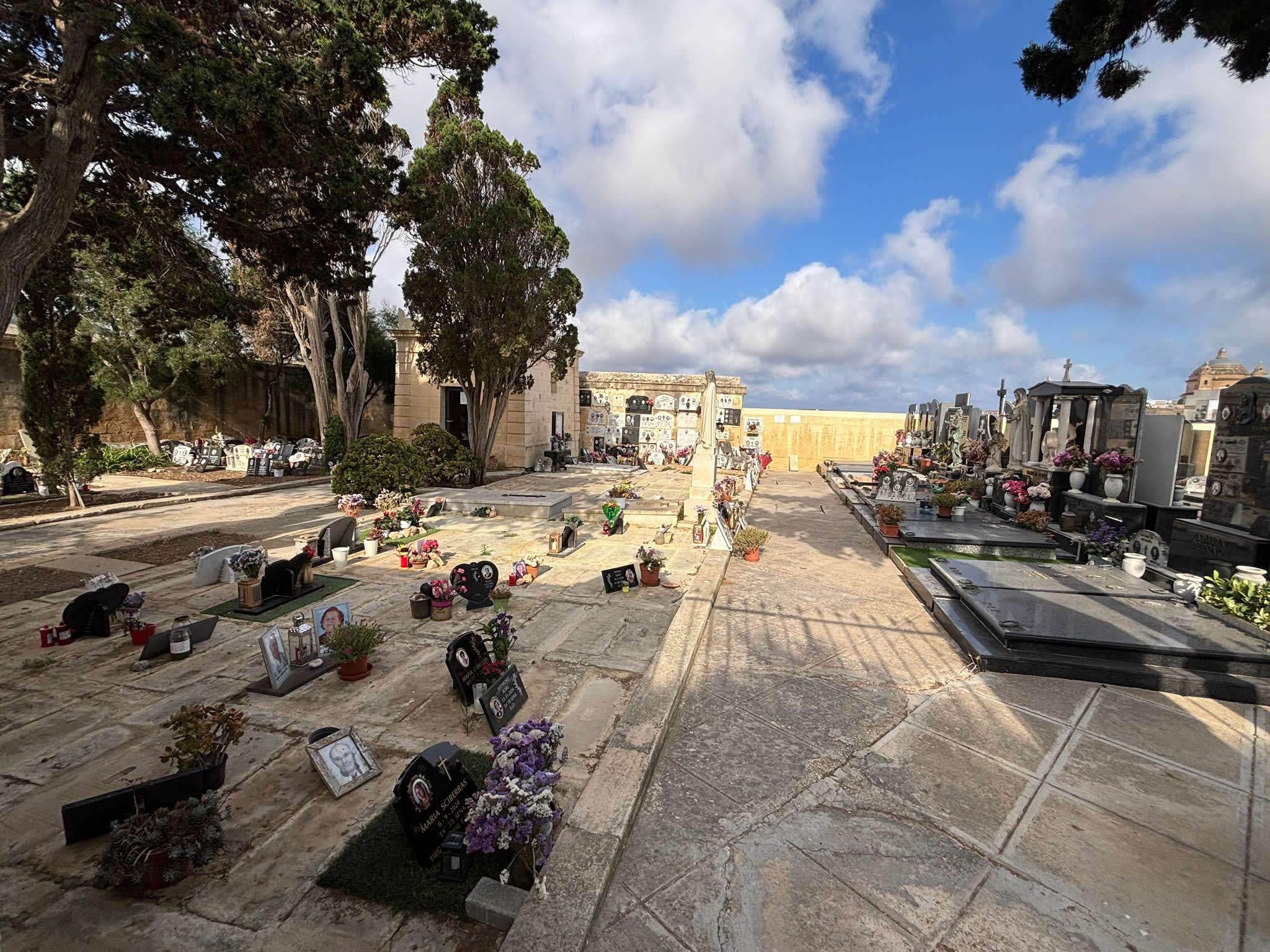
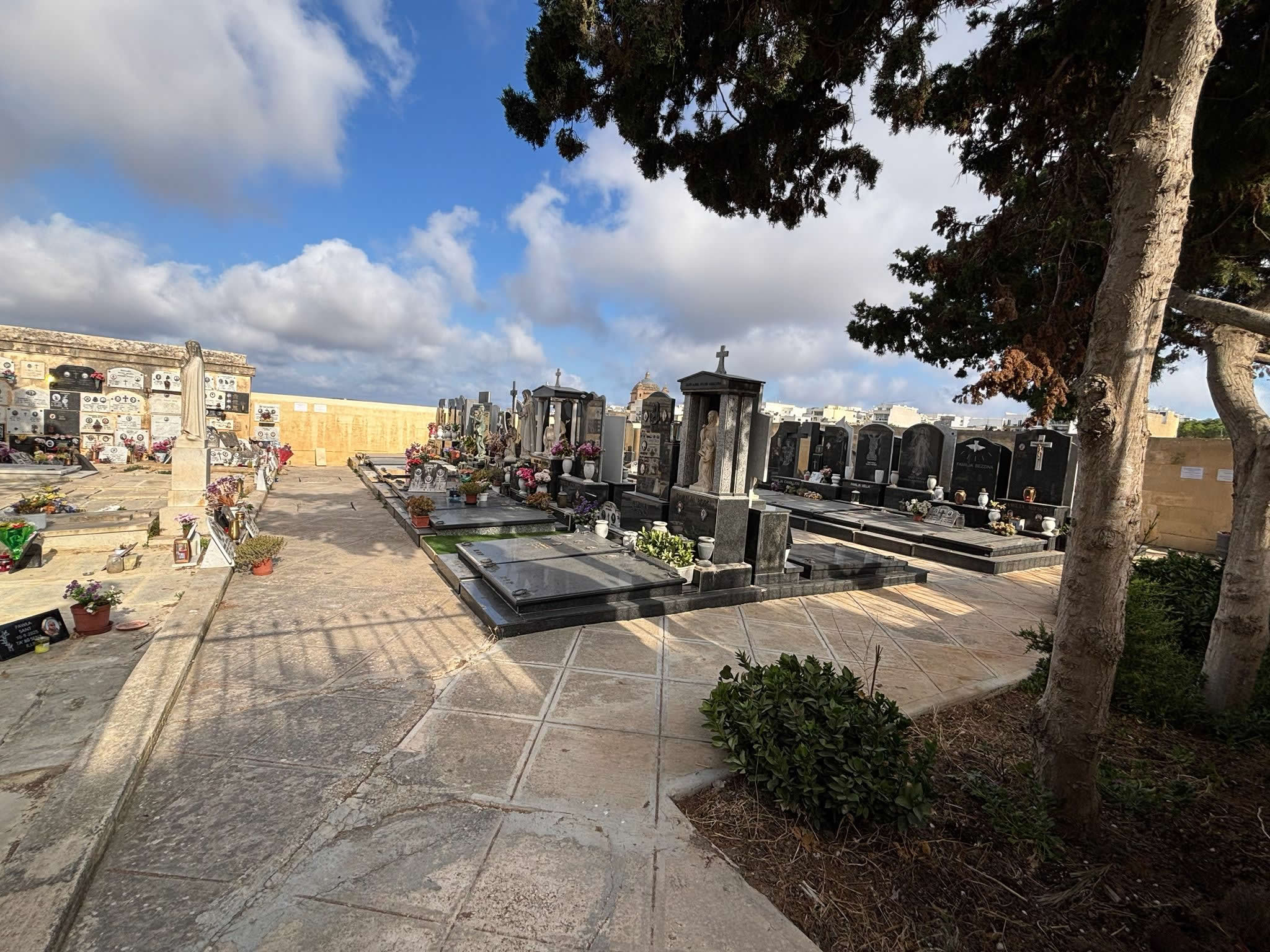
Today visitors can clearly distinguish between:
- The historic enclosed cemetery
- Later burial extensions
- Modern family tombs
- Contemporary cemetery infrastructure
The newer entrance, while functional, is considerably less monumental than the original gateway and reflects modern practical requirements rather than decorative architectural expression.
Burial Traditions
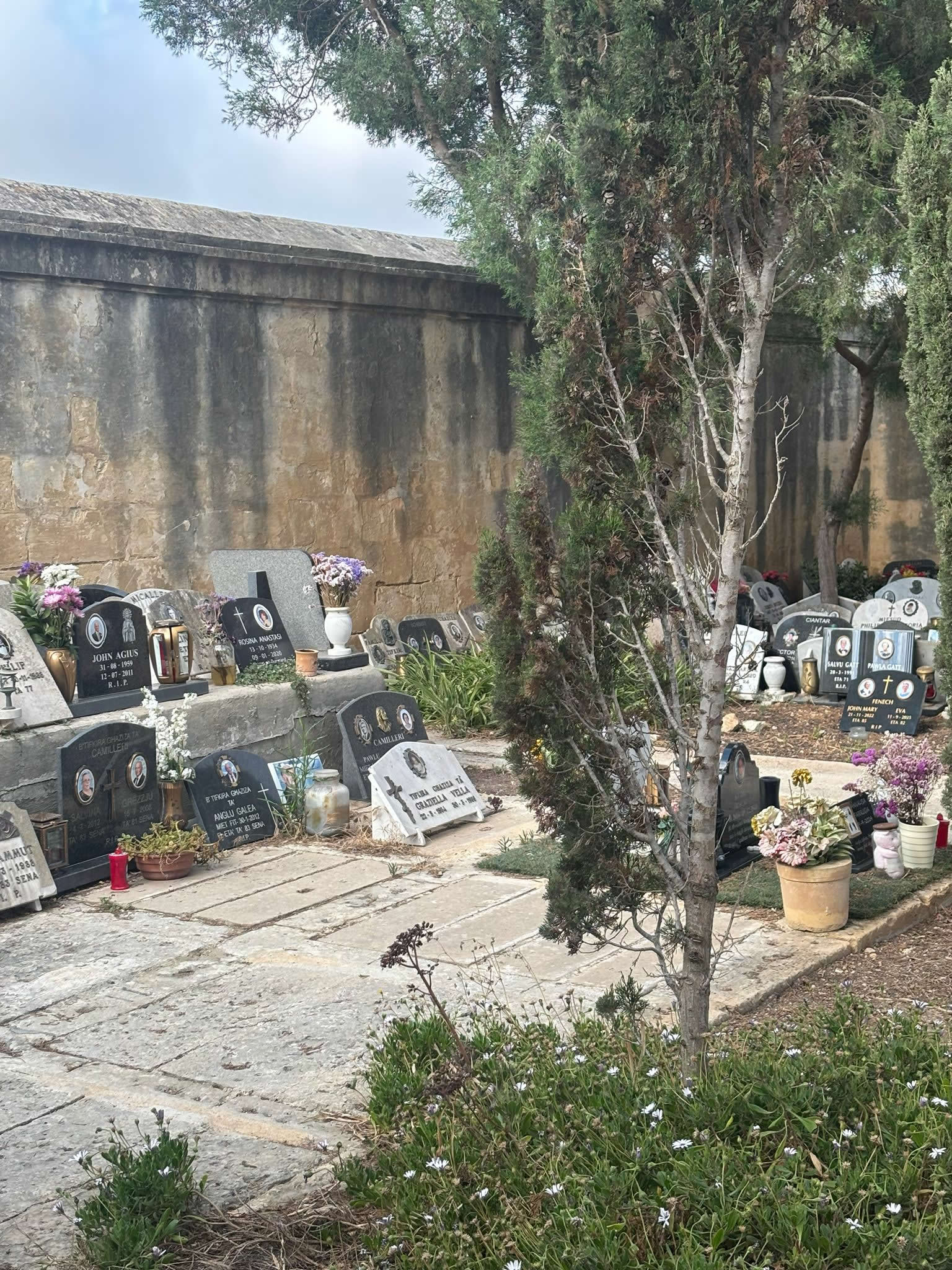
Mġarr Cemetery reflects longstanding Maltese Catholic burial customs. Family tombs remain a particularly important feature, with multiple generations often interred within the same burial structure.
Many tombs contain:
- Marble memorial plaques
- Religious inscriptions
- Photographic portraits
- Family coats of arms
- Decorative statuary
- Funerary lanterns
These memorials preserve valuable genealogical and social information concerning the families of Mġarr.
Architectural Character
The cemetery contains a mixture of architectural styles reflecting different historical periods. Earlier monuments often display:
- Hand-carved limestone details
- Victorian funerary influences
- Neo-classical elements
- Traditional Maltese craftsmanship
Later additions introduced modern materials such as polished marble, granite and contemporary metalwork.
Landscape and Atmosphere
The cemetery occupies a peaceful setting that reflects the rural character of Mġarr itself. Mature trees, open skies and surrounding countryside contribute to a tranquil atmosphere.
The combination of historic stone architecture and vegetation gives the cemetery an appearance distinct from many of Malta's larger urban burial grounds.
Community Importance
For generations of Mġarr residents, the cemetery has served as the final resting place of relatives, clergy, farmers, local families and members of the wider parish community.
The site remains closely connected to village identity and religious observances, particularly:
- All Souls' Day
- November commemorations
- Family memorial visits
- Funeral processions
- Parish remembrance traditions
Maintenance and Restoration
As an active cemetery, Mġarr Cemetery undergoes continuous maintenance and periodic restoration. Conservation efforts focus on:
- Historic stone walls
- Entrance structures
- Iron gates
- Pathways
- Drainage systems
- Vegetation management
Preserving the original entrance remains particularly important due to its architectural significance and visual identity within the village.
Timeline
| Date | Event |
|---|---|
| 1893 | Mġarr becomes an independent parish. :contentReference[oaicite:1]{index=1} |
| Late 19th Century | Modern cemetery development becomes widespread across Malta |
| Early 20th Century | Historic section of Mġarr Cemetery established and enclosed |
| 20th Century | Construction of family tombs and cemetery expansion |
| Late 20th Century | Additional burial areas developed |
| Modern Era | Cemetery continues serving the growing community of Mġarr |
Visitor Information
Visitors should treat the cemetery with respect as an active burial ground. Photography is generally possible when undertaken respectfully and without disturbing mourners or funeral services.
The older entrance remains the most architecturally significant access point and provides an excellent example of traditional Maltese funerary architecture.
Conclusion
Mġarr Cemetery stands as an important historical, architectural and cultural landmark within one of Malta's most rural communities. Its distinctive original entrance, high limestone enclosure walls and evolving layout tell the story of a village that grew steadily while preserving its traditions and identity. The contrast between the older cemetery core and the later extensions offers a visible record of changing burial practices, population growth and community development. As both an active cemetery and a heritage site, Mġarr Cemetery remains an important part of the cultural landscape of Mġarr and the wider Maltese Islands.