📍 Location
Location Map Coordinates 35.928173, 14.436386
The Forgotten Plague Cemetery of the 1813–1814 Malta Epidemic
Introduction
Ta' Gadaf Cemetery in Naxxar is one of Malta’s most forgotten and neglected historic burial grounds. Hidden away on the outskirts of the town, the cemetery is believed to have been established during the devastating 1813–1814 Malta plague epidemic which claimed thousands of lives across the islands during the early British colonial period.
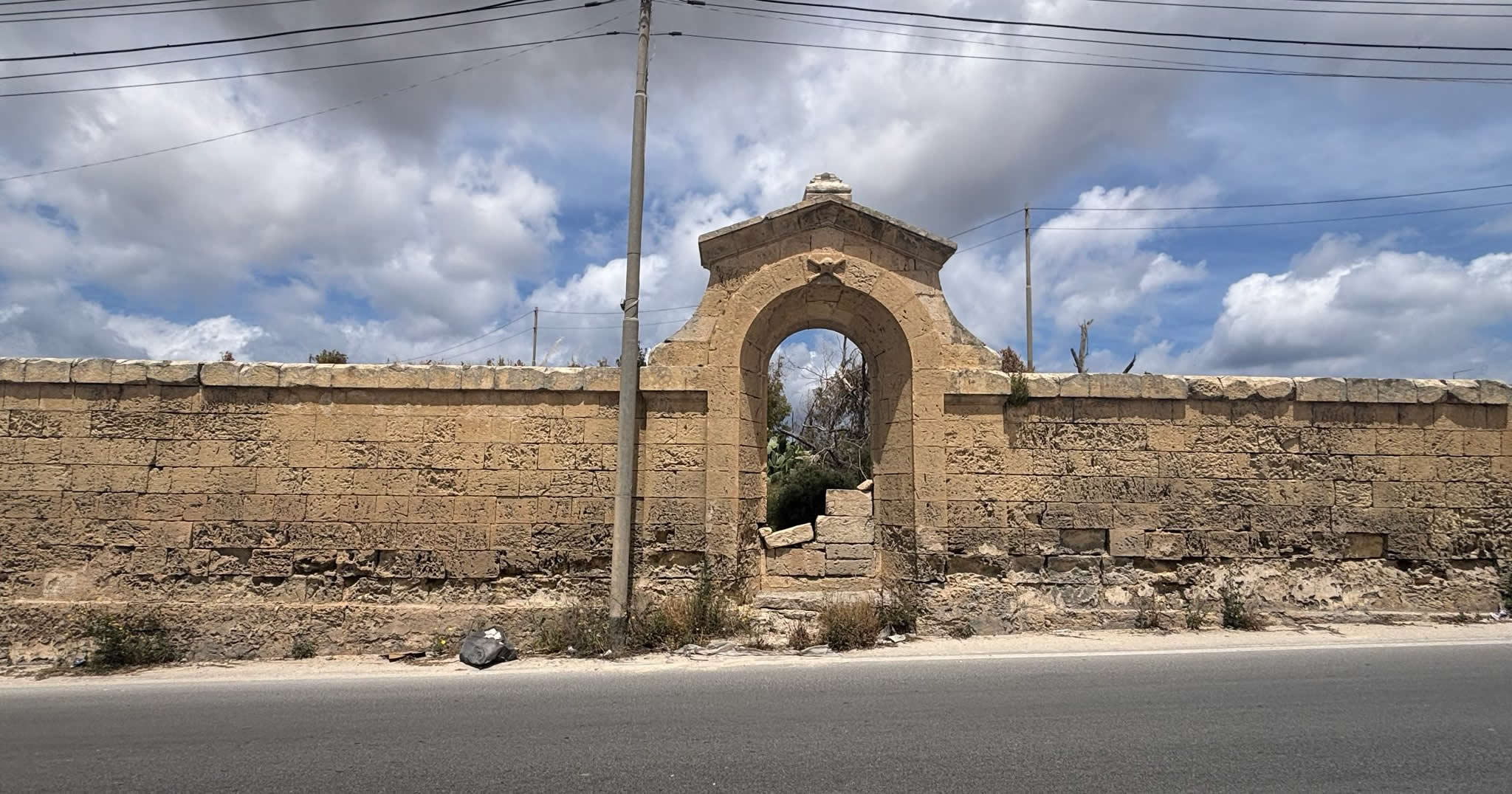
Unlike later cemeteries in Malta which developed elaborate monuments and family vaults, Ta' Gadaf appears to have functioned as an emergency plague burial ground. Today, little survives apart from the boundary enclosure, fragments of the original entrance, and the cemetery’s most important surviving feature — heavily weathered skull-and-crossbones carvings associated with death and contagion.
Overgrown vegetation, erosion and long-term neglect now dominate the site. Despite its deteriorated condition, Ta' Gadaf Cemetery remains historically important as one of the few surviving plague burial grounds connected to Malta’s last major plague epidemic.

The 1813–1814 Malta Plague Epidemic
The plague epidemic of 1813–1814 was one of the deadliest outbreaks in Maltese history. Arriving during the early years of British administration, the disease spread rapidly across several towns and villages throughout Malta.
Authorities imposed strict quarantine regulations, isolation measures and emergency health controls in an attempt to limit the spread of infection. Because plague victims posed a serious public health risk, burials within churches and densely populated town centres became increasingly dangerous.
As a result, isolated burial grounds were created outside urban areas specifically for plague victims. Ta' Gadaf Cemetery is widely believed to have been one of these emergency plague cemeteries serving the Naxxar area.
Its location away from the town centre reflects the medical and sanitary thinking of the period. Isolation was considered essential in reducing contagion, and plague cemeteries were deliberately established at a distance from residential districts.

Location and Setting
Ta' Gadaf Cemetery is located near Naxxar in the northern region of Malta at coordinates 35.928173, 14.436386. The surrounding landscape historically consisted of agricultural land and open countryside, making it suitable for quarantine-related burials during the epidemic.
Although modern development has gradually expanded around the area, the cemetery still retains an isolated atmosphere. The surrounding terrain and abandoned appearance reinforce its historical identity as a place intentionally separated from ordinary community life.

The Skull-and-Crossbones Entrance
The cemetery’s most distinctive surviving feature is the skull-and-crossbones imagery carved near the entrance. Although badly worn and heavily eroded, the symbols remain visible and are among the most historically important elements of the site.
Throughout Europe, skull-and-crossbones imagery was commonly associated with mortality, plague, danger and the inevitability of death. In cemeteries and plague sites, these carvings also served as warnings connected to contagious burial grounds.
At Ta' Gadaf Cemetery, the weathered carvings likely date from the cemetery’s original use during the nineteenth century plague epidemic. Their survival is remarkable given the long period of exposure to Malta’s harsh climate and lack of conservation work.
The carvings also give the cemetery a distinctive identity unlike most other burial grounds in Malta.
Beneath the skull-and-crossbones carving at the cemetery entrance, a heavily weathered inscription appears to contain the date “1825”. Although erosion makes the numerals difficult to read with certainty, the inscription may indicate a later formalisation or reconstruction of the cemetery several years after the 1813–1814 plague epidemic.

Absence of Monumental Tombs
One of the defining features of Ta' Gadaf Cemetery is the near total absence of monumental funerary structures. Unlike cemeteries such as Addolorata or Ta’ Braxia, Ta' Gadaf does not contain elaborate mausoleums, decorated family tombs or monumental grave architecture.
This simplicity strongly supports the theory that the cemetery functioned as an emergency epidemic burial ground rather than a conventional cemetery intended for long-term family commemoration.
Many plague cemeteries across Europe were intentionally basic in design. Burials were often carried out quickly under emergency conditions with practical considerations taking precedence over decorative memorials.
Today, much of the site appears as open ground enclosed by deteriorating boundary walls and overgrown vegetation.

Current Condition
Ta' Gadaf Cemetery is presently in a very poor state of preservation. Large sections are overgrown with weeds and wild vegetation while erosion and neglect continue to damage surviving historic features.
The entrance area and skull-and-crossbones carvings show significant weathering. In several places the cemetery enclosure itself has deteriorated due to lack of maintenance.
The neglected condition of the cemetery has raised concerns among heritage organisations and local historians. Conservation advocates have highlighted the importance of preserving the site as one of Malta’s few surviving plague burial grounds.
Unfortunately, despite its historical significance, the cemetery remains largely unknown to the wider public.

Historical Importance
Ta' Gadaf Cemetery is historically significant for several reasons:
- It is associated with the 1813–1814 Malta plague epidemic.
- It preserves rare plague-related funerary symbolism.
- It reflects early nineteenth-century public health practices.
- It represents an increasingly rare type of emergency epidemic cemetery.
- It contributes to the historical landscape of Naxxar.
The cemetery also forms part of Malta’s broader story of disease control, quarantine and burial practices during periods of epidemic crisis.

Historical References
Historical references to Ta' Gadaf Cemetery are relatively limited, reflecting the cemetery’s long abandonment and neglected condition. However, several modern historical studies of the 1813–1814 Malta plague epidemic specifically identify Ta' Gadaf as one of the isolated plague burial grounds established outside populated areas during the epidemic.
Historical accounts describe Ta' Gadaf as a cemetery which later fell into abandonment, unlike some other plague cemeteries in Malta which evolved into larger public cemeteries. Modern conservation articles and heritage publications have also documented the cemetery’s deteriorated state, overgrown graves, collapsing walls and surviving skull-and-crossbones carvings at the entrance.
The cemetery remains one of the few surviving physical reminders of Malta’s final major plague epidemic during the early British period.
Plague Cemeteries in Malta
During major epidemics, Malta established several temporary or isolated cemeteries outside populated areas. These burial grounds were designed specifically to reduce the risk of infection spreading within towns and villages.
Many such cemeteries disappeared over time through redevelopment or neglect. Ta' Gadaf is therefore particularly valuable because physical traces of the site still survive.
The cemetery offers insight into how Maltese communities and British colonial authorities responded to epidemic disease during the nineteenth century.
Conservation Concerns
Heritage organisations and historians have expressed concern regarding the future of Ta' Gadaf Cemetery. The site faces several ongoing threats:
- Vegetation overgrowth
- Stone erosion
- Structural deterioration
- Lack of conservation
- Urban pressure and development
- Limited public awareness
Without intervention, the surviving entrance carvings and historic enclosure may continue to deteriorate.
Visiting Ta' Gadaf Cemetery
Visitors interested in Malta’s hidden heritage and plague history may find Ta' Gadaf Cemetery particularly fascinating. The cemetery offers a rare connection to Malta’s final major plague epidemic and preserves an atmosphere unlike more formal cemeteries on the islands.
Due to the cemetery’s neglected condition, visitors should exercise caution and respect while exploring the site.
Plague Cemeteries in Malta
During major epidemics, Malta established several temporary or isolated cemeteries outside populated areas. These burial grounds were designed specifically to reduce the risk of infection spreading within towns and villages.
Many such cemeteries disappeared over time through redevelopment or neglect. Ta' Gadaf is therefore particularly valuable because physical traces of the site still survive.
The cemetery offers insight into how Maltese communities and British colonial authorities responded to epidemic disease during the nineteenth century. Visitors interested in the wider history of epidemic burial grounds across the islands can also explore our detailed guide to Plague Cemeteries in Malta and Gozo.
Conclusion
Ta' Gadaf Cemetery remains one of Malta’s most overlooked historic sites. Although heavily neglected and overgrown, the cemetery preserves an important connection to the tragic 1813–1814 plague epidemic which shaped Maltese history during the early British period.
The worn skull-and-crossbones carvings at the entrance stand as haunting reminders of mortality, epidemic disease and the emergency burial practices once required during times of crisis.
While little survives architecturally, the cemetery’s simplicity is itself historically significant. Ta' Gadaf was never intended to be a grand memorial landscape. Instead, it served as a practical and isolated burial ground during one of Malta’s darkest public health disasters.
Today, the cemetery deserves greater recognition, documentation and protection as part of Malta’s endangered cultural heritage.
Frequently Asked Questions
What is Ta' Gadaf Cemetery?
Ta' Gadaf Cemetery is a historic plague cemetery in Naxxar, Malta believed to date from the 1813–1814 Malta plague epidemic.
Where is Ta' Gadaf Cemetery located?
The cemetery is located in Naxxar, Malta at coordinates 35.928173, 14.436386.
Why is the cemetery important?
The cemetery is historically important because it is associated with Malta’s last major plague epidemic and preserves rare plague-related funerary symbolism.
What survives at the cemetery today?
The cemetery retains its enclosure and weathered skull-and-crossbones carvings, although the site is heavily overgrown and neglected.
Are there tombs at Ta' Gadaf Cemetery?
No major tomb structures survive at the site, supporting the theory that it functioned as an emergency plague burial ground rather than a conventional cemetery.