📍 Location
Location Map Coordinates 35.868777, 14.511979
Tracing the Vernacular Masonry, Historical Foundations, and Parochial Governance of a Sacred Southern Landmark
1. Spatial Orientation and Technical Index
The historic Tarxien Parish Cemetery represents a premier, remarkably preserved example of parochially managed extramural burial planning within the southeastern district of Malta. Positioned inside the urban boundaries of Tarxien, the site occupies a unique footprint that immediately borders the ancient, UNESCO-protected Tarxien Neolithic Temples. This creates an extraordinary topographical layering where modern and early modern Christian mortuary structures sit beside a prehistoric temple landscape.
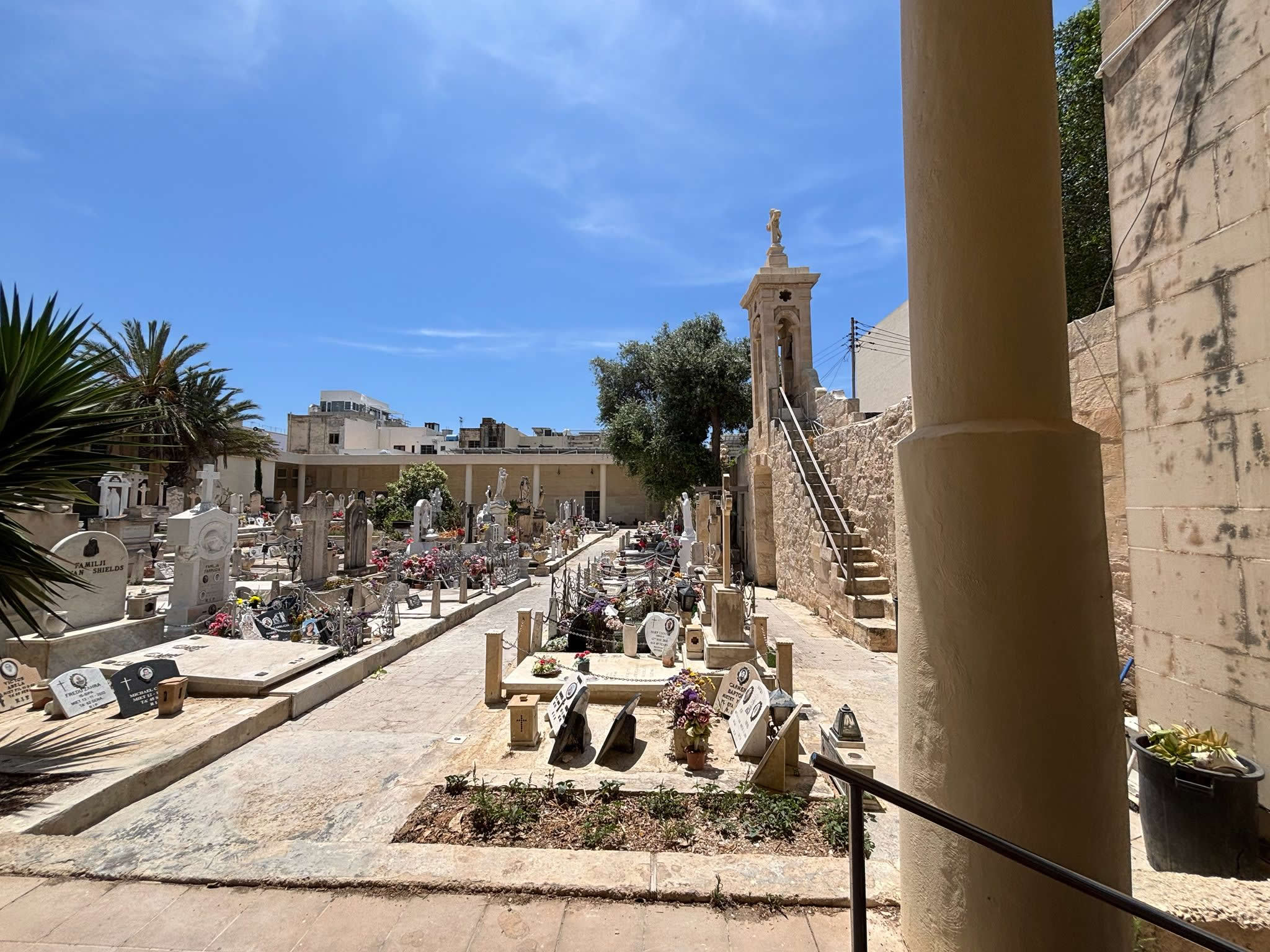
Topographically, the cemetery grounds are framed by historic alleys, accessible via a small public square that serves as a transition zone between the bustling modern locality and the quiet sanctity of the burial fields. The site utilizes a highly dense arrangement designed to maximize interment capacity while respecting the strict physical limitations of the surrounding urban grid.
| Site Survey & Archival Data Sheet | |
|---|---|
| Official Cemetery Name | Tarxien Parish Cemetery (Cimiterju ta' Ħal Tarxien) |
| Locality Identification | Tarxien, Southeastern Region, Malta |
| Geographical Coordinates | 35.868777, 14.511979 |
| Administrative Model | 100% Church-Run / Parochial Governance |
| Primary Boundary Lithology | Globigerina Limestone and Tooled Fieldstone (Zonqor/Franka mix) |
| Historical Core Establishment | Late 17th Century (with subsequent 19th & 20th Century expansions) |
| Central Enclosed Temple | Church of All Souls / Church of the Risen Lord |
| Current Operational Status | Active Sacred Parochial Burial Ground |
2. Historical Chronology and Sanitary Evolution
The continuous lineage of the Tarxien Parish Cemetery maps the broader sanitary and religious transformations that redefined Maltese culture from the late Renaissance down to the mid-twentieth century. Following the elevation of Tarxien to an independent parish in 1592, the local populace historically buried their deceased beneath the floorboards and crypt networks of the parish church.
By the latter half of the seventeenth century, the establishment of a small chapel dedicated to the Holy Souls (1675) triggered the formal consecration of the surrounding soils for extramural burials. This spatial shift was greatly accelerated during subsequent centuries by the onset of devastating epidemic outbreaks, such as the cholera epidemics of the 1800s. These events legally compelled the church and state to abandon interior church burials in favor of well-ventilated, walled perimeter fields situated outside the residential core. Over the decades, these fields grew systematically into the grand, unified parochial cemetery standing today.
3. Structural Analysis of the Exterior Facade and Bell-Cot Gatehouse
The exterior boundary of the Tarxien Parish Cemetery is characterized by a monumental, rustic facade that beautifully exemplifies traditional Maltese vernacular masonry. Unlike the highly polished, strictly neoclassical urban facades seen in state-run national cemeteries, the Tarxien complex utilizes a split-faced, multi-layered stone enclosure that reflects its organic growth across several centuries.
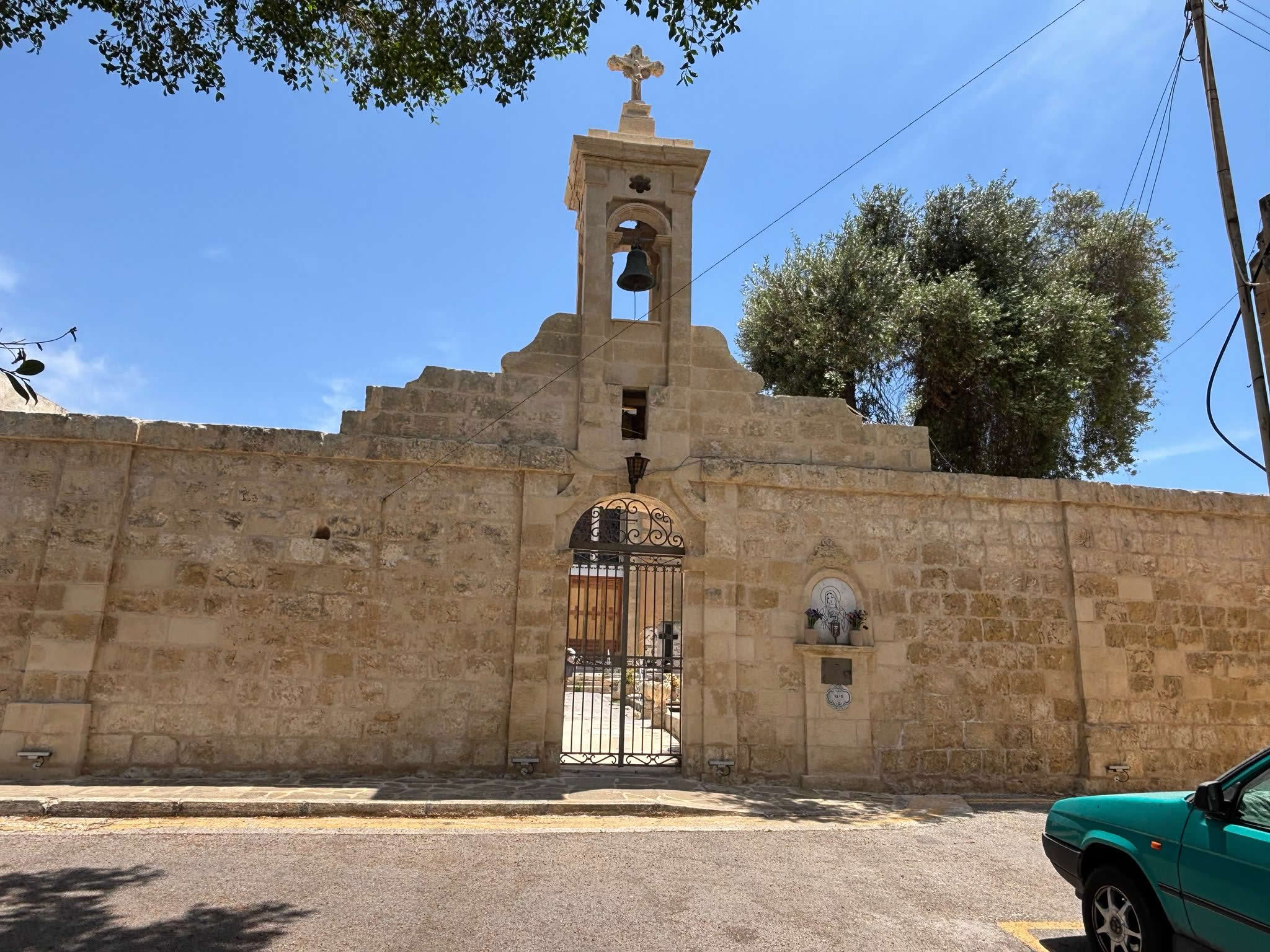
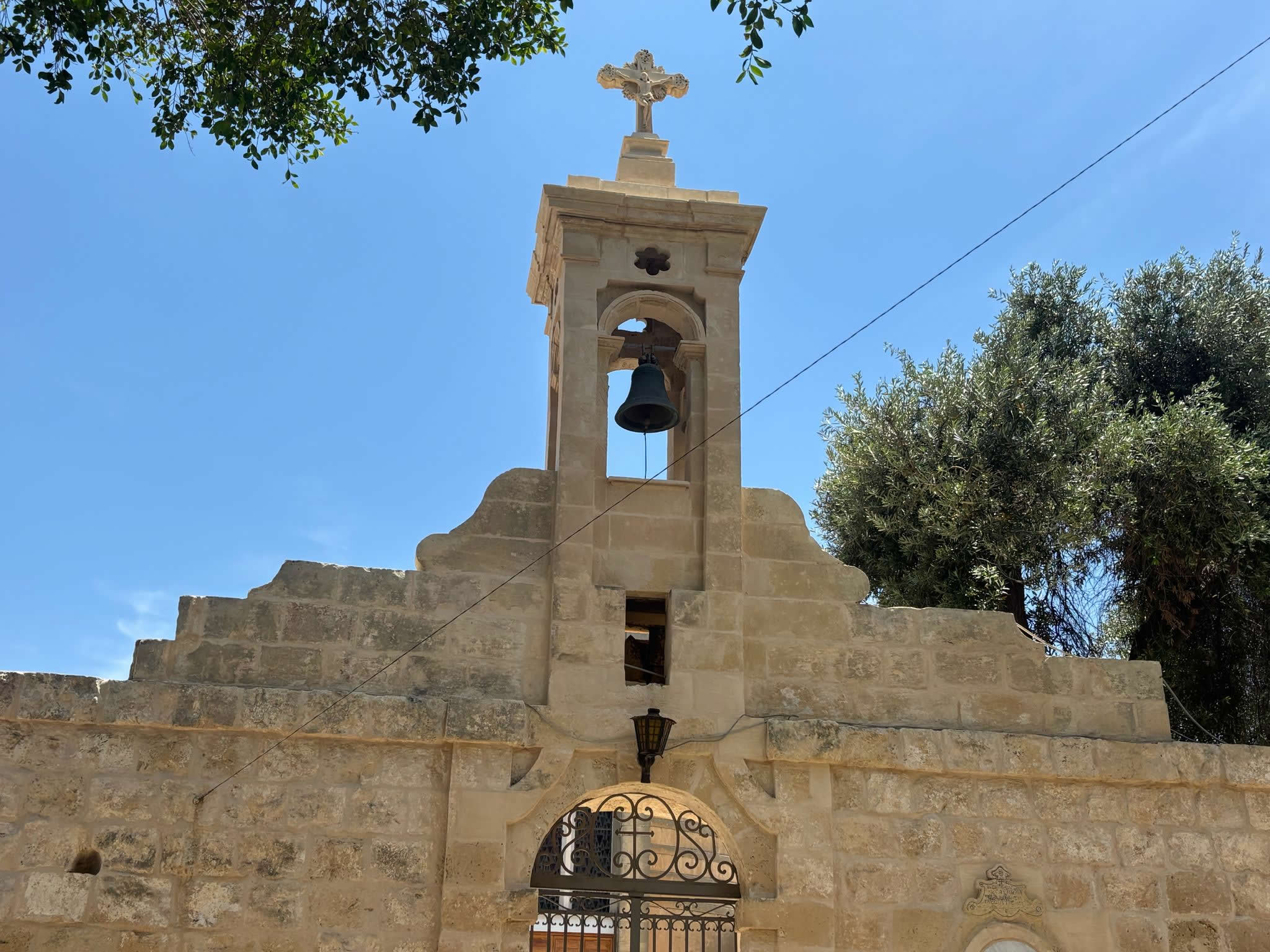
The main perimeter wall is constructed using a blend of roughly dressed, weathered limestone blocks laid in irregular horizontal courses. This heavy, fortress-like enclosure is punctuated by a central, monumental archway that serves as the formal threshold into the sacred grounds. Rising directly above this arched entrance is a magnificent, towering stone bell-cot (kampanard).
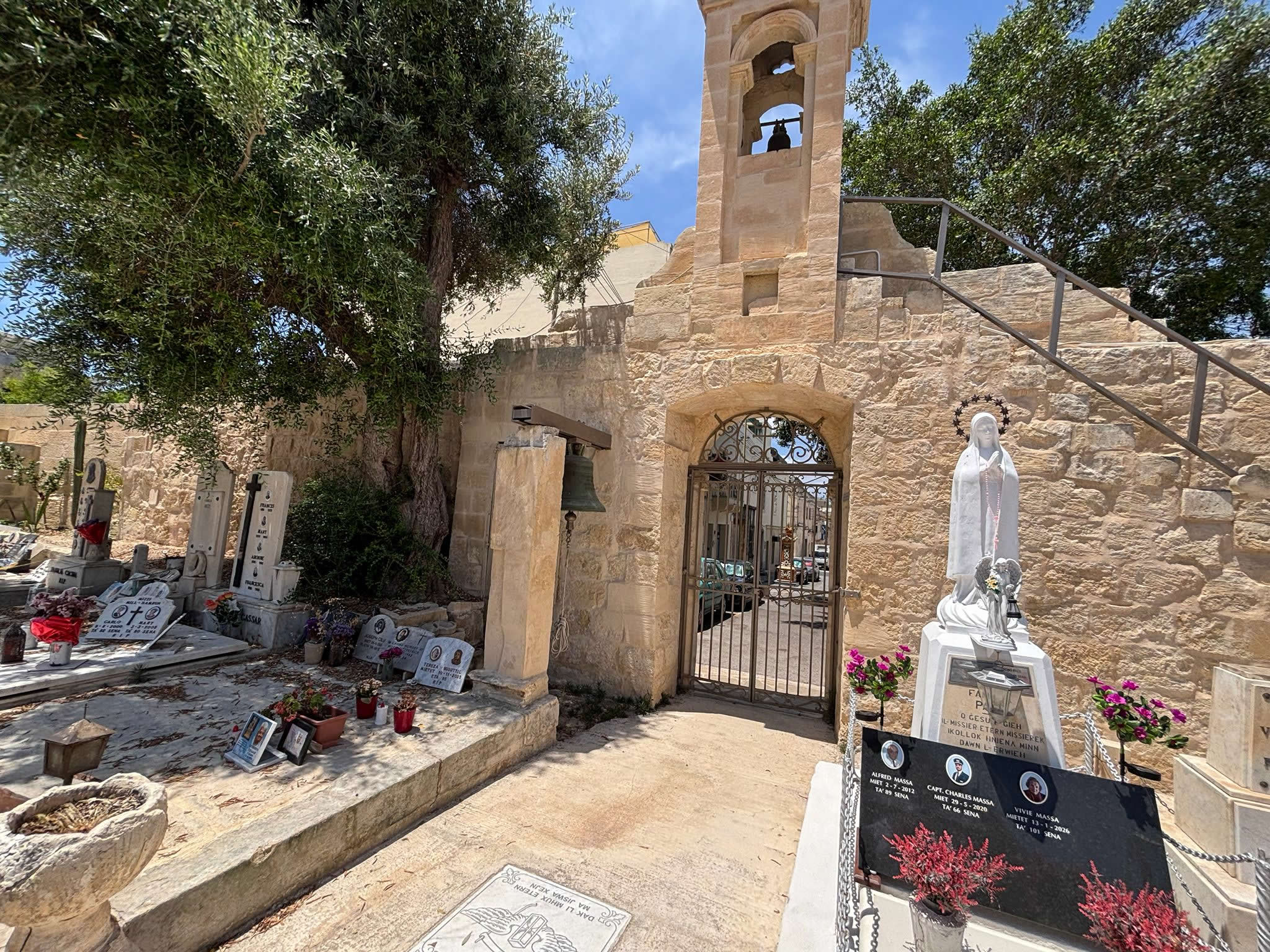
This architectural feature boasts a classical round-arched opening that houses a single bronze liturgical bell, used historically to toll the *De Profundis* and announce the arrival of funeral processions. The bell-cot is capped by a decorative stone platform topped with an ornate limestone cross. Immediately to the right of the ornate wrought-iron entrance gates, a small devotional marble relief depicting the Virgin Mary is set directly into the stonework, serving as an immediate station for prayer and reflection for passersby.
4. The Monumental Statue of the Miraculous Medal
Directly in front of the primary cemetery facade, situated within the stone-paved public square that frames the entrance, stands an important freestanding devotional monument. This sculpture features a classic bronze representation of the Virgin Mary as depicted on the Miraculous Medal, standing atop a tapered limestone pedestal.
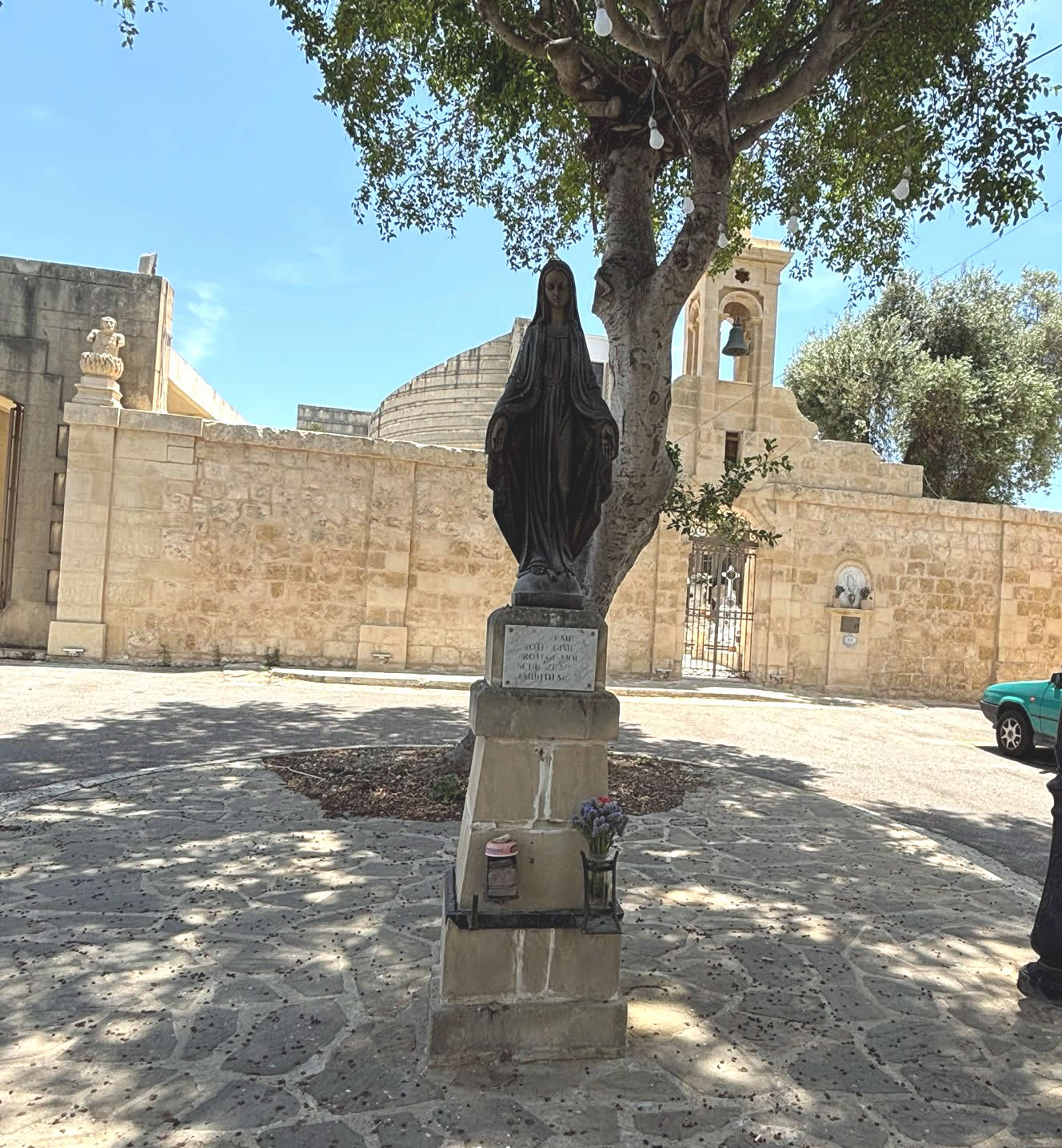
The statue is intentionally positioned looking outward toward the community, with hands extended down to symbolize the pouring out of graces. A white marble plaque affixed to the front of the multi-tiered stone base features a deeply weathered inscription written in the native Maltese tongue, calling for spiritual protection and remembrance. Framed by a mature shade tree and set within a paved clearing, this landmark monument anchors the public square, serving as a spiritual bridge between the everyday civic life of Tarxien and the silent resting place of its ancestors inside the gates.
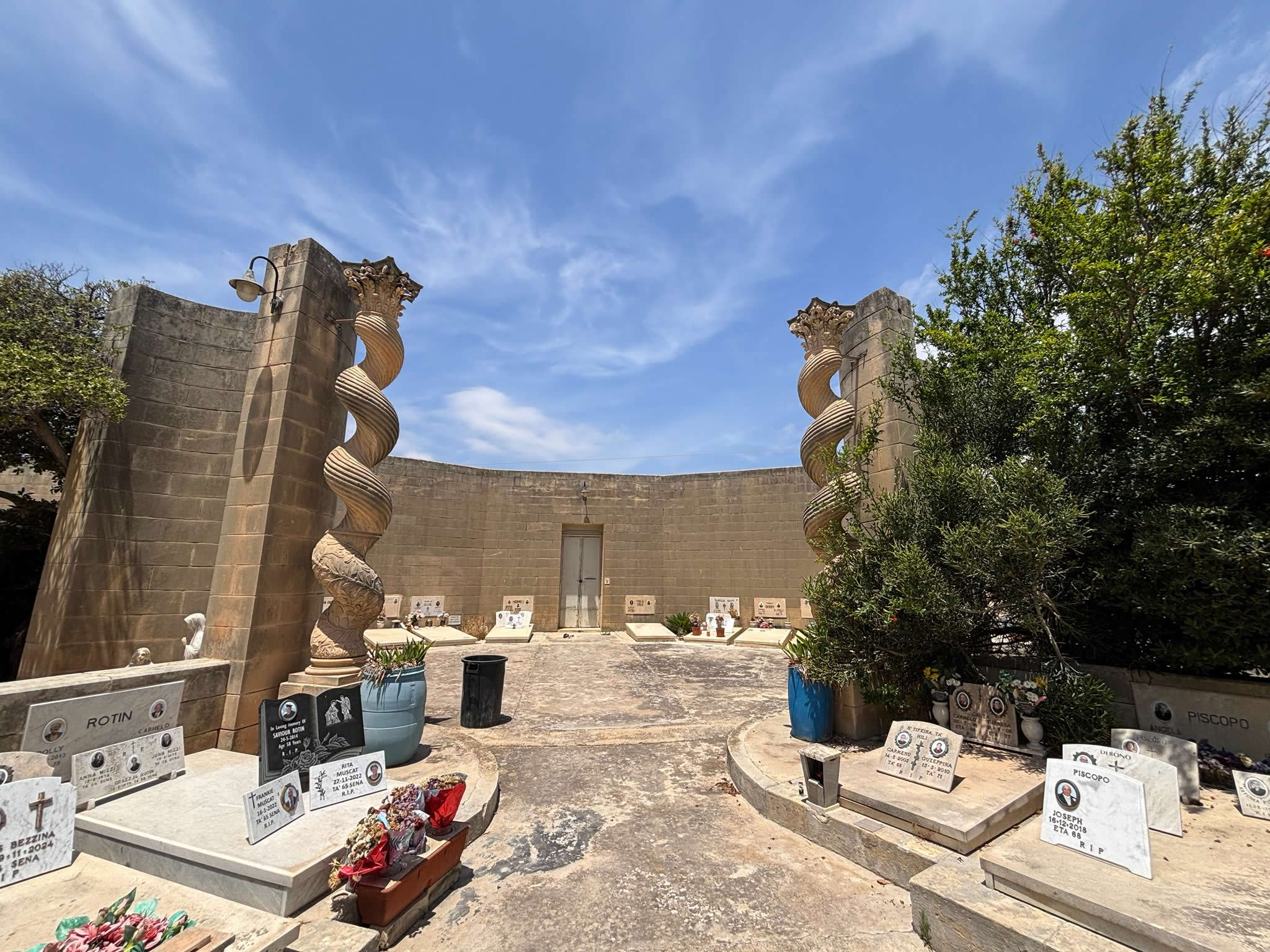
5. The Church-Run Governance Model and Archival Registries
The Tarxien Parish Cemetery operates as a fully church-run institution, functioning under the direct administrative, pastoral, and canonical authority of the local Roman Catholic parish. While modern municipal cemeteries in Malta fall under the jurisdiction of state public health departments, Tarxien has retained its historical ecclesiastical management model.
This direct church administration heavily influences the management of genealogical data. Rather than being filed in state civil archives, all interment registers, plot titles, and historical lineage logs have been maintained by hand by generations of parish scribes within the official *Liber Mortuorum* (Book of the Dead).
The day-to-day operations are handled by church-appointed caretakers. They oversee the conservation of communal walkways, coordinate committal arrangements, and ensure that all modern environmental and sanitary procedures align smoothly with traditional Catholic burial customs.
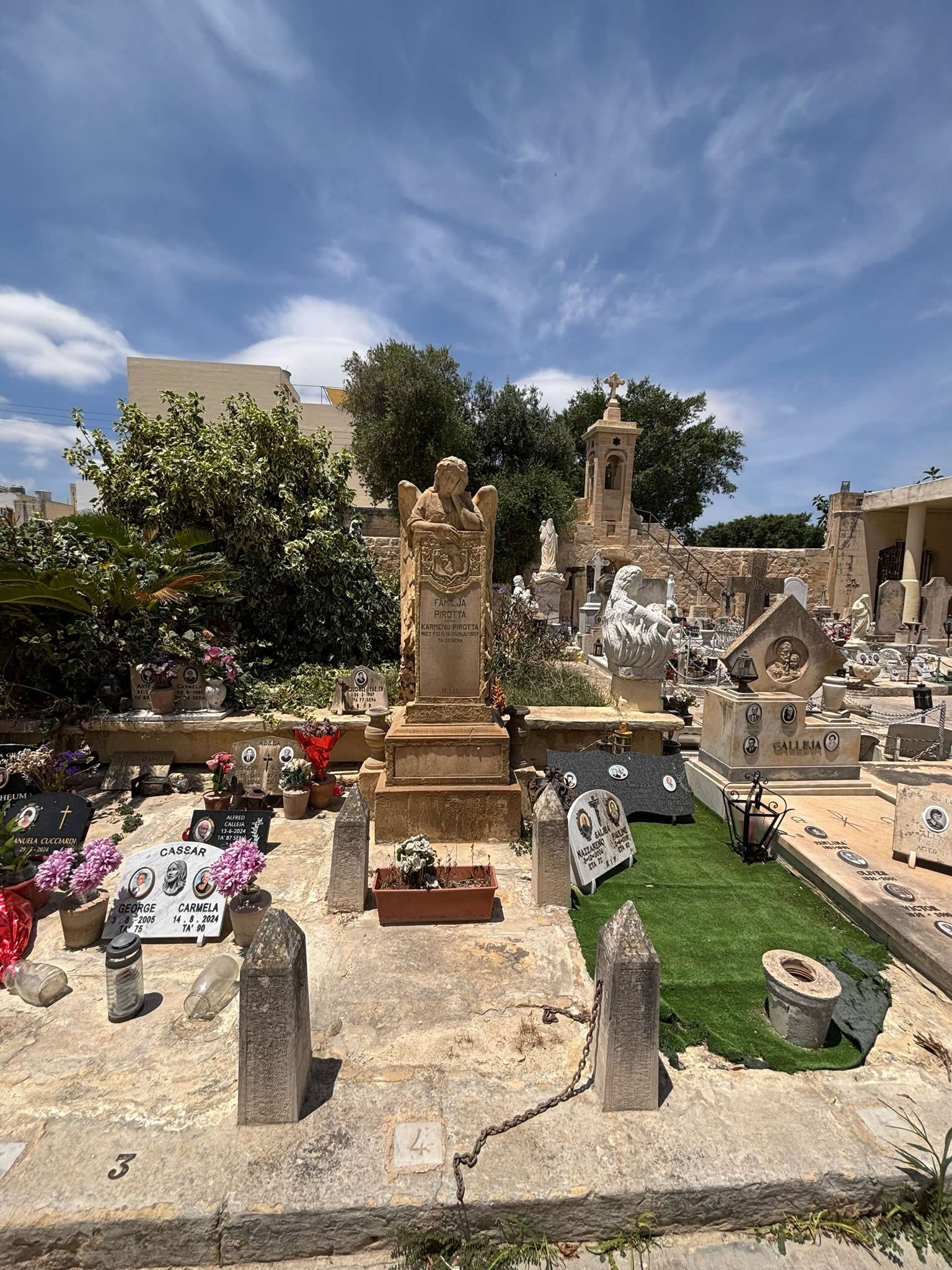
6. Internal Separation from the Central Church of All Souls
To maintain structural clarity across your digital platform, it is crucial to establish a clear distinction between the cemetery grounds detailed on this page and the distinct modernist church building that stands at its core.
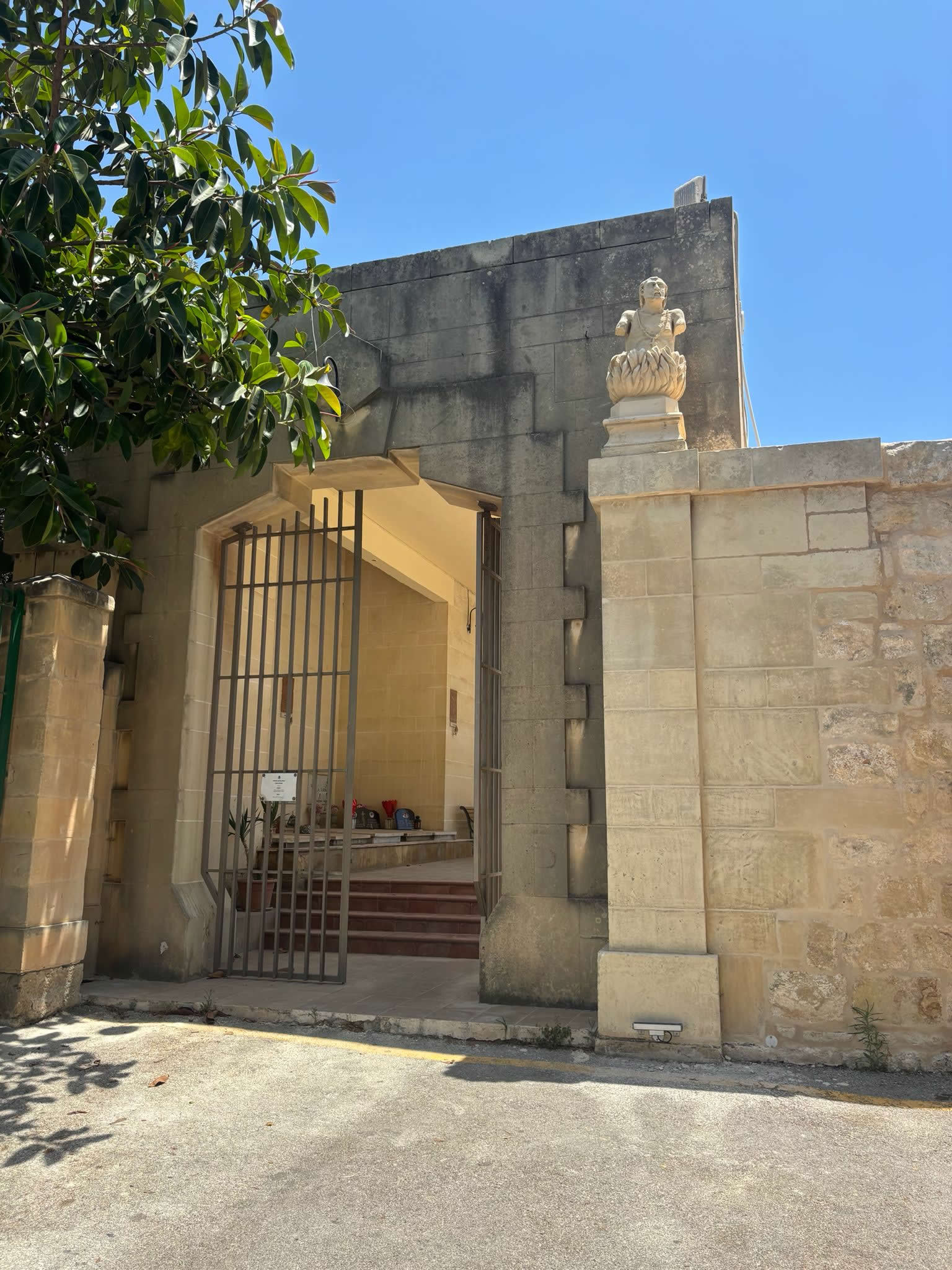
The interior grid of the cemetery wraps directly around the Church of All Souls (officially titled the Church of the Risen Lord and known colloquially as the *Knisja tal-Erwieħ*). Built in 1964 to replace the tiny, historic 17th-century chapel, this building is celebrated for its unique, post-conciliar elliptical (oval) architecture, designed to foster communal unity during worship.
While the church sits physically in the middle of the burial plots, it operates under its own distinct pastoral framework, hosting regular parish masses, Holy Week pageants, and community events. For an exhaustive architectural, artistic, and historical breakdown focusing strictly on that modernist building, please visit our dedicated page: The Church of All Souls, Tarxien In-Depth Profile.
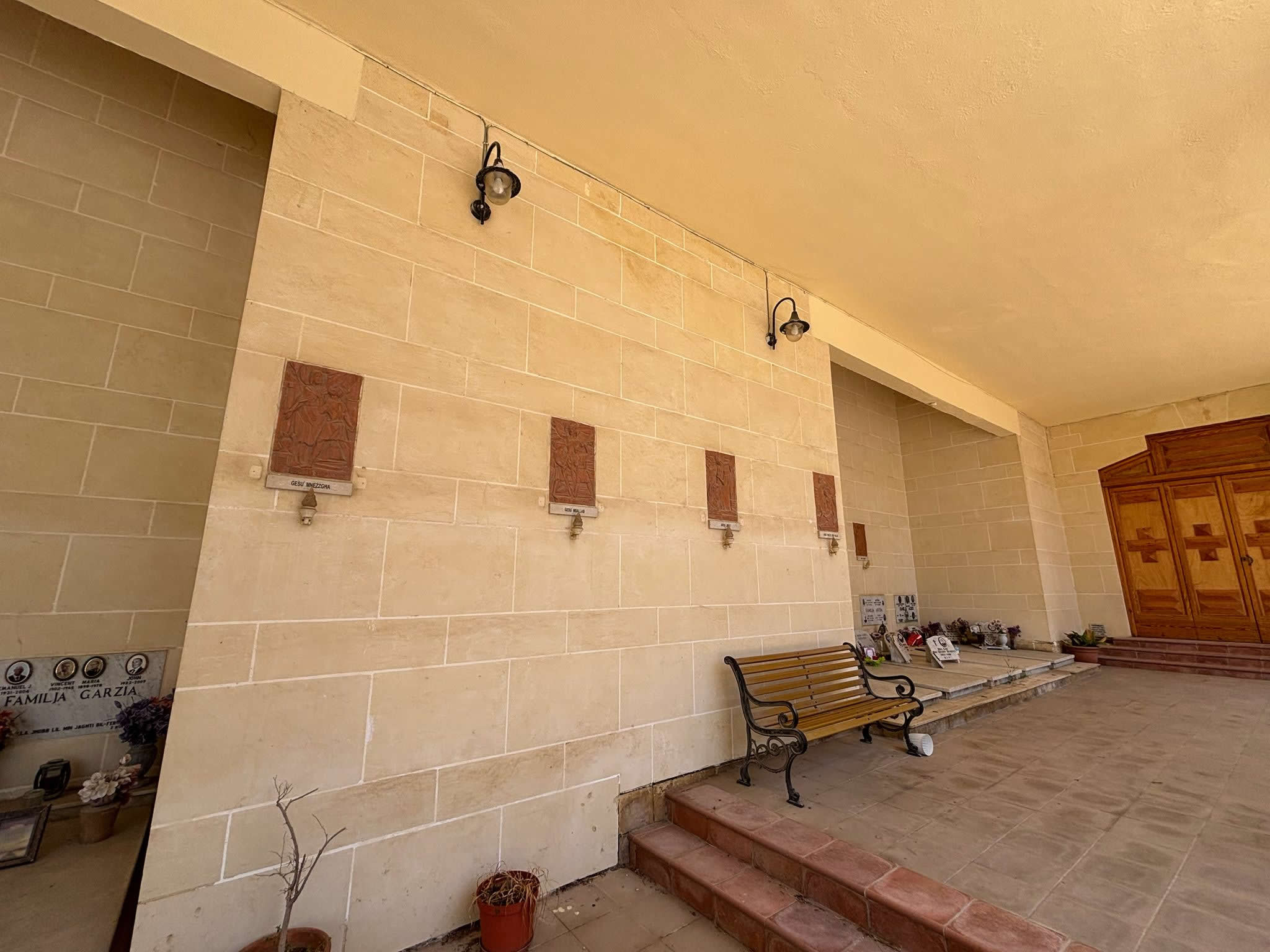
7. Modern Use, Devotion, and Visitor Etiquette
Today, the Tarxien Parish Cemetery continues to fulfill its original sacred purpose, serving as an active burial ground for families rooted in the locality. It remains a deeply revered place of local remembrance, drawing visitors daily who come to clean family vaults, light memorial lamps, and place fresh flowers along the stone rows.
The site plays an important cultural role during the traditional month of remembrance in November. On All Souls' Day, families gather across the stone paths and within the central courtyard for solemn blessing ceremonies, connecting the modern townspeople with generations of their ancestors.
Because this is an active place of rest and private prayer, visitors are requested to follow strict site etiquette. Casual wandering over grave markers is discouraged, and professional photography or tour grouping is banned during active funeral services to ensure that the timeless peace and dignity of this historic church-run sanctuary are preserved for all.
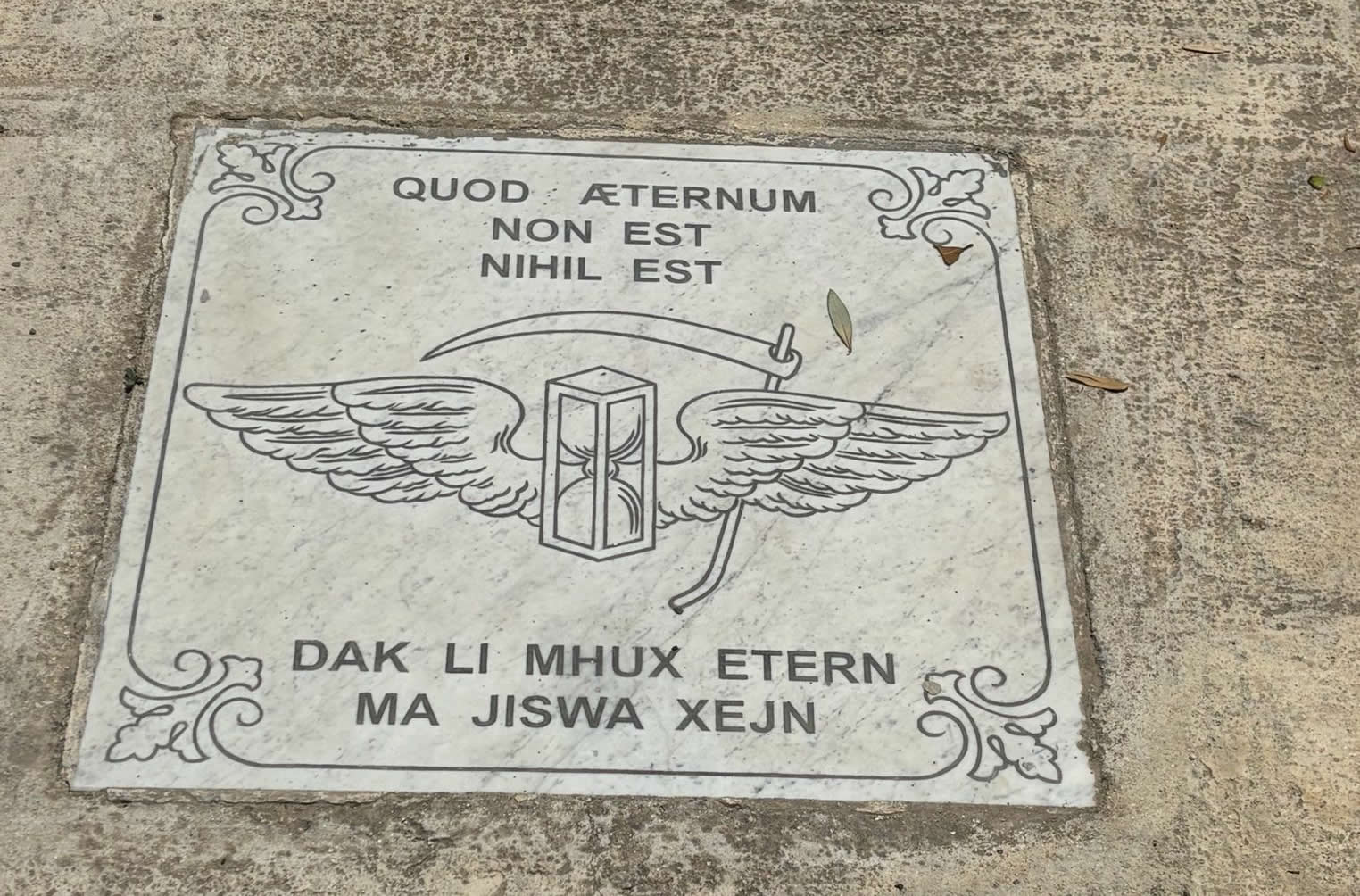
8. The Walkway Memento Mori: Epigraphy and Iconography
Embedded directly into the concrete surface of the cemetery's primary central walkway lies a striking marble commemorative plaque. This slab functions as a traditional memento mori—a solemn artistic reminder designed to prompt visitors to reflect on the temporary nature of earthly life as they walk among the graves.
QUOD ÆTERNUM NON EST NIHIL EST
(Latin: That which is not eternal is nothing)
DAK LI MHUX ETERN MA JISWA XEJN
(Maltese: That which is not eternal is worth nothing)
The bilingual text is framed by elegant corner scrollwork surrounding a central symbolic engraving. The motif depicts an hourglass flanked by large feathered wings, which graphically illustrates the classical concept of tempus fugit (time flies). Piercing through the winged hourglass is a large harvesting scythe, the universal icon of the Grim Reaper, symbolizing the sudden, cutting arrival of mortality.
This carefully maintained pathway feature is a prized element for genealogical researchers and heritage visitors alike. It perfectly demonstrates how Maltese parochially managed cemeteries use language and high-contrast imagery to turn a standard walkway into an active space for theological and philosophical meditation.
Frequently Asked Questions — Tarxien Parish Cemetery
The Tarxien Parish Cemetery is fully church-run. It operates under the direct canonical and administrative care of the local Tarxien Roman Catholic parish, which manages plot maintenance, burial logs, and religious services.
Because the cemetery is parochially managed, historical burial logs are preserved within the parish archives (*Liber Mortuorum*) rather than centralized state public health databases. Inquiries for historical and family tree research should be directed to the Tarxien parish office.
Yes, the cemetery is located immediately adjacent to the main archaeological site of the Tarxien Temples on Triq Santa Tereza. Worshippers and history enthusiasts can access the public square outside the cemetery daily, though visitors are asked to maintain a quiet, respectful presence inside the gates.
The freestanding bronze monument in the public square depicts the Virgin Mary of the Miraculous Medal. Set on a large limestone pedestal with a Maltese inscription, it stands as a traditional protective shrine welcoming visitors to the sacred space.