Location Map Coordinates 35.873544, 14.493873
An Architectural Masterpiece of Romantic Orientalism and Sacred Heritage in Malta
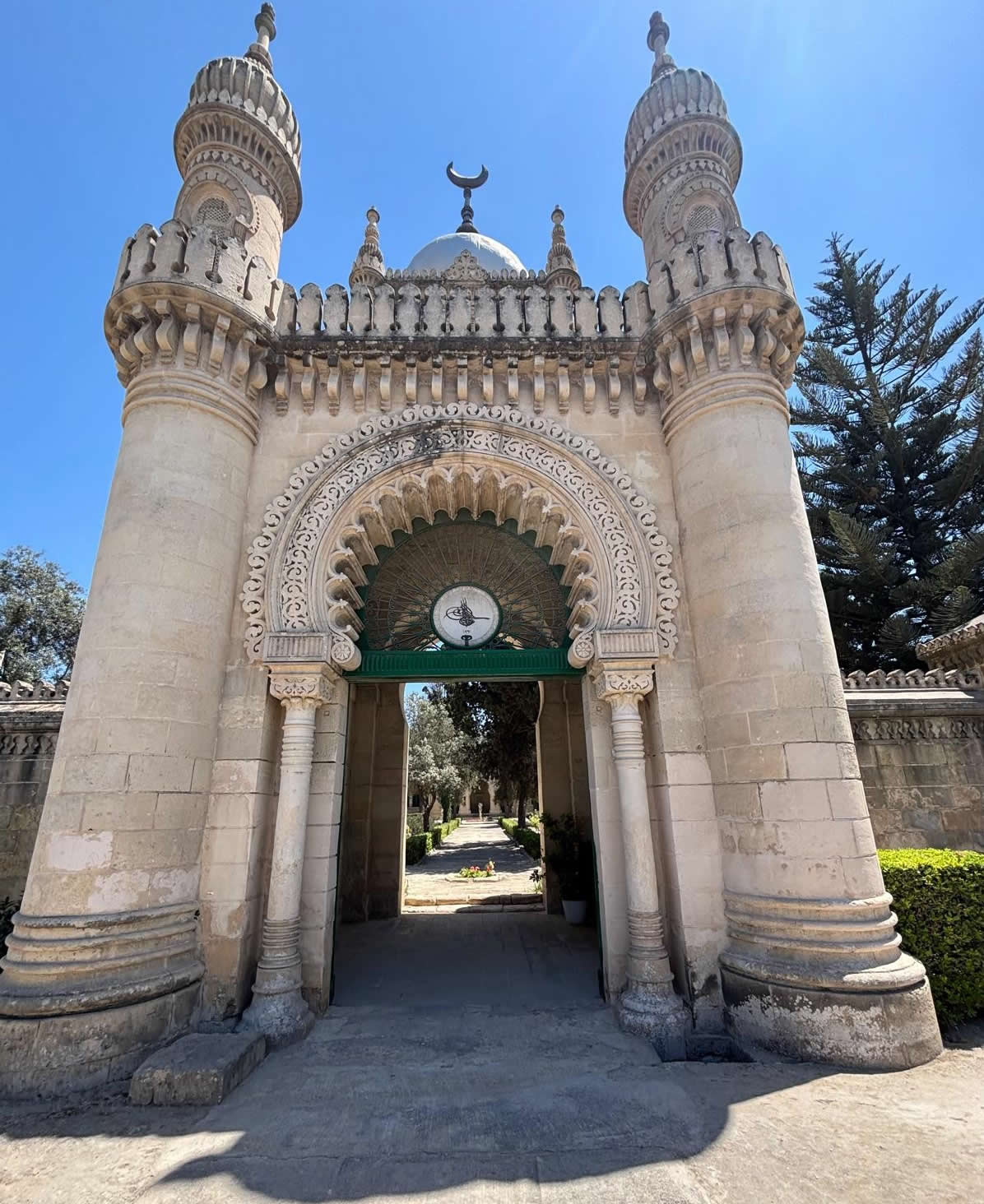
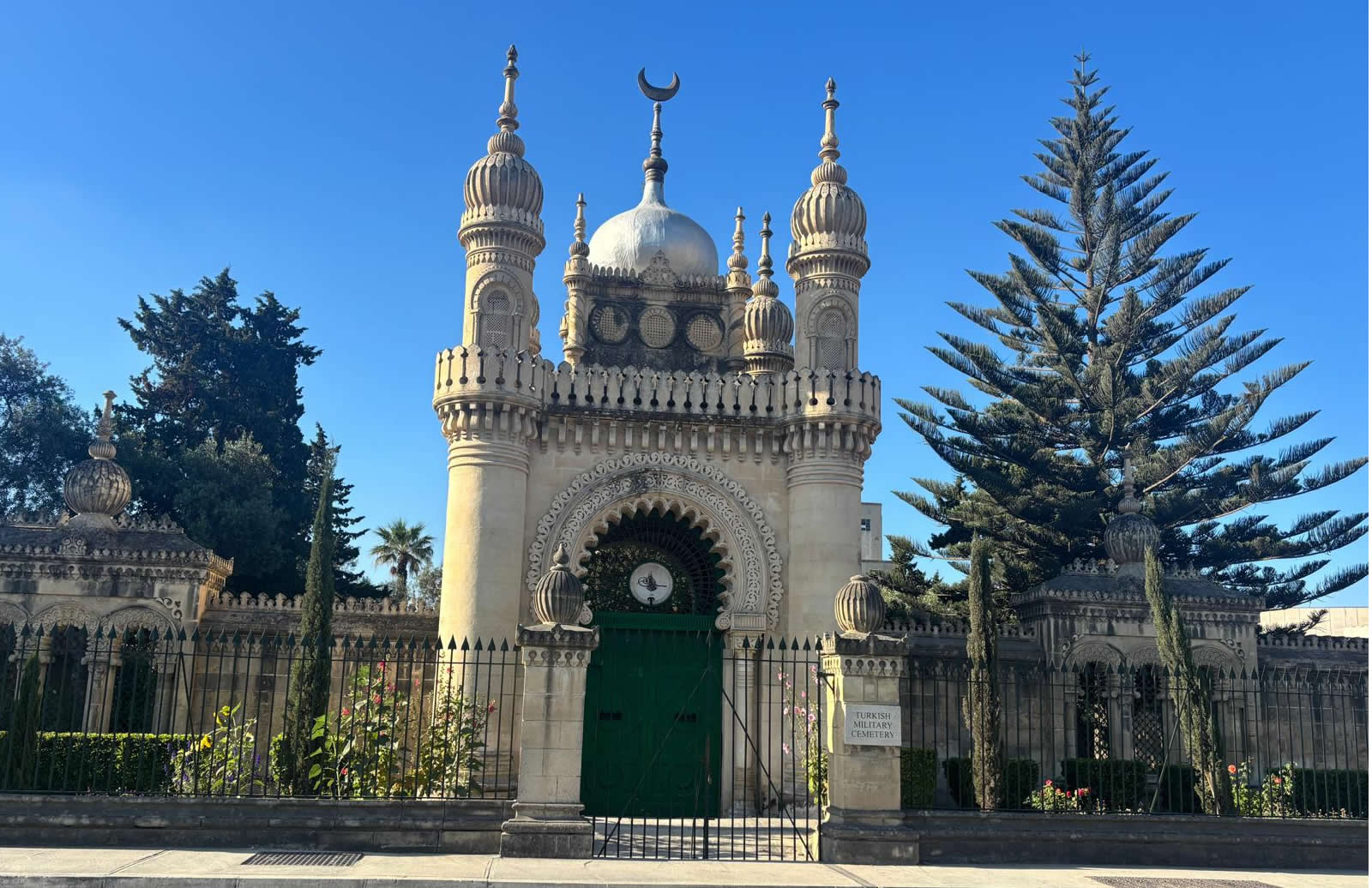
Rising unexpectedly out of the industrialized landscape and fast-moving traffic arteries of Marsa, the Turkish Military Cemetery (known natively in Maltese as Iċ-Ċimiterju tat-Torok) stands as one of the most visually mesmerizing and culturally fascinating architectural wonders in the Maltese Islands. Framed against the background of limestone quarries and transport yards, its exotic bulbous domes, tapering minarets, and lace-like geometric carvings arrest the eye, instantly transporting the viewer to the historic landscapes of Istanbul or Agra.
Yet, far from being a displaced foreign import, this extraordinary structural complex is deeply intertwined with Malta's complex historical narrative. It represents a poignant intersection of Ottoman imperial ambition, British colonial infrastructure, and the unparalleled creative vision of Malta's premier nineteenth-century master architect, Perit Emanuele Luigi Galizia. Described by global architectural historians as the "Ottoman Taj Mahal," it represents a bold statement of artistic synthesis and diplomacy, remaining arguably the most important surviving example of nineteenth-century Ottoman architectural design built beyond the physical borders of the historical Ottoman Empire.
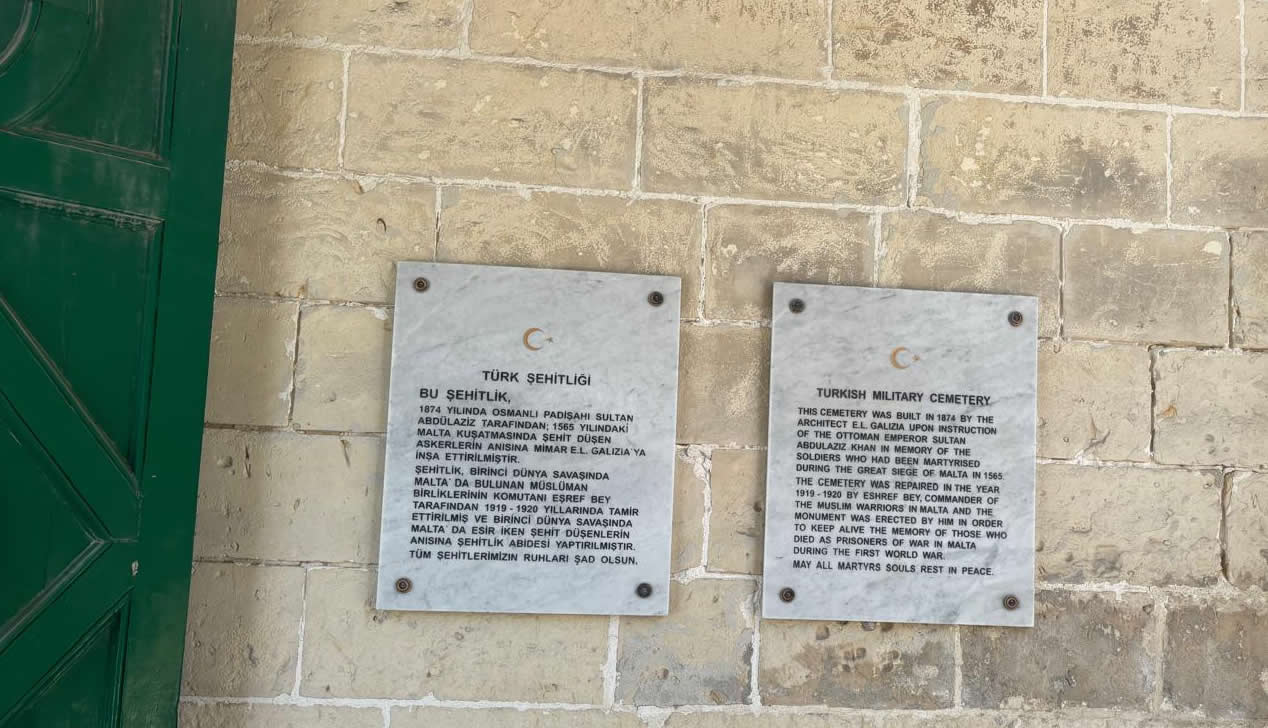
1. The Historical Context: Tracing Islamic Burial Sites in Marsa
The current cemetery structure completed in 1874 was not the first Islamic burial ground in this low-lying region of Malta. The geographical basin of Marsa—situated at the sheltered inner tip of the Grand Harbour—had long served as an area of interaction, conflict, and encampment. During the cataclysmic events of the Great Siege of 1565, the massive Ottoman forces commanded by Mustapha Pasha camped directly within the marshy pastures of Marsa, exploiting its natural fresh-water wells. Following the intense skirmishes around the harbor, hundreds of fallen Ottoman soldiers were hastily interred in unrecorded communal trenches across the area.
Throughout the centuries of the Order of Saint John’s rule over Malta, a continuous population of Muslim slaves, sailors, and traders passed through or resided on the islands. A dedicated burial ground was established at nearby il-Menqa to receive the remains of Muslim slaves who perished within the structural confines of the Valletta bagnos (slave prisons).
In 1675, following the structural expansion of the Floriana Lines, this early cemetery was relocated further inland to an elevated plot near Spencer Hill, running along the historical Via della Croce (the boundaries of modern-day Ħamrun and Marsa). This seventeenth-century cemetery operated continuously for nearly two centuries under the tacit acknowledgement of the local authorities. However, by the mid-nineteenth century, the rapid growth of Malta's maritime economy and British naval infrastructure necessitated sweeping layout changes. The planned expansion of the inner harbor dockyard facilities and the creation of new thoroughfares required the complete relocation of the Spencer Hill cemetery.
2. The Royal Commission of Sultan Abdülaziz I (1867)
The catalyst for the modern monument came in 1867, during a historic visit to Malta by the 32nd ruler of the Ottoman Empire, Sultan Abdülaziz I. As the first Ottoman sultan to conduct an official state tour of Western Europe, Abdülaziz’s voyage was designed to foster strong diplomatic ties with European powers, including the British Empire. Upon pulling into the Grand Harbour, the Sultan became acutely aware of the unsatisfactory and neglected condition of the existing Muslim cemetery plot at Spencer Hill.
Determined to establish a dignified resting place for his subjects that reflected the artistic prestige of the sublime Porte, the Sultan negotiated directly with the British Governor of Malta to purchase a fresh, larger plot of land further south in Marsa. To oversee the execution of this grand diplomatic project, the Ottoman Empire looked directly to Naoum Duhany Efeendy, the Consul General to Malta. Rather than flying out an imperial architect from Constantinople, the Ottoman consulate astutely selected Perit Emanuele Luigi Galizia, who was already serving as the Chief Perito within the British Colonial Public Works Department.
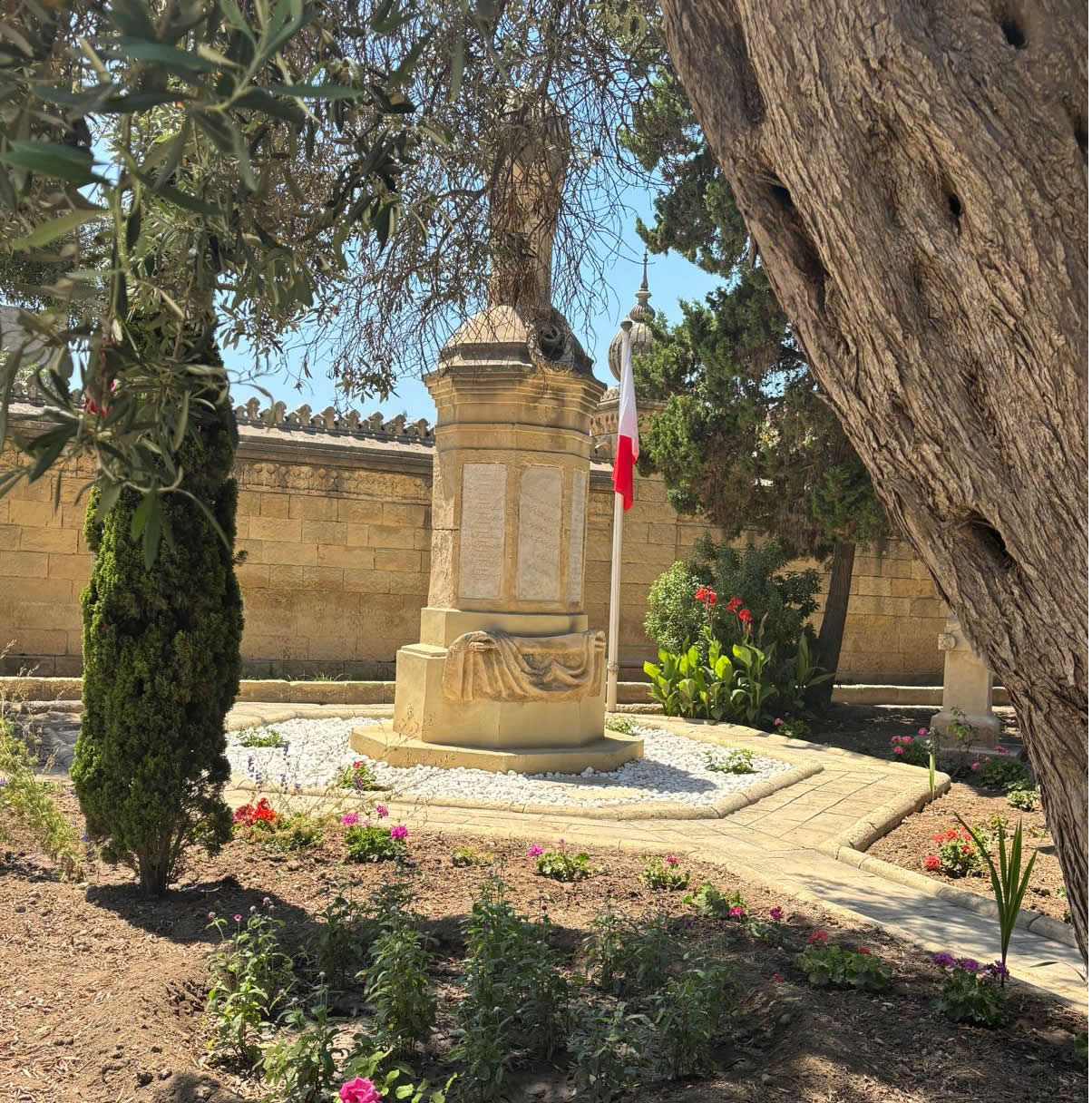
3. The Architecture: Galizia’s Exotic Masterpiece
When Galizia received the commission in 1873, he was already celebrated for his monumental design of the nearby Gothic Revival masterpiece, the Santa Marija Addolorata Cemetery. While the soaring spires of the Addolorata catered perfectly to the Catholic sensibilities of the era, the Turkish commission demanded an entirely different, bold creative palette.
Galizia embraced the nineteenth-century currents of Romantic Orientalism and Eclecticism. Drawing structural inspiration from his official travels through British colonial Cyprus, alongside visual references to John Nash’s famous Royal Pavilion in Brighton, Galizia drafted a rectangular, walled necropolis that harmonized traditional Islamic motifs with Western symmetry and precision.
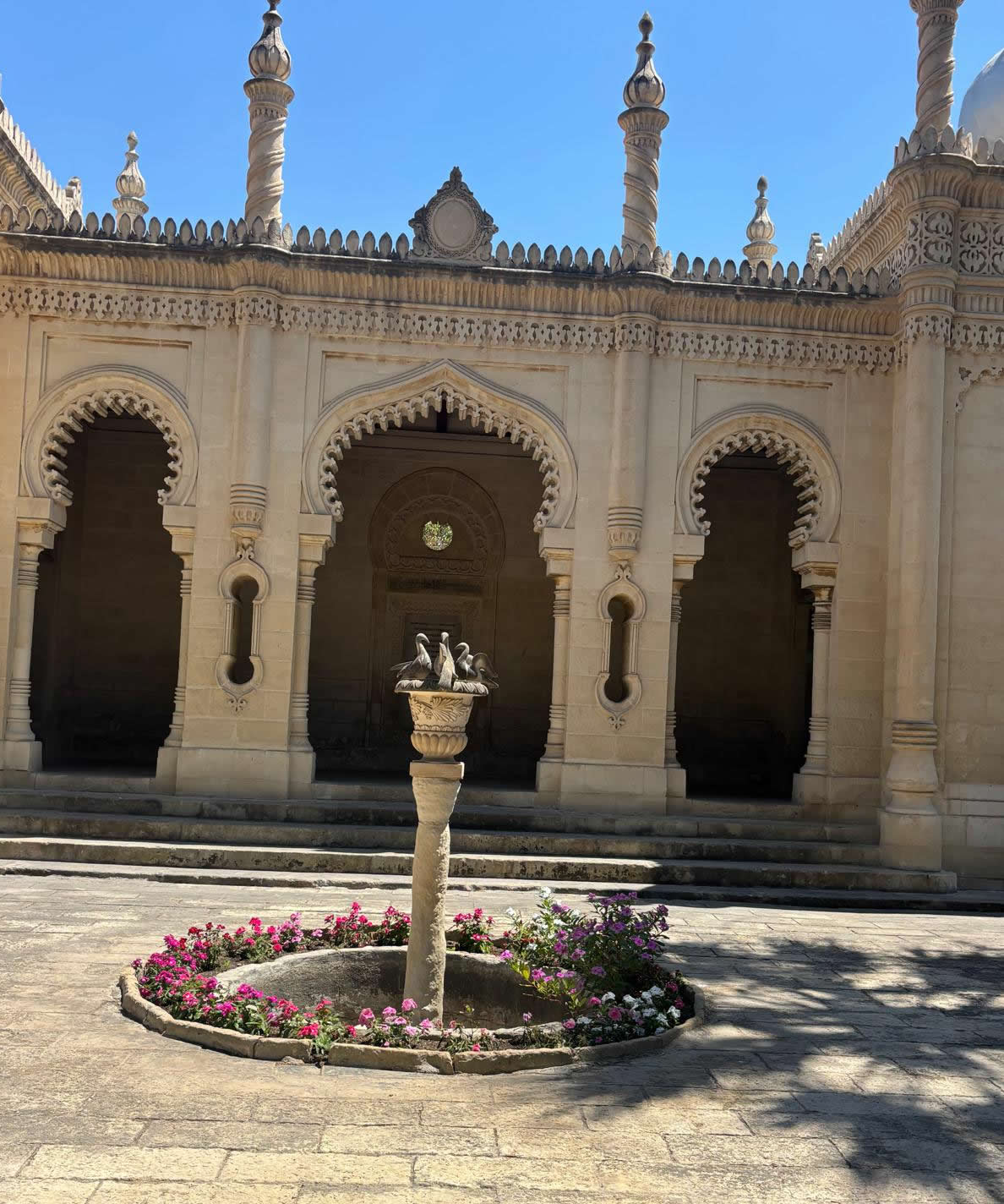
The Entrance Gate and Minarets
The defining feature of the exterior facade is the magnificent, symmetrical entrance pavilion. Constructed entirely out of premium local Maltese Globigerina limestone, the central portal features a dramatic, recessed horseshoe arch reminiscent of Moorish Spain. Flanking this grand portal are four slender, highly stylized minaret towers that frame the sky. Each minaret is carved with precision, featuring structural galleries and culminating in perfectly proportioned, miniature stone onion domes topped with the crescent sickle of Islam.
The Inner Courtyard and Ablution Fountain
Upon crossing the threshold of the main portal, visitors enter a highly ordered, serene courtyard space designed to offer a total sanctuary from the outer world. At the absolute geometric center of this open space rests an exquisite, freestanding ablution fountain (shadirvan). The fountain features highly delicate, low-relief geometric and floral stone carvings, allowing water to flow in accordance with Islamic ritual cleansing traditions prior to prayer.
The Arcaded Prayer Lodge
Dominating the rear of the enclosure is the arcaded prayer lodge or pavilion structure. The facade is defined by a repetitive series of elegant horseshoe arches supported by limestone pillars. The structure is crowned by a sweeping, bulbous sequential dome that is deeply fluted, creating a dramatic interplay of light and shadow under the intense Maltese sun. The pinnacle of the dome is crowned by a large, wrought-iron crescent finial.
4. Historical Use: From Imperial Subjects to World War I
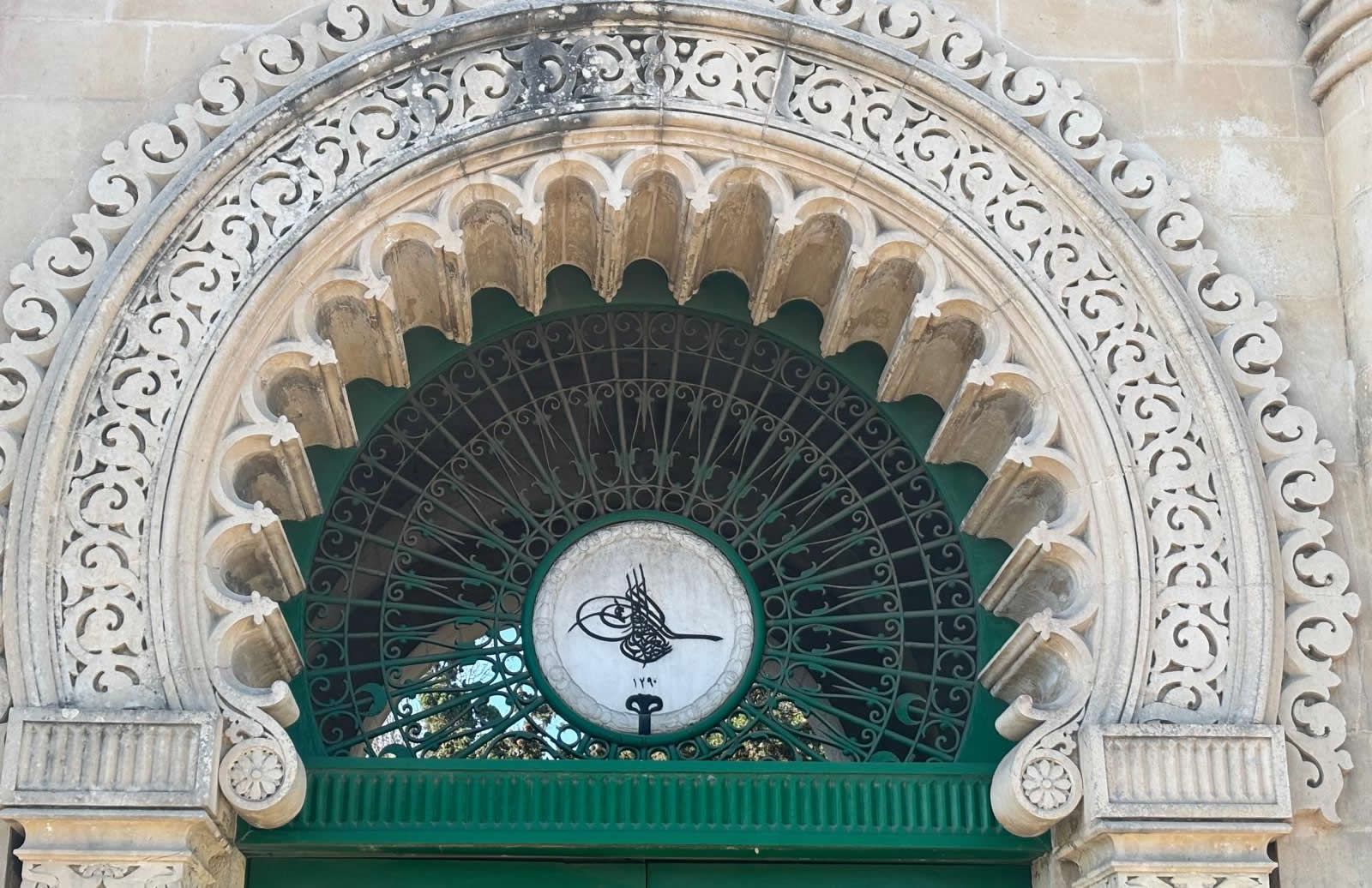
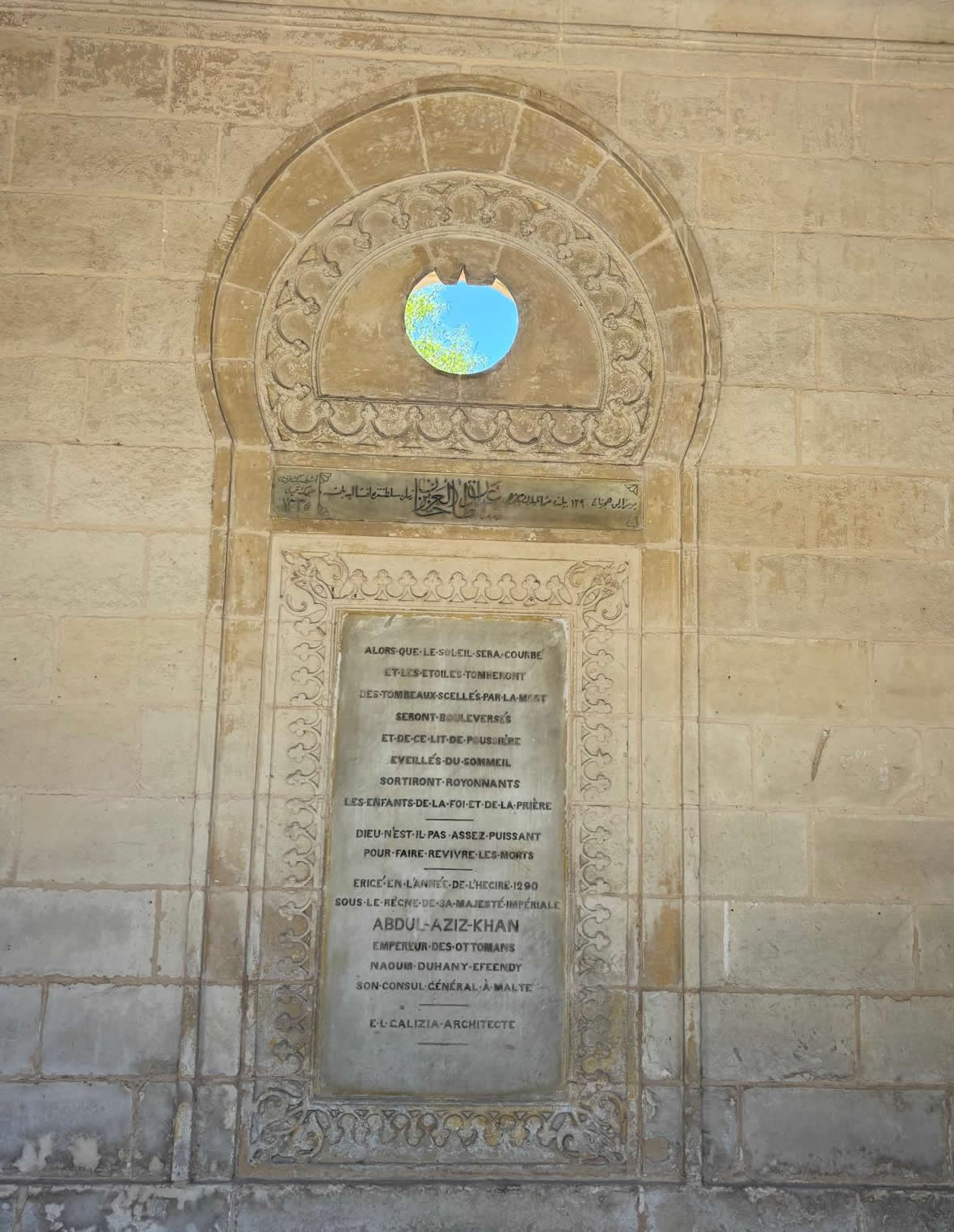
Upon its formal consecration and completion in late 1874, the site immediately became the official repository for all Muslims who passed away within the territorial waters or lands of the Maltese Islands. An inscription carved directly above the main portal entry commemorates the foundation of the space:
"Erected in the year 1290AH (1874) during the reign of his Imperial Majesty Abdul Aziz Khan, Emperor of the Ottomans. Naoum Duhany Efeendy – his Consul General to Malta. E. L. Galizia – Architect."
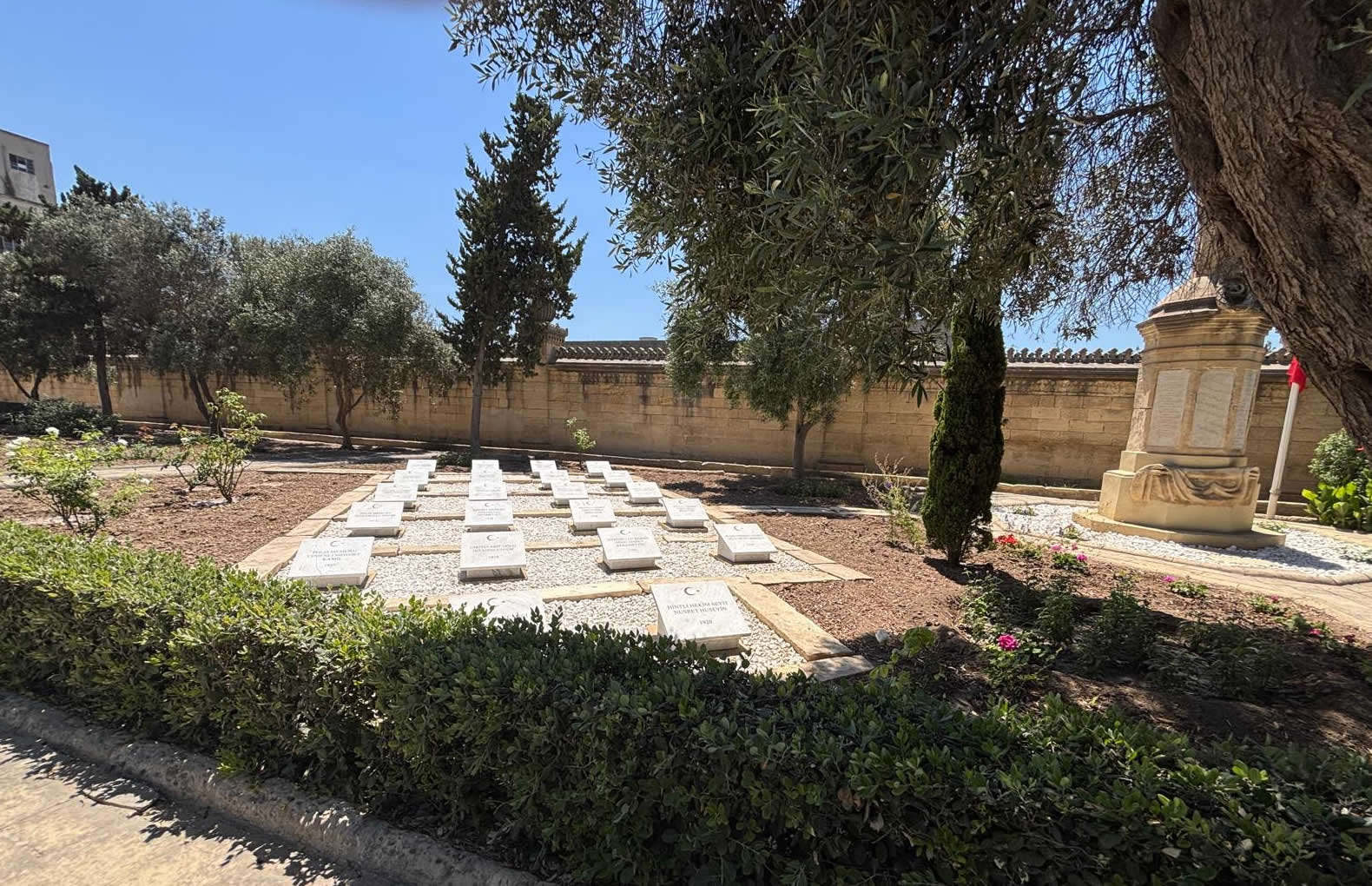
While the initial interments consisted primarily of merchant sailors, Ottoman travelers, and casual laborers, the arrival of the early twentieth century transformed the quiet graveyard into a true military necropolis. During the global trauma of World War I (1914–1918), Malta assumed the moniker of the "Nurse of the Mediterranean," taking in thousands of wounded soldiers from the Gallipoli and Salonika campaigns.
Concurrently, the British authorities established secure prisoner-of-war camps across Malta, interring hundreds of captured Ottoman soldiers and sailors. Those prisoners who succumbed to wounds, disease, or influenza while in captivity were laid to rest with full religious honors within the walls of Galizia’s cemetery. Today, a uniform array of neatly arranged, upright limestone headstones marks these rows, each meticulously carved with Ottoman script, signifying their ultimate sacrifice far from home.
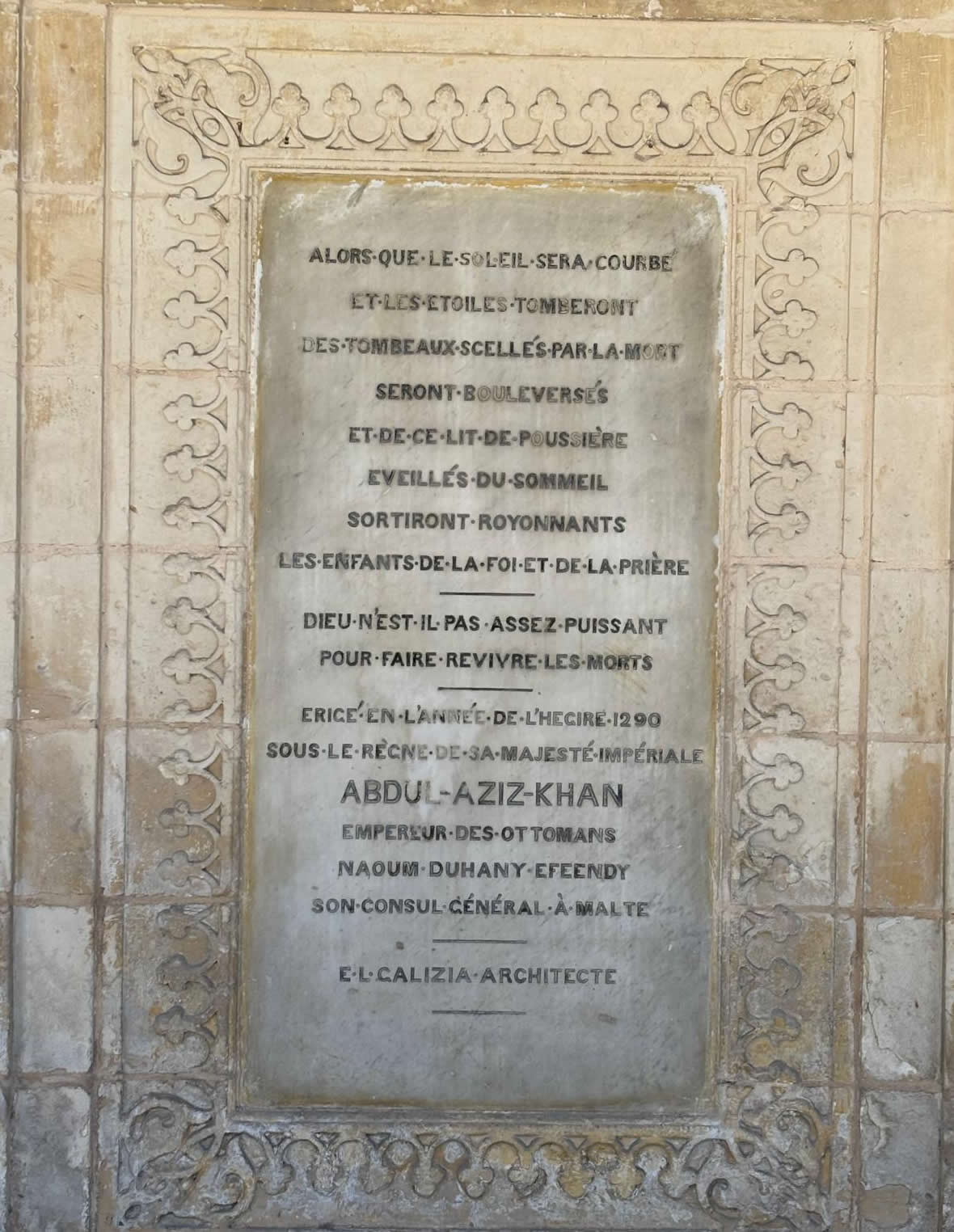
The Foundation Plaque: Imperial Inscription
Set within an intricately carved limestone border on the cemetery's main structure is a monumental marble tablet. Written in French—the global language of nineteenth-century diplomacy—the text combines poetic, monotheistic reflections on the resurrection with formal state acknowledgments of the Ottoman patronage, the diplomatic delegation, and the local master architect.
Original French Transcription
ALORS QUE LE SOLEIL SERA COURBÉ
ET LES ÉTOILES TOMBERONT
DES TOMBEAUX SCELLÉS PAR LA MORT
SERONT BOULEVERSÉS
ET DE CE LIT DE POUSSIÈRE
ÉVEILLÉS DU SOMMEIL
SORTIRONT RAYONNANTS
LES ENFANTS DE LA FOI ET DE LA PRIÈRE
—
DIEU N'EST-IL PAS ASSEZ PUISSANT
POUR FAIRE REVIVRE LES MORTS
—
ÉRIGÉ EN L'ANNÉE DE L'HÉGIRE 1290
SOUS LE RÈGNE DE SA MAJESTÉ IMPÉRIALE
ABDUL-AZIZ-KHAN
EMPEREUR DES OTTOMANS
—
NAOUM DUHANY EFEENDY
SON CONSUL GÉNÉRAL À MALTE
—
E. L. GALIZIA ARCHITECTE
English Translation
WHEN THE SUN SHALL BE FOLDED UP
AND THE STARS SHALL FALL,
THE TOMBS SEALED BY DEATH
SHALL BE OVERTHROWN,
AND FROM THIS BED OF DUST,
AWAKENED FROM SLEEP,
SHALL COME FORTH RADIANT
THE CHILDREN OF FAITH AND PRAYER.
—
IS NOT GOD POWERFUL ENOUGH
TO BRING THE DEAD BACK TO LIFE?
—
ERECTED IN THE YEAR OF THE HIJRA 1290
UNDER THE REIGN OF HIS IMPERIAL MAJESTY
ABDÜLAZIZ KHAN
EMPEROR OF THE OTTOMANS,
—
NAOUM DUHANY EFEENDY
HIS CONSUL GENERAL IN MALTA.
—
E. L. GALIZIA, ARCHITECT.
5. Chronological History of the Cemetery Complex
| Year / Era | Historical Event & Structural Significance |
|---|---|
| 1565 | Ottoman military troops camp in Marsa during the Great Siege; early unrecorded burial ditches created. |
| 1675 | Earlier Muslim burial grounds at il-Menqa are moved to Spencer Hill due to the building of the Floriana Lines. |
| 1865 | British colonial roadworks require the complete closure and relocation of the old Spencer Hill site. |
| 1867 | Sultan Abdülaziz I visits Malta and commissions a new, grand repository at his own imperial expense. |
| 1873 | Perit Emanuele Luigi Galizia begins drafting the flamboyant, Neo-Ottoman structural plans. |
| 1874 | Construction terminates; Galizia is awarded the prestigious imperial Order of Medjidie (4th Class). |
| 1914–1918 | World War I prisoners of war who died in Malta are buried inside the cemetery with full military honors. |
| 2015–2018 | The Turkish Government funds a comprehensive, multi-million euro structural restoration of the site. |
6. Artworks and Masterful Stone Carvings
The artistic brilliance of the Turkish Military Cemetery rests in its exquisite, detailed stone craftsmanship. Rather than relying on painted icons, frescoes, or cast bronze statues—which are forbidden under traditional Islamic iconoclastic principles—the artistic weight of the complex is carried entirely by intricate geometric stonework and calligraphy.
Maltese stone masons, working under Galizia’s direct supervision, pushed the limits of soft Globigerina limestone. Every single window opening is screened by intricate, hand-carved stone tracery (jali), which filters incoming natural light into complex geometric shapes. The corners of the main boundary walls feature miniature projecting bartizans that echo traditional Ottoman defensive architecture, seamlessly blending military security with romantic aesthetics. The grave markers themselves are examples of high-relief typography, featuring beautifully executed Arabic calligraphy detailing the name, rank, and origins of the deceased.
7. Environmental Challenges and the Modern Restoration
Despite its structural beauty, the site’s geographic location has exposed it to extreme environmental hazards over the past century. Because the Marsa basin sits at the lowest topographical point of the surrounding valley systems, the cemetery has historically suffered from **severe flash flooding** during stormy winter months. For decades, highly brackish, silt-heavy floodwaters regularly breached the perimeter walls, submerging the lower courses of the delicate limestone buildings.
Furthermore, the rapid rise of heavy surrounding industries, combined with toxic exhaust emissions from the neighboring Triq Diċembru 13 highway, accelerated the structural decay. The acidic soot settled heavily into the porous limestone, causing severe black crusting, surface powdering, and the tragic fracturing of the pointed minaret pinnacles, some of which were completely split by direct lightning strikes.
The Global Restoration Project (2015–2018)
Recognizing the critical state of this global treasure, a comprehensive, multi-year restoration project was launched in October 2015. Financed and directed entirely by the Government of the Republic of Turkey, the project brought together international conservationists and master Maltese stone masons.
The extensive works focused on carefully removing decades of thick industrial soot using non-destructive laser cleaning techniques, consolidating fractured structural blocks, and completely rebuilding the delicate, missing stone pinnacles on the minarets. Furthermore, modern drainage networks were integrated around the outer perimeter walls to divert flash floodwaters away from the low-lying site, ensuring that Galizia's masterpiece survives for generations to come.
Frequently Asked Questions
Q: Who designed the Turkish Military Cemetery in Marsa?
A: The cemetery was designed by the preeminent 19th-century Maltese civil engineer and architect Perit Emanuele Luigi Galizia, who also designed the nearby Santa Marija Addolorata Cemetery and Ta' Braxia Cemetery.
Q: Can you visit the Turkish Military Cemetery in Malta?
A: The cemetery is owned and maintained by the Republic of Turkey. While the main perimeter gates along Triq Diċembru 13 are generally locked to safeguard the delicate stonework, access can sometimes be requested for research or diplomatic purposes via the Turkish Embassy in Malta.
Q: Why is it nicknamed the 'Ottoman Taj Mahal'?
A: The nickname was coined by architectural historians due to the building's exceptional, flamboyant mixture of Neo-Ottoman, Indo-Mughal, and Moorish styles, making it arguably the most important 19th-century Ottoman monument standing outside the borders of the former empire.
Q: Are Great Siege soldiers buried at this cemetery?
A: No. While an ancient, unrecorded ditch cemetery near the Menqa area held Ottoman casualties from the 1565 Great Siege, this specific site contains individuals buried from 1874 onward, including prisoners of war from WWI.