📍 Location
Location Map Coordinates 35.874315, 14.441945
An Epigraphical and Architectural Exposition on the 1562 Foundations, the 1676 Contagion Boundary, and the 1956 Dun Filippu Calleja Translocation Monument
1. Deep Timeline: The 1562 Foundation and Parish Framework
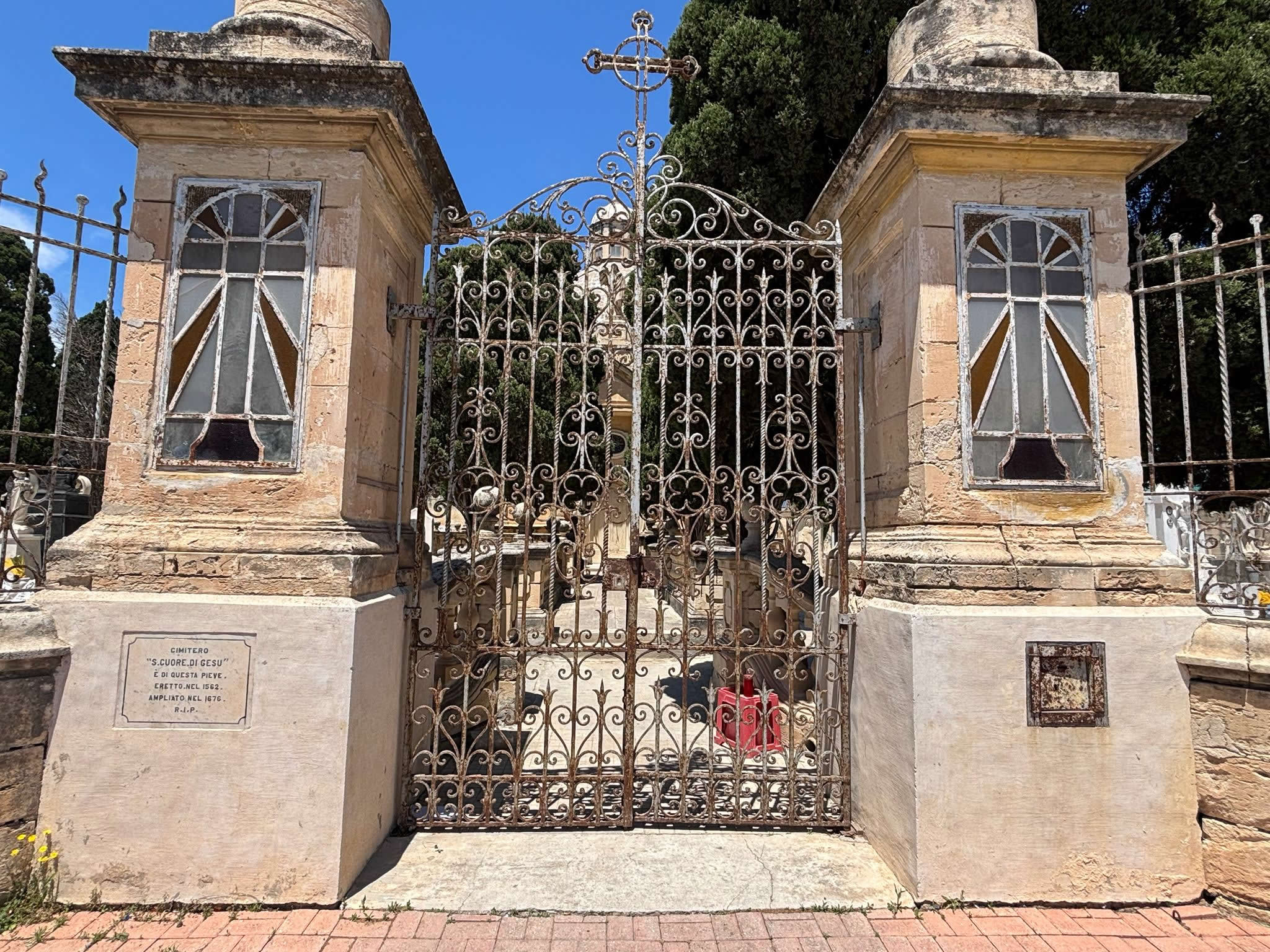
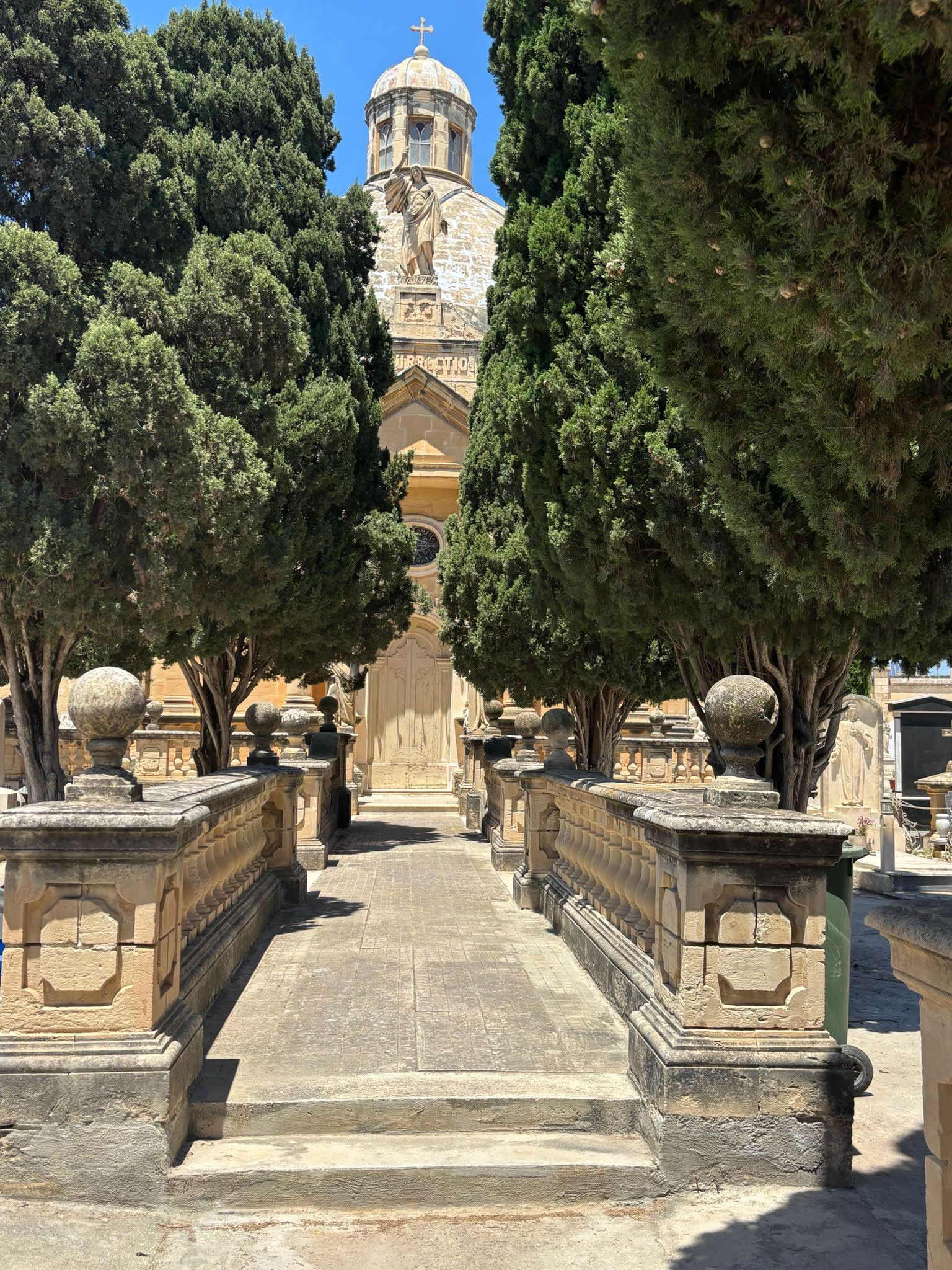
The Qalb ta' Ġesù Cemetery (venerated locally as the Żebbuġ Central Cemetery or Ċimiterju tal-Qalb ta' Ġesù) stands as one of the most historically complex funerary spaces in the Maltese islands. Situated along the major thoroughfare of Triq l-Imdina, its present structural expanse masks a multi-layered chronology that spans nearly half a millennium. For generations, casual architectural surveys attributed the site entirely to late nineteenth-century municipal developments. However, recent epigraphical documentation and on-site fieldwork have shattered this misconception, establishing the site as an early Renaissance-era landmark.
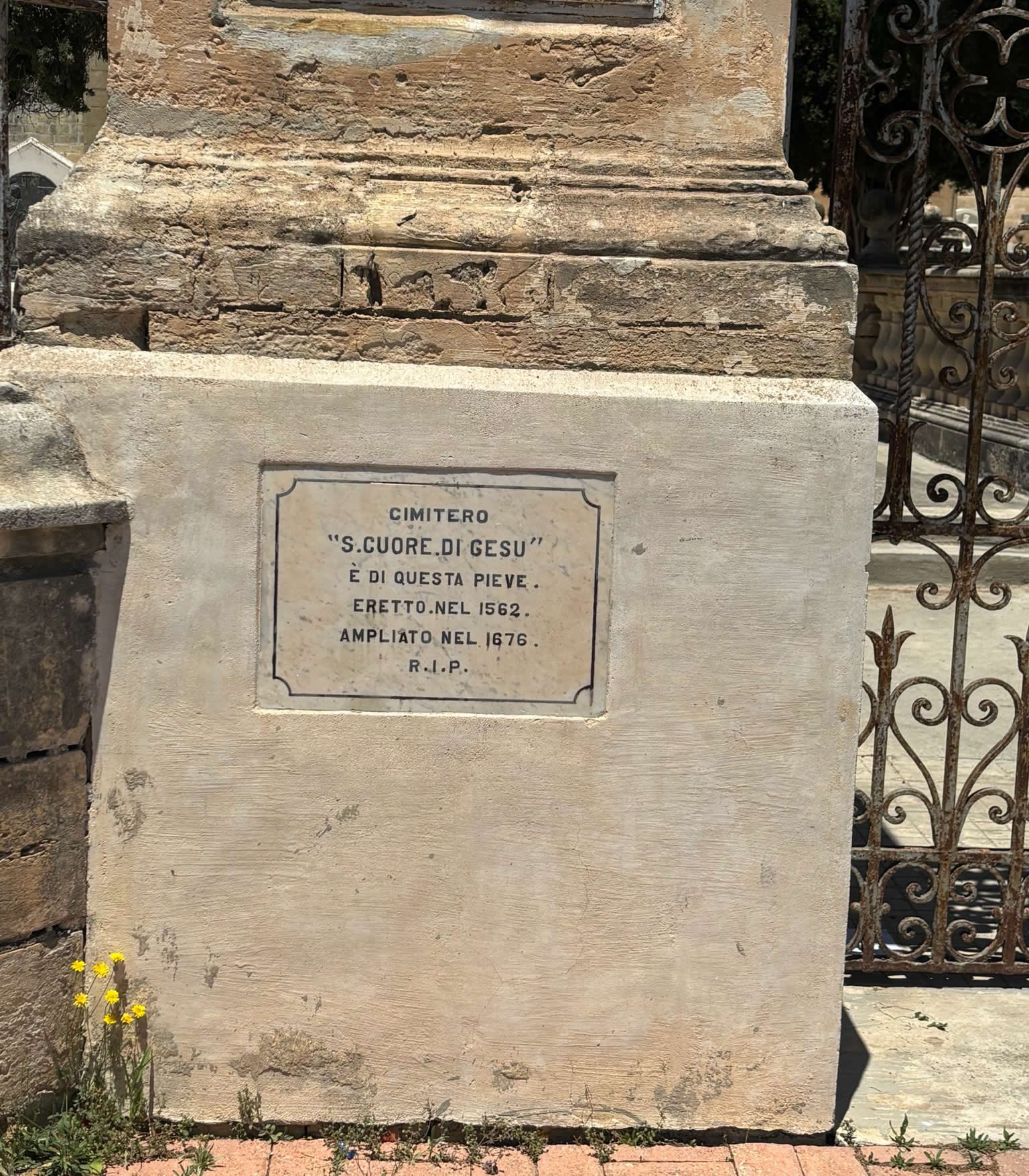
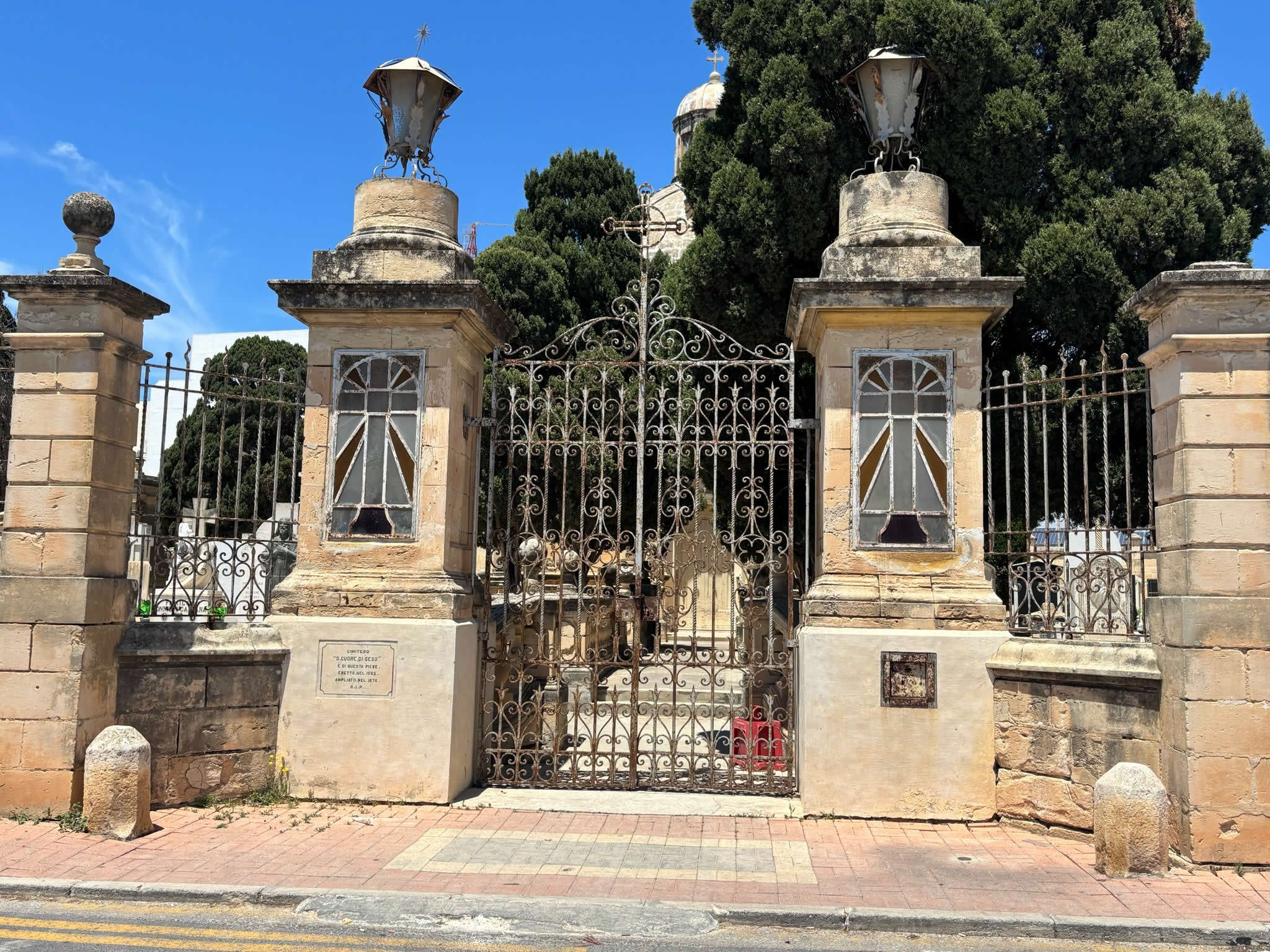
An authentic, beautifully incised white marble plaque inset into the lower base of the main entrance pillar provides irrefutable proof of the site's antiquity. The inscription reads: ERETTO NEL 1562 (Erected in 1562). This positions the original burial ground’s consecration a mere three years prior to the Great Siege of Malta, during the rule of the Order of St. John under Grand Master Jean de Valette. The inscription explicitly clarifies that the cemetery È DI QUESTA PIEVE—meaning it belonged directly to the local parish community (pieve being the classical Italian term for a parish territory or mother church). This confirms that long before the creation of the standard nineteenth-century extramural cemetery system, Ħaż-Żebbuġ had established a highly organized, consecrated regional burial field away from its immediate residential core to manage its demographic needs safely.
2. The Crisis of 1676: Epidemic Expansion and Public Health Yards
The second line of the primary entry inscription contains a vital piece of epidemiological history for the Maltese islands: AMPLIATO NEL 1676 (Expanded in 1676). The year 1676 represents the single most catastrophic bubonic plague outbreak in Maltese history under the Knights of St. John. The contagion, which entered the islands via a French naval vessel, killed over 11,300 people, devastating dense urban areas and rural villages alike.
During this severe public health emergency, traditional indoor crypt burials inside the old parish churches were quickly banned by order of the Grand Master and the Proto-Medicus to prevent the spread of "miasma." Parishes across Malta were forced to rapidly establish or expand walled, extra-mural isolation fields to handle mass fatalities. The epigraphical record at Qalb ta' Ġesù confirms that the existing 1562 parish cemetery was heavily expanded in 1676 specifically to serve as an emergency quarantine burial ground. This layout created a highly layered historical space, where a traditional, consecrated community cemetery directly integrated an active pestilence containment yard along its borders.
3. Architectural Analysis: The Structural Merging of Two Cemeteries
The physical layout of the cemetery boundaries offers clear visual proof of this historical expansion. Rather than a single uniform wall, the roadside boundary consists of two distinct architectural sections joined together over time, highlighted by two entirely separate entrance gates that served completely different functions.
A. The Primary Parish Entrance Gate
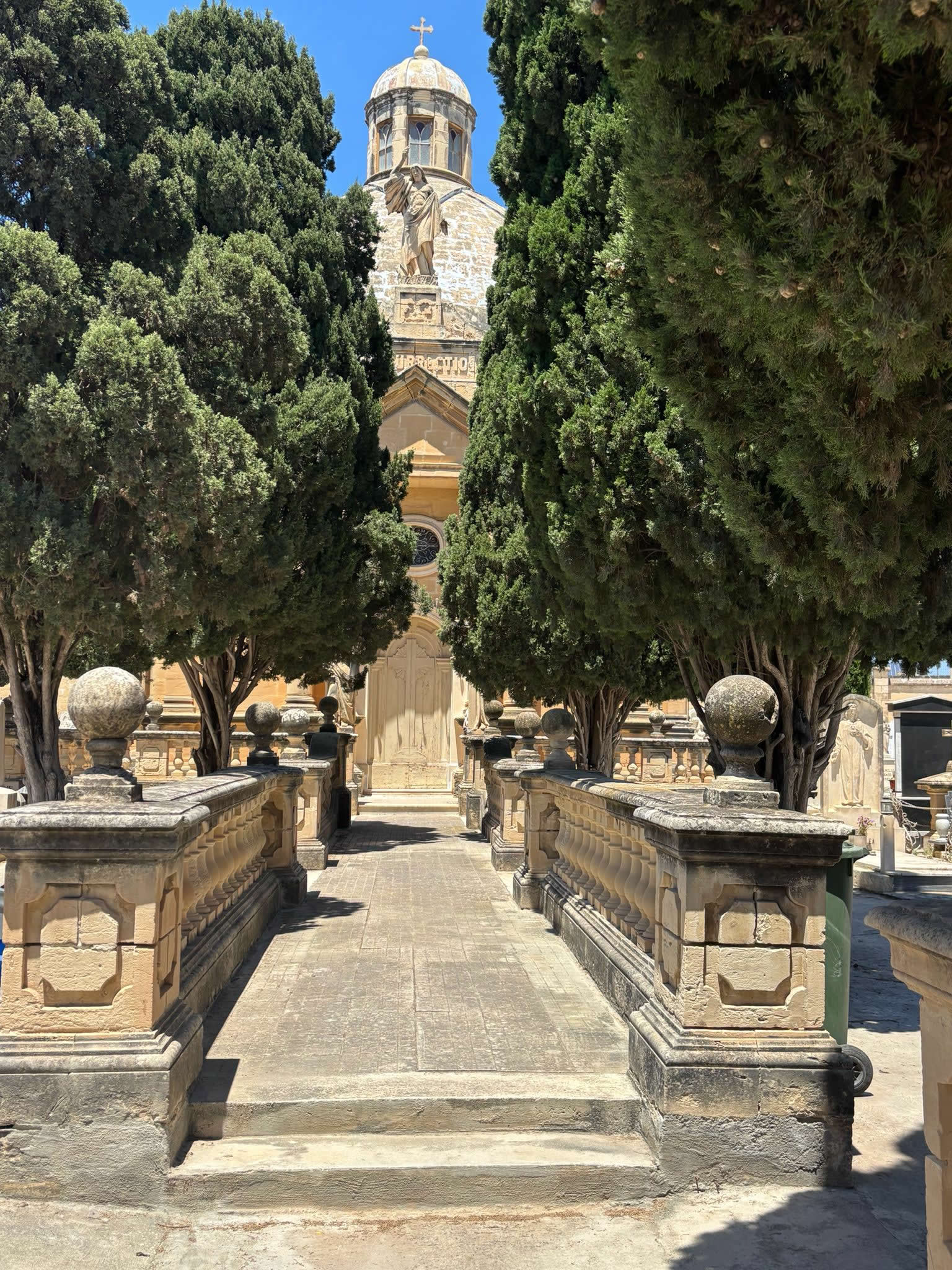
The main central entrance features a grand, institutional style. It is flanked by towering, formal limestone pillars mounted with ornate metal lanterns, leading to fine decorative wrought-iron gates. This entrance was designed to project a stately, comforting presence for standard community burials, providing a formal gateway into the primary consecrated sections of the parish grounds.
B. The Far-Left 1676 Quarantine Entrance Gate
Further down the far-left side of the perimeter stands a completely different gateway. This secondary entrance features an austere, classical style typically used for emergency isolation sites across Malta. The pillars are constructed from heavily weathered, coarse limestone blocks that have aged deeply from the elements over the centuries.
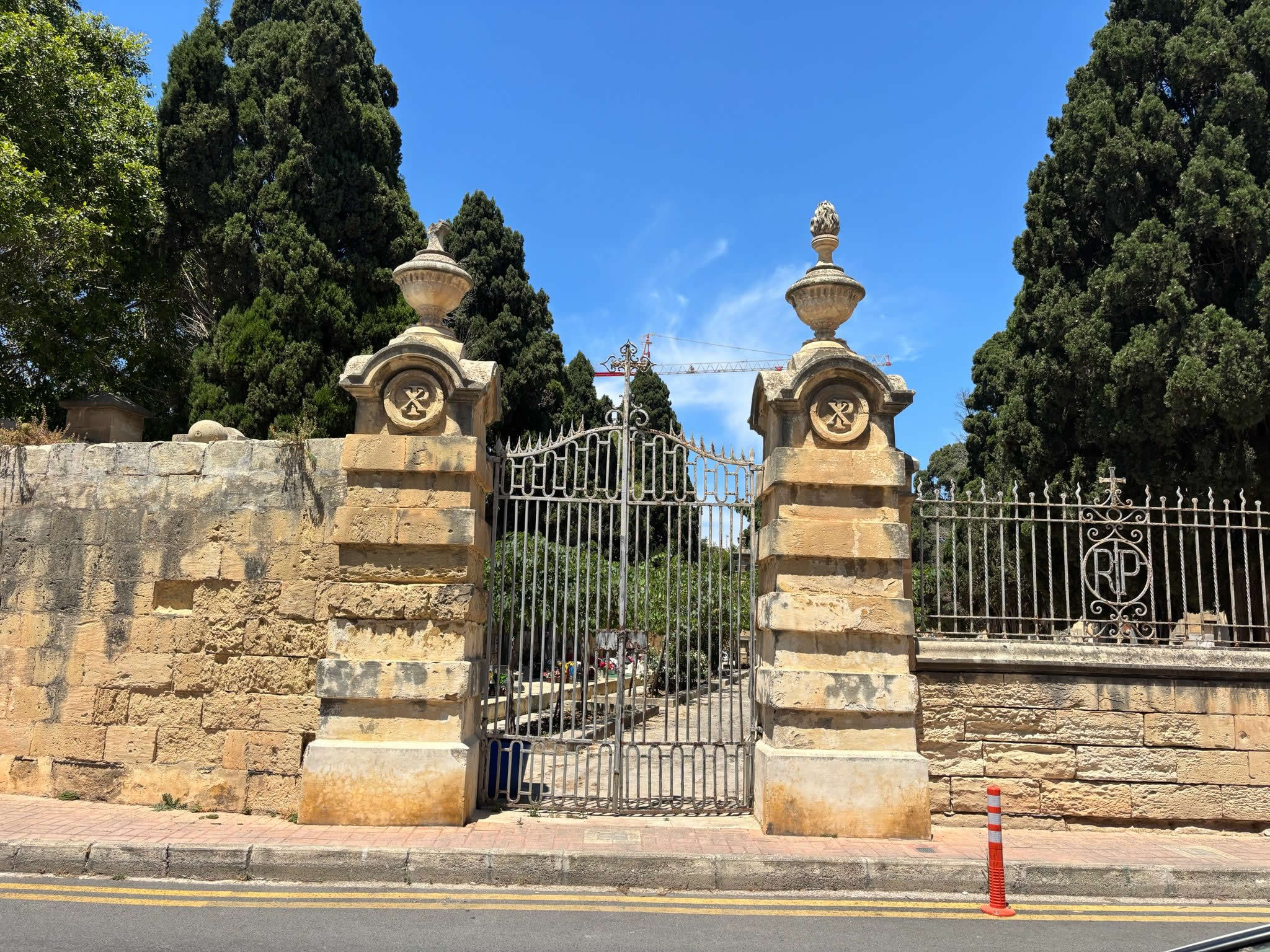
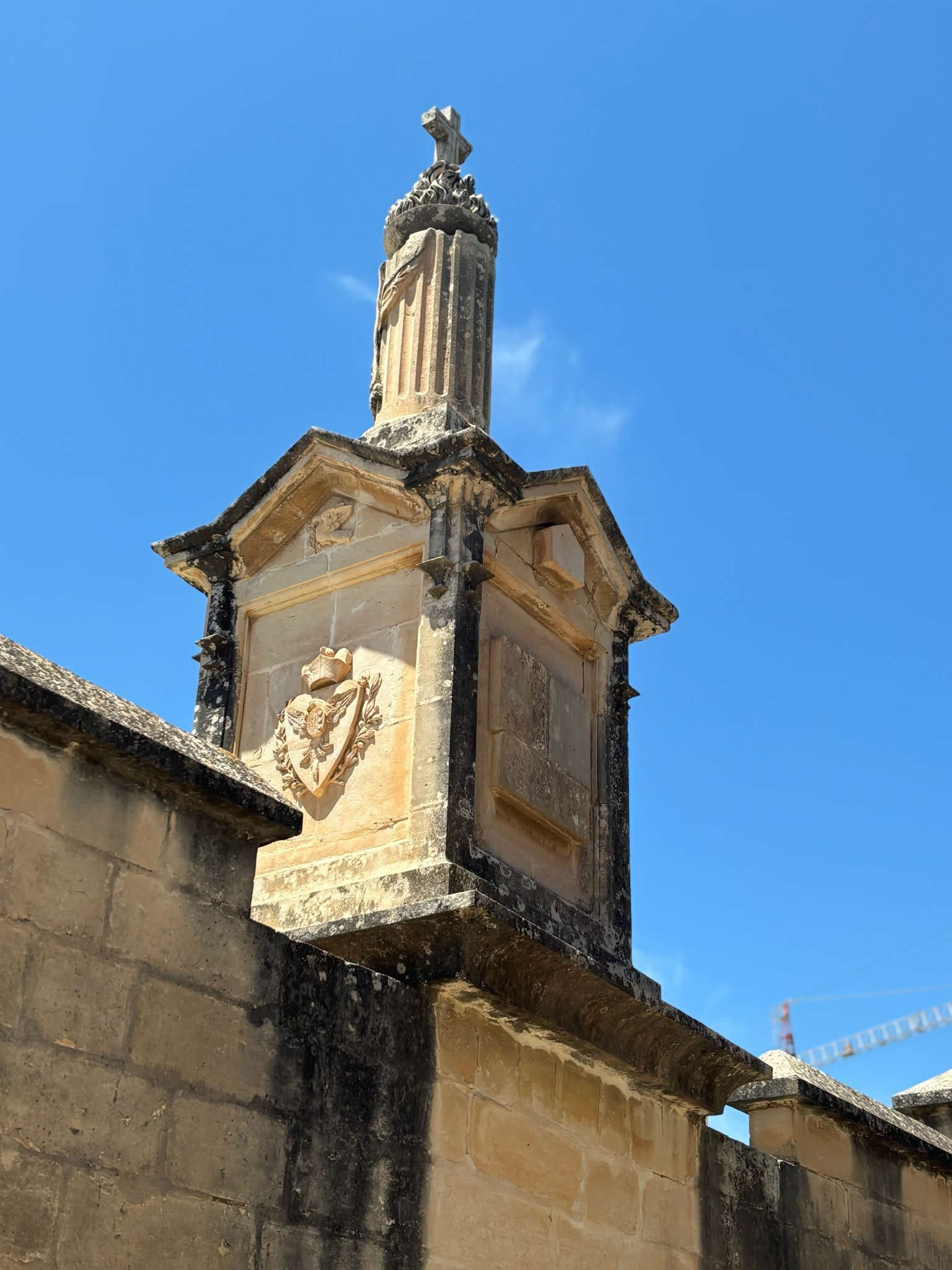
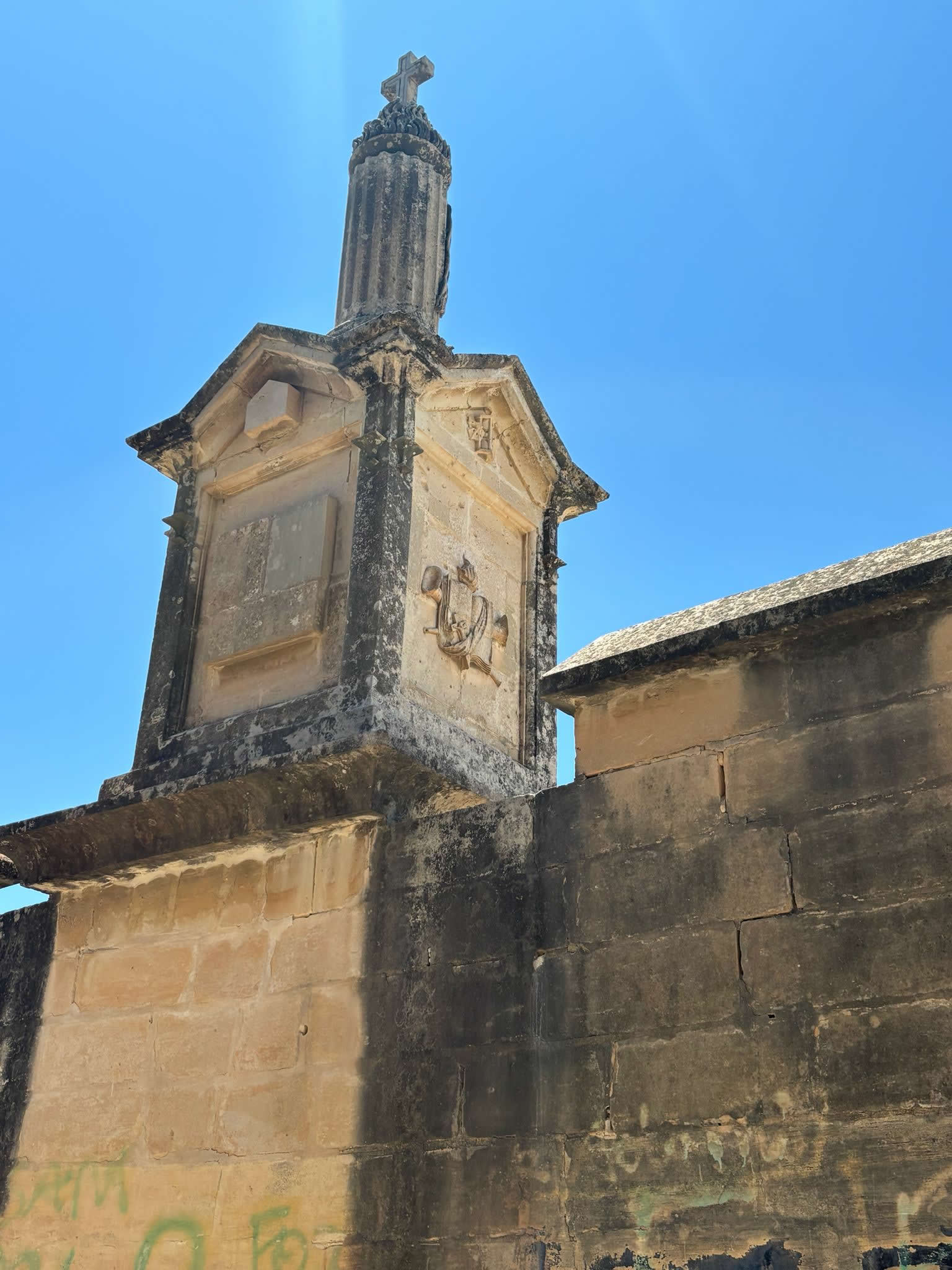
The pillars are topped with distinct carved stone finials: a prominent classical mourning urn on the left and a symbolic pinecone or flame detail on the right. In seventeenth-century funerary architecture, these motifs were explicitly used to signify deep mourning, eternity, and the containment of infectious disease. Furthermore, both pillars feature circular stone medallions carved with the Chi-Rho monogram, a classic Christian symbol often used to mark quarantine zones during times of crisis. The gate itself is basic and functional, designed to seal an isolated space rather than welcome a community. This gate marks the original entrance to the 1676 plague cemetery extension, which was later incorporated into the main cemetery walls as the complex expanded.
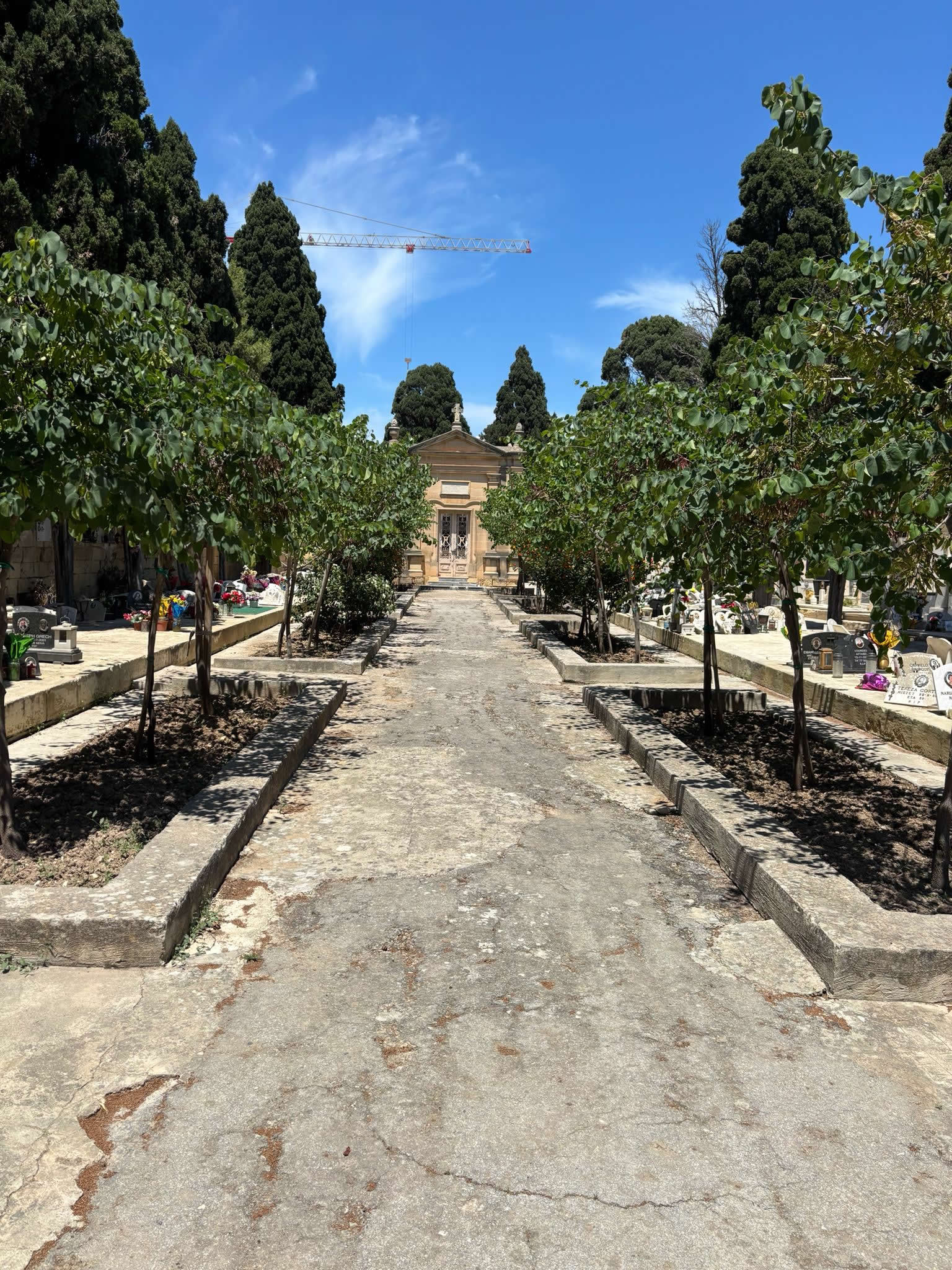
4. Epigraphical Records & The 1956 Calleja Monument
In addition to its 1562 and 1676 history, Qalb ta' Ġesù Cemetery holds deep connections to the 1813 bubonic plague outbreak. This connection was cemented during a major public health and municipal reorganization in the mid-twentieth century. For over a hundred years, the victims of the 1813 epidemic lay in the outlying emergency fields of Ta' Trapna/Sant' Andrija Cemetery, located near a temporary field hospital outside the village center.
In the 1950s, under joint direction from national public health boards and the Archdiocese of Malta, the historic remains at Ta' Trapna were carefully exhumed and moved to a large common vault inside the main section of Qalb ta' Ġesù Cemetery. To mark this important historical translation, a large marble monument was built in the modern section of the grounds, preserving the memory of these individuals within the central community sanctuary.
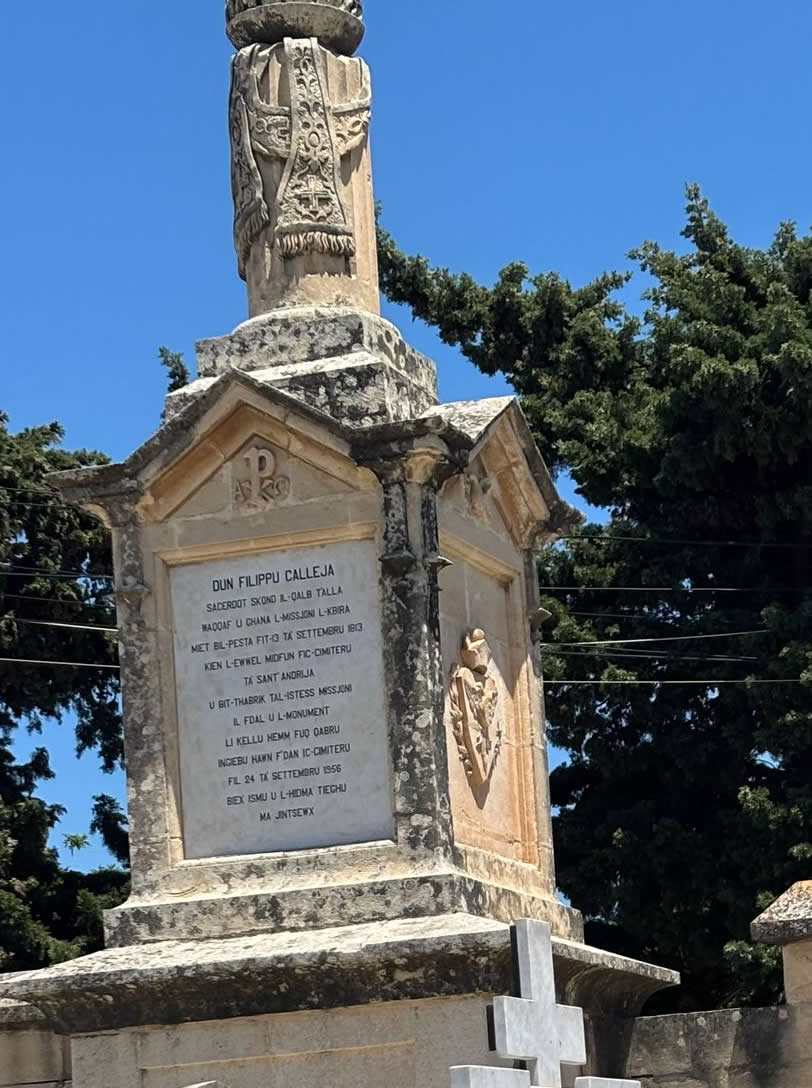
The main plaque on this monument honors Father Philip Calleja (Dun Filippu Calleja), a prominent local priest who was the first major ecclesiastical victim of the 1813 outbreak in Ħaż-Żebbuġ. The inscription offers an invaluable historical record of the 1956 relocation program:
SACERDOT SKOND IL-QALB TA' ALLA
WAQQAF LI GĦANA L-MISSJONI L-KBIRA
MIET BIL-PESTA FIT-13 TA' SETTEMBRU 1813
KIEN L-EWWEL MIDFUN FIĊ-ĊIMITERJU
TA' SANT' ANDRIJA
U BIT-TĦABRIK TAL-ISTESS MISSJONI
IL-FDAL U L-MONUMENT
LI KELLU HEMM FUQ QABRU
INĠIEBU HAWN F'DAN IĊ-ĊIMITERJU
FIL-24 TA' SETTEMBRU 1956
BIEX ISMU U L-ĦIDMA TIEGĦU
MA JINTSEWX
A PRIEST AFTER GOD'S OWN HEART
WHO FOUNDED AND ENRICHED THE GREAT MISSION
DIED OF THE PLAGUE ON THE 13TH OF SEPTEMBER 1813
HE WAS THE FIRST TO BE BURIED IN THE CEMETERY
OF SAINT ANDREW (SANT' ANDRIJA)
AND THROUGH THE EFFORTS OF THE SAME MISSION
THE REMAINS AND THE MONUMENT
WHICH HE HAD THERE OVER HIS GRAVE
WERE BROUGHT HERE TO THIS CEMETERY
ON THE 24TH OF SEPTEMBER 1956
SO THAT HIS NAME AND HIS LABOR
SHALL NOT BE FORGOTTEN
This text provides absolute verification for historians, proving that Father Calleja’s remains and his original carved tomb monument were moved from the St. Andrew/Ta' Trapna zone exactly 143 years after the initial outbreak, ensuring their long-term preservation within the central parish compound.
5. Technical Geodetic Matrix and Web Navigation
To accurately map the historical locations associated with the 1813 and 1676 outbreaks across Ħaż-Żebbuġ, researchers can utilize this technical data profile. The main cemetery grounds are situated along a vital modern artery, providing an excellent vantage point for comparative studies of Malta's historic burial systems.
| Technical Survey Parameter | Field Inventory Reference Data |
|---|---|
| Official Nomenclature | Qalb ta' Ġesù Cemetery (Ċimiterju tal-Qalb ta' Ġesù) |
| Alternative Typology | Integrated Parish Cemetery and 1676 Plague Containment Compound |
| WGS84 Coordinate Grid | 35.874315 Latitude, 14.441945 Longitude |
| Original Foundation Era | 1562 (Eretto - Late Renaissance Period) |
| Epidemic Expansion Era | 1676 (Ampliato - Severe Bubonic Plague Crisis) |
| Key Historical Translations | Ta' Trapna / Sant' Andrija 1813 remains relocated here on September 24, 1956 |
To see how the multi-era architecture and historical monuments at the Żebbuġ Central Cemetery connect with wider parish networks, historic lazarettos, and municipal burial complexes across the islands, explore our comprehensive master guides at the Cemeteries of Malta and Gozo Master Directory as well as our specialized Plague Cemeteries of Malta and Gozo Portal.
6. Frequently Asked Questions (FAQ)
❓ Exactly when was the primary cemetery in Żebbuġ established?
According to the original marble plaque on the main entrance gate pillar, the cemetery was first erected (eretto) in 1562, making it an exceptionally early example of an organized regional burial ground outside Valletta.
❓ Why is the year 1676 prominently listed on the entrance plaque?
The year 1676 marks the single deadliest bubonic plague outbreak in Malta's history. The plaque notes the cemetery was expanded (ampliato) in 1676, confirming that a portion of the site served as an emergency containment field during this major public health crisis.
❓ Why are there two separate main gates along the road fence?
The dual gates indicate that the site was formed by joining two distinct burial grounds. The grand central gate serves the main parish sections, while the smaller gate on the far left shows the classic style of the 1676 plague containment yard, complete with carved mourning urns and pinecone finials.
❓ What happened to the 1813 plague victims from the old Ta' Trapna cemetery?
On September 24, 1956, the remains and original tomb monuments from the outlying Ta' Trapna field were carefully exhumed and moved to a large common vault inside the main section of Qalb ta' Ġesù Cemetery, marked by a prominent commemorative monument honoring Father Philip Calleja.