📍 Location
Location Map Coordinates 35.888984, 14.528217
The Oldest Surviving Jewish Burial Ground in Malta
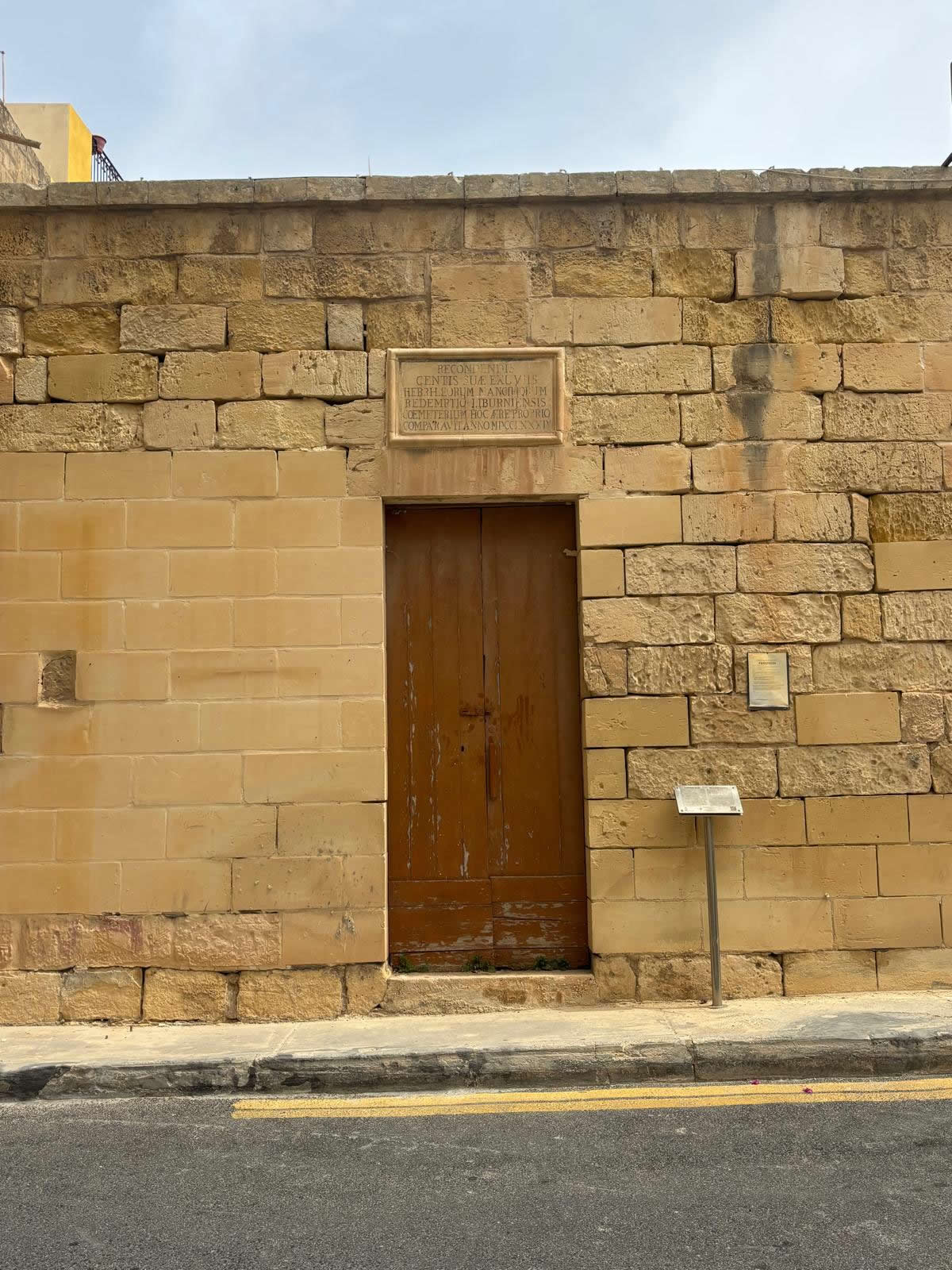
Coordinates: 35.888984, 14.528217
Introduction
The Kalkara Jewish Cemetery is the oldest surviving Jewish burial ground in Malta and one of the most historically important sites connected with Jewish heritage on the Maltese Islands. Established in 1784 during the rule of the Knights of St John, the cemetery reflects centuries of Jewish presence, slavery, maritime trade and religious diversity in Malta.
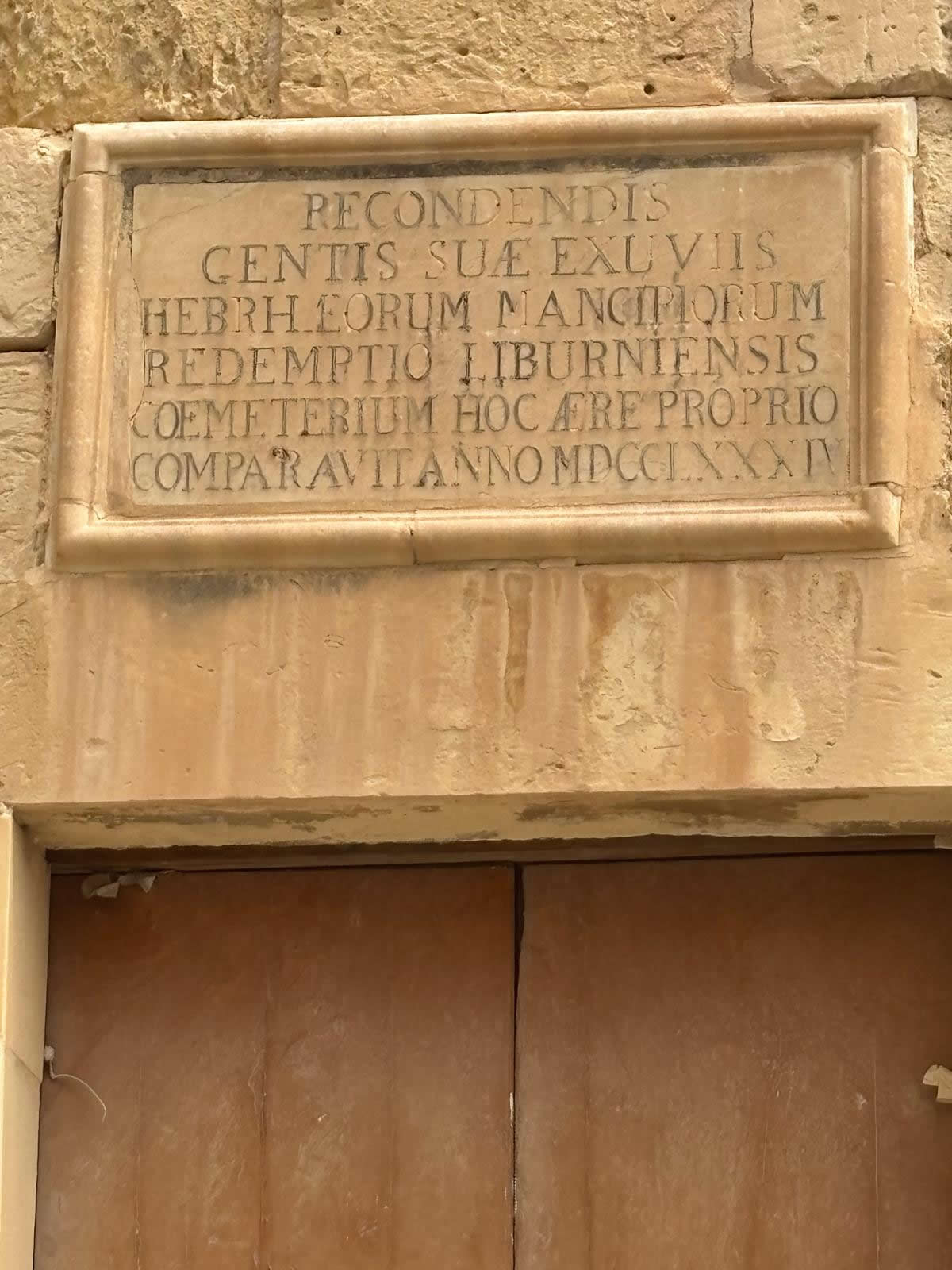
Original Latin Text
RECONDENDIS
GENTIS SUE EXUVIIS
HEBRÆORUM MANCIPIORUM
REDEMPTIO LIBURNIENSIS
CŒMETERIUM HOC ÆRE PROPRIO
COMPARAVIT ANNO MDCCLXXXIV
English Translation
For burying the remains of its people, the Leghorn [Livorno] Institution for the Redemption of Jewish Slaves acquired this cemetery with its own funds in the year 1784.
Historical Context: This stone plaque provides the foundational date and institutional backing for the Kalkara Jewish Cemetery. The Latin phrase "Hebraeorum Mancipiorum" explicitly points to the "Jewish Slaves" or bondsmen captured by privateers and the Knights of St. John. The "Redemptio Liburniensis" refers to the famous community fund based in the Tuscan port of Livorno (Leghorn), which paid ransoms to free these captives and bought this specific plot of land in 1784 (MDCCLXXXIV) to ensure they received a proper, dignified Jewish burial according to religious law.
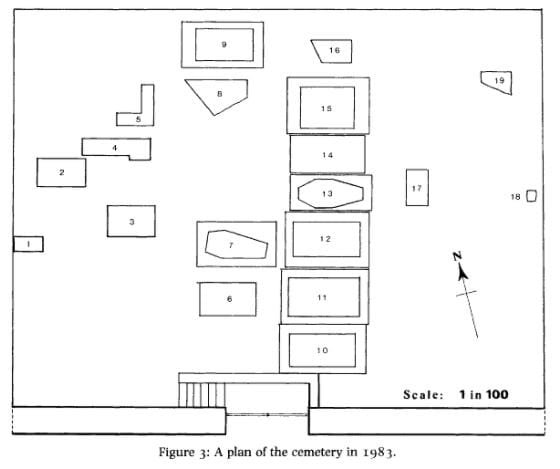
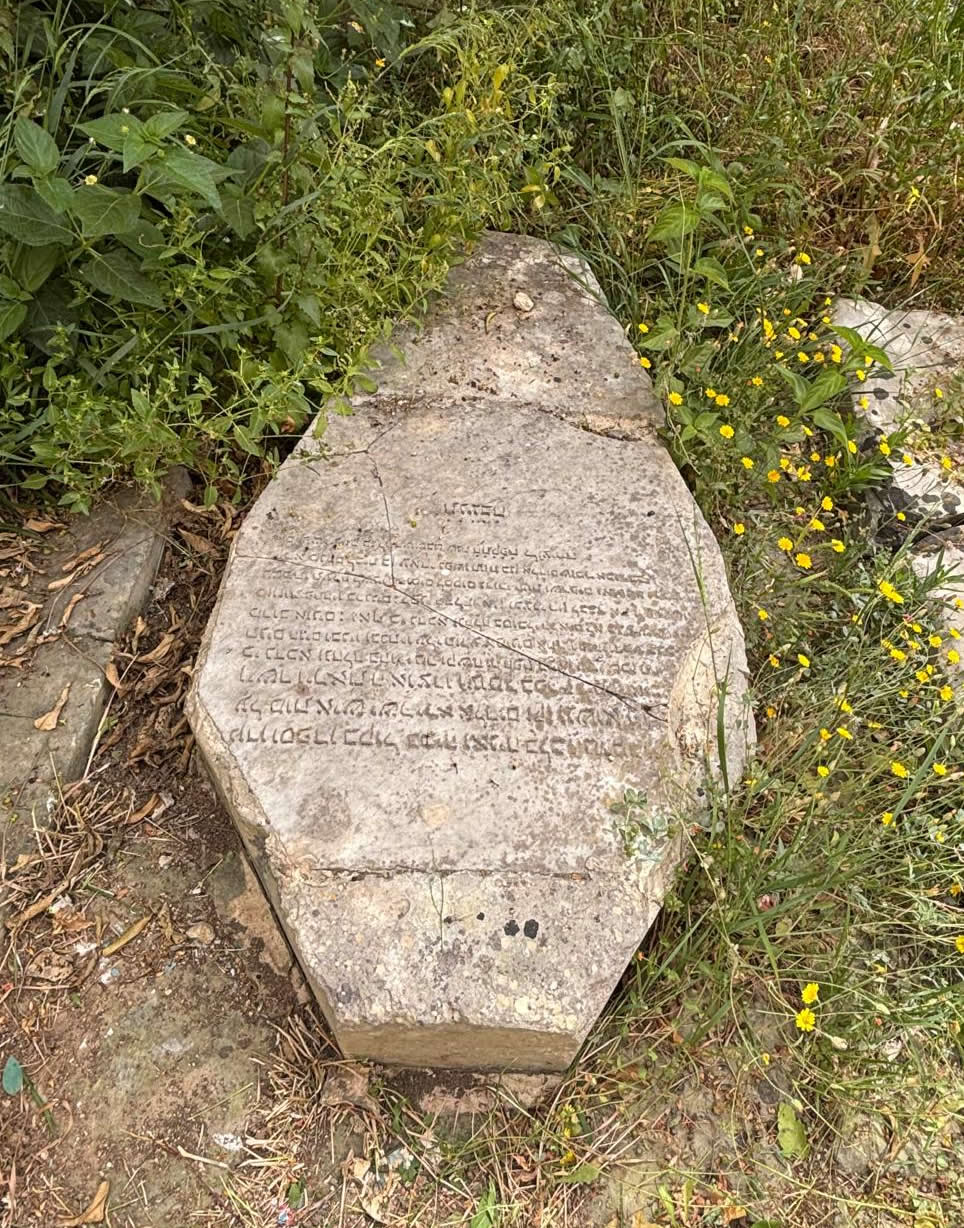
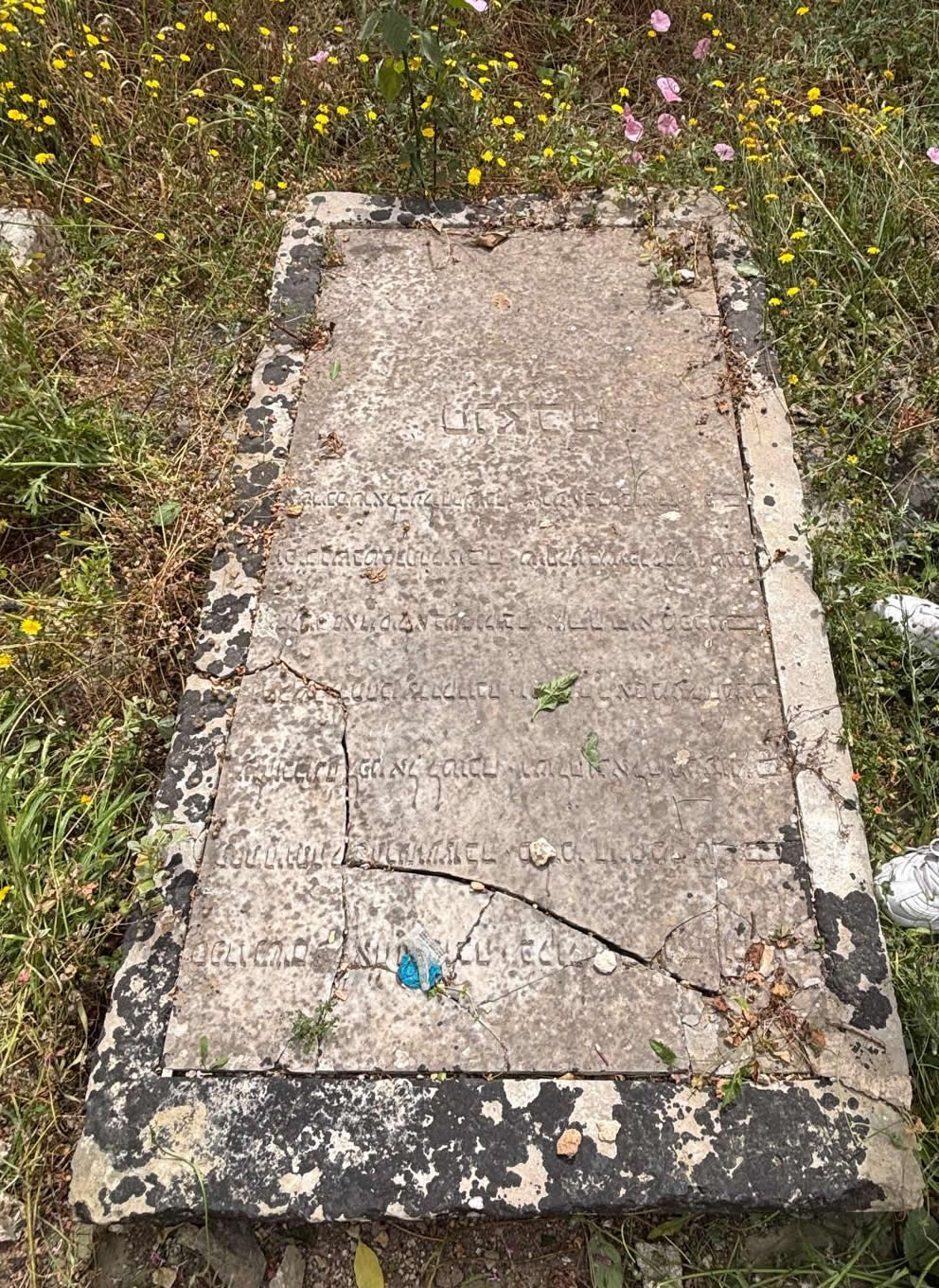
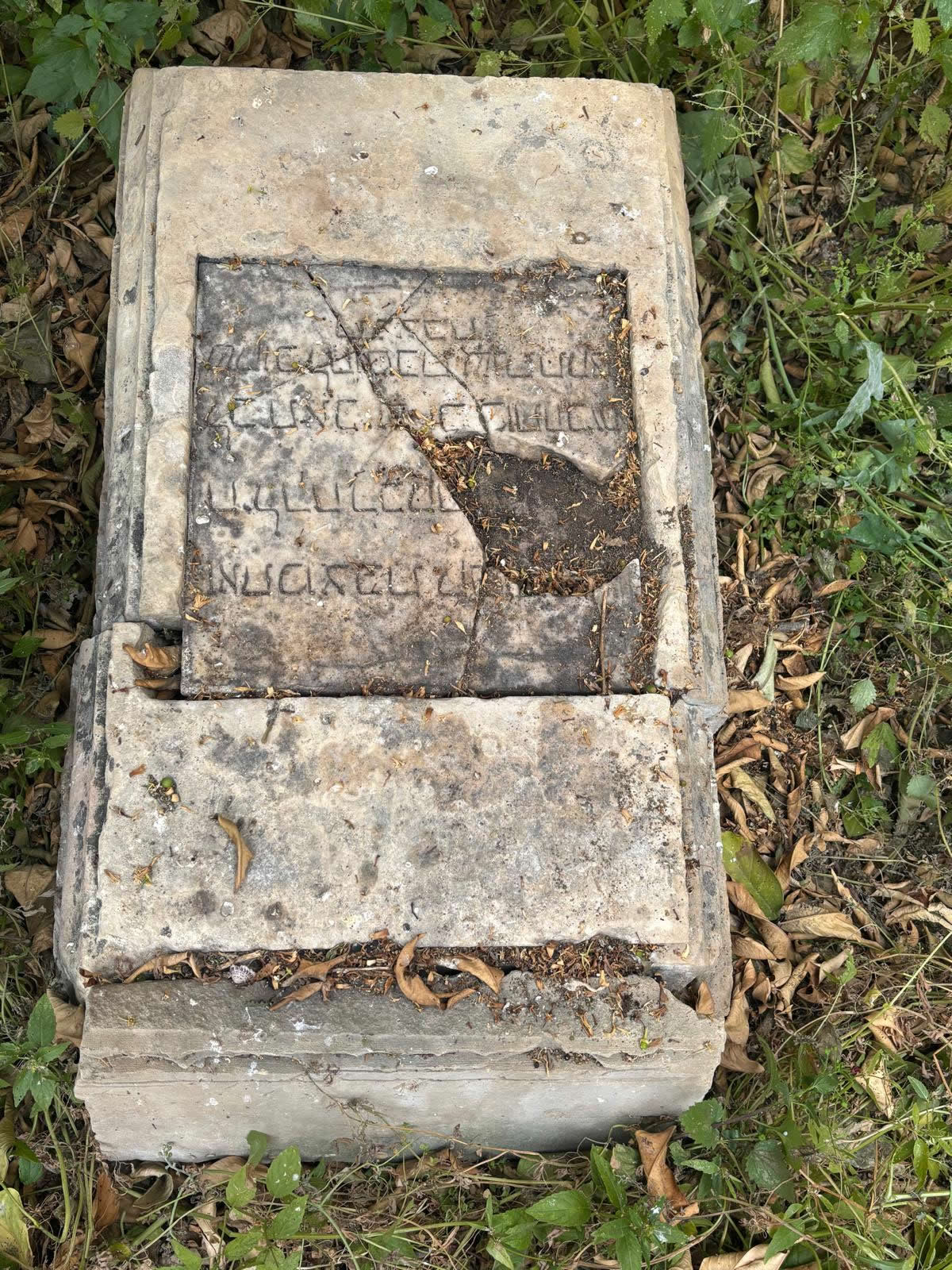
Grave 9 Rafael Elieser Sarfati Died-1833
Grave 11 Hanna Sa'a De Silva 1776-1820
Grave 12 Judah L
Grave 13 Menahem Benady 1755-1825
Grave 15 Rika Abeasis 1809-1831
Grave 17 Rebecca Abeasis 1814-1831
Grave 18 Fano Died-1834
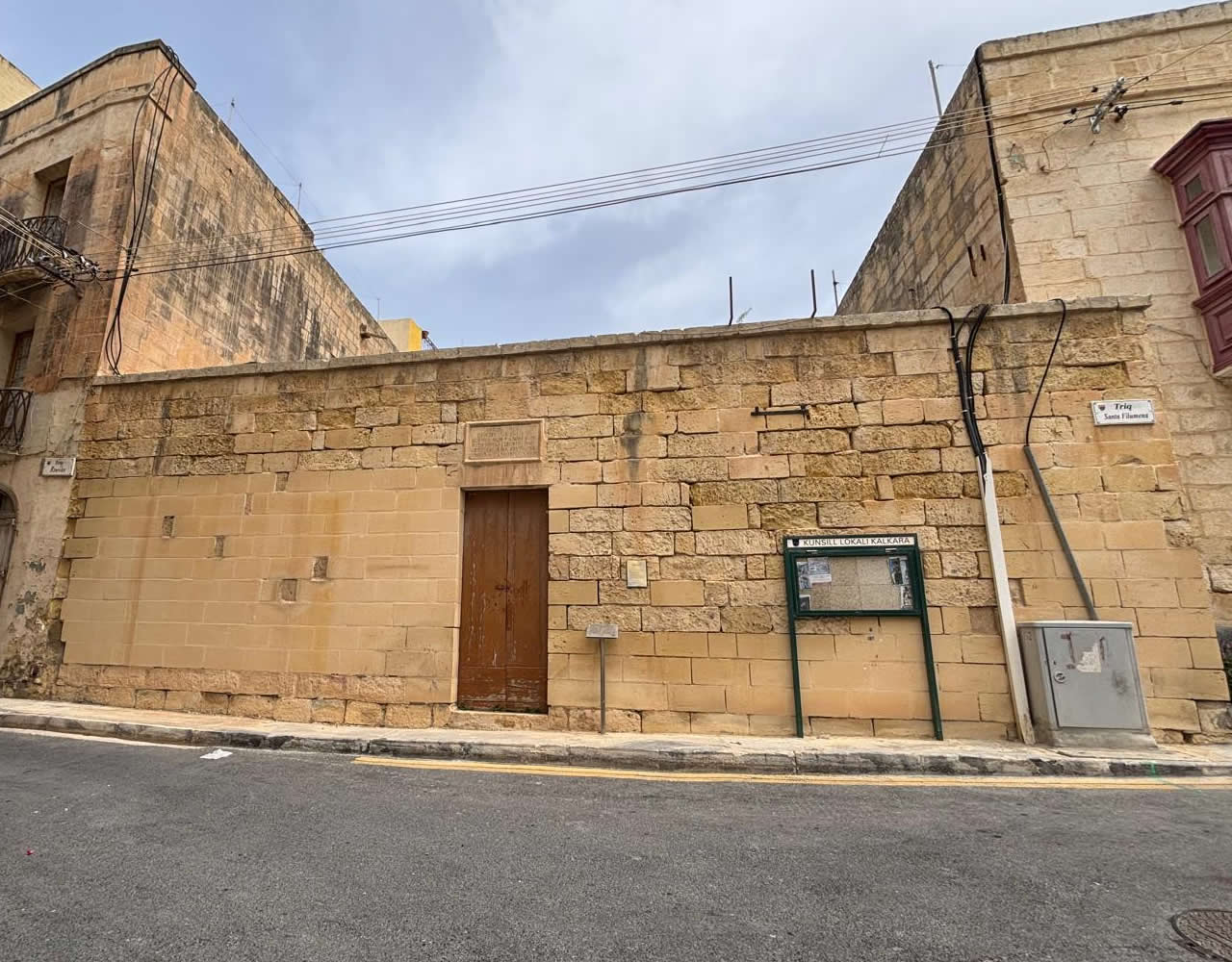
Located near the lower section of Triq Rinella in Kalkara, close to the Grand Harbour, the small enclosed cemetery preserves an important chapter of Maltese history that is often overlooked. Despite its modest size, the cemetery is deeply connected to the Jewish communities of Livorno, Mediterranean maritime trade networks and the experience of Jewish captives and merchants during the Hospitaller period.
Today the cemetery survives as a rare and significant monument representing Jewish life in Malta during the late 18th and early 19th centuries.
Jewish Presence in Malta Before the Cemetery
Jewish communities have existed in Malta since antiquity. Archaeological evidence from Roman catacombs in Rabat demonstrates the existence of a Jewish population during the Roman period. Several catacombs contain menorah carvings and Jewish funerary symbols dating back many centuries.
During the medieval period Malta formed part of the Kingdom of Sicily and possessed an established Jewish community centred primarily around Mdina and Rabat. However, following the expulsion of Jews from Sicily and its territories in 1492 under Spanish rule, the formal Jewish community in Malta largely disappeared.
When the Knights of St John arrived in Malta in 1530, the islands once again became connected to Jewish Mediterranean networks, although under very different circumstances.
Jewish Slavery Under the Knights of St John
During the Hospitaller period Malta became an important corsairing base in the Mediterranean. The Knights and Maltese privateers captured Muslim and Jewish prisoners from Ottoman territories and North African ports.
Many Jewish captives were brought to Malta as slaves. However, unlike some other European territories of the period, Malta also developed organised systems allowing Jewish communities abroad to ransom enslaved Jews.
Jewish communities in Livorno, Venice and other Mediterranean trading cities raised funds to redeem Jewish captives held in Malta. Livorno in particular became strongly connected to Jewish charitable activities on the island.
These Jewish networks eventually contributed to the establishment of a formal Jewish burial ground in Kalkara.
Foundation of the Kalkara Jewish Cemetery
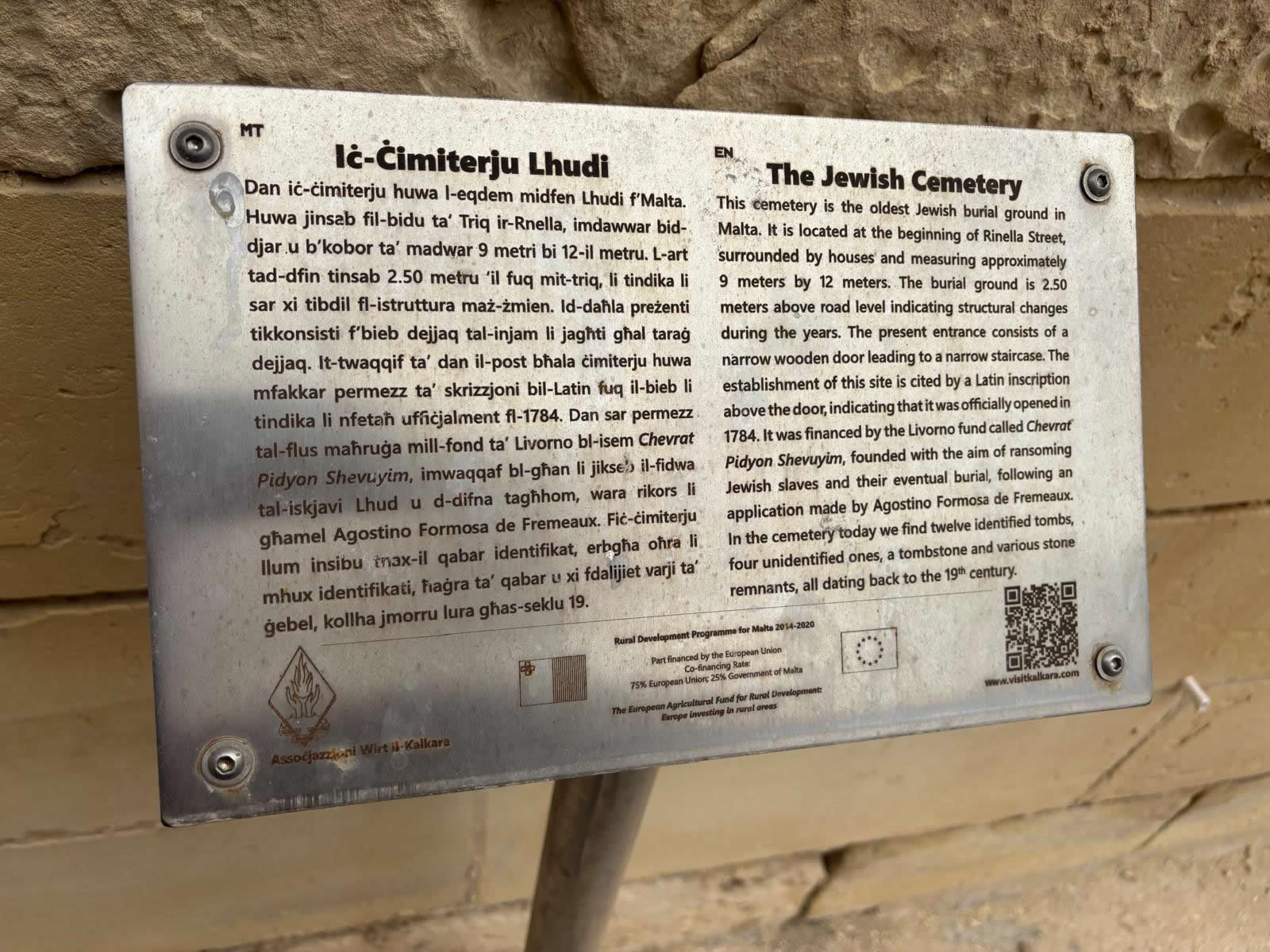
The cemetery was officially established in 1784. A Latin inscription above the cemetery entrance records its foundation and links it to the Jewish charitable organisation from Livorno known as the Chevrat Pidyon Shevuyim.
This charitable fund specialised in ransoming Jewish captives and assisting members of the Jewish community abroad. The cemetery was reportedly created following an application made by Agostino Formosa de Fremeaux.
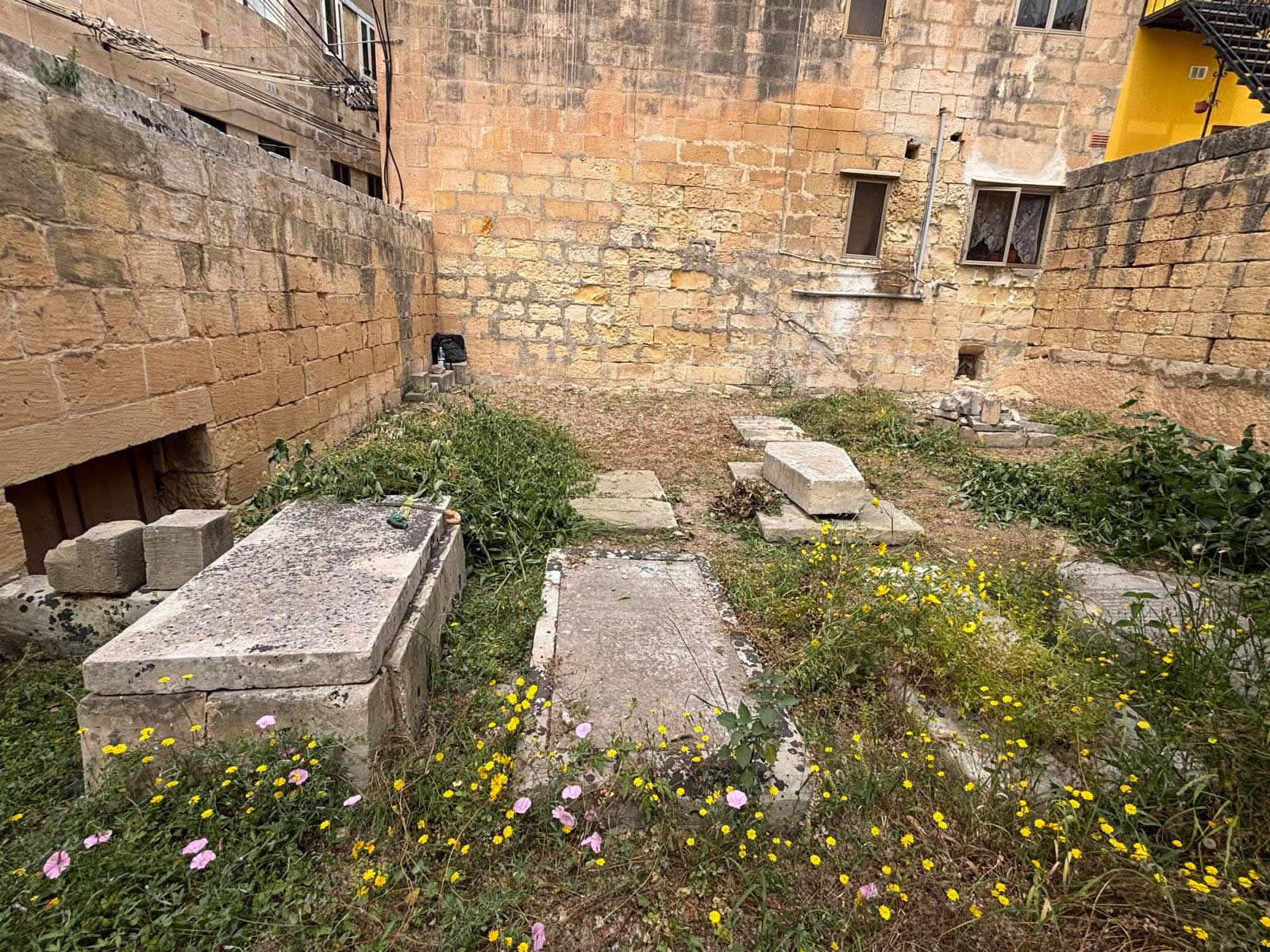
The cemetery was specifically intended for “the burial of the dead of its race,” reflecting the need for a dedicated Jewish burial ground in Malta.
Historical research suggests the site may already have been associated with non-Christian burials even before its official establishment in 1784. Some historians believe the area may previously have been used for Muslim burials following the Great Siege of Malta in 1565 due to its location near former battlefields around Kalkara and Rinella.
Location and Physical Layout
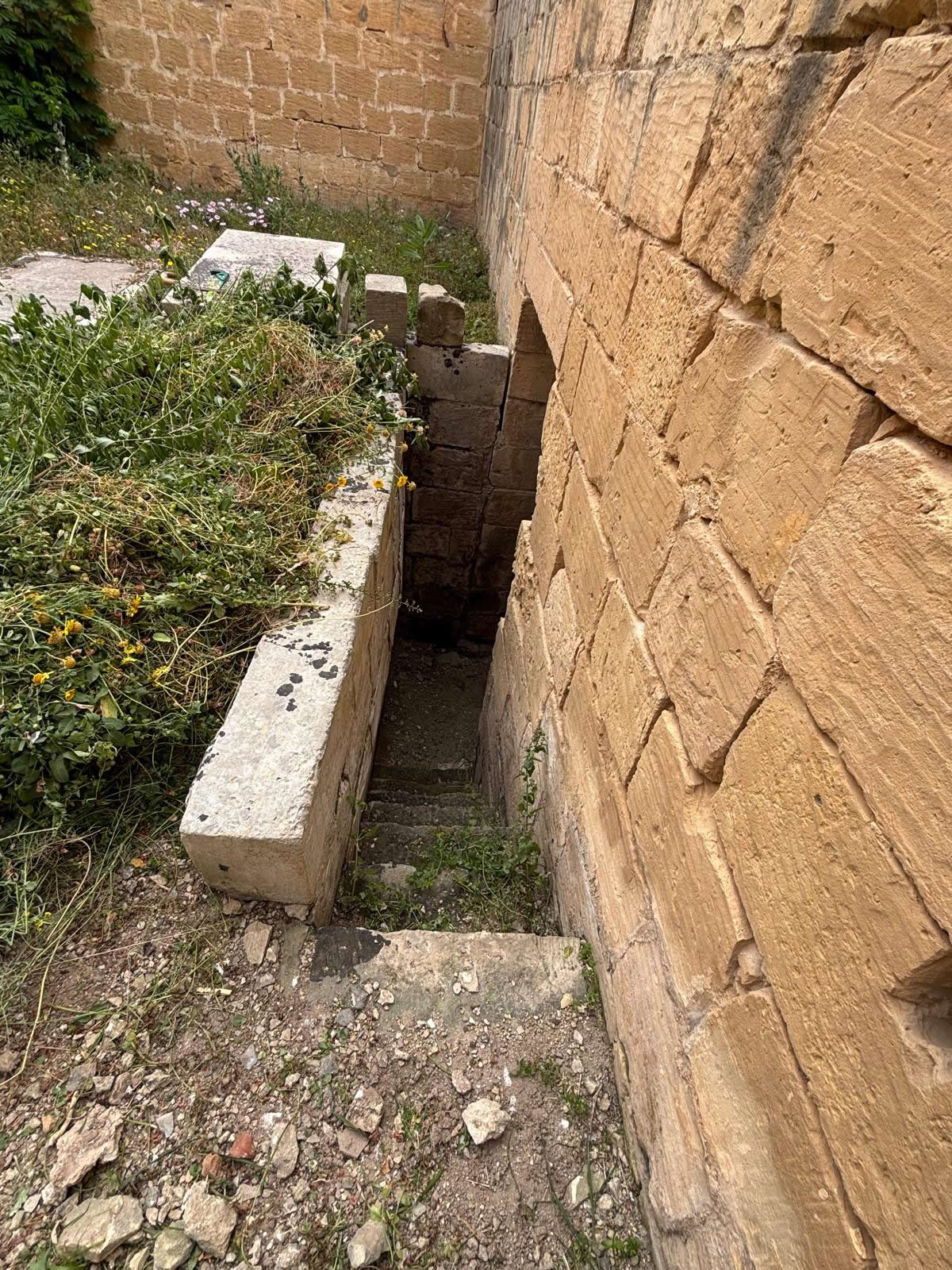
The cemetery occupies a surprisingly small enclosed area measuring approximately 9 metres by 12 metres. It is surrounded by later urban development and modern residential buildings.
One of the cemetery’s most distinctive features is its elevated position above road level. The burial ground stands around 2.5 metres above the present street level, suggesting substantial structural and landscape changes in the area over the centuries.
Access to the cemetery is gained through a narrow entrance doorway and staircase descending into the burial enclosure.
Despite its limited dimensions, the cemetery preserves an atmosphere of isolation and historical continuity rarely found within modern urban Kalkara.
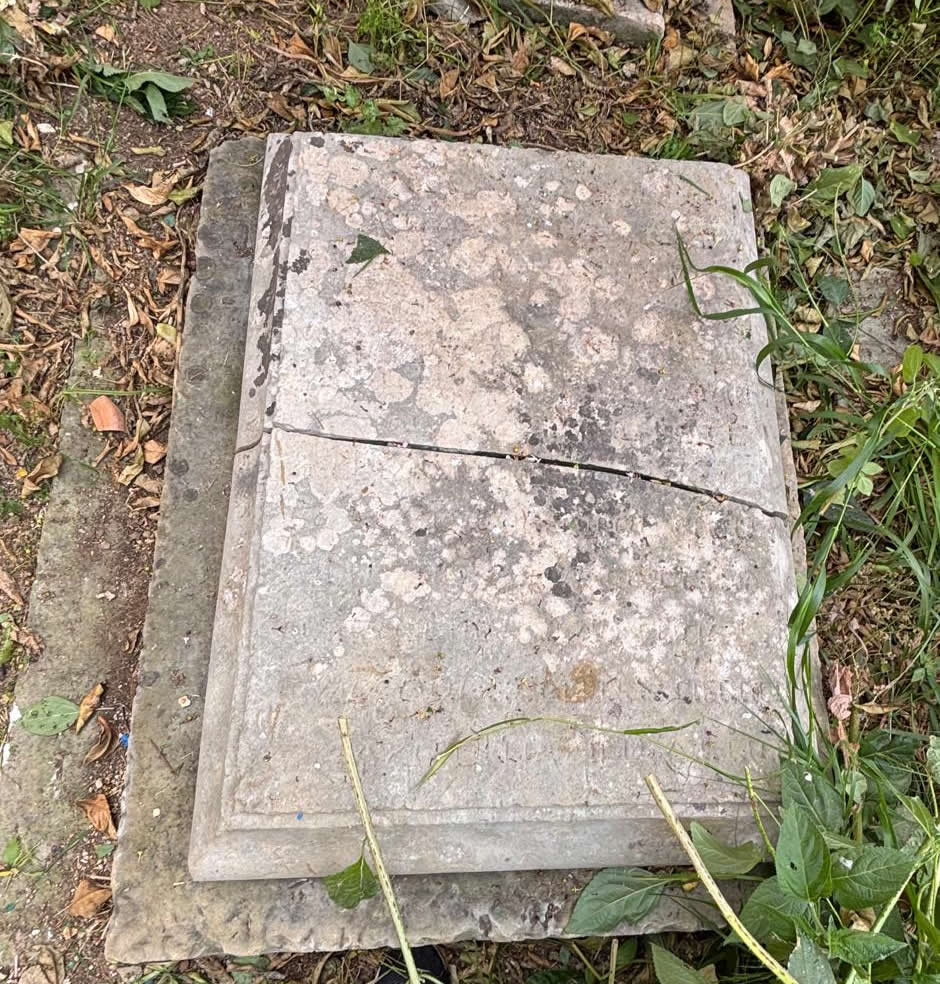
Plot 9 Rafael Elieser Sarfati BIRTH - unknown DEATH - 1833
The Surviving Tombs
Today the cemetery contains:
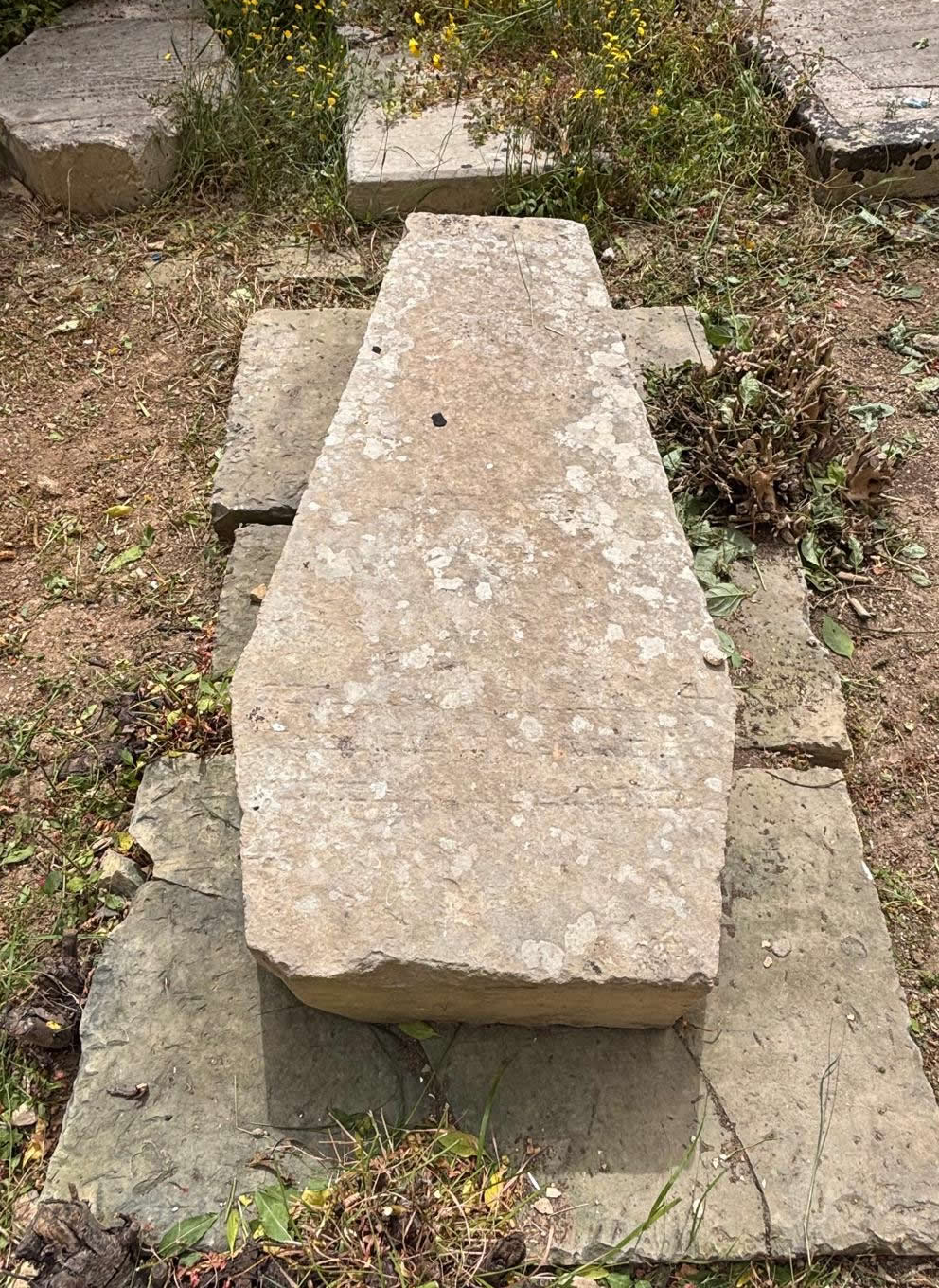
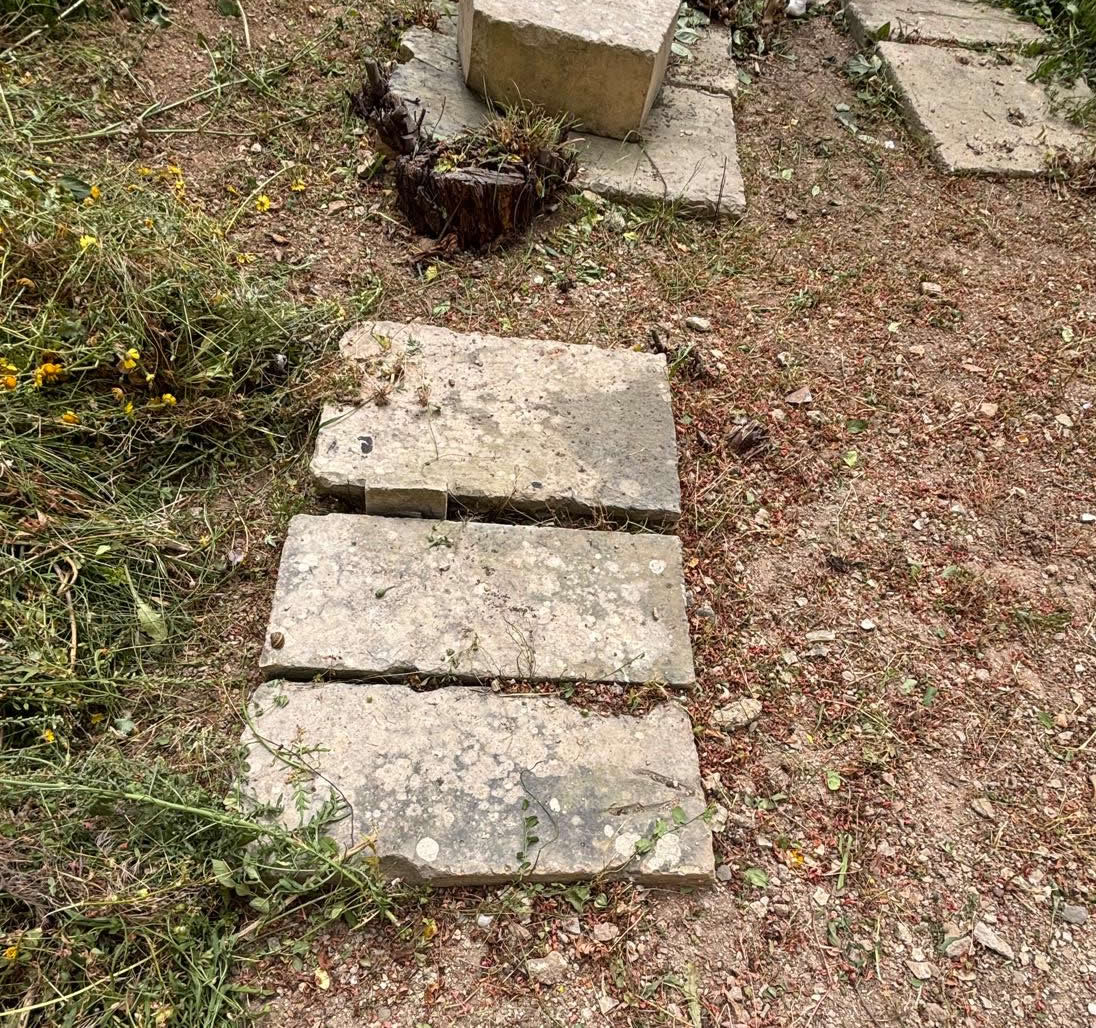
- Twelve identifiable graves
- Four unidentified burial sites
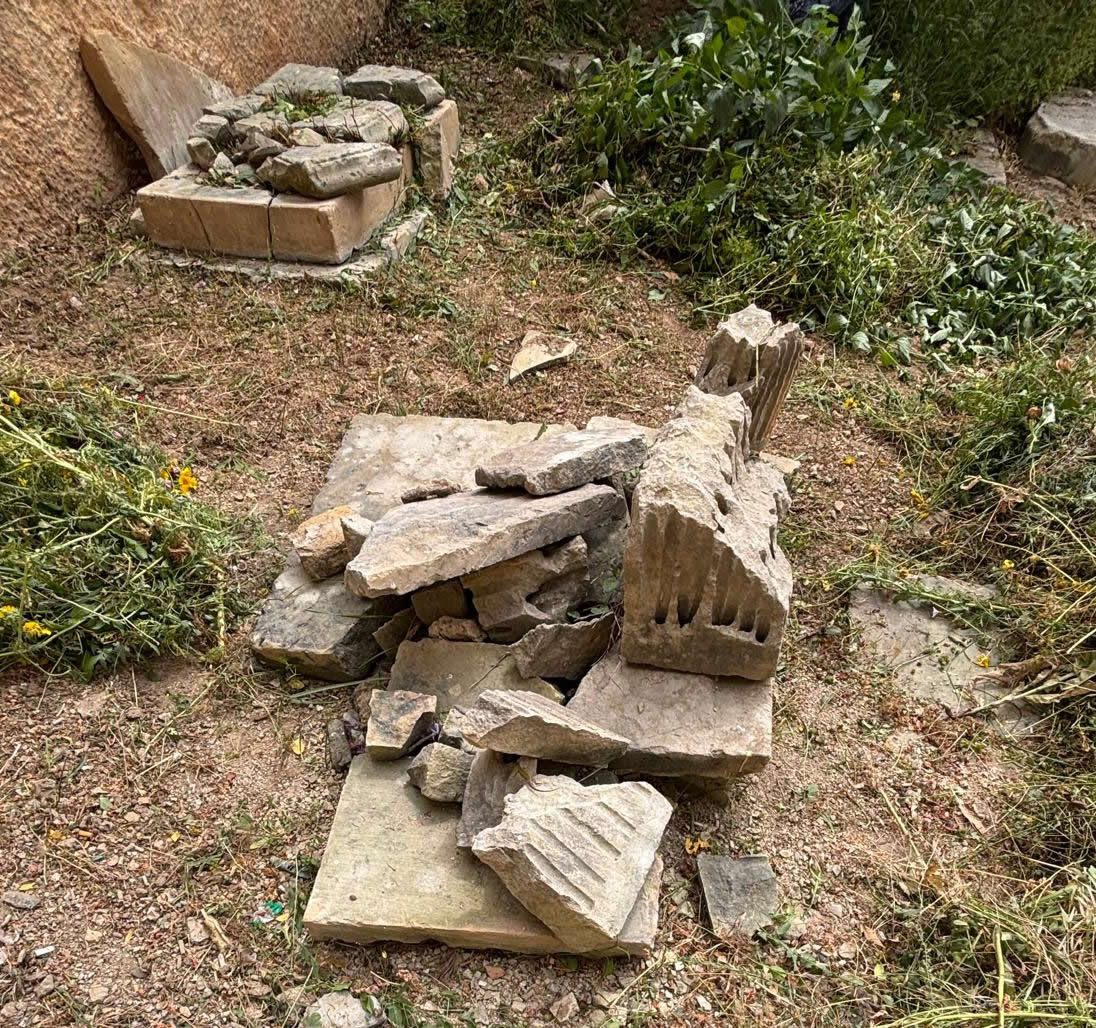
- Several damaged stone fragments
- Loose tombstone remnants
- Hebrew inscriptions
Most surviving burials date between approximately 1820 and 1834, although the cemetery itself remained associated with Jewish burial practices for a longer period.
The surviving tombstones display a combination of Hebrew and European funerary traditions reflecting the cosmopolitan nature of Malta’s Jewish community during the late Hospitaller and early British periods.
Hebrew Inscriptions and Symbolism
Several surviving gravestones contain Hebrew inscriptions, prayers and abbreviations commonly found in Jewish funerary traditions.
Jewish gravestones often begin with traditional phrases honouring the deceased and conclude with abbreviations meaning “May his or her soul be bound in the bond of eternal life.”
The inscriptions at Kalkara provide valuable evidence regarding:
- Jewish naming traditions
- Mediterranean Jewish migration
- Language use
- Religious customs
- Burial practices in Malta
The cemetery also demonstrates the continued connection between Malta and Sephardic Jewish communities in Livorno and the wider Mediterranean.
The Cemetery During the British Period
Following the departure of the French and the beginning of British rule in Malta in 1800, the Jewish population slowly increased once again.
As Malta developed into an important British naval base and trading centre, Jewish merchants, traders and families from Gibraltar, North Africa, Livorno and elsewhere settled temporarily or permanently on the islands.
The Kalkara Jewish Cemetery continued to be used during the early British period until additional Jewish burial grounds were later established.
Eventually the Jewish section within Ta’ Braxia Cemetery and later the Marsa Jewish Cemetery became the principal burial places for Malta’s growing Jewish community during the 19th century.
Connection to Other Jewish Cemeteries in Malta
The Kalkara Jewish Cemetery forms part of a wider network of historic Jewish burial sites in Malta:
| Cemetery | Period | Location |
|---|---|---|
| Kalkara Jewish Cemetery | 1784–1830s | Kalkara |
| Ta’ Braxia Jewish Cemetery | 1836–1891 | Pietà |
| Marsa Jewish Cemetery | 1887–Present | Marsa |
Together these cemeteries trace the development and continuity of Jewish life in Malta from the Hospitaller period into the modern era.
Architectural and Cultural Importance
Although extremely small compared to other historic cemeteries in Malta, the Kalkara Jewish Cemetery possesses exceptional cultural significance.
The cemetery represents:
- The oldest surviving Jewish cemetery in Malta
- Evidence of Jewish life under the Knights
- Mediterranean Jewish charitable networks
- The history of slavery and ransom systems
- Religious diversity in Malta
- Historic Hebrew funerary traditions
The site also forms part of Malta’s broader multicultural heritage connected to maritime trade and Mediterranean migration.
Restoration and Conservation
Over the centuries the cemetery suffered from neglect, weathering and urban encroachment.
By the late 20th century parts of the cemetery had deteriorated considerably and several gravestones were damaged or displaced.
In 2003 restoration and refurbishment works were undertaken with the involvement of the Kalkara Local Council. Additional clean-up and conservation initiatives have since been supported by Jewish heritage organisations and cultural groups interested in preserving Malta’s Jewish heritage.
The cemetery remains vulnerable due to:
- Environmental weathering
- Urban pressure
- Stone erosion
- Biological growth
- The fragile condition of inscriptions
Nevertheless, the survival of the cemetery into the modern era represents an important achievement in Maltese heritage conservation.
The Cemetery Today
Today the Kalkara Jewish Cemetery remains a little-known but historically important site hidden within the urban fabric of Kalkara.
Although small and often overlooked by visitors, the cemetery offers extraordinary insight into Malta’s Jewish past and its role within wider Mediterranean history.
The cemetery is also increasingly recognised internationally by organisations documenting Jewish heritage sites across Europe and the Mediterranean.
For historians, genealogists and visitors interested in Jewish heritage, the site provides a rare surviving link to Malta’s Jewish communities during the final decades of the Knights of St John and the beginning of British rule.
Conclusion
The Kalkara Jewish Cemetery is one of the most historically significant Jewish heritage sites in Malta. Established in 1784 through the support of Jewish charitable organisations from Livorno, the cemetery reflects centuries of Mediterranean maritime history, slavery, ransom systems, migration and religious identity.
Despite its small size, the cemetery preserves a powerful historical legacy connected with Malta’s Jewish communities and their enduring links to the wider Mediterranean world.
Today the cemetery continues to stand quietly near Rinella as a reminder of Malta’s multicultural past and the importance of preserving the diverse historical narratives that shaped the islands.
Recorded Burials – Old Jewish Cemetery, Kalkara, Malta
The following table lists known burials recorded at the historic Old Jewish Cemetery in Kalkara, Malta. The cemetery, established in 1784, contains graves associated with Malta’s early Sephardic Jewish community, including families connected with Gibraltar, Livorno and Mediterranean trade networks.
| Surname ▲▼ | Full Name ▲▼ | Birth Year ▲▼ | Death Year ▲▼ | Plot Number ▲▼ | Notes |
|---|---|---|---|---|---|
| Abeasis | Rebecca Abeasis | 1814 | 1831 | 17 | No grave photo available |
| Abeasis | Rika Abeasis | 1809 | 1831 | 15 | No grave photo available |
| Benady | Menahem Benady | 1755 | 1825 | 13 | Born in Gibraltar according to cemetery records Photo on this page |
| De Silva | Hanna Sa'a De Silva | 1776 | 1820 | 11 | Photo on this page |
| Fano | Unknown Fano | Unknown | 1834 | 18 | Partial inscription only survives |
| L? | Judah L? | Unknown | Unknown | 12 | Name partially illegible |
| Lucena | Jacob Lucena | 1809 | 1831 | 07 | Photo on this page |
| Sarfati | Rafael Elieser Sarfati | Unknown | 1833 | 09 | Sephardic Jewish family name Photo on this page |
Historical Notes
The Old Jewish Cemetery at Kalkara is one of the oldest surviving Jewish burial grounds in Malta and was formally established in 1784 during the rule of the Knights of Saint John. The cemetery reflects the presence of Sephardic Jewish merchants, traders and families connected to Gibraltar, Livorno, London and other Mediterranean ports.
Several surnames recorded in the cemetery, including Abeasis, Lucena and Sarfati, are historically associated with Sephardic Jewish communities of the western Mediterranean and Gibraltar.
Frequently Asked Questions
Where is the Kalkara Jewish Cemetery located?
The cemetery is located in Kalkara, Malta near Triq Rinella.
When was the Kalkara Jewish Cemetery established?
The cemetery was officially established in 1784 during the rule of the Knights of St John.
Why is the cemetery historically important?
It is the oldest surviving Jewish cemetery in Malta.
Who funded the cemetery?
The cemetery was funded by the Livorno-based Jewish charitable organisation Chevrat Pidyon Shevuyim.
How many tombs survive today?
The cemetery contains twelve identifiable graves along with additional damaged burial remains and stone fragments.
Was the cemetery restored?
Yes, restoration and refurbishment works were carried out in 2003 with support from the Kalkara Local Council.
Does Malta have other Jewish cemeteries?
Yes, important Jewish cemeteries also exist at Ta’ Braxia and Marsa.