📍 Location
Location Map Coordinates 35.901697, 14.503878
Malta’s Historic Quarantine Hospital and Maritime Isolation Complex
Coordinates: 35.901697, 14.503878
Introduction
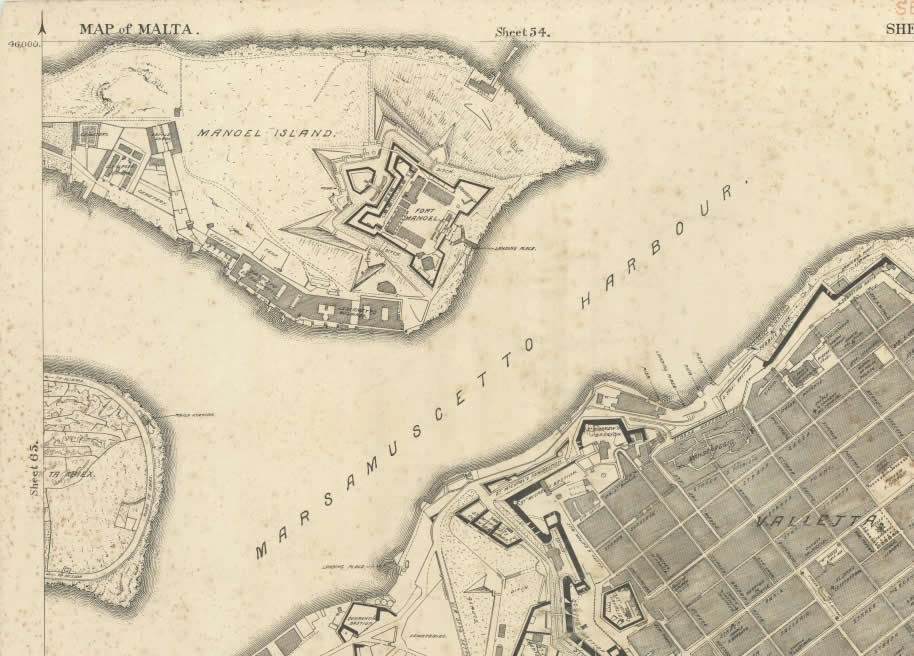
The Lazzaretto on Manoel Island in Gżira is one of the most historically important medical and quarantine complexes in Malta. Built and expanded by the Knights of St John between the 17th and 18th centuries, the vast complex served as a quarantine hospital for travellers, sailors, merchants and patients arriving from regions affected by plague, cholera and other infectious diseases.
For centuries the Lazzaretto protected Malta from epidemics arriving through Mediterranean maritime trade routes. The buildings on Manoel Island became internationally respected for their strict quarantine procedures and played an essential role in safeguarding public health in the Maltese Islands.
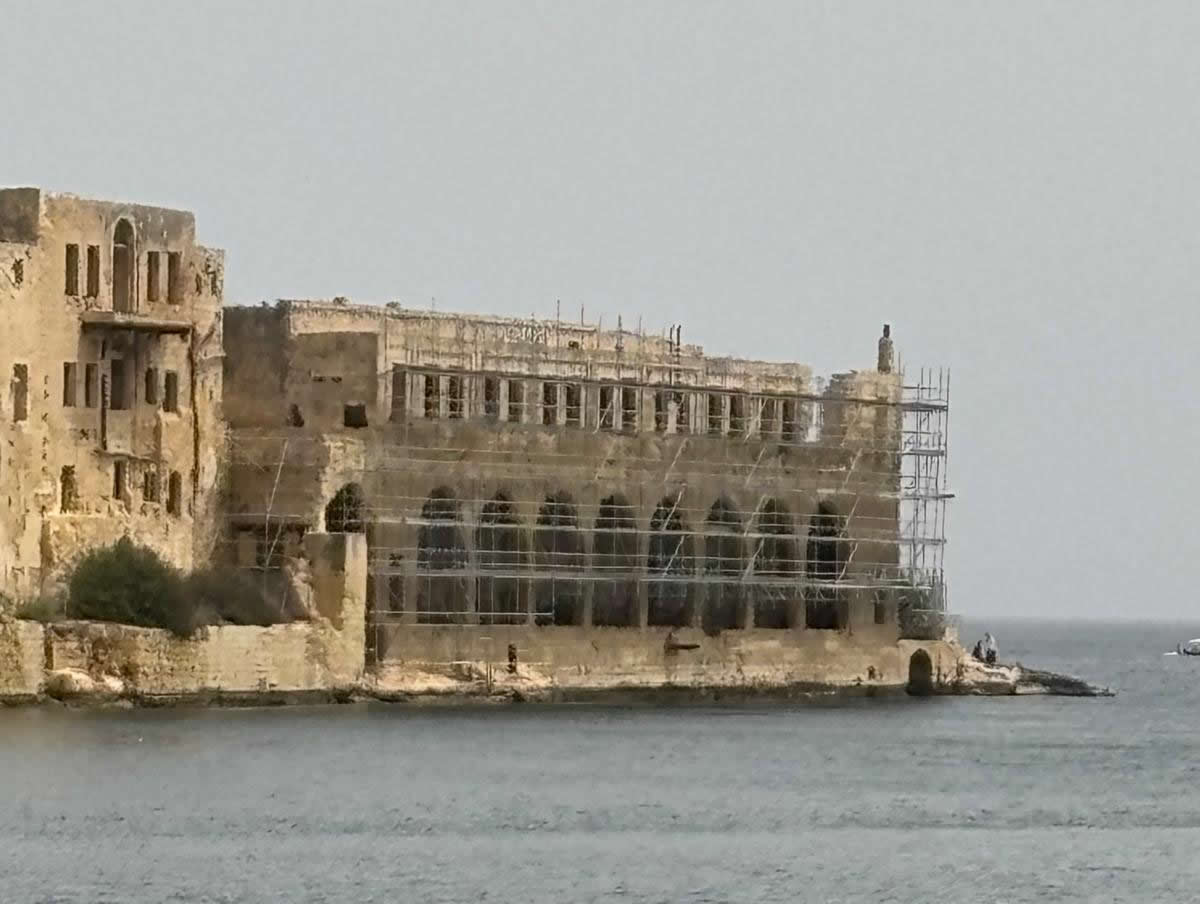
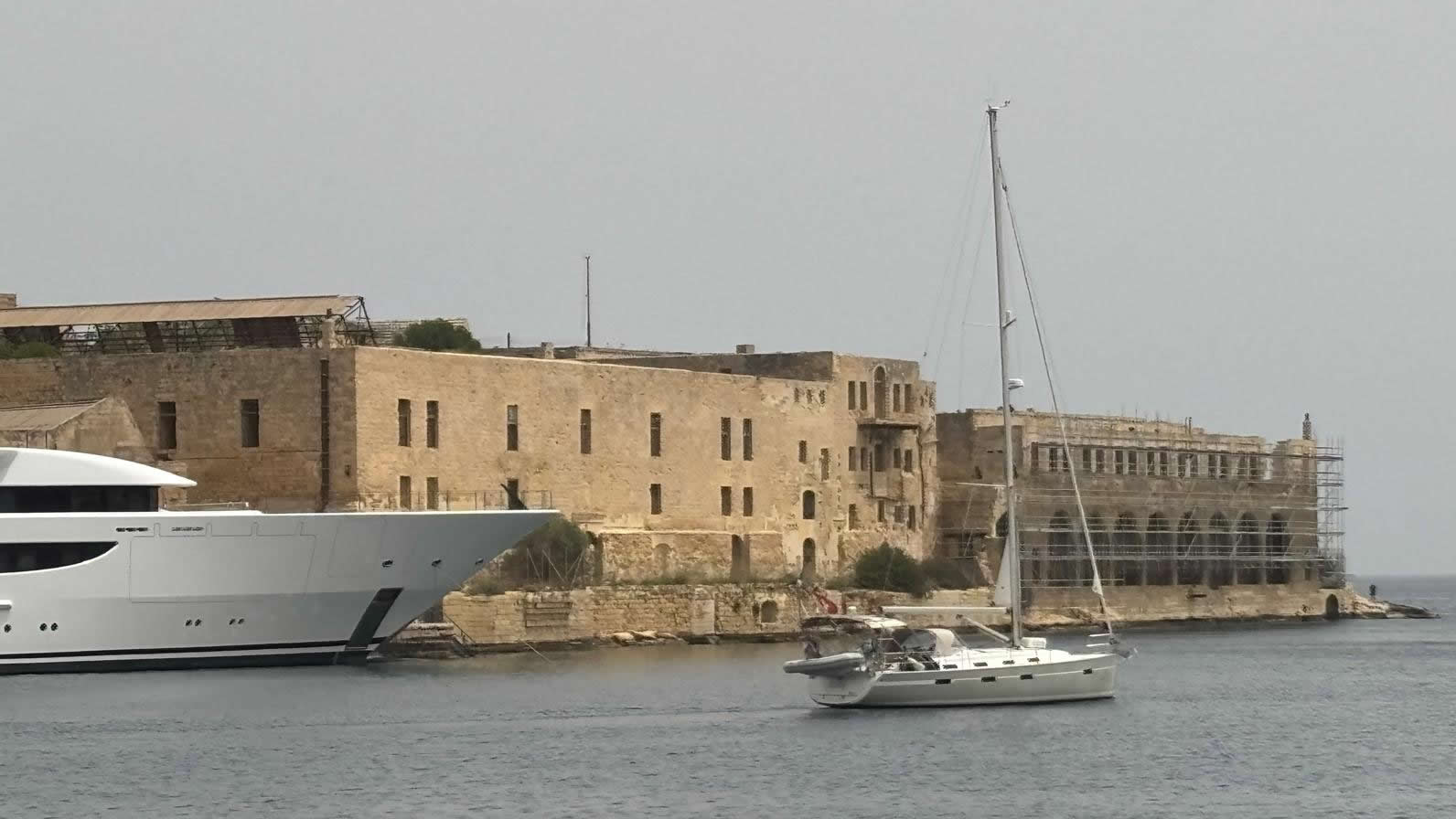
Today the Lazzaretto survives as one of Malta’s most significant but endangered medical heritage sites. Despite wartime damage and decades of abandonment, much of the remarkable complex still stands along the shores of Marsamxett Harbour.
Origins of Quarantine in Malta
Malta’s strategic location in the centre of the Mediterranean made the islands an important maritime crossroads between Europe, North Africa and the Near East. While trade brought wealth and prosperity, it also carried the constant danger of contagious diseases.
From the 16th century onward, quarantine systems became increasingly important throughout Mediterranean ports. Ships arriving from infected regions were isolated before passengers and cargo could enter cities safely.
Marsamxett Harbour was already being used informally for quarantine purposes from around 1526. However, the first proper quarantine structures on Manoel Island were established during the plague epidemic of 1592–1593.
The First Lazzaretto of 1592
The earliest quarantine hospital on Manoel Island was a temporary structure made of wooden huts. The island was then known as the Isolotto or Bishop’s Island because it belonged to the Bishop of Malta and the Cathedral Chapter of Mdina.
The temporary hospital was constructed rapidly during the plague outbreak of 1592–1593 in order to isolate infected individuals away from the densely populated harbour settlements.
The epidemic eventually subsided and the temporary structures were dismantled shortly afterwards. Nevertheless, the usefulness of the island as a quarantine location had become obvious.
The Permanent Lazzaretto
In 1643 Grand Master Giovanni Paolo Lascaris ordered the construction of a permanent quarantine hospital on Manoel Island. The Order of St John acquired the island from the Church in exchange for land near Rabat.
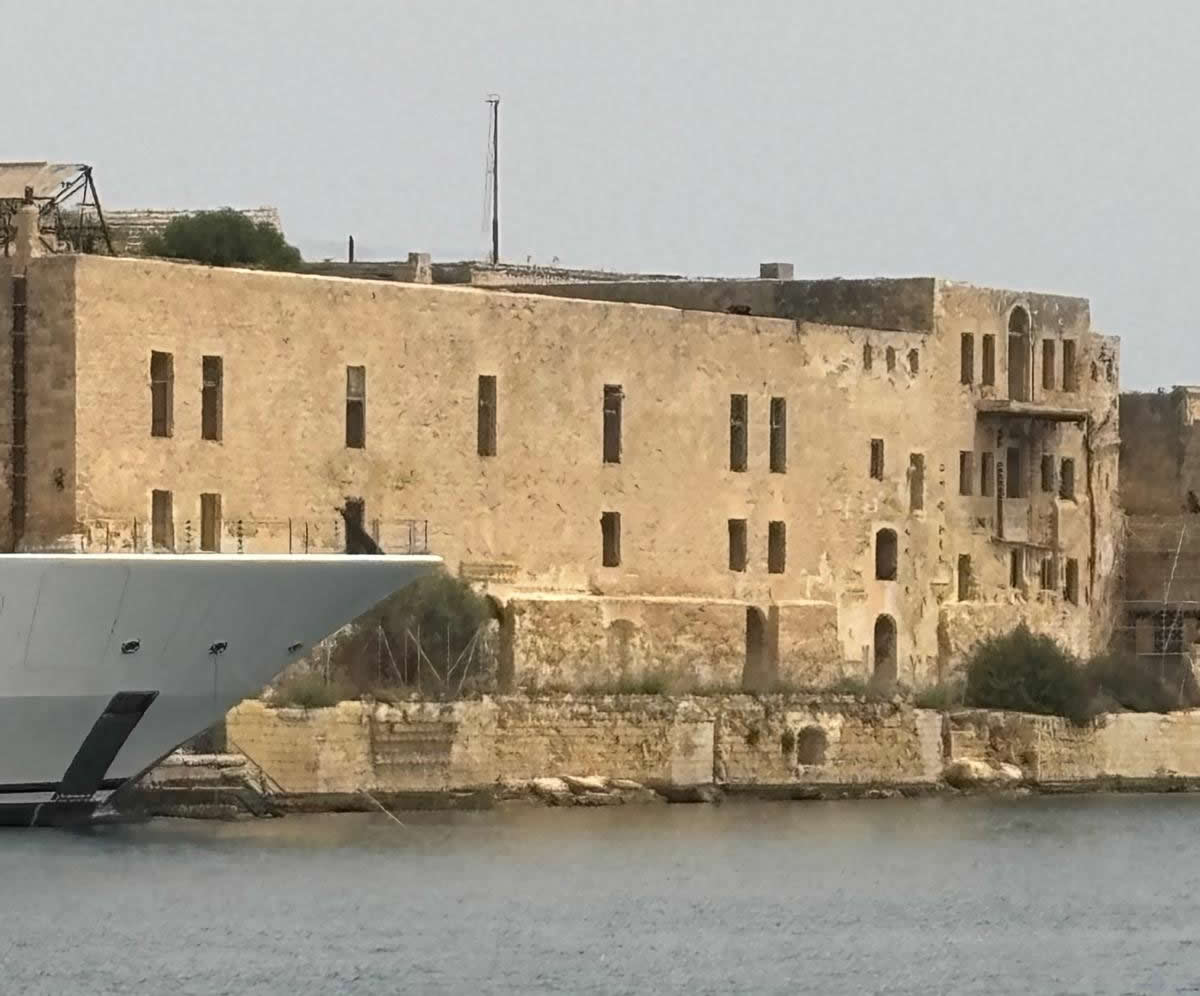
The new Lazzaretto became one of the most important public health institutions in Malta. It was initially composed of a single large block known today as the Palazzo Vecchio or Old Palace.
Over the following decades successive Grand Masters enlarged and improved the complex:
| Grand Master | Works and Expansions |
|---|---|
| Giovanni Paolo Lascaris | Original permanent Lazzaretto built in 1643 |
| Nicolas Cotoner | Additional structures and improvements in 1670 |
| Gregorio Carafa | Expansion works in 1683 |
| Ramon Perellos y Roccaful | Further enlargements in 1701 |
| António Manoel de Vilhena | Major additions around 1726 |
| Emmanuel de Rohan | New block and warehouses completed in 1797 |
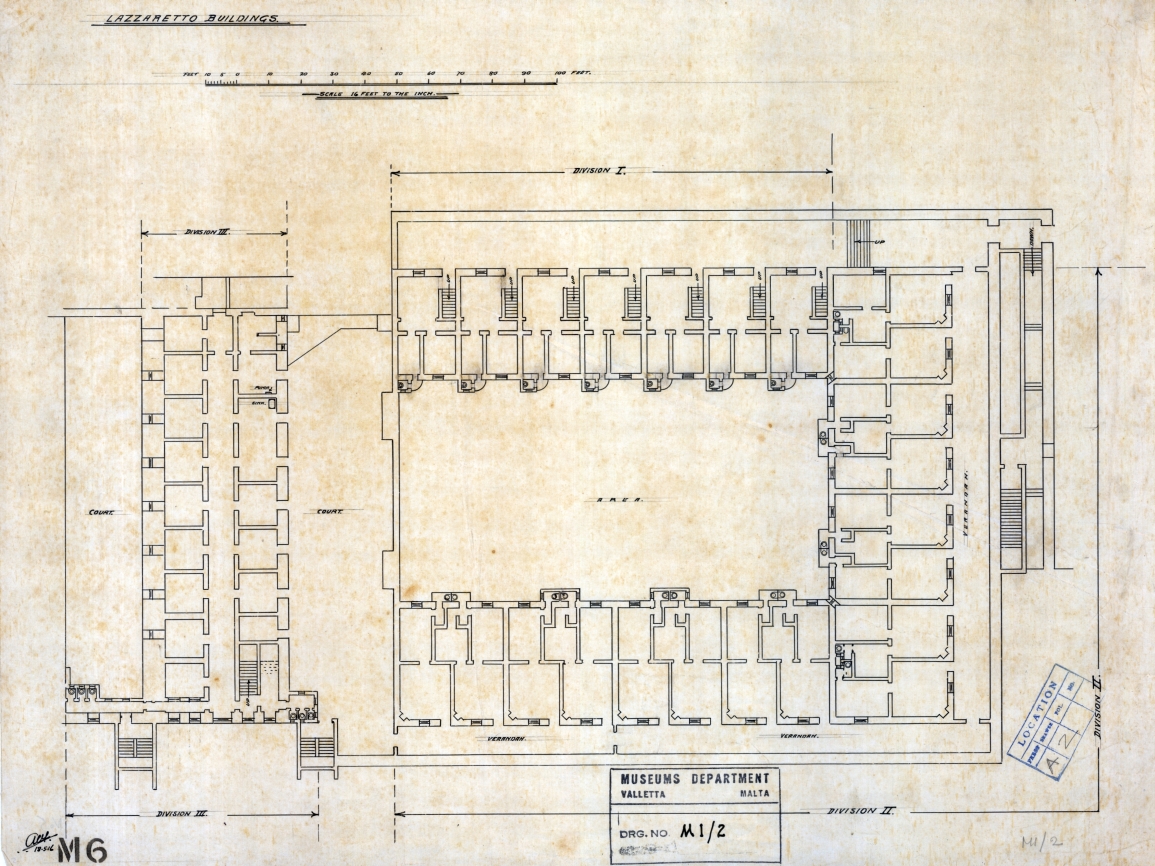
PDM-04-60072 Archives of Malta
Architecture of the Complex
The Lazzaretto developed into a massive medical and quarantine complex extending along the waterfront of Manoel Island.
The oldest surviving structure, the Old Palace, consists of large halls arranged around a central courtyard. Massive limestone walls, vaulted ceilings and enclosed courtyards were designed to separate patients and minimise the spread of infection.
The complex eventually included:
- Isolation wards
- Warehouses for quarantined cargo
- Animal quarantine areas
- Disinfection stations
- Medical treatment rooms
- Administrative offices
- Waterfront unloading facilities
- Cemeteries
- Protective perimeter walls
The architecture combined practicality with the military-style discipline characteristic of the Knights Hospitaller.
The Quarantine System
The Lazzaretto operated under extremely strict regulations. Ships arriving from ports suspected of carrying plague or other contagious diseases were ordered into quarantine before passengers or goods could enter Malta.
Travellers could spend weeks or even months in isolation depending on the severity of outbreaks abroad. Cargo such as textiles, paper and other materials considered capable of carrying disease were fumigated and disinfected.
Special quarantine certificates known as bills of health were issued after successful isolation periods.
The system became internationally respected and Malta developed one of the Mediterranean’s most advanced quarantine services.
The Profumo Office
One of the most fascinating sections of the Lazzaretto was the Profumo Office, where incoming mail and documents were disinfected.
Letters were pierced or slit and exposed to fumigation chemicals in order to prevent the spread of disease through correspondence. Many surviving historic letters from Malta still contain distinctive disinfection slits created during this process.
The Profumo Office became particularly important during cholera outbreaks in the 19th century.
Plague and Cholera Epidemics
The Lazzaretto played a central role during several epidemics affecting Malta.
The Plague of 1813–1814
One of the most devastating outbreaks in Maltese history occurred during the British period when plague reached Malta in 1813. Thousands died during the epidemic and the Lazzaretto became heavily involved in quarantine and isolation operations.
The Cholera Epidemic of 1865
Cholera repeatedly threatened Mediterranean ports during the 19th century. During the 1865 epidemic the Lazzaretto once again became critical in preventing the spread of infection.
The Plague of 1937
Even in the 20th century the Lazzaretto continued to be used during outbreaks of plague and infectious disease.
The British Period
Following the arrival of the British in Malta, the Lazzaretto continued operating as a quarantine hospital and maritime isolation centre.
British authorities expanded and modernised parts of the complex during the 19th century. Additional medical facilities and quarantine structures were introduced as maritime traffic increased through Malta.
At times the buildings also served military medical functions and temporary accommodation for troops.
The Lazzaretto remained internationally recognised as an important Mediterranean quarantine station throughout the British colonial era.
World War II
During World War II Manoel Island became heavily militarised due to its strategic location in Marsamxett Harbour.
The island served as a naval base for the Royal Navy’s 10th Submarine Flotilla and became known as HMS Talbot and HMS Phoenicia.
The Lazzaretto suffered extensive damage during German and Italian aerial bombardments. Several historic sections were destroyed while others were severely weakened by explosions and structural collapse.
Many parts of the complex visible today still show evidence of wartime destruction.
Post-War Medical Use
Despite wartime damage, parts of the Lazzaretto reopened as a hospital in 1949.
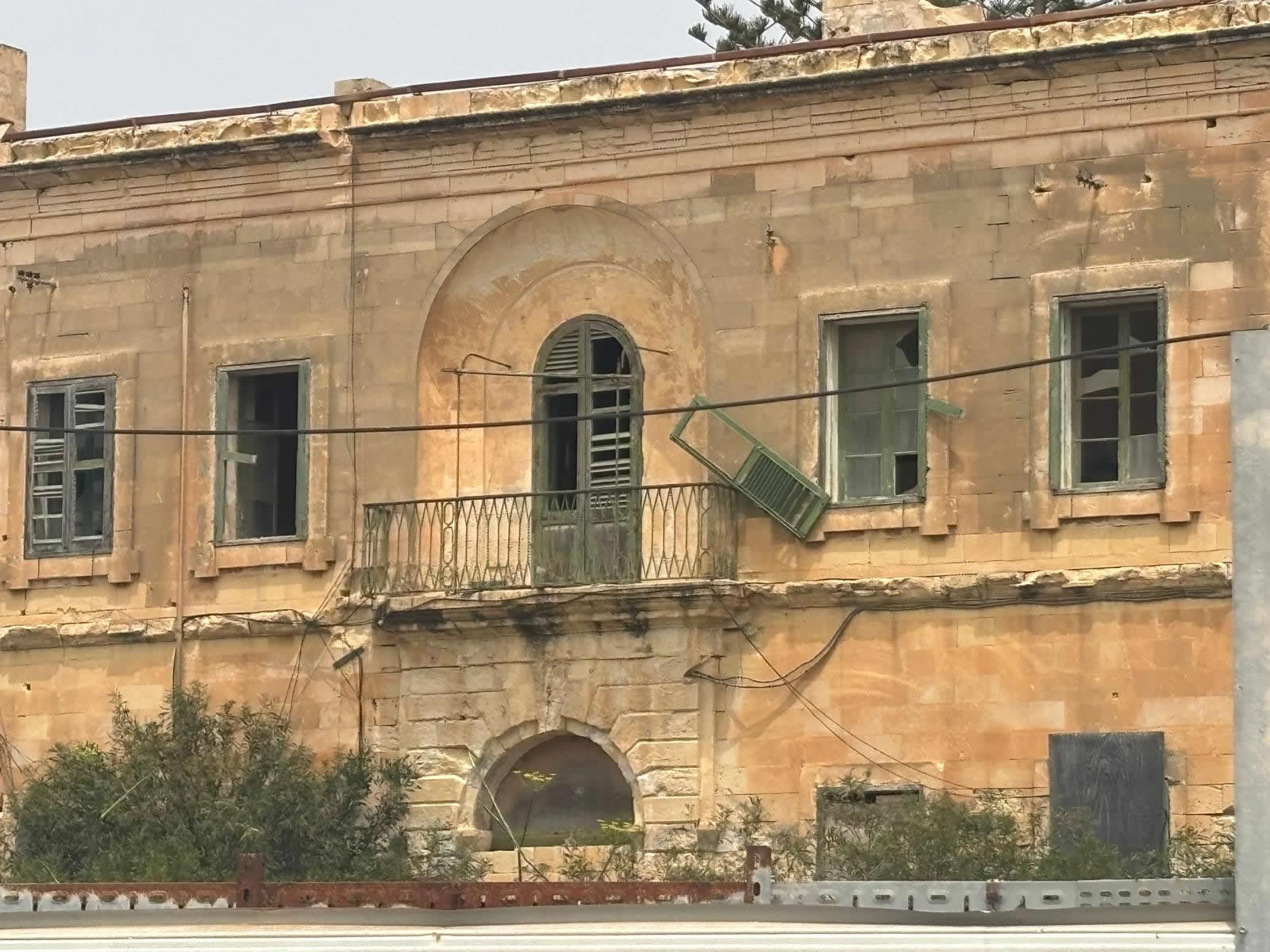
Medical use continued until the departure of the Royal Navy from Malta during the 1970s. Afterwards the buildings were gradually abandoned and entered a prolonged period of decline.
For some years sections of the site were also used as shelters for abandoned dogs.
Historic Graffiti and Inscriptions
The Lazzaretto contains a remarkable collection of historic graffiti, inscriptions and markings created by patients, sailors and visitors over several centuries.
Some graffiti date back to 1681 while later inscriptions continue into the 20th century. These markings provide rare personal glimpses into the lives of those who experienced quarantine on the island.
The surviving inscriptions include ships, names, dates and religious symbols carved into the limestone walls.
Restoration and Conservation
Today the Lazzaretto remains in a vulnerable condition. Many structures suffer from severe deterioration, collapsed roofs, vegetation growth and wartime damage.
Nevertheless, the complex is recognised as an important national monument and forms part of Malta’s wider heritage associated with the Knights of St John and maritime medicine.
Restoration proposals connected to the redevelopment of Manoel Island have included plans to restore the Lazzaretto and adapt portions of the complex for new uses including:
- Boutique accommodation
- Restaurants
- Offices
- Cultural spaces
- Public heritage areas
The future of Manoel Island remains the subject of significant public debate in Malta, with many heritage organisations and residents calling for greater public access and preservation of the island’s historic structures.
The Lazzaretto Today
Despite its deteriorated condition, the Lazzaretto remains one of Malta’s most atmospheric historic sites. The vast arcaded waterfront buildings overlooking Marsamxett Harbour provide extraordinary insight into the evolution of quarantine medicine and maritime public health.
The surviving complex represents centuries of Maltese, Hospitaller and British medical history and remains one of the most important quarantine stations in the Mediterranean region.
Conclusion
The Lazzaretto on Manoel Island is one of Malta’s most remarkable historic medical institutions. Established to protect the islands from plague and infectious disease, the quarantine hospital evolved into a vast complex serving generations of travellers, sailors and patients.
From the temporary plague huts of 1592 to the monumental limestone structures still standing today, the Lazzaretto reflects Malta’s importance as a Mediterranean maritime crossroads and demonstrates the sophisticated public health systems developed by the Knights of St John and later the British administration.
Although much restoration work remains necessary, the Lazzaretto continues to stand as one of the Maltese Islands’ most important surviving monuments connected with medicine, quarantine and maritime history.
Frequently Asked Questions
Where is the Lazzaretto located?
The Lazzaretto is located on Manoel Island in Gżira, Malta.
What was the purpose of the Lazzaretto?
The Lazzaretto served as a quarantine hospital and isolation station for ships, passengers and cargo arriving from regions affected by infectious diseases.
When was the permanent Lazzaretto built?
The permanent Lazzaretto was established in 1643 during the reign of Grand Master Giovanni Paolo Lascaris.
What diseases were treated at the Lazzaretto?
The complex was used during outbreaks of plague, cholera and other infectious diseases.
What was the Profumo Office?
The Profumo Office was used to fumigate and disinfect mail entering Malta.
Was the Lazzaretto damaged during World War II?
Yes, the complex suffered extensive aerial bombing damage during World War II.
Can the Lazzaretto still be visited today?
Access varies depending on restoration and development works on Manoel Island, but parts of the complex remain visible externally.