📍 Location
Location Map Coordinates 35.886392, 14.403026
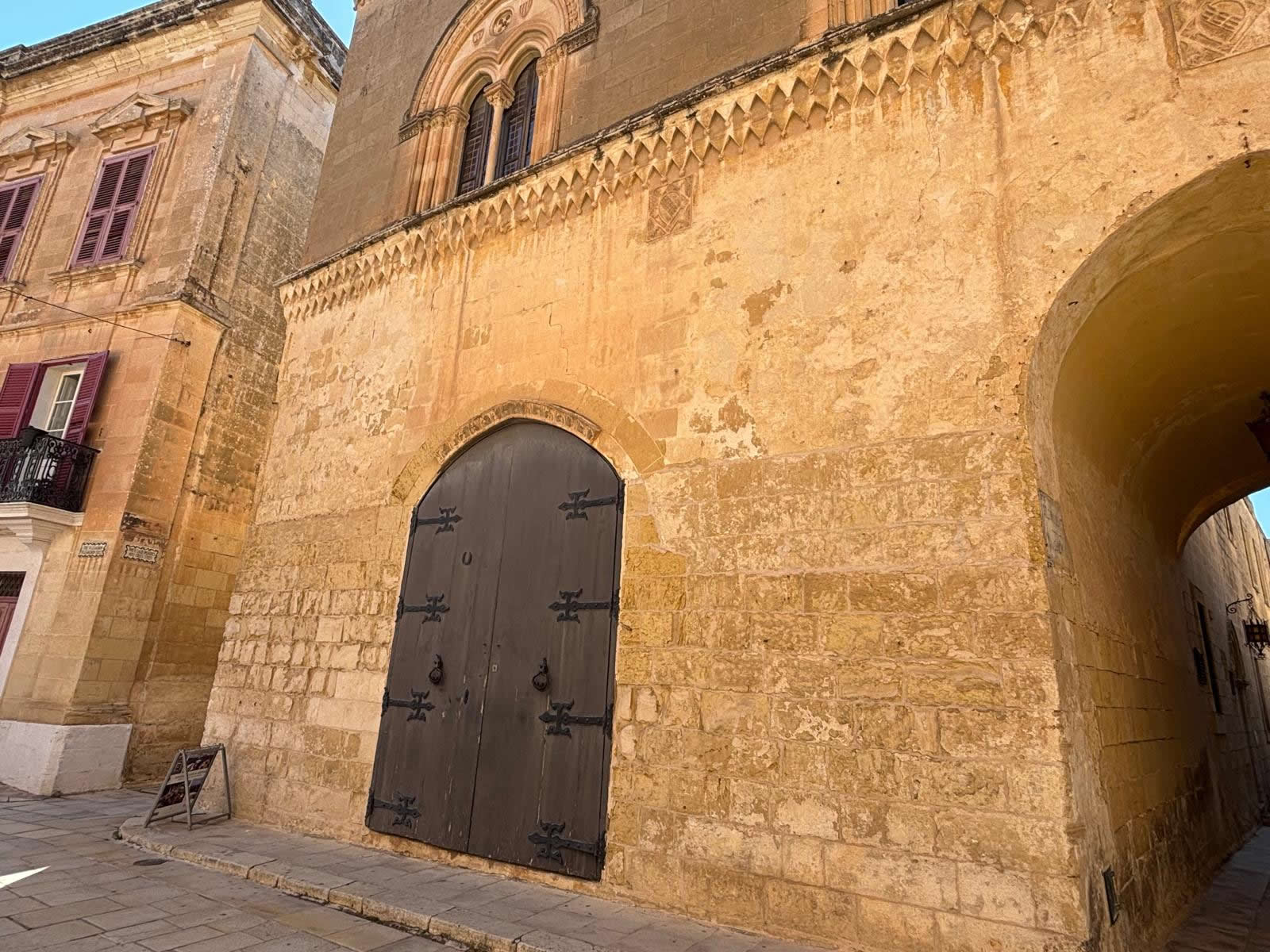
Palazzo Santa Sofia, located in the historic fortified city of Mdina, Malta, is widely recognised as the oldest surviving medieval building on the islands, bearing a confirmed construction date of 1233. This remarkable structure stands as one of the most important architectural and historical landmarks in Malta, offering rare insight into the island’s medieval urban fabric, long before the arrival of the Knights of St John in 1530.
Unlike many churches and palaces that were rebuilt or heavily altered over the centuries, Palazzo Santa Sofia retains substantial portions of its original medieval structure. Its survival makes it an essential reference point for understanding Malta’s architectural evolution from the medieval period into the Renaissance and Baroque eras.
Location and Setting
Palazzo Santa Sofia is situated in Mdina, Malta’s ancient capital, often referred to as the “Silent City.” Mdina itself has origins stretching back to Phoenician and Roman times, but the surviving urban layout and much of its architecture reflect medieval and early modern development.
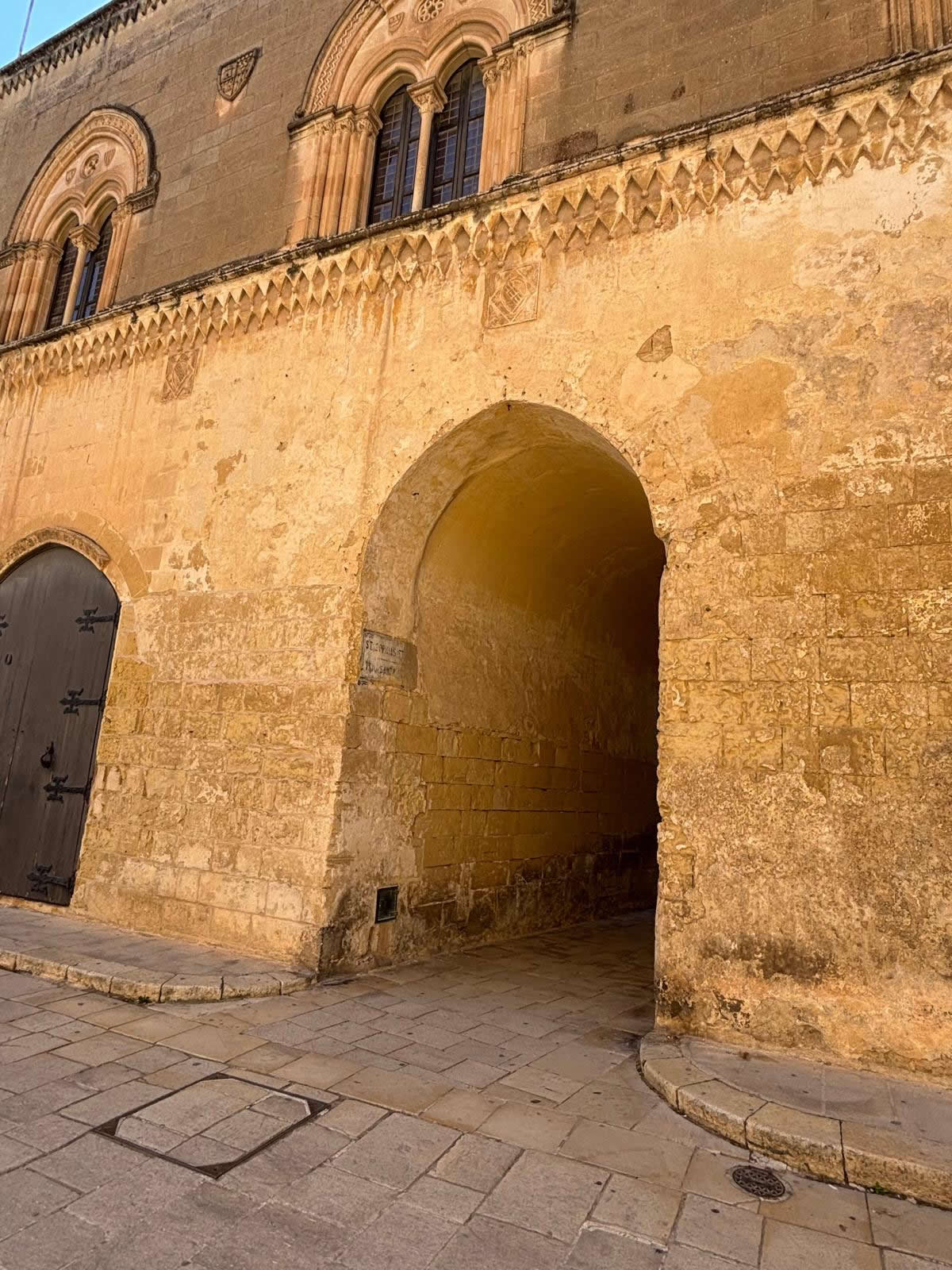
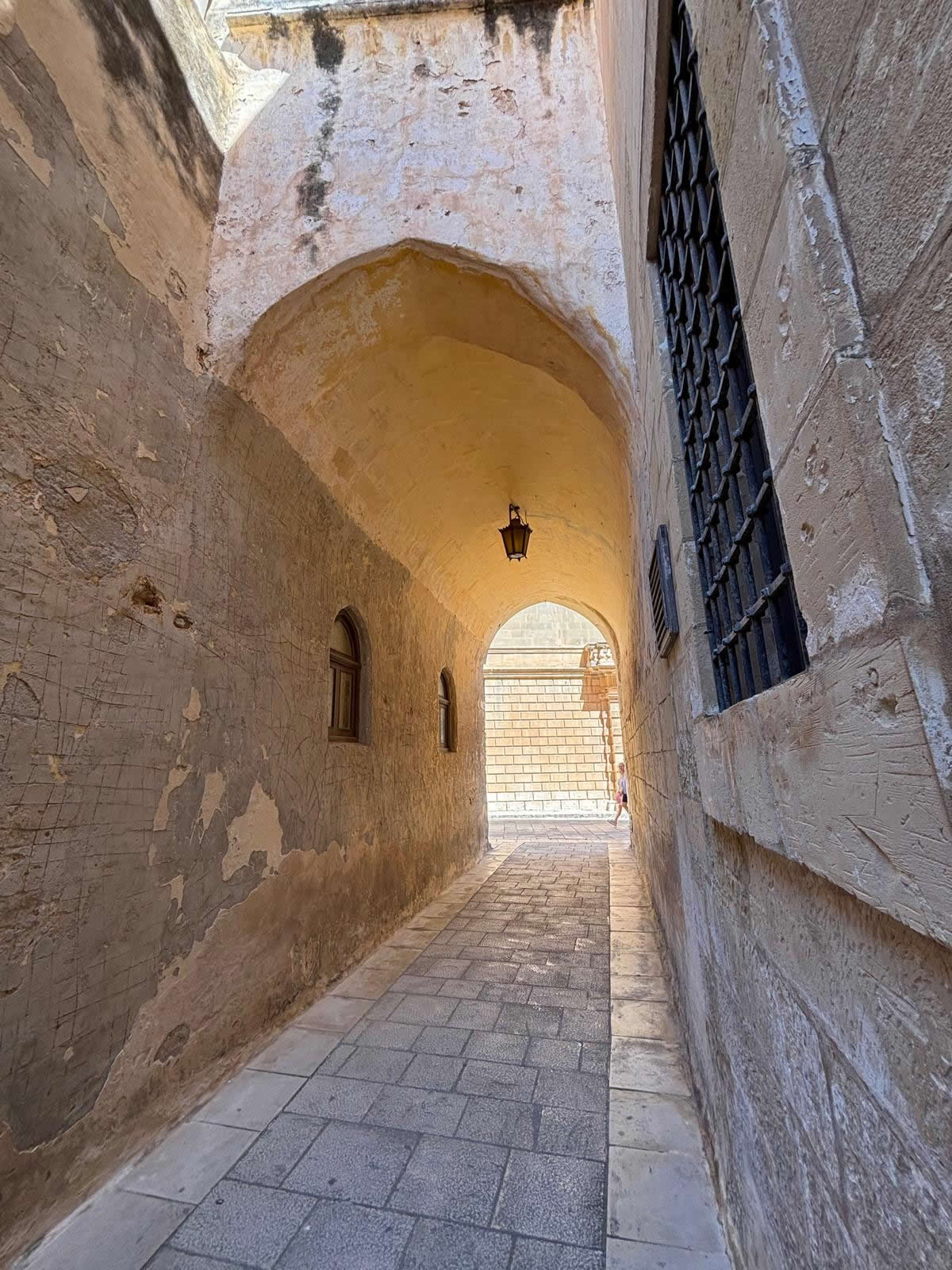
The palace is located along a narrow street within the fortified walls, surrounded by other noble residences and ecclesiastical buildings. Its position reflects the social hierarchy of medieval Mdina, where aristocratic families resided within the city’s defensive perimeter.
Construction and Dating (1233)
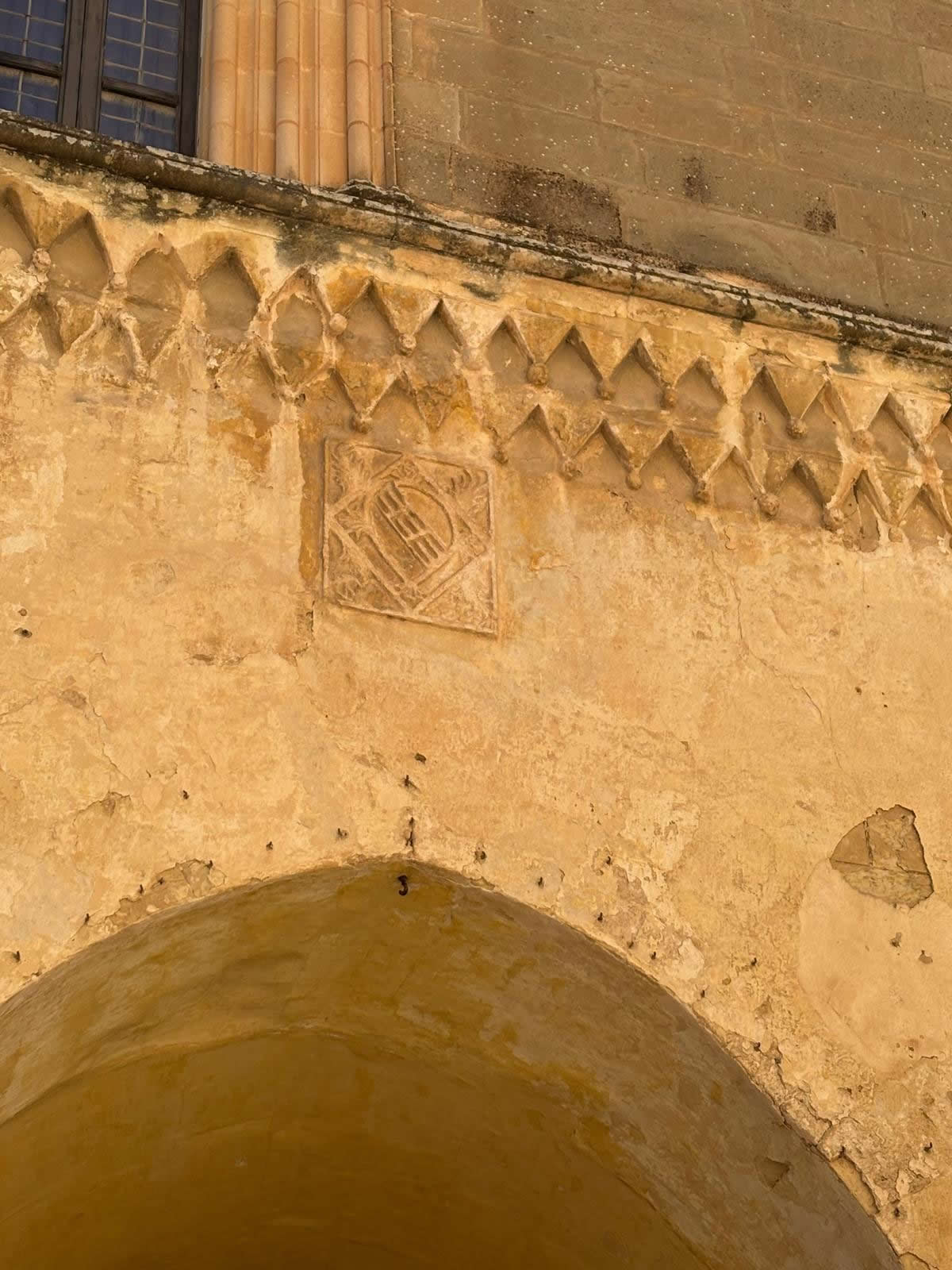
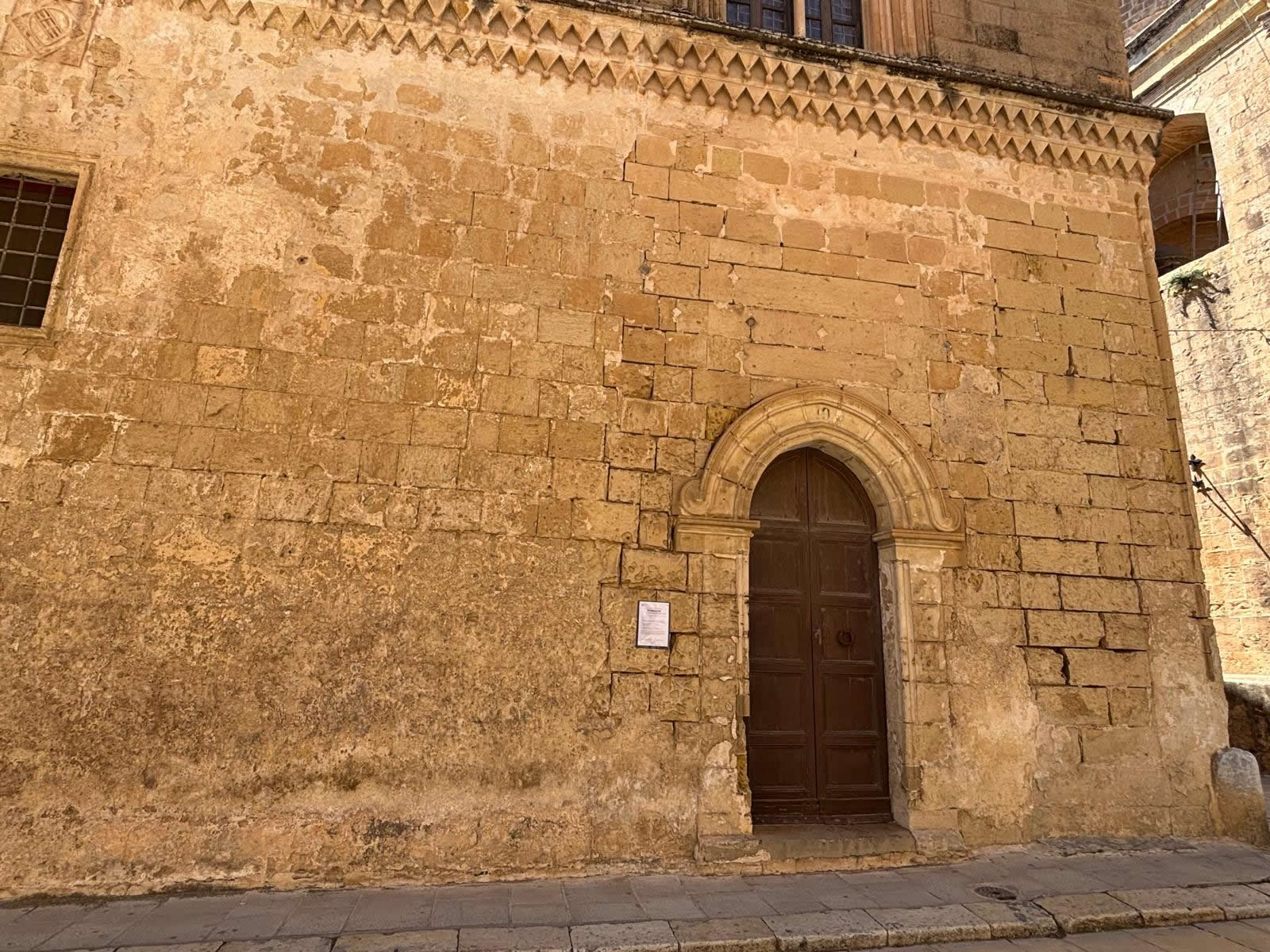
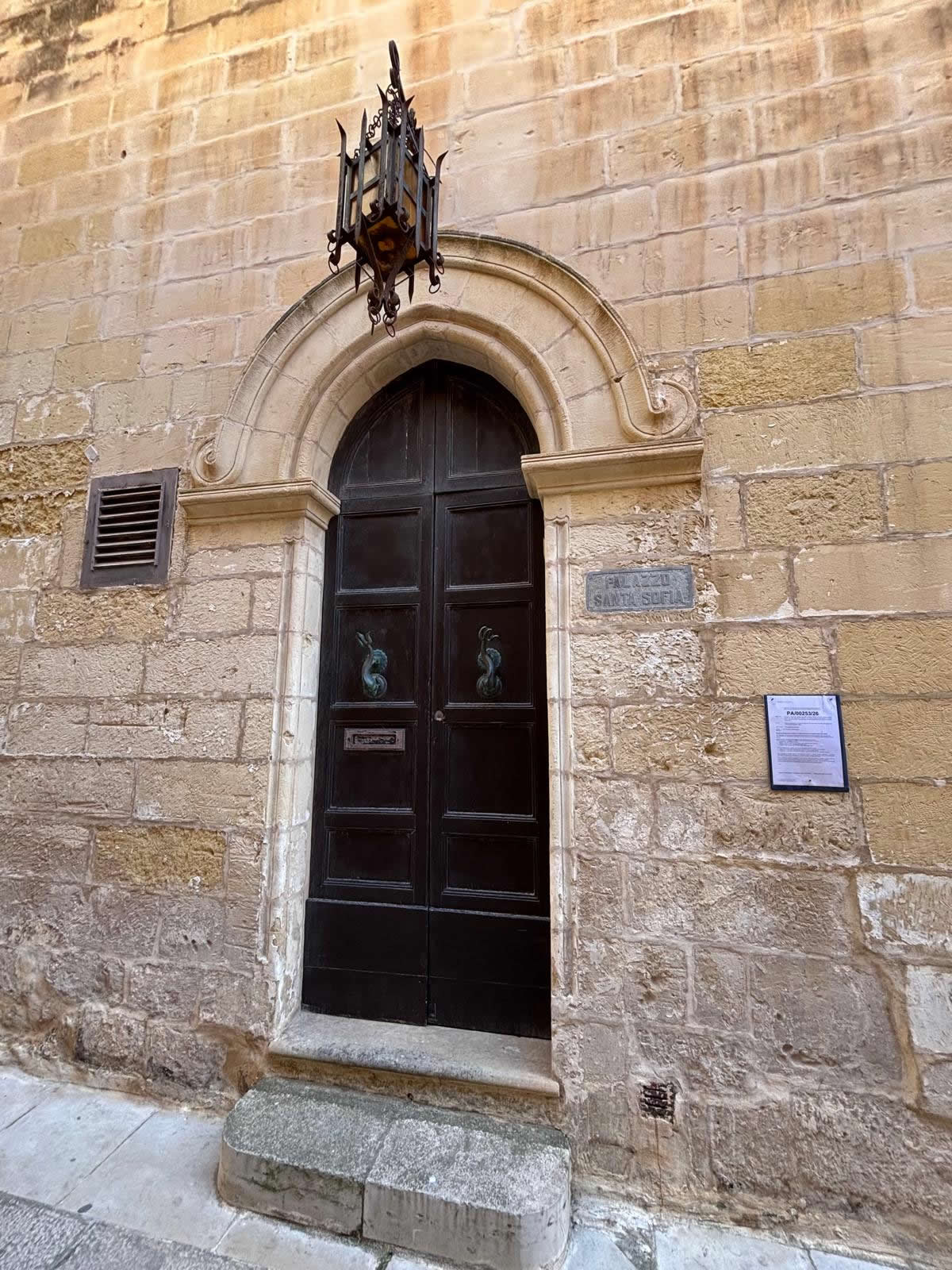
The most significant feature of Palazzo Santa Sofia is the inscription indicating the year 1233, making it the oldest dated building still standing in Malta. This date is generally associated with the construction of the ground floor, which exhibits strong medieval characteristics.
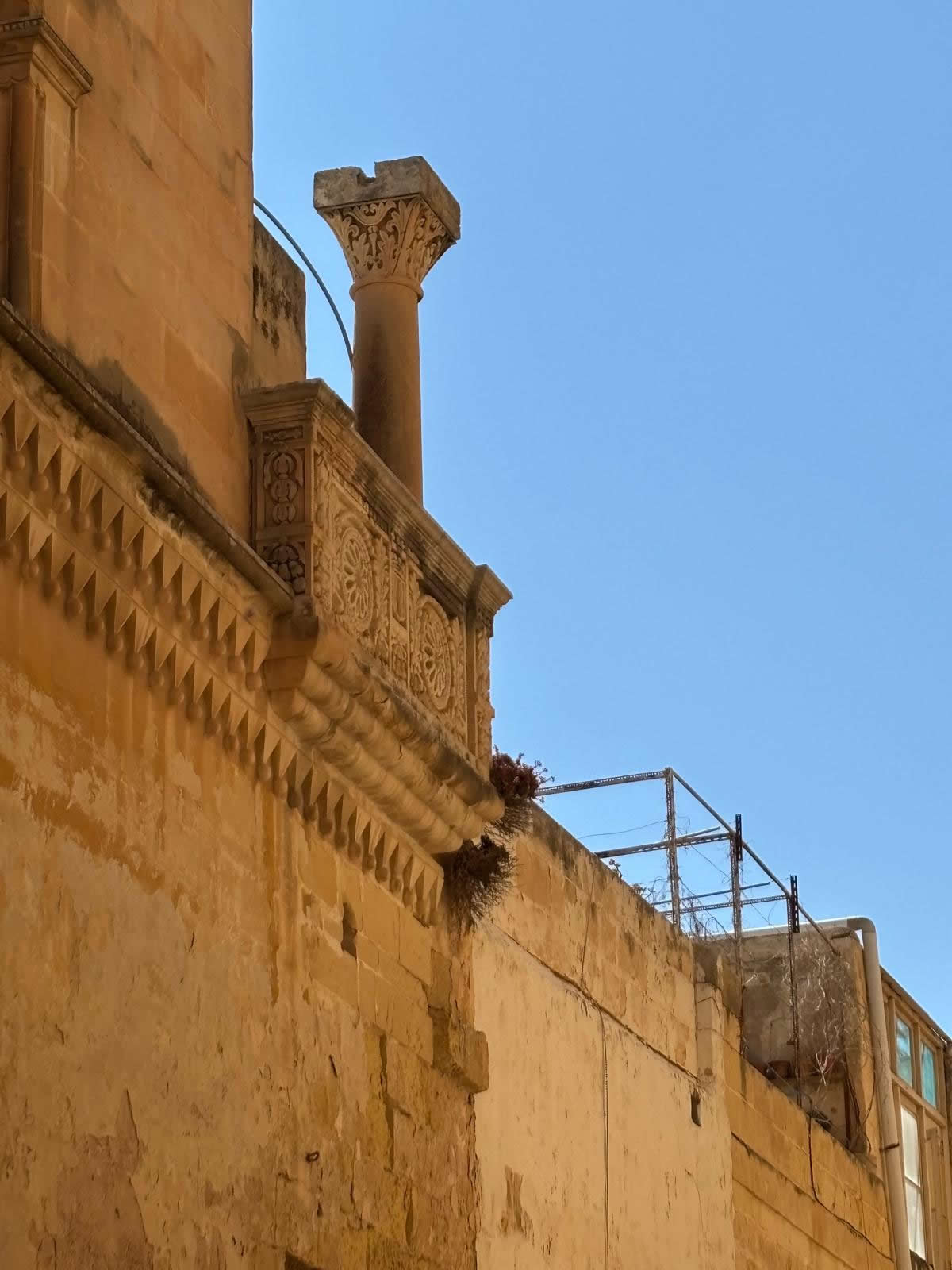
The upper floor was added later, most likely in the 15th century, reflecting architectural developments during the late medieval period. This layered construction provides valuable evidence of evolving building techniques and stylistic changes over time.
Architectural Features
Medieval Ground Floor
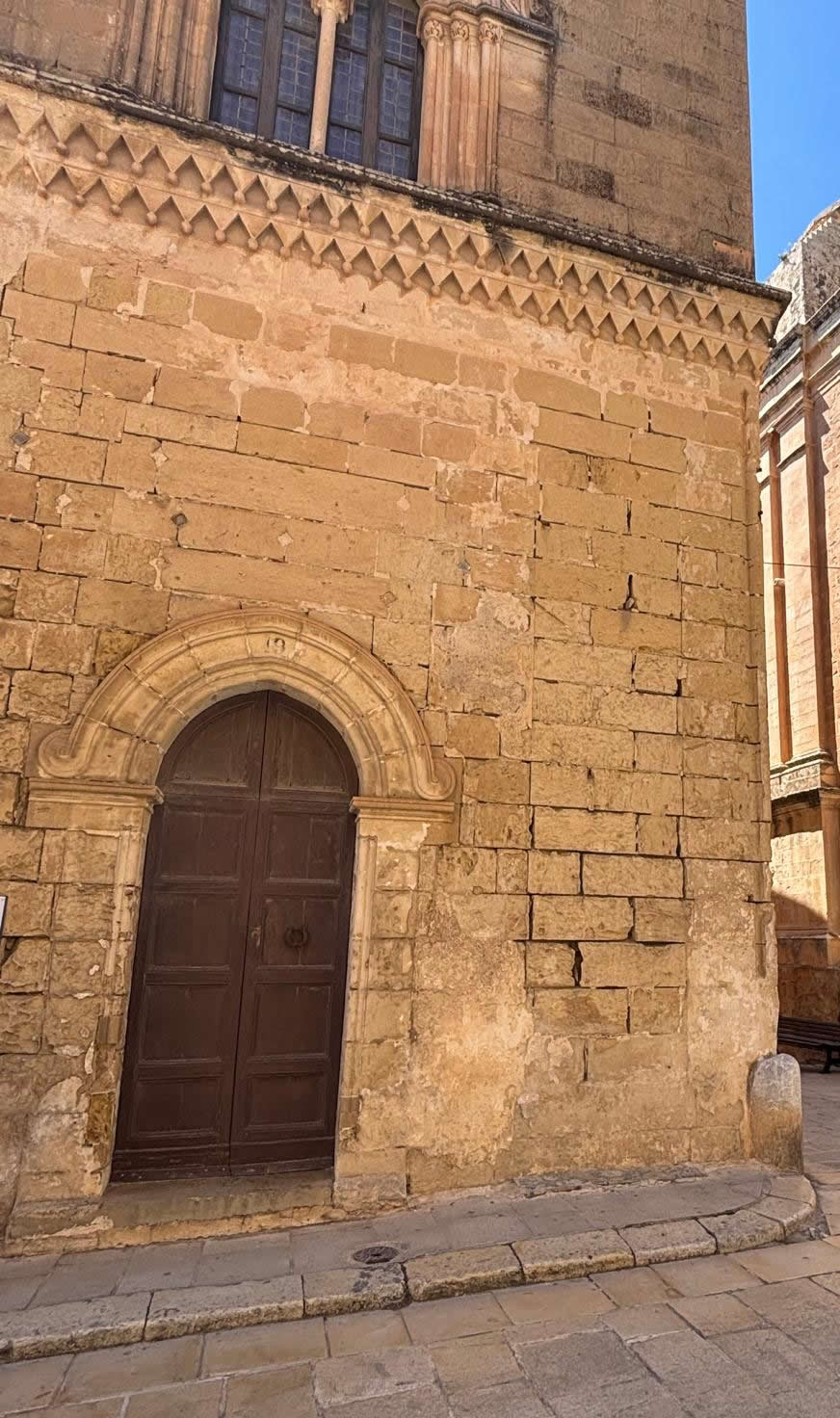
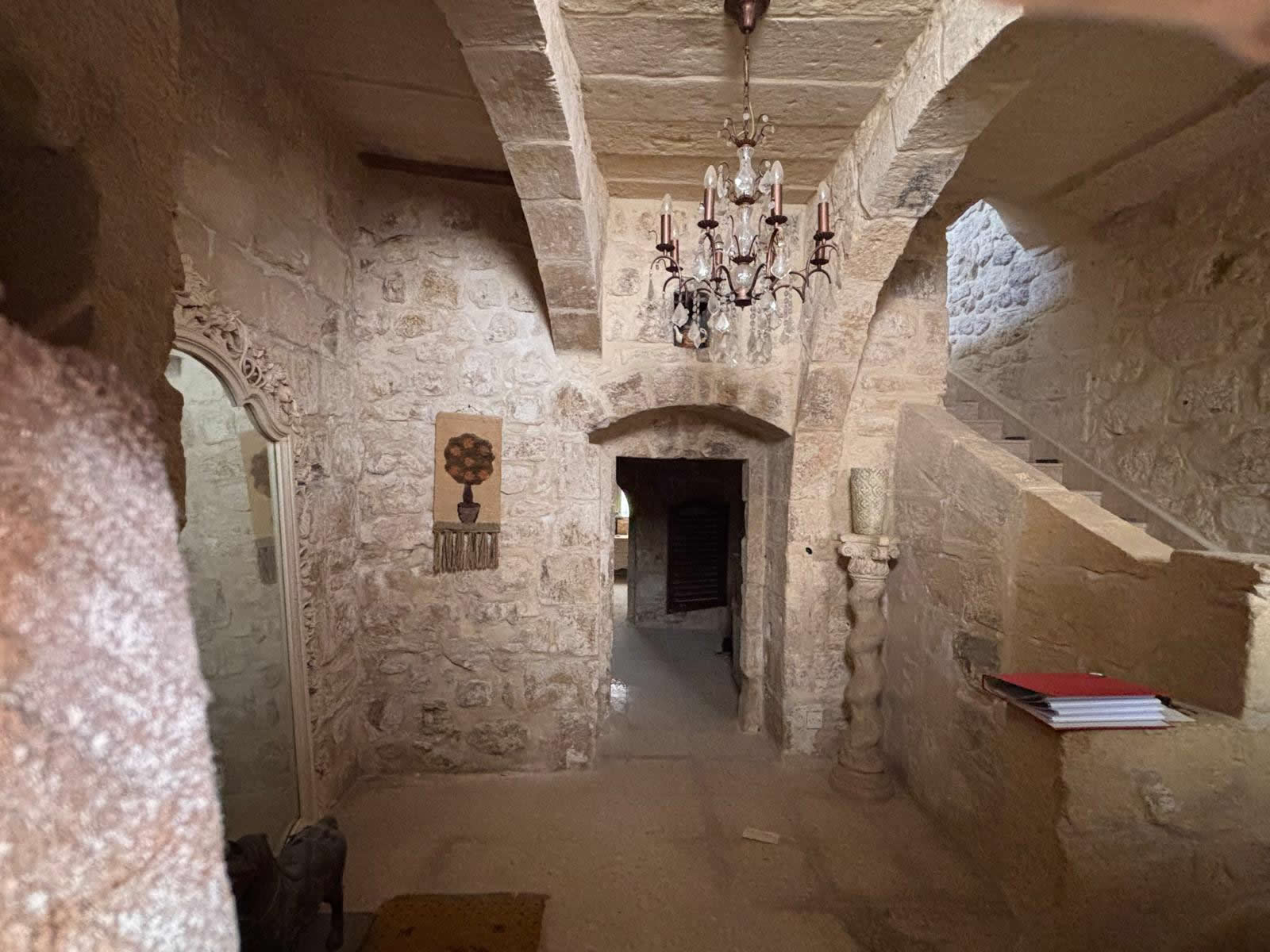
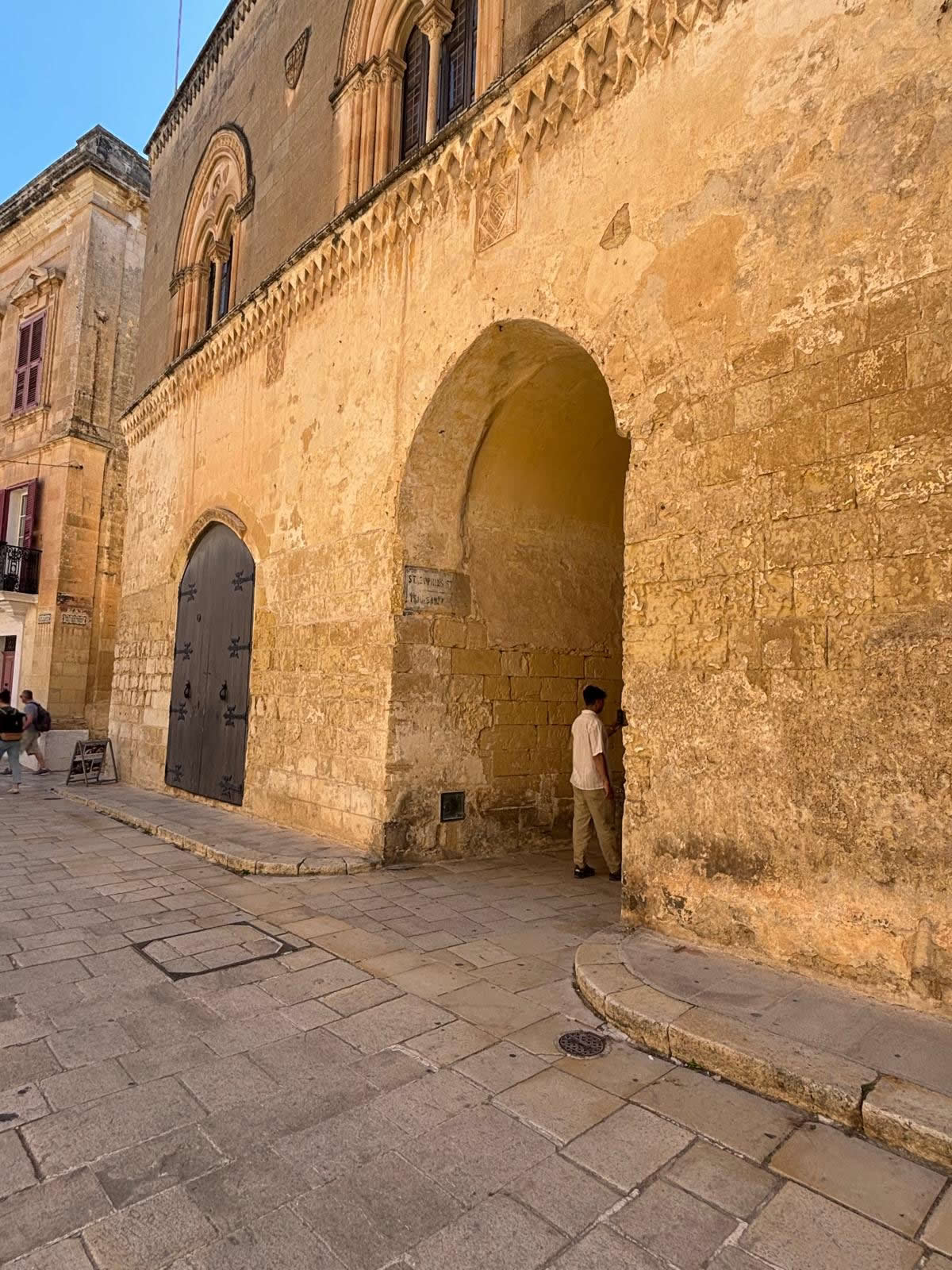
The ground level of Palazzo Santa Sofia is constructed from thick limestone walls, designed for both structural strength and defensive capability. The small openings and robust masonry are typical of medieval buildings in Malta, where security and durability were essential considerations.
Upper Storey Additions
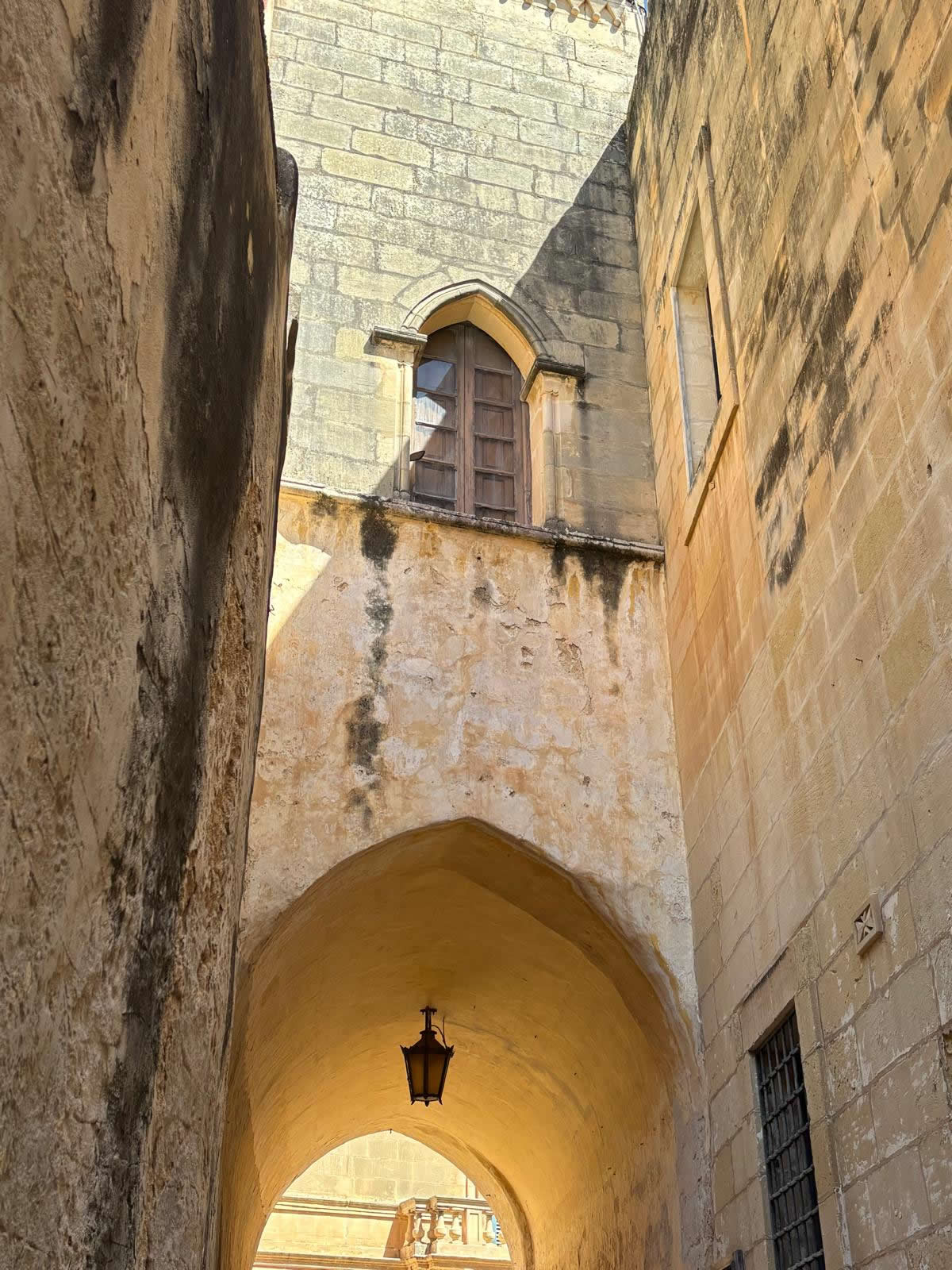
The upper level, added in the later medieval period, incorporates larger windows and more refined detailing, reflecting increased emphasis on comfort and status. The combination of these elements highlights the transition from purely defensive architecture to more residential and aesthetic concerns.
Materials and Craftsmanship
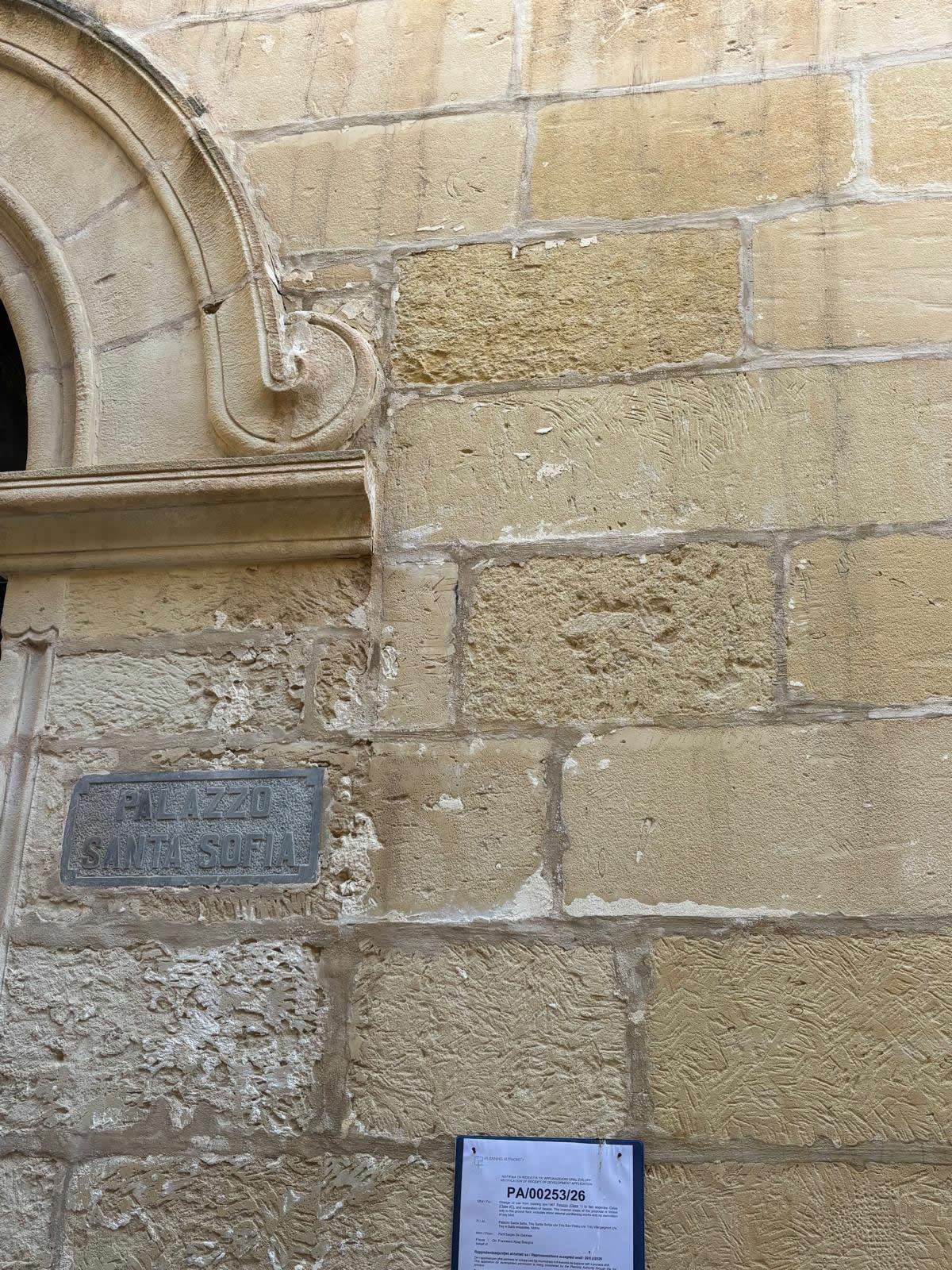
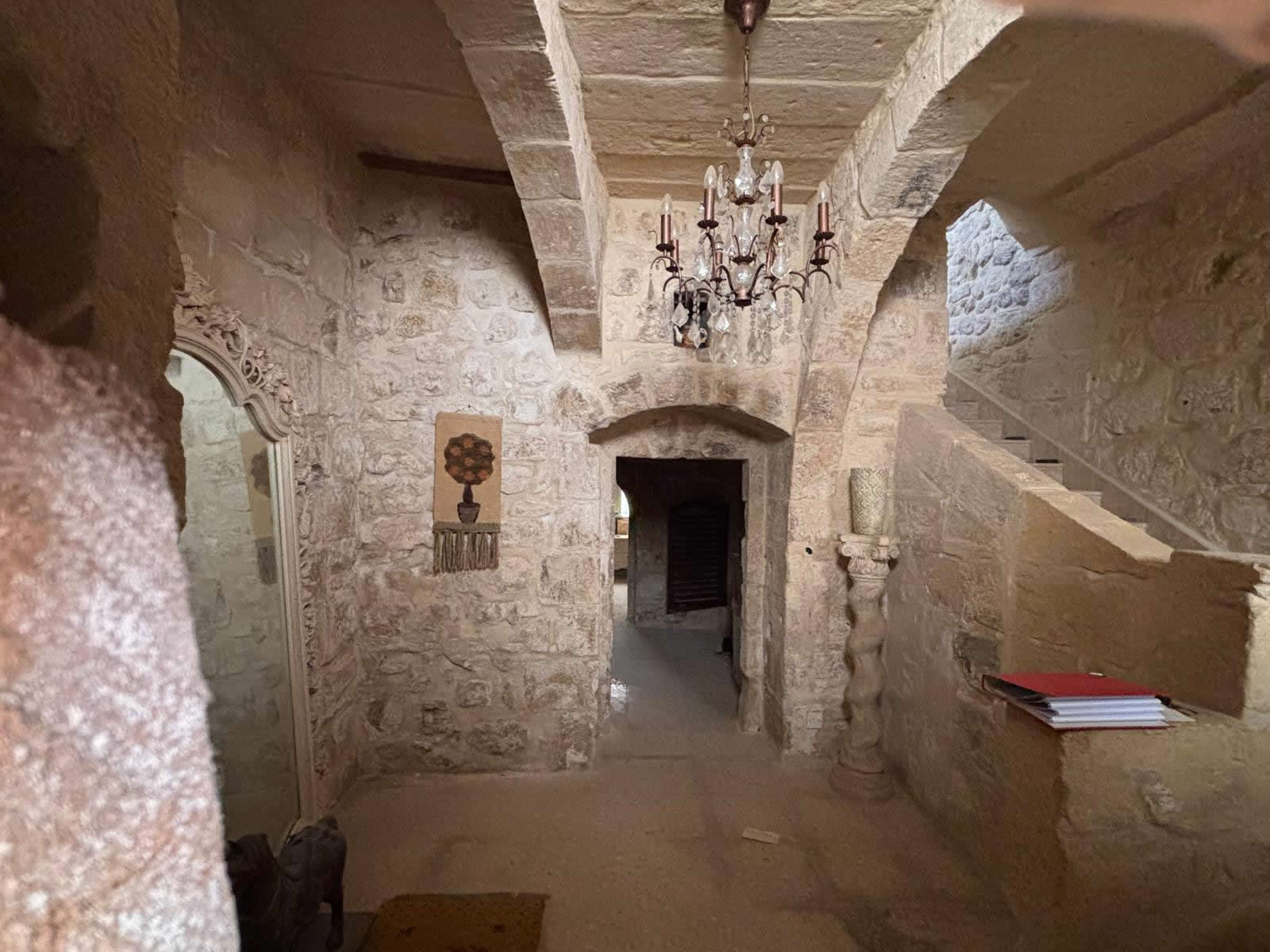
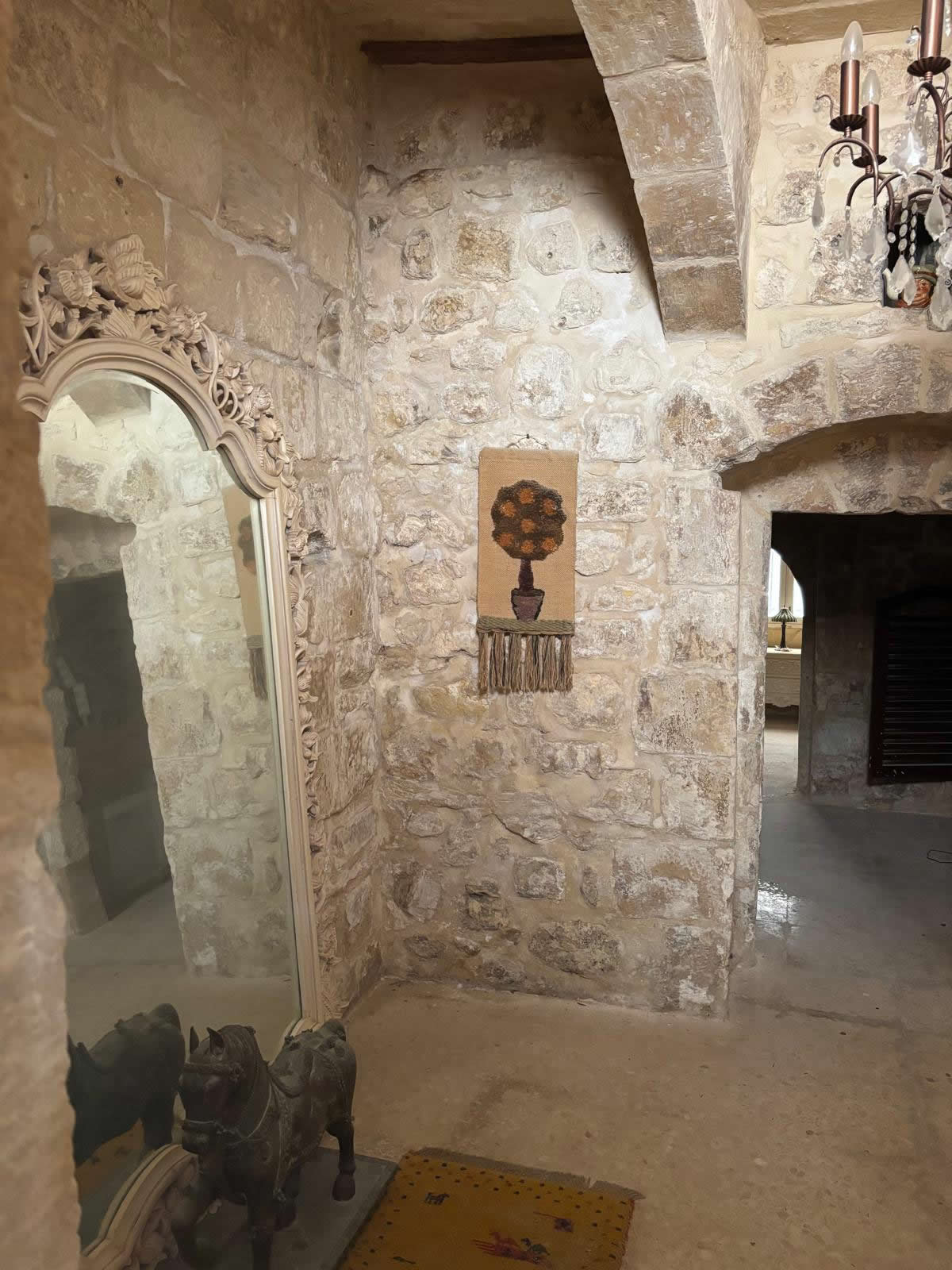
The building is constructed using local globigerina limestone, a material widely used across Malta due to its availability and workability. The stonework demonstrates skilled craftsmanship, with carefully dressed blocks and enduring structural integrity that has allowed the building to survive for centuries.
Historical Context
At the time of its construction in 1233, Malta was under the rule of the Kingdom of Sicily. Mdina served as the administrative and noble centre of the island, housing the elite and governing authorities.
Palazzo Santa Sofia would have been part of this aristocratic environment, likely serving as a residence for a noble or influential family. Its construction reflects both the stability of the period and the importance of Mdina as the island’s political and cultural hub.
Use Through the Centuries
Over the centuries, Palazzo Santa Sofia has remained primarily a residential property. Unlike many historic buildings that were repurposed for institutional or religious use, it has retained its domestic character.
Despite changes in ownership and minor alterations, the building has preserved its historical identity. Its continued use as a private residence has contributed to its preservation, as it has avoided large-scale reconstruction that might have altered its original features.
Restoration and Preservation
Preservation efforts have focused on maintaining the building’s structural integrity while respecting its historical authenticity. Restoration work has been carried out carefully to ensure that original materials and architectural details are retained wherever possible.
Given its importance as Malta’s oldest dated building, Palazzo Santa Sofia is considered a key heritage asset. Conservation policies aim to protect it from inappropriate development while allowing for its continued use.
Importance in Maltese Heritage
Palazzo Santa Sofia occupies a unique position in Malta’s cultural landscape. It is not only a rare surviving example of medieval domestic architecture but also a tangible link to a period of Maltese history that is otherwise poorly represented in surviving structures.
Its significance extends beyond architecture, contributing to the broader understanding of social, political, and urban life in medieval Malta. For historians, architects, and visitors alike, it represents a vital connection to the island’s past.
Comparison with Other Historic Buildings
Many historic sites in Malta claim ancient origins, but few retain their original fabric. Churches, in particular, were frequently rebuilt or extensively modified during the Baroque period.
Palazzo Santa Sofia stands apart because it has preserved its medieval core. This makes it one of the most authentic surviving structures from this era, unlike later reconstructions that only reflect earlier foundations.
Visitor Information
As a privately owned residence, Palazzo Santa Sofia is not generally open to the public. However, it can be viewed from the exterior, where its architectural features and historic character can be appreciated.
Visitors to Mdina can easily include the palace in a walking tour of the city, alongside other important landmarks and historic streets.
Conclusion
Palazzo Santa Sofia is a cornerstone of Malta’s medieval heritage. Its confirmed date of 1233 and its remarkable state of preservation make it an essential landmark for understanding the island’s architectural and historical development.
As the oldest surviving dated building in Malta, it stands as a testament to the enduring legacy of medieval craftsmanship and the historical significance of Mdina as the island’s ancient capital.
Frequently Asked Questions
When was Palazzo Santa Sofia built?
The ground floor dates to 1233, making it the oldest dated building in Malta.
Where is Palazzo Santa Sofia located?
It is located in Mdina, Malta’s historic fortified city.
Can you visit Palazzo Santa Sofia?
The building is privately owned and not generally open to the public, but it can be viewed externally.
Why is it important?
It is the oldest surviving medieval building in Malta with a confirmed construction date.