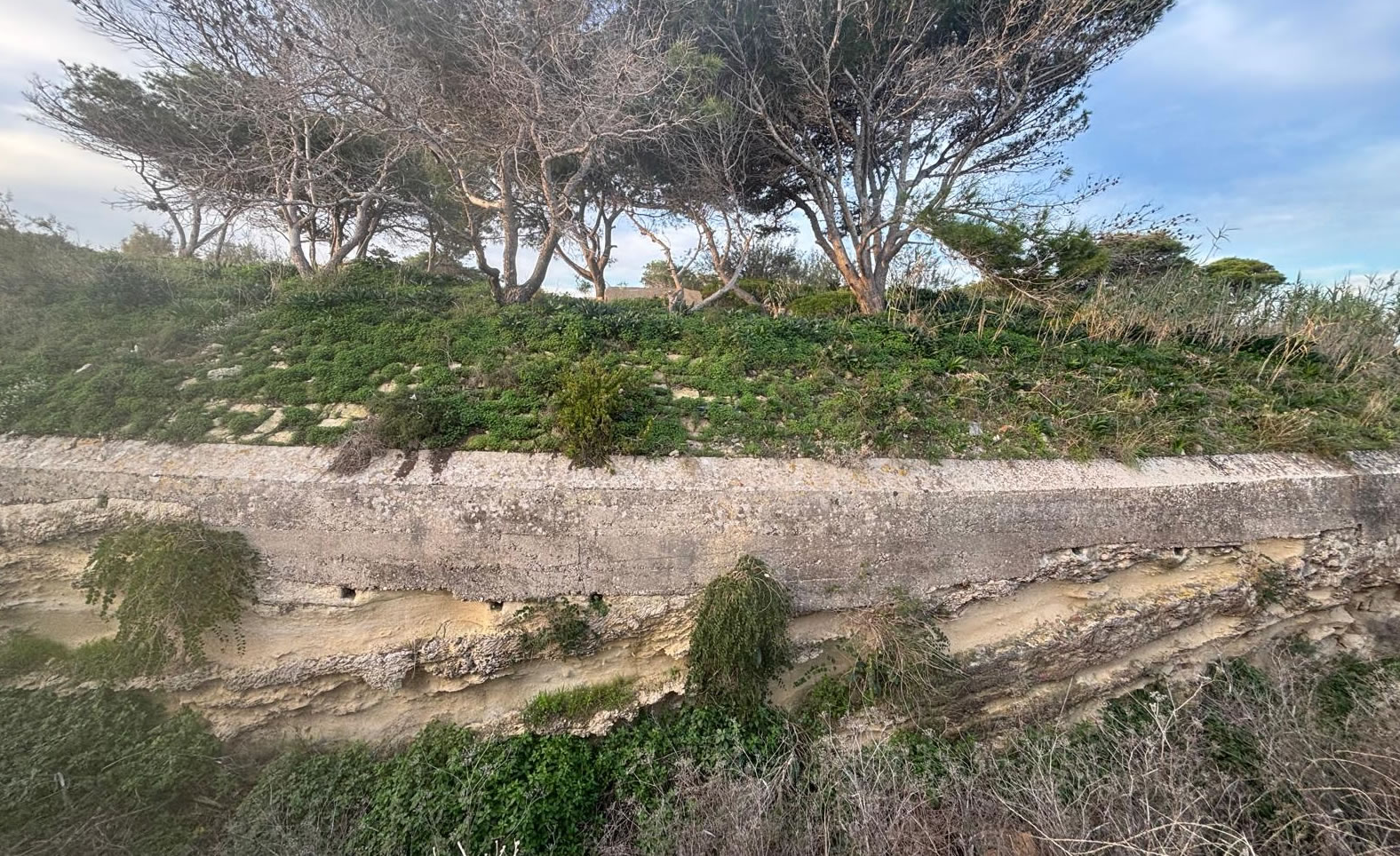
Overall plan: a compact “D”-shaped/polygonal battery
The “D” form is a practical coastal-battery geometry: a curved or rounded seaward front concentrates fire toward maritime approaches, while a straighter rear (gorge) supports access and internal logistics.
The ditch / dry moat (perimeter defence)
Descriptions of the site record a dry moat (ditch) around most of the battery (with the gorge treated differently), intended to slow attackers and keep threats at a distance from the gun positions and entrances.
Gun emplacements (three positions)
The battery was designed for three gun emplacements. A recorded construction-phase change upgraded the planned armament, resulting in three 7-inch 6.5-ton RML guns in barbette mounts as the final fit.
Underground magazine and internal movement
The design includes an underground magazine supporting sustained fire. This below-ground element protected ammunition from splinters, weather, and accidental ignition—standard practice for 19th-century batteries.
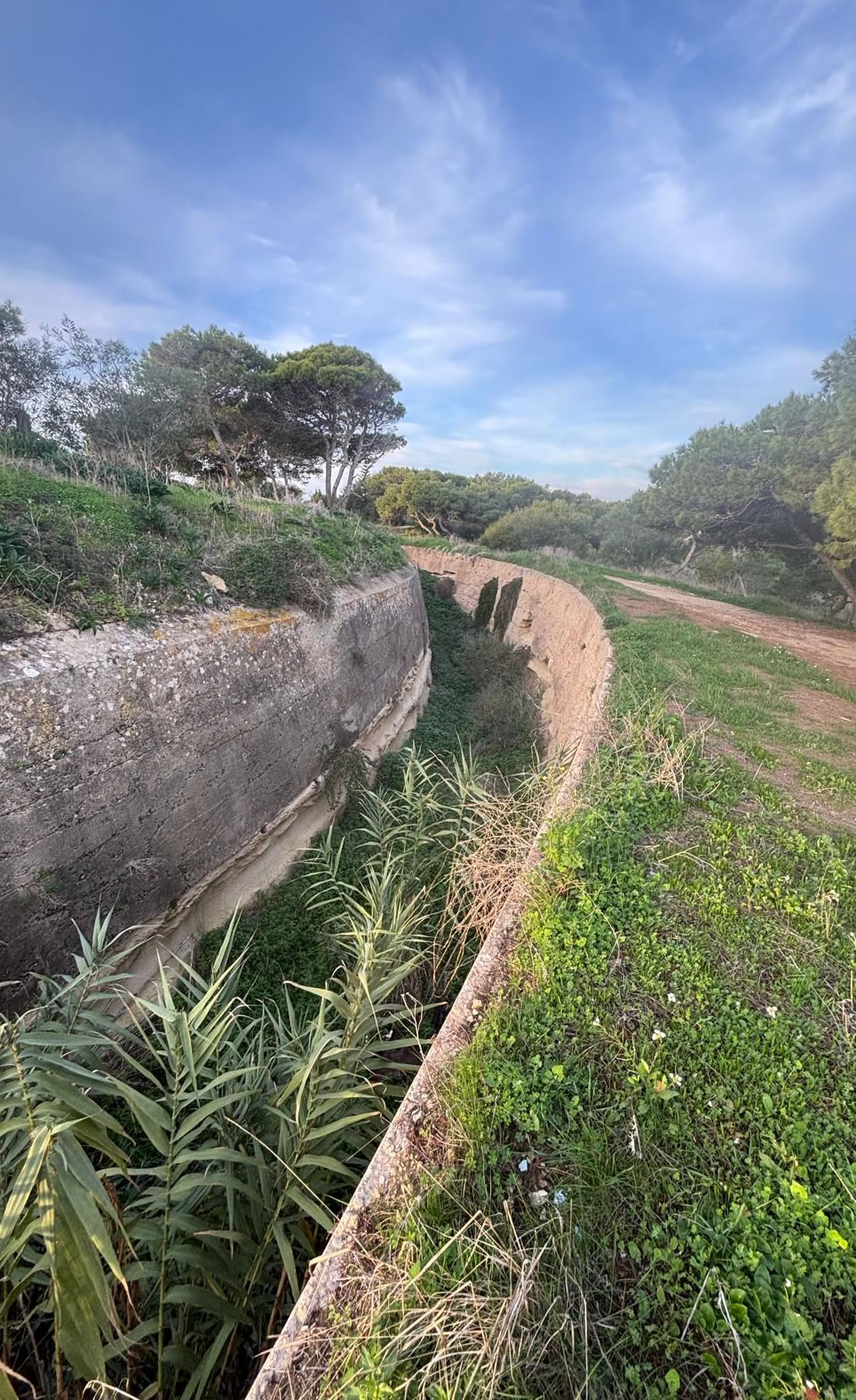
Materials: dressed stone and early concrete (recorded)
Site descriptions note the combined use of dressed stone and early concrete (including concrete to the tops of gun emplacements and parts of the ditch lining), reflecting a transitional period when British engineers increasingly adopted concrete for strength and speed.
How St Paul’s Battery worked with nearby forts
The battery is consistently linked to the Delimara/Tas-Silġ fortification complex in descriptions and context studies, acting as an additional firing position within a broader defended sector. :contentReference[oaicite:33]{index=33}