
Is it open to the public?
There is typically no formal visitor centre or ticketing. Access can be variable depending on land management, safety conditions, and any temporary works. Treat the battery as a sensitive heritage site first and foremost.
Safety essentials (seriously)
- Ditch/moat edges: uneven ground and hidden drops are common around fortifications.
- Underground spaces: avoid entering magazines/tunnels (collapse risk, low oxygen, flooding, debris).
- Overgrowth: vegetation can conceal holes, sharp metal, or unstable masonry.
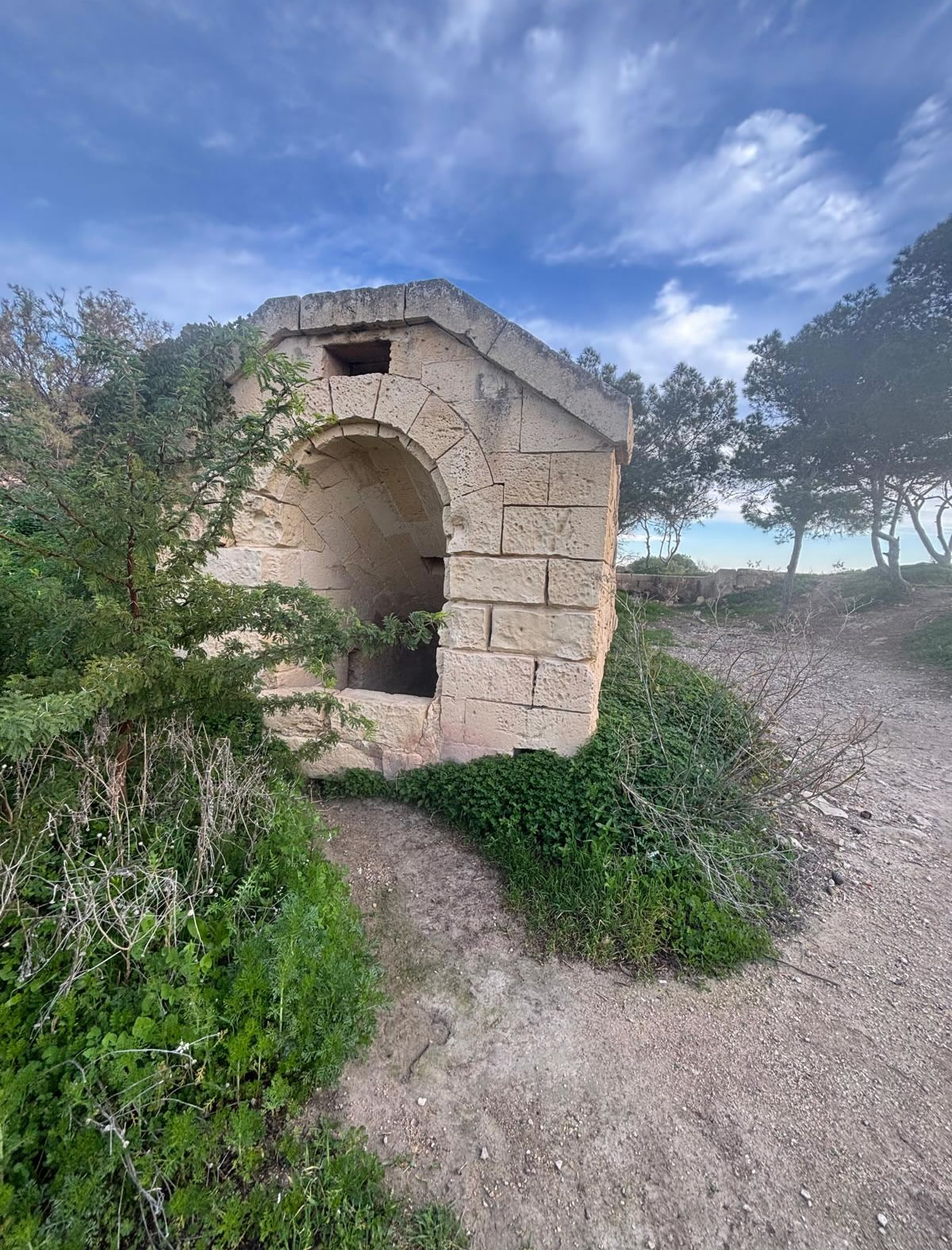
Respectful visiting tip: do not climb parapets, do not remove stones, and do not enter unsafe openings. Take photos from stable ground and follow any posted restrictions.
What to look for (even from outside)
- The “D”-shaped / polygonal outline and the relationship between the seaward front and the gorge
- Three gun emplacement zones (barbette-style positions) and associated concrete/stone detailing
- The ditch/moat line that defines the battery’s defensive perimeter

Nearby heritage context
The battery sits within a wider Delimara/Marsaxlokk defence landscape that includes major forts from the same general era and earlier coastal works.