War Memorials > Royal Malta Artillery Dockyard Explosion Memorial
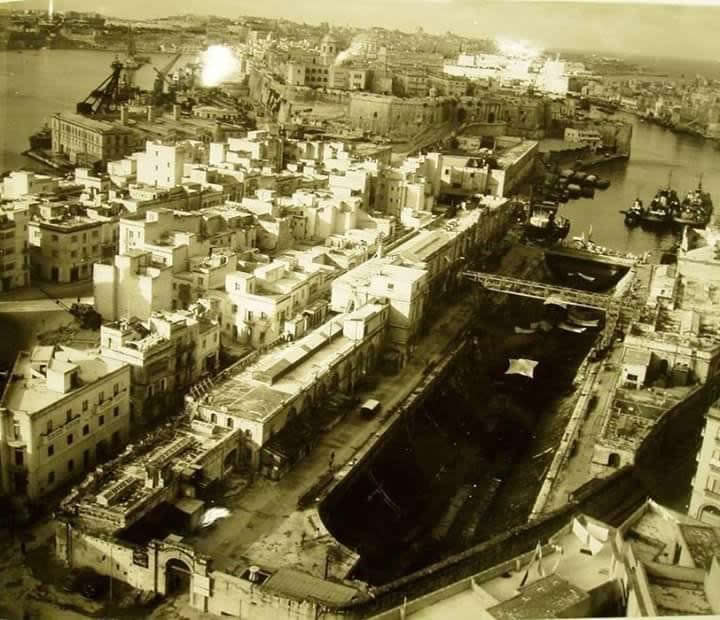
Google Map – Malta Dockyard area
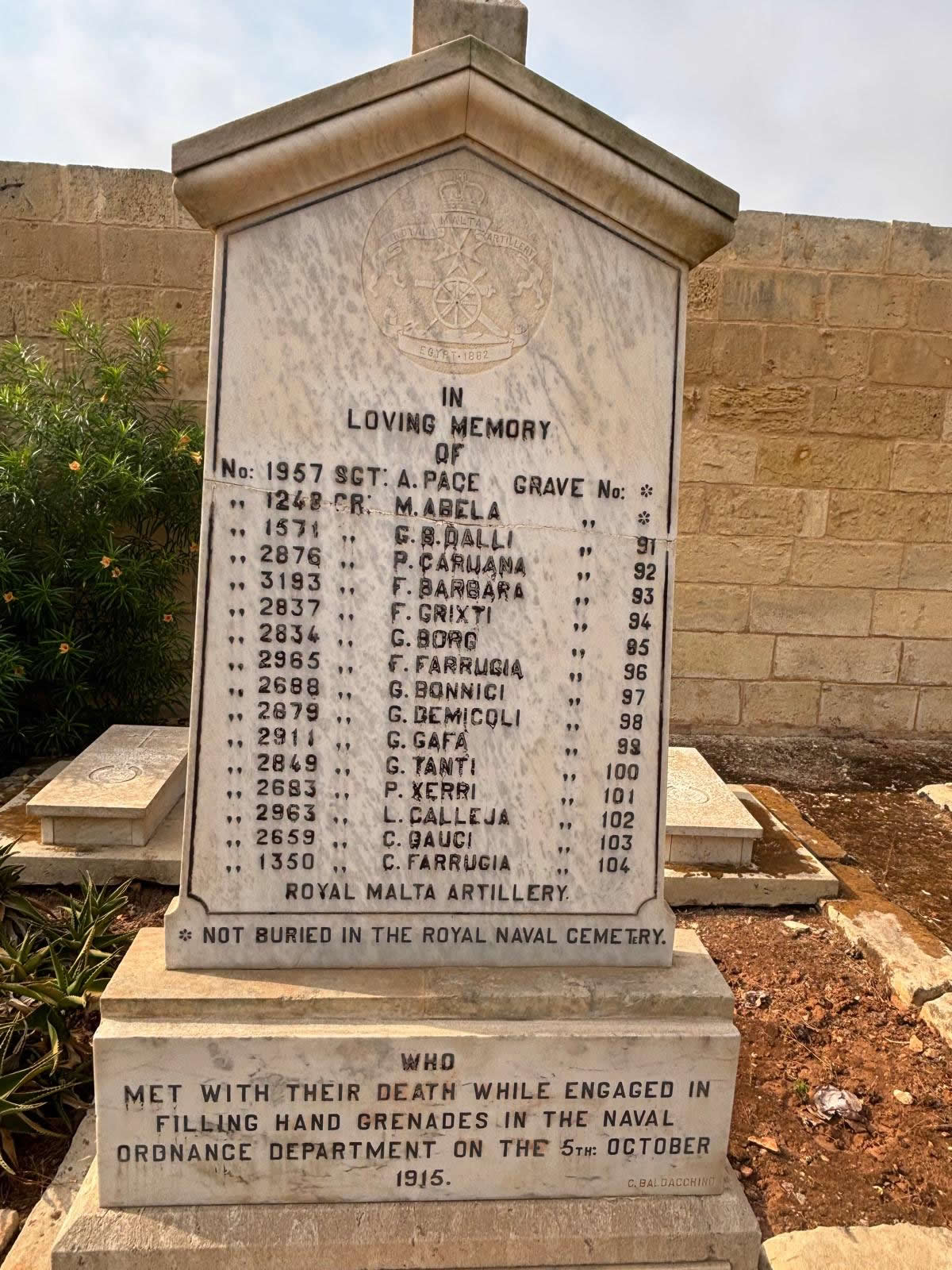
The Royal Malta Artillery Dockyard explosion of 5 October 1915 was a major wartime accident in Malta during the First World War. Sixteen Maltese members of the Royal Malta Artillery lost their lives while engaged in the preparation of hand grenades for the Allied campaign at Gallipoli.
16 Royal Malta Artillery personnel killed
The victims were buried in several locations, including the Capuccini Naval Cemetery at Kalkara, Dingli and Żebbuġ.
The Dockyard Explosion
During the First World War, Malta was an important British military and naval base in the Mediterranean. Its dockyard and military establishments supported Allied operations throughout the region, including the campaign at Gallipoli.
In 1915 Royal Malta Artillery personnel were involved in dangerous work associated with the preparation of hand grenades. On 5 October 1915, a quantity of grenades exploded at the Malta Dockyard. The resulting blast killed sixteen members of the Royal Malta Artillery and wounded others.
The disaster is particularly significant because the men were performing military duties connected with the wider Allied war effort. Although they died in an accident rather than in combat, they were serving during wartime and their names deserve to be preserved alongside Malta's other First World War casualties.
The 16 Victims
The following names are recorded for the sixteen Royal Malta Artillery personnel associated with the 5 October 1915 explosion. Burial information is included where identified from cemetery and memorial records.
| No. | Name | Rank | RMA No. | Burial / Memorial Location |
|---|---|---|---|---|
| 1 | Gio Batta Dalli | Gunner | 1571 | Plot K, Grave 91 Capuccini Naval Cemetery, Kalkara |
| 2 | Paolo Caruana | Gunner | 2876 | Plot K, Grave 92 Capuccini Naval Cemetery, Kalkara |
| 3 | Fedele Barbara | Gunner | 3193 | Plot K, Grave 93 Capuccini Naval Cemetery, Kalkara |
| 4 | Francesco Grixti | Gunner | 2837 | Plot K, Grave 94 Capuccini Naval Cemetery, Kalkara |
| 5 | Giuseppe Borg | Gunner | 2934 | Plot K, Grave 95 Capuccini Naval Cemetery, Kalkara |
| 6 | Francesca Farrugia | Gunner | 2965 | Plot K, Grave 96 Capuccini Naval Cemetery, Kalkara |
| 7 | Giovanni Bonnici | Gunner | 2688 | Plot K, Grave 97 Capuccini Naval Cemetery, Kalkara |
| 8 | Giovanni Maria Demicoli | Gunner | 2879 | Plot K, Grave 98 Capuccini Naval Cemetery, Kalkara |
| 9 | Giuseppe Gafa | Gunner | 2911 | Plot K, Grave 99 Capuccini Naval Cemetery, Kalkara |
| 10 | Giuseppe Tanti | Gunner | 2849 | Plot K, Grave 100 Capuccini Naval Cemetery, Kalkara |
| 11 | Paolo Xerri | Gunner | 2683 | Plot K, Grave 101 Capuccini Naval Cemetery, Kalkara |
| 12 | Lawrence Calleja | Gunner | 2963 | Plot K, Grave 102 Capuccini Naval Cemetery, Kalkara |
| 13 | Carmelo Gauci | Gunner | 2659 | Plot K, Grave 103 Capuccini Naval Cemetery, Kalkara |
| 14 | Carmelo Farrugia | Gunner | 1350 | Plot K, Grave 104 Capuccini Naval Cemetery, Kalkara |
| 15 | Agostino (Wistin) Pace | Serjeant | 1957 | Żebbuġ Parish Church Memorial in passageway leading to the crypt |
| 16 | Michael Abela | Gunner | 1248 | Maria Addolorata Cemetery, Dingli Remains recorded as lying in the ossuary |
The explosion also claimed the life of Carmelo Abela, an employee of H.M. Dockyard. Abela was not a Royal Malta Artillery volunteer he was an employee of H.M. Dockyard and his name does not appear on the RMA memorial. He is, however, buried nearby in Plot K, Grave 90 at the Capuccini Naval Cemetery.
Abela died from injuries sustained in the explosion, making his grave an important part of the wider story of the 5 October 1915 Dockyard disaster. His grave, K090, lies immediately before the sequence of RMA graves associated with the memorial.
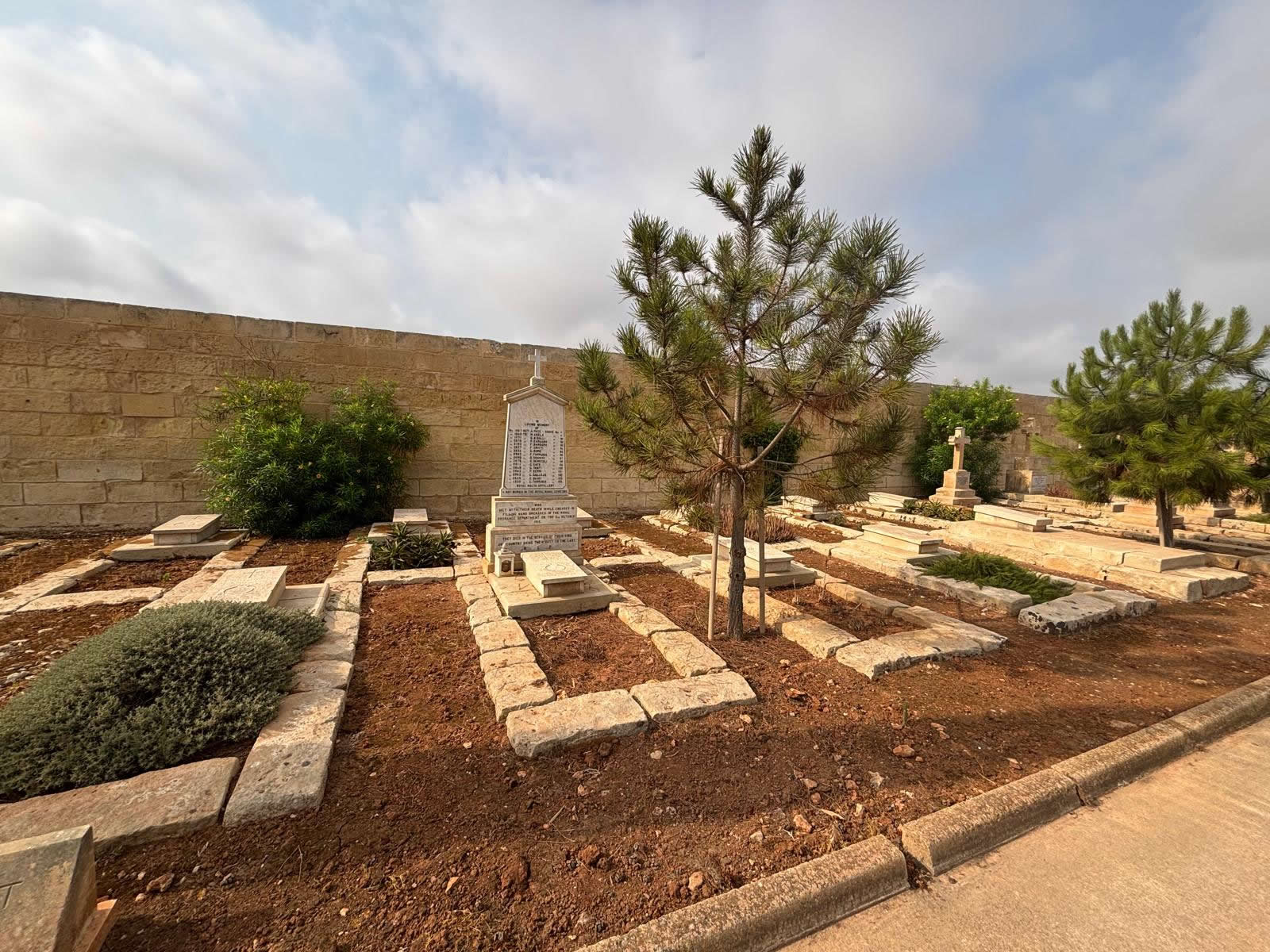
Capuccini Naval Cemetery, Kalkara
Fourteen of the victims
Fourteen of the sixteen men are associated with graves at the Malta (Capuccini) Naval Cemetery at Kalkara. Their graves form an important physical record of the 1915 Dockyard tragedy.
Gunner Michael Abela — Dingli
Gunner Michael Abela, Royal Malta Artillery service number 1248, was one of the sixteen men killed in the explosion.
Unlike most of the victims, Abela was not buried at Capuccini. His memorial at Dingli records that his remains lie in an ossuary at Maria Addolorata Cemetery, Dingli.
“IN MEMORY OF GUNNER M. ABELA / ROYAL MALTA ARTILLERY / 5.10.1915 / WHOSE REMAINS LIE IN THIS OSSUARY.”

Serjeant Agostino (Wistin) Pace — Żebbuġ
Serjeant Agostino Pace, also known as Wistin Pace, was another of the sixteen Royal Malta Artillery victims. His service number is recorded as 1957.
Pace was returned to his home community and is commemorated at the parish church in Żebbuġ. The surviving marble memorial is now situated in the passageway leading towards the crypt. The memorial is particularly important because it preserves a direct local connection to one of the men who died in the Dockyard accident.
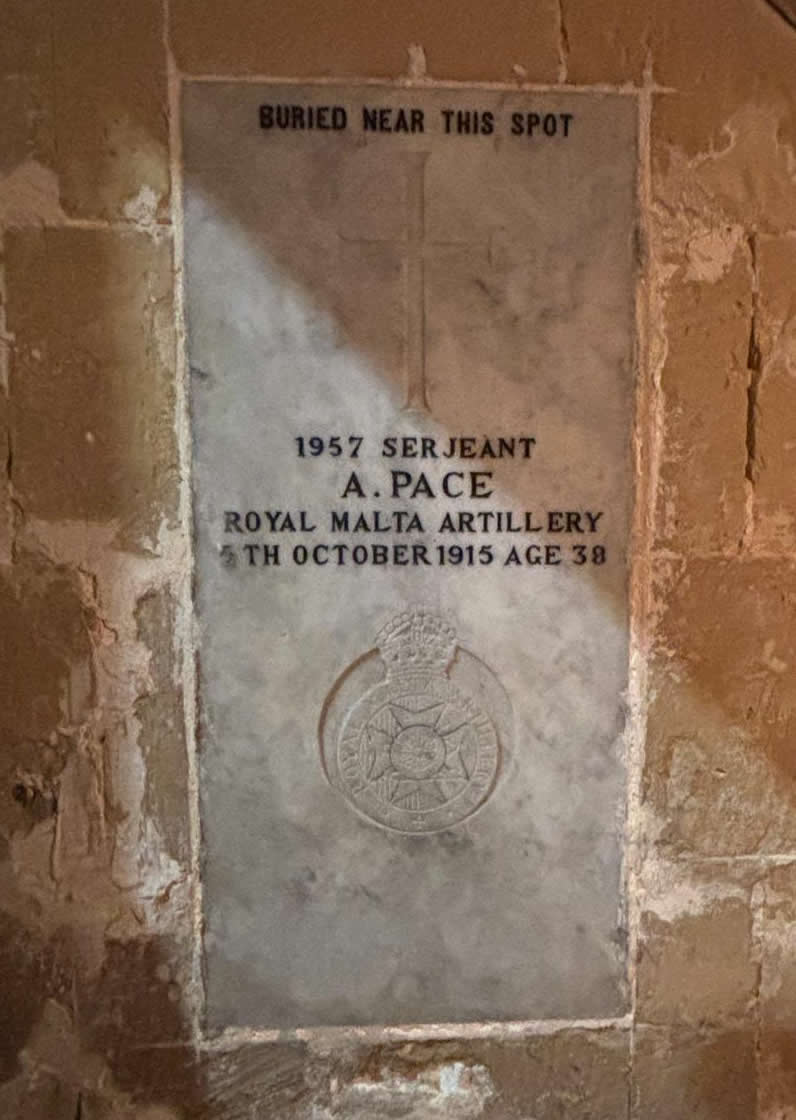
The surviving Żebbuġ memorial which was almost certainly on the floor of the church and this plaque relocated after the floor was relaid.
The Royal Malta Artillery and the First World War
The Royal Malta Artillery was an important component of Malta's military establishment. During the First World War Maltese artillery personnel supported British military operations and served in a range of duties associated with the defence and supply infrastructure of the Mediterranean.
The 1915 Dockyard explosion demonstrates that wartime casualties were not confined to the battlefield. Military personnel could also lose their lives while handling ammunition and other dangerous materials in support of active operations.
Connection with the Gallipoli Campaign
The explosion occurred during the Gallipoli campaign, when Allied forces were engaged in fighting in the Dardanelles. Malta's strategic position made the island an important base for British and Allied operations.
The preparation of grenades in Malta illustrates the island's wider logistical role in the First World War. The men killed on 5 October 1915 were therefore casualties of a wartime military operation taking place away from the battlefield itself.
Remembering the 16 Men
The story of the Dockyard explosion survives through a combination of military records, cemetery records, parish memorials and surviving inscriptions. The victims are not all commemorated in one place: most are connected with Capuccini Naval Cemetery, while Michael Abela is remembered at Dingli and Agostino Pace at Żebbuġ.
Recording these separate locations is important. It allows the individual stories of the men to be connected to the wider history of Malta during the First World War and preserves the physical evidence that remains more than a century after the tragedy.
Frequently Asked Questions
What happened at the Malta Dockyard on 5 October 1915?
A quantity of hand grenades being prepared for wartime use exploded at the Malta Dockyard. Sixteen members of the Royal Malta Artillery were killed.
How many Royal Malta Artillery men died in the explosion?
Sixteen Maltese members of the Royal Malta Artillery died as a result of the Dockyard explosion.
Where were the victims buried?
Most of the victims were buried at the Capuccini Naval Cemetery in Kalkara. Michael Abela is commemorated at Dingli Cemetery, while Agostino Pace is commemorated at Żebbuġ Parish Church.
Was the explosion connected with Gallipoli?
Yes. The accident occurred during the Gallipoli campaign and involved the preparation of hand grenades for the Allied war effort.
Where is the memorial to Michael Abela?
A memorial to Gunner Michael Abela is found at Maria Addolorata Cemetery in Dingli. It records that his remains lie in the ossuary.
Where is the memorial to Agostino Pace?
The memorial to Serjeant Agostino Pace is at Żebbuġ Parish Church, in the passageway leading towards the crypt.
Research & Documentation
- Researcher: Paul Berman
- Last Updated: 2026
This page forms part of eMalta's ongoing documentation of the historical, cultural and military heritage of Malta and Gozo.
Information is compiled through site visits, field research, historical publications, archival records, cemetery records, memorial inscriptions, maps and other reference sources.
Where a surviving memorial inscription differs from a later historical record, eMalta records the physical evidence and identifies the discrepancy rather than silently changing the inscription.
Images used on eMalta include original photography as well as historical illustrations, maps and photographs reproduced with permission from archives, institutions and copyright holders where applicable. Individual image credits and archive reference numbers are provided where available.