📍 HMS Grampus Submarine Memorial
Location Map Coordinates 35.902231, 14.519625
HMS Grampus (N56) was the lead vessel of the Royal Navy's Grampus-class minelaying submarines. Designed to lay offensive minefields deep inside enemy waters, she entered service shortly before the outbreak of the Second World War and became one of the first British submarines lost during the Mediterranean campaign. Today she is commemorated on Malta's Royal Navy Submarine Roll of Honour at the National War Museum, Fort St Elmo, Valletta.
Construction and Design
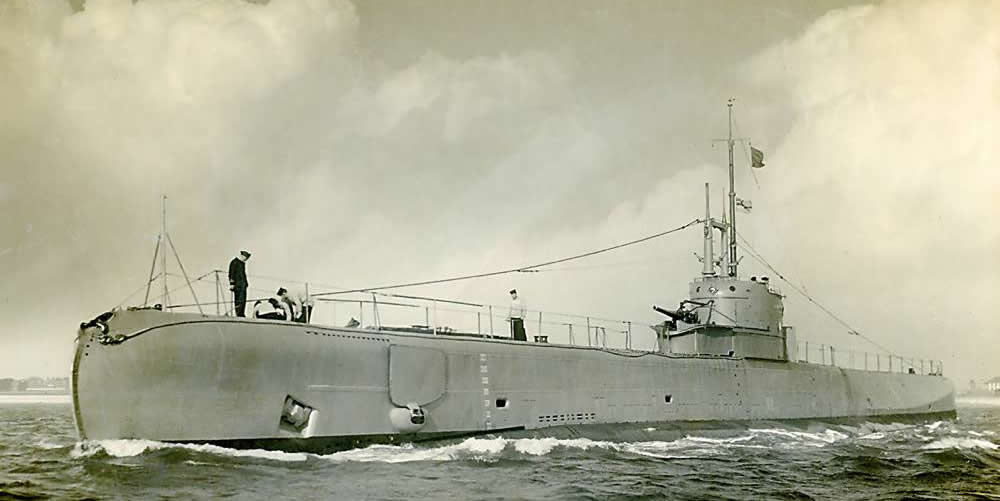
Ordered under the Royal Navy's 1935 construction programme, HMS Grampus was built by Chatham Dockyard as the first submarine of a new class specifically designed for minelaying operations. Unlike conventional fleet submarines, the Grampus class could carry large numbers of naval mines while retaining torpedo armament for attacks against enemy vessels.
She was launched on 25 February 1936 and commissioned into the Royal Navy on 2 February 1939. With the outbreak of war later that year, HMS Grampus joined the Mediterranean Fleet, where she was tasked with laying minefields against Italian naval bases and shipping routes.
Technical Specifications
| Name | HMS Grampus |
|---|---|
| Pennant Number | N56 |
| Class | Grampus-class minelaying submarine |
| Builder | Chatham Dockyard |
| Launched | 25 February 1936 |
| Commissioned | 2 February 1939 |
| Length | 293 ft 6 in (89.5 m) |
| Displacement | 1,520 tons surfaced 2,062 tons submerged |
| Maximum Speed | 15.5 knots surfaced |
| Crew | Approximately 59 officers and ratings |
| Primary Role | Minelaying submarine |
Mediterranean Service
Following Italy's declaration of war on 10 June 1940, HMS Grampus was among the first Royal Navy submarines sent to lay offensive minefields in the central Mediterranean. These operations aimed to restrict Italian naval movements and disrupt supply routes supporting the Axis war effort in North Africa.
Operating from Alexandria in Egypt, Grampus laid minefields in waters heavily patrolled by the Italian Navy and Regia Aeronautica. Her missions were exceptionally dangerous, requiring the submarine to remain submerged for long periods while working close to enemy coastlines.
The Final Patrol
On 16 June 1940 HMS Grampus departed Alexandria to lay a defensive minefield off the coast of Sicily. The mission formed part of the Royal Navy's early efforts to disrupt Italian naval movements following Italy's entry into the Second World War. Operating close to heavily defended enemy waters, Grampus successfully laid her mines before beginning the return voyage.
Unknown to the Royal Navy, Italian naval forces had become aware that a British submarine was operating in the area. On 19 June 1940 Grampus was detected south of Augusta, Sicily, by the Italian torpedo boats Circe, Clio, Calliope and Polluce.
The four vessels immediately launched a coordinated anti-submarine attack using depth charges. After several attacks, large quantities of oil, wreckage and air bubbles appeared on the surface. HMS Grampus failed to return to Alexandria and was officially declared lost with all hands.
Loss of HMS Grampus
HMS Grampus was lost on 16 June 1940, only nine days after Italy entered the war. Her loss marked one of the Royal Navy's earliest submarine casualties in the Mediterranean campaign and demonstrated the increasing effectiveness of coordinated Italian anti-submarine operations.
Roll of Honour – Crew Lost
When HMS Grampus was lost on 16 June 1940, all members of her ship's company perished. The following Roll of Honour records the officers and ratings who gave their lives while serving aboard the submarine.
| Name | Rank / Rating |
|---|---|
| Rowe, C. A. | Lieutenant Commander (Commanding Officer) |
| Albrow, R. E. | Leading Seaman |
| Atkin, G. W. | Leading Stoker |
| Baker, W. E. | Stoker 1st Class |
| Barnard, H. P. | Able Seaman |
| Bowler, F. S. | Engine Room Artificer 2nd Class |
| Brownlie, T. H. | Leading Stoker |
| Buckler, L. E. | Warrant Engineer |
| Bull, E. B. | Lieutenant |
| Burch, B. | Able Seaman |
| Burton, T. R. | Leading Seaman |
| Butcher, F. | Leading Stoker |
| Church, W. | Leading Seaman |
| Clarke, A. W. | Leading Stoker |
| Collins, R. | Leading Seaman |
| Cousins, A. R. | Leading Seaman |
| Cryle, A. M. | Engine Room Artificer 3rd Class |
| Cuthbert, G. | Leading Stoker |
| Denyer, C. J. | Able Seaman |
| Dorrell, K. J. | Lieutenant |
| Edwards, E. P. | Stoker Petty Officer |
| Frampton, K. J. | Petty Officer Telegraphist |
| Glanville, W. G. | Petty Officer |
| Groves, R. R. | Engine Room Artificer 3rd Class |
| Halliday, I. | Able Seaman |
| Harnden, F. W. | Telegraphist |
| Hart, A. | Chief Petty Officer |
| Hedley, W. | Stoker Petty Officer |
| Heselton, J. | Leading Cook |
| Hodge, R. E. | Able Seaman |
| Long, S. H. | Telegraphist |
| McConville, P. E. | Leading Stoker |
| Marshall, W. A. | Engine Room Artificer 3rd Class |
| Messenger, F. P. | Petty Officer |
| Nicholson, E. G. | Able Seaman |
| Noone, E. | Stoker 1st Class |
| Northcott, L. H. J. | Stoker Petty Officer |
| Parker, A. E. | Leading Stoker |
| Pashley, P. W. | Engine Room Artificer 3rd Class |
| Paxton, A. A. | Chief Petty Officer |
| Redding, R. F. J. | Able Seaman |
| Richardson, F. | Stoker 1st Class |
| Roberts, G. | Able Seaman |
| Robinson, W. T. | Petty Officer |
| Scott, C. | Able Seaman |
| Smith, N. A. | Stoker 1st Class |
| Stinchcombe, C. J. | Leading Seaman |
| Storey, D. | Stoker 1st Class |
| Swift, G. H. J. | Telegraphist |
| Tamplin, D. W. E. | Able Seaman |
| Thompson, T. E. | Stoker 1st Class |
| Wallis, A. E. | Chief Engine Room Artificer |
| Watkin, J. H. | Engine Room Artificer 2nd Class |
| Welbourn, T. H. | Stoker 1st Class |
| Whittle, J. | Leading Stoker |
| Willcox, E. G. | Leading Seaman |
| Wilson, C. C. | Sub-Lieutenant, RNR |
Source: Malta Defiant & Triumphant – Rolls of Honour 1940–1943, George Cross Island Association.
All fifty-nine members of the ship's company, including her Commanding Officer Lieutenant Commander Charles Alexander Rowe, RN, were lost.
Commanding Officer
| Name | Lieutenant Commander Charles Alexander Rowe, RN |
|---|---|
| Rank | Lieutenant Commander |
| Command | HMS Grampus (N56) |
| Fate | Lost with his submarine on 19 June 1940 |
Connection with Malta
Although HMS Grampus operated primarily from Alexandria during her final patrol, she formed part of the Royal Navy submarine force that later became closely associated with Malta and the struggle for control of the Mediterranean. Her loss is commemorated on the Royal Navy Submarine Roll of Honour at the National War Museum, Fort St Elmo, Valletta.
The memorial honours submarines whose operations helped defend Malta and disrupt Axis supply routes to North Africa. These patrols were among the most hazardous undertaken by any branch of the Royal Navy during the Second World War.
Timeline
| 1935 | Ordered under the Royal Navy construction programme. |
|---|---|
| 25 February 1936 | Launched at Chatham Dockyard. |
| 2 February 1939 | Commissioned into the Royal Navy. |
| September 1939 | Second World War begins. |
| 10 June 1940 | Italy enters the Second World War. |
| 16 June 1940 | Sailed from Alexandria to lay mines off Sicily. |
| 19 June 1940 | Attacked and sunk by Italian torpedo boats south of Augusta, Sicily. |
Did You Know?
- HMS Grampus was the lead vessel of the Grampus class of minelaying submarines.
- She was one of the first Royal Navy submarines lost in the Mediterranean during the Second World War.
- Her final mission was to lay a minefield off the coast of Sicily.
- The submarine was attacked by four Italian torpedo boats working together.
- All fifty-nine members of her crew were lost.
- HMS Grampus is commemorated on Malta's Royal Navy Submarine Roll of Honour at Fort St Elmo.
Related Pages
- Royal Navy Submarine Roll of Honour
- HMS Cachalot (N83)
- HMS Olympus
- HMS Tigris
- HMS Upholder
- HMS Urge
- Malta Military Memorial Catalogue
Sources
This page has been compiled using official Royal Navy records, published histories of British submarine operations in the Mediterranean, Commonwealth War Graves Commission records, contemporary naval accounts and the Royal Navy Submarine Roll of Honour displayed at the National War Museum, Fort St Elmo, Valletta.
Explore More Maltese Maritime History
- Discover comprehensive defense relics, locations, and historical summaries via the Malta War Memorials Catalogue.
- Pay tribute to the silent service veterans stationed at Manoel Island on our dedicated WWII Submarine Roll of Honour.