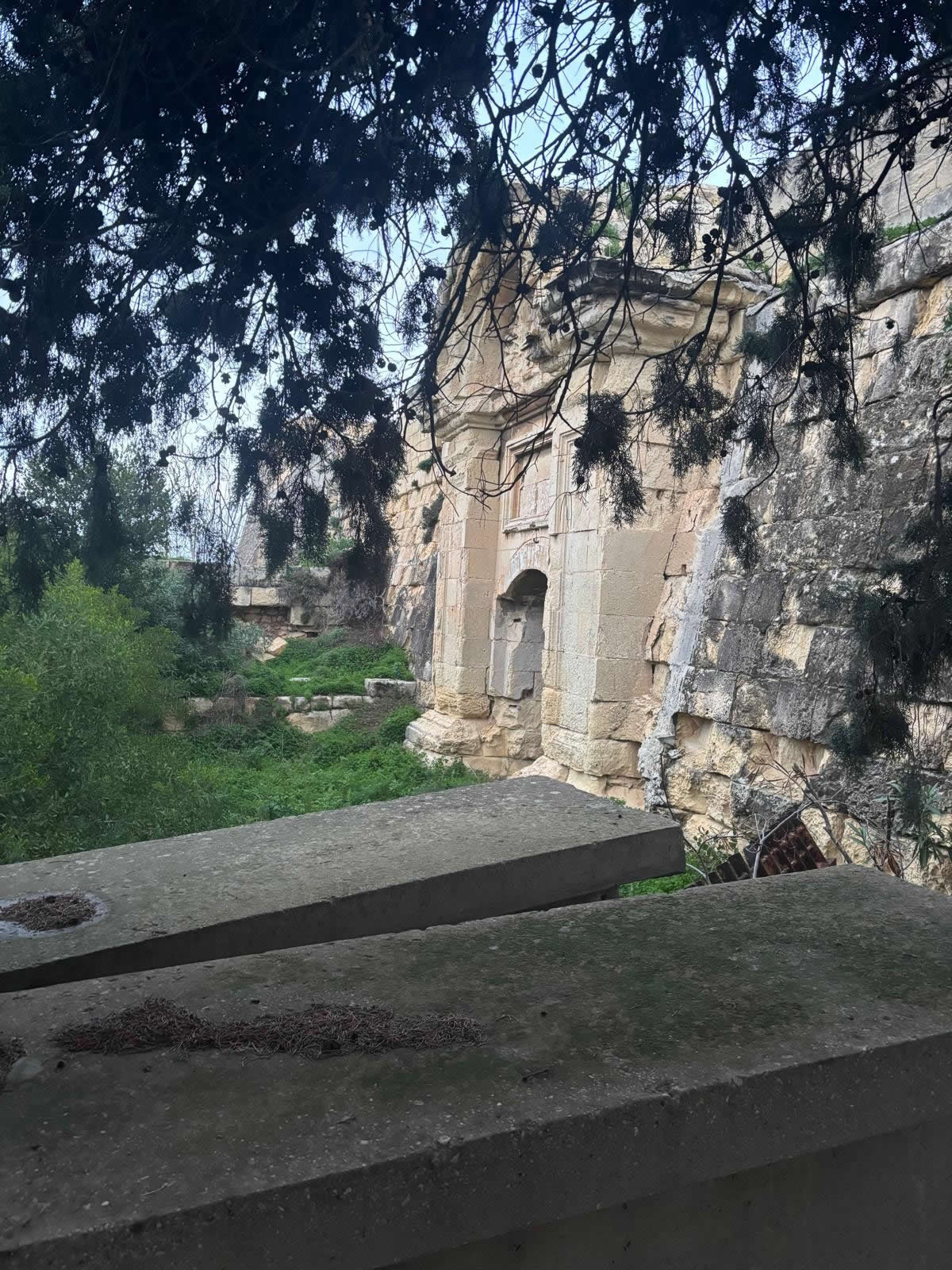
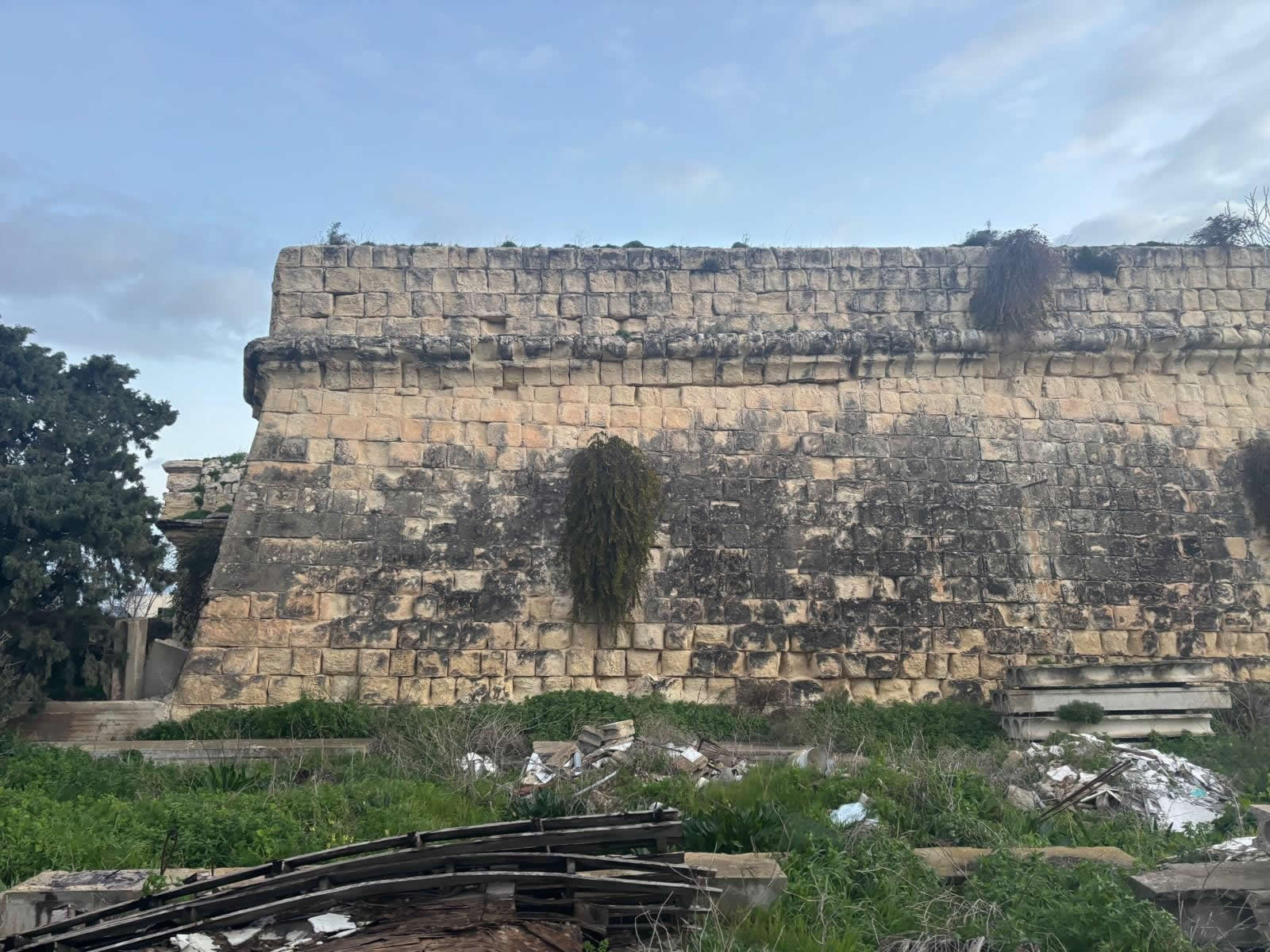
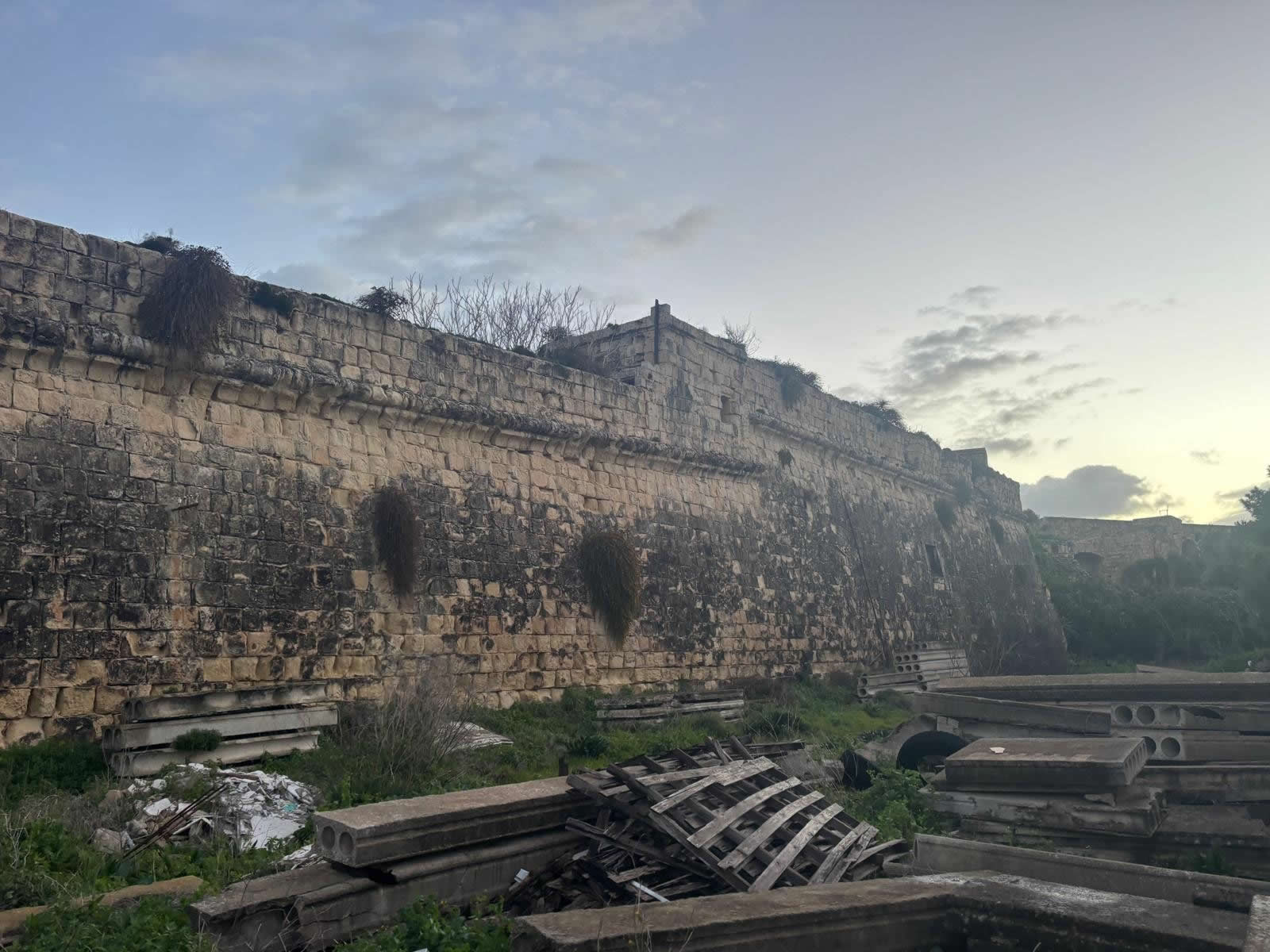
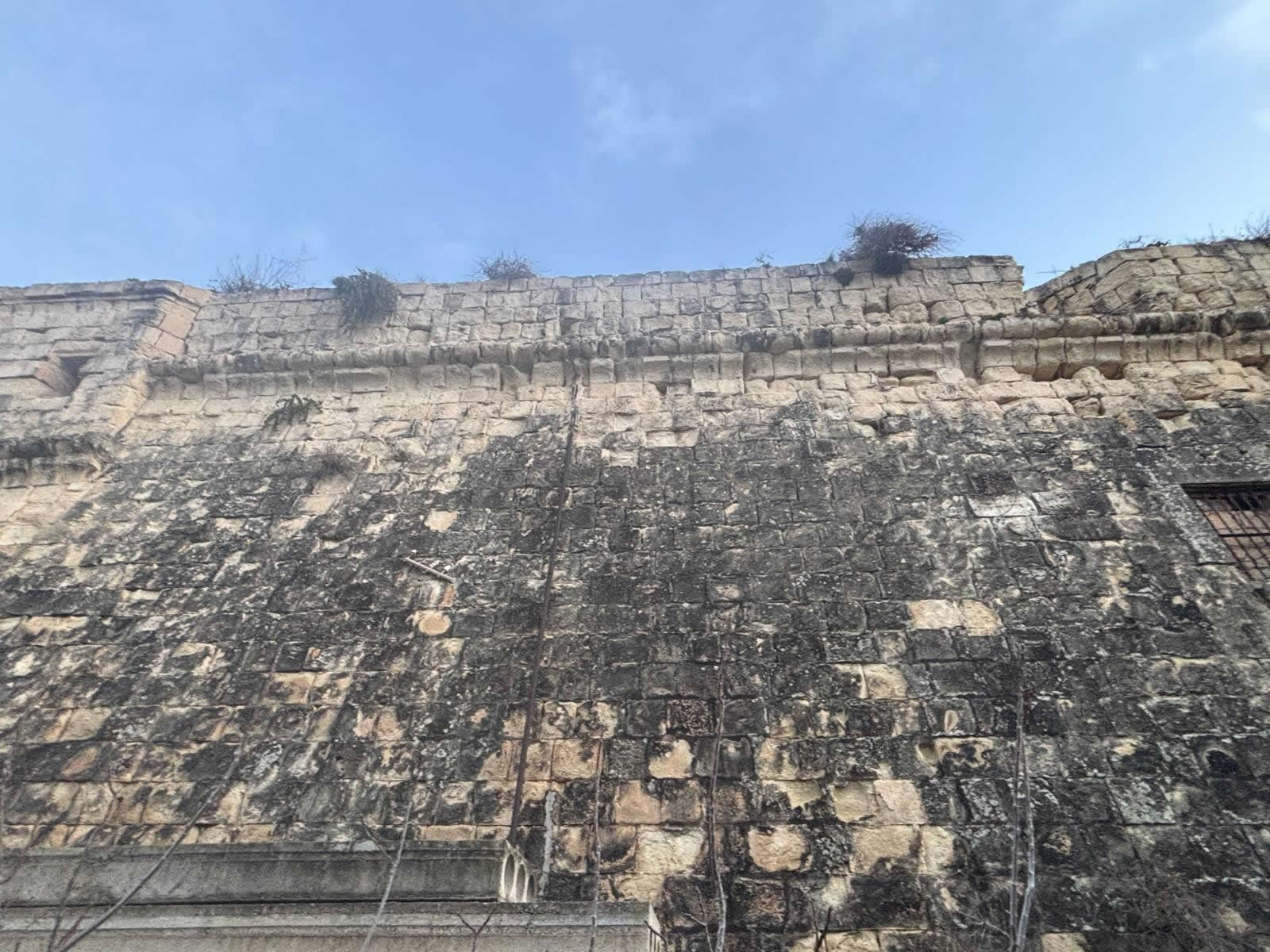
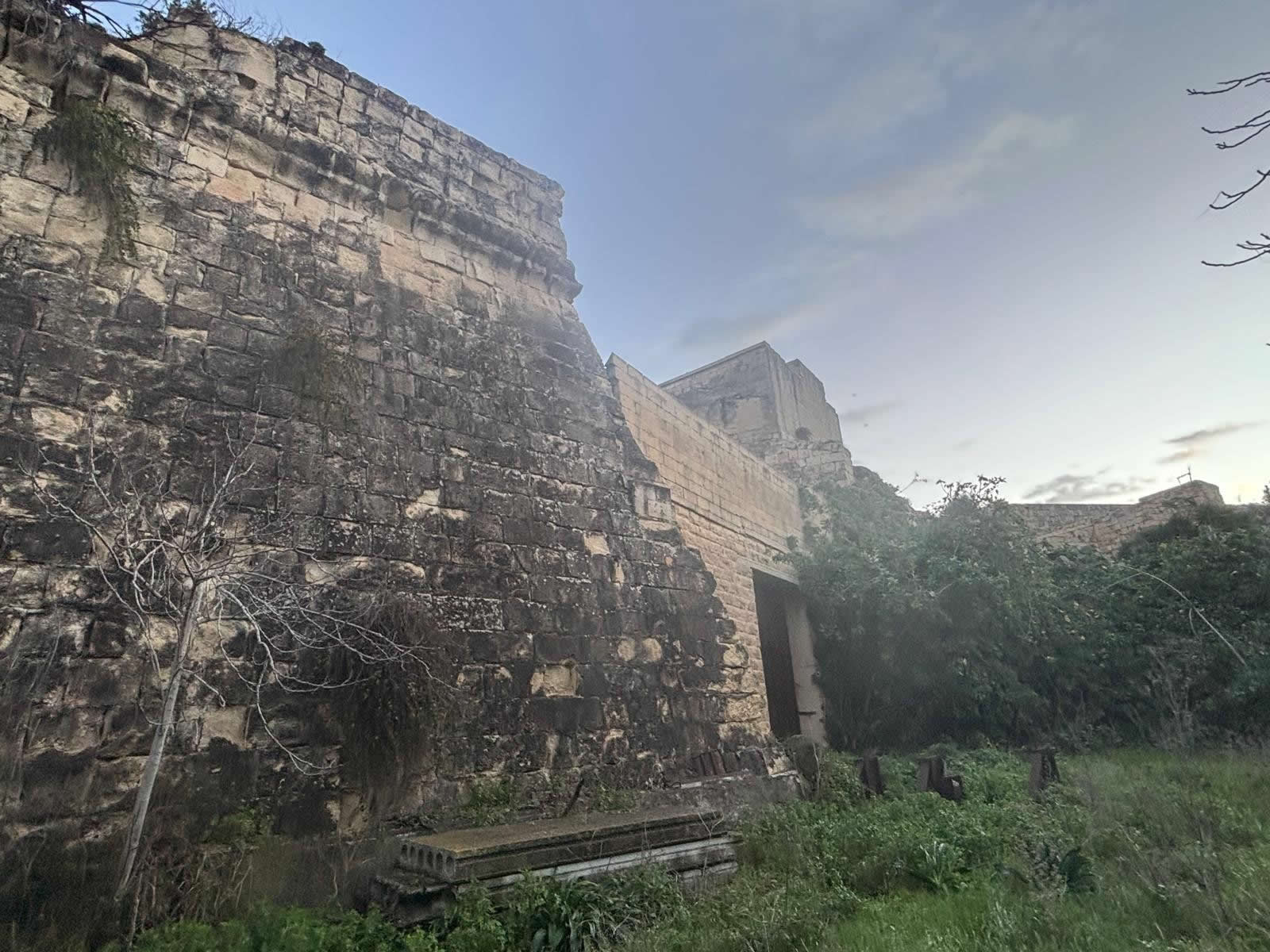
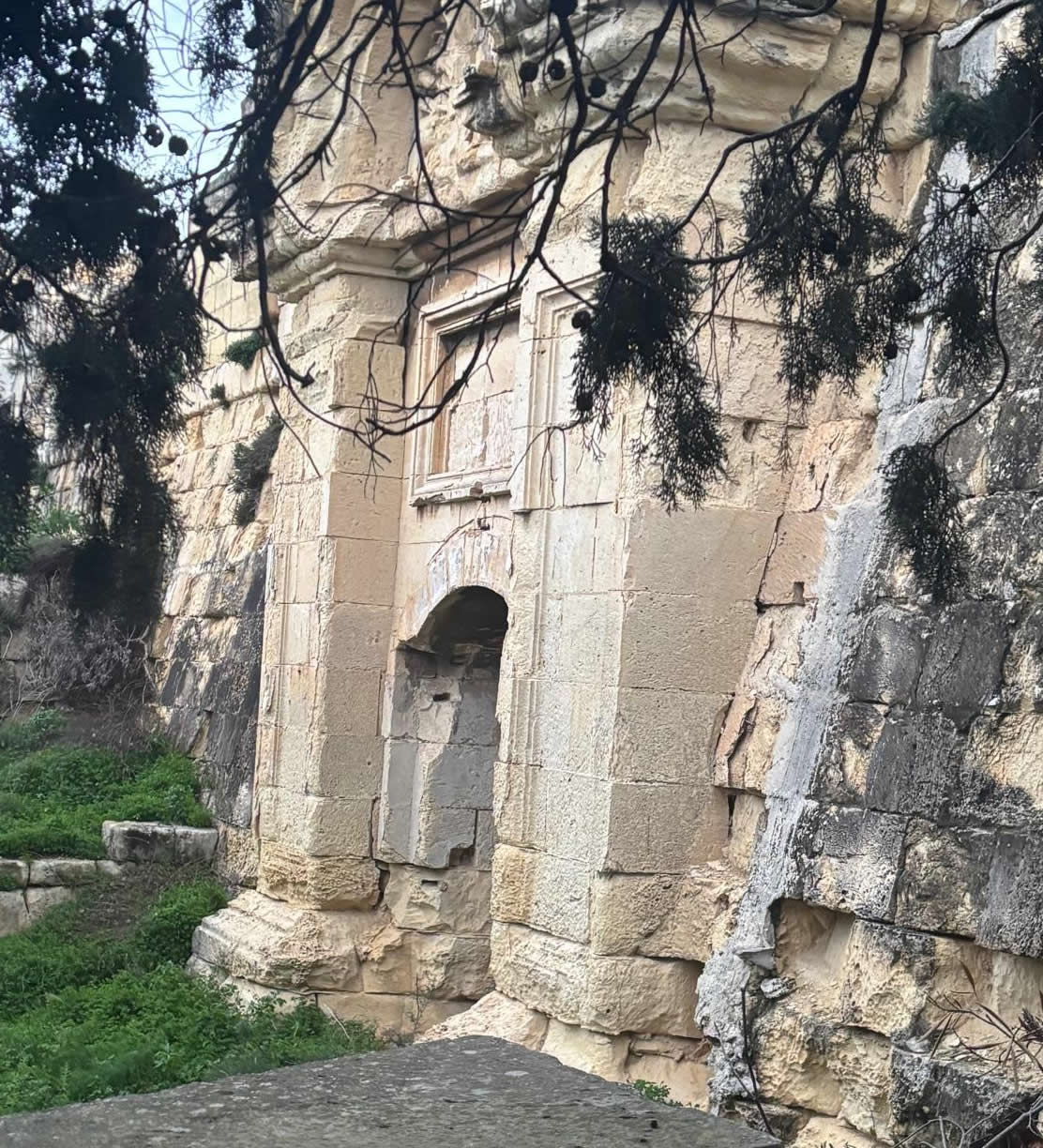
Fort San Salvatore is a compact 18th-century retrenched fort built in 1724 on San Salvatore Bastion,
the northernmost bastion of the Cottonera Lines overlooking the Grand Harbour approaches near Birgu (Vittoriosa).
Coordinates: 35.885976, 14.527308Built: 1724System: Cottonera LinesWWII explosion: 25 Oct 1941Status: Private ownership (not generally open)
Quick overview
Fort San Salvatore was designed as an “inner fort” (a retrenchment) within the larger Cottonera Lines to strengthen
the most exposed approach near Birgu. Its plan is typically described as two demi-bastions linked by a curtain wall,
enclosed by a ditch, with a central parade ground.
Where it sitsSan Salvatore Bastion, Cottonera Lines (Birgu side)
ConstructionLimestone; retrenched bastioned fort layout
Historical useMilitary post, POW camp, internment, wartime fuel depot
Visitor accessGenerally closed (private property)
History of Fort San Salvatore
Fort San Salvatore’s story is tied to the Cottonera Lines: begun in 1670, paused around 1680,
and later improved in the early 18th century—when San Salvatore Bastion was converted into this compact fort in 1724.
Before the fort: the Cottonera Lines (1670s)
The Cottonera Lines were planned as a vast fortified enceinte around the harbour cities. Work started in 1670 but,
despite major progress on the main bastioned perimeter, funding constraints slowed completion and left important outerworks unfinished.
Creation of the retrenched fort (1724)
In 1724, the Order of St John converted San Salvatore Bastion into a self-contained retrenched fort—adding an internal defensive line
and ditching so the position could be held even if the outer line was compromised.
19th–early 20th century: prisoner-of-war use
Under British administration, the fort continued as a controlled military space and was repeatedly used as a prisoner-of-war facility,
including for Turkish prisoners (from 1824, connected to the Greek War of Independence) and later for German prisoners during World War I.
World War II: internment and the 25 October 1941 explosion
Between May and July 1940, the fort was used to intern Maltese suspected of supporting Italian irredentism, including the politician Enrico Mizzi.
During WWII it was also used as a kerosene depot; after being hit in an air raid, the fuel depot exploded on 25 October 1941.
Private ownership and present condition
Fort San Salvatore is unusual among Malta’s fortifications because it is privately owned. It is generally not open to the public and,
while intact, it has often been described as dilapidated—making it a significant (but inaccessible) piece of the Cottonera defensive system.
Key dates timeline
Date
Event
1670
Construction of the Cottonera Lines begins.
c. 1680
Major works are suspended due to lack of funds; the main enceinte is largely complete but important outworks remain unfinished.
1724
Fort San Salvatore is built by converting San Salvatore Bastion into a retrenched fort.
1824
Used as a prisoner-of-war camp for Turkish prisoners during the Greek War of Independence (period use begins).
1914–1918
Used again as a POW camp (German prisoners in World War I).
May–July 1940
Internment of Maltese suspected of pro-Italian sympathies (including Enrico Mizzi).
25 Oct 1941
Kerosene depot explosion after the fort is hit during an air raid.
1958
Lease to a private company (a key step toward long-term private control).
1982
Emphyteusis redeemed; fort becomes private property.
Location
Coordinates: 35.885976, 14.527308
Fort San Salvatore sits within the Cottonera (Three Cities) fortification landscape near Birgu, positioned on San Salvatore Bastion.
Note: because it is privately owned and not generally open, views are typically from surrounding public streets and vantage points.
FAQs
Can you visit Fort San Salvatore?
In most cases, no—Fort San Salvatore is privately owned and is not generally open to the public.
Why is it historically important?
It is a rare “fort within a fortification line”: a retrenched position built to strengthen the Cottonera Lines,
later re-used for POW and internment purposes, and linked to a notable WWII fuel-depot explosion in 1941.