Overview
In Maltese archaeology, “hypogeum” describes underground spaces (natural and/or carved) that were adapted into burial and ritual settings. Santa Luċija’s hypogeum has been described as a smaller counterpart to Malta’s more famous underground monuments, with a monumental entrance and a sequence of internal spaces.
Name note: this page uses “Santa Luċija Hypogeum” as commonly referenced in public summaries of the locality.
Discovery and safeguarding
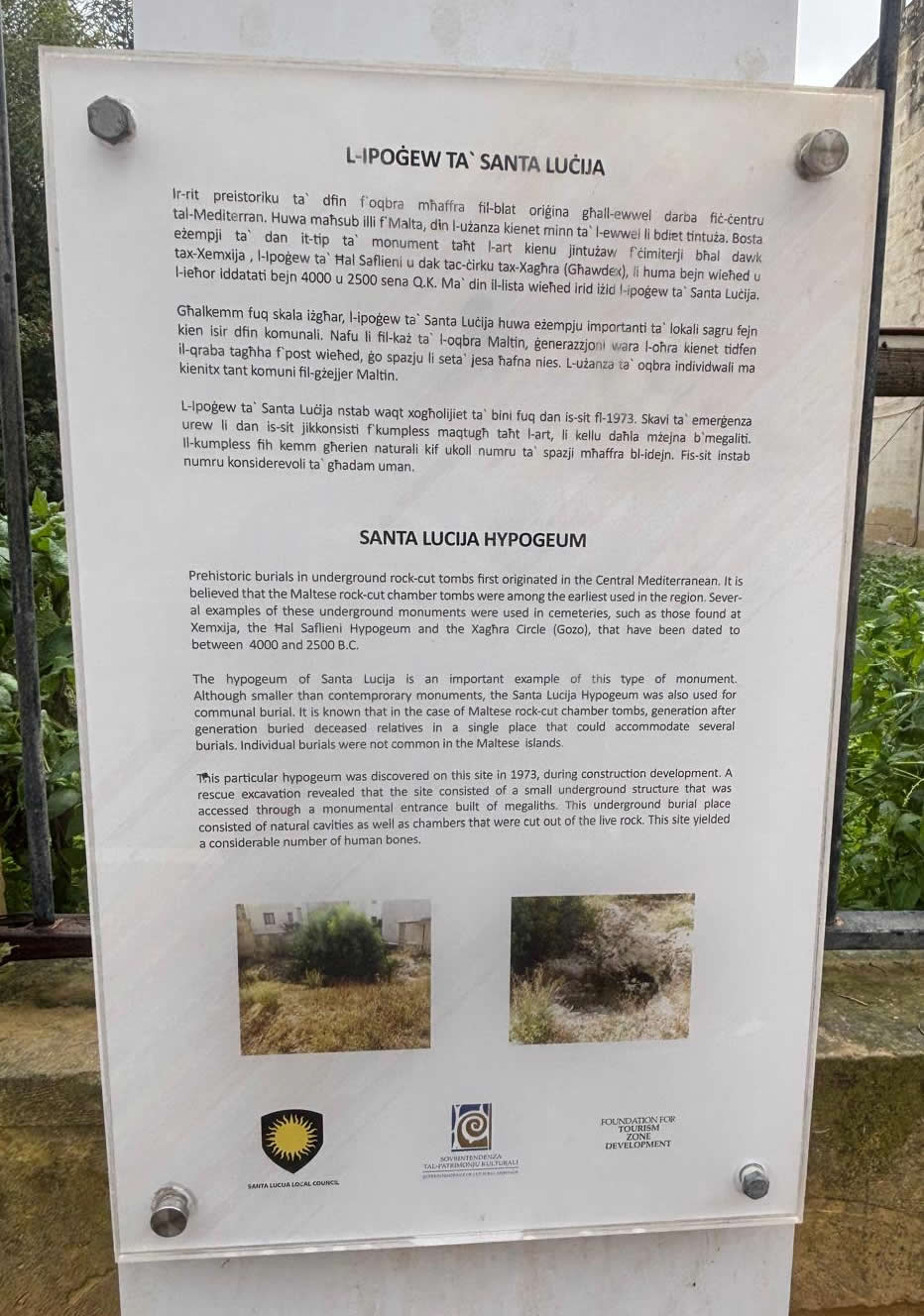
The hypogeum is reported to have been discovered in 1973.
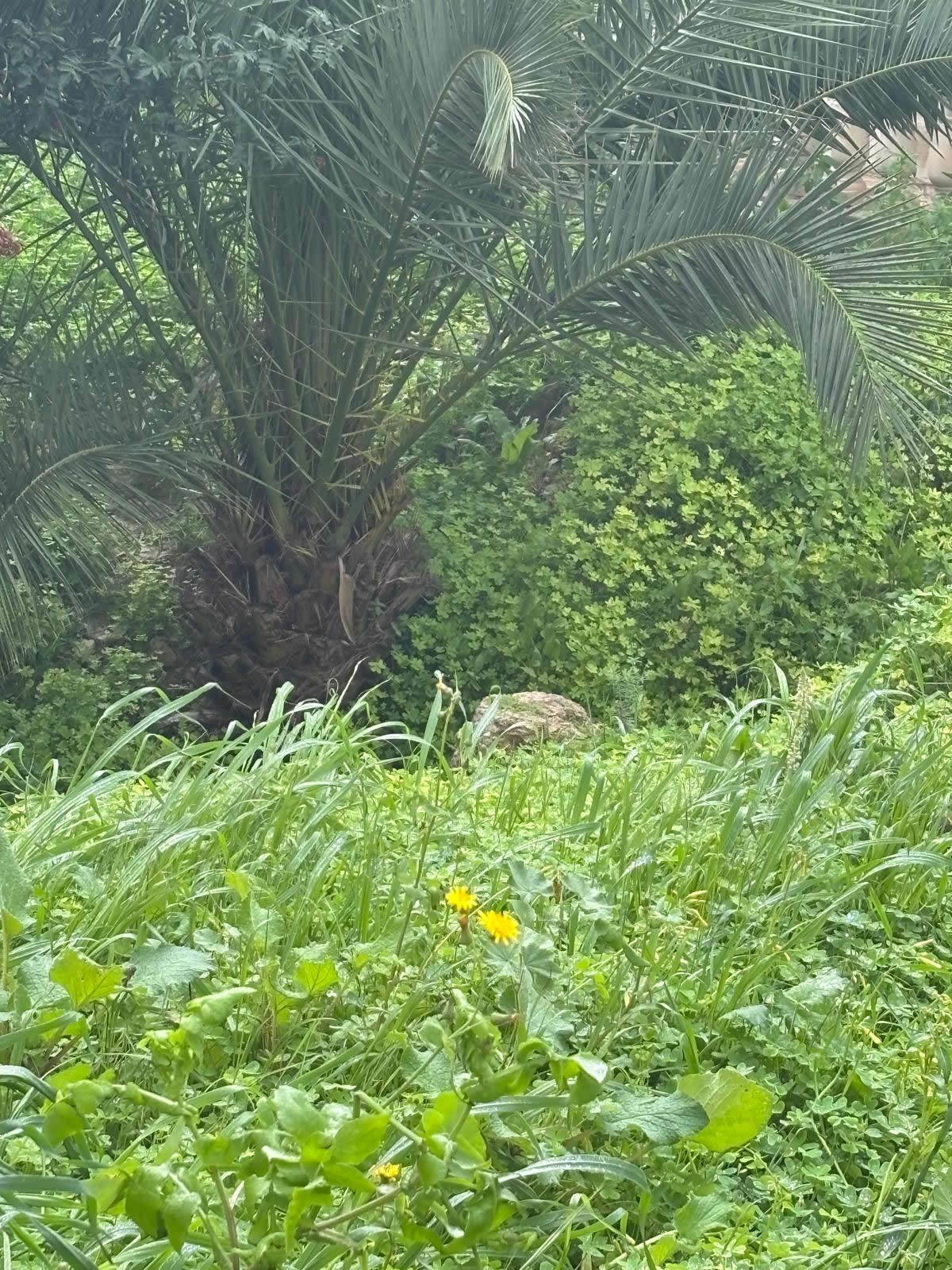
A later report notes that, decades after discovery, it remained covered by earth and vegetation, and that it had been saved from encroaching development by the Museums Department.
- 1973: Discovery reported.
- 2009: Reported still covered/closed; proposals discussed to make it accessible.
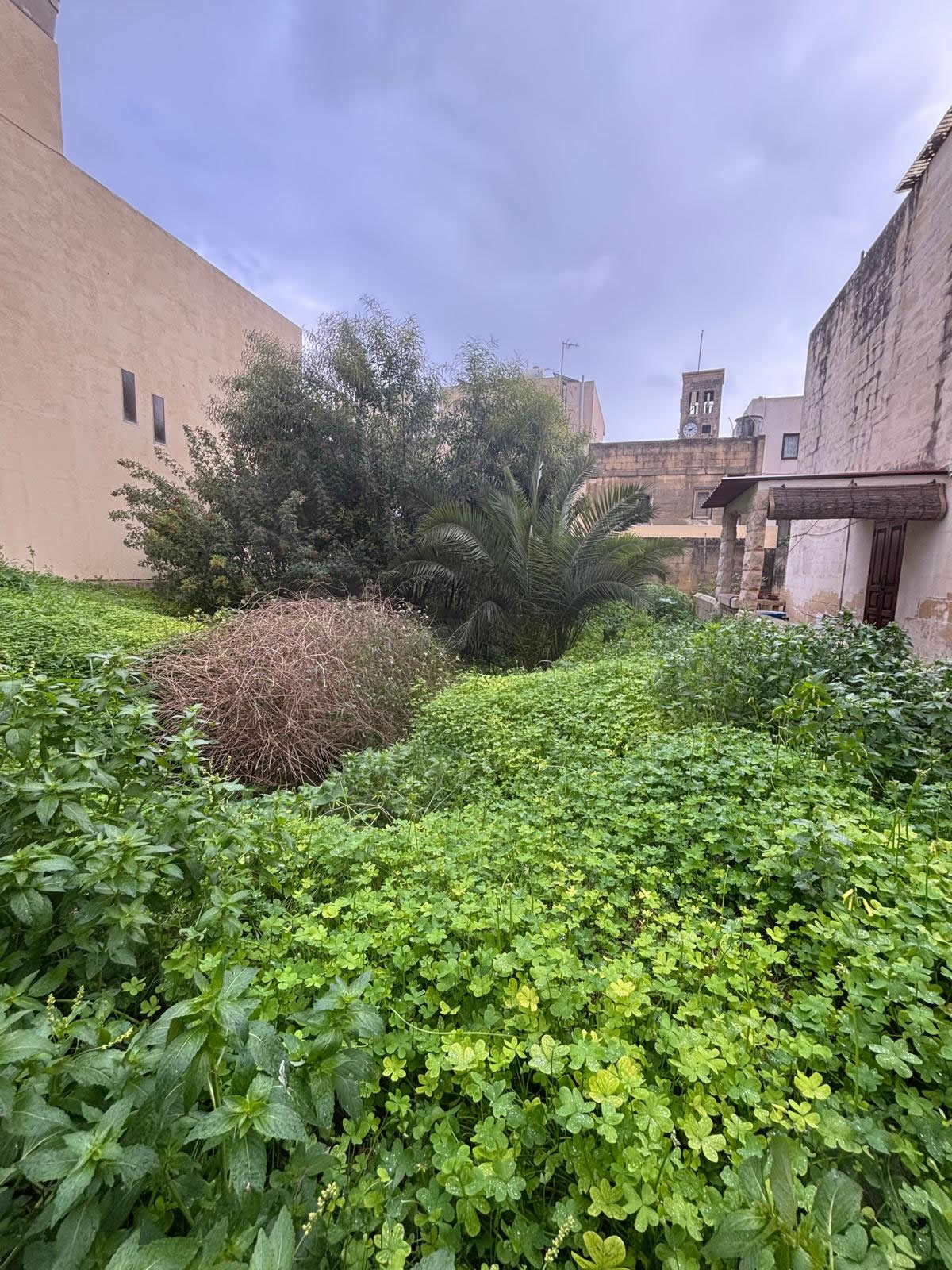
- 2026 (your visit): You observed it currently closed, abandoned, and in a bad state (field observation).
Construction and layout
Descriptions linked to the discovery describe a monumental entrance built of megaliths, leading to an underground complex made up of natural cavities and rock-cut chambers.
This combination—natural voids adapted and connected by deliberate cutting—is typical of Maltese underground sites, where softer limestone and existing fissures could be expanded into functional chambers.
What that implies on site
- Megalithic entrance zone: large stone blocks forming a formal threshold/approach.
- Inner chambers: spaces cut into bedrock, likely enlarged over time.
- Natural cavities: pre-existing voids adapted into the plan.
When was it built?
Public summaries and discovery-linked descriptions associate the Santa Luċija Hypogeum with prehistoric material, including human remains and prehistoric pottery and ornaments.
The most cautious, evidence-aligned way to “confirm” its likely build period is: Late Neolithic (Temple Period) — probably, because the reported contents include prehistoric pottery, beads and pendants comparable to Temple Period contexts, and the monument is described as similar in concept to Malta’s major prehistoric hypogea.
If you later obtain an official site sheet (e.g., Superintendence/Heritage Malta inventory note) with a phase label, you can replace “Late Neolithic (Temple Period) — probably” with the exact period terminology and dates.
Contents and finds reported from the site
Reporting connected to the discovery describes a substantial deposit including human bones together with prehistoric pottery and personal ornaments such as beads and pendants.
- Human remains: described as present in significant quantities.
- Material culture: prehistoric pottery, beads, pendants (and similar small finds).
- Deposit character: described as if material had been “dumped” into the monument from above (a clue that what was found may include secondary deposits rather than neat primary burials).
SEO tip: if you have any photos of the blocked entrance, surface markers, or any visible stonework, add a gallery with descriptive alt text (e.g., “Sealed entrance area of Santa Luċija Hypogeum, Malta”).
Use: burial place, ritual space, or both?
Based on how comparable Maltese prehistoric underground sites function, the Santa Luċija Hypogeum can be presented as an underground complex associated with the dead (human remains and offerings) and possibly ritual practice. The presence of mixed deposits may indicate episodes of reorganisation, clearance, or redeposition during the monument’s life.
A practical interpretation you can publish safely
- Primary role: prehistoric funerary/ritual monument (hypogeum tradition).
- Burial evidence: human remains and associated objects reported from inside.
- Secondary processes: deposits described as mixed/redeposited, suggesting complex use-history.
Current condition, access, and conservation concerns
A 2009 report described the site as still covered by earth and vegetation decades after discovery. On your visit today, you found it closed, abandoned, and in a bad state (on-site observation).
- Access: treat as closed unless clearly opened by the competent authorities.
- Safety: sealed shafts/cavities can be unstable; avoid climbing on disturbed ground.
- Protection: do not remove stones/soil; do not enter blocked openings; avoid publishing “how to get in”.
Archaeological hypogea are fragile micro-environments. Uncontrolled entry can accelerate collapse, salt damage, and vandalism.
Visiting notes (for a closed site)
- Best approach: view only from public areas and document the surroundings (signage, boundary, surface condition).
- What to photograph: the entrance zone, any visible megalithic blocks, and overall state (for awareness/reporting).
- Responsible action: if you notice fresh damage, consider reporting it to the relevant heritage authority.
Related pages
- Catacombs & Tombs – broader burial landscapes and rock-cut heritage.
- Paola