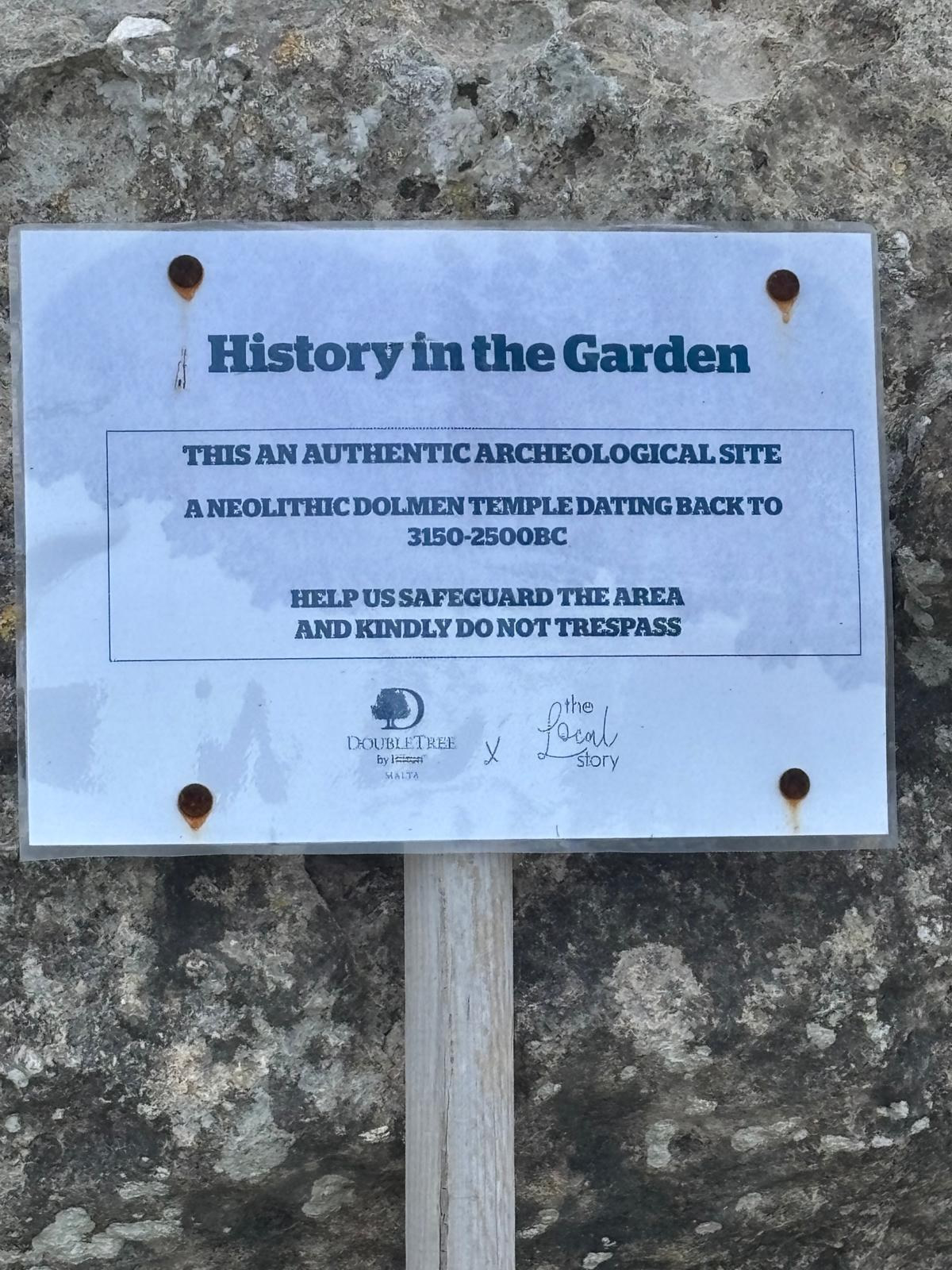
⚔️ The Buġibba Temple
📍 Location
Situated St Paul's Bay inside the Dolmen Hotel. Google Map Link
The coordinates of he Buġibba Temple: 35.954643, 14.417989
The complete history, excavation details, construction phases, and present condition of the Buġibba Temple, located today inside the grounds of the Dolmen Hotel, Qawra/Buġibba.
⭐ Full History of the Buġibba Temple (Qawra / Buġibba, Malta)
🏛️ Discovery
The Buġibba Temple was discovered in 1925 by Sir Themistocles (Temi) Zammit, Malta’s pioneering archaeologist.
While surveying an open field near Qawra Point, he noticed large, scattered megalithic stones that appeared to be part of a prehistoric structure.
His inspection confirmed that they belonged to a Megalithic Temple dating to the Maltese Tarxien Phase (c. 3150–2500 BC) — the same cultural era as the Ġgantija, Tarxien, Mnajdra, and Ħaġar Qim temples.
🏗️ Construction & Structure
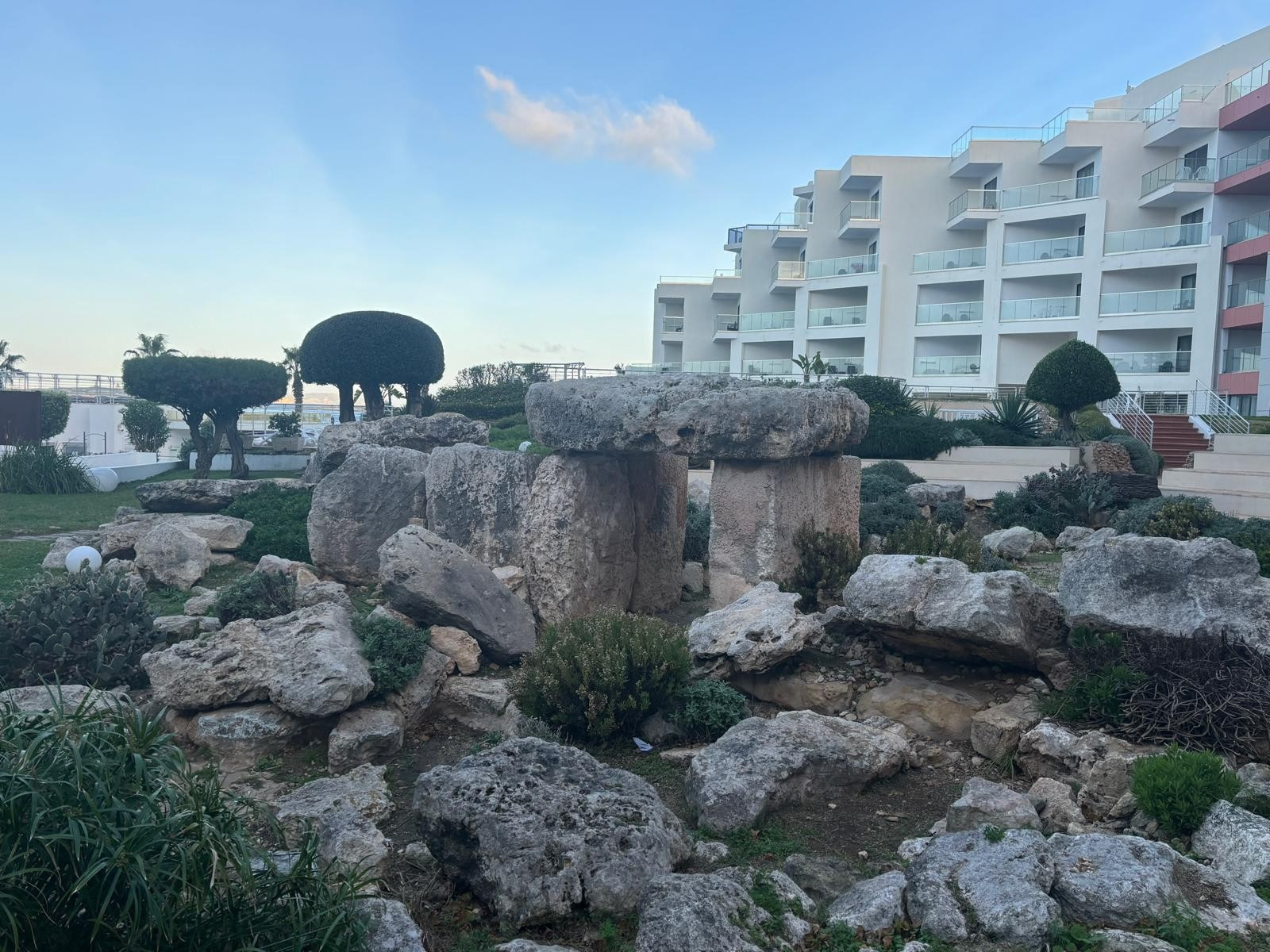
Although much smaller and less elaborate than the major Maltese temples, the Buġibba Temple shares key architectural features of the temple tradition:
✔ Layout
A three-apse (trefoil) temple layout
Entrance marked by flanking megaliths
Curved internal apse walls typical of temple design
Central court area
✔ Materials
Built from coralline limestone, a harder stone than the globigerina limestone used at some other temples
Many stones were heavily weathered, which is one reason the structure was overlooked until 1925
✔ Decorative Elements (Important!)
Temple excavations uncovered a unique carved stone block featuring:
A fish-like or seahorse-like carved motif
Often called the “Buġibba Fish Altar”
This is one of the very few examples in temple art with a possible marine symbol, fitting the temple’s location near the coast.
The carved altar is now kept in the National Museum of Archaeology in Valletta.
🧱 Excavation History
🔹 1925 — Discovery by Temi Zammit
First documentation and rough clearing of the site
Basic mapping and stone identification
🔹 2nd phase excavations (1930s–1950s)
Additional excavation clarified the temple’s layout and confirmed its Tarxien Phase timing
🔹 1960s–1970s — Development Threat
The area was transformed into a tourist zone
The Dolmen Hotel was built on top of and around the site
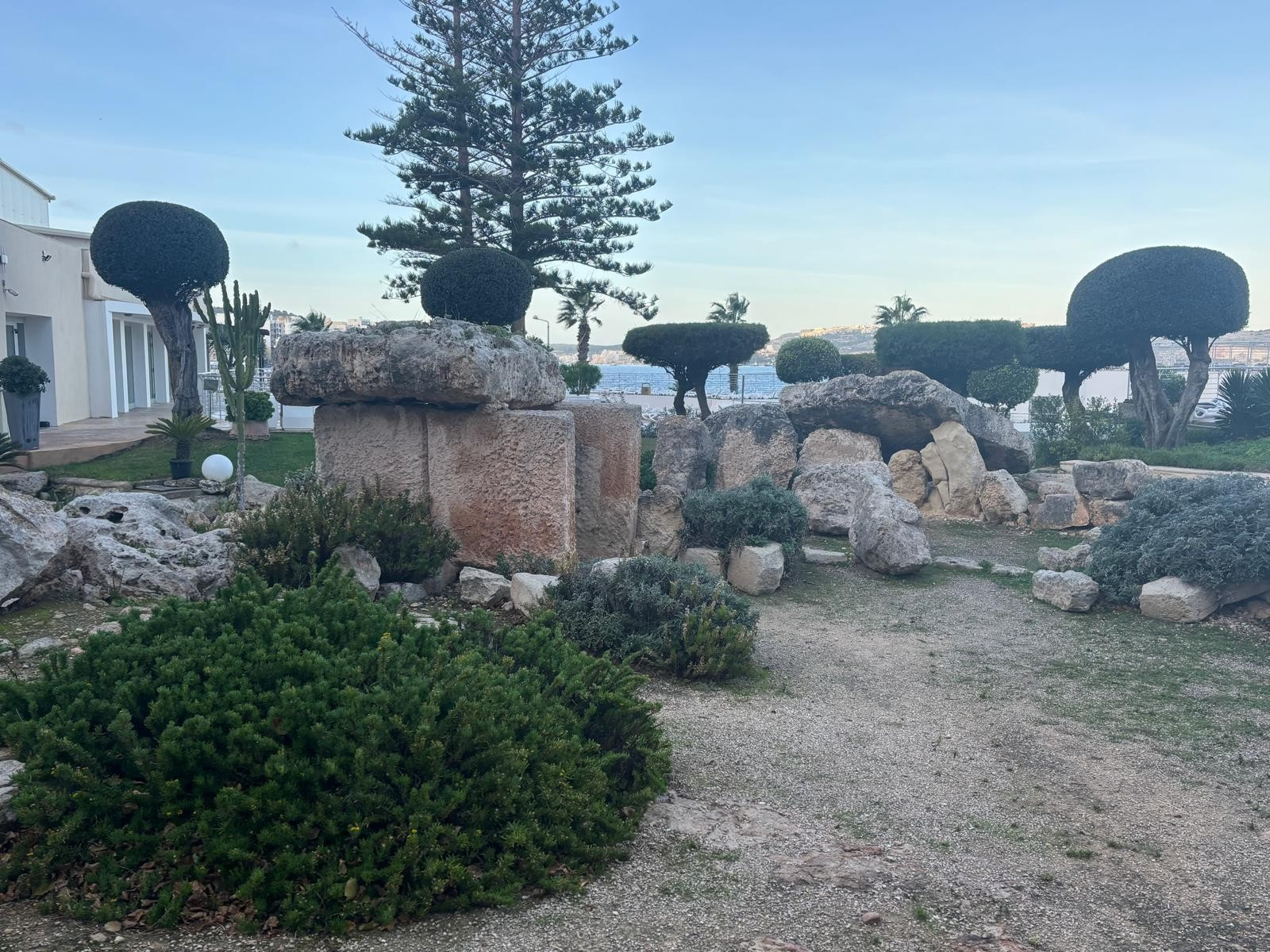
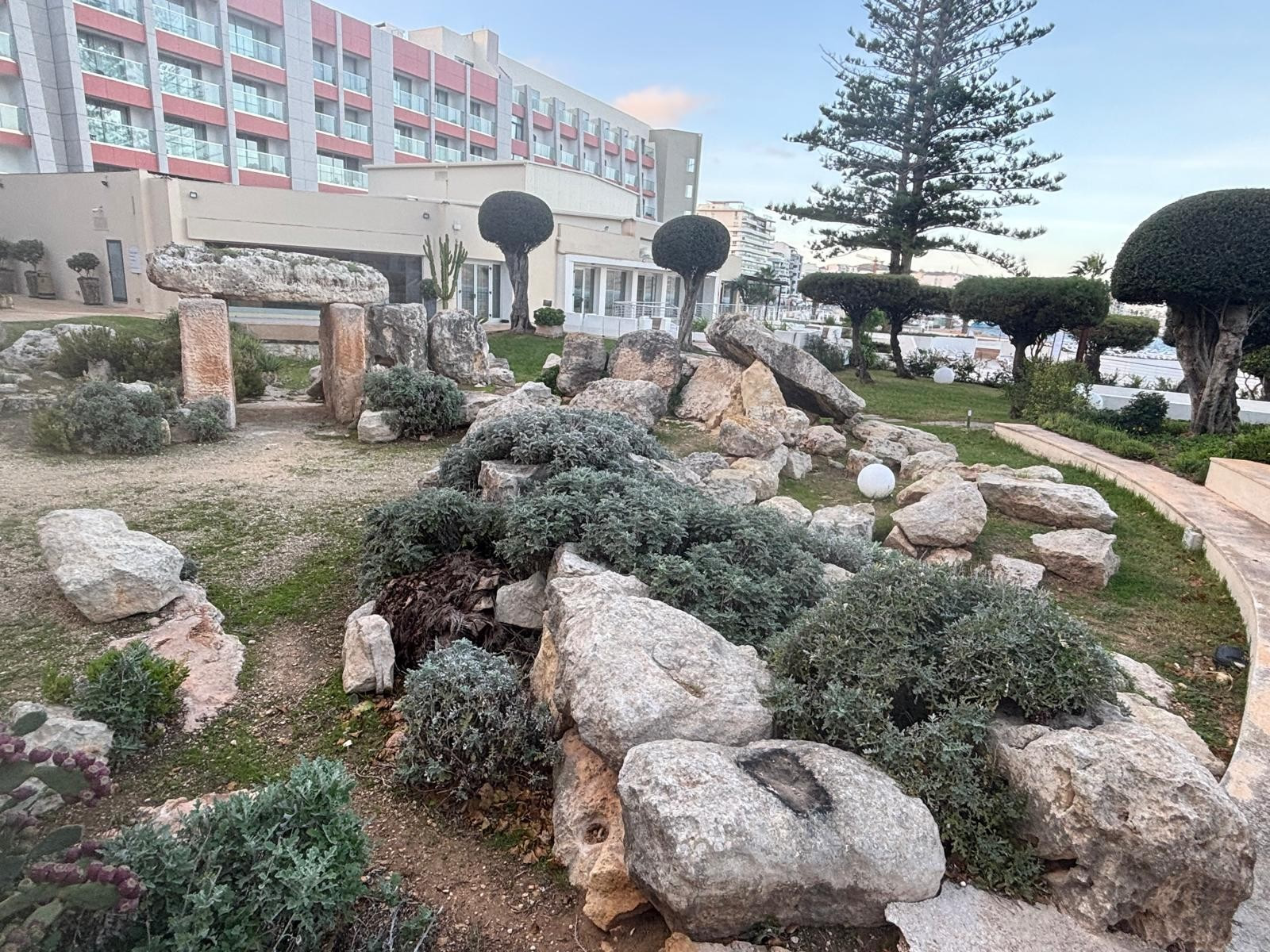
Much of the temple was preserved, but integrated into hotel gardens
🔹 Present
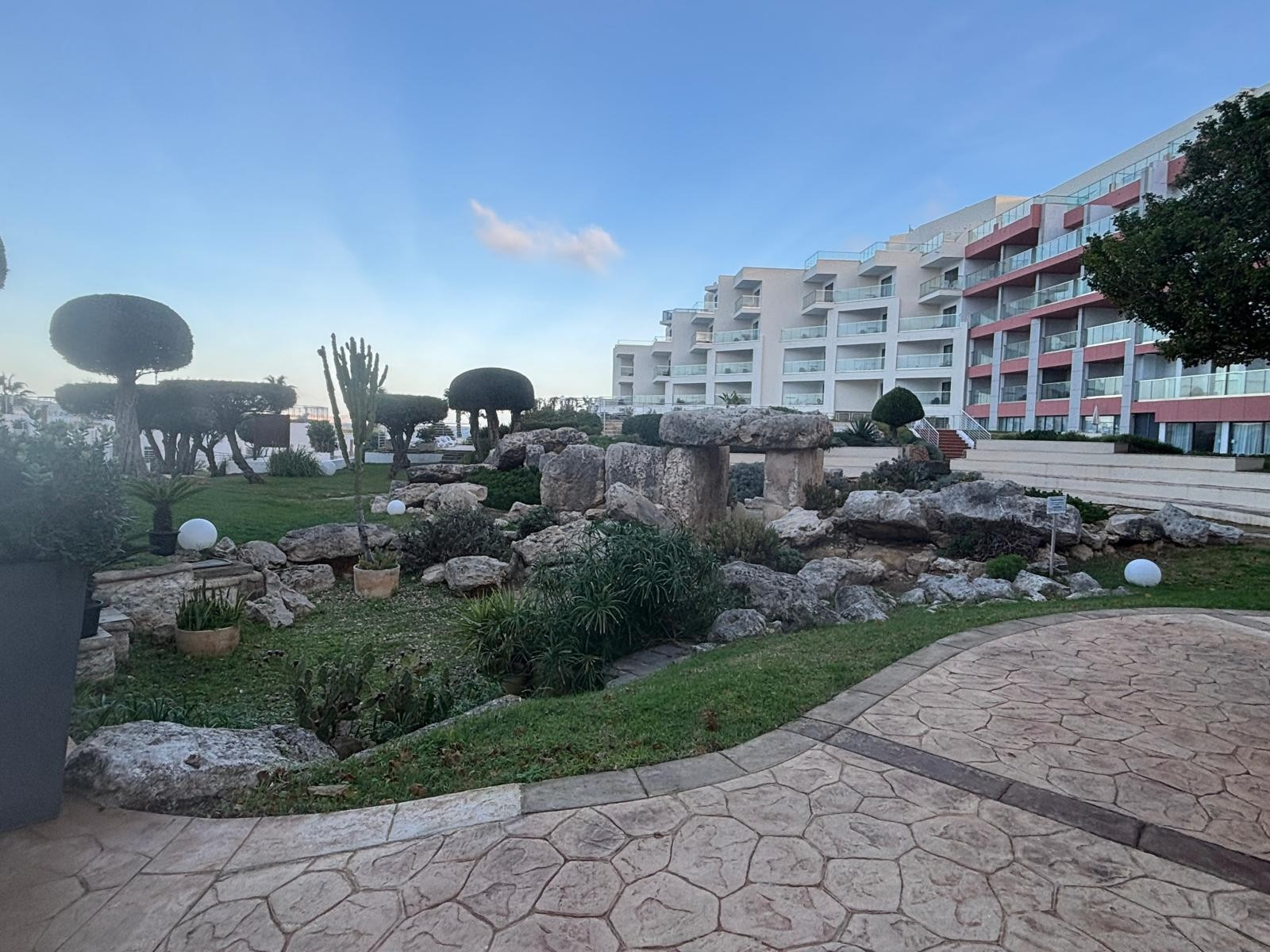
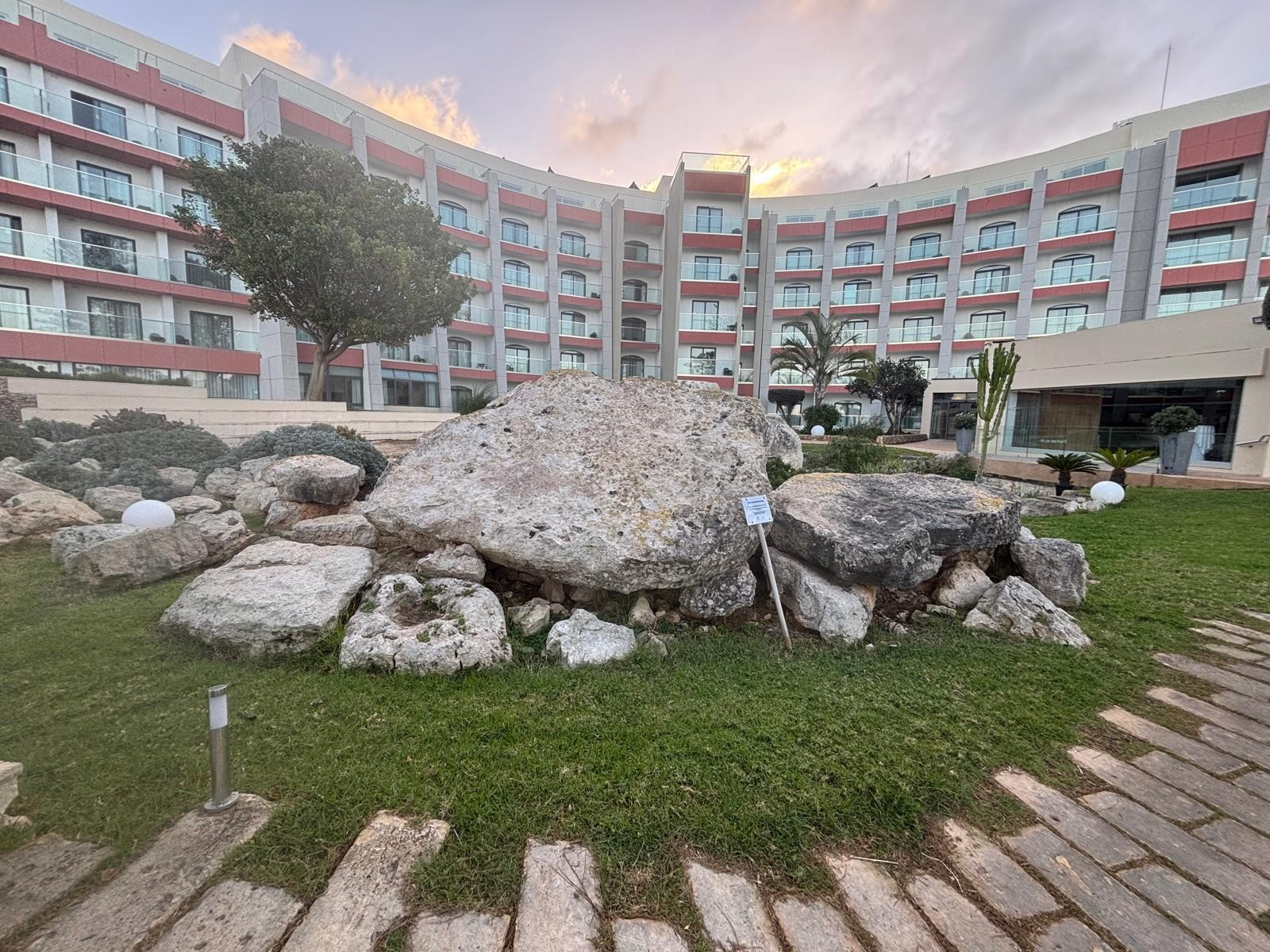
The temple remains visible and accessible to hotel guests
Markers and information boards identify key features
The main megalithic structure survives, though fragmentary
🧭 Function & Significance
The Buġibba Temple is believed to have had similar ritual purposes as larger temples, though on a small community scale:
Ceremonial rituals
Veneration of deities or ancestors
Possibly connected to coastal navigation or fertility, suggested by the marine carving
Its location near the coast may indicate:
A small temple serving a local settlement, or
A ritual site linked to the sea or marine fertility
🏺 Artifacts
The most notable finds include:
✔ The carved fish or marine altar
Now preserved at the National Museum
A unique piece in Maltese prehistoric art
✔ Stone tools and pottery
Indicating typical Tarxien Phase usage
🏨 Current State
Today, the Buġibba Temple is:
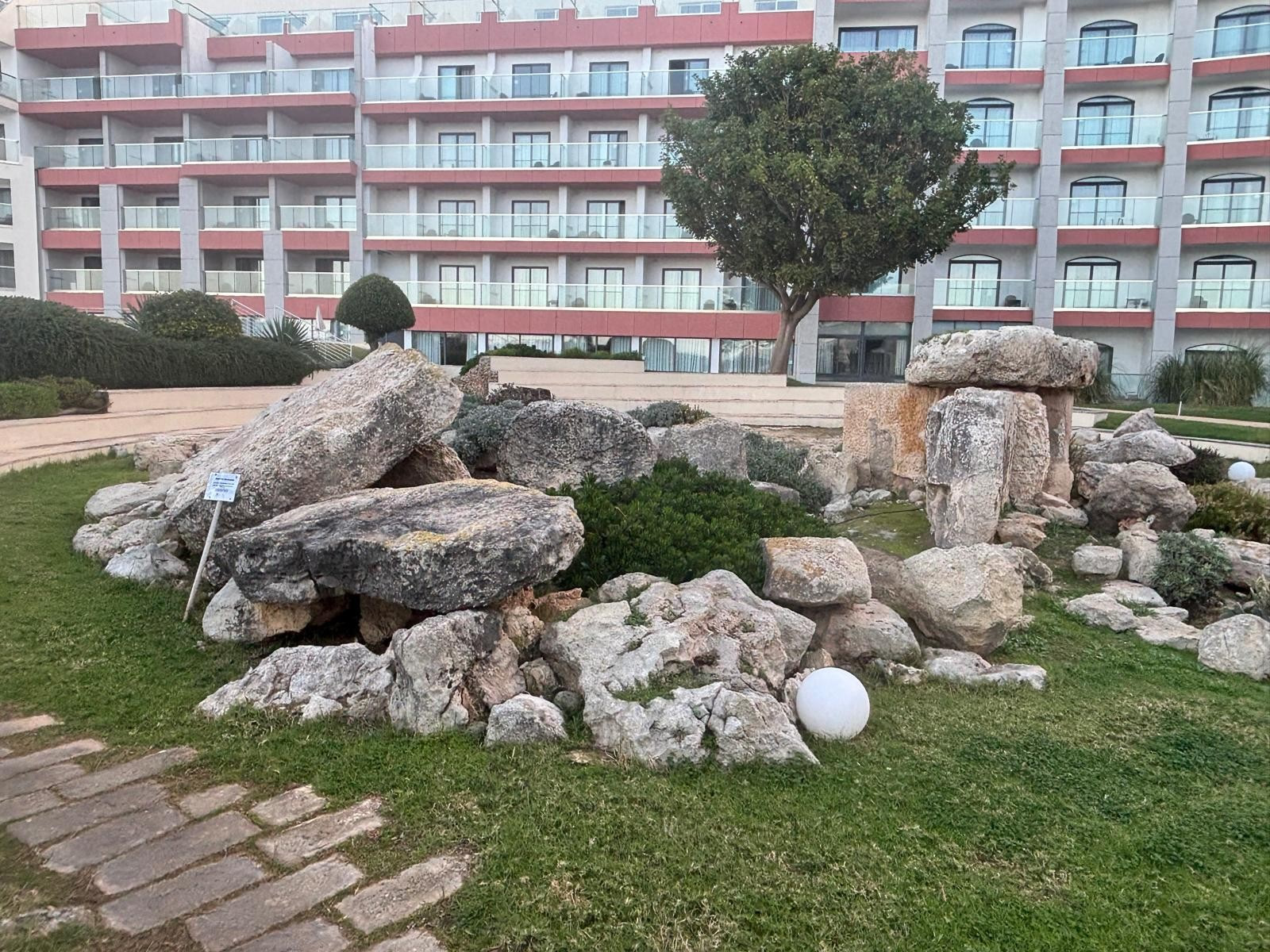
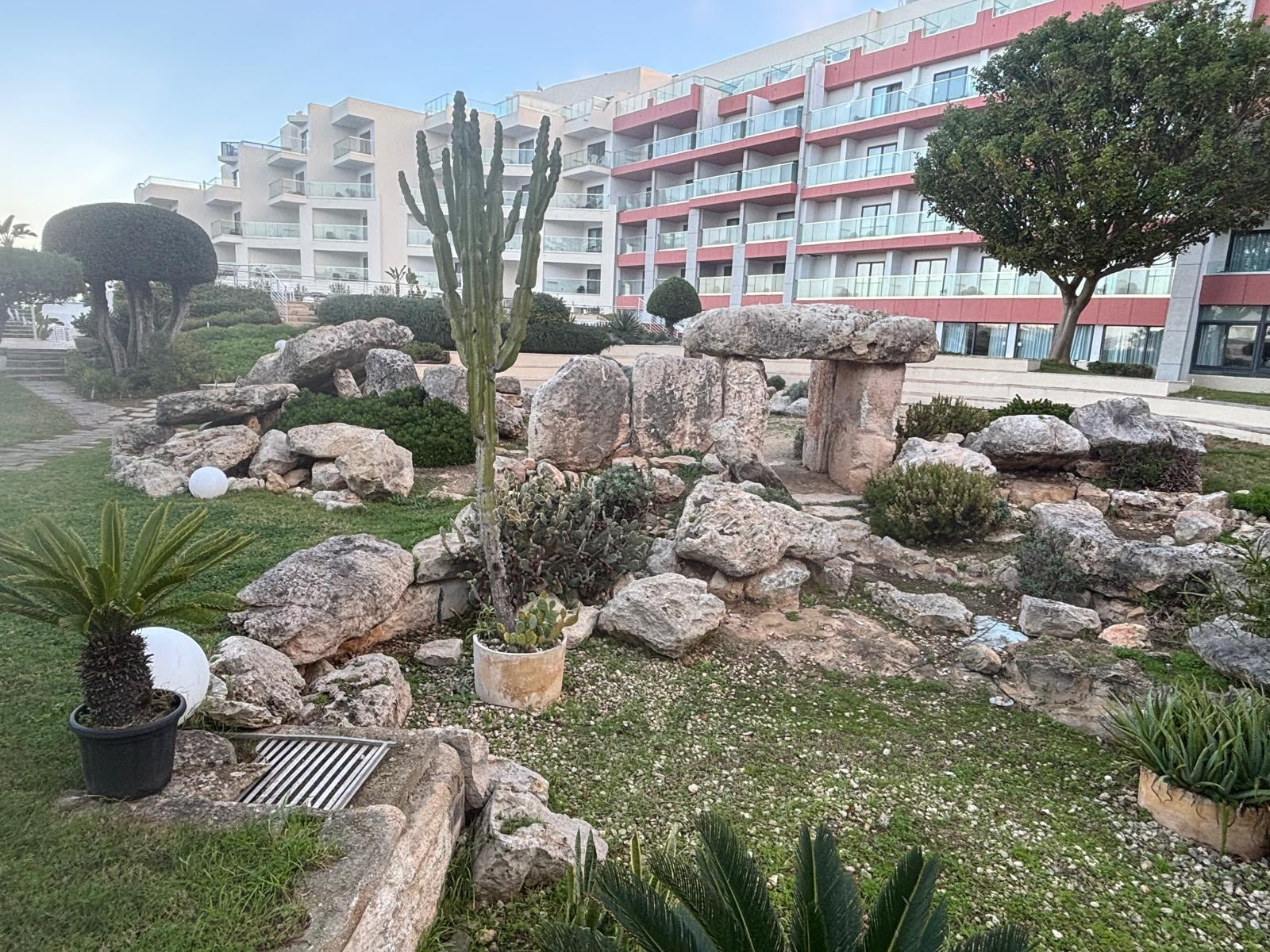
Preserved within the grounds of the Dolmen Hotel
Marked with signage and paths
Free to view if you access the hotel’s outdoor area
In a fragmentary but well-presented condition for such a small temple
Its presence is the reason the hotel is called “Dolmen” — referencing the megaliths.
⭐ Summary
The Buġibba Temple is a small but culturally important Megalithic Temple (3150–2500 BC) discovered by Sir Temi Zammit in 1925.
Although overshadowed by Malta’s larger UNESCO-listed temples, it remains notable for:
Its preserved three-apse layout
The unique carved fish altar
Its integration into a modern setting
Its role in expanding our understanding of Malta’s prehistoric coastal communities